
Reviewed · TEA CEREMONIES
Tokyo: Two Types of Japanese Sweets Making and Tea Ceremony
Sweets can tell a story. This Tokyo workshop lets you make three Japanese treats and matcha, giving you a hands-on look at a food tradition that can seem mysterious in a shop window. I especially like the use of Kyoto-made bean paste and the chance to prepare both dry ohigashi and soft nerikiri. The main consideration is that English support is offered as much as possible, but the instructor’s primary language is Japanese.
I also like the relaxed tea ceremony at the end. You grind matcha, whisk it yourself, and then enjoy the sweets you have made. The nerikiri shaping takes more care than the ohigashi, so you should expect a little trial and error rather than perfect confectionery on your first attempt.
In This Review
- Key details before you book
- Three Japanese sweets in one Tokyo visit
- Starting with wasanbon ohigashi
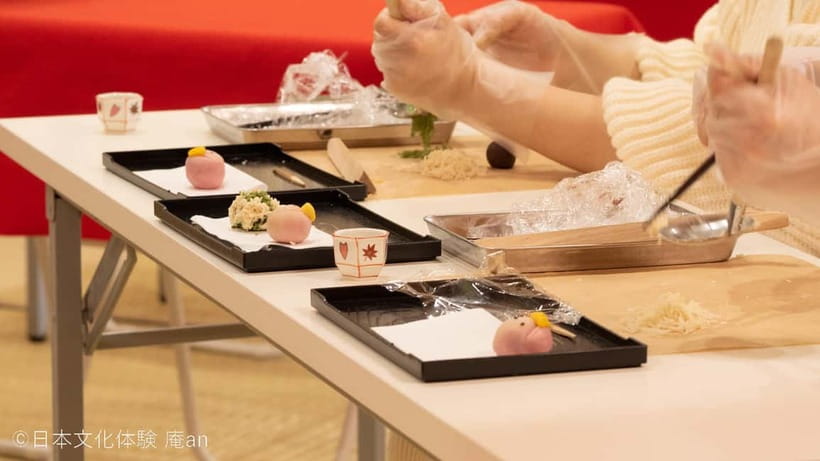
- Shaping two seasonal nerikiri
- A short break before the tea lesson
- Grinding and whisking single-origin matcha
- Eating your sweets with the tea
- How much value does $28 offer?
- English support and the instructor’s approach
- Timing, punctuality, and practical planning
- Who will enjoy this Tokyo culture activity?
- Final verdict: book it for a hands-on taste of Japan
- FAQ
- How long does the Japanese sweets and tea experience last?
- What will I make during the activity?
- Is matcha included in the experience?
- What language is spoken during the activity?
- How much does the activity cost?
- Can I take the sweets home?
- Are any other extras available?
- What is the cancellation policy?
Key details before you book
- Three connected activities: Make traditional wasanbon sugar sweets, two seasonal nerikiri, and your own matcha.
- Kyoto ingredients: The white and red bean pastes come from long-established Kyoto shops.
- 125-minute format: The session includes making time, short breaks, explanations, tea preparation, photos, and eating time.
- Casual tea ceremony: You learn the basic process without needing prior tea experience.
- Small extra costs: A take-out box costs 100 JPY, added color costs 200 JPY, and a completion certificate costs 300 JPY.
- Helpful but limited English: Instruction is in Japanese, with English translation provided as much as possible.
Three Japanese sweets in one Tokyo visit
This experience is built around three parts that work well together. First comes ohigashi, a dry sweet made with wasanbon, a finely textured Japanese sugar. Next, you shape two seasonal nerikiri sweets from bean paste. Last, you prepare matcha and take part in a casual tea ceremony.
That combination gives you more than a single craft lesson. You see how Japanese sweets range from firm and delicate to soft and sculptural, then taste them alongside powdered green tea. The program also explains the difference between ordinary green tea and matcha, which helps make the final tea service more meaningful.
The session takes place at AN TOKYO Japanese Culture Experience. The stated price is $28 per person, and the full program lasts 125 minutes. For Tokyo, that is a fairly reasonable price for a guided cultural activity that includes ingredients, instruction, tea preparation, and time to eat what you make.
Still, the value depends on what you want. If you are looking for a quick tasting, this will feel long. If you want to understand the work behind Japanese confectionery and leave with practical memories, the two-hour format earns its keep.
More Tea Ceremonies in Tokyo
- Matcha Making Class in Tokyo with Authentic Japanese Sweets Set
★ 5.0 · 744 reviews - Tokyo: Traditional Tea Ceremony with a Tea Master
★ 5.0 · 528 reviews - Tokyo: Matcha Making Experience with Mochi Sweets in Asakusa
★ 4.9 · 388 reviews
Starting with wasanbon ohigashi
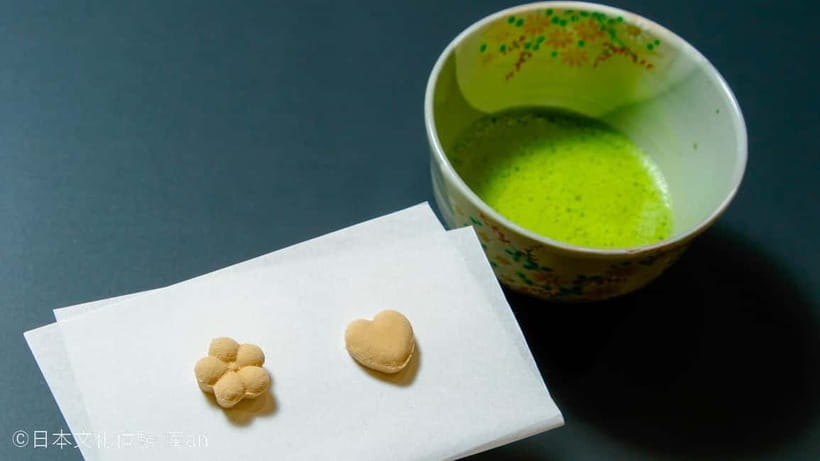
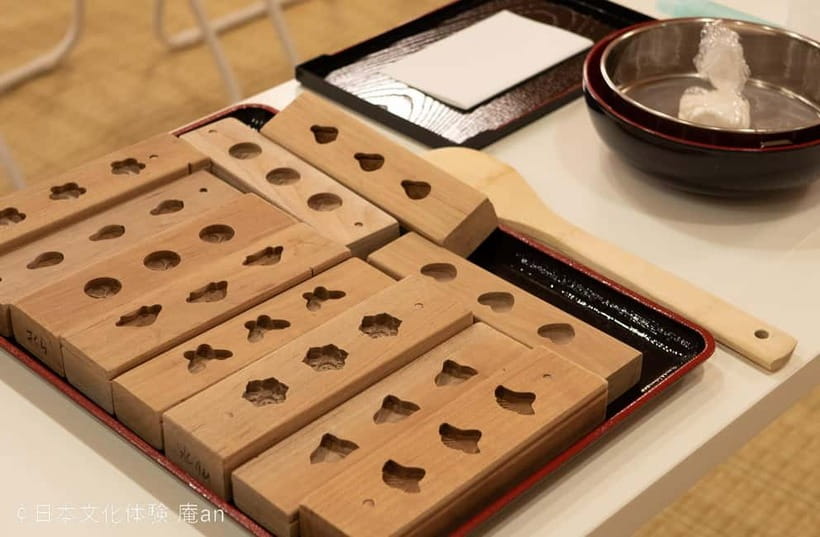
The opening activity is ohigashi, a traditional dry Japanese sweet made from wasanbon. This sugar is associated with refined confectionery because of its fine texture and clean sweetness. You begin with an explanation of traditional Japanese sweets, then make your own dry sweets.
The ohigashi section is the easiest part of the workshop. You are working with a simple, moldable sweet rather than a delicate cream or pastry. That makes it a good introduction, especially if you are not used to shaping food by hand.
The schedule allows about 20 minutes for this first activity. That is enough time to understand the basic process without letting the lesson drag. I like that the workshop begins with a manageable task. You can get comfortable with the tools and instructions before moving on to nerikiri, which requires more control.
Ohigashi also gives you a useful glimpse of Japanese tea culture. These sweets are not simply sugary snacks. Their small size and restrained sweetness are meant to work with tea, particularly bitter matcha. You will notice that the experience treats the sweet and the drink as a pair rather than as separate items.
Shaping two seasonal nerikiri
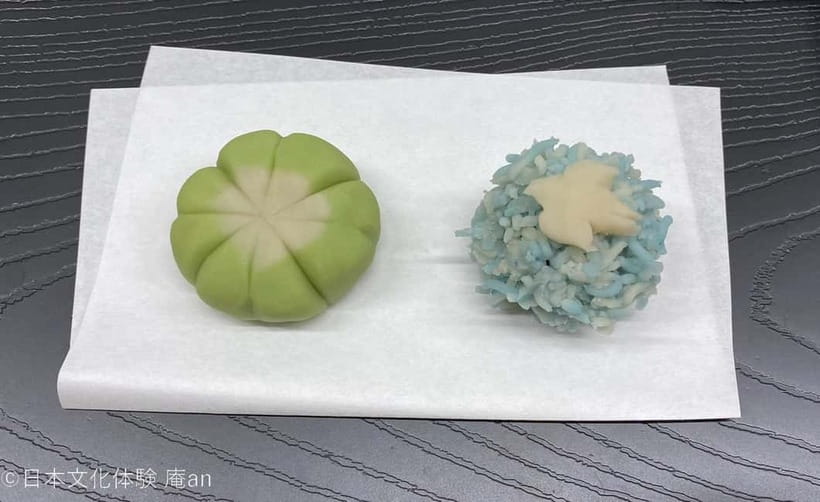
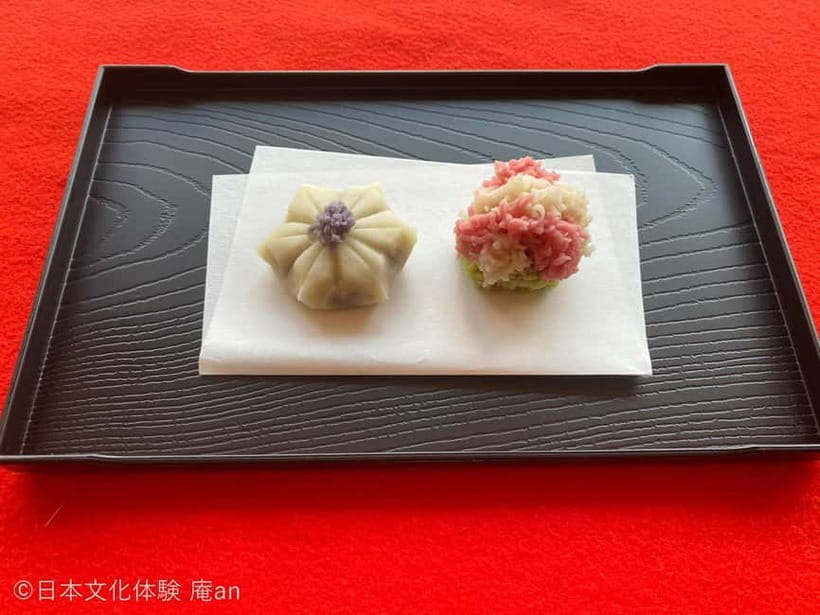
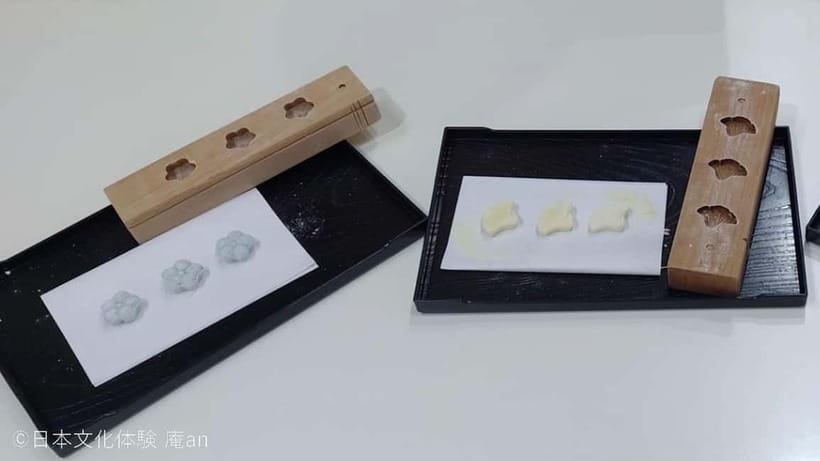
After a short break, the main hands-on work begins. You make two seasonal nerikiri sweets, one flower-shaped and one called kinton nerikiri. Both use white and red bean paste produced by established shops in Kyoto.
The seasonal focus matters. Japanese confectionery often reflects flowers, plants, colors, and other signs of the time of year. The exact designs can vary by season, but the purpose is consistent: the sweet should suggest something beyond its ingredients. You are not only forming a snack. You are trying to create a small edible image.
The flower-shaped nerikiri comes first. This is where the activity becomes more delicate. You need to shape the paste carefully, keeping the surface neat while forming the petals or other details. The kinton style brings a different look and texture, so you get two examples rather than repeating one design.
You should not expect both sweets to look professional on your first try. One participant described the ohigashi as easy, while finding the nerikiri more difficult and requiring fine feeling. That is useful advice. The challenge is part of the fun, but anyone with limited hand strength or patience for detailed work should know that this is not a simple assembly activity.
The instructor explains different types of Japanese sweets and offers background on the ingredients. That context helps you understand why the workshop uses bean paste from Kyoto rather than treating it as a generic filling. White bean paste and red bean paste have different colors, textures, and uses, and those differences become easier to notice once you handle them yourself.
A short break before the tea lesson
The schedule includes another break after the nerikiri section. The first break comes at about 20 minutes, and the second falls around the 85-minute mark. These pauses divide the session into clear stages.
That pacing is helpful because detailed shaping can take concentration. You get a chance to pause before the tea explanation begins. The full session does not rush from one task into another, although you still need to arrive on time because the event cannot be held for delayed arrivals.
The break also keeps the workshop suitable for different ages. Children who sit on a parent’s lap are free, but only if they are under two years old. Everyone else who takes part needs a paid place, and people who do not participate cannot enter the room.
A completely different kind of day out:
- Tokyo Disney Resort – Tokyo Disneyland & Tokyo DisneySea Park Tickets
★ 4.8 · 99,488 reviews - SHIBUYA SKY Ticket
★ 4.7 · 46,509 reviews - JR Whole Japan Rail Pass
★ 4.8 · 29,150 reviews - Mt Fuji and Hakone 1-Day Bus Tour Return by Bullet Train
★ 5.0 · 26,383 reviews
Grinding and whisking single-origin matcha
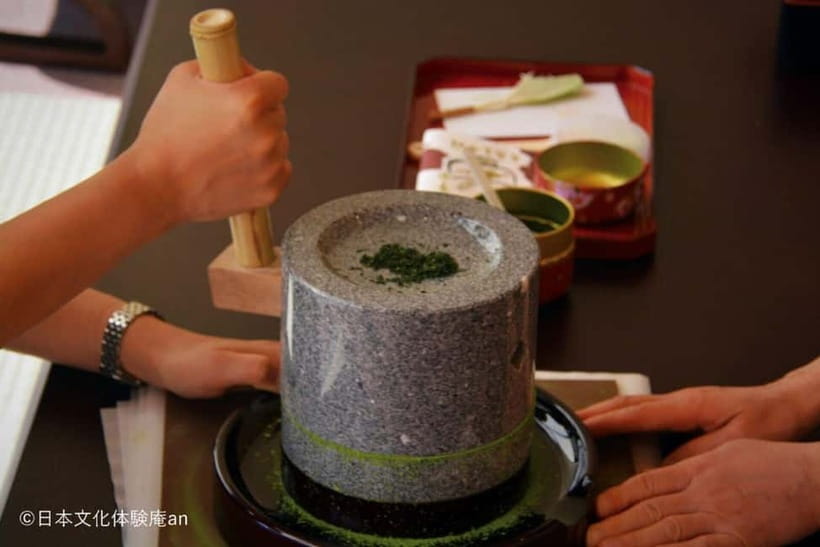
At about 95 minutes, the tea portion starts with an explanation of tea. You then watch a matcha grinding demonstration before preparing your own drink. The program uses special single-origin matcha, which gives this part a stronger sense of place and quality than a generic powdered tea demonstration.
Matcha preparation can look formal from the outside, but you do not need prior experience. The instructor explains the basic process, and you whisk the powder yourself. One useful point from the available feedback is that whisking the tea felt easier than shaping the nerikiri. That makes sense: the movement is simple once you have seen it demonstrated.
The session presents the tea ceremony in a casual way. You learn enough to take part without needing to master every rule of a formal ceremony. I like this approach for a short Tokyo activity because it gives you the central actions and etiquette while keeping the mood accessible.
The comparison between green tea and matcha is also worthwhile. Matcha is powdered, so you drink the prepared tea rather than simply steeping leaves and removing them. The workshop’s explanation helps you understand why the flavor, texture, and preparation feel different.
Eating your sweets with the tea
After the tea ceremony, there is picture time, followed by eating and drinking time. The schedule places the end of the formal activity at around 115 minutes and room departure at 125 minutes.
This final section is more important than it may sound. You have spent much of the session concentrating on shape, color, sugar, bean paste, and whisking. Sitting down with the finished sweets lets you connect the techniques with the taste.
The nerikiri are meant to be enjoyed with tea, not merely admired. Their bean-paste base gives them a soft, sweet character, while matcha adds bitterness and a vegetal note. The contrast is part of the lesson. You may also find that the sweet tastes better because you have made it yourself, though the workshop does not promise restaurant-style results.
If you want to take your creations away, bring an extra 100 JPY for a sweets take-out box. The box is not included. Added color costs 200 JPY, and a completion certificate costs 300 JPY. These are optional extras, so the advertised price remains a fair guide to the core activity.
How much value does $28 offer?
At $28, the experience is priced below many longer food workshops and guided cultural classes in Tokyo. You receive three activities, ingredients, instruction, a matcha session, and a total of 125 minutes. That works out to a little over two hours of structured time for a modest outlay.
The strongest value comes from the range. A short tea ceremony alone might leave you with a pleasant but limited memory. Here, you handle wasanbon, shape two kinds of nerikiri, learn about bean paste, watch matcha grinding, and make tea. The activities build on one another.
The value is less clear if you want polished English instruction or a take-home food package. English translation is provided as much as possible, but Japanese is the listed language. You should be comfortable following demonstrations, watching closely, and asking for help when needed.
The extra fees are small, but you should know about them before arriving. A box, coloring option, and certificate can add 600 JPY if you choose all three. None is required for the main experience.
English support and the instructor’s approach
The instructor is Japanese, and English assistance is offered as much as possible. The available feedback gives a positive picture of the teaching style. One participant specifically appreciated receiving explanations in English, while another praised the effort made to explain the types of Japanese sweets and the difference between green tea and matcha.
I would treat the language arrangement as workable rather than fully English-led. You may receive clear demonstrations and some English explanations, but not every detail is guaranteed in fluent English. The food-making format helps because much of the instruction can be shown by hand.
The session suits you best if you enjoy learning through observation. Watch how the paste is handled, copy the movement, and ask for clarification when needed. It is not the best match if you need every step translated in detail or prefer a fully scripted lesson in English.
The instructor’s care seems to be one of the strongest parts of the activity. The available rating is 4.6 from 26 ratings, and the most positive comments focus on kindness, clear effort, and useful cultural background. That is more important here than flashy presentation because the shaping techniques benefit from patient guidance.
Timing, punctuality, and practical planning
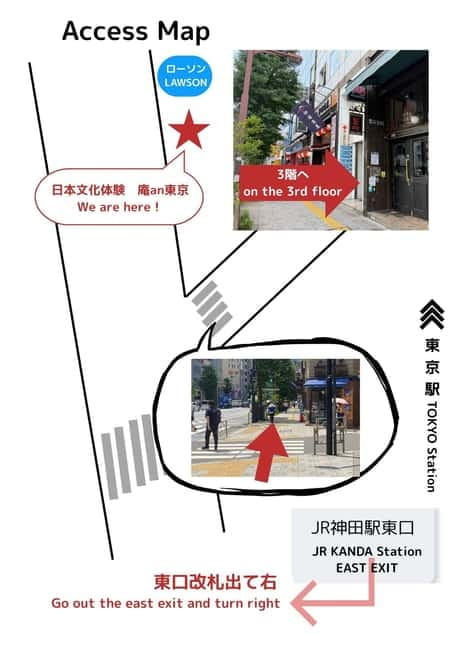
The workshop operates from 10:00 to 17:00. Reservations received after 17:00 are processed the next day, so do not expect an immediate response late in the evening.
The session length is fixed at 125 minutes, with start times based on availability. Arrive with enough time to find AN TOKYO Japanese Culture Experience. The event cannot be held for late arrivals, and the provider does not compensate for transportation expenses if you miss it because of a delay.
That policy matters in Tokyo, where a small navigation mistake can become a long one. Check your route before leaving and allow extra time. A late arrival could mean missing the opening explanation or the ohigashi activity, which would make the rest of the session less useful.
The workshop is also not a drop-in sightseeing stop. Only people taking part may enter, so a companion who does not want to make sweets cannot simply wait inside.
Who will enjoy this Tokyo culture activity?
I would recommend it to you if you want a calm, hands-on cultural experience rather than a passive demonstration. It suits couples, friends, families with older children, and solo visitors who like food crafts and Japanese traditions.
It is especially good for people who enjoy visual details. The seasonal nerikiri change in appearance, and the activity lets you see how a simple paste can become a flower or kinton design. You also get a natural photo opportunity during the scheduled picture time.
The workshop should appeal to anyone who has already tried matcha in a café and wants to understand how it is prepared. It also works well for a rainy-day plan, though the provided information does not describe the surrounding area or transport options, so you should check those separately.
You may want to skip it if you dislike sweet bean paste, have little interest in tea, or want a fast activity under an hour. Nerikiri shaping requires some care, and the Japanese-first instruction style may feel limiting if you expect detailed English teaching throughout.
Final verdict: book it for a hands-on taste of Japan
I would book this experience if you want three related activities in one reasonably priced Tokyo session. The use of Kyoto bean paste, seasonal designs, wasanbon sugar, and single-origin matcha gives the class real substance. You are not just drinking tea and taking a few photos.
The best reason to choose it is the progression from easy ohigashi to more demanding nerikiri, then to simple matcha whisking. You finish with sweets you helped create and a clearer sense of how Japanese confectionery fits with tea.
Book it with realistic expectations about English support and the difficulty of nerikiri. Arrive early, bring 100 JPY if you want a take-out box, and consider the optional color or certificate fees only if they matter to you. For $28 and 125 minutes, this is a good-value choice for a curious eater who wants to make, taste, and learn.
FAQ
How long does the Japanese sweets and tea experience last?
The experience lasts 125 minutes, including explanations, sweet-making, breaks, matcha preparation, picture time, and eating and drinking time.
What will I make during the activity?
You will make wasanbon ohigashi, two seasonal nerikiri sweets, and your own matcha. The nerikiri include a flower-shaped sweet and a kinton nerikiri.
Is matcha included in the experience?
Yes. The program includes a matcha grinding demonstration, a tea ceremony experience, and time to prepare and drink your own matcha.
What language is spoken during the activity?
Japanese is the listed language. English translation will be provided as much as possible.
How much does the activity cost?
The listed price is $28 per person.
Can I take the sweets home?
Yes, but a sweets take-out box costs an additional 100 JPY.
Are any other extras available?
Adding color costs 200 JPY, and an experience completion certificate costs 300 JPY. These are not included in the core price.
What is the cancellation policy?
You can cancel up to 24 hours in advance for a full refund. You can also reserve now and pay later.
More Dessert Tours in Tokyo
- Private Mochi Sweets Making class near Shibuya area
★ 5.0 · 93 reviews - Japanese Traditional Sweets making and Tea Ceremony
★ 4.7 · 50 reviews - Tokyo Local Food Tour: Noodles, Skewers, Dumplings, Sweets
★ 5.0 · 48 reviews - Japanese Traditional Sweets making
★ 4.1 · 19 reviews
Just added in Tokyo
- A One-of-a-Kind Sushi Experience in a Special Place of Japan★ 5.0 · 15 reviews
- Tokyo Cute Bento Cooking Class – Make a Kawaii Character Lunchbox★ 5.0 · 126 reviews
- Japanese Home Cooking Class & Walk in Todoroki Temple Tokyo★ 5.0 · 88 reviews
- Japan Tokyo Tower Observatory Deck E-Ticket★ 4.0 · 34 reviews
- Catch a Baseball Game in Tokyo with a Local – Tickets Included★ 5.0 · 24 reviews
- Japan Classic 10 Day – One Life Adventures★ 5.0 · 129 reviews
- JDM Experience with Fast&Furious RX-7 (English speaking Driver)★ 5.0 · 57 reviews
- Tokyo Private Day Tour by Car with English speaking Driver Guide★ 4.0 · 29 reviews
Tea Ceremonies, compared.
Tea Ceremony in a Traditional Tea House in Kiyomizu
Read our review →
World Heritage Kyoto & Nara Uji Authentic Matcha Experience
Read our review →
Browse the lists this tour appears in