
Reviewed · PRIVATE TOURS IN KYOTO
Nara 8hr Private Tour – Kyoto DEP. with Licensed Guide
Nara rewards a slower day. This private tour lets you choose three or four sights, and I especially like the chance to pair Tōdaiji Temple with Naramachi’s old streets. I also like having a government-licensed guide explain the links between Buddhism, Shinto, Japan’s early capitals, and everyday customs. The main catch is that transportation, admissions, lunch, and personal expenses are extra, so the advertised price is not the complete cost.
The tour lasts about eight hours and is designed for your own group, not a mixed busload. Guides such as Junichi, Taku, Ken, Yuka, and Masaaki have received especially warm praise for tailoring the day, explaining difficult religious details clearly, and helping with trains, restaurants, photos, and local customs.
In This Review
- Five things to know before booking
- Why Nara makes a better day trip than a quick stop
- Meeting in Kyoto and getting around
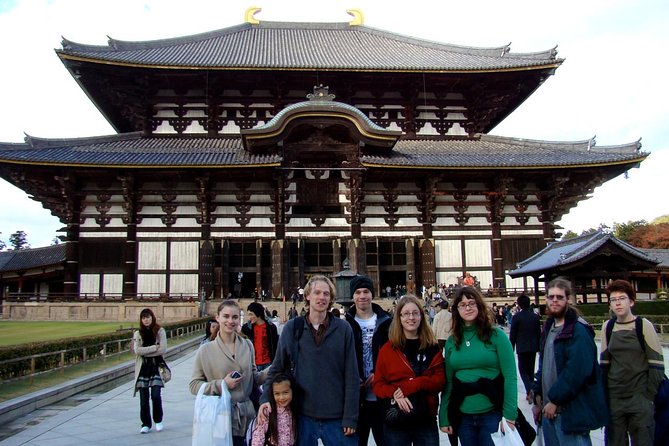
- Tōdaiji Temple and the enormous bronze Buddha
- Nara Park and the deer
- Kasuga Taisha and the forest approach
- Naramachi, where old merchant homes meet modern Nara
- Hōryūji, Yakushiji, and Tōshōdaiji for serious history
- Gardens, museums, hills, and the former palace
- What the guide adds to the $201.51 price
- Who should book this Nara day
- Should you book it?
- FAQ
- How long does the private Nara tour last?
- Where does the tour begin?
- Is transportation included?
- How many sites can I visit?
- Are entrance fees included?
- Is lunch included?
- Is this a group tour?
- Can I cancel for a full refund?
Five things to know before booking
- You choose three or four sites: The long list includes major temples, gardens, museums, old neighborhoods, and a hilltop viewpoint, but you will not see everything in one day.
- Tōdaiji is the essential stop: Its enormous Buddha Hall and huge bronze Buddha give Nara its unforgettable scale.
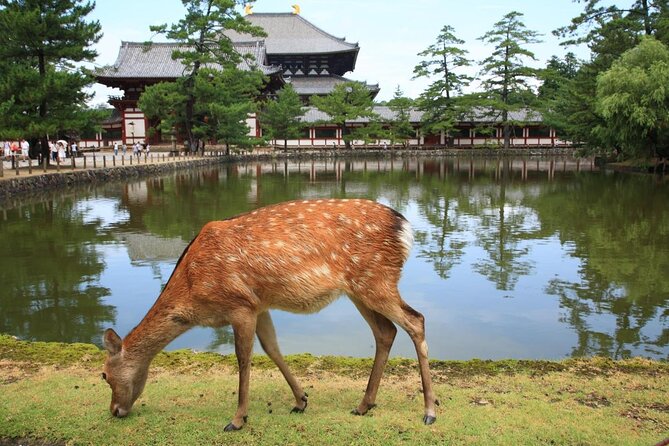
- The deer are part of the experience: Nara Park’s free-roaming deer often come close, especially when food is available.
- It is a walking tour: Pickup means meeting your guide on foot within the designated Kyoto area. There is no private vehicle included.
- The guide adds the real value: Strong guides have helped families, teenagers, vegetarian diners, train users, and visitors who wanted less familiar temples.
- Budget beyond the $201.51 price: Entrance fees, transport, lunch, and other personal costs are not included.
Why Nara makes a better day trip than a quick stop
Kyoto can fill several days with temples and gardens, but Nara gives you a different view of Japan. This was the country’s capital during most of the Nara period, from 710 to 794. Its temples and shrines are not simply pretty buildings. They show how early Japanese government, Buddhism, court culture, and local religious practice developed together.
I like this tour because it treats Nara as more than a deer photograph. The deer are charming, sometimes pushy, and impossible to ignore. Yet the best part of the day may be hearing why Tōdaiji became the head temple for provincial temples, how Kasuga Taisha protected the old capital, or why Naramachi still has traditional merchant houses.
A private guide also changes the pace. If your family wants more time with the deer, you can build around that. If you care most about Buddhist sculpture and architecture, you can choose Hōryūji, Yakushiji, Tōshōdaiji, or the Nara National Museum. If your group includes children, your guide can keep the explanations lively and add practical stops.
The tour is rated 4.9 out of 5, with 98 percent recommending it. That is a strong record, but it does not remove the need to choose your guide and route carefully. One poor experience involved communication problems in English, while another complained about unclear agency communication. The larger pattern is very positive, but ask for clear meeting details and share your interests before the day.
More Private Tours in Kyoto
- Kyoto 6hr Private Tour with Government-Licensed Guide
★ 5.0 · 1,369 reviews - 10 Must-see Spots in Kyoto One Day Private Tour (up to 7 people)
★ 5.0 · 1,108 reviews - Kyoto 4hr Private Tour with Government-Licensed Guide
★ 5.0 · 629 reviews
Meeting in Kyoto and getting around
The included meeting arrangement is on foot within a designated area of Kyoto. This is not a hotel pickup by private car, and the tour does not include a vehicle. If you begin in Osaka, some arrangements may involve reaching Nara by train, but transportation fees remain your responsibility.
That detail matters. An eight-hour tour sounds long, yet Nara’s sights are spread across different areas. The eastern group, including Tōdaiji, Nara Park, Kasuga Taisha, Isuien Garden, and Wakakusayama Hill, works well together. Hōryūji, Yakushiji, Tōshōdaiji, and the Heijō Palace Site are farther from the central cluster and can make the day more ambitious.
I would send your guide a short priority list before the tour. Put your top two sites first, then add one or two flexible choices. Several successful tours were shaped around specific interests, such as Yakushiji’s ancient pagoda, a teenager’s preferences, vegetarian food, gardens, or Japanese religious traditions.
Expect to walk. A guide can save time by knowing the route, the train system, and the order that makes sense, but you still need comfortable shoes. Summer heat and humidity have made some days tiring, while rain has affected other outings. Spring and autumn may be easier for long walks, although the tour operates in all kinds of weather.
Tōdaiji Temple and the enormous bronze Buddha
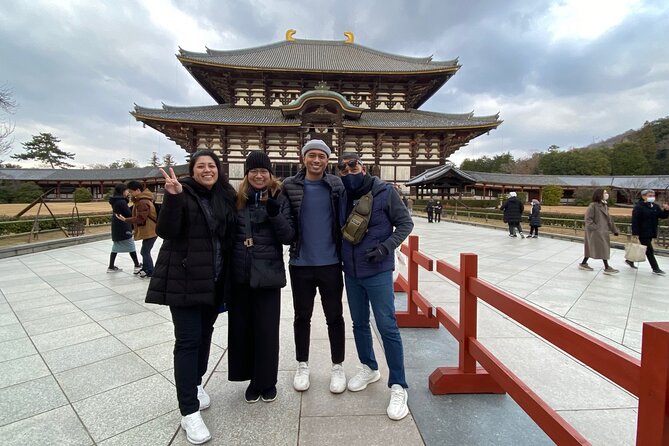
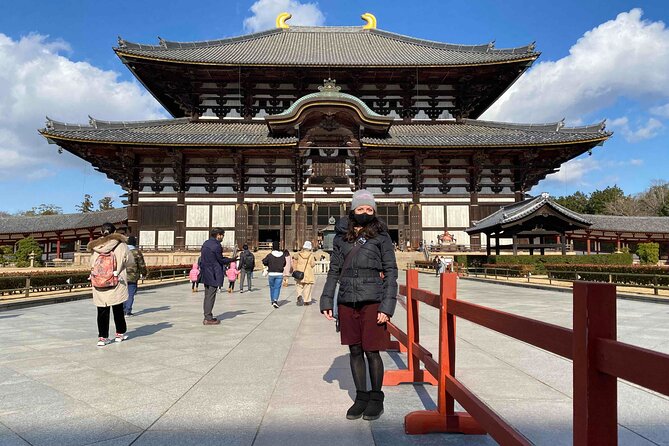
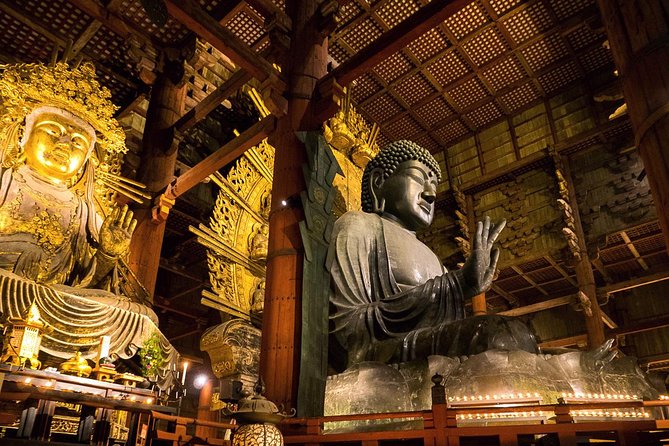
Tōdaiji is the anchor of the usual Nara route. Founded in 752, it was created as the head temple of Japan’s provincial temples. Its main hall houses the Great Buddha, a colossal bronze image of Vairocana Buddha.
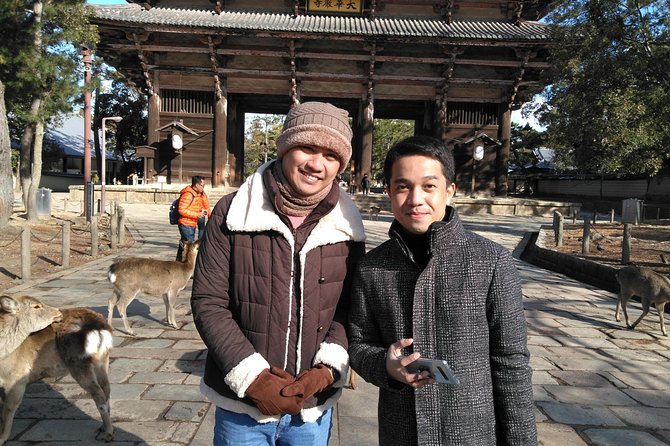
The approach through the Nandaimon Gate sets the mood. The gate is imposing, and its scale prepares you for the Great Buddha Hall. Inside, the Buddha’s size can be hard to grasp until you compare it with the people around it. This is one of those places where a guide’s explanation gives the building more meaning than a quick photograph can.
Many visitors also enjoy the famous pillar with a hole said to match the Buddha’s nostril. Children often line up to try it, and families may find this playful moment more memorable than another formal temple explanation. Your guide can also point out details that are easy to miss and explain the relationship between Buddhist buildings and nearby Shinto sites.
The listed stop is described as about 30 minutes, but your actual time will depend on the route and your guide’s plan. Admission is not included. Ask in advance exactly which entry fees you will pay and whether the guide’s own admission is covered for the places you choose.
Nara Park and the deer
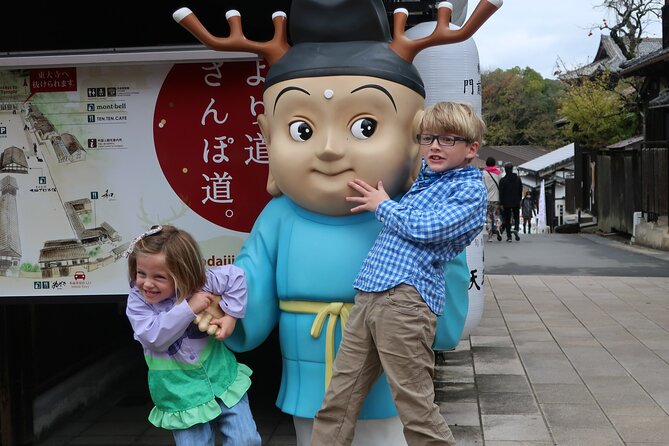
Nara Park was established in 1880 and spreads around several of Nara’s main sights. The deer move freely through the park, near paths, temple grounds, and wooded areas. They are accustomed to people, but they are still animals, not tame pets.
You can expect the deer to be a highlight, especially if you buy crackers to feed them. They may bow or appear to bow, and some will follow you when they suspect you have food. Keep your hands clear once the food is gone, and pay attention to signs and your guide’s advice.
The park is also useful as a break between temple interiors. You get open space, trees, stone paths, and views toward the surrounding hills. The deer make the setting lively, but the park can become crowded, particularly during school excursions, holidays, and peak seasons.
The tour’s flexibility helps here. If Tōdaiji is crowded, a good guide can shift attention to nearby areas, explain the wider complex, or take you toward quieter paths. One route included Nigatsudo Hall, where a climb brought broad views over Nara and the Tōdaiji grounds. That stop is not guaranteed, but it shows how a private day can develop beyond the basic checklist.
A completely different kind of day out:
- PERFECT KYOTO 1-Day Bus Tour
★ 5.0 · 13,518 reviews - [Kyoto & Nara Day Tour] Sagano Scenic Railway & Nara Park & Fushimi Inari Taisha Thousand Torii Gates & Togetsukyo Bridge & Bamboo Grove & Kimono Forest (Departing from Osaka)
★ 4.9 · 10,942 reviews - Kyoto: Fushimi Inari, Kinkakuji, Bamboo Grove 1 Day Bus Tour
★ 4.8 · 4,316 reviews - Kyoto: Tea Ceremony in a Traditional Tea House in Kiyomizu
★ 4.9 · 3,519 reviews
Kasuga Taisha and the forest approach
Kasuga Taisha is Nara’s best-known shrine. It was founded when the capital was established and is linked to the deity responsible for protecting the city. The approach through Nara Park is lined with stone lanterns and shaded by trees.
This is a useful contrast with Tōdaiji. Tōdaiji presents the power and scale of state-supported Buddhism. Kasuga Taisha gives you Shinto architecture, ritual, lanterns, and a quieter woodland setting. A guide can explain how Buddhism and Shinto interacted in Nara, rather than presenting them as totally separate traditions.
The shrine itself is free to visit according to the tour details, though particular areas or special displays may have different arrangements. The standard stop is listed as 30 minutes, so tell your guide if you want more time for the shrine or its sub-shrines.
The route can include Wakamiya Shrine or Tamukeyama Hachiman Shrine if your guide considers them a good fit. These additions are not guaranteed, but they may suit you if you enjoy religious history more than shopping.
Naramachi, where old merchant homes meet modern Nara
Naramachi is the former merchant district. Traditional homes, warehouses, small shops, cafes, and preserved residential buildings line its streets. It is one of the best places to see how ordinary urban life differed from the grand temple compounds.
I like Naramachi because it changes the subject. After enormous gates and sacred halls, you see narrow streets and modest buildings designed for work, storage, trade, and family life. Some traditional homes are open to the public, including Nigiwai-no-Ie, where tatami rooms, alcoves, and staggered shelves show the design of a traditional house.
This is also a sensible place to ask your guide about lunch or local food. Guides have helped arrange ramen, tofu meals, vegetarian options, sake tasting, shaved ice, and local specialties. Food is not included, and your guide’s recommendations will depend on the day, availability, and your dietary needs, so share those details early.
Naramachi is free to explore, but some buildings or museums may charge admission. It is a good final stop if you want time for browsing, photographs, cafes, or small purchases without rushing back through the temple grounds.
Hōryūji, Yakushiji, and Tōshōdaiji for serious history
Hōryūji is one of Japan’s oldest temples, founded in 607 by Prince Shōtoku. It contains what is described as the world’s oldest surviving wooden building. The temple is a major choice for anyone interested in early Buddhism, ancient art, and wooden architecture.
The tradeoff is distance. Choosing Hōryūji may mean giving up one or more central Nara sights. One carefully planned day placed Hōryūji in the morning and made it the high point for visitors interested in early artwork and architecture. That kind of route requires firm priorities.
Yakushiji was built in the late seventh century for the recovery of Emperor Tenmu’s sick wife. Its strict symmetry and East Pagoda, first built more than 1,300 years ago, appeal to anyone who enjoys architectural order and historical detail.
Tōshōdaiji was founded in 759 by Ganjin, a Chinese priest invited to Japan to train priests and improve Buddhist practice. These two temples are especially worthwhile if you have already seen the main Nara Park sights or want a less familiar side of the city.
Admission is not included at these temples. Confirm the day’s transport plan before selecting them, since the eight-hour limit includes travel, walking, meals, and time at each site.
Gardens, museums, hills, and the former palace
Isuien Garden uses borrowed scenery, including Tōdaiji’s Nandaimon Gate and Wakakusayama Hill. It offers a quieter, carefully shaped setting after the crowds near the Great Buddha. Yoshikien Garden is another pleasant central option, named for the Yoshikigawa River beside it.
These gardens suit you if you want beauty without another large temple complex. They also give the day a slower rhythm. Both have admission charges listed as not included.
Wakakusayama Hill rises behind Nara Park and offers wide views over the city. The climb may be a poor choice on a hot or rainy day, but it can reward you with a clear sense of Nara’s setting. Do not select it simply because it appears on the list. Mention your fitness level and weather concerns to your guide.
The Nara National Museum focuses mainly on Japanese Buddhist art and was established in 1889. It is a strong choice for anyone who wants sculpture and religious objects explained in a more formal setting. Heijō Palace Site Historical Park covers the former capital area, where the palace extended roughly one kilometer by one kilometer. It is a better match for people interested in government and city planning than for those seeking a compact temple walk.
Kōfukuji, once the family temple of the powerful Fujiwara clan, adds another important piece of Nara’s political and religious story. Its five-story pagoda and historic halls are striking, but check which buildings are open and which admissions apply.
What the guide adds to the $201.51 price
At $201.51 per person, this is not a budget outing, especially because transportation, admissions, lunch, and personal expenses are extra. The value comes from the private format and the guide’s time, not from included tickets or transport.
For a group of friends or family, the price may compare well with booking several separate services. You can shape the day around your own pace, questions, food needs, and interests. You also avoid spending time trying to connect distant temples without local help.
The guide quality is the deciding factor. Junichi has been praised for detailed preparation, local knowledge of Nara, and strong communication before the tour. Taku has been especially appreciated for clear English, maps, flower identification sheets, history, humor, sake stops, and care with tired feet. Ken has built routes around children and teenagers, while Yuka has adjusted plans to include Yakushiji and helped families find food.
Masaaki is a particularly good match if you care about architecture, Buddhist art, and the political history of the old capital. Other guides, including Haru, Rie, Momoyo, Naomi, Hiro, Kazuo, and Lily, have been praised for patience, organization, family-friendly planning, restaurant help, and local suggestions.
You cannot combine multiple tour groups, so only your own party participates. That makes the day more comfortable, but the cost is also tied to the size of your group. A small party may pay more per person for privacy.
Who should book this Nara day
I would choose this tour if you have one day for Nara and want more than a quick walk from the station to the deer park. It suits families, couples, small groups, history fans, first-time visitors, and anyone who wants help with trains, food, and local customs.
It is especially useful if you have firm priorities. Tell your guide if you want Hōryūji above all else, if your children need a flexible pace, or if you want gardens and old neighborhoods rather than a string of major temples.
I would hesitate if you want a fully packaged excursion with transport, admissions, and lunch included. I would also hesitate if your group dislikes walking or expects to see all 14 possible stops. The tour offers choice, not unlimited time.
Free cancellation is available up to 24 hours before the start time. Confirmation is sent within 48 hours, subject to availability. Most people can participate, service animals are allowed, and the tour is near public transportation.
Should you book it?
Book this tour if you want Nara explained by a local guide and you value a route built around your interests. The strongest payoff is not simply seeing Tōdaiji, deer, Kasuga Taisha, and Naramachi. It is understanding how those places fit together.
Before booking, prepare three priorities and a backup plan. Ask about the guide’s meeting point, likely transport costs, admission fees, and the walking level. If the answers suit your group, the private format can turn a complicated Nara day into a focused and memorable one.
FAQ
How long does the private Nara tour last?
The tour lasts approximately eight hours.
Where does the tour begin?
The tour begins with an on-foot meeting with your guide within a designated area of Kyoto.
Is transportation included?
No. Transportation fees are not included, and the tour does not provide a private vehicle.
How many sites can I visit?
You can choose three to four sites from the available options.
Are entrance fees included?
Entrance fees are not included. The tour details state that guide entry fees are covered only for sights listed under the expected stops.
Is lunch included?
No. Lunch and other personal expenses are paid separately.
Is this a group tour?
No. This is a private activity for your own group, and multiple tour groups cannot be combined.
Can I cancel for a full refund?
Yes. You can cancel at least 24 hours before the experience start time for a full refund. Changes or cancellations made less than 24 hours before the start time are not accepted for a refund.
Just added in Kyoto
- The “Golden Route” and Ancient Japan by DIAMIR Erlebnisreisen – 14-Day Tour★ 2.0 · 2 reviews
- Japan: Castles & Cuisine by G Adventures – 6-Day Kyoto to Osaka Tour★ 4.5 · 4 reviews
- Cycle Japan by Explore! – 13-Day Kyoto to Tokyo Tour★ 4.7 · 12 reviews
- Cycle Japan by Intrepid Travel – 11-Day Kyoto to Tokyo Tour★ 4.8 · 2 reviews
- Classic Japan by Intrepid Travel – 11-Day Kyoto to Tokyo Tour★ 4.4 · 14 reviews
- Ancient & Modern Japan 14-Day Tour by Exodus Adventure Travels★ 4.4 · 40 reviews
- 5 Day Cultural Adventure of Kyoto, Nara & Osaka by Tourist Journey★ 2.5 · 2 reviews
- 12 Days Kinosaki Onsen Escape: A Journey Through Japan’s Timeless Towns by UME Travel★ 4.8 · 5 reviews
Private Tours in Kyoto, compared.
Kyoto 6hr Private Tour with Government-Licensed Guide
Read our review →
10 Must-see Spots in Kyoto One Day Private Tour (up to 7 people)
Read our review →
Kyoto 4hr Private Tour with Government-Licensed Guide
Read our review →
Private Kyoto Tour with Licensed Guide & Vehicle (Max 15 persons)
Read our review →
Kyoto Customized Private Tour: See Top Attractions in 1 Day
Read our review →
Explore Kyoto | Private Tour – Local English Driver(guide option)
Read our review →
Highlights & Hidden Gems With Locals: Best of Kyoto Private Tour
Read our review →Browse the lists this tour appears in