
Reviewed · NARA TOURS
Nara: Todai-ji y parque de Nara (Spanish Guide)
Nara’s deer share the sidewalks with history. This five-hour walk connects the Great Buddha at Todai-ji with Nigatsu-do, Kasuga Taisha, Ukimido, and Kofuku-ji, giving you a useful first look at Nara without arranging each stop yourself. I especially like the Spanish-language guidance and the chance to see the deer in several different parts of the park, not just near the station. The main drawback is simple: the route is entirely on foot, so it is a poor match for anyone with limited mobility or a dislike of long walks.
I also like the way the route mixes famous sights with quieter corners. Nigatsu-do gives you broad views over Nara, while Ukimido offers a calm pause beside the pond. Guides named Alex, Diego, and Federico have earned especially warm praise for their clear explanations and enthusiasm for Japanese history.
At $85 per person, this is not the cheapest way to see Nara, but the value improves if you want Spanish commentary, the Todai-ji entrance ticket, and a carefully linked route through several major sites. You meet at exit 5 of Kintetsu-Nara Station and return there after five hours.
In This Review
- Key points to know before booking
- Starting at Kintetsu-Nara Station
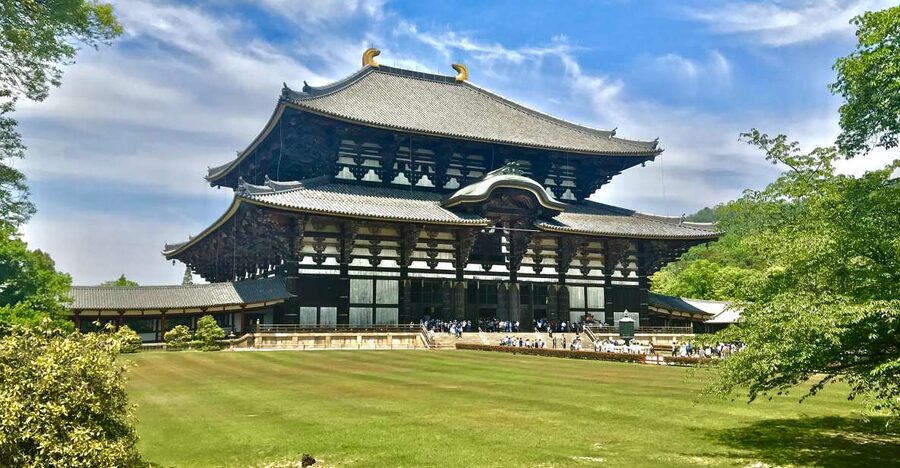
- Todai-ji and the Great Buddha
- Nigatsu-do and the higher view over Nara
- Tamukeyama Hachimangu, a quieter link in the route
- Kasuga Taisha and its stone lanterns
- Nara Park and the deer
- Ukimido and a quiet pond pause
- Kofuku-ji and the five-story pagoda
- What the $85 price really covers
- Who will enjoy this walking tour most
- Practical tips for a better day
- Should you book the Nara Spanish guide?
- FAQ
- Where does the tour begin and end?
- How long does the experience last?
- Is the tour conducted in Spanish?
- Is the Todai-ji entrance ticket included?
- Is the route completed on foot?
- Can I cancel for a full refund?
Key points to know before booking
- The Great Buddha is the main event: Todai-ji houses one of the world’s largest religious statues, and the included entrance ticket saves you one extra decision on the day.
- You walk for the full five hours: The tour covers temples, shrine grounds, paths, viewpoints, and park areas without using transport between stops.
- Spanish guidance adds real value: Alex, Diego, and Federico have been singled out for making the history easy to follow and enjoyable.
- Nigatsu-do changes the view: This part of the Todai-ji complex gives you a higher viewpoint over Nara and is especially attractive during cherry blossom season.
- Deer appear throughout the route: You see them around Nara Park and near several historic sites, rather than treating the deer as a quick photo stop.
- The price includes Todai-ji admission: The listed guided visits cover the major stops, while the included entrance ticket is specifically for Todai-ji.
Starting at Kintetsu-Nara Station
The meeting point is exit 5 at Kintetsu-Nara Station, a practical place to begin because the tour ends there too. That makes the route easy to understand: you start near the center of Nara, walk toward the temple and park area, then return through another set of historic sights.
You should arrive ready to walk. Comfortable shoes and comfortable clothing are listed as essentials, and that advice is worth taking seriously. The route includes temple grounds, shrine approaches, park paths, and scenic stops. A stroller is not allowed, and the activity is not suitable for people with mobility impairments.
The five-hour length gives the guide time to explain what you are seeing instead of rushing from one gate to the next. Still, this is an active half-day. If you have already spent the morning walking around Kyoto or Osaka, you may feel the distance by the final temple.
A few more options to weigh up in Nara
- World Heritage Kyoto & Nara Uji Authentic Matcha Experience
★ 5.0 · 1,573 reviews - Nara Half Day Trip Walking Tour (Private Option Available)
★ 5.0 · 937 reviews - Nara Early Morning Tour (Kyoto or Osaka Departure Available)
★ 5.0 · 676 reviews
Todai-ji and the Great Buddha
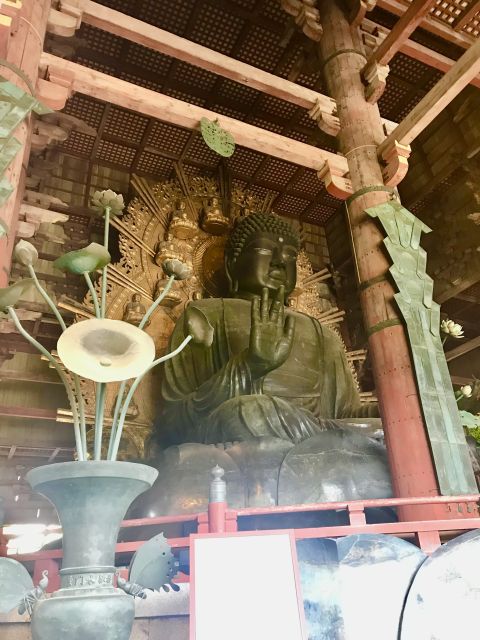
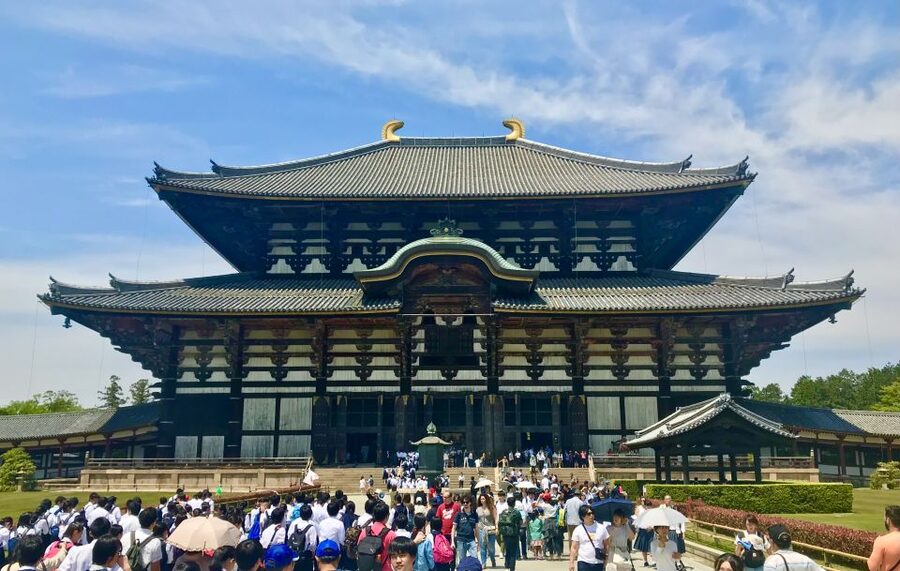
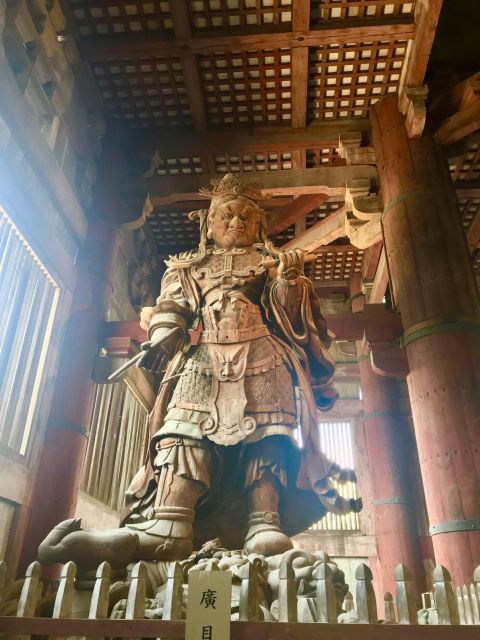
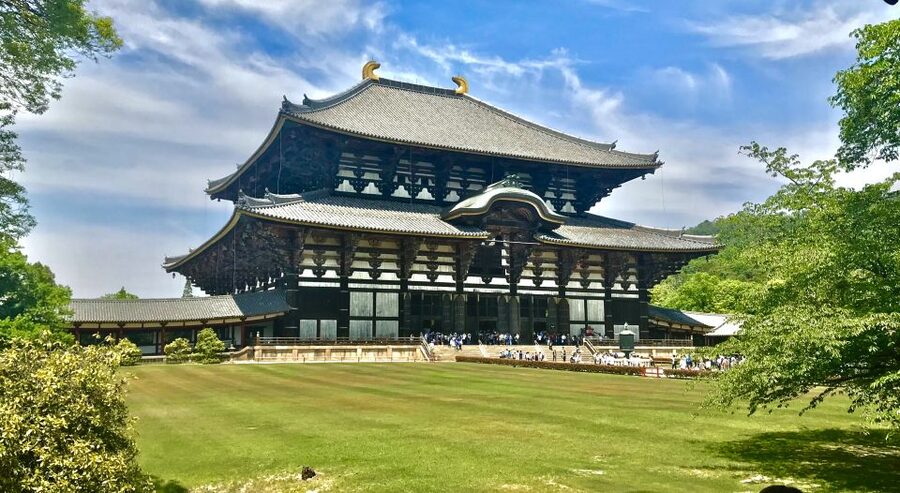
Todai-ji is the emotional high point of the tour. The temple houses the Great Buddha, an immense religious figure that makes the building feel almost too small around it. Even if you have seen large Buddhist statues elsewhere in Japan, the scale here is difficult to prepare for.
The one-hour stop allows time for a guided visit, photographs, walking, and wildlife viewing along the way. That combination matters because Todai-ji is not only an indoor temple visit. The approach and surrounding grounds are part of the experience, with deer appearing around the paths and open areas.
A Spanish-speaking guide can add useful context here. A large statue can impress you for a few minutes, but an explanation of its religious purpose, the temple’s place in Nara, and the design of the building helps turn the visit into something more lasting. This is one place where the guide’s role can justify part of the tour price.
The Todai-ji admission ticket is included. That is a clear benefit, although you should remember that the information provided only confirms this specific entrance ticket. The price should be judged mainly on the guide, the route, and this included admission, not on a package of many paid attractions.
Nigatsu-do and the higher view over Nara
After Todai-ji, the walk continues to Nigatsu-do, also called February Hall. The stop lasts about 30 minutes and includes a break, a guided visit, photographs, and views along the way.
Nigatsu-do offers a different experience from the Great Buddha hall. Instead of looking inward at a giant religious image, you look outward over Nara. The viewpoint gives you a broader sense of the city and the surrounding area. In spring, the cherry blossoms add another reason to linger.
I like this stop because it breaks up the temple interiors and gives your legs a short reset without taking you away from the historic setting. It also gives the guide room to explain how the buildings in the Todai-ji complex relate to one another.
The practical catch is that this is still a walking stop, not a leisurely coach viewpoint. You should expect paths and steps as part of the approach. The supplied information does not give a detailed accessibility plan, so you should not book it assuming the route can be adapted easily.
Tamukeyama Hachimangu, a quieter link in the route
The next section visits Tamukeyama Hachimangu for about 30 minutes. The stop includes a guided visit, sightseeing, walking, and wildlife viewing, with some areas passed along the way rather than explored at length.
This part helps the day feel like more than a greatest-hits march between Todai-ji and Kasuga Taisha. You get another religious site and another setting in which to notice the relationship between Nara’s temples, shrines, trees, and deer.
Because the stop is shorter and partly described as passing by, I would treat it as a contextual visit rather than a full, stand-alone attraction. You are unlikely to spend the same amount of time here as at Todai-ji. That is fine if your goal is to understand the area as a whole, but less ideal if you want a slow study of every building.
A completely different kind of day out:
- Osaka: Nara and Uji Day Trip with Deer Park and Hot Spring
★ 4.4 · 302 reviews - Kyoto/Osaka: Kinkakuji, Bamboo Forest, and Nara Deer Park
★ 4.4 · 265 reviews - Nara 6hr Private Tour with Government-Licensed Guide
★ 5.0 · 219 reviews - E-Bike Nara Highlights – Todaiji, Knives, Deer, Shrine
★ 4.8 · 186 reviews
Kasuga Taisha and its stone lanterns
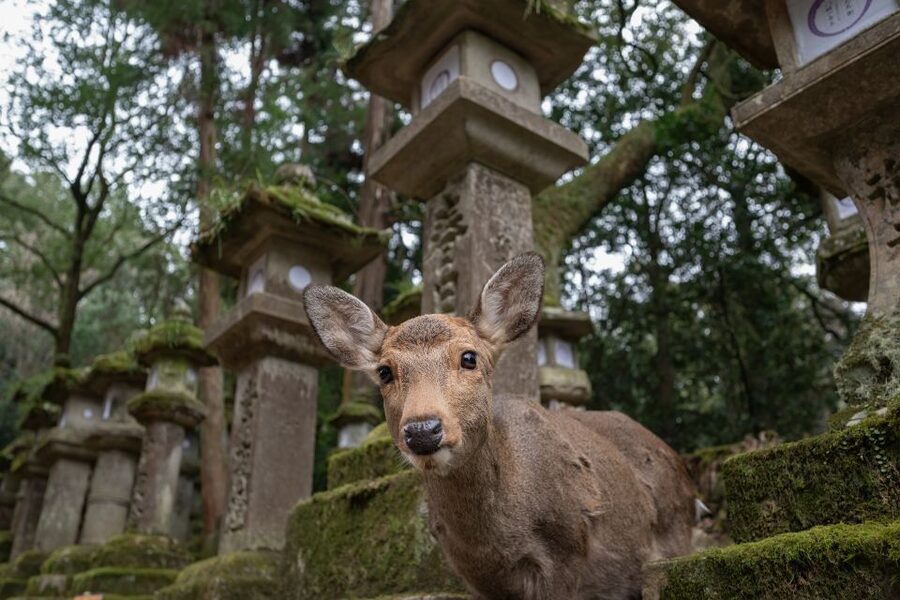
Kasuga Taisha is one of Nara’s most atmospheric stops. The shrine is known for its many stone lanterns and its forest surroundings, which create a quieter, more spiritual mood after the open spaces around Todai-ji.
The scheduled time is around 30 minutes. You walk with the guide, hear the story of the shrine, and have the chance to notice the lanterns and wooded setting. The word mystical fits this part of the route better than it does the busy approach to the Great Buddha.
I find the contrast valuable. Todai-ji gives you monumental architecture. Kasuga Taisha offers repetition, shadow, stone, and a closer feeling of being in a sacred woodland setting. The two sites show different sides of Nara’s religious identity within the same half-day.
The limitation is time. Thirty minutes is enough for an introduction and a look around, but not for a slow, detailed exploration of every section of the shrine grounds. If Kasuga Taisha is your personal priority, you may want to return independently after the tour.
Nara Park and the deer
Nara Park is where the human and animal parts of the visit meet. The deer are treated as divine messengers in Japanese culture, and they appear around the park and near the historic sites rather than being confined to a zoo-like enclosure.
The tour gives you about 30 minutes in the park for walking, sightseeing, and wildlife viewing. That may be enough to observe the deer at close range and take photographs, though the animals are not scheduled to perform anything. Their presence is part of the setting, and their behavior can be unpredictable in the ordinary way of wildlife.
You should approach them calmly and follow the guide’s instructions. The supplied details do not promise feeding, so I would not book this expecting a formal animal interaction. The real value is seeing how closely the deer are tied to the daily feel of Nara Park.
This section is also a good reason to keep your hands free and your shoes comfortable. You will be stopping, walking, looking up at buildings, and watching the ground at the same time. The combination is charming, but it rewards attention.
Ukimido and a quiet pond pause
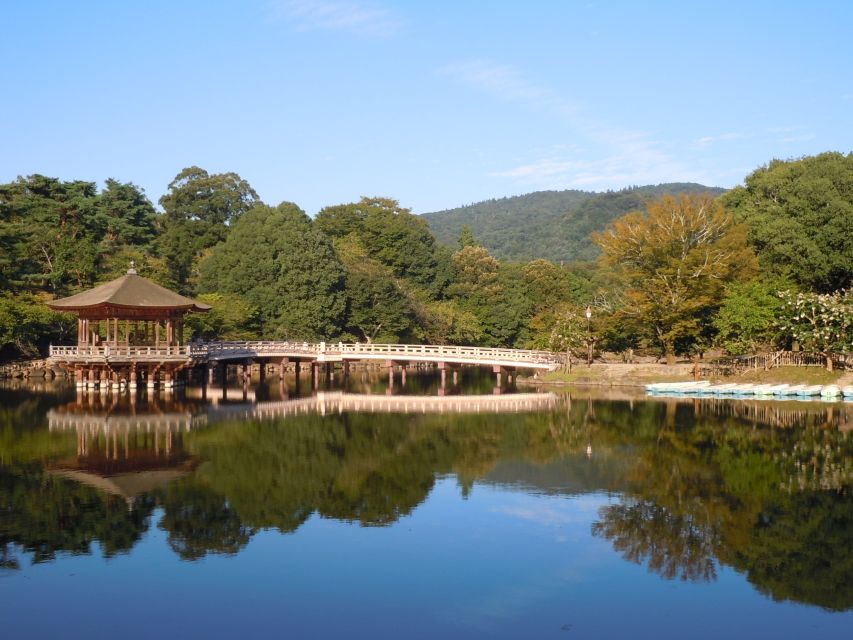
Ukimido is a small pavilion set in the middle of a peaceful pond in Nara Deer Park. The stop lasts about 30 minutes and includes a break, a photo stop, sightseeing, and scenic views.
After several temples and shrine paths, Ukimido gives you breathing room. The pavilion and water create a calmer picture of Nara, and the deer remain part of the wider park setting. This is a useful pause for anyone who likes to take photographs without standing in front of a major monument.
I would not expect a long rest here. The tour still has to reach Kofuku-ji and return to Kintetsu-Nara Station. Think of Ukimido as a short visual reset, not a café break or an extended free period.
The stop works particularly well for people who want variety in a guided day. You get architecture, water, trees, wildlife, and open views, all within a compact route.
Kofuku-ji and the five-story pagoda
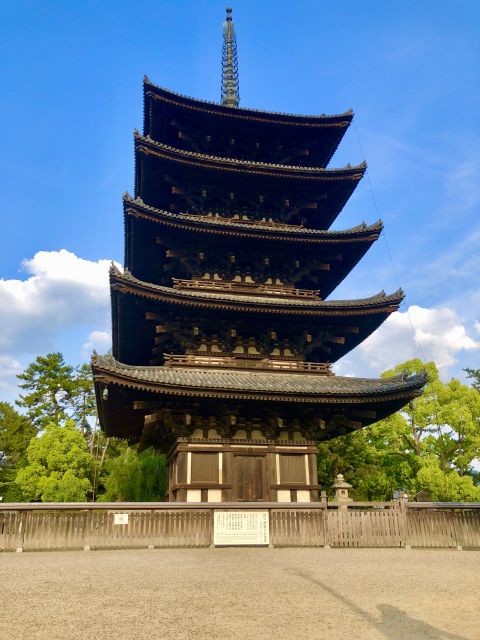
The final major sight is Kofuku-ji, a historic temple complex known for its five-story pagoda. The 30-minute visit includes a guided tour, walking, sightseeing, and a photo stop before the group heads back to the station.
The pagoda provides a strong final image because it is tall, elegant, and easy to recognize. After the massive Great Buddha and the forested shrine paths, Kofuku-ji brings the route back toward the city with a more open temple setting.
You will have time to learn about the site and see its gardens and older structures, but the schedule does not suggest a full museum-style visit. If you want to examine every building or spend a long time photographing the pagoda, the guided timetable may feel brisk.
Ending here also makes practical sense. The route does not finish at a remote temple. You walk back to Kintetsu-Nara Station, the same place where you met the guide.
What the $85 price really covers
At $85, the tour asks you to pay for more than admission. You are paying for a Spanish-speaking guide, a five-hour route, interpretation at seven named stops, and the convenience of seeing the main sights in a sensible order.
The included Todai-ji ticket is the clearest direct saving. The other value comes from the explanations. Nara’s sites can look beautiful even when you know little about them, but a guide helps connect the Great Buddha, Nigatsu-do, Tamukeyama Hachimangu, Kasuga Taisha, the deer, Ukimido, and Kofuku-ji into one story.
I would consider the price fair for you if Spanish is your preferred language and this is your main Nara visit. It is less compelling if you are comfortable exploring alone, already know the temples well, or want to spend most of the day at only one or two sites.
The rating is listed as 5 from 16 reviews. The strongest praise focuses on the guides rather than on a surprise feature of the route. Alex received specific approval for excellent work, Diego was described as making a day in Nara work perfectly, and Federico was praised for his enthusiasm for Japanese history. That pattern suggests the guide can make a major difference to the experience.
Who will enjoy this walking tour most
I would recommend this tour to you if you want:
- Spanish explanations at major Nara sights
- A structured half-day instead of planning each temple yourself
- The Great Buddha, deer, shrine lanterns, viewpoints, pond, and pagoda in one route
- A guide who can add historical context to famous places
- A straightforward meeting and return point at Kintetsu-Nara Station
You may want another option if you have mobility limits, need frequent transport, dislike walking for several hours, or prefer a slow visit with lots of unplanned time. The tour keeps moving because it covers many locations.
Families should also note the stroller restriction. The information does not provide a minimum age or special child arrangements, so you would need to judge the five-hour walk based on your own group’s stamina.
Practical tips for a better day
Wear shoes that can handle several hours of walking. Do not save your least comfortable pair for this outing, even if they look good in photographs.
Dress for movement and changing conditions. The route includes open park areas, temple grounds, shrine paths, a pond, and a viewpoint. Comfortable clothing will help you focus on the sights instead of your feet.
Keep your schedule flexible after the tour. The listed duration is five hours, but a walking route with photo stops and wildlife viewing can feel different from a timed museum visit. The return point is Kintetsu-Nara Station, which makes continuing your day easier.
If spring scenery matters to you, Nigatsu-do is the stop to watch. The information specifically highlights cherry blossoms there, though bloom timing is naturally not guaranteed.
The booking terms are useful for uncertain plans. You can reserve now and pay later, and cancellation is free up to 24 hours in advance for a full refund. Those policies do not change the walking demands, but they reduce the risk of committing too early.
Should you book the Nara Spanish guide?
I would book this tour if you want a well-organized introduction to Nara and Spanish commentary matters to you. The route covers the essential sights, includes Todai-ji admission, returns to the same station, and gives you both grand monuments and quieter places such as Ukimido.
I would skip it if you want complete freedom, a short outing, or a route designed around accessibility. Five hours on foot is the central fact to consider.
For most Spanish-speaking visitors making one focused visit to Nara, the combination of the Great Buddha, sacred deer, Kasuga Taisha, and Kofuku-ji offers solid value. The deciding factor is likely to be the guide. The positive feedback for Alex, Diego, and Federico suggests that a strong guide can turn a series of beautiful stops into a much more meaningful day.
FAQ
Where does the tour begin and end?
The tour begins at Kintetsu-Nara Station, exit 5, and returns to Kintetsu-Nara Station after the route.
How long does the experience last?
The experience lasts five hours.
Is the tour conducted in Spanish?
Yes. The activity includes a live Spanish-speaking tour guide.
Is the Todai-ji entrance ticket included?
Yes. The Todai-ji entrance ticket is included in the price.
Is the route completed on foot?
Yes. The entire route is completed on foot and involves some physical effort.
Can I cancel for a full refund?
Yes. You can cancel up to 24 hours in advance for a full refund.
Just added in Nara
- Hammer a Pattern on Your Ring Workshop★ 5.0 · 57 reviews
- All must-sees in 3 hours – Nara Park Classic Tour! From JR Nara!★ 5.0 · 108 reviews
- Nara Private Tour: Flexible Pickup from Kyoto, Osaka, or Nara★ 5.0 · 17 reviews
- Private Nara Tour and Sake Tasting (Departing from Kyoto/Nara)★ 5.0 · 40 reviews
- Nara Highlight Walking Tour with Furoshiki Experience with Lunch★ 5.0 · 73 reviews
- Nara Sake Tasting Tour at Local Brewerie(tasting fee included)★ 5.0 · 12 reviews
- Nara World Heritage PRIVATE TOUR★ 4.5 · 15 reviews
- Nara – Highlights Bike Tour★ 4.5 · 89 reviews
Nara Tours, compared.
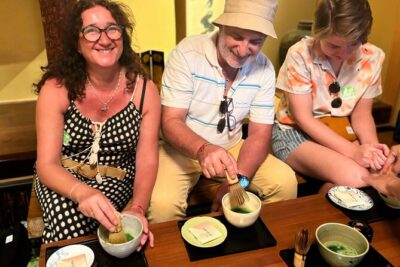
World Heritage Kyoto & Nara Uji Authentic Matcha Experience
Read our review →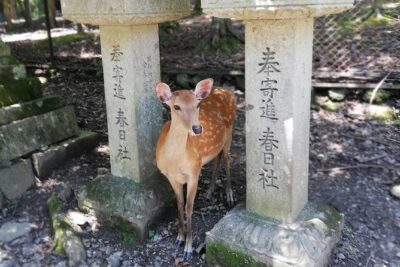
Nara Half Day Trip Walking Tour (Private Option Available)
Read our review →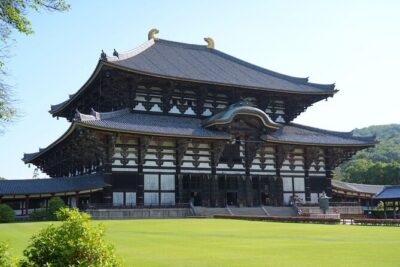
Nara Early Morning Tour (Kyoto or Osaka Departure Available)
Read our review →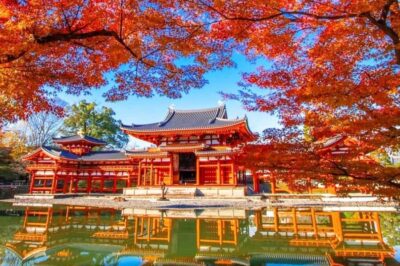
Nara and Uji Day Trip with Deer Park and Hot Spring
Read our review →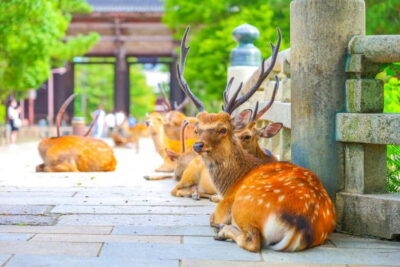
Kyoto/Osaka: Kinkakuji, Bamboo Forest, and Nara Deer Park
Read our review →
Nara 6hr Private Tour with Government-Licensed Guide
Read our review →
E-Bike Nara Highlights – Todaiji, Knives, Deer, Shrine
Read our review →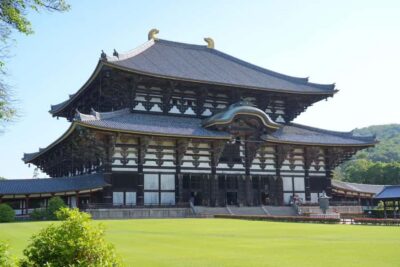
Nara Early Bird Tour (Kyoto Departure Option Available)
Read our review →Browse the lists this tour appears in