
Reviewed · CASTLES AND HISTORIC SITES
Osaka: Castle History Walking Tour / Castle Tower Admission
Osaka Castle makes more sense from the ground up. This 90-minute walking tour turns a famous photo stop into a lesson in military planning, showing you how moats, gates, walls, and firing points worked together. I like the way the guide explains the castle as a fighting machine, not just a bright white tower. I also like that your admission ticket is included, with access through a separate entrance.
The tour is especially strong when guides such as Mao, Spike, Saya, Kaz, Yuta, and Ken connect the stones and gates to the struggle between Toyotomi Hideyoshi’s heirs and Tokugawa Ieyasu. The main consideration is pace: you will walk through large castle grounds, and the tower museum itself is not guided floor by floor. You get the story and orientation, then explore the indoor exhibits on your own.
In This Review
- Key points at a glance
- Meeting at Lawson S Otemae Rest House Store
- Osaka Castle begins with moats, gates, and traps
- Stone walls that made climbing nearly impossible
- Hokoku Shrine and the Toyotomi connection
- Why Osaka Castle fell despite its defenses
- Entering the tower through a separate entrance
- The top-floor view is the reward
- What the $33 price really buys you
- Guide quality and group experience
- The best time and the practical drawbacks
- Who should book this Osaka Castle tour?
- FAQ
- How long does the Osaka Castle tour last?
- What is included in the price?
- Is the tour conducted in English?
- Where is the meeting point?
- Does the guide explain every floor inside the castle museum?
- Should I wear special clothing?
- Can I cancel the booking?
Key points at a glance

- The castle’s defenses come first: Triple moats, angled walls, zigzag routes, and masugata gates reveal how attackers were slowed and exposed.
- The largest stone has a practical story: You learn how enormous blocks were moved in the 16th century and how craftsmen marked their work.
- The tower provides the payoff: After the guided approach, you reach the top for wide city views.
- Hokoku Shrine adds a personal connection: The shrine helps explain the lasting importance of Toyotomi Hideyoshi.
- Skip-the-line access saves useful time: A separate entrance can matter greatly when the castle is busy, especially later in the morning.
- The guides are the main value: English-speaking guides explain details you could easily walk past alone.
Meeting at Lawson S Otemae Rest House Store
Your meeting point is in front of Lawson S Otemae Rest House Store, near Osaka Castle. This is important: there are several Lawson stores in the area, so check Google Maps carefully before setting out. The meeting point is marked by a Local Guide Stars sign.
Once you meet the guide, the tour begins outside the main tower area rather than inside the museum. That is a smart arrangement. You first learn how the castle was designed, then see the tower as the final piece of a much larger defensive system.
Wear comfortable shoes and dress for the weather. The walk crosses outdoor historical sites, moats, stone paths, gates, and open grounds. The tour is not presented as a strenuous hike, but standing and walking are central to the experience.
More Castles and Historic Sites in Osaka
- Osaka Castle Ticket
★ 4.7 · 12,450 reviews - Osaka Castle: Museum and Tower Entry Ticket
★ 4.5 · 2,380 reviews - Ultimate Osaka Walking Tour: Castle, Dotonbori & Hidden Gems
★ 5.0 · 862 reviews
Osaka Castle begins with moats, gates, and traps
The first part of the walk explains why Osaka Castle was so difficult to attack. You see the outer moats and the layered defenses that forced an enemy to advance slowly, change direction, and divide into smaller groups.
The triple-moat system is one of the clearest examples. A moat was not simply a ditch filled with water. It created distance between the attacker and the wall, restricted movement, and gave defenders time to respond. From the ground, you can better understand how much space an attacking force had to cross before reaching the inner defenses.
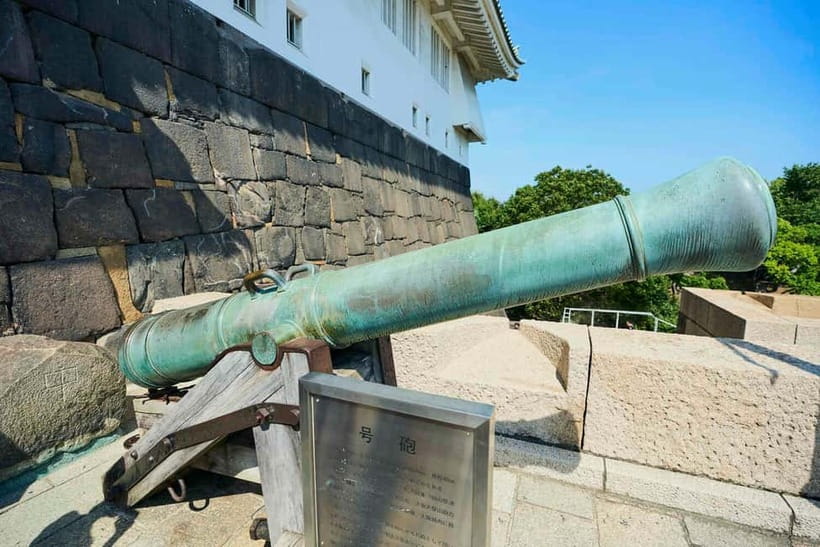
The guide also points out the castle’s multi-layered gates. Many visitors see a gate as an entrance. Here, you learn to see it as a controlled killing zone. The masugata entrance used a squared-off layout that forced attackers into a confined space before they could reach the next gate. Defenders could watch and fire from several directions.
The route itself makes the idea easier to grasp. Instead of moving directly toward the tower, you follow paths that turn and redirect you. In wartime, those zigzagging approaches would have delayed an invading force and made it harder to keep formation.
This is where a guide earns the admission price. Plaques can name a gate or wall, but they do not always explain why the route bends or why a second gate sits behind the first. You are given a way to read the site.
Stone walls that made climbing nearly impossible
Osaka Castle’s stonework deserves more attention than the glittering tower usually receives. The walls were built at angles that made them hard to climb. Their lower sections slope outward, leaving an attacker with little purchase, while the scale of the blocks added another obstacle.
The guide discusses the marks left by master craftsmen. These symbols and cuts may look like random scratches until you know to search for them. They helped identify the work of different groups involved in shaping and placing the stones.
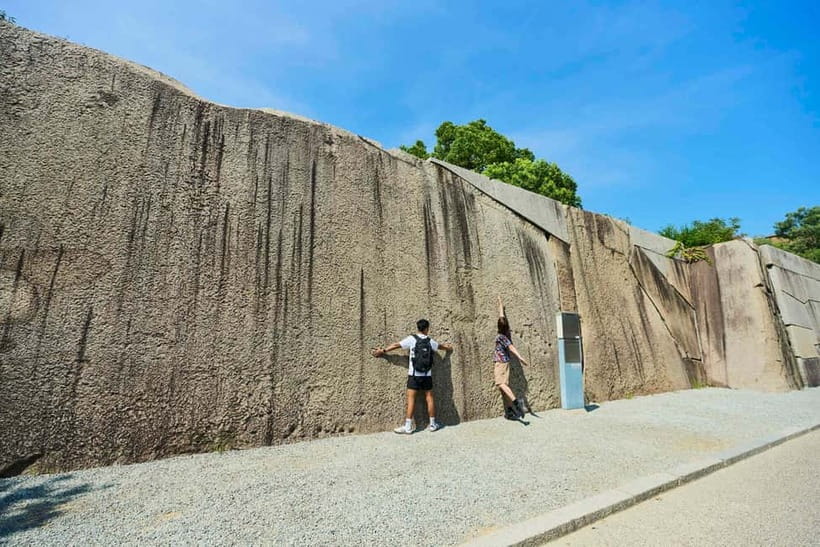
One of the most memorable stops is the castle’s largest stone. It is a useful moment to pause and consider the problem faced by 16th-century builders. There were no modern cranes or heavy trucks, yet huge blocks had to be quarried, moved, lifted, and set into a precise wall.
You learn about the transport methods used at the time. The point is not simply that the stone is large. It is that the stone represents organization, labor, planning, and political power. A ruler who could command the movement of such material could also signal control over a wide territory.
I would pay close attention here, even if you are not a specialist in Japanese architecture. The stone walls are among the least appreciated parts of the visit, and the guide helps turn them into something readable.
Hokoku Shrine and the Toyotomi connection
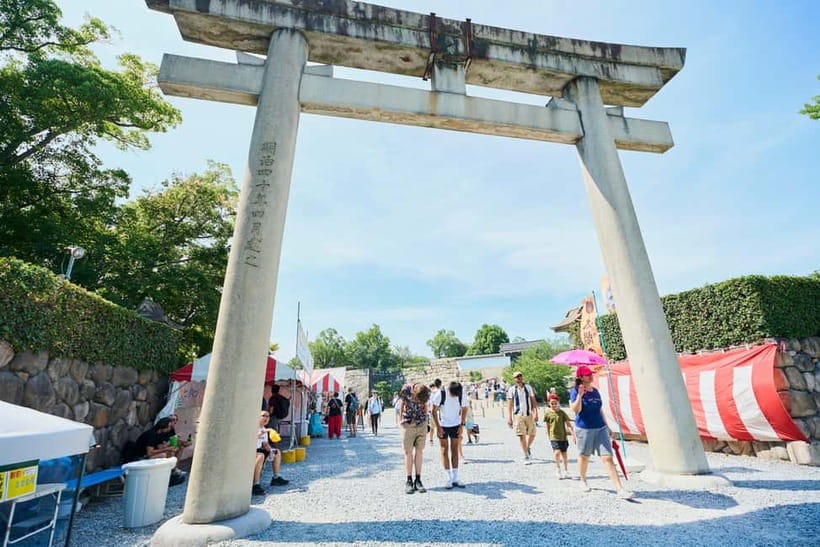
The route includes a guided stop at Hokoku Shrine. The shrine is tied to Toyotomi Hideyoshi, the warlord associated with the original Osaka Castle and with the political ambitions that shaped the site.
This stop gives the tour a useful change of mood. The castle grounds focus on defense and warfare, while the shrine brings attention to memory, loyalty, and the way historical figures are honored. The guide can connect the shrine to the wider story of Osaka and to the legacy that continued after Hideyoshi’s death.
The timing at the shrine may also bring an unexpected cultural moment. One tour group encountered a traditional Japanese wedding ceremony during the visit, though that is not a promised feature. Treat such an event as luck, not part of the advertised program.
The shrine is not the longest stop, but it helps keep the castle from becoming only a lesson in walls and weapons. You get a sense of the people and political loyalties behind the construction.
More Walking Tours in Osaka
- Osaka: Hotspots & Hidden Gems Walking Tour Private or Group
★ 4.9 · 1,300 reviews - Osaka Local Foodie Walking Tour in Dotonbori and Shinsekai
★ 5.0 · 985 reviews - Osaka Bar Hopping Night Walking Tour in Namba (3 bars, 6 tastes)
★ 5.0 · 958 reviews - Osaka: Deep Backstreets Walking Tour with Dinner Option
★ 4.9 · 902 reviews
Why Osaka Castle fell despite its defenses
The central historical question is how a fortress described as invincible could fall. The answer comes through the Osaka campaigns of 1614 and 1615.
The castle was closely linked to Toyotomi Hideyoshi’s legacy, while Tokugawa Ieyasu sought to secure his own rule and remove a rival claim to power. The conflict was not only about one building. It was about who would control Japan after years of warfare and political uncertainty.
The first campaign in 1614 weakened the castle’s position. The final campaign in 1615 brought the Toyotomi cause to an end. That turn in the story gives the defenses a sharper meaning. The moats and walls were formidable, but military strength alone could not guarantee survival when alliances, strategy, and political pressure changed.
This is one of the tour’s best themes. You are not simply told that Osaka Castle was strong. You are encouraged to ask what strength could and could not accomplish. A powerful fortress could delay an enemy, but it could not settle a succession struggle forever.
Guides vary in personality, but the strongest examples in the group have been clear, warm, and willing to answer questions. Ken has been praised for explaining difficult historical details patiently, while guides such as Mao and Saya are noted for making the story accessible and lively. If you enjoy asking questions, this tour gives you more room than a self-guided visit.
Entering the tower through a separate entrance
The tower visit comes after the outdoor explanation, so you arrive with a better sense of what the building represents. The included Osaka Castle Tower admission ticket is handled through a separate entrance, allowing you to avoid the standard line.
That benefit can be significant. One visitor who took the 9 a.m. tour reported that the lines were much longer by the time the group left around 11 a.m., including the wait connected with the elevator. Timing is not guaranteed to produce the same result every day, but an early start is a sensible choice if you want to avoid heavier crowds.
Inside, the tower functions as a museum and viewpoint. The tour explains the building as a command post and final defense, with arrow slits and gun ports built into the military design. Gold decoration had a practical psychological role as well. It projected wealth and power to anyone approaching the castle.
The tower is a reconstruction, and the indoor displays present history through museum exhibits rather than through a preserved medieval interior. You should not expect every floor to be explained by the guide. The guide leads you into the tower and provides the larger context, but the individual floors are for self-guided exploration.
That arrangement suits many people. You receive a clear explanation outdoors, then move through the museum at your own speed. If you want a floor-by-floor museum lecture, this is not that kind of tour.
The top-floor view is the reward
The final climb leads to the observation level, where Osaka spreads out below you. The city view is a welcome reward after the walls, gates, and military details.
The view also helps you understand the castle’s original purpose. From above, the relationship between the tower, open grounds, moats, and surrounding city becomes easier to picture. The castle was not placed in isolation. Its position allowed commanders to observe approaches and control a strategic center.
Allow time for photos at the top. The guided portion may finish around the tower, leaving you able to look around on your own afterward. This is helpful if you want to read displays, take pictures, or simply enjoy the view without keeping a group together.
The tower can be busy, especially later in the morning. The separate entrance helps, but it does not mean the entire building will feel quiet. Your guide can get you through the access point more efficiently, but indoor crowd levels may still vary.
What the $33 price really buys you
At $33 per person, this is not the cheapest way to enter Osaka Castle. The value depends on how much you want from the visit.
If you only need a tower photo and a city view, visiting independently may be enough. The ticket included with the tour is useful, but the main purchase is the interpretation. You are paying for an English-speaking guide who explains why the walls angle outward, how attackers were trapped, what the stone marks mean, and how the Toyotomi and Tokugawa conflict shaped the castle’s fate.
The separate entrance adds practical value on busy days. Saving time in a long admission line can be worthwhile during a short Osaka stay, particularly if you have other plans nearby.
The strongest value comes if you are interested in military strategy, architecture, or Japanese political history. Families can also benefit when the guide uses stories and visible details rather than a long lecture. A three-year-old remained engaged for the full experience on one occasion, while teenagers also enjoyed a well-paced visit with several stops.
The experience may be less useful if you dislike guided groups or prefer to spend a long time inside the museum. The tour lasts 90 minutes, and the schedule is built around the major outdoor features and the tower visit, not a slow examination of every exhibit.
Guide quality and group experience
The guides are central to the tour’s success. Names that appear repeatedly in the experience include Mao, Spike, Saya, Kaz, Yuta, Ken, Yu, Ami, Kat, and Sayaka. Their styles differ, but the strongest pattern is friendly English delivery, clear explanations, and a willingness to adjust to the group.
Spike has been praised for keeping people comfortable and safe, including an older member of one group. Kaz has adjusted the walk for a family member recovering from an injury. Yu has made room for photos and rest while keeping the historical explanation moving.
Small groups can feel especially personal. Several people have found themselves in groups of one or only a few participants, creating something close to a private walk. That will depend on the date and bookings, so do not count on it. Still, the possibility is a pleasant bonus.
The guides also help with orientation beyond the basic route. One guide offered useful suggestions for what to do after the tour. That kind of local advice can make the experience feel less like a fixed script, although it is not a guaranteed inclusion.
The best time and the practical drawbacks
An early start, especially around 9 a.m., is worth considering. It may help you reach the tower before lines grow and leaves more of the day available for Osaka. It can also make the outdoor walk more comfortable in warm weather, though the tour information does not promise a particular crowd level.
The main drawback is that the activity combines outdoor walking with a tower visit. You need shoes suited to walking and clothing suitable for the weather. If you have limited mobility, tell the guide as early as possible. The guides have shown care with mobility needs, but the route includes historical grounds, gates, paths, and changes in pace.
The meeting point deserves attention. A wrong Lawson store could create needless stress, so confirm the exact location in Google Maps and look for the Local Guide Stars sign.
The tour is in English only. That is ideal for English-speaking visitors who want live explanation, but it will not suit anyone seeking a multilingual experience.
Who should book this Osaka Castle tour?
I recommend this tour if you want to understand Osaka Castle rather than simply photograph it. It is a particularly good fit for first-time visitors, history buffs, families who benefit from storytelling, and anyone curious about fortification design.
Book it if the largest stone, hidden craftsman marks, layered gates, and the 1614 to 1615 campaigns sound more interesting than a quick museum visit. The tour gives you a framework, and that framework makes the rest of the castle easier to appreciate.
Skip it if you prefer complete independence, want to study every museum floor at length, or already know the castle’s military and political story well. You will still get the admission ticket and view, but the guided explanation is the reason to pay $33.
For most visitors, I would choose an early departure. You get the defenses before the tower, the shrine and historical context along the way, and a better chance of reaching the museum before the longest lines. The guides, not just the ticket, are what make this a worthwhile introduction to Osaka Castle.
FAQ
How long does the Osaka Castle tour last?
The experience lasts 90 minutes. It includes a guided walk through Osaka Castle, a stop at Hokoku Shrine, and access to the castle tower.
What is included in the price?
The $33 price includes admission to Osaka Castle Tower and a professional English-speaking guide.
Is the tour conducted in English?
Yes. The live tour guide speaks English, and English is the listed tour language.
Where is the meeting point?
Meet in front of Lawson S Otemae Rest House Store. There are multiple Lawson stores nearby, so confirm the exact location on Google Maps and look for the Local Guide Stars sign.
Does the guide explain every floor inside the castle museum?
No. Guided tours of each museum floor are not included. The guide explains the castle and leads you through the main experience, while the museum floors can be explored independently.
Should I wear special clothing?
Wear comfortable shoes and clothing suitable for the weather. The tour involves walking through outdoor historical areas.
Can I cancel the booking?
You can cancel up to 24 hours in advance for a full refund. A reserve now and pay later option is also available.
More Castles and Historic Sites in Japan
- Tokyo: Samurai Restaurant Show Ticket with 2 Drinks
★ 4.5 · 1,307 reviews - Kyoto Samurai Experience
★ 5.0 · 1,294 reviews - Tokyo Castle & Imperial PalaceーShogun Walking Tour
★ 4.7 · 1,068 reviews - Kyoto: Nijo-jo Castle and Ninomaru Palace Guided Tour
★ 4.7 · 1,020 reviews
More Walking Tours in Japan
- Kyoto Geisha Walking Tour: Gion District & Hidden Gems
★ 4.7 · 3,273 reviews - Tokyo Tsukiji Fish Market Food and Culture Walking Tour
★ 5.0 · 3,184 reviews - Kyoto: Gion Magical Night Walking Tour with Geisha Trivia
★ 4.9 · 2,393 reviews - Tokyo: Imperial Palace and Shogun Historical Walking Tour
★ 5.0 · 2,251 reviews
Just added in Japan
- A One-of-a-Kind Sushi Experience in a Special Place of Japan★ 5.0 · 15 reviews
- Tokyo Cute Bento Cooking Class – Make a Kawaii Character Lunchbox★ 5.0 · 126 reviews
- Japanese Home Cooking Class & Walk in Todoroki Temple Tokyo★ 5.0 · 88 reviews
- Japan Tokyo Tower Observatory Deck E-Ticket★ 4.0 · 34 reviews
- Catch a Baseball Game in Tokyo with a Local – Tickets Included★ 5.0 · 24 reviews
- JDM Experience with Fast&Furious RX-7 (English speaking Driver)★ 5.0 · 57 reviews
- Tokyo Private Day Tour by Car with English speaking Driver Guide★ 4.0 · 29 reviews
- Japan Classic 10 Day – One Life Adventures★ 5.0 · 129 reviews
Castles and Historic Sites, compared.

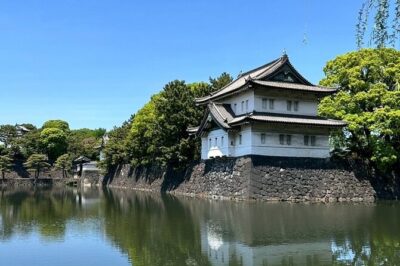
Imperial Palace and Shogun Historical Walking Tour
Read our review →
Tokyo Castle & Imperial PalaceーShogun Walking Tour
Read our review →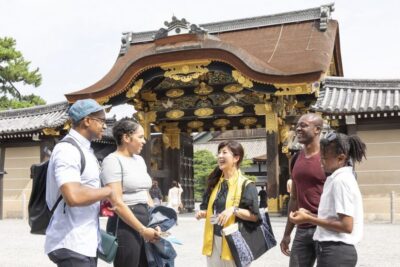
Nijo-jo Castle and Ninomaru Palace Guided Tour
Read our review →
Samurai Ninja Museum Guided tour and Experience
Read our review →Browse the lists this tour appears in