
Reviewed · COOKING CLASSES
Popular Sushi Making Class near Tokyo Tower
Sushi tastes better when you make it yourself. This 90-minute class in Higashiazabu gives you a hands-on introduction to sushi with an English-speaking chef, fresh fish, and a meal at the end. I especially like the step-by-step instruction and the chance to dress in kimono-style clothing for photos. The class is also close to Tokyo Tower, which makes it easy to pair with sightseeing. The main drawback is the price: at $87.55 per person, it costs more than simply eating sushi at a casual restaurant.
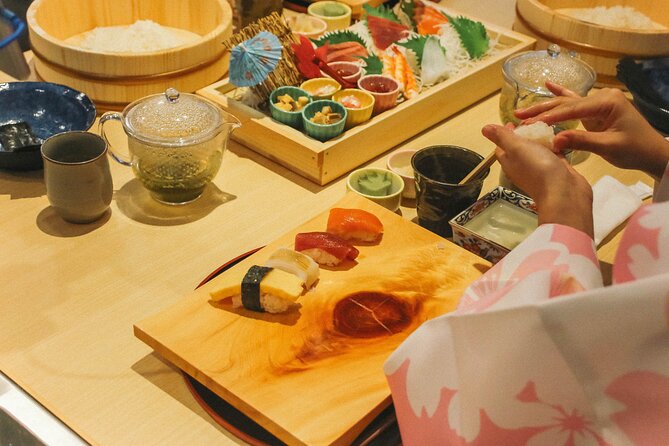
You make sushi with ingredients such as salmon, tuna, and other seafood, then eat what you prepare. A short video plays beside your seat, while the chef demonstrates the proper way to shape rice and place the fish. I like that the lesson is simple enough to repeat at home, though one or two people found the instruction harder to follow because of language differences or uneven preparation during busy periods.
The class takes place at 1-chōme-6-8 Higashiazabu, near Tokyo Tower, and returns to that same meeting point. It operates throughout the day, accepts mobile tickets, and allows up to 14 people. Families, couples, first-time visitors, and anyone who wants a practical food activity will find plenty to enjoy here.
In This Review
- Key points to know before booking
- What the 90-minute sushi class is really like
- Making sushi with salmon, tuna, and prepared rice
- The chefs and English instruction
- Kimono costumes, samurai props, and photo time
- Building a Tokyo Tower day around the class
- Is $87.55 good value?
- Dietary needs, children, and practical planning
- Who should book this sushi experience?
- Should you book it?
- FAQ
- Where does the sushi-making class take place?
- How long does the experience last?
- Is the class taught in English?
- What sushi ingredients will I use?
- How much sushi will I make?
- Can children join the class?
- Are vegetarian, vegan, or gluten-free options available?
- Can I wear traditional clothing during the class?
- How many people can join the class?
Key points to know before booking
- You make and eat your own sushi: The food is not just a demonstration. You prepare the pieces yourself, then sit down to eat them.
- English instruction is provided: The chef demonstrates each step, and you can also follow a short video beside your seat.
- Tokyo Tower is within easy reach: The Higashiazabu location works well before or after seeing Tokyo Tower, Zojo-ji, or Shiba Park.
- Costumes and photos add a cultural touch: Kimono-style clothing, samurai swords, ring-light photos, and a video may be available for playful pictures.
- The class suits children: Children from age four are charged, and younger children may share a dish with an older participant.
- Dietary requests need advance notice: Vegetarian, vegan, and gluten-free options are available if requested ahead of time. Allergies should also be reported before the class.
What the 90-minute sushi class is really like
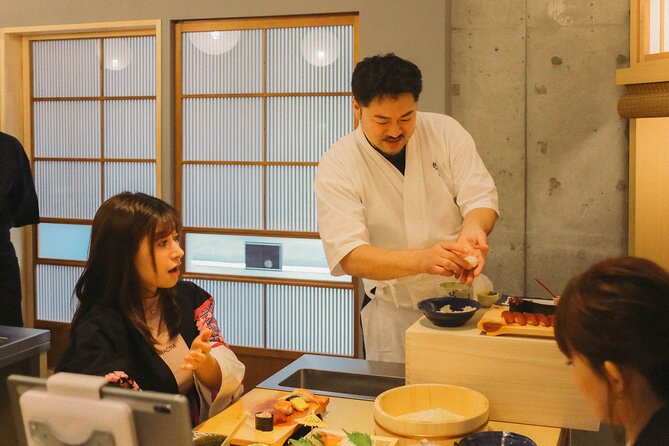
This is a compact food lesson rather than a long cooking course. You arrive at the Higashiazabu meeting point, sit at your station, and prepare sushi under the chef’s direction. The format is designed for visitors who want a cultural activity without giving up half a day.
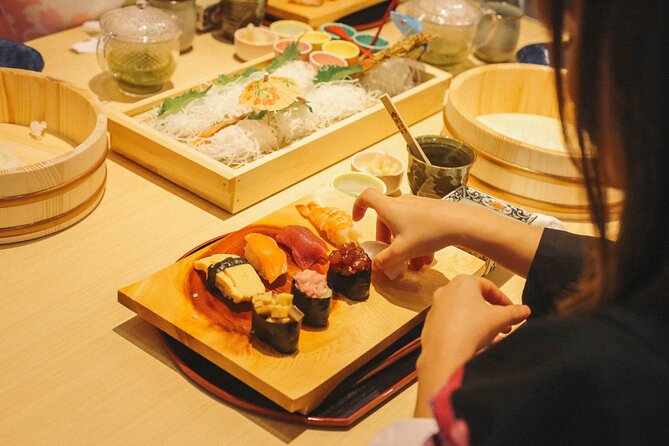
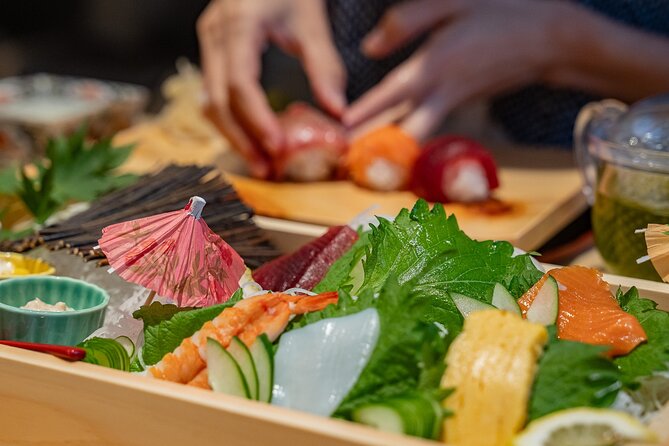
The chef first shows you how the pieces should be assembled. The focus is on sushi rice, shaping, and placing the topping correctly. Salmon and tuna are among the ingredients used, along with other items that may be prepared for the session.
You are not left to guess what comes next. The chef demonstrates a technique, then you copy it at your own place. Some sessions also include helpers who can give individual attention, which is useful if you are traveling with children or have never handled sushi rice before.
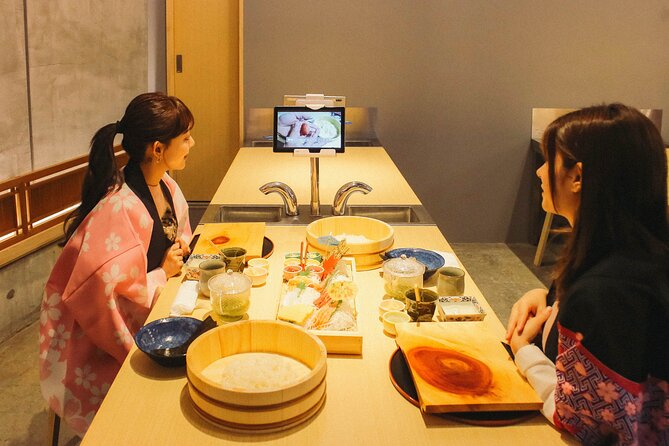
A short video instruction plays beside your seat. It is useful as a visual reminder, but it is only brief, so the live demonstration matters more. If you learn best by watching and copying, the format should feel approachable. If you want a detailed lecture on sushi traditions, fish sourcing, knife skills, or rice preparation, this class may feel basic.
The pace can vary. The stated duration is about 1 hour and 30 minutes, while one account described finishing in about an hour. That difference may depend on the group, the amount of food prepared, and how busy the venue is. Plan for roughly 90 minutes, but avoid scheduling something that begins immediately afterward.
More Cooking Classes in Tokyo
- Sushi Making Tokyo Roll and Authentic Japanese Sushi Class
★ 5.0 · 3,971 reviews - Tokyo: Roll and Authentic Sushi Making Class in Asakusa
★ 4.9 · 1,957 reviews - Tokyo Shinjuku Chopsticks Making Class
★ 5.0 · 1,763 reviews
Making sushi with salmon, tuna, and prepared rice
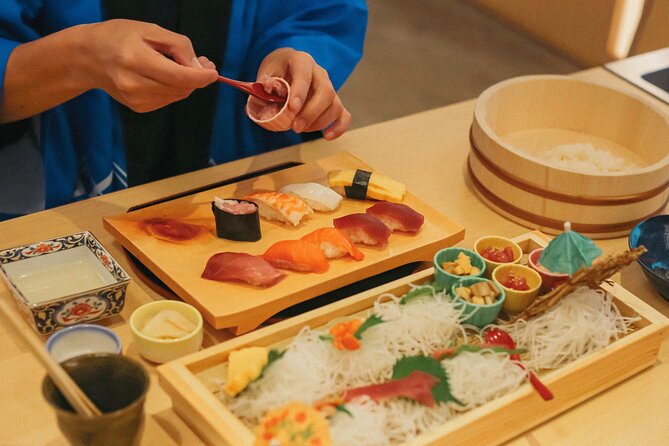
The appeal here is the simple, hands-on method. You learn how to form the rice and place the fish so each piece looks and holds together properly. One particularly useful lesson is how much rice to use and how to roll it without crushing it.
That simplicity is a strength. You can take the basic method home and try it again without needing a professional kitchen. The class is not trying to turn you into a sushi chef in one sitting, but it can make restaurant sushi feel less mysterious and home preparation less intimidating.
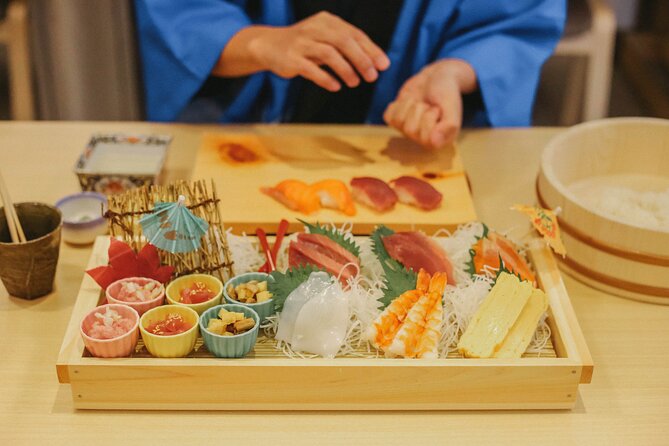
The food portion is generous enough to replace a light lunch for many people. Comments describe portions ranging from about eight pieces to 10 or 12 pieces, so the exact amount may differ. You should arrive ready to eat, especially if you schedule the activity around lunchtime or dinner.
Food quality received mostly warm praise, with fresh fish and good-tasting rice singled out often. Still, the experience is not completely uniform. One person found the fish disappointing and the rice too firm. That is worth keeping in mind if your main reason for booking is a high-end sushi meal rather than the activity itself.
This is best viewed as a lesson with a meal attached, not as a substitute for an omakase dinner. You are paying for the instruction, setting, cultural elements, and interaction, as well as the ingredients.
The chefs and English instruction
The staff is one of the class’s strongest points. Keiko is praised for a warm welcome and patient teaching, while Yuki is described as encouraging and friendly. Mickie receives particular praise for showing each piece step by step and explaining the assembly clearly.
The class is conducted in English, making it practical for international visitors. The chef also answers questions about ingredients and chats about Japan and the countries participants come from. That personal contact gives the class more life than simply watching a pre-recorded cooking demonstration.
English ability may vary from one session to another. One person found the instructions somewhat difficult to follow because of a language barrier. You can reduce that risk by watching the chef’s hands closely and using the video as a second visual guide.
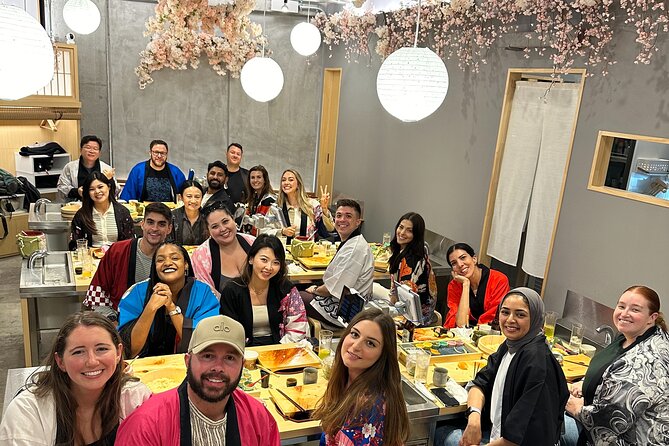
The class may seat you with other customers when the venue is busy. With a maximum of 14 people, it is not a private lesson unless your own booking fills the group. That shared format can be pleasant for families and couples who like a social activity, but less appealing if you want quiet, individual instruction.
Kimono costumes, samurai props, and photo time
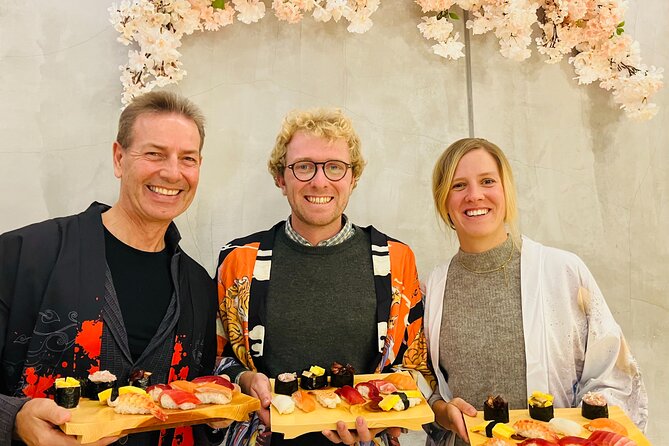
The dress-up element is more than a passing novelty. Several accounts describe wearing kimono-style clothing, holding samurai swords, and posing with a bright ring light. The staff may also take photos and create a video of the experience.
For families, this can be a big part of the fun. Children get a visual memory of the class, not just a plate of food. Couples may also enjoy the photos, especially if they want something more personal than another picture in front of a famous landmark.
The costumes do not replace the cooking lesson. They are an added cultural and photographic feature, and the amount of time devoted to them may vary. If you are mainly interested in sushi technique, treat the dress-up portion as a bonus rather than the reason to pay the admission price.
The setting itself is repeatedly described as clean, pleasant, beautiful, and well organized. Individual work stations put the ingredients and tools within reach, which helps keep the lesson moving. A clean teaching space matters when you are handling ready-to-eat seafood, and the positive comments on organization are reassuring.
A completely different kind of day out:
- Tokyo Disney Resort – Tokyo Disneyland & Tokyo DisneySea Park Tickets
★ 4.8 · 99,488 reviews - SHIBUYA SKY Ticket
★ 4.7 · 46,509 reviews - JR Whole Japan Rail Pass
★ 4.8 · 29,150 reviews - Mt Fuji and Hakone 1-Day Bus Tour Return by Bullet Train
★ 5.0 · 26,383 reviews
Building a Tokyo Tower day around the class
The meeting point is in Higashiazabu, close to several major Tokyo sights. The sushi class does not transport you from landmark to landmark. It begins and ends at the Higashiazabu address, so you should plan the nearby sights on your own before or after the meal.
Here is how the listed area highlights can fit into your day:
- Tokyo Tower: This is the most natural pairing. The tower gives you a familiar Tokyo view and is close enough to make the class a convenient food stop. One useful tip is to visit Tokyo Tower at night after the class, when the illuminated structure creates a very different scene.
- Zojo-ji: This major Buddhist temple sits near Tokyo Tower and gives you a calmer change of pace. Combine it with the class if you want both traditional religious architecture and a modern food activity.
- Azabujuban: This neighborhood is known for shops and places to eat. It makes sense as a wandering area before or after sushi, though you should allow time to find the meeting point rather than relying on a rushed walk.
- Shiba Park: The park offers open space around the Tokyo Tower area. It is a good place to walk off a large serving of sushi, particularly if you are traveling with children.
- teamLab Borderless Tokyo at Azabudai Hills: This digital art attraction is another nearby-area option, but it is a separate admission and experience. Do not assume the sushi booking includes entry.
- Azabudai Hills: The newer development provides shopping, dining, and city views. It can be paired with the class, but plan the timing carefully because the sushi session itself may last the full 90 minutes.
- Hamarikyu Wharf: This waterfront area is farther from the class than the nearby Higashiazabu sights. It is better treated as part of a wider Tokyo day, not as a quick stop between the class and Tokyo Tower.
- Tokyo City View at Roppongi Hills: This observation deck offers another way to see the city. It is a separate attraction in Roppongi, and you will need your own transport or walking plan.
- The National Art Center, Tokyo: The museum is a solid cultural addition to a Roppongi day. It is not part of the sushi lesson, so leave enough time for its exhibitions and opening schedule.
- Roppongi: The nightlife and restaurant district can work before or after the class. It is a useful choice if you want to continue your evening nearby rather than crossing Tokyo after dinner.
The best pairing is probably Zojo-ji, Shiba Park, Tokyo Tower, and the sushi class. These sights are geographically sensible and give you a good mix of temple, park, landmark, and food.
Is $87.55 good value?
At $87.55 per person, this is not a bargain meal. You can buy sushi more cheaply in Tokyo, often with no booking and no lesson. The price makes more sense when you count the chef’s instruction, the prepared ingredients, the cultural dress-up, the photo opportunities, and the fact that the food you make becomes your meal.
I would consider it fair value for a visitor who wants an organized activity and does not have access to a kitchen. It also offers a clear advantage over a restaurant meal for families. Children can take part, follow the chef, wear costumes, and eat what they made. Several families found the format particularly successful for children between roughly seven and 15.
For serious food lovers, the calculation is different. If you already know sushi well, the lesson may be too elementary. If you are expecting premium fish or a refined restaurant experience, the price may feel high. The best reason to book is the combination of instruction and entertainment, not the promise of the city’s finest sushi.
The class can also replace a meal, which softens the cost. It is better value when you schedule it at lunch or dinner rather than paying for a separate meal soon afterward. Portions are described as substantial, and you can reportedly ask for more rice during the preparation.
Dietary needs, children, and practical planning
You must tell the provider about allergies in advance. Vegetarian, vegan, and gluten-free versions are available, but a request made on the day may not be possible. This is especially important for a sushi activity, where ingredients and sauces need to be prepared before you arrive.
Children age four and older are charged. Children under four may share a dish with an older participant, according to the provided information. Since the activity involves several steps and a fair amount of food, it is a better fit for children who can sit, watch demonstrations, and follow simple instructions.
The location is near public transportation, and confirmation is provided at booking. A mobile ticket keeps the arrival process simple. Still, I would arrive with enough time to find 1-chōme-6-8 Higashiazabu, particularly if you are navigating Tokyo for the first time.
The group limit is 14 people. You may share a table or seating area with other customers when demand is high. The class is therefore intimate enough for instruction, but not guaranteed to be private.
You can cancel for a full refund up to 24 hours before the start time. Inside that window, the payment is not refunded and changes are not accepted. If you are building a complicated Tokyo schedule, this deadline is worth noting before you book.
Who should book this sushi experience?
I would recommend it most strongly to first-time visitors, families, couples, and people who enjoy learning through food. It is also a good choice if you want a planned activity near Tokyo Tower and prefer something more active than another sightseeing stop.
Home cooks will appreciate the practical lesson. The techniques are simple enough to repeat, and the class gives you a better sense of how sushi rice and fish should be handled. Even if your homemade pieces look uneven, you still get to eat them, which is a forgiving way to learn.
I would be more cautious if you are on a tight budget, have advanced sushi skills, or want a quiet fine-dining meal. The class can feel basic, and the fish or rice may not satisfy every palate. Busy sessions and occasional language difficulties are also possible.
Should you book it?
Book this class if you want to make your own meal, learn a few useful techniques, and leave with photos near Tokyo Tower. The friendly English-speaking staff, clean space, costume options, and child-friendly format give it broad appeal.
Skip it if your priority is the lowest-cost sushi in Tokyo or a sophisticated tasting menu. At $87.55, the value comes from the full experience. Schedule it around lunch or dinner, request dietary accommodations early, and leave time afterward for Tokyo Tower and Zojo-ji.
FAQ
Where does the sushi-making class take place?
The class meets at 1-chōme-6-8 Higashiazabu, Minato City, Tokyo 106-0044, Japan. It ends back at the same meeting point.
How long does the experience last?
The stated duration is approximately 1 hour and 30 minutes. One account described a shorter session, so avoid scheduling another activity immediately afterward.
Is the class taught in English?
Yes. A Japanese sushi chef teaches the class in English, and a short video instruction is also available beside your seat.
What sushi ingredients will I use?
The class includes ingredients such as salmon, tuna, and other items. You prepare the pieces yourself and eat them afterward.
How much sushi will I make?
The amount can vary. Descriptions include approximately eight pieces and, in another account, about 10 to 12 pieces. You should plan to arrive hungry.
Can children join the class?
Yes. Fees apply from age four. A child under four may share a dish with an older participant, according to the provided information.
Are vegetarian, vegan, or gluten-free options available?
Yes, but you must request them in advance by message. Requests made on the day may not be possible.
Can I wear traditional clothing during the class?
The experience may include kimono-style clothing and photo props such as samurai swords. Staff may also take photos and make a video.
How many people can join the class?
The maximum group size is 14 people. Depending on how busy the venue is, you may be seated with other customers.
Just added in Tokyo
- A One-of-a-Kind Sushi Experience in a Special Place of Japan★ 5.0 · 15 reviews
- Tokyo Cute Bento Cooking Class – Make a Kawaii Character Lunchbox★ 5.0 · 126 reviews
- Japanese Home Cooking Class & Walk in Todoroki Temple Tokyo★ 5.0 · 88 reviews
- Japan Tokyo Tower Observatory Deck E-Ticket★ 4.0 · 34 reviews
- Catch a Baseball Game in Tokyo with a Local – Tickets Included★ 5.0 · 24 reviews
- Tokyo Private Day Tour by Car with English speaking Driver Guide★ 4.0 · 29 reviews
- Japan Classic 10 Day – One Life Adventures★ 5.0 · 129 reviews
- JDM Experience with Fast&Furious RX-7 (English speaking Driver)★ 5.0 · 57 reviews
Cooking Classes, compared.
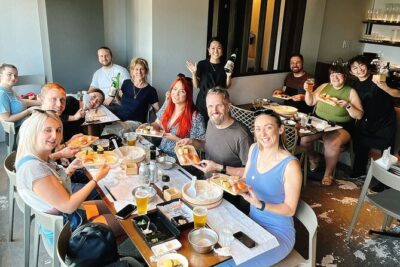
Sushi Making Tokyo Roll and Authentic Japanese Sushi Class
Read our review →
Roll and Authentic Sushi Making Class in Asakusa
Read our review →
Ramen Cooking Class at Ramen Factory in Kyoto
Read our review →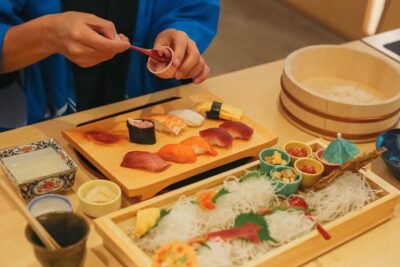
Sushi Making Class in a Happi Coat near a Famous Spot
Read our review →
Sushi Making Osaka Roll and Authentic Japanese Sushi Class
Read our review →
Tokyo Sushi Making Class in Tsukiji with Professional Chef
Read our review →
Ramen & Gyoza Cooking Class in Tokyo with Local Supermarket Visit
Read our review →Browse the lists this tour appears in