
Reviewed · TEMPLES AND SHRINES
Private Guided Traditional Buddhist Cooking in Japan
Good food can open a door to Japan. This private Kyoto class turns Shojin-ryori, Buddhist vegetarian cooking, into a hands-on meal built around seasonal vegetables, tofu, grains, seaweed, and fermented foods. I like the seven-dish menu, which gives you a broad taste of the cuisine, and I like that recipes are included so you can try the meal again at home. The main consideration is that the class lasts about two and a half hours, so it takes a solid part of your day.
I also like the personal teaching style associated with Yukari’s Japanese Home Cooking. Names appearing in the class feedback include Yukari and Yuka, and the teaching is praised for patience, clear explanations, and warmth. The price of $70.94 per person is fair for a private cooking lesson with lunch, ingredients, equipment, drinks, and recipes, though the experience does not include private transportation.
In This Review
- Key points before you book
- What this Kyoto cooking class is really about
- Seven dishes give you a useful taste of the cuisine
- Why the teaching style matters
- The meeting point and timing
- Enkoji Temple, the first named stop
- Shisendo Temple and the rhythm of the day
- Ginkakuji Temple and what to confirm
- What is included for $70.94
- Dietary needs and food expectations
- Who will enjoy this most
- Booking advice and cancellation terms
- Should you book this Kyoto cooking experience?
- FAQ
- How long does the experience last?
- What time does the class start?
- Where does the experience begin?
- Where does the experience end?
- Is this a private activity?
- Is the food vegan?
- How many dishes will be prepared?
- Can the class accommodate a gluten-free diet?
- Are drinks and cooking equipment included?
- Are transportation and temple admission included?
Key points before you book
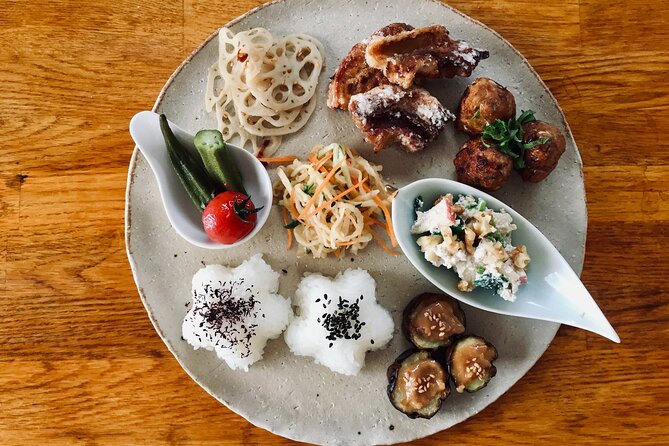
- Seven vegan dishes in one class: Prepare seasonal vegetables, tofu salad, eggplant with miso, lotus root, rice balls, and meat-free fried chicken.
- A real lesson, not just a meal: You learn about Shojin-ryori, local ingredients, preparation methods, and the role of plant-based food in Buddhist tradition.
- Private group format: Only your party participates, giving you more space to ask questions and work at your own pace.
- Recipes go home with you: The printed recipes make the class useful after your trip, especially if you already cook.
- Temple names are part of the route: Enkoji Temple, Shisendo Temple, and Ginkakuji Temple are listed as stops, but the available details do not specify how long you spend at each or whether admission is included.
- Useful for dietary needs: Gluten-free requests can be accepted if you provide notice.
What this Kyoto cooking class is really about
Shojin-ryori is Buddhist temple cooking made without animal products. The class presents it as a cuisine shaped by the rule against killing animals, but the result is not a plate of plain vegetables. The cooking uses tofu, soybeans, grains, seaweed, seasonal produce, and fermented foods to create contrast in flavor and texture.
That matters because Japanese food can be easy to misunderstand from a restaurant menu. A dish may look simple, yet the preparation can involve careful slicing, simmering, seasoning, and balancing. This lesson gives you a chance to see those small choices rather than simply ordering a finished plate.
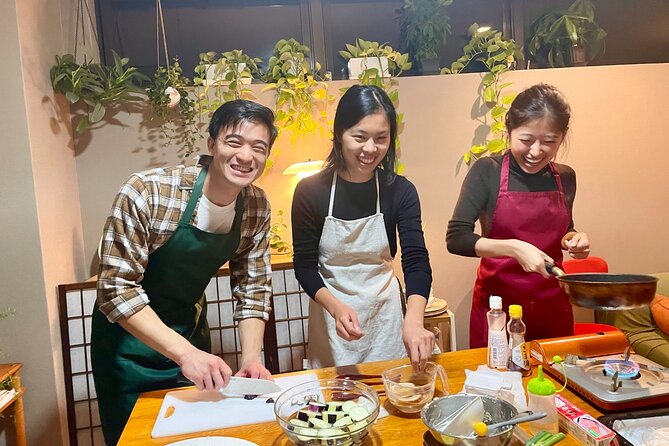
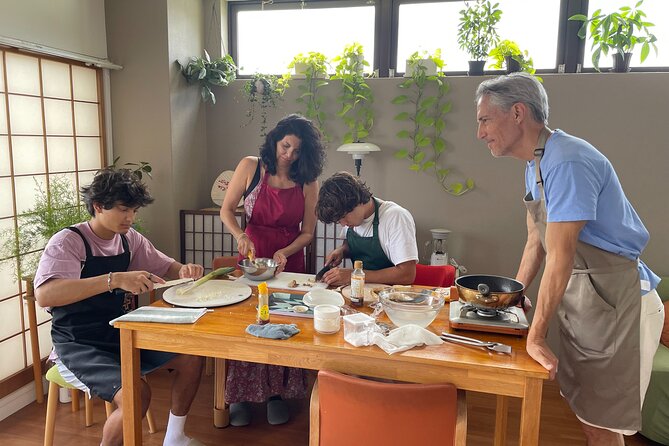
You begin with an introduction to Shojin-ryori and local ingredients. Then you put on an apron and cook several dishes with the instructor. At the end, you sit down to a plate lunch or dinner made by the group. Water or tea is included, so you do not need to arrange a drink separately.
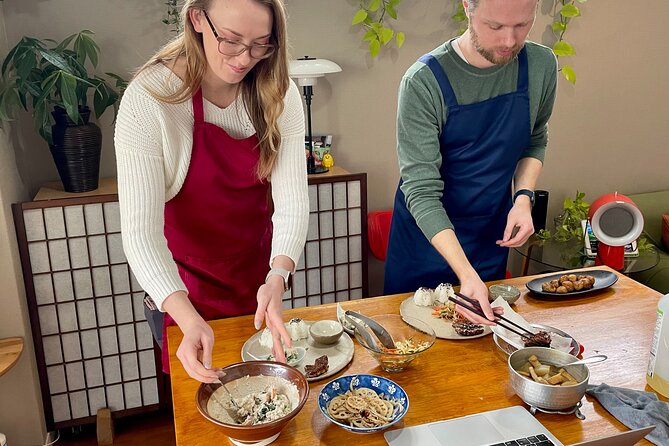
The class is designed for participation. You are not just watching a demonstration while someone else does the work. You help make the meal, which gives the food more meaning and makes it easier to remember the techniques later.
More Temples and Shrines in Kyoto
- [Kyoto & Nara Day Tour] Sagano Scenic Railway & Nara Park & Fushimi Inari Taisha Thousand Torii Gates & Togetsukyo Bridge & Bamboo Grove & Kimono Forest (Departing from Osaka)
★ 4.9 · 10,942 reviews - Kyoto: Fushimi Inari, Kinkakuji, Bamboo Grove 1 Day Bus Tour
★ 4.8 · 4,316 reviews - Kyoto: Tea Ceremony in a Traditional Tea House in Kiyomizu
★ 4.9 · 3,519 reviews
Seven dishes give you a useful taste of the cuisine
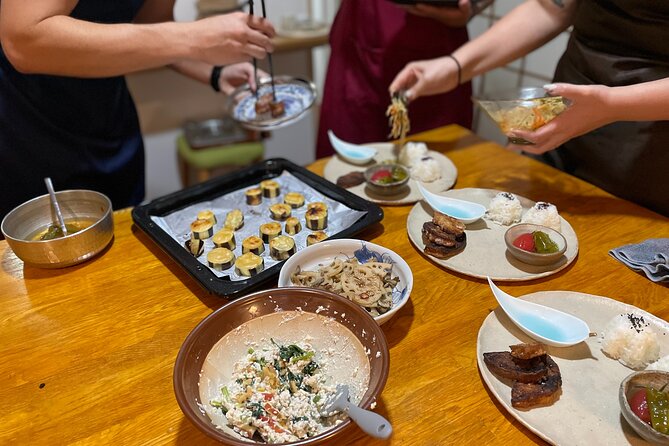
The menu is a strong part of the experience. Instead of focusing on one recipe, you prepare a small spread with different methods and ingredients.
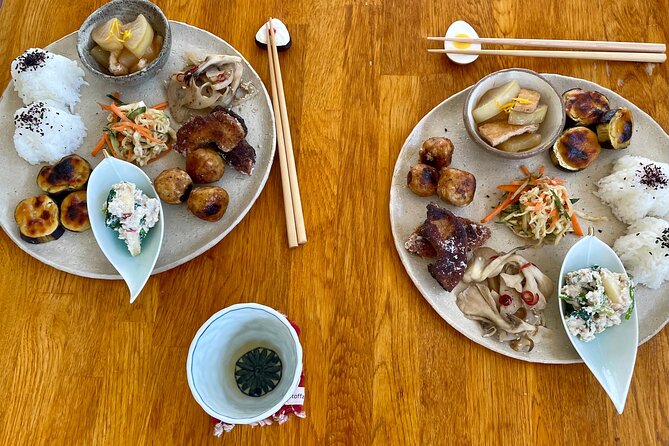
The dishes include simmered seasonal vegetables, a salad made with dried strips of daikon, and kinpira of lotus root. These recipes show how vegetables can carry the meal through cooking technique and seasoning rather than animal stock or meat.
You also prepare nasu dengaku, eggplant glazed with miso, and shiraae, a mashed tofu salad. Tofu is especially important here because it adds body and protein while taking on the flavors around it. The eggplant offers a different texture, and the miso gives the dish a strong savory finish.
The menu also includes spicy teriyaki balls and vegetarian fried chicken made with wheat gluten. These two dishes give the meal a playful modern touch. They imitate familiar savory foods without using meat, which may appeal to children or to anyone who is curious about plant-based Japanese cooking but does not want a meal built only around delicate vegetable dishes.
Finally, you make two rice balls. Rice balls are simple in concept, but they round out the meal and give you a practical recipe to repeat at home.
Seven dishes may sound ambitious for a two-and-a-half-hour class. The details do not say how much of each recipe you prepare from start to finish, so you should not expect a full professional kitchen course covering every technique in great depth. Still, the variety gives you more value than a class built around one main dish.
Why the teaching style matters
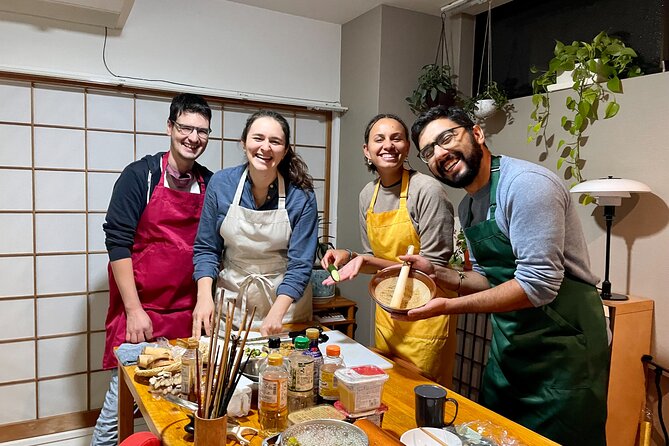
The strongest praise focuses on the instructor rather than on the room or equipment. Yukari is repeatedly described as welcoming, patient, kind, and generous with explanations. One family specifically enjoyed the class with two 11-year-olds, which suggests the teaching can work well for mixed-age groups.
That is useful information if you are booking for children. The class has enough variety to keep younger cooks involved, but it is still a cultural lesson rather than a child-only activity. Your family will need to be comfortable spending two and a half hours preparing food and listening to explanations.
The teaching also appears suited to people who want context. The instructor explains the background of Buddhist cooking, introduces ingredients and local products, and discusses Kyoto’s food culture. One participant described the teacher as having written books and articles about Japanese food, while another praised her extensive knowledge of Japanese cuisine. Those comments point to a lesson with more substance than a quick souvenir activity.
The names are worth noting. The experience is offered by Yukari’s Japanese Home Cooking. Participant comments name Yukari several times, while some instructor responses are signed Yuka. If having a particular teacher matters to you, confirm the guide’s name when booking.
The meeting point and timing
The class starts at 10:00 am at 16 Fairmont Building, Ichijoji Nodacho, Sakyo Ward, Kyoto 606-8165. It ends back at the same meeting point.
The location is near public transportation, but private transportation is not included. You will need to make your own way there and back. Build in extra time to find the Fairmont Building, especially if you are unfamiliar with Kyoto’s address system.
The morning start works well with the lunch format. You can cook, eat, and still have part of the afternoon available. The class is also listed with temple stops, so you should check the exact plan and order before the day begins. The supplied details do not state how transport between the cooking location and the named temples is handled.
A mobile ticket is included, which keeps the booking simple. Confirmation is sent at the time of booking. Because the experience is often booked 51 days ahead, reserve early if your Kyoto dates are fixed.
A completely different kind of day out:
- PERFECT KYOTO 1-Day Bus Tour
★ 5.0 · 13,518 reviews - Kyoto: Gion Make Your Own Chopsticks with Engraving Option
★ 5.0 · 3,465 reviews - Kyoto Nara Day Trip │ Kiyomizu-dera Temple + Fushimi Inari-taisha Shrine + Nara Park (Departing from Osaka/Kyoto)
★ 4.7 · 3,408 reviews - Kyoto Geisha Walking Tour: Gion District & Hidden Gems
★ 4.7 · 3,273 reviews
Enkoji Temple, the first named stop
Enkoji Temple is listed as the first stop. The available information does not explain whether you tour the grounds, receive a guided visit, or simply pass nearby, so ask for clarification before booking if the temple portion is a major reason for your interest.
That uncertainty is the main drawback of the sightseeing side. The cooking class is described in detail, but the temple stops are not. You should treat the food lesson as the clear centerpiece and view the temple names as an additional part of the plan until the provider confirms otherwise.
If the route includes time at Enkoji, it may add a useful connection between Kyoto’s religious traditions and the Buddhist food you are preparing. Just do not assume entrance fees, guided temple commentary, or a set amount of sightseeing time, since those details are not provided.
Shisendo Temple and the rhythm of the day
Shisendo Temple is named as the second stop. Again, no visit length or admission information is supplied. The practical question is not whether the name sounds appealing, but how this stop fits around the cooking schedule.
A class with seven dishes needs organization. If the temple stops happen before cooking, arrive ready for a morning that combines sightseeing and food preparation. If they happen around the lesson, the day may feel more like a cultural tour with a cooking session attached. Confirm the order, especially if you have another reservation later.
The supplied details describe the class as lasting approximately two hours and thirty minutes. That timing likely refers to the cooking experience, but the information does not clearly say how much time is assigned to each temple stop. Keep your afternoon flexible.
Ginkakuji Temple and what to confirm
Ginkakuji Temple is listed as the third stop. It is the best-known name among the three, but the same practical warning applies: the details do not specify whether admission or a formal visit is included.
Ask three simple questions before the day:
- Are all three temples visited during this booking?
- How much time is spent at each one?
- Are entrance fees and transportation included?
The answers will help you judge the full value. At $70.94 per person, the class is already reasonably priced for a private lesson with a full meal and supplies. If the temple stops include organized visits, the overall package becomes more useful. If they are only route markers, you should judge the booking mainly as a cooking class.
What is included for $70.94
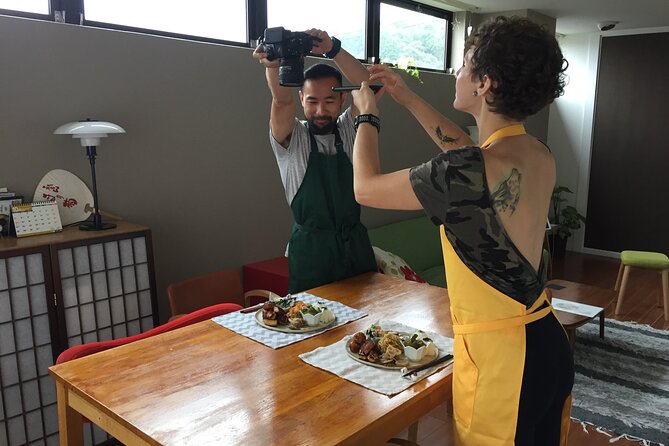
The fee includes lunch ingredients, water or tea, an apron, cooking equipment, utility charges, a facility fee, and recipes. That is a solid bundle. You do not need to buy ingredients, rent equipment, or pay separately for the drink and apron.
The recipes are especially valuable. A food tour can disappear once the meal is finished, but written recipes give you a way to keep using what you learned. The class also introduces ingredients that may be unfamiliar outside Japan, so the recipes can help you remember what you cooked and how the dishes fit together.
The private format adds value for couples and families. You can ask questions without competing with a large group, and the instructor can give more direct help during preparation. The tradeoff is that a private class does not automatically mean private transportation or a fully customized menu.
At this price, I would compare the experience with the cost of a high-quality restaurant meal. Here, you receive food plus instruction, cultural background, practical recipes, and a shared activity. If you only want to eat Shojin-ryori, a restaurant may be faster. If you want to understand how the meal comes together, the class offers more for your money.
Dietary needs and food expectations
The entire menu is presented as vegan Buddhist cooking, with no meat or fish and no animal products generally used. That makes this a natural choice for vegans and vegetarians, but you should still explain any allergies or strict dietary rules when booking.
Gluten-free requests can be accepted if you notify the provider. This matters because the menu includes vegetarian fried chicken made with wheat gluten. Do not assume that dish can simply be served as written on a gluten-free diet. Ask what substitutions will be made.
The class is also a good way to explore Japanese food if you have avoided it because you expect fish-based ingredients. The supplied menu focuses on vegetables, tofu, miso, rice, lotus root, daikon, eggplant, and wheat gluten. Still, the information does not provide a full allergen list, so share your needs before arrival.
Who will enjoy this most
I would recommend the class to:
- Vegans and vegetarians who want more than a restaurant meal
- Couples seeking a private activity with a meal at the end
- Families with older children who can take part in food preparation
- Home cooks who want recipes they can repeat
- Visitors interested in the connection between Buddhism and Japanese cuisine
- People who prefer a small, personal lesson to a large group demonstration
It may be less suitable if you have only a short window in Kyoto or want a fast lunch. The cooking, explanations, and possible temple stops require time. It may also disappoint you if you expect a detailed temple tour, since the available information gives no clear description of the sightseeing portion.
The class is not aimed only at expert cooks. The instructions describe the dishes as manageable, and the teaching is repeatedly praised for patience and clear explanations. You can enjoy it even if your Japanese cooking experience begins and ends with instant noodles.
Booking advice and cancellation terms
The experience is private, so only your group participates. Service animals are allowed, and the meeting point is near public transportation.
You can cancel for a full refund if you do so at least 24 hours before the 10:00 am start time. Cancellations or changes made inside that 24-hour window are not accepted for a refund. The cut-off uses Kyoto local time, so check the time carefully if you are changing plans from another time zone.
Because the average booking point is 51 days ahead, early planning makes sense for a fixed itinerary. Confirm the instructor name, temple arrangements, transportation, and dietary substitutions before the cancellation deadline.
Should you book this Kyoto cooking experience?
Book it if you want a personal, hands-on introduction to vegan Japanese food, especially if you value recipes and conversation as much as the meal itself. The seven-dish menu, private format, included supplies, and warm teaching style make $70.94 a reasonable price.
I would not book it solely for the three temple names. Their role is not explained in enough detail, and transportation is not included. Book this for the cooking first, then confirm how Enkoji, Shisendo, and Ginkakuji fit into the day. For a food-focused visit to Kyoto, it offers a thoughtful meal, practical skills, and a better sense of how Buddhist cooking works than simply ordering a plate in a restaurant.
FAQ
How long does the experience last?
The cooking experience lasts approximately two hours and thirty minutes.
What time does the class start?
It starts at 10:00 am.
Where does the experience begin?
It begins at 16 Fairmont Building, Ichijoji Nodacho, Sakyo Ward, Kyoto 606-8165, Japan.
Where does the experience end?
The activity ends back at the meeting point.
Is this a private activity?
Yes. Only your group participates.
Is the food vegan?
The class teaches Shojin-ryori, traditional Buddhist cooking made without animal products. The dishes generally contain no meat, fish, or other animal products.
How many dishes will be prepared?
The class includes seven dishes, including simmered vegetables, daikon salad, lotus root, miso-glazed eggplant, mashed tofu salad, spicy teriyaki balls, vegetarian fried chicken, and two rice balls.
Can the class accommodate a gluten-free diet?
Yes, gluten-free requests can be accepted if you let the provider know.
Are drinks and cooking equipment included?
Yes. Ingredients, water or tea, an apron, cooking equipment, utility charges, and the facility fee are included.
Are transportation and temple admission included?
Private transportation is not included. The experience names Enkoji Temple, Shisendo Temple, and Ginkakuji Temple as stops, but the provided details do not say whether temple admission or transportation between stops is included.
Just added in Kyoto
- The “Golden Route” and Ancient Japan by DIAMIR Erlebnisreisen – 14-Day Tour★ 2.0 · 2 reviews
- Japan: Castles & Cuisine by G Adventures – 6-Day Kyoto to Osaka Tour★ 4.5 · 4 reviews
- Cycle Japan by Explore! – 13-Day Kyoto to Tokyo Tour★ 4.7 · 12 reviews
- Cycle Japan by Intrepid Travel – 11-Day Kyoto to Tokyo Tour★ 4.8 · 2 reviews
- Classic Japan by Intrepid Travel – 11-Day Kyoto to Tokyo Tour★ 4.4 · 14 reviews
- Ancient & Modern Japan 14-Day Tour by Exodus Adventure Travels★ 4.4 · 40 reviews
- 5 Day Cultural Adventure of Kyoto, Nara & Osaka by Tourist Journey★ 2.5 · 2 reviews
- 12 Days Kinosaki Onsen Escape: A Journey Through Japan’s Timeless Towns by UME Travel★ 4.8 · 5 reviews
Temples and Shrines, compared.
![[Kyoto & Nara Day Tour] Sagano Scenic Railway & Nara Park & Fushimi Inari Taisha Thousand Torii Gates & Togetsukyo Bridge & Bamboo Grove & Kimono Forest (Departing from Osaka)](https://media.japanvisits.com/wp-content/uploads/kyoto-nara-day-tour-sagano-scenic-railway-nara-park-fushimi-inari-taisha-thousand-torii-gates-togetsukyo-bridge-bamboo-grove-kimono-forest-departing-from-osaka-k110001-400x257.jpg)
Kyushu One-Day Tour: Yufuin no Mori Train & Yufuin Town & Nyoirin-ji Temple & Dazaifu & Hell Hot Springs (Departing from Fukuoka)
Read our review →
Fushimi Inari, Kinkakuji, Bamboo Grove 1 Day Bus Tour
Read our review →
Tea Ceremony in a Traditional Tea House in Kiyomizu
Read our review →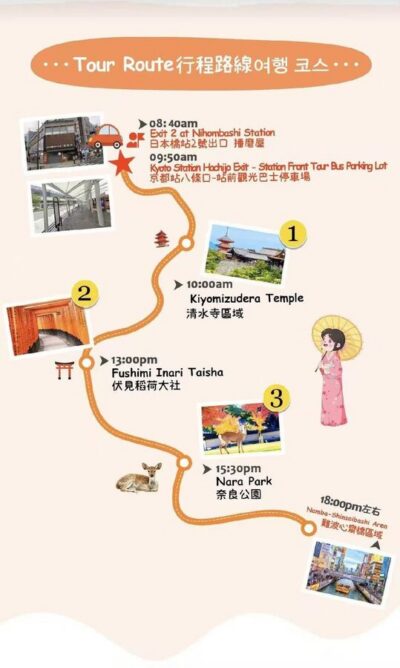
Kyoto Nara Day Trip │ Kiyomizu-dera Temple + Fushimi Inari-taisha Shrine + Nara Park (Departing from Osaka/Kyoto)
Read our review →
Browse the lists this tour appears in