
Reviewed · COOKING CLASSES
Private Japanese Cooking Class in Osaka with Culinary Expert Yoko
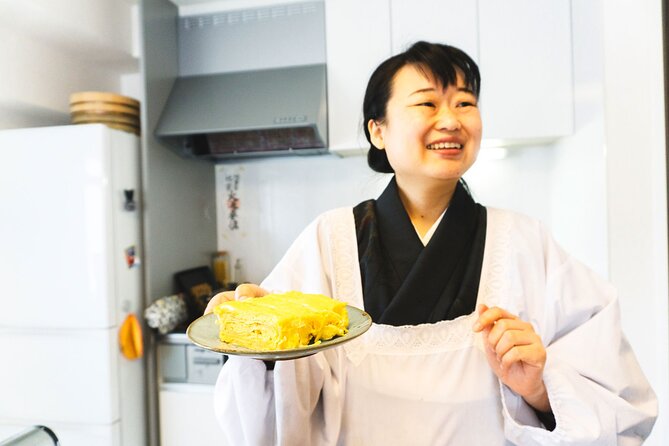
Come hungry, leave with recipes. This private Osaka cooking class brings you into Yoko’s home near Osaka Castle, where a culinary institute-trained chef teaches traditional techniques in a relaxed, personal setting. I especially like the home setting and the chance to ask Yoko how to adapt Japanese recipes at home. I also like that the experience includes a neighborhood walk, a meal, sake tasting, and practical advice about ingredients such as seaweed and dried fish.
The main consideration is the price: at $182 per person, this is not a cheap meal or a quick demonstration. The value comes from private instruction, cultural exchange, and recipes you can use later. You should also note that the advertised overview refers to five specialties, while the detailed class description says you will make three dishes from scratch during about 1.5 hours of cooking. The exact menu changes with the season.
In This Review
- Key points at a glance
- Meeting Yoko near Osaka Castle
- The first lesson: five tastes and Japanese pantry basics
- Watching the demonstrations before taking over
- Cooking three dishes from scratch
- Eating your own Japanese dinner
- What the $182 price includes
- Dietary needs and menu changes
- Timing, transport, and practical planning
- Who will enjoy this private Osaka class
- Should you book Yoko’s cooking experience?
- FAQ
- Where does the cooking class begin?
- Where does the experience end?
- How long does the experience last?
- Is this a private activity?
- What is included in the price?
- Is hotel pickup included?
- Are vegetarian and vegan options available?
- Can I cancel for a full refund?
Key points at a glance
- Yoko’s private Osaka apartment: You remove your shoes, put on slippers, and share a meal in the home of a local cook.
- A neighborhood introduction: Yoko meets you at Minami-Morimachi Station and gives you a short look at her area before the class.
- Hands-on instruction: You watch demonstrations, then take part in cutting and cooking rather than simply observing.
- Japanese flavor basics: Yoko explains the five tastes and introduces ingredients such as seaweed and dried fish.
- Flexible, private format: Only your group participates, with menu adjustments possible for vegetarian, vegan, and other dietary needs.
- A social meal afterward: You eat the food you helped prepare, with sake tasting and possibly green tea ice cream.
Meeting Yoko near Osaka Castle
The experience begins at Minami-Morimachi Station, at 2 Chome-1 Minamimorimachi in Osaka’s Kita Ward. Yoko meets you there and walks with you through her neighborhood toward her apartment. This short introduction helps you get your bearings before the cooking begins, and it gives the class a local feel from the first few minutes.
The apartment is described as simple and clean, in the city near Osaka Castle. This is not a restaurant kitchen or a polished culinary school. You are visiting a private home, which is the point. The setting makes the evening feel more like being invited over for dinner than attending a standard commercial class.
At the entrance, Yoko provides slippers. Removing outdoor shoes before entering a Japanese home is an everyday custom, and this small ritual sets the tone for the visit. You are not being rushed from a meeting point into a classroom. You are entering someone’s living space, so courtesy matters.
The home setting also brings a few practical limits. Space is likely more intimate than in a large cooking studio, and the class works best for people who enjoy conversation and a personal format. If you prefer a fast-paced professional kitchen with several cooking stations, this may feel more relaxed than expected.
More Cooking Classes in Osaka
- Sushi Making Osaka Roll and Authentic Japanese Sushi Class
★ 5.0 · 1,220 reviews - Matcha Making Class in Osaka with Authentic Japanese Sweets Set
★ 5.0 · 509 reviews - Osaka Sushi Making Experience
★ 5.0 · 400 reviews
The first lesson: five tastes and Japanese pantry basics
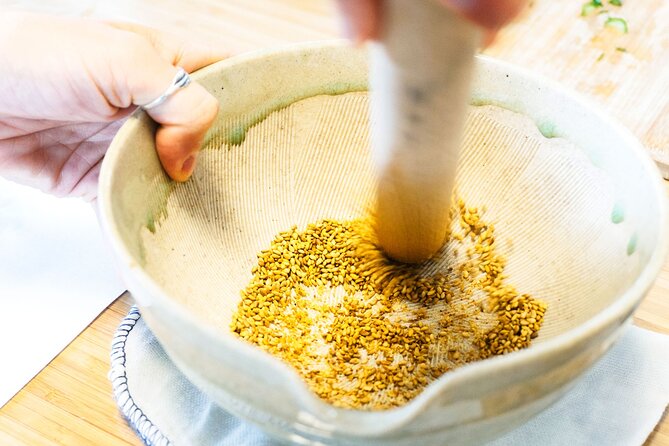
Before you chop or cook, Yoko introduces several ideas that help explain Japanese food. She discusses the five different tastes and shows the key ingredients used during the lesson, including seaweed and dried fish.
This part is valuable because Japanese cooking often depends on small amounts of ingredients that carry a great deal of flavor. Seaweed and dried fish are not just background items. They help build the savory base found in many Japanese dishes. Understanding their role gives you more than a recipe. It helps you recognize why the food tastes the way it does.
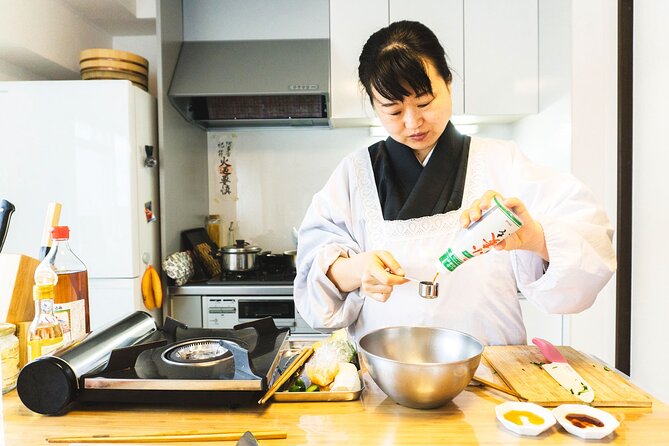
Yoko was trained at a culinary institute, and the class is designed around explanation as well as action. You can ask about Japanese cooking styles, ingredient choices, and the little tricks that make a dish work. The strongest praise for this experience centers on her teaching and her willingness to explain things clearly.
That makes this a good fit if you are curious about technique, not just food. You might learn how ingredients are combined, how a preparation is adjusted, or how to replace a hard-to-find Japanese product once you return home. One especially useful feature is Yoko’s advice about adapting recipes for kitchens with limited access to Japanese ingredients.
Watching the demonstrations before taking over
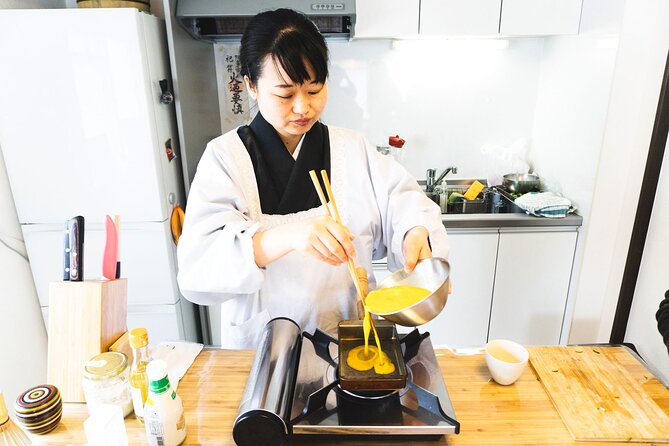
Yoko first shows you how the dishes are prepared. She may complete some advance preparation, then bring you into the cutting and cooking process. This is a sensible approach for a three-hour experience because it keeps the class moving while still giving you real work to do.
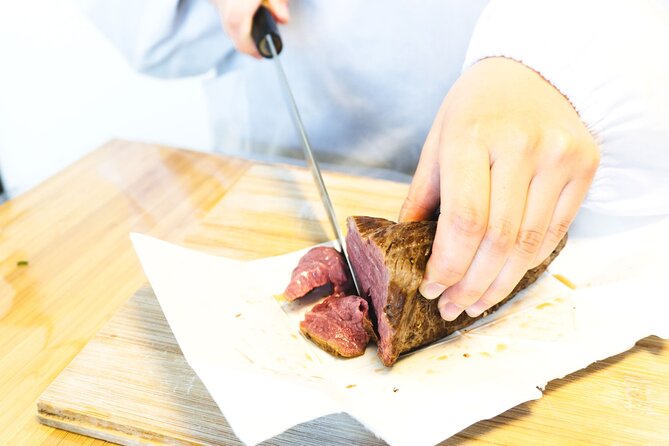
You will not simply sit and watch a chef prepare dinner. You put on an apron, roll up your sleeves, and take part. The detailed description specifies about 1.5 hours of cooking, with three dishes made from scratch during that portion of the class.
The broader experience description refers to five different Japanese specialties. Those may include dishes such as sushi, a Japanese pancake, or Japanese fried chicken, but the actual menu can vary by season and booking. You should treat the menu as a guide rather than a fixed promise.
That variation is useful for repeat visitors and for people with a particular interest. Since the activity is private, you may be able to discuss what you want to learn with Yoko. One participant valued being able to choose what to study, and that kind of flexibility is one of the clearest reasons to book a private class instead of a group workshop.
Still, do not assume that every listed dish will appear on your table. Ask about the planned menu if a particular food is important to you. The experience promises Japanese cooking instruction, not one unchanging set menu.
Cooking three dishes from scratch
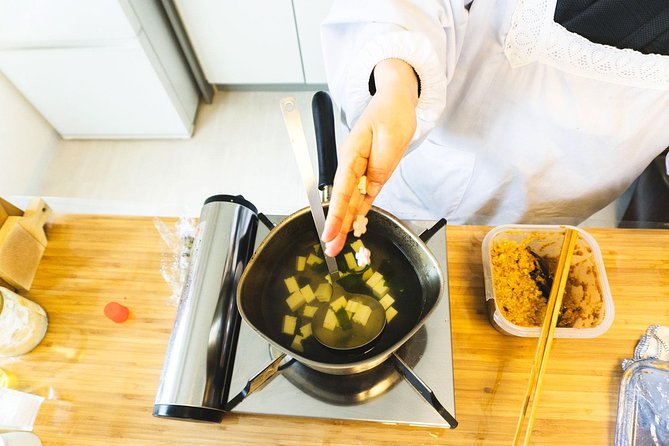
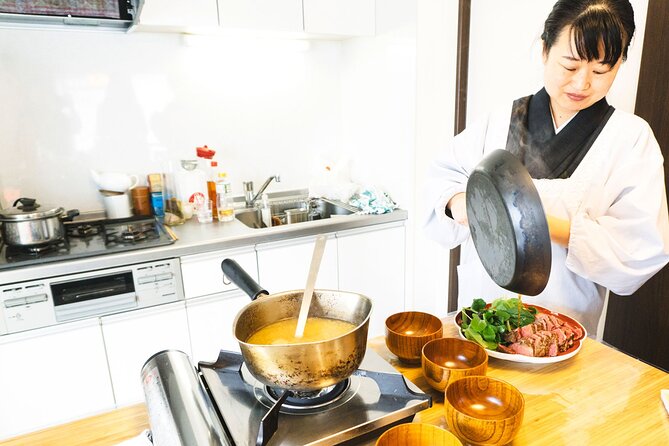
The hands-on part is the heart of the experience. After Yoko’s demonstrations, you help with cutting and cooking. The class description says you will prepare three dishes from scratch during the cooking period, while the wider tour overview describes learning five specialties. The difference likely reflects the full range of dishes discussed or demonstrated, but the exact division is not spelled out.
For you, the key point is that the class includes active participation. You get to practice the steps under Yoko’s guidance, then eat what you have helped make. That connection between preparation and meal gives the class more lasting value than a demonstration alone.
Yoko’s teaching style is another major strength. The feedback supplied for this experience repeatedly praises her warmth, clear explanations, and practical tips. She is also described as welcoming, fun, and willing to go beyond the basic plan. That matters in a private home, where the quality of the host shapes the whole evening.
You should feel free to ask questions. Ask about Japanese cooking habits, ingredient substitutions, or how to repeat a recipe at home. The experience includes recipes, so you are not left with only a pleasant memory and a vague idea of what went into dinner.
More Cooking Classes in Japan:
- Sushi Making Tokyo Roll and Authentic Japanese Sushi Class
★ 5.0 · 3,971 reviews - Tokyo: Roll and Authentic Sushi Making Class in Asakusa
★ 4.9 · 1,957 reviews - Ramen Cooking Class at Ramen Factory in Kyoto
★ 5.0 · 1,937 reviews - Tokyo Shinjuku Chopsticks Making Class
★ 5.0 · 1,763 reviews
Eating your own Japanese dinner
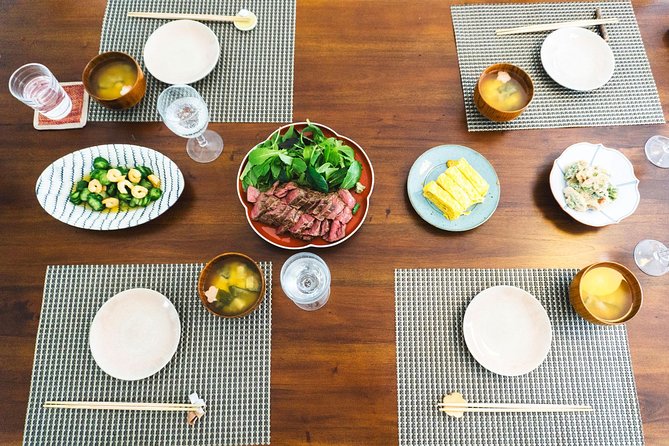
Once the cooking is finished, you sit down to eat the meal together. The food may include sushi, Japanese pancake, Japanese fried chicken, or other seasonal dishes. The menu is not fixed, so the exact dinner depends on the time of year and the arrangements for your class.
The meal is more than a reward at the end. It gives you a chance to taste the results with Yoko and ask questions while the cooking is still fresh in your mind. You can compare the finished dish with what you expected, talk about the ingredients, and learn how the food fits into everyday Japanese cooking.
The meal also creates time for conversation. Yoko has traveled widely and is described as open and easy to talk with. If you enjoy meeting local people and learning through informal conversation, this is likely to be one of the evening’s best parts.
Sake tasting is included. A bowl of green tea ice cream may also finish the meal, according to the experience description. Because the menu can change, neither the exact dishes nor every dessert detail should be treated as guaranteed for every date.
The food receives especially strong praise. The supplied comments describe it as restaurant quality, while also emphasizing the pleasure of helping prepare it. That combination is important. You are paying for instruction and hospitality, not only for a meal, and the meal appears to deliver on both fronts.
What the $182 price includes
The listed price is $182 per person. That is a serious amount for a three-hour activity, especially in a city with many inexpensive places to eat. You need to judge it as a private cultural experience with food, not as a standard cooking lesson priced by the plate.
Your fee includes:
- A private home cooking class with Yoko
- A home-cooked Japanese meal
- Sake tasting
- Pickup from Minami-Morimachi Station
- A private experience for your own group
The price makes more sense if you value personal attention. In a large class, you might stand behind other people or receive only brief instruction. Here, Yoko can focus on your group, answer individual questions, and adjust the pace.
It also includes cultural context that is hard to measure but easy to notice. You enter a local home, follow household customs, walk through Yoko’s neighborhood, learn about Japanese ingredients, and share a meal with the person teaching you. That is a fuller experience than a restaurant dinner.
Group discounts are available, which may improve the value for families or friends booking together. Hotel pickup and drop-off are not included, so you need to reach Minami-Morimachi Station yourself and return there at the end.
I would recommend comparing the price with what a private meal and private guide would cost in Osaka. If you mainly want to eat Japanese food cheaply, choose a restaurant. If you want to learn recipes, meet a local cook, and have a private evening, the price is easier to justify.
Dietary needs and menu changes
Vegetarian and vegan options are available, but you must request them when booking. You should also list any allergies, restrictions, or other dietary needs in the special requirements box. Do not wait until you arrive at the apartment, since the ingredients and menu need to be planned in advance.
The menu changes with the season. This can be a benefit because the food may reflect what is available at the time of your visit. It also means you should not book this experience expecting one exact set of five dishes unless Yoko confirms it.
The private format gives you more room to discuss preferences. That does not mean every request can be met, so be specific when you book. State what you can eat, what you cannot eat, and whether cross-contact is a concern.
Timing, transport, and practical planning
The full experience lasts about three hours. The cooking portion is described as roughly 1.5 hours, with the remaining time used for meeting Yoko, walking through the neighborhood, learning about ingredients and techniques, preparing the meal, eating, and talking.
The class begins at Minami-Morimachi Station and ends back at the same meeting point. Hotel pickup and drop-off are not included. The location is near public transportation, so the meeting point is straightforward to reach if you plan your route in advance.
I would avoid scheduling a major attraction immediately after the class. The experience includes cooking and a shared meal, and the pace is intended to be social rather than rushed. Give yourself room to enjoy the conversation and finish comfortably.
Confirmation arrives within 48 hours of booking, subject to availability. The experience is often booked well in advance, with an average booking lead time of 72 days. If your Osaka dates are fixed, booking early is sensible.
Free cancellation is available up to 24 hours before the start time for a full refund. Changes or cancellations made less than 24 hours in advance are not accepted for a refund, and the cut-off follows local Osaka time.
Who will enjoy this private Osaka class
I would choose this experience if you want food to be a doorway into local life. It suits couples, families, friends, and small groups who prefer personal attention to a formal class. It also works well for cooks who want recipes and technique rather than a single meal they will forget by the next day.
You will get the most from it if you enjoy asking questions. Yoko’s warmth and willingness to share tips are central to the experience, so a quiet, purely observational approach would miss part of its value.
This is also a strong choice for anyone who wants help cooking Japanese food outside Japan. The practical advice about ingredient substitutions can save you frustration when specialty products are difficult to find at home. You can leave with a better sense of what matters in a recipe and what can be adjusted.
I would be more cautious if you are looking for a low-cost activity, a fixed menu, or a large professional kitchen. The food list may change, and the small home setting is personal rather than polished. The high price only works if the cultural exchange and private instruction matter to you.
Should you book Yoko’s cooking experience?
Book it if you want a warm, private introduction to Japanese home cooking in Osaka. The strongest reasons are Yoko’s teaching, the chance to cook rather than watch, the home setting near Osaka Castle, and the useful recipes and adaptation tips you can take home.
At $182 per person, this is a splurge. But it includes a private class, a meal, sake tasting, local conversation, and a look at everyday Japanese cooking customs. Confirm the menu and dietary arrangements before booking, especially since the description refers to both three dishes and five specialties.
For food-focused visitors who value people and place as much as the meal itself, this is a very good use of an Osaka evening.
FAQ
Where does the cooking class begin?
The class begins at Minami-Morimachi Station, located at 2 Chome-1 Minamimorimachi, Kita Ward, Osaka, 530-0054, Japan.
Where does the experience end?
The activity ends back at the meeting point at Minami-Morimachi Station.
How long does the experience last?
The full experience lasts approximately three hours. The cooking portion is described as about 1.5 hours.
Is this a private activity?
Yes. Only your group participates in the experience.
What is included in the price?
The price includes a private home cooking class with Yoko, a home-cooked Japanese meal, sake tasting, and pickup from Minami-Morimachi Station.
Is hotel pickup included?
No. Hotel pickup and drop-off are not included. You must make your own way to Minami-Morimachi Station.
Are vegetarian and vegan options available?
Yes. Vegetarian and vegan options are available, but you must request them when booking.
Can I cancel for a full refund?
Yes. You can cancel at least 24 hours before the local start time for a full refund. Cancellations or changes made less than 24 hours before the start time are not accepted for a refund.
Just added in Japan
- Tokyo Cute Bento Cooking Class – Make a Kawaii Character Lunchbox★ 5.0 · 126 reviews
- Japanese Home Cooking Class & Walk in Todoroki Temple Tokyo★ 5.0 · 88 reviews
- A One-of-a-Kind Sushi Experience in a Special Place of Japan★ 5.0 · 15 reviews
- Japan Tokyo Tower Observatory Deck E-Ticket★ 4.0 · 34 reviews
- Catch a Baseball Game in Tokyo with a Local – Tickets Included★ 5.0 · 24 reviews
- JDM Experience with Fast&Furious RX-7 (English speaking Driver)★ 5.0 · 57 reviews
- Tokyo Private Day Tour by Car with English speaking Driver Guide★ 4.0 · 29 reviews
- Japan Classic 10 Day – One Life Adventures★ 5.0 · 129 reviews
Cooking Classes, compared.
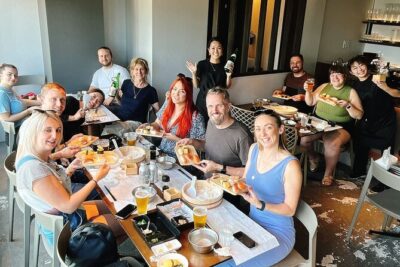
Sushi Making Tokyo Roll and Authentic Japanese Sushi Class
Read our review →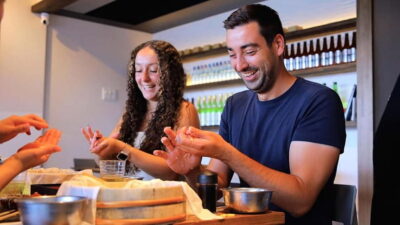
Roll and Authentic Sushi Making Class in Asakusa
Read our review →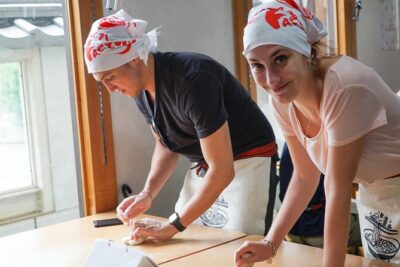
Ramen Cooking Class at Ramen Factory in Kyoto
Read our review →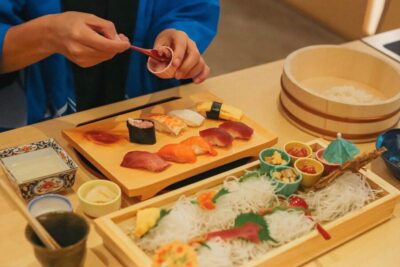
Sushi Making Class in a Happi Coat near a Famous Spot
Read our review →
Sushi Making Osaka Roll and Authentic Japanese Sushi Class
Read our review →
Tokyo Sushi Making Class in Tsukiji with Professional Chef
Read our review →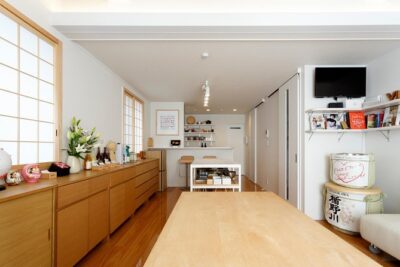
Ramen & Gyoza Cooking Class in Tokyo with Local Supermarket Visit
Read our review →Browse the lists this tour appears in