Reviewed · KYOTO TOURS
Private Kyoto Tour: Explore the Most Iconic Sights
Kyoto rewards a well-planned day. This private Kyoto tour links four of the city’s most famous sights, with time at Kinkaku-ji, Kiyomizu-dera, Fushimi Inari Taisha, and Arashiyama’s bamboo forest. I like the private format and the freedom to shape the day around your interests. I also like that taxis are used when practical, rather than charging you for a dedicated car all day.
The main catch is the pace. Four major sights with about two hours at each, plus travel time, make for a long day. The price of $200 per person can be fair for a small private group, but you should clarify transportation, group size, and entrance fees before paying. A poor experience involved a party of 10 that expected one vehicle, so larger groups need extra care.
In This Review
- Key Details Before You Book
- Why This Private Kyoto Day Can Work Well
- Kinkaku-ji: Kyoto’s Golden Pavilion
- Kiyomizu-dera and the Hillside View
- Fushimi Inari Taisha: Vermilion Gates on Mount Inari
- Arashiyama Bamboo Forest and Togetsukyo Bridge
- The Guide Makes or Breaks the Day
- Taxis, Public Transit, and Group Size
- Is $200 Per Person Good Value?
- Small Details That Shape the Day
- Who Should Book This Kyoto Tour?
- Should You Book It?
- FAQ
- How long does the private Kyoto tour last?
- Which Kyoto sights are included?
- Is this a private tour?
- Is pickup available?
- What transportation is used?
- Is lunch included?
- Are entrance fees included?
- Is the tour conducted in English?
- Can service animals participate?
- Can I cancel for a full refund?
Key Details Before You Book
- Four famous Kyoto stops in one day: Kinkaku-ji, Kiyomizu-dera, Fushimi Inari Taisha, and Arashiyama are all included in the planned route.
- Private service: Only your group participates, so you can ask questions and request changes without keeping pace with strangers.
- About eight to ten hours: Travel time is included, making this a full day rather than a quick sightseeing outing.
- Taxis and public transit may be used: You pay for the transportation actually used, instead of a fixed private-car charge.
- English is standard: Guides from Japan, the United States, and Spanish-speaking countries may be available, with other languages arranged for an extra fee.
- The schedule needs checking: The information about Fushimi Inari’s entrance fee conflicts in two places, so confirm what is covered before departure.
Why This Private Kyoto Day Can Work Well
Kyoto’s top sights are spread across the city. Kinkaku-ji sits in the northwest, Kiyomizu-dera is in the eastern hills, Fushimi Inari is south of the center, and Arashiyama lies farther west. Seeing all four without a plan can waste a lot of time.
I like the way this private tour removes some of that strain. You have a guide to help organize the day, and taxis can make the transfers easier than piecing together every train and bus connection yourself. The guide can also answer questions as you go, which matters at temples where a little context turns a pretty building into a meaningful place.
The private setup is the strongest feature. You are not locked into a fixed group’s mood or walking speed. If you want more time at a temple, have a question about Buddhist or Shinto customs, or want to ask about adding another place, you can discuss it directly with the guide.
The schedule is still ambitious. Two hours at each stop sounds generous, but it includes walking, meeting the guide, finding entrances, and moving through crowded areas. Add city traffic and the day can easily reach the full 10 hours.
A few more options to weigh up in Kyoto
- PERFECT KYOTO 1-Day Bus Tour
★ 5.0 · 13,518 reviews - [Kyoto & Nara Day Tour] Sagano Scenic Railway & Nara Park & Fushimi Inari Taisha Thousand Torii Gates & Togetsukyo Bridge & Bamboo Grove & Kimono Forest (Departing from Osaka)
★ 4.9 · 10,942 reviews - Kyoto: Fushimi Inari, Kinkakuji, Bamboo Grove 1 Day Bus Tour
★ 4.8 · 4,316 reviews
Kinkaku-ji: Kyoto’s Golden Pavilion
Your first major stop is Kinkaku-ji, better known as the Golden Pavilion. The temple’s official name is Rokuon-ji, and its top two floors are covered in gold leaf. The building reflects across a pond, creating the familiar Kyoto image that appears on countless postcards.
I would give this stop close attention, even if the view seems familiar from photographs. The setting around the pavilion is part of the appeal. You see the structure from a designated route, with gardens and water framing it from different angles. The two-hour allotment gives you time to look beyond the first photograph and hear about the temple’s Zen Buddhist setting.
Admission is included for this stop. That helps keep the day simple, although the tour information also lists a general temple entrance cost of about $8 to $10, so it is wise to ask exactly which fees are covered. The details are not fully consistent.
Kinkaku-ji is a sightseeing stop first. You will not be exploring every corner of a working religious complex, and the pavilion itself is the clear star. I would visit early in the day if the schedule allows, since the narrow viewing route can feel busy when many groups arrive at once.
Kiyomizu-dera and the Hillside View
Kiyomizu-dera gives you a different experience. This Buddhist temple has a history spanning 1,200 years and is recognized as a UNESCO World Heritage site. Its position on the eastern hills gives the visit a strong sense of place, with Kyoto spreading out below.
The temple grounds are larger and more varied than a single pavilion. You can expect walking between buildings, viewing points, and religious spaces. The two-hour stop is useful here because rushing through Kiyomizu-dera would reduce it to a quick photograph.
Admission is listed as included. Again, ask your guide or provider to confirm the exact entrance arrangements because the general fee information is unclear. You do not want a small admission question to become a surprise during a busy day.
Kiyomizu-dera also requires attention to footwear, walking surfaces, and hills. The information says most people can participate and that the tour is near public transportation, but it does not provide a detailed mobility plan. If anyone in your group has trouble with inclines or extended walking, raise that point before booking.
Fushimi Inari Taisha: Vermilion Gates on Mount Inari
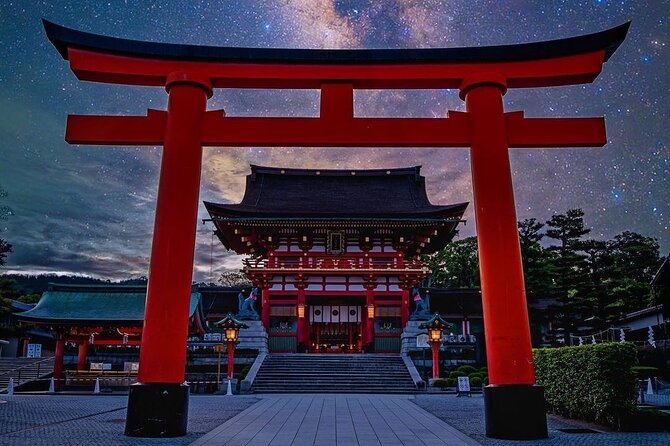
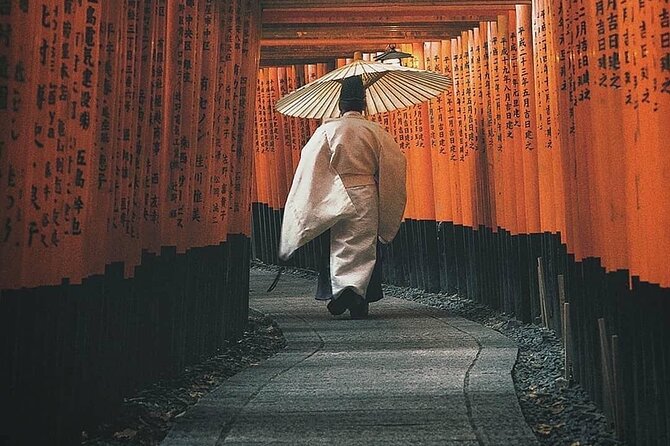
Fushimi Inari Taisha is perhaps the most visually distinctive stop. Its thousands of vermilion torii gates form paths up Mount Inari. The shrine is dedicated to Inari, the Shinto deity associated with rice.
The best part of Fushimi Inari is the change in mood as you move from the main shrine area toward the gates. Even if you do not walk the entire mountain route, the repeating torii create a memorable corridor. Your guide can explain the shrine’s religious role and the meaning behind the offerings and symbols you see.
The two-hour allocation gives you room to walk at least part of the route. Do not assume it means you will reach the summit. The full area extends up the mountain, and the tour has three other major stops to cover.
There is a fee conflict worth noting. The itinerary says the admission ticket is not included, while the included-services section says the entrance fee for Fushimi Inari Taisha is included. Since those statements disagree, confirm this before the day begins. The general information also mentions temple entrance fees of $8 to $10, adding more uncertainty.
Fushimi Inari is a place where your private guide can be especially useful. You can decide together how far to walk, rather than being pushed toward a fixed endpoint. If your group wants photographs and a short walk, say so. If you want more time among the gates, the private format gives you a better chance of adjusting the plan.
A completely different kind of day out:
- Kyoto: Tea Ceremony in a Traditional Tea House in Kiyomizu
★ 4.9 · 3,519 reviews - Kyoto: Gion Make Your Own Chopsticks with Engraving Option
★ 5.0 · 3,465 reviews - Kyoto Nara Day Trip │ Kiyomizu-dera Temple + Fushimi Inari-taisha Shrine + Nara Park (Departing from Osaka/Kyoto)
★ 4.7 · 3,408 reviews - Kyoto Geisha Walking Tour: Gion District & Hidden Gems
★ 4.7 · 3,273 reviews
Arashiyama Bamboo Forest and Togetsukyo Bridge
Arashiyama brings the day to western Kyoto. The planned visit includes the famous bamboo forest, Togetsukyo Bridge, and a boat ride across the lake. Of the four stops, this is the one with the strongest mix of walking, scenery, and time outdoors.
The bamboo forest is known for its tall stalks and narrow paths. The forest itself is not a long, isolated wilderness walk. You follow a public route, and the experience depends greatly on how much time and space you have around you. A guide can help you move through it efficiently and point out the parts worth pausing for.
Crossing Togetsukyo Bridge adds another view of Arashiyama. The boat ride gives the stop a slower finish, although the exact boat arrangements are not fully explained. Ask whether the ride is part of the scheduled plan, how long it lasts, and what fee is covered.
The entrance fee for the bamboo forest is listed as included. There is no clear breakdown of a separate boat ticket, so I would confirm that too. The tour’s wording refers to the bamboo forest admission, but not every activity connected with the Arashiyama stop.
Arashiyama can be tiring after three earlier sights. If this is the part you care about most, tell the guide at the start. A private tour works best when you share priorities early, rather than hoping the day will somehow fit everything equally.
The Guide Makes or Breaks the Day
A long Kyoto day needs a guide who can manage both information and timing. The strongest praise goes to guides who are friendly, flexible, clear in English, and willing to answer questions.
Riku received especially warm praise for being pleasant, helpful, and well informed. Another guide was praised for excellent English, accommodating the requested sights, careful driving, and keeping the car clean and reliable. Those details matter because you spend many hours together, including travel between widely separated parts of Kyoto.
The guide is not simply there to point at buildings. I would use the private setting to ask about the difference between a Buddhist temple and a Shinto shrine, the purpose of the torii gates, and the reasons these four places are so important to Kyoto. You can also ask for help judging how long to stay at each stop.
Language choice requires planning. Tours are generally conducted in English. Guides from Japan, the United States, and Spanish-speaking countries may be arranged, while a guide in another native language costs extra. Do not assume a language request is automatic.
Taxis, Public Transit, and Group Size
The transportation plan is flexible rather than fixed. The tour uses taxis and public transportation as needed, and the price does not include a dedicated private car charge. That can be good value because you pay for the rides actually used.
It also means you need to understand what the $200 per person covers. Parking fees and an air-conditioned vehicle are listed as included, but the description says taxis may be used. Ask whether taxi fares are paid directly during the day or handled by the provider.
The private format suits couples, families, and small groups that want direct attention. It is less straightforward for a large party. One serious complaint involved a group of 10 that had been assured they could sit together in one vehicle, despite the tour description referring to a smaller maximum. That warning is important: if you have more than the stated group size, get the vehicle arrangement in writing.
Pickup is offered, and the activity begins and ends in Kyoto. The exact pickup point should be confirmed when you book. Since travel time counts toward the eight-to-10-hour duration, a distant pickup or drop-off could reduce time at the sights.
Is $200 Per Person Good Value?
At $200 per person, this is not a budget sightseeing day. The value depends on your group size and how much you want help with planning.
For a small private group, the cost buys a full day, a guide, transportation support, and admission to at least some of the sights. You also gain the ability to ask for a custom route. If you would otherwise arrange several taxis, research temple hours, and manage four major stops yourself, the price may be reasonable.
The value is weaker if you are comfortable using Kyoto’s public transportation and want a slow day at only one or two places. You will also need to budget for lunch, since it is not included, and possibly temple or shrine fees. The conflicting information about Fushimi Inari and other entrance costs makes a pre-tour check essential.
I would compare the price against your actual group size. A couple pays much more per person than a larger group sharing the guide’s time, but a larger party must confirm vehicle capacity. The tour is not a simple private car rental, and that distinction matters.
Small Details That Shape the Day
Confirmation is normally sent at booking. If you book within five hours of departure, confirmation comes as soon as possible and depends on availability. I would avoid leaving a tour this complex until the last moment, especially if you need a particular language or vehicle arrangement.
Free cancellation is available until 24 hours before the start time. Changes or cancellations made inside that window are not accepted for a refund. The cut-off uses Kyoto local time.
Service animals are allowed, and the tour is near public transportation. Most people can participate, but the route involves extended walking at temple grounds, shrine paths, and the bamboo forest. Ask ahead about any specific mobility concern because the available information does not describe step-free access at every stop.
Lunch is not included. Since the day can last up to 10 hours, plan to discuss a meal break with your guide at the start. The private format should make that easier, but the exact restaurant or lunch location is not specified.
Who Should Book This Kyoto Tour?
I would recommend this experience to someone visiting Kyoto for the first time who wants to see the city’s headline sights in one long day. It is also a good match if you value personal explanations, prefer taxis when useful, or do not want to build a complicated route yourself.
Families and small private groups may appreciate the flexible pace. You can ask the guide to adjust walking time or focus on the sights your group cares about most. English speakers should find the standard arrangement practical, while other language needs should be settled before booking.
I would be more cautious if you want a slow, quiet cultural day. Four famous sites in eight to 10 hours is a lot. I would also hesitate for a group larger than the stated capacity unless the provider confirms the transport plan clearly.
Should You Book It?
Book this private Kyoto tour if your priority is coverage, convenience, and direct help from a guide. The route brings together Kinkaku-ji, Kiyomizu-dera, Fushimi Inari Taisha, and Arashiyama, which is a powerful introduction to Kyoto.
Before you commit, confirm three things: the exact group limit, how taxi fares are handled, and which entrance fees are included. If those points are clear, the tour offers a practical way to see four major sights without managing every transfer yourself. If you prefer a slower pace or want to keep costs low, choose fewer sights and explore them independently.
FAQ
How long does the private Kyoto tour last?
The tour lasts approximately eight to 10 hours, and travel time is included in that total.
Which Kyoto sights are included?
The planned route includes Kinkaku-ji Temple, Kiyomizu-dera Temple, Fushimi Inari Taisha Shrine, and the Arashiyama Bamboo Forest.
Is this a private tour?
Yes. Only your group participates in the activity.
Is pickup available?
Yes. Pickup is offered in Kyoto, and the tour ends back at the meeting point.
What transportation is used?
The tour uses taxis and public transportation as needed. An air-conditioned vehicle and parking fees are listed among the included services.
Is lunch included?
No. Lunch is not included in the price.
Are entrance fees included?
Kinkaku-ji and Kiyomizu-dera are listed with admission included. The bamboo forest entrance is also listed as included. The information gives conflicting details about the Fushimi Inari entrance fee, so confirm this before booking.
Is the tour conducted in English?
Tours are typically conducted in English. A guide who speaks another native language may be arranged for an additional fee.
Can service animals participate?
Yes. Service animals are allowed.
Can I cancel for a full refund?
Yes, if you cancel at least 24 hours before the experience starts. Cancellations or changes made less than 24 hours before the start time are not refunded or accepted.
Just added in Kyoto
- The “Golden Route” and Ancient Japan by DIAMIR Erlebnisreisen – 14-Day Tour★ 2.0 · 2 reviews
- Japan: Castles & Cuisine by G Adventures – 6-Day Kyoto to Osaka Tour★ 4.5 · 4 reviews
- Cycle Japan by Explore! – 13-Day Kyoto to Tokyo Tour★ 4.7 · 12 reviews
- Cycle Japan by Intrepid Travel – 11-Day Kyoto to Tokyo Tour★ 4.8 · 2 reviews
- Classic Japan by Intrepid Travel – 11-Day Kyoto to Tokyo Tour★ 4.4 · 14 reviews
- Ancient & Modern Japan 14-Day Tour by Exodus Adventure Travels★ 4.4 · 40 reviews
- 5 Day Cultural Adventure of Kyoto, Nara & Osaka by Tourist Journey★ 2.5 · 2 reviews
- 12 Days Kinosaki Onsen Escape: A Journey Through Japan’s Timeless Towns by UME Travel★ 4.8 · 5 reviews
Kyoto Tours, compared.
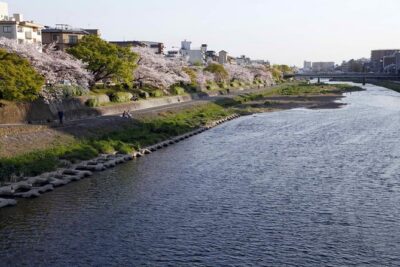
![[Kyoto & Nara Day Tour] Sagano Scenic Railway & Nara Park & Fushimi Inari Taisha Thousand Torii Gates & Togetsukyo Bridge & Bamboo Grove & Kimono Forest (Departing from Osaka)](https://media.japanvisits.com/wp-content/uploads/kyoto-nara-day-tour-sagano-scenic-railway-nara-park-fushimi-inari-taisha-thousand-torii-gates-togetsukyo-bridge-bamboo-grove-kimono-forest-departing-from-osaka-k110001-400x257.jpg)
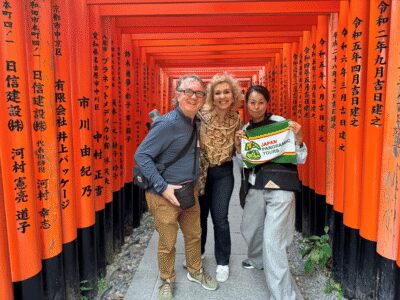
Fushimi Inari, Kinkakuji, Bamboo Grove 1 Day Bus Tour
Read our review →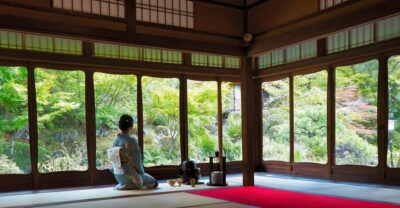
Tea Ceremony in a Traditional Tea House in Kiyomizu
Read our review →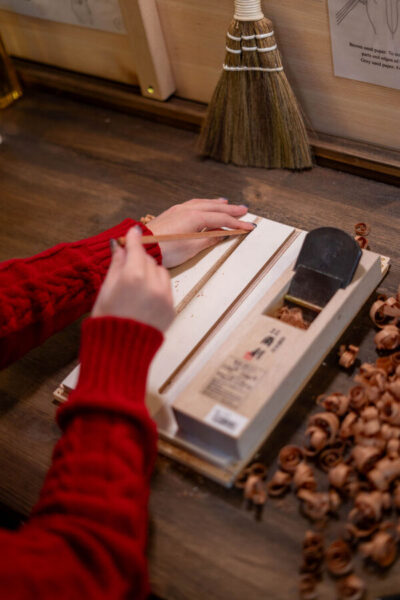
Gion Make Your Own Chopsticks with Engraving Option
Read our review →
Kyoto Nara Day Trip │ Kiyomizu-dera Temple + Fushimi Inari-taisha Shrine + Nara Park (Departing from Osaka/Kyoto)
Read our review →
Kyoto Geisha Walking Tour: Gion District & Hidden Gems
Read our review →