Reviewed · KYOTO TOURS
Private Kyoto Tour with a Local, Highlights & Hidden Gems, Personalised
Kyoto rewards a slower look. This private walking experience pairs famous temples and old neighborhoods with quieter corners chosen around your interests, so you are not simply following a guide holding a flag. I like the pre-tour questionnaire and the chance to meet a host who can adjust the pace as you go. The main catch is that the itinerary is not fixed, and food, admissions, transport, and taxis cost extra.
At $102.03 per person, this makes the most sense for a couple, family, or small group that wants help shaping a day in Kyoto. Guides such as Amy, Alex, Miki, Kokoro, Hiro, and Kenta Suzuki have been praised for clear English, cultural insight, restaurant advice, and help with trains and buses. Just remember that two to five hours is a wide time range, and a short outing cannot cover every major sight.
In This Review
- Key points to know before booking
- A private Kyoto walk that changes with your priorities
- Pontocho Alley and the Sanjo-ohashi starting area
- Kennin-ji and Kyoto’s artistic side
- Gion, Hanami-koji Street, and Tatsumi Bridge
- Yasaka Shrine and Maruyama Park
- Sannenzaka, Ninenzaka, and Kiyomizu-dera
- Fushimi Inari and the red torii path
- Kiyamachi Street and food advice
- What the guides add to the day
- Timing, transport, and walking effort
- Is $102.03 per person good value?
- Who should book this Kyoto experience?
- My verdict on this flexible Kyoto walk
- FAQ
- How long does the private Kyoto tour last?
- Is the tour private?
- What is included in the price?
- Are temple admission fees included?
- Are food and drinks included?
- Is transportation included?
- Where does the tour start and finish?
- Can the itinerary be changed?
- Can I cancel for a full refund?
Key points to know before booking
- Your route is built after a questionnaire: Tell the company if you care most about temples, food, history, shopping, photography, or local customs.
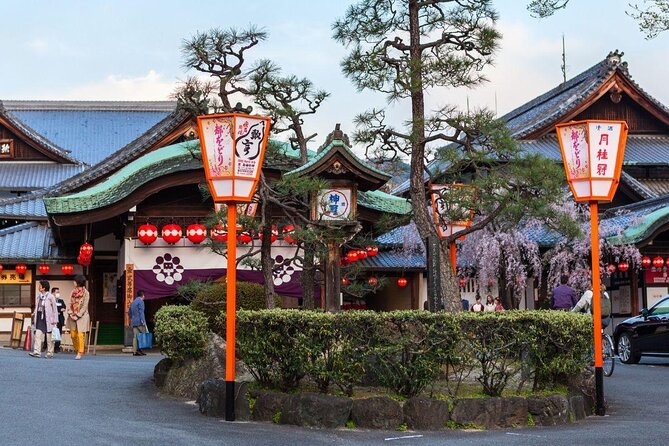
- Gion and Pontocho fit well into a short visit: These central districts offer traditional streets, wooden buildings, tea houses, restaurants, and easy walking.
- Fushimi Inari and Kiyomizu-dera need more time: Both are possible, but adding them may mean less time in Gion or more use of public transport.
- The host can be as useful after the tour as during it: Several guides have helped with train routes, restaurant choices, markets, shrine etiquette, and plans for the next day.
- It is a private activity: Only your group takes part, which makes it easier to ask questions, stop for photos, or change direction.
- The price excludes extras: Entry fees, meals, drinks, and transport are not included, so budget for those separately.
A private Kyoto walk that changes with your priorities
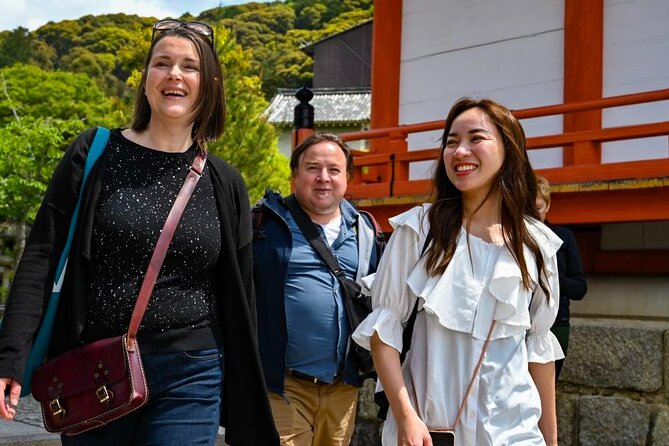
Kyoto can be confusing at first. Its major sights are spread across different parts of the city, and the most famous places can feel very different at 8 a.m. than they do later in the day. A private host gives you a practical advantage: you can explain what matters to you, then let someone with local experience shape the route.
The experience begins with a short online questionnaire. You can share must-see places, interests, walking preferences, and the kind of day you want. That matters because a history fan may want temple art and religious customs, while a family may prefer shorter visits, snacks, and streets where children can keep moving.
You can meet at the listed Starbucks near Sanjo-ohashi Bridge, or at your accommodation or another central location where pickup is possible. The end point is back at the meeting point. Since this is mainly a walking experience, comfortable shoes are more useful than a carefully pressed outfit.
The private format is the real product here. You are not locked into a large group’s pace or forced to spend twenty minutes at a place that does not interest you. If you want more time at a shrine, a quieter lane, or a food stop, you can ask. If the weather turns or your energy drops, the host can adjust the plan.
A few more options to weigh up in Kyoto
- PERFECT KYOTO 1-Day Bus Tour
★ 5.0 · 13,518 reviews - [Kyoto & Nara Day Tour] Sagano Scenic Railway & Nara Park & Fushimi Inari Taisha Thousand Torii Gates & Togetsukyo Bridge & Bamboo Grove & Kimono Forest (Departing from Osaka)
★ 4.9 · 10,942 reviews - Kyoto: Fushimi Inari, Kinkakuji, Bamboo Grove 1 Day Bus Tour
★ 4.8 · 4,316 reviews
Pontocho Alley and the Sanjo-ohashi starting area
Pontocho Alley is one of the best early choices for getting a feel for central Kyoto. It is a narrow, car-free lane with traditional wooden buildings and small restaurants. In the evening, it becomes a popular dining area, but during a daytime walk it offers a calmer look at the city’s older street pattern.
I like this stop because it gives you atmosphere without requiring a long journey across town. You can ask your host about dining in the area, the difference between ordinary restaurants and more formal establishments, and where to return later.
There is one practical limit. Pontocho is more about mood and street detail than major monuments. If your list is packed with temples, you may prefer to use this section as a short orientation walk rather than a long visit.
Kennin-ji and Kyoto’s artistic side
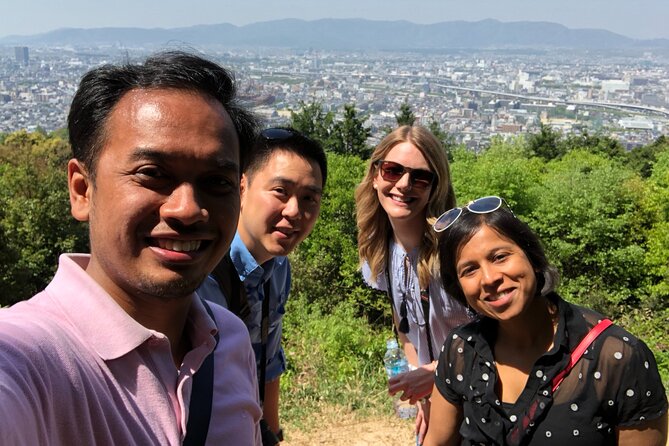
Kennin-ji is described as Kyoto’s oldest Zen temple, and it offers a useful pause from the busy streets of Gion. The temple is known for its twin dragon mural and gilded screens showing the wind and thunder gods. Those details give your host something concrete to explain, from Buddhist imagery to Japanese painting traditions.
This is the kind of stop that benefits from a guide. Without context, you might admire the screens, take a photo, and move on. With a host, you can ask what the images mean, how Zen temples differ from shrines, and why the building and garden are arranged as they are.
Admission is not included, so check the cost with your host before entering. Also, the temple may not suit someone who wants a rapid checklist of sights. It works best when you are willing to slow down and look closely.
Gion, Hanami-koji Street, and Tatsumi Bridge
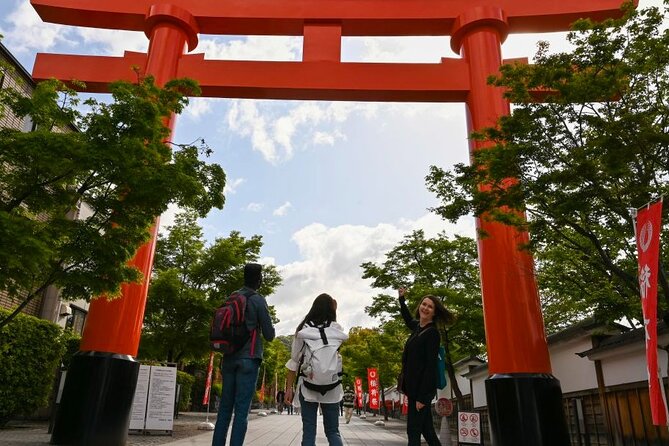
Gion is likely to be the strongest part of a shorter tour. Hanami-koji Street, Tatsumi Bridge, and the Shimbashi area bring together wooden buildings, narrow lanes, tea houses, and a sense of old Kyoto. The streets are attractive, but the value of a local host is not just pointing out pretty facades.
Your guide can help you understand how the district functions, what kind of businesses operate here, and how to behave respectfully in a traditional neighborhood. This is also a good place to ask about Kyoto’s geisha culture without treating the area like a stage set.
Several guides have been praised for making Gion especially rewarding. Alex helped one short-time visitor cover a large section of the district while explaining culture, religion, and geography. Miki has also been praised for giving a first-day introduction that helped with the rest of a Kyoto stay.
Please keep your expectations sensible. Gion is a working neighborhood, not a guaranteed sighting of a geisha. It can also become crowded, so a private host’s route choices may matter more than the number of streets you cover.
A completely different kind of day out:
- Kyoto: Tea Ceremony in a Traditional Tea House in Kiyomizu
★ 4.9 · 3,519 reviews - Kyoto: Gion Make Your Own Chopsticks with Engraving Option
★ 5.0 · 3,465 reviews - Kyoto Nara Day Trip │ Kiyomizu-dera Temple + Fushimi Inari-taisha Shrine + Nara Park (Departing from Osaka/Kyoto)
★ 4.7 · 3,408 reviews - Kyoto Geisha Walking Tour: Gion District & Hidden Gems
★ 4.7 · 3,273 reviews
Yasaka Shrine and Maruyama Park
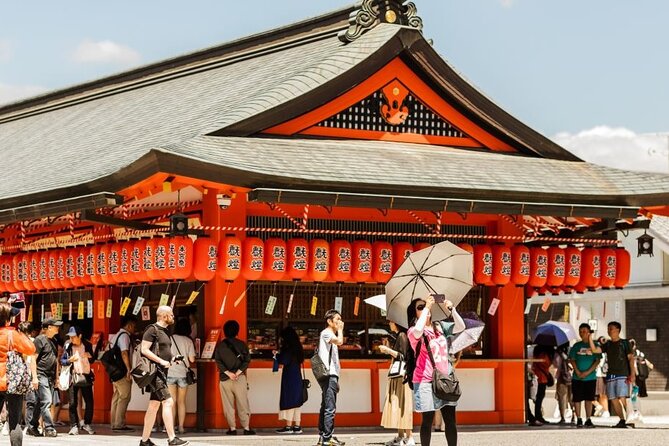
Yasaka Shrine is a natural partner for a Gion walk. With a history of about 1,350 years and a close connection to the Gion Matsuri festival, it gives you a clear look at Kyoto’s Shinto traditions. Your host can explain shrine customs and help you understand the steps involved in a visit.
This is where the tour can move beyond sightseeing. Guests have praised guides for explaining shrine rituals and everyday Japanese customs in plain language. That sort of instruction is useful if you plan to visit more temples and shrines on your own.
Next door, Maruyama Park offers a change of pace. It is a pleasant place to rest, take photos, and enjoy the trees and gardens. Cherry blossoms make spring especially appealing, but the park is presented as a peaceful stop throughout the year.
The drawback is time. Yasaka Shrine, Maruyama Park, Gion, and the nearby historic lanes can easily fill a two-hour outing by themselves. If you also want Fushimi Inari or Kiyomizu-dera, tell your host before the day begins.
Sannenzaka, Ninenzaka, and Kiyomizu-dera
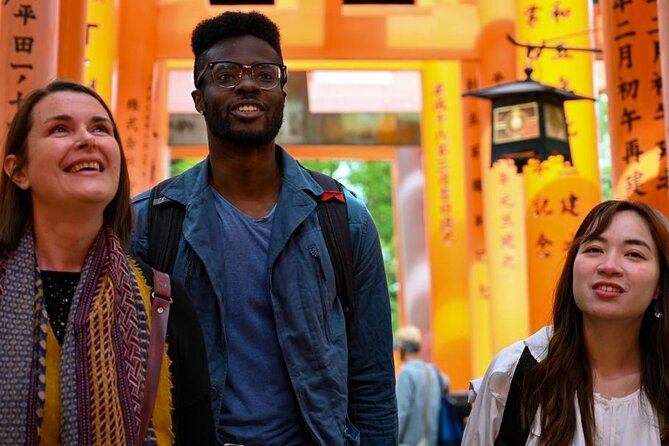
The narrow streets of Sannenzaka and Ninenzaka offer the classic old-Kyoto experience. Wooden buildings, pottery shops, crafts, sweets, and small stores line the route toward Kiyomizu-dera. It is a good section for browsing, but it is not the quietest part of the city.
Kiyomizu-dera adds the major architectural payoff. Its wooden stage looks out over Kyoto, and the Otowa Waterfall is associated with blessings for longevity, success, and love. A guide can explain the customs here and help you make sense of the many small details that are easy to miss.
Entry fees are extra. The approach streets also invite shopping, so set a limit if you do not want a bag of sweets and pottery following you for the rest of the day.
Kiyomizu-dera is best for someone who wants a major temple plus traditional streets in one connected walk. It is less suitable for anyone with limited mobility or a strong dislike of slopes, stairs, and crowds, although the activity description says most people can participate. Ask your host about the route when arranging the tour.
Fushimi Inari and the red torii path
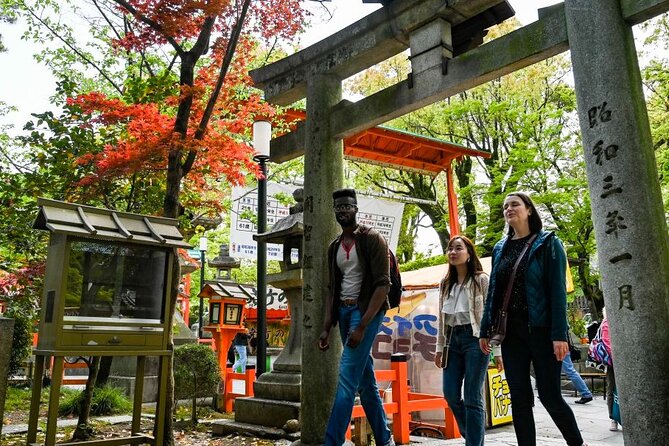
Fushimi Inari-taisha is the most ambitious optional stop in this plan. Its rows of vermilion torii gates climb the wooded slopes behind the shrine, and fox statues appear throughout the grounds. You do not need to complete the whole route to enjoy it. A shorter walk can still give you the main visual experience and some uphill views.
Amy has helped a visitor with limited time combine Fushimi Inari and Kiyomizu-dera. Kenta Suzuki has also been praised for planning a detailed outing around Fushimi Inari and Arashiyama’s bamboo grove at a comfortable pace. These examples show what a strong host can do, but they should not be read as a guaranteed route for every booking.
The practical issue is distance. Fushimi Inari is not simply another nearby stop on a Gion walk. Public transport or a local taxi may be needed, and those costs are separate. If this shrine is a must-see, say so in the questionnaire and confirm how much walking and travel time your host expects.
Kiyamachi Street and food advice
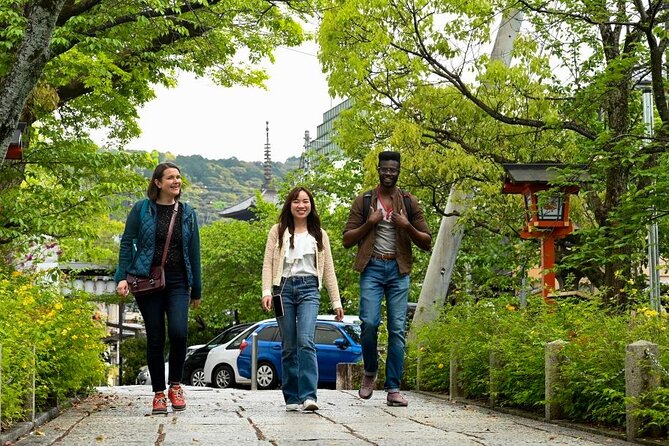
Kiyamachi Street can provide a lively finish, with bars, cafes, and restaurants near the river. It is a sensible place to ask for dinner ideas, especially if you want help choosing between a traditional meal, a casual cafe, or a drink.
Food is not included, but that is not necessarily a weakness. You can choose what fits your appetite and budget instead of being assigned a restaurant. Guides have offered useful recommendations for markets, restaurants, and conveyor-belt sushi, and some have stayed involved long enough to help with the next stop after the tour.
I would treat food suggestions as part of the host’s local orientation, not as a formal tasting tour. If eating is your main goal, make that clear before booking. The standard experience is a walking tour with optional stops chosen together.
What the guides add to the day
The guide can make or break a private experience, yet this company uses a range of local hosts rather than promising one named person. The most praised qualities are warmth, flexibility, clear English, and the ability to explain both historical events and ordinary life.
Amy appears repeatedly in the feedback, with strong marks for adapting plans, explaining Japanese history, using public transport, and taking photos. Alex has been praised for packing a lot into three hours without losing the cultural side of the visit. Miki has helped first-time visitors get their bearings, while Kokoro has been valued for language skills, temple knowledge, and easy navigation through buses and subways.
Other hosts bring different strengths. Hiro has taken people to less expected places such as an art gallery and a house connected with a shogun’s wife for matcha tea. Ceci has kept children engaged and helped a family reach the subway afterward. Milo has been praised for answering a wide range of questions while keeping an easy pace.
You cannot select a particular guide with certainty from the information provided. You can, however, use the questionnaire and pre-tour messages to explain the kind of host you want. Ask for history, food, photography, family activities, or transport help rather than simply asking for the best sights.
Timing, transport, and walking effort
The advertised duration runs from two to five hours. That range is important. Two hours suits a focused neighborhood walk, such as Gion, Pontocho, Yasaka Shrine, and Maruyama Park. Five hours gives you a better chance of connecting central Kyoto with a farther site, although even five hours cannot cover every place listed.
Public transport may be used between sites, with the cost paid separately. The private vehicle is not included. Some guides have helped people learn how to use Kyoto’s trains and buses, which can be one of the most useful parts of the outing because you leave with practical skills for the rest of your stay.
The route is adjusted as you go, but that freedom can also create uncertainty. Ask at the start which places are essential, which are optional, and how much time each transfer will take. If you have a flight, train, child’s nap, or dinner reservation, say so clearly.
Is $102.03 per person good value?
The price is reasonable for a private, customized experience, especially if you are sharing it with family or friends and want a guide for your first day. You are paying for planning, private attention, local advice, and the ability to change the route, not for entrance tickets or a set meal.
Value improves when you use the host well. Ask about shrine etiquette, restaurant areas, transport, quieter temples, and what to see tomorrow. A three-hour walk that teaches you how to use the city can be more useful than a longer outing that only leaves you with photographs.
The price is less attractive if you already know Kyoto well or want a tightly scheduled sightseeing package with tickets included. It may also feel expensive for a solo visitor who wants only one monument explained. In that case, compare the cost with a small-group temple tour or an independent visit.
The experience has a 4.9 rating from 1,544 ratings and a 96 percent recommendation rate. Those figures suggest strong satisfaction, but the range of hosts and the open itinerary mean your preparation still matters.
Who should book this Kyoto experience?
I would recommend it most strongly for:
- First-time visitors who want help understanding Kyoto’s customs and districts.
- Families that need a guide who can adjust the pace and keep children interested.
- Couples who want photos, food advice, and a more personal route.
- Short-stay visitors trying to connect major sights efficiently.
- People who enjoy asking questions rather than listening to a fixed speech.
- Anyone who wants less familiar temples or local streets added to a classic route.
I would hesitate if you need guaranteed visits to every named site, a private car, included admission, or a formal food tour. The description offers possibilities, not promises. Your questionnaire and pre-tour conversation are the best tools for turning those possibilities into a workable plan.
Free cancellation is available up to 24 hours before the start time for a full refund. Changes or cancellations inside that window are not accepted for a refund, so keep the local cut-off time in mind.
My verdict on this flexible Kyoto walk
I like this experience because it treats Kyoto as a city to understand, not just a collection of photo stops. The strongest parts are the private format, the useful local guidance, and the ability to combine familiar places such as Gion and Kiyomizu-dera with quieter temples or personal interests.
Book it if you want a friendly local introduction and are willing to help shape the day. Before paying, decide your top two or three priorities, ask how much walking they require, and confirm which transport and entry costs are extra. If you do that, $102.03 per person can buy a very useful first look at Kyoto, plus advice that continues to pay off after the guide says goodbye.
FAQ
How long does the private Kyoto tour last?
The experience lasts approximately two to five hours. The shorter option is best for a focused area, while five hours gives you more room for several districts or a longer transfer.
Is the tour private?
Yes. Only your group participates in the activity.
What is included in the price?
The price includes a private walking experience, a pre-experience questionnaire, communication with your host before the tour, a meeting at your accommodation or a central location where accessible, flexible pacing, and local recommendations.
Are temple admission fees included?
No. Entry fees are not included. You and your host can decide which places to enter on the day.
Are food and drinks included?
No. Food and drinks are not included. You can choose to stop for them with your host and pay separately.
Is transportation included?
No. The experience is mainly on foot, and a private vehicle is not included. Public transport or local taxis may be used at an additional cost.
Where does the tour start and finish?
The listed meeting point is Starbucks Coffee at Kyoto Sanjo-ohashi Bridge. The activity ends back at the meeting point.
Can the itinerary be changed?
Yes. The route and pace are flexible, and the host can adjust the experience around your interests. There is no fixed or guaranteed itinerary.
Can I cancel for a full refund?
Yes, if you cancel at least 24 hours before the local start time. Cancellations or changes made less than 24 hours before the start time are not refunded.
Just added in Kyoto
- The “Golden Route” and Ancient Japan by DIAMIR Erlebnisreisen – 14-Day Tour★ 2.0 · 2 reviews
- Japan: Castles & Cuisine by G Adventures – 6-Day Kyoto to Osaka Tour★ 4.5 · 4 reviews
- Cycle Japan by Explore! – 13-Day Kyoto to Tokyo Tour★ 4.7 · 12 reviews
- Cycle Japan by Intrepid Travel – 11-Day Kyoto to Tokyo Tour★ 4.8 · 2 reviews
- Classic Japan by Intrepid Travel – 11-Day Kyoto to Tokyo Tour★ 4.4 · 14 reviews
- Ancient & Modern Japan 14-Day Tour by Exodus Adventure Travels★ 4.4 · 40 reviews
- 5 Day Cultural Adventure of Kyoto, Nara & Osaka by Tourist Journey★ 2.5 · 2 reviews
- 12 Days Kinosaki Onsen Escape: A Journey Through Japan’s Timeless Towns by UME Travel★ 4.8 · 5 reviews
Kyoto Tours, compared.
![[Kyoto & Nara Day Tour] Sagano Scenic Railway & Nara Park & Fushimi Inari Taisha Thousand Torii Gates & Togetsukyo Bridge & Bamboo Grove & Kimono Forest (Departing from Osaka)](https://media.japanvisits.com/wp-content/uploads/kyoto-nara-day-tour-sagano-scenic-railway-nara-park-fushimi-inari-taisha-thousand-torii-gates-togetsukyo-bridge-bamboo-grove-kimono-forest-departing-from-osaka-k110001-400x257.jpg)
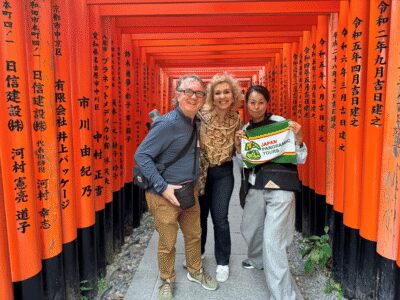
Fushimi Inari, Kinkakuji, Bamboo Grove 1 Day Bus Tour
Read our review →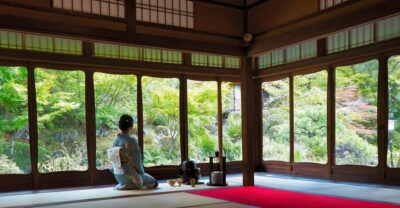
Tea Ceremony in a Traditional Tea House in Kiyomizu
Read our review →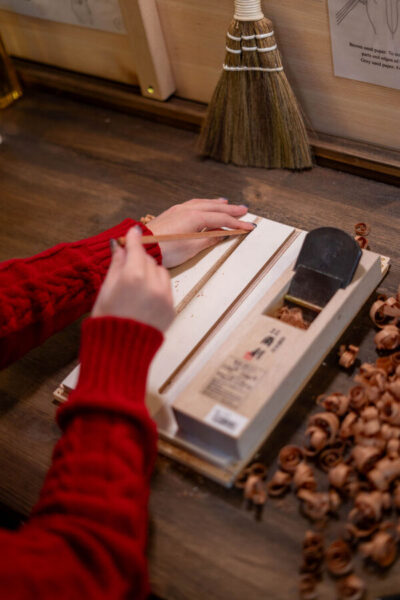
Gion Make Your Own Chopsticks with Engraving Option
Read our review →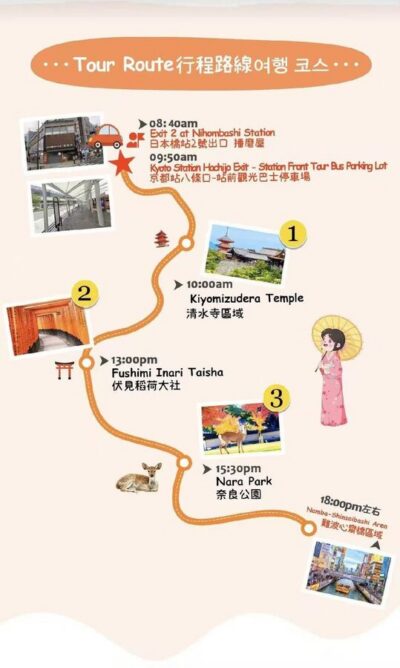
Kyoto Nara Day Trip │ Kiyomizu-dera Temple + Fushimi Inari-taisha Shrine + Nara Park (Departing from Osaka/Kyoto)
Read our review →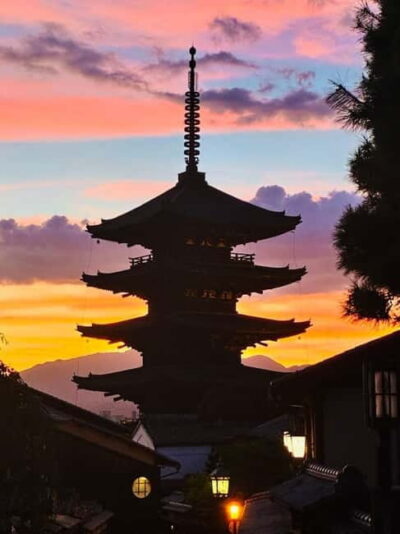
Kyoto Geisha Walking Tour: Gion District & Hidden Gems
Read our review →