
Reviewed · COOKING CLASSES
Private Market Tour and Cooking Class with Kanae, a Sapporo Local
Fresh food, friendly company, real home cooking. This four-hour Sapporo experience pairs a market visit with a private cooking class at Kanae’s home. I especially like the chance to shop for ingredients with a local and the relaxed meal with one or two glasses of Hokkaido alcohol included. The main consideration is that the market portion depends on the day, since the Sapporo Morning Market is closed Wednesdays and Sundays.
This is a strong pick if you want more than a quick restaurant meal. Kanae’s open-kitchen class gives you time to ask questions, adjust the pace, and learn dishes that reflect Hokkaido. The only practical wrinkle is transportation for larger groups: her car holds four visitors, not five.
In This Review
- Key details before you book
- Why this Sapporo food experience feels different
- The morning begins at Maruyama Koen Station
- Market shopping puts Hokkaido on the plate
- A 15-minute drive leads to Kanae’s open kitchen
- The cooking class favors useful home dishes
- Lunch, local alcohol, and time to talk
- What the $82 price really buys you
- Who should book this class?
- Should you book Kanae’s market and cooking class?
- FAQ
- How long does the experience last?
- Where does the tour begin?
- What time does the tour start?
- Which markets will I visit?
- Is the Sapporo Morning Market open every day?
- Where does the cooking class take place?
- How many people can join Kanae in her car?
- Are vegetarian and vegan meals available?
- Are lunch, alcohol, and gratuities included?
Key details before you book
- Shop before you cook: Kanae leads you through local fish, fruit, vegetable, and seafood markets before choosing ingredients for lunch.
- Cook inside a Sapporo home: The class takes place in Kanae’s open kitchen, followed by the meal you helped prepare.
- Hokkaido flavors take center stage: Menus can include local seafood, salmon, edible seaweeds, mushrooms, tofu, and other seasonal ingredients.
- A genuinely private format: Only your party participates, so you can ask questions freely and work at a comfortable speed.
- Alcohol and gratuities are included: Expect one or two glasses of local alcohol with the meal, along with the tip.
- Plan around the market calendar: The Sapporo Morning Market is closed Wednesdays and Sundays, and larger groups need a taxi to follow Kanae’s car.
Why this Sapporo food experience feels different
Sapporo has no shortage of places to eat, from noodle shops to seafood counters. Yet ordering a finished dish tells you little about how local ingredients reach the table. This experience lets you see the ingredients first, then prepare them in a private home.
That order matters. At the market, you can look closely at the seafood and produce before lunch is decided. Kanae explains what you are seeing and helps select a few fresh ingredients for the class. You are not simply walking past stalls while a guide recites facts. The market visit has a job to do: it supplies the meal.
The four-hour format also gives the day a comfortable rhythm. You meet at Maruyama Koen Station at 9:00 a.m., visit the markets, drive about 15 minutes to Kanae’s home, cook for roughly one to one and a half hours, then sit down to eat. The timing makes this a half-day commitment rather than a short demonstration squeezed between sightseeing stops.
I particularly like the private setup. If you are unsure how to handle fish, curious about a Japanese ingredient, or simply need more time with a knife technique, you can ask without feeling that a large class is waiting for you. Solo participants can also book, and the private format means the experience does not depend on filling a big group.
More Cooking Classes in Sapporo:
- Wagashi traditional japanese sweets class
★ 5.0 · 49 reviews - Private Japanese Cooking Class in Sapporo with Local Chef Shiori
★ 5.0 · 34 reviews - Private Japanese Cooking Class in Sapporo with Local Host Kanae
★ 5.0 · 20 reviews
The morning begins at Maruyama Koen Station
The meeting point is Maruyama Koen Station, at 26 Chome-2 Odorinishi in Sapporo’s Chuo Ward. You are responsible for reaching the station, since hotel pickup and drop-off are not included.
From there, Kanae takes you to the local market area. The stated plan includes the Sapporo Morning Market and Jogai Market near Sapporo Central Wholesale Market. The exact market emphasis may vary, and one menu may be built around the central market rather than the better-known Nijo Ichiba area.
That distinction is useful. Nijo Ichiba is convenient and familiar to many visitors, but Sapporo’s market choices are not limited to it. A visit to the morning or wholesale market area can give you a different look at the city’s seafood trade and everyday produce. You might see fish, vegetables, fruit, crabs, and edible seaweeds, depending on the season and what is available that morning.
The market is not just a photo stop. Kanae helps you understand what you are buying and selects ingredients to use later. Past menus have included fresh salmon, fish preparations, gomae, agedashi tofu, mushroom miso soup, and other home-style dishes. Another meal focused on Hokkaido seafood included explanations of local crabs and edible seaweeds.
Because the menu changes with the season, you should not book this expecting one fixed recipe list. That is a strength for many people. You are more likely to cook with what is good that day, rather than work through a rigid menu built months in advance.
Market shopping puts Hokkaido on the plate
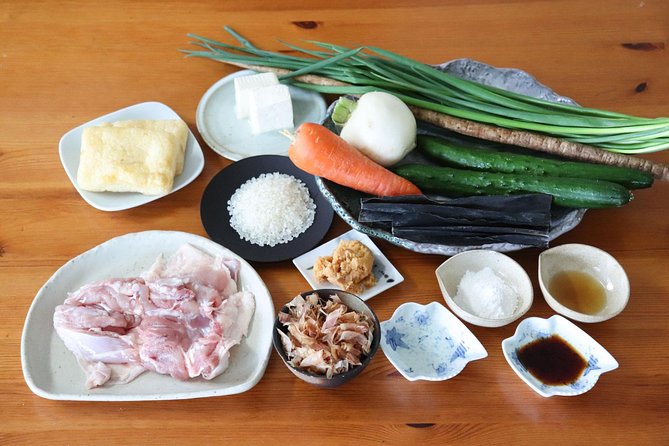
Hokkaido is known in Japan for its seafood, dairy products, produce, and cold-climate ingredients. This class gives those foods a practical setting. Instead of hearing a broad speech about regional cuisine, you encounter ingredients in the place where they are sold and then use them at lunch.
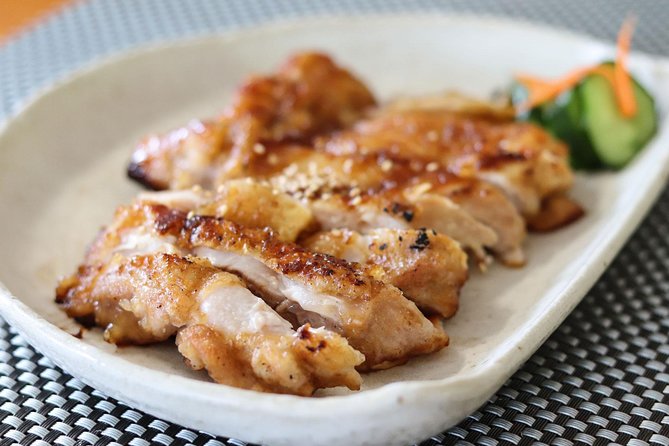
The seafood focus can be especially rewarding. The market portion may introduce you to different crab varieties, fish, and seaweeds, while the cooking portion shows how those ingredients fit into a meal. Fresh salmon has appeared in a menu, and the class can include more than one way to prepare fish.
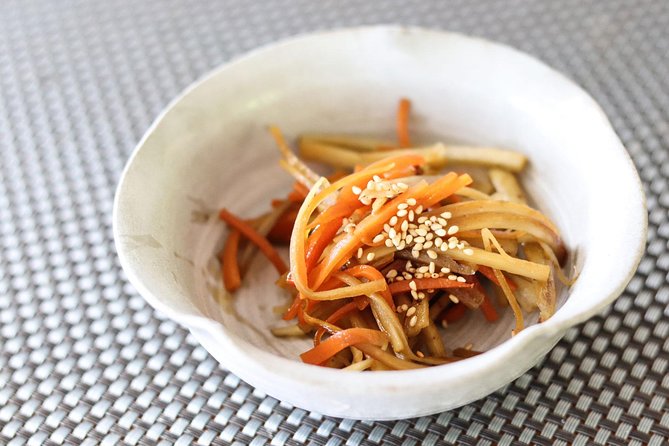
Vegetables and side dishes keep the meal from becoming a seafood-only lesson. Gomae, often made with a sesame dressing, and agedashi tofu offer a taste of everyday Japanese cooking. Mushroom miso soup adds another useful skill: building a simple soup with ingredients that are easy to recognize and adapt.
The market is also a good place to ask questions that are hard to answer in a restaurant. What is this seaweed? How do Japanese cooks use this fish? Which crab is common in Hokkaido? Kanae’s role is to connect the display case to the kitchen.
One point to keep in mind is that shopping conditions are seasonal. The menu may change, and a certain fish or vegetable may not be available. If you care about a particular regional dish, tell Kanae when you book. She is happy to introduce Hokkaido dishes instead of a more typical home menu if you are interested.
A 15-minute drive leads to Kanae’s open kitchen
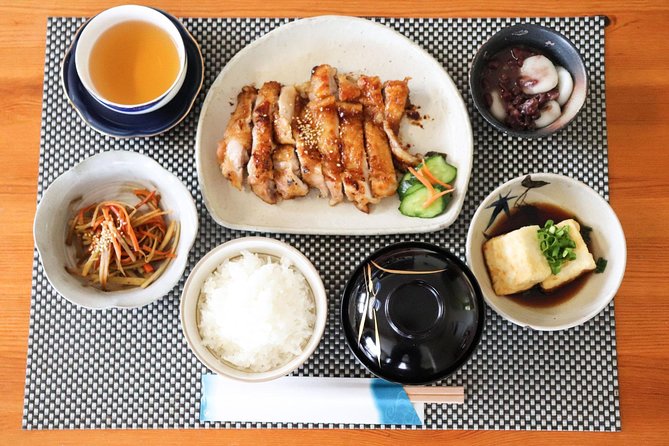
After the market visit, Kanae drives you to her home, about 15 minutes away. This short ride is part of the experience, but it also creates a logistical limit. Her car fits five people total, including Kanae, so the maximum is four visitors.
A group of five or more can still take part, but everyone must use a taxi that follows Kanae’s car after meeting her at the station. That adds coordination and cost, so smaller parties are the easier fit. If you are booking for a larger family or group of friends, settle this point before the morning begins.
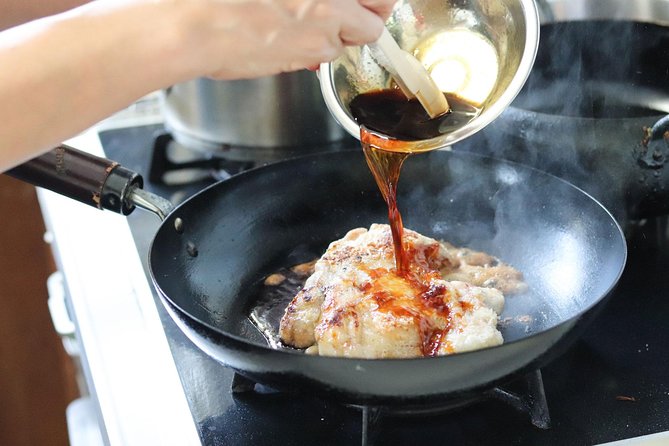
At home, the tone changes from market tour to hands-on class. You work with Kanae in her open kitchen and prepare a traditional homemade Japanese meal. The cooking takes about 60 to 90 minutes, depending on the menu and the pace of your group.
This is not presented as a formal culinary-school lesson. That is part of its appeal. You are learning how a local person prepares food at home, with time to stop, ask, taste, and watch. If your party has different cooking abilities, the private format lets people take on different tasks without the pressure of a fixed class size.
Several strong points come through in the way the experience is structured. Kanae is described as friendly, pleasant, and happy to modify the menu. She has adjusted dishes for dietary needs, and her English is reported as very good. Those details matter because a cooking lesson is only as useful as the communication between host and participant.
More Markets and Food Halls in Sapporo:
- Authentic Sapporo: Nijo Market Seafood Lunch & History Tour
★ 4.8 · 20 reviews - Authentic Sapporo: Nijo Market Seafood Lunch & Local History Tour
★ 5.0 · 13 reviews - Tokyo Tsukiji Fish Market Food and Culture Walking Tour
★ 5.0 · 3,184 reviews - Tokyo: Tsukiji Fish Market Food and Walking tour
★ 5.0 · 1,724 reviews
The cooking class favors useful home dishes
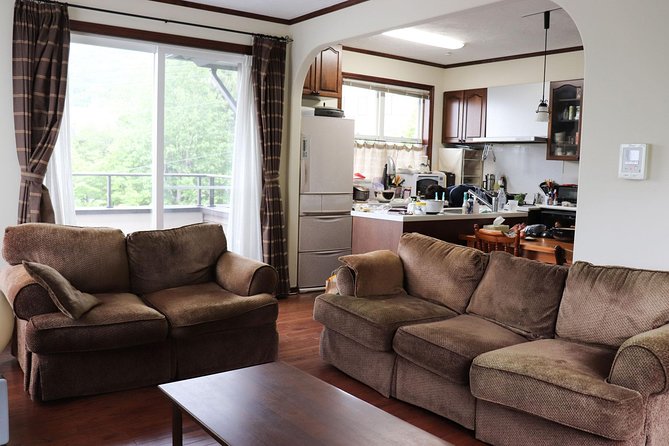
The dishes are likely to be practical rather than showy. You may prepare fish, soup, tofu, vegetable sides, or regional specialties, then eat the results together. The value is not just in mastering one recipe. It is in seeing how several dishes form a balanced Japanese meal.
That makes the class useful for people who cook at home. The food is not designed only for a restaurant presentation. You can take home the recipes for the dishes you make, which gives the experience a life beyond your Sapporo visit.
The class can also suit beginners. A private host can slow the process and explain unfamiliar ingredients. If you already cook often, you can use the market and regional focus to learn something more specific about Hokkaido seafood or local preparation methods.
The menu is not guaranteed in advance, so keep your expectations flexible. If you want a famous dish by name, ask before the tour. If you would rather let the market and season decide, the open-ended format works well.
Food restrictions should be given at booking. Vegetarian and vegan options are available, and the host asks for allergies, dietary restrictions, and cooking preferences in advance. Do not wait until the market visit to mention a serious allergy. The shopping plan and menu need to be arranged before the class.
Lunch, local alcohol, and time to talk
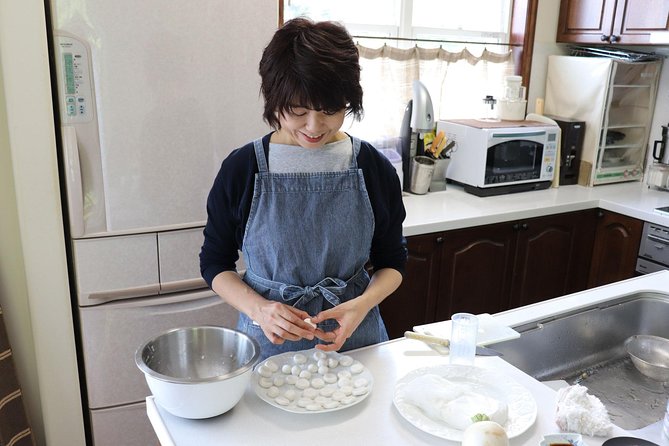
Once the cooking is complete, you sit down to eat what you prepared. This shared meal is the emotional center of the morning. You are not being rushed out after the lesson, and the food has a clear connection to the market visit and your own work in the kitchen.
One or two glasses of local alcohol are included. That might suit a relaxed lunch, but anyone who does not drink should note that the package includes alcohol rather than treating it as an important reason to book. The main value remains the food, instruction, and time with Kanae.
The meal also gives you space to talk about Japanese food and daily life. The experience is built around personal contact, not just a list of sights. For many people, sitting in a local home and eating a meal prepared together will be more memorable than another restaurant stop.
The day ends back at the original meeting point. Hotel transportation is not included, so plan your route to and from Maruyama Koen Station. Since the start time is 9:00 a.m., check your morning train connection carefully.
What the $82 price really buys you
At $82 per person, this is not the cheapest way to eat in Sapporo. You could buy a good lunch for much less. But a restaurant meal does not include a market tour, private instruction, ingredients, local drinks, transportation between the markets and home, or recipes to use later.
The price makes better sense if you value several parts of the experience at once. You are paying for Kanae’s time before, during, and after cooking. You also avoid the uncertainty of choosing unfamiliar seafood on your own and wondering how to prepare it.
The private format is another part of the value. A large class might cost less per person, but it usually gives you less direct attention. Here, the group shares one host, one market visit, one kitchen, and one meal. Couples, families, and small groups can make good use of that arrangement.
Group discounts are available, so the per-person cost may work better for a larger eligible party. Still, groups of five or more face the taxi issue, and that should be part of your budget.
With 5 or more bookings recorded in the previous month and a 4.9 rating from 29 ratings, the experience has a strong record. I would not treat numbers alone as a guarantee, but the repeated praise points in the same direction: Kanae’s warmth, the market access, the fresh ingredients, and the meal at home are the heart of the tour.
Who should book this class?
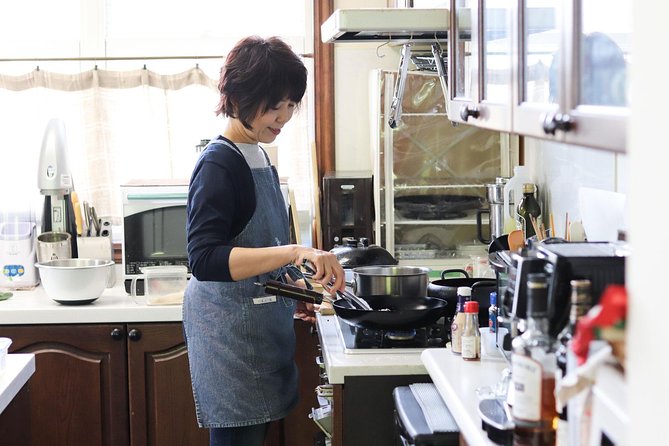
I would recommend it most strongly to food-focused visitors who want to understand what they eat in Sapporo. It is also a good choice for anyone who prefers a personal activity over a standard sightseeing route.
You should consider booking if you:
- Enjoy seafood, produce markets, and regional Japanese cooking
- Want to learn several home-style dishes in one session
- Prefer a private class where you can ask many questions
- Like meeting a local in a home setting
- Want recipes to take home
- Have dietary needs that can be shared in advance
- Are comfortable with a seasonal menu that may change
It may be less suitable if you want a fast, highly polished cooking demonstration, a fixed menu, or hotel pickup. It also requires a morning start and some planning for the trip to Maruyama Koen Station.
The experience is wheelchair accessible only to the extent stated in the available details, so specific access questions should be confirmed before booking. Service animals are allowed, and the activity is near public transportation.
Free cancellation is available if you cancel at least 24 hours before the local start time. Changes or cancellations inside that window are not accepted for a refund.
Should you book Kanae’s market and cooking class?
Book it if you want your Sapporo food experience to include shopping, cooking, and conversation rather than just eating. The most appealing detail is the link between the market and the lunch: you see local ingredients, choose some of them, prepare them, and then sit down to enjoy the result.
I would especially choose this for a couple, family, or small group that values personal attention. Ask Kanae about Hokkaido dishes when you book, list every dietary need, and remember that the market schedule changes on Wednesdays and Sundays.
Skip it if your Sapporo plans cannot spare a full morning, if you need hotel transportation, or if your group has five or more people and does not want to arrange a taxi. For everyone else, the $82 price is fair for a private half-day with fresh food, local guidance, cooking instruction, lunch, and a warm welcome into daily Japanese life.
FAQ
How long does the experience last?
The experience lasts approximately four hours. The cooking portion takes about one to one and a half hours, followed by the meal.
Where does the tour begin?
It begins at Maruyama Koen Station, located at 26 Chome-2 Odorinishi, Chuo Ward, Sapporo, Hokkaido 064-0820, Japan.
What time does the tour start?
The start time is 9:00 a.m.
Which markets will I visit?
The stated itinerary includes the Sapporo Morning Market and Jogai Market near Sapporo Central Wholesale Market. The market visit may vary depending on the day and plan.
Is the Sapporo Morning Market open every day?
No. The Sapporo Morning Market is closed on Wednesdays and Sundays.
Where does the cooking class take place?
The cooking class takes place in Kanae’s home, in her open kitchen. She drives the group there after the market visit, which takes about 15 minutes.
How many people can join Kanae in her car?
Kanae’s car holds five people total, including the driver. The maximum is four visitors.
Are vegetarian and vegan meals available?
Yes. Vegetarian and vegan options are available, but you must advise the host at the time of booking. You should also provide details about allergies, dietary restrictions, and cooking preferences.
Are lunch, alcohol, and gratuities included?
Yes. Ingredients, the meal, one or two glasses of local alcohol, and gratuities are included. Hotel pickup and drop-off are not included.
Just added in Sapporo
- Hokkaido 7 Days Noboribetsu, Asahikawa, Biei by Delightful Travel★ 5.0 · 1 review
- 6 Days Hokkaido’s Floral Symphony Tour by UME Travel★ 5.0 · 2 reviews
- Full Day Private Skiing / Snowboarding Tour in Sapporo★ 5.0 · 30 reviews
- Snowshoe Hike Tour from Sapporo include hotel p/up & drop off★ 5.0 · 16 reviews
- Wagashi traditional japanese sweets class★ 5.0 · 49 reviews
- Snowshoeing and Onsen Adventures in a Winter Wonderland -Sapporo.★ 5.0 · 30 reviews
- Authentic Sapporo: Nijo Market Seafood Lunch & Local History Tour★ 5.0 · 13 reviews
- Sapporo Sumo Show Experience with Japanese Food and Photo★ 4.5 · 38 reviews
Cooking Classes, compared.
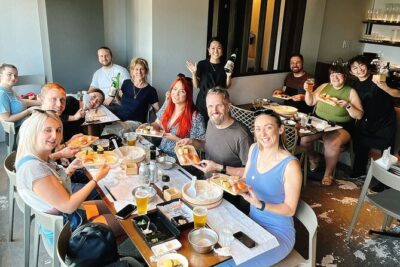
Sushi Making Tokyo Roll and Authentic Japanese Sushi Class
Read our review →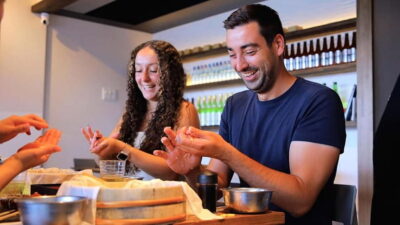
Roll and Authentic Sushi Making Class in Asakusa
Read our review →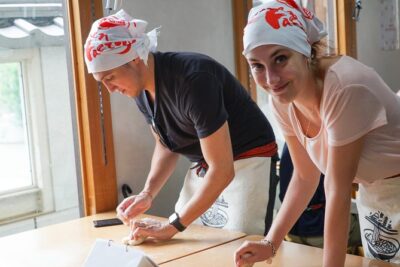
Ramen Cooking Class at Ramen Factory in Kyoto
Read our review →
Sushi Making Class in a Happi Coat near a Famous Spot
Read our review →
Sushi Making Osaka Roll and Authentic Japanese Sushi Class
Read our review →
Tokyo Sushi Making Class in Tsukiji with Professional Chef
Read our review →
Ramen & Gyoza Cooking Class in Tokyo with Local Supermarket Visit
Read our review →Browse the lists this tour appears in