Reviewed · KYOTO TOURS
Roketsu dyeing experience: M course Roketsu Dyeing Experience
Make your own Kyoto keepsake. This Roketsu dyeing workshop lets you draw a design, apply wax, and create a finished dyed item with help from local craftspeople. I like the hands-on format and the fact that you take your work home the same day, often after about 90 to 120 minutes.
I also like the quiet change of pace from temple visits and long walks. The owner and his mother, Yoko, guide beginners patiently, and you can choose from a large collection of designs or bring your own sketch. The main consideration is communication: English is limited, so some instructions may require careful watching and demonstration.
In This Review
- Key points to know before booking
- Making a Kyoto souvenir with your own hands
- What happens during the 90 to 120 minute workshop
- Choosing between a T-shirt, tote bag, or wall hanging
- Why the family-run setting matters
- A calm break from Kyoto’s walking schedule
- The $25.77 price and what you receive
- Getting to Nishikyogoku and planning your day
- Who will enjoy this most
- Practical tips for a better finished piece
- Should you book Roketsu73?
- FAQ
- Where does the Roketsu dyeing experience take place?
- How long does the workshop last?
- Can I take my finished item home the same day?
- What can I make during the workshop?
- Do I need drawing or craft experience?
- Can I choose my own design?
- What dyeing method is used?
- Is the workshop suitable for families?
- Is the activity available with a mobile ticket?
- What is the cancellation policy?
Key points to know before booking
- You create the design yourself: Choose a stencil, combine patterns, or draw something original.
- The process uses traditional wax resist dyeing: You apply melted wax before the fabric is dyed.
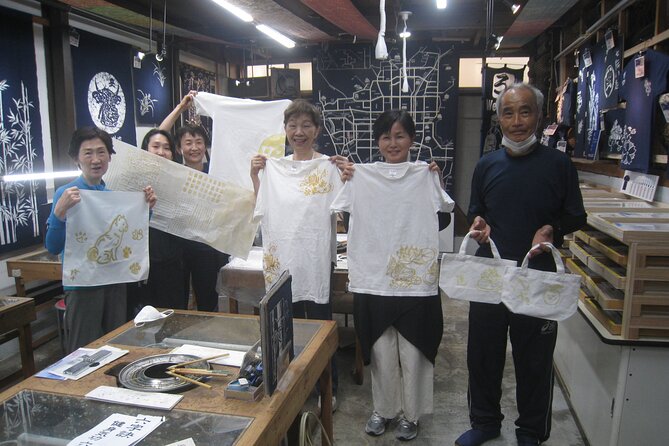
- You choose the item: Options described include T-shirts, tote bags, banners, and hanging pieces.
- The finished work is available the same day: The usual session lasts about 90 to 120 minutes, though detailed designs can take around three hours.
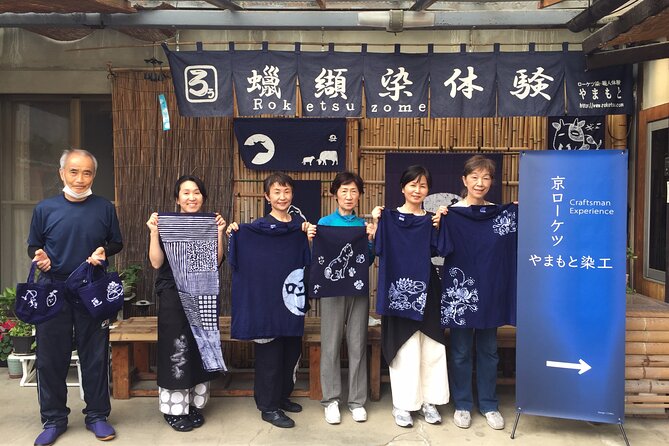
- It is a small family-run studio: The owner and his mother, Yoko, offer patient, practical help.
- The workshop sits away from Kyoto’s main sightseeing circuit: It offers a useful break from crowded attractions, but you should allow time to reach Nishikyogoku.
Making a Kyoto souvenir with your own hands
Kyoto has no shortage of polished craft shops, but buying a finished object is not the same as making one. At Roketsu73, you take part in the work from the first sketch to the final dyed fabric.
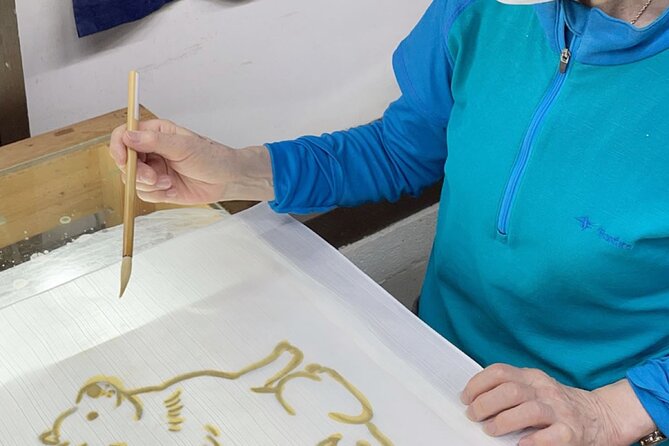
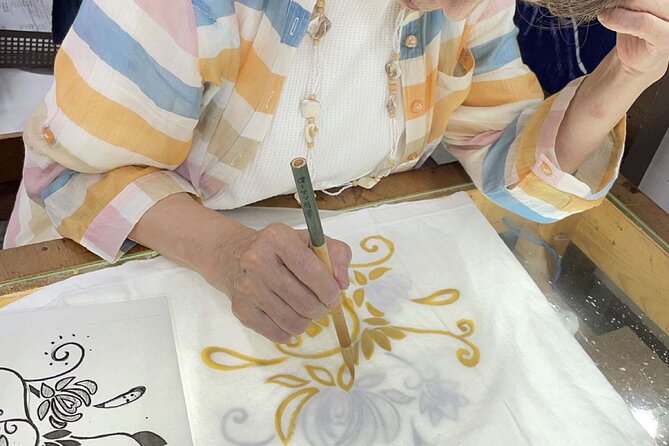
The appeal is simple: you do not just watch a craft demonstration. You draw the image, place it on the fabric, apply the wax, and take part in creating the pattern. The studio then handles the dyeing stage, giving you a finished piece that carries your own uneven lines, choices, and small surprises.
That personal touch is the real value. A mass-produced souvenir may look perfect, but a handmade T-shirt or wall hanging tells a better story when you return home. You can point to the design and explain that you made it in Kyoto.
The experience is also forgiving. You do not need formal art training, and several people with little confidence in crafts came away pleased with their results. The instructors offer help throughout the process, so you are not left alone with a blank piece of fabric and a pot of wax.
A few more options to weigh up in Kyoto
- PERFECT KYOTO 1-Day Bus Tour
★ 5.0 · 13,518 reviews - [Kyoto & Nara Day Tour] Sagano Scenic Railway & Nara Park & Fushimi Inari Taisha Thousand Torii Gates & Togetsukyo Bridge & Bamboo Grove & Kimono Forest (Departing from Osaka)
★ 4.9 · 10,942 reviews - Kyoto: Fushimi Inari, Kinkakuji, Bamboo Grove 1 Day Bus Tour
★ 4.8 · 4,316 reviews
What happens during the 90 to 120 minute workshop
The activity begins at Roketsu73 in Nishikyogoku, in Kyoto’s Ukyo Ward. The meeting point is also where the workshop ends. It is outside the city’s most heavily visited areas, which gives the session a more local feel, though you should not treat it as a quick stop between two central Kyoto temples.
The first decision is what to make. Choices described for the workshop include T-shirts, tote bags, decorative banners, and hanging pieces. The available item can affect both the size and the amount of drawing required, so ask about the options before settling on a design.
Next comes the design. You can select from a large supply of stencils and pattern drafts. Some descriptions refer to dozens of designs, while another mentions hundreds of stencils, so the exact selection may vary. You can use one pattern as provided, combine several, or create something freehand.
If you have your own sketch, you can bring it and work toward a more personal design. This is a good reason to prepare before arriving. A simple outline is easier to transfer than a highly detailed drawing, especially if you want to stay near the advertised session length.
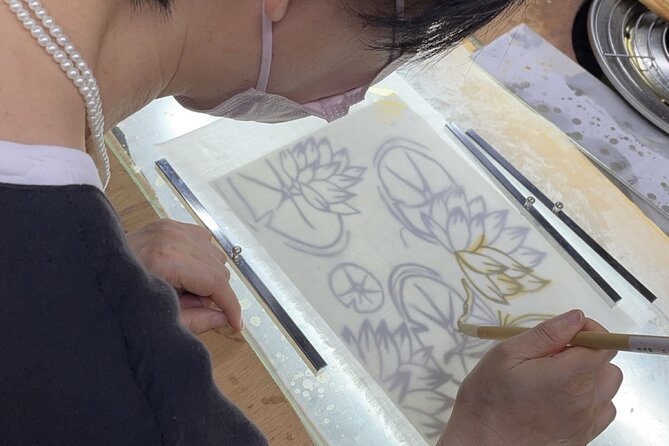
Before working on the final fabric, you may practice on a small piece of cloth. This is useful because the wax application is the part that needs the most care. It gives you a chance to see how your hand pressure and line thickness affect the result.
You then apply melted wax to the chosen fabric. The wax blocks the dye from reaching certain areas, creating the pattern after dyeing. This is the classic resist-dye principle behind the work, but you do not need to master the theory to enjoy the activity. The process is tactile, slow, and easy to follow once you watch the demonstration.
The fabric is dyed as part of the workshop process. The finished effect can be hard to predict perfectly, which is part of the charm. Even the same rough sketch can produce a different result depending on the conditions at the time.
The item is generally ready to take home that day. The published timing is about 90 to 120 minutes, but that is not a strict promise for complex designs. One family spent several hours because they chose detailed patterns, while another solo participant found the whole process calm and unhurried.
Choosing between a T-shirt, tote bag, or wall hanging
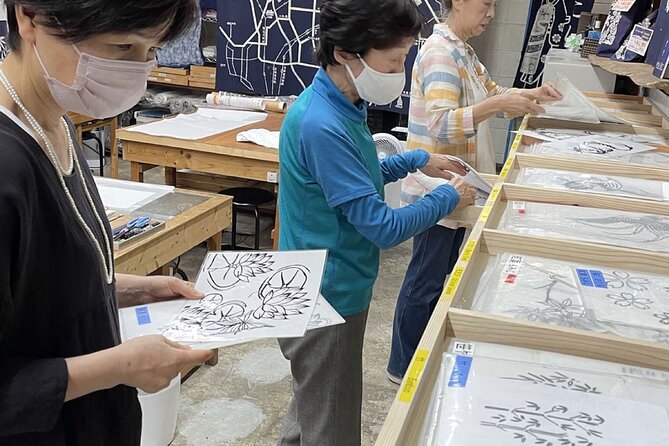
Your choice of item changes the usefulness of the souvenir. A T-shirt is easy to wear and makes the experience part of your daily life, but you will need to think about placement, size, and how bold you want the design to be.
A tote bag is practical and gives you a good surface for a clear pattern. It can also be a sensible pick if you want something easy to pack. A banner or wall hanging works better if your main goal is a decorative reminder of Kyoto.
There is no single best option. I would choose the item based on how you expect to use it at home, not just on which one looks attractive in the studio. If you are making several pieces as a family, choosing different formats can make the final results more varied.
The workshop is suitable for children as well as adults. A family with two adults and four teenagers spent several hours making T-shirts and a banner, and the experience gave them time to work together without phones or sightseeing schedules competing for attention. A six-year-old also took part with family members.
That said, younger children may need close help with drawing and wax application. The activity is hands-on, but it is not a rushed entertainment stop. It rewards patience.
Why the family-run setting matters
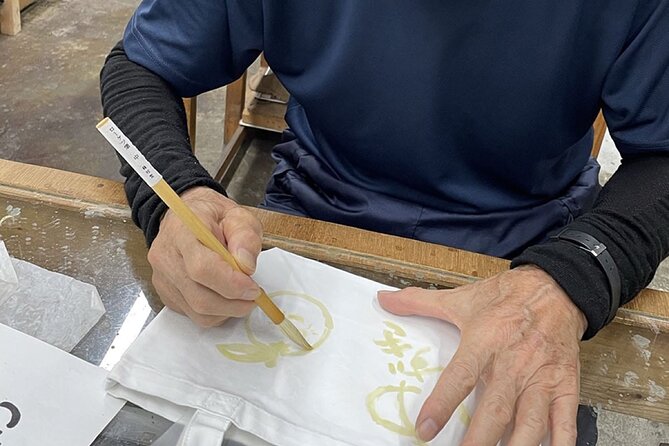
The studio is operated by local craftspeople rather than presented as a large commercial attraction. The owner and his mother, Yoko, are repeatedly described as kind, patient, and willing to help with each step.
That personal attention changes the mood. You can ask for guidance on a design, watch how the wax is applied, and get help when something does not go as planned. The support is practical rather than formal, which suits a craft class.
The limited English is the one clear weakness. Some visitors found the technique harder to understand because the staff speak little English. Others managed well through demonstrations, gestures, and hands-on instruction. I would expect a few moments of confusion, but not a barrier that prevents participation.
A useful approach is to watch closely before starting and confirm the next step with a simple gesture or example. If you have a design in mind, showing a sketch may communicate more clearly than trying to explain it in detail.
This language gap is worth considering if you want a lecture about Japanese textile history in fluent English. It is less of a problem if you mainly want to make something and are comfortable learning by watching.
A completely different kind of day out:
- Kyoto: Tea Ceremony in a Traditional Tea House in Kiyomizu
★ 4.9 · 3,519 reviews - Kyoto: Gion Make Your Own Chopsticks with Engraving Option
★ 5.0 · 3,465 reviews - Kyoto Nara Day Trip │ Kiyomizu-dera Temple + Fushimi Inari-taisha Shrine + Nara Park (Departing from Osaka/Kyoto)
★ 4.7 · 3,408 reviews - Kyoto Geisha Walking Tour: Gion District & Hidden Gems
★ 4.7 · 3,273 reviews
A calm break from Kyoto’s walking schedule
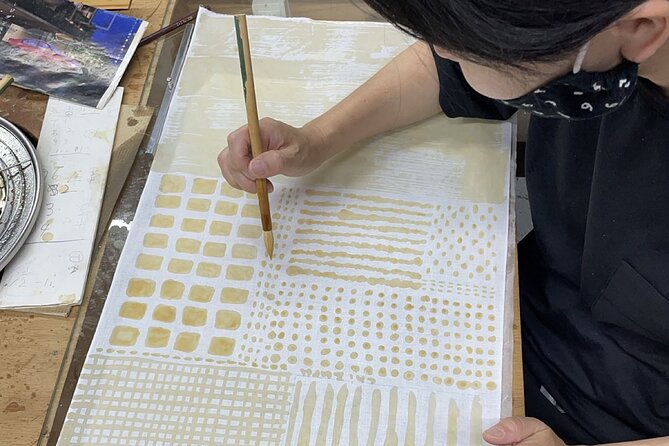
Kyoto sightseeing can become a parade of gates, steps, crowds, and train rides. A seated craft session gives your feet a rest while still keeping you connected to Japanese culture.
The workshop takes place indoors in a studio setting, and the activity is described as peaceful, soothing, and relaxing. You still have a creative task to focus on, but the pace is slower than a typical sightseeing stop.
I especially like this as a middle-of-trip activity. After several days of temples and historic streets, you may want something that does not require another hour of standing. It also gives children and teenagers a reason to look up from their phones.
The calm mood should not be confused with a passive activity. You are still drawing, practicing, applying wax, and making choices. Detailed work can take much longer than expected, so leave room in your day if you care about the design.
The $25.77 price and what you receive
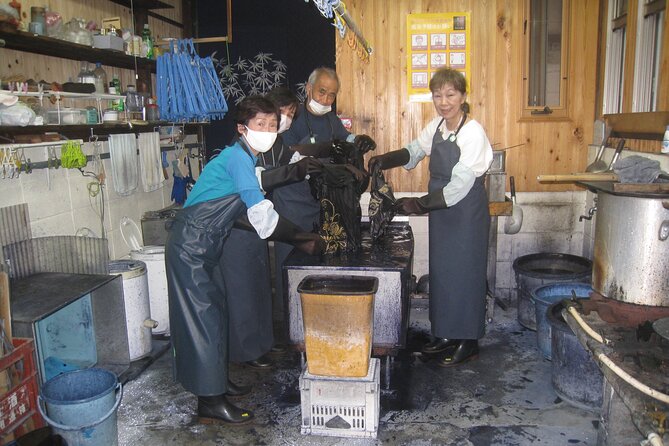
At about $25.77 per person, this is a strong value if your chosen item is included in the booking price and you want a handmade souvenir. You are paying for instruction, access to the studio’s materials and patterns, the dyeing process, and an object you can take home.
The value is better than it first appears because the souvenir is not an extra purchase at the end. You spend the session making something with your own hands, then leave with a useful or displayable result.
The price also compares well with other paid Kyoto activities because it fills roughly two hours without requiring a full-day commitment. It can replace a shopping stop, and the finished item has a personal story attached to it.
Still, check what product choices are available for your specific booking. The information describes T-shirts, bags, banners, and hanging pieces, but it does not provide a full item-by-item price list. If the object you want is important, confirm the options before you go.
Getting to Nishikyogoku and planning your day
The studio address is Roketsu73, Nishikyogoku Umazukacho, Ukyo Ward, Kyoto, postal code 615-0885. The workshop is near public transportation, and the meeting point is also the end point.
The location is not in the center of the main temple district. That is a plus if you want a local neighborhood setting and a break from Kyoto’s busiest sights. It is a drawback if you are trying to fit the activity into a tightly packed day around Gion, Kiyomizu-dera, or Arashiyama.
Allow more time than the activity’s two-hour duration if you need to travel across Kyoto. You should also leave a buffer after the workshop because intricate designs can take three hours rather than one and a half.
The experience accepts mobile tickets, which is convenient when you are moving around the city. Confirmation is sent within 48 hours of booking, subject to availability, so do not assume your reservation is final until confirmation arrives.
The maximum group size is 30 people. That is not necessarily the size of every session, but it means the activity can accommodate families and larger groups. The small family-run feel may be strongest when the room is quiet, so a less crowded time could be preferable if you have a choice.
Who will enjoy this most
I would recommend Roketsu dyeing to you if you want an activity that is:
- Hands-on rather than mainly observational
- Suitable for beginners
- Appropriate for families with older children and teenagers
- Focused on making a personal souvenir
- A slower break from walking and sightseeing
- Connected to a traditional Japanese craft
- Flexible enough for freehand designs or ready-made patterns
It is also a good solo activity. One person took part alone and found the studio welcoming rather than awkward. You can work at your own pace, ask for help, and leave with a souvenir that feels more personal than a shop purchase.
You may want to skip it if you dislike crafts, have very little time between other bookings, or need detailed English explanations at every stage. The language limitation is real, and an ambitious design may stretch the session well beyond two hours.
Practical tips for a better finished piece
Choose a simple design if you want to finish close to the advertised time. You can always make the pattern more interesting by combining smaller motifs rather than attempting one large, complicated drawing.
Use the practice cloth seriously. It is the best place to understand how the wax behaves before you commit to the T-shirt, bag, or banner.
If you are working with children, help them narrow down their design choices. A large collection of stencils can be exciting, but too many options can also slow the start.
Bring your own sketch if you want a truly personal piece. Keep it clear and uncomplicated so the staff can understand what you want even if language is limited.
Plan for the result to have some variation. Roketsu dyeing is not a digital printing process, and the final pattern may not look exactly like your first drawing. That is not a failure. It is what makes each piece individual.
Finally, schedule this as an experience, not a quick souvenir factory visit. The people running the studio take time to guide you, and the best results come when you slow down.
Should you book Roketsu73?
I would book this workshop if you want a reasonably priced Kyoto activity with a real hands-on payoff. The strongest reasons are the same-day souvenir, the patient help from the owner and Yoko, the broad stencil selection, and the chance to create something without needing artistic skill.
Book ahead, especially if you have a fixed schedule, since the activity has been booked frequently and confirmation depends on availability. Keep your design modest if you need to stay within two hours, and allow extra time if you want detailed artwork.
The main warning is the limited English and the studio’s location away from central sightseeing areas. If those points suit your plans, this is an unusually personal way to spend part of a Kyoto day.
FAQ
Where does the Roketsu dyeing experience take place?
It takes place at Roketsu73, Nishikyogoku Umazukacho, Ukyo Ward, Kyoto, Japan, postal code 615-0885.
How long does the workshop last?
The expected duration is about two hours, usually 90 to 120 minutes. Detailed designs can take around three hours.
Can I take my finished item home the same day?
Yes. The finished work can be taken home on the day of the activity.
What can I make during the workshop?
The available choices described include T-shirts, tote bags, decorative banners, and hanging pieces.
Do I need drawing or craft experience?
No. The activity is suitable for beginners, and guidance is provided throughout the process.
Can I choose my own design?
Yes. You can select from many stencils and design drafts, combine patterns, draw freehand, or bring your own sketch.
What dyeing method is used?
The workshop uses wax-resist Roketsu dyeing, with the design drawn and wax applied before the fabric is dyed.
Is the workshop suitable for families?
Yes. Families with children and teenagers have taken part, and most people can participate. Younger children may need help with the drawing and wax stages.
Is the activity available with a mobile ticket?
Yes. Mobile tickets are accepted.
What is the cancellation policy?
You can cancel for a full refund if you cancel at least 24 hours before the start time. Cancellations or changes made less than 24 hours before the start time are not accepted for a refund. If poor weather causes the activity to be canceled, you will be offered another date or a full refund.
Just added in Kyoto
- The “Golden Route” and Ancient Japan by DIAMIR Erlebnisreisen – 14-Day Tour★ 2.0 · 2 reviews
- Japan: Castles & Cuisine by G Adventures – 6-Day Kyoto to Osaka Tour★ 4.5 · 4 reviews
- Cycle Japan by Explore! – 13-Day Kyoto to Tokyo Tour★ 4.7 · 12 reviews
- Cycle Japan by Intrepid Travel – 11-Day Kyoto to Tokyo Tour★ 4.8 · 2 reviews
- Classic Japan by Intrepid Travel – 11-Day Kyoto to Tokyo Tour★ 4.4 · 14 reviews
- Ancient & Modern Japan 14-Day Tour by Exodus Adventure Travels★ 4.4 · 40 reviews
- 5 Day Cultural Adventure of Kyoto, Nara & Osaka by Tourist Journey★ 2.5 · 2 reviews
- 12 Days Kinosaki Onsen Escape: A Journey Through Japan’s Timeless Towns by UME Travel★ 4.8 · 5 reviews
Kyoto Tours, compared.

![[Kyoto & Nara Day Tour] Sagano Scenic Railway & Nara Park & Fushimi Inari Taisha Thousand Torii Gates & Togetsukyo Bridge & Bamboo Grove & Kimono Forest (Departing from Osaka)](https://media.japanvisits.com/wp-content/uploads/kyoto-nara-day-tour-sagano-scenic-railway-nara-park-fushimi-inari-taisha-thousand-torii-gates-togetsukyo-bridge-bamboo-grove-kimono-forest-departing-from-osaka-k110001-400x257.jpg)
Fushimi Inari, Kinkakuji, Bamboo Grove 1 Day Bus Tour
Read our review →
Tea Ceremony in a Traditional Tea House in Kiyomizu
Read our review →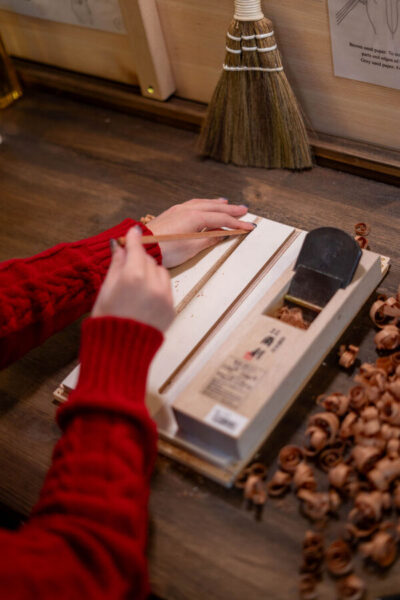
Gion Make Your Own Chopsticks with Engraving Option
Read our review →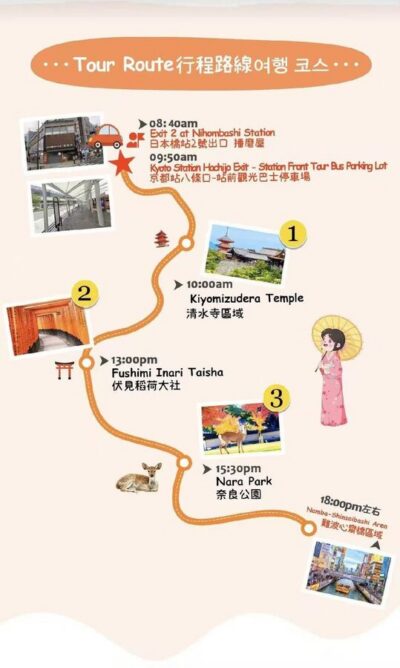
Kyoto Nara Day Trip │ Kiyomizu-dera Temple + Fushimi Inari-taisha Shrine + Nara Park (Departing from Osaka/Kyoto)
Read our review →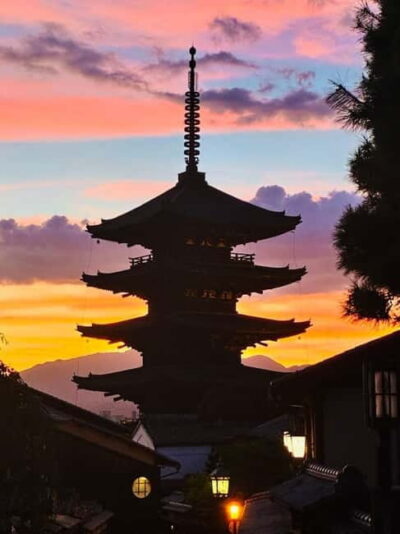
Kyoto Geisha Walking Tour: Gion District & Hidden Gems
Read our review →