Reviewed · KYOTO TOURS
Shamisen Discovery in Kyoto 【Group】
Kyoto has a quieter musical side. This one-hour class introduces you to the shamisen, a traditional Japanese stringed instrument, through a small group lesson led by Jack, an instructor with more than 20 years of experience. I like the hands-on format and the fact that you are playing the instrument yourself, not simply watching a demonstration. The maximum group size is five, so you should get useful help with posture, the bachi pick, and basic technique.
I also like the relaxed extras: you can choose a shamisen for the photo session, enjoy coffee or green tea, and finish with a guided jam. The main drawback is time. Sixty minutes passes quickly, especially if you want more than a first taste of the instrument. At $65.89 per person, it is fair value for a personal cultural lesson, but it is not a full music course.
In This Review
- Key points to know before booking
- A one-hour introduction to the shamisen
- Meeting Jack at the Shamisen Dojo
- What happens during the class
- Shamisen basics and history
- Choosing and holding the instrument
- Basic playing techniques
- Learning one scale
- Free playing time
- The closing jam session
- Photos, tea, and the small details
- Why the group size matters
- The Kyoto setting and how to plan your day
- Is $65.89 good value?
- Who will enjoy this most?
- Booking, cancellation, and practical details
- Should you book the Shamisen Discovery in Kyoto?
- FAQ
- How long does the shamisen class last?
- Where does the experience begin and end?
- How many people can join the group?
- Do I need previous musical experience?
- Is a shamisen provided?
- Are left-handed players accommodated?
- Are drinks included?
- Can I cancel for a full refund?
Key points to know before booking
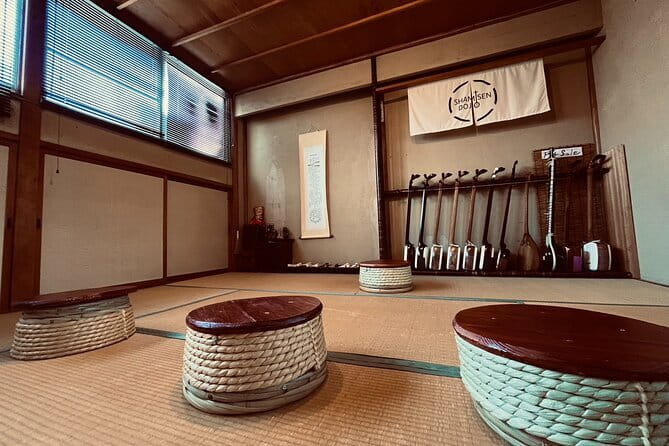
- You play a real shamisen: The class includes an introduction to technique, one scale, free playing time, and a short jam with the instructor.
- The group is limited to five people: That gives Jack room to correct your hand position and help beginners one by one.
- Jack is the instructor: He brings more than 20 years of experience and adjusts the lesson to the ability of the people in front of him.
- Left-handed players are covered: Left-handed shamisen are available, so you do not have to force yourself into an awkward setup.
- Tea and photos are included: You receive a photo session with the instrument you choose, plus coffee or green tea.
- The class begins and ends in Kita Ward: The meeting point is in Murasakino Nakakashiwanocho, near public transportation.
A one-hour introduction to the shamisen
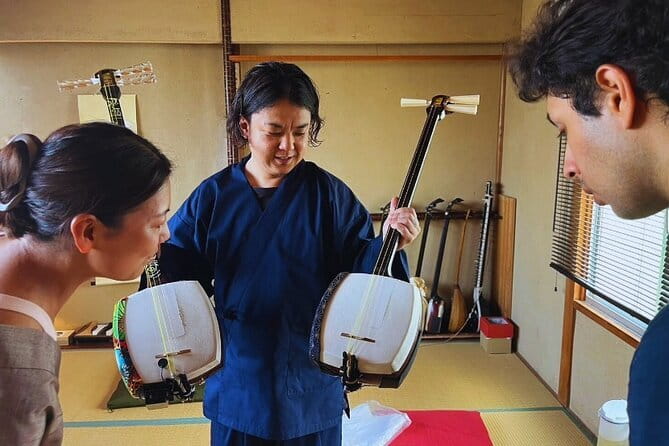
The shamisen is a three-stringed Japanese instrument with a distinctive shape and sound. You do not need previous musical training to join this class, and the lesson is designed to give you a usable first experience rather than a lecture about an instrument behind glass.
Jack begins with basic information about shamisen types, history, and playing methods. That opening matters because the instrument can feel unfamiliar at first. You learn what you are holding before being asked to make music with it.
The class then moves into the practical work. You learn how to hold the shamisen and the bachi, the large pick used to strike the strings. Proper form is a central part of the lesson, and it is one reason a small group helps. A teacher can spot a tense wrist or awkward grip much faster in a class of five than in a crowded workshop.
You also receive an introduction to one shamisen scale. That gives the class a clear musical goal. Instead of only making random sounds, you begin to understand how notes fit together and how Japanese musical phrases can be built.
The final portion gives you time to play freely. Jack accompanies the group during a jam session, allowing you to create simple melodies with the five signature sounds of Japan. This is not meant to turn you into a shamisen performer in an hour. It is a friendly first step that lets you feel how the instrument responds in your hands.
A few more options to weigh up in Kyoto
- PERFECT KYOTO 1-Day Bus Tour
★ 5.0 · 13,518 reviews - [Kyoto & Nara Day Tour] Sagano Scenic Railway & Nara Park & Fushimi Inari Taisha Thousand Torii Gates & Togetsukyo Bridge & Bamboo Grove & Kimono Forest (Departing from Osaka)
★ 4.9 · 10,942 reviews - Kyoto: Fushimi Inari, Kinkakuji, Bamboo Grove 1 Day Bus Tour
★ 4.8 · 4,316 reviews
Meeting Jack at the Shamisen Dojo
Jack is a major part of the experience. His background of more than 20 years gives him enough musical experience to explain the instrument clearly, but the lesson also appears to be personal and gentle in tone.
He has taught complete beginners, people with Western musical training, and players who already enjoy making music. That range matters. If you have never touched a stringed instrument, you can focus on basic holding and striking. If you already play music, you may move more quickly toward scales, rhythm, and melody.
The class is also suitable for mixed-ability pairs. You can attend with a sibling, partner, friend, or child. A 17-year-old and a parent, for example, can take part together without the class feeling aimed only at serious musicians.
Jack also plays for you during the session. Hearing an experienced musician use the shamisen helps put your own first attempts in perspective. The sound may feel rough when you begin, but the demonstration shows what the instrument can do.
A particularly useful feature is his ability to adjust the class. One person may need help with basic posture, while another is ready to experiment with a scale. With no more than five participants, the lesson has room for that kind of attention.
What happens during the class
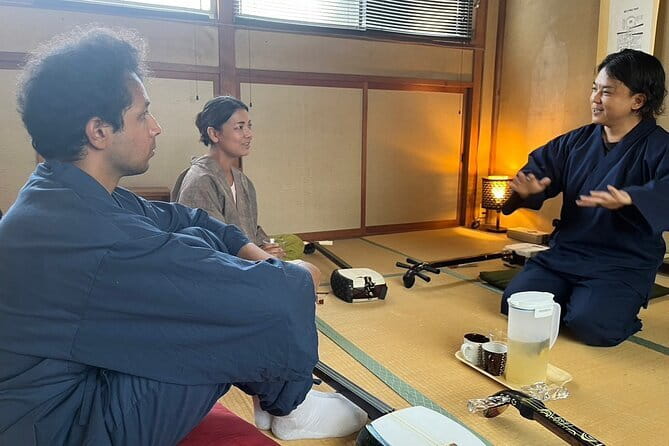
The course is structured, but it does not appear stiff. You can expect six main parts during the 60 minutes.
Shamisen basics and history
The class opens with a concise explanation of the instrument. You learn about different types of shamisen, its background, and basic playing principles.
This part is short by design. The point is to give you context before the practical lesson begins. If you want a long academic talk about Japanese music, this is not the right format. If you want enough background to understand the instrument you are about to play, it should fit well.
A completely different kind of day out:
- Kyoto: Tea Ceremony in a Traditional Tea House in Kiyomizu
★ 4.9 · 3,519 reviews - Kyoto: Gion Make Your Own Chopsticks with Engraving Option
★ 5.0 · 3,465 reviews - Kyoto Nara Day Trip │ Kiyomizu-dera Temple + Fushimi Inari-taisha Shrine + Nara Park (Departing from Osaka/Kyoto)
★ 4.7 · 3,408 reviews - Kyoto Geisha Walking Tour: Gion District & Hidden Gems
★ 4.7 · 3,273 reviews
Choosing and holding the instrument
You receive a rental shamisen for the lesson. You also have the chance to choose the instrument you prefer for the photo session.
Jack explains how to hold the shamisen and bachi correctly. This may sound simple, but it is the foundation of the entire class. The instrument has its own shape and playing position, so a few early corrections can make the rest of the hour much more comfortable.
Left-handed participants can request a lefty shamisen. That is a useful detail to confirm when you arrive, especially if you normally play instruments with your left hand in a particular position.
Basic playing techniques
Next comes the first attempt at producing sound. You learn the basic way to strike the strings and begin to coordinate your hands.
The class is not presented as a test. Beginners can expect a step-by-step approach, while people with musical experience may find the mechanics easier at once. Either way, the small group gives you a chance to ask for help rather than quietly repeating a mistake.
Several people have managed to play through a song by the end of the hour. That result will depend on your pace and musical background, but it shows that the lesson has a practical aim. You are not just posing with an instrument for a photograph.
Learning one scale
The introduction to one shamisen scale gives the lesson a sense of direction. You learn a small set of notes and begin to use them in a musical way.
This is where the class can appeal to musicians. If you already play an instrument, you may recognize the value of learning a scale as a framework for improvisation. If you do not play music, the scale gives you a limited set of sounds to work with, which can make the final jam less intimidating.
Free playing time
You then get time to play the shamisen without following every instruction. This is a good chance to test the technique you have just learned.
Free time also keeps the workshop from feeling like a school lesson. You can experiment, listen to the sound, and find a rhythm that feels natural. The one-hour limit means this segment may be brief, but it is important. It lets you move from copying the teacher to making choices of your own.
The closing jam session
The class ends with Jack accompanying you while you create melodies. This is likely the most memorable part for many people because it turns a technical lesson into a shared musical moment.
You do not need to perform a polished piece. The point is to use the scale and sounds you have learned in a simple group session. Jack provides the accompaniment, so you have musical support while trying out your own ideas.
If you come with family or friends, this part can be especially enjoyable. You can hear how each person approaches the same instrument, and the informal setting takes pressure off the first-time player.
Photos, tea, and the small details
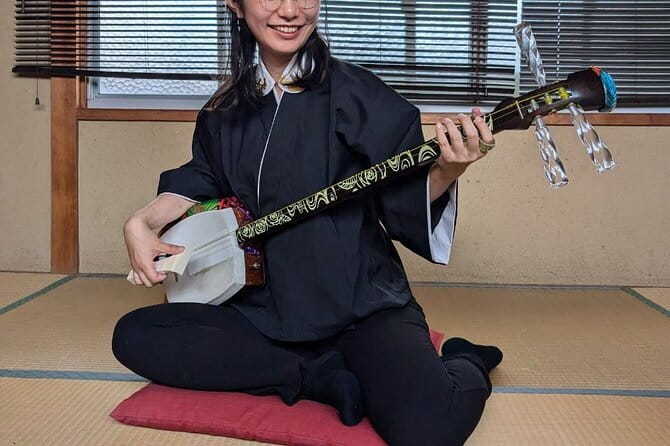
The photo session is included, and you can hold the shamisen you like. This gives you a tangible memory of the activity without requiring a separate photography package.
The photos also fit naturally into the class. You are already holding and learning the instrument, so the picture does not feel like a forced stop between activities. Jack can take photos of you playing, making this more personal than a standard group snapshot.
Coffee and tea, including green tea, are included as well. It is a small touch, but useful during a compact lesson. You can take a short break, stay hydrated, and chat with the instructor before returning to the instrument.
Do not expect a full meal or a long café stop. The drink is a simple extra, not the reason to book. Still, it adds warmth to what could otherwise be a tightly packed hour.
Why the group size matters
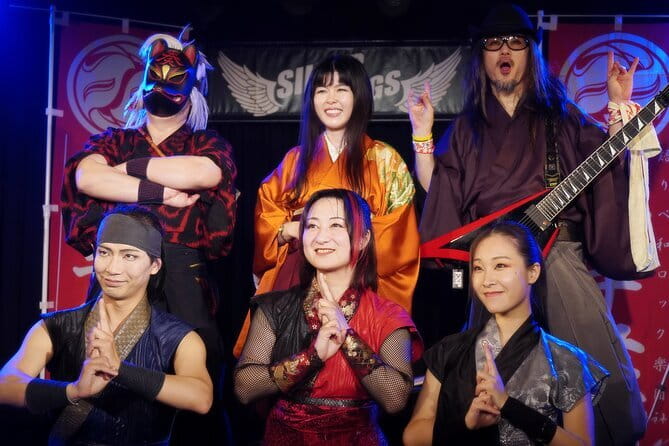
The activity has a maximum of five participants. That is small enough for a teacher to give direct attention, while still allowing the session to feel social.
A private lesson would offer more time for one person, but this group format can be more fun if you are traveling with someone else. You can encourage each other, compare progress, and share the final jam.
The tradeoff is that the hour is divided among the people present. If the class fills to five, you may receive less individual playing time than you would in a private booking. The course is best viewed as a focused introduction, not an extended personal coaching session.
The group setting also suits people who feel nervous about trying a traditional instrument alone. You are not expected to sound polished. Everyone is learning, and the shared first attempts can make the lesson feel easier.
The Kyoto setting and how to plan your day
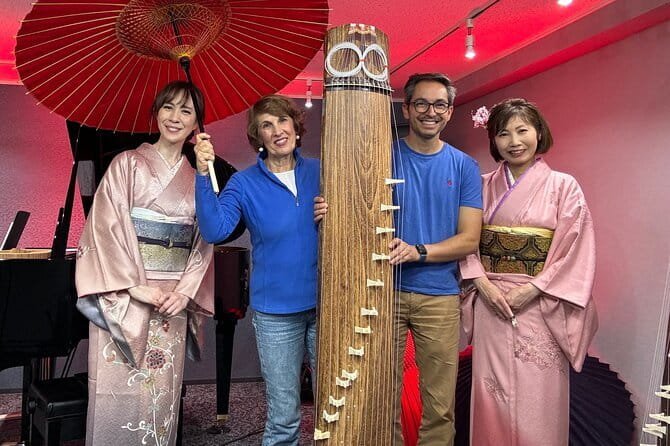
The meeting point is in Murasakino Nakakashiwanocho in Kyoto’s Kita Ward. The activity starts and ends at the same location, and the area is near public transportation.
This is not a central sightseeing stop that you simply drop into between major attractions. You need to plan the trip to the meeting point. The location can work well as part of a northern Kyoto day, especially if you are already visiting Kinkaku-ji in the morning.
One useful plan is to visit Kinkaku-ji first, then continue to the Shamisen Dojo. The timing will depend on your booking hour and transport, so leave enough room to arrive without rushing. The class begins at a fixed meeting point, and missing the start would cut into a short 60-minute lesson.
Because the course returns to the starting point, you do not need to arrange a separate pickup or worry about ending in another part of Kyoto. Private transportation is not included, so you are responsible for reaching the dojo.
The activity is confirmed at booking, and mobile tickets make it easy to keep the reservation details on your phone. You should still check the exact meeting instructions before setting out.
Is $65.89 good value?
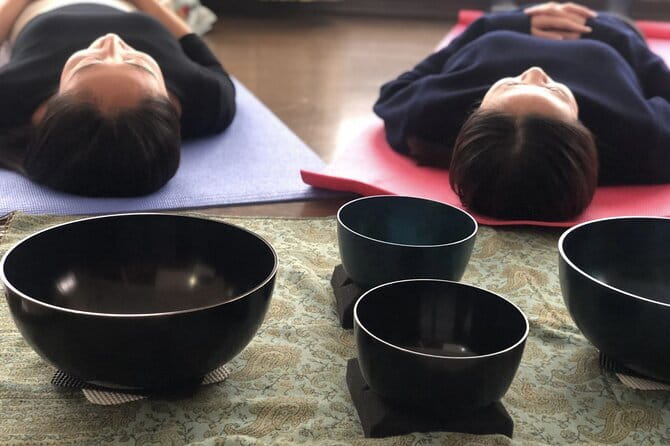
At $65.89 per person, this is not the cheapest one-hour activity in Kyoto. It is also more than the cost of simply visiting a temple or museum. The value comes from the personal instruction, instrument rental, photo session, drink, and chance to play with an experienced teacher.
You are paying for access to an instrument that you may not otherwise handle, along with direct guidance on how to use it. That makes the price easier to justify if you have a real interest in Japanese music or want a cultural activity with active participation.
The price is less compelling if you only want a quick photo with a shamisen. You can take the photo, but much of the class is devoted to instruction and playing. You should be ready to spend the full hour learning.
The activity also has a strong record: it is rated 5 out of 5 from 24 ratings, with 100 percent recommending it. That does not remove the basic limitation of the short format, but it supports the idea that the class delivers a warm, well-run introduction.
Who will enjoy this most?
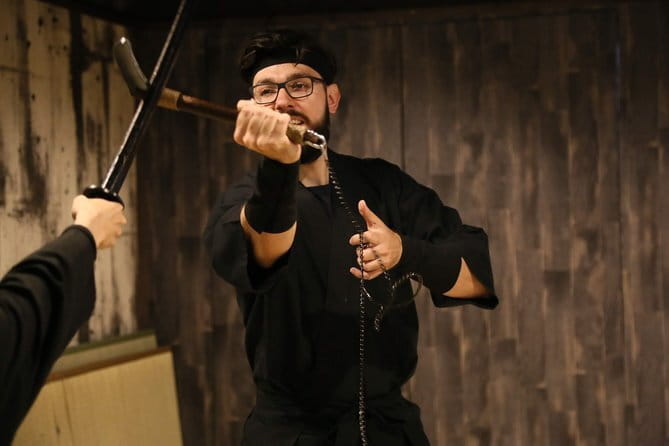
I would recommend the class to:
- People curious about traditional Japanese instruments
- Beginners who want a structured first lesson
- Musicians interested in learning a different scale and playing style
- Families with older children or teenagers
- Couples, siblings, and friends looking for a shared activity
- Anyone who wants time away from crowded sightseeing venues
You do not need to play an instrument. Several parts of the lesson are designed for first-timers, and Jack can guide you step by step.
Music lovers may get the most from the class because they can connect the technique, scale, and jam session. Still, the lesson does not require you to understand music theory. You can simply follow the demonstrations and enjoy making a new sound.
The class may be less suitable if you want a long performance, a private lesson, or a detailed course in shamisen culture. It is a compact introduction with a real playing component.
Booking, cancellation, and practical details
The experience is usually booked about 25 days in advance, so I would reserve ahead if your Kyoto dates are fixed. The small five-person limit can make popular times unavailable.
Most people can participate, and the activity is near public transportation. There is no private transportation included. You receive confirmation at the time of booking, and the mobile ticket is convenient for a day of sightseeing.
Free cancellation is available until 24 hours before the start time for a full refund. Changes or cancellations made less than 24 hours before the start time are not accepted for a refund, and the cut-off uses Kyoto local time.
Should you book the Shamisen Discovery in Kyoto?
Book it if you want to make music rather than only watch it. The class gives you a real shamisen, a patient teacher, a scale to practice, free playing time, and a closing jam. Jack’s experience and personal teaching style are the main reasons this feels more substantial than a quick cultural demonstration.
I would especially choose it for a pair or small family group. The photo, tea, and shared lesson make it an easy memory to take home, while the small class keeps the instruction personal.
Skip it if your schedule is too tight to reach Kita Ward comfortably, or if you want a long, advanced lesson. For everyone else, $65.89 buys a focused and unusual hour in Kyoto, with enough instruction to leave you understanding the shamisen and proud of the first sounds you make.
FAQ
How long does the shamisen class last?
The course lasts approximately 60 minutes.
Where does the experience begin and end?
It begins in Murasakino Nakakashiwanocho, Kita Ward, Kyoto, and ends back at the same meeting point.
How many people can join the group?
The activity has a maximum of five participants.
Do I need previous musical experience?
No. The class is designed as an introduction and is suitable for beginners. People with musical backgrounds can also take part.
Is a shamisen provided?
Yes. Rental of a shamisen is included in the course.
Are left-handed players accommodated?
Yes. Left-handed shamisen are available.
Are drinks included?
Yes. Coffee and tea, including green tea, are included.
Can I cancel for a full refund?
Yes, if you cancel at least 24 hours before the experience start time. Cancellations or changes made less than 24 hours before the start time are not refunded.
Just added in Kyoto
- The “Golden Route” and Ancient Japan by DIAMIR Erlebnisreisen – 14-Day Tour★ 2.0 · 2 reviews
- Japan: Castles & Cuisine by G Adventures – 6-Day Kyoto to Osaka Tour★ 4.5 · 4 reviews
- Cycle Japan by Explore! – 13-Day Kyoto to Tokyo Tour★ 4.7 · 12 reviews
- Cycle Japan by Intrepid Travel – 11-Day Kyoto to Tokyo Tour★ 4.8 · 2 reviews
- Classic Japan by Intrepid Travel – 11-Day Kyoto to Tokyo Tour★ 4.4 · 14 reviews
- Ancient & Modern Japan 14-Day Tour by Exodus Adventure Travels★ 4.4 · 40 reviews
- 5 Day Cultural Adventure of Kyoto, Nara & Osaka by Tourist Journey★ 2.5 · 2 reviews
- 12 Days Kinosaki Onsen Escape: A Journey Through Japan’s Timeless Towns by UME Travel★ 4.8 · 5 reviews
Kyoto Tours, compared.

![[Kyoto & Nara Day Tour] Sagano Scenic Railway & Nara Park & Fushimi Inari Taisha Thousand Torii Gates & Togetsukyo Bridge & Bamboo Grove & Kimono Forest (Departing from Osaka)](https://media.japanvisits.com/wp-content/uploads/kyoto-nara-day-tour-sagano-scenic-railway-nara-park-fushimi-inari-taisha-thousand-torii-gates-togetsukyo-bridge-bamboo-grove-kimono-forest-departing-from-osaka-k110001-400x257.jpg)
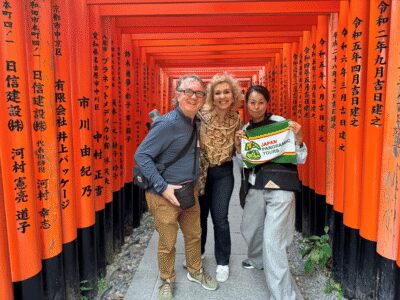
Fushimi Inari, Kinkakuji, Bamboo Grove 1 Day Bus Tour
Read our review →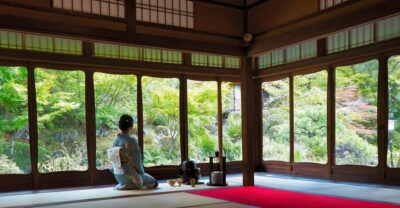
Tea Ceremony in a Traditional Tea House in Kiyomizu
Read our review →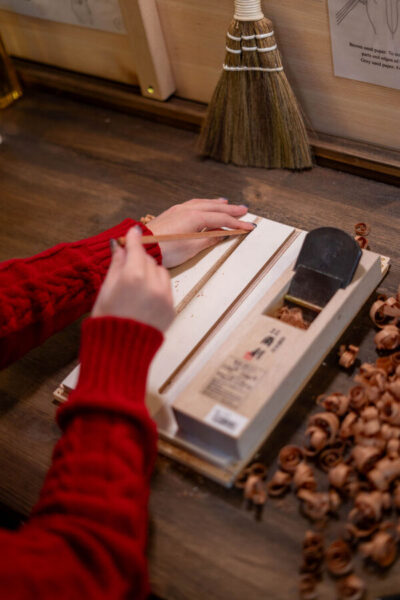
Gion Make Your Own Chopsticks with Engraving Option
Read our review →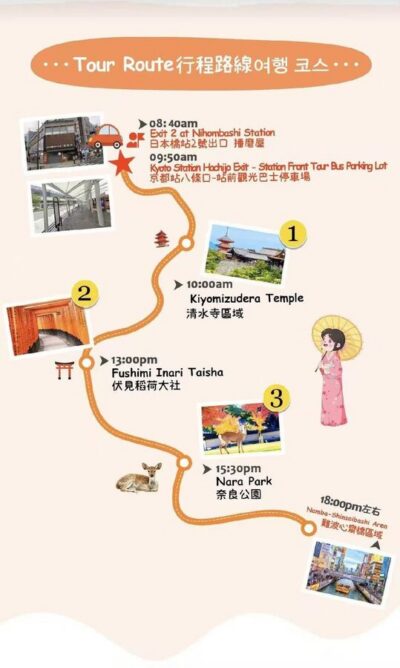
Kyoto Nara Day Trip │ Kiyomizu-dera Temple + Fushimi Inari-taisha Shrine + Nara Park (Departing from Osaka/Kyoto)
Read our review →
Kyoto Geisha Walking Tour: Gion District & Hidden Gems
Read our review →