Reviewed · KYOTO TOURS
Single- & multi-day Adventures within Kyoto Nara Osaka Kobe
See four cities without changing trains. This private driving experience lets you combine Kyoto, Nara, Osaka, and Kobe in a route shaped around your group. I especially like the custom itinerary and the fact that the vehicle comes with Wi-Fi and charging power. You can also arrange pickup and drop-off at hotels, airports, or other agreed locations.
The $385 price is for up to eight people, which can be excellent value for a full group. My main caution is scope: the suggested stops are far too numerous for one relaxed day, and admission fees are extra. You will need to choose carefully rather than trying to collect every famous sight.
The experience has a 4.8 rating from 16 reviews, with 94 percent recommending it. Kevin and Chi receive especially warm praise for flexible planning and communication. Still, one unhappy customer reported a dispute over cancellation and a refund, so I would confirm the pickup time, route, duration, and cancellation terms in writing before setting off.
In This Review
- Key points to know before booking
- How this private service works
- Day 1: Kyoto temples, Amanohashidate, and the northern coast
- Amanohashidate and Ine no Funaya
- Arashiyama and western Kyoto
- Markets, Zen temples, and Gion
- Northern coast alternatives
- Day 2: Osaka Castle, street food, and local districts
- Osaka Castle and Ikeda
- Shinsekai, Kuromon, and Dotonbori
- Osaka Bay and the outer options
- Day 3: Nara’s deer, temples, and Uji tea country
- Day 4: Kobe, sake, Himeji, and Mount Rokko
- Mount Rokko and the city views
- Nada sake and Kobe’s port
- Himeji Castle and Koko-en
- Price, group size, and real value
- Who should book this experience
- Should you book it?
- FAQ
- How many people can join the private tour?
- How long can I book the experience?
- Can I choose which cities to visit?
- Is pickup available?
- Can I be picked up in one city and dropped off in another?
- Does the vehicle have Wi-Fi?
- Are entrance tickets included?
- Is there a restroom in the vehicle?
- What is the cancellation policy?
Key points to know before booking
- One private vehicle for up to eight people: You avoid a shared bus schedule and keep the day with your own group.
- Four destinations in one flexible service: Kyoto, Nara, Osaka, and Kobe can be combined across one to four days, depending on the plan you choose.
- Wi-Fi and 100V charging onboard: Useful for maps, translation apps, cameras, and laptops during long drives.
- Pickup and drop-off can be arranged: Hotel, airport, and other locations are available by agreement, including a one-day pickup in one city and drop-off in another.
- The route needs editing: The long list of possible stops is a menu, not a sensible promise that every place can be visited.
- Admission costs are mostly separate: Temples, castles, museums, gardens, the Hozugawa boat ride, and other paid attractions require additional money.
How this private service works
This is best understood as a private transportation and sightseeing service rather than a fixed four-day escorted tour. You can select one to four days and focus on Kyoto, Nara, Osaka, Kobe, or several of them together.
That flexibility matters in the Kansai region. Kyoto’s temples are spread across the city. Nara’s major sights are concentrated around the park but still require walking. Osaka’s food districts and shopping streets are close together, while Kobe’s mountain, port, sake, and historic foreign quarter pull you in different directions.
A private car gives you a practical way to join those areas, particularly if your group includes older relatives, children, or people who would rather not manage several train changes. It also lets you adjust the pace. You might spend more time at Fushimi Inari and less time shopping, or replace a crowded city stop with Uji, Kyotango, or a mountain viewpoint.
The vehicle is air-conditioned, includes Wi-Fi, and has a 100V power supply for devices such as cameras and laptops. There is no restroom onboard, and most entrance tickets are not included. Those two details affect the rhythm of a long day, so plan regular comfort stops and keep cash or payment arrangements ready for admissions.
A few more options to weigh up in Kyoto
- PERFECT KYOTO 1-Day Bus Tour
★ 5.0 · 13,518 reviews - [Kyoto & Nara Day Tour] Sagano Scenic Railway & Nara Park & Fushimi Inari Taisha Thousand Torii Gates & Togetsukyo Bridge & Bamboo Grove & Kimono Forest (Departing from Osaka)
★ 4.9 · 10,942 reviews - Kyoto: Fushimi Inari, Kinkakuji, Bamboo Grove 1 Day Bus Tour
★ 4.8 · 4,316 reviews
Day 1: Kyoto temples, Amanohashidate, and the northern coast
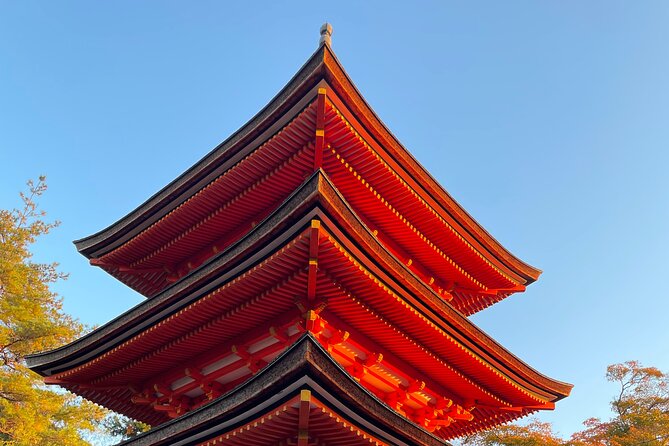
The first day offers the most ambitious mix. Amanohashidate and Ine no Funaya are in northern Kyoto Prefecture, while Arashiyama, Kinkakuji, Gion, and Fushimi Inari are in or near central Kyoto. These are not neighboring sights. If you want the northern coast, make it the main purpose of the day and keep the Kyoto city list short.
Amanohashidate and Ine no Funaya
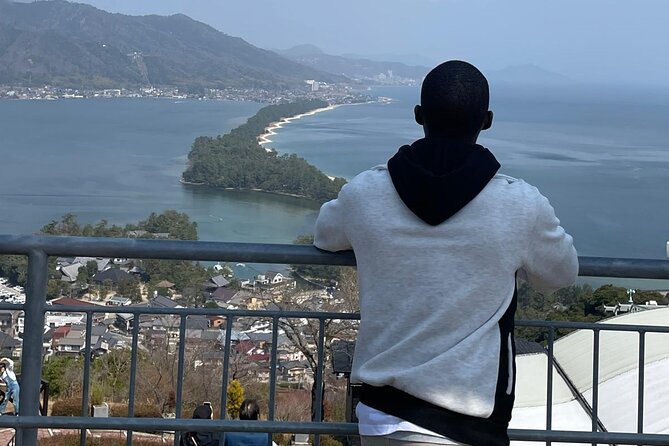
Amanohashidate is a pine-covered sandbar crossing Miyazu Bay. Its name means Bridge in Heaven, and it is traditionally counted among Japan’s three great scenic views. The suggested visit is about two hours, with admission not included.
I like this choice for anyone who wants more than the standard Kyoto temple circuit. The bay, sandbar, and pine trees give you a very different view of the region. It is also a good reason to use private transport, since reaching northern Kyoto takes more planning than visiting the central temples.
Nearby Ine no Funaya is known for its wooden boathouses built along the water. These structures combine fishing homes and boat storage in a way that makes the village feel unlike central Kyoto. The visit lasts about an hour, and admission is not included.
The tradeoff is time on the road. Amanohashidate and Ine are rewarding as a dedicated northern excursion, but adding them to a full list of central Kyoto sights would make the day rushed.
Arashiyama and western Kyoto
Arashiyama offers river scenery, temples, and the famous bamboo area. The suggested two-hour stop gives you enough time for a purposeful walk, though not for every attraction in the district.
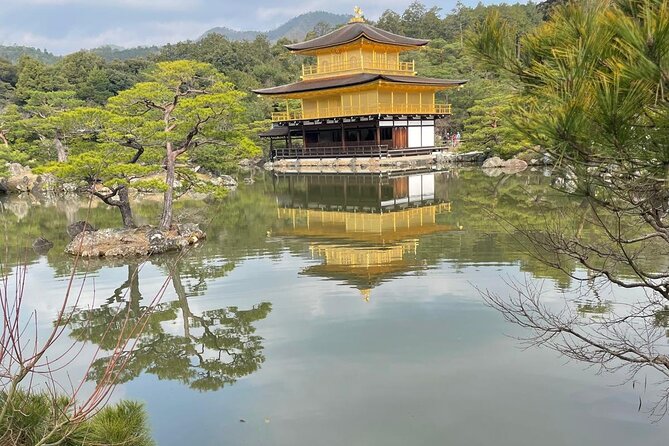
Kinkakuji, the Golden Pavilion, sits beside a pond and was once part of shogun Ashikaga Yoshimitsu’s retirement villa. The visit is listed at 30 minutes. That is enough for the main view and photographs, but not for a slow garden visit.
Nijo Castle takes about an hour. Its former imperial setting and connection to the Tokugawa shoguns give it a different character from Kyoto’s Buddhist temples. The castle helps explain political change in Japan, while Kinkakuji is mainly about architecture, gardens, and visual pleasure.
Kyoto Imperial Palace also receives about an hour. It was the home of Japan’s imperial family until the capital moved to Tokyo in 1868. The palace grounds are spacious, so your experience will depend on how much walking you want to do.
A completely different kind of day out:
- Kyoto: Tea Ceremony in a Traditional Tea House in Kiyomizu
★ 4.9 · 3,519 reviews - Kyoto: Gion Make Your Own Chopsticks with Engraving Option
★ 5.0 · 3,465 reviews - Kyoto Nara Day Trip │ Kiyomizu-dera Temple + Fushimi Inari-taisha Shrine + Nara Park (Departing from Osaka/Kyoto)
★ 4.7 · 3,408 reviews - Kyoto Geisha Walking Tour: Gion District & Hidden Gems
★ 4.7 · 3,273 reviews
Markets, Zen temples, and Gion
Nishiki Market is a narrow, five-block food street with more than 100 shops and restaurants. Forty-five minutes is enough for a quick taste and a look at Kyoto’s food culture, but it is not much time if you want to stop at several stalls.
Ginkakuji, the Silver Pavilion, was built as Ashikaga Yoshimasa’s retirement villa. Its garden and temple setting are often more rewarding than the name suggests, since the building itself is not covered in silver. Allow about 45 minutes.
Nanzenji is a major Rinzai Zen temple with a one-hour suggested visit. Its setting near the eastern mountains gives it a calmer feel than some of Kyoto’s central sights. Gion, scheduled for two hours, adds traditional streets, Yasaka Shrine, and the possibility of seeing Kyoto’s geisha district at work. You should treat the area as a living neighborhood, not a stage set.
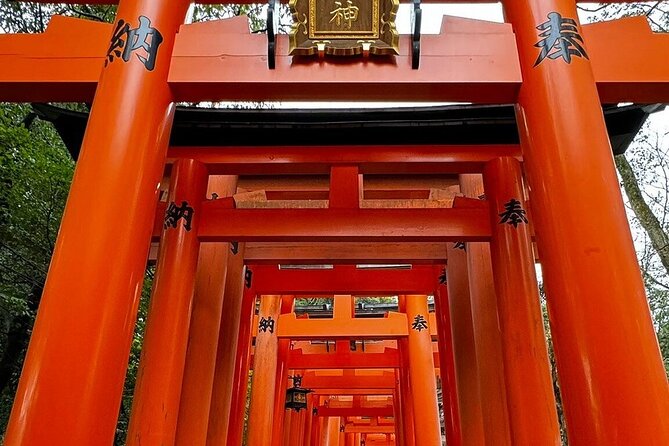
Sanjusangendo is known for its 1,001 statues of Kannon. The one-hour stop gives you time to appreciate the long hall and its repeated rows of figures. Fushimi Inari Taisha is listed for only 30 minutes, which means you will see the famous vermilion gates but will not get far up the mountain trail.
Northern coast alternatives
Kyotango offers beaches, including Shotenkyo Beach and Kotohiki-hama, known as Singing Sand Beach. The proposed two-hour stop suits a slower coastal day and provides a break from city temples.
Amanohashidate Winery is another northern option, with a two-hour visit listed at no admission cost. It combines wine-making interest with a quieter setting. If you choose these northern stops, I would not also attempt Arashiyama, Gion, Fushimi Inari, and the central temple circuit on the same day.
The Hozugawa River boat ride is listed as a two-hour activity at the river’s endpoint. It offers a more active way to see the countryside, but the ticket is extra and the schedule should be confirmed before building the day around it.
Day 2: Osaka Castle, street food, and local districts
Osaka works well with a private car when you divide the city into zones. The central market and nightlife stops can be grouped together, while Minoo, Ikeda, the bay, and the eastern or southern suburbs need separate driving time.
Osaka Castle and Ikeda
Osaka Castle is the obvious historical starting point. The one-hour visit lets you see the grounds and main structure, but the ticket is not included. The castle is one of Osaka’s most recognizable sights, though you should allow extra time if you want to study the interior exhibits.
The Cup Noodles Museum in Osaka Ikeda takes about an hour. It covers the development of instant ramen and includes a reproduction of Momofuku Ando’s hut. This is a playful, distinctly Japanese stop that works well for families and anyone who wants a change from temples.
Minoo Park provides two hours of greenery and a visit to Ryuanji Temple. The park is outside central Osaka, so it is a better choice for a day that values fresh air and a slower walk. It may not suit a group focused entirely on shopping and food.
Shinsekai, Kuromon, and Dotonbori
Shinsekai was developed before the Second World War with design influences linked to New York and Paris. Its Tsutenkaku Tower area has a retro feel and offers a look at an older side of Osaka. The planned hour is enough for a walk, though tower admission is extra.
Sennichimae Doguyasuji is a specialist shopping street filled with restaurant equipment, cutlery, crockery, and related goods. Even if you do not run a restaurant, it is a useful place for unusual souvenirs. Thirty minutes is a reasonable first visit.
Kuromon Market, known as Osaka’s Kitchen, is more than 200 years old and specializes in seafood, meat, and produce. The suggested 45 minutes is enough for a quick browse and a snack, but food purchases are your own expense.
Hozenji Yokocho is a narrow, lantern-lit alley with cobblestones and Hozenji Temple. The 45-minute visit gives you a welcome pause from the larger commercial streets. Dotonbori follows with neon signs, canal views, street food, and the famous Glico Running Man sign.
Shinsaibashi-suji is a covered shopping street about 600 meters long. It has served as a major shopping area for centuries, so you can combine it with Dotonbori and Hozenji without wasting much time in the car. This central Osaka grouping is one of the most efficient parts of the suggested plan.
Osaka Bay and the outer options
Tempozan Harbor Village includes shopping, restaurants, and access to Kaiyukan Aquarium, described as the world’s largest aquarium. Two hours is not much if you also want the aquarium, and admission is extra, so choose this area only if it matches your interests.
The Asahi Beer Museum offers a sensory visit and beer tasting, with tours available. The listed hour works for a focused stop, but confirm tour timing before relying on it.
Hoshi no Buranko is a suspension bridge about 50 meters above the ground, with panoramic views and especially attractive autumn color. It takes about two hours and requires a taste for walking and open heights.
Tondabayashi Jinaimachi preserves traditional townhouses from the Edo period through the early Showa period. The listed two-minute stop is plainly too short for a useful visit. Treat it as an optional area to explore only if the timing is corrected during planning.
Day 3: Nara’s deer, temples, and Uji tea country
Nara is easier to organize than the first two days because many main sights sit around Nara Park. You can walk between several of them, then use the vehicle for Uji or other longer transfers.
Nara Park covers about 660 hectares and is famous for free-roaming deer. The deer are part of the area’s identity, but you should follow local feeding instructions and remember that the animals are not decorative props. The park itself is free.
Todai-ji contains the giant bronze Daibutsu and is one of the world’s largest wooden buildings. Admission is extra, and one hour gives you a focused visit to the main hall and statue.
Kofukuji dates from the seventh century and includes pagodas, halls, and gardens. Its one-hour slot pairs well with Todai-ji, while Higashimuki Shopping Street offers restaurants, souvenirs, and a covered route near the park. The mochi-pounding shop is a memorable local-food stop, though the timing is only about 30 minutes.
Kasuga Grand Shrine is known for its hanging bronze lanterns and rows of stone lanterns along the approach. Give it the listed hour if you want more than a quick photograph. Naramachi, with its old merchant houses, small lanes, cafes, and shops, adds a human scale to the temple-heavy morning.
Isuien Garden offers ponds, a teahouse, and carefully arranged garden views. Admission is included in the stated plan, unlike many other attractions. One hour is a good amount of time for a calm pause.
Uji is a quieter southern Kyoto stop, known for Japanese tea and green fields. Two hours gives you time to enjoy a different side of the region. It is a good final choice after Nara, but combining every Nara stop with Uji will create another full day.
Sanjodori Street in Kyoto is included with admission and offers shopping and dining along the route between Gion and Kawaramachi. It can work as an evening finish, though the exact sequence will depend on pickup and drop-off locations.
Day 4: Kobe, sake, Himeji, and Mount Rokko
Kobe offers the broadest variety on the fourth day. You can choose mountain views, sake breweries, the earthquake memorial, foreign merchant homes, Chinatown, and the harbor. Himeji Castle is a major detour and deserves special attention before you add it.
Mount Rokko and the city views
Mount Rokko reaches 931 meters and provides views toward Kobe and Osaka Bay. The mountain area includes gardens and the Rokko-Shidare Observatory, whose tree-like dome combines art and nature.
Rokko Garden Terrace is listed for an hour, while the observatory receives two hours. These stops are best for scenery and open air. Weather can affect the payoff, so keep the city-based alternatives in mind.
Arima Onsen is one of Japan’s oldest hot spring resorts. The suggested hour allows time for a bath or footbath, but admission arrangements should be checked because the general tour price does not cover most entrance tickets.
Nada sake and Kobe’s port
Nada no Hitotsubi is a sake district with high-quality rice, water, and favorable conditions for brewing. The one-hour visit introduces an important part of Kobe’s food culture.
Kobe Shushinkan has a sake shop, a Japanese restaurant, and a free guided warehouse tour once per day. The tour time matters, so ask the driver or planner to build the schedule around it rather than simply arriving at any hour.
The Port of Kobe Earthquake Memorial Park records the Great Hanshin Awaji Earthquake of January 17, 1995. More than 5,000 people died, and the disaster destroyed tens of thousands of homes. This is a serious, educational stop that gives modern Kobe context beyond shopping and harbor views.
Kitano Ijinkan-gai preserves former homes used by foreign merchants and diplomats after Kobe opened to international trade in the late nineteenth century. Admission to individual houses is extra. Nankinmachi, Kobe’s Chinatown, offers a different immigrant story, while Kobe Harborland brings shopping, restaurants, cinemas, and waterfront recreation.
Himeji Castle and Koko-en
Himeji Castle, the White Heron Castle, is one of Japan’s most important castles and the country’s first UNESCO World Cultural Heritage site. The castle visit is listed at one hour, but that is a tight schedule for a large complex with stairs and walking.
Koko-en Garden is next to Himeji Castle and is included in the stated plan. Its ponds, bridges, and landscaped sections make it a fine companion to the castle. If Himeji is your priority, I would build the day around these two stops and skip some Kobe districts.
Trying to combine Mount Rokko, Nada, the earthquake memorial, Kitano, Chinatown, Harborland, Himeji, Koko-en, and Arima Onsen in one day would be too much. The private format helps, but it cannot remove distance, traffic, opening hours, or walking time.
Price, group size, and real value
At $385 per group of up to eight, the price looks strongest when shared by a family or small group. Split eight ways, the transportation cost is modest compared with arranging several separate taxis or paying individual fares across four cities.
The value drops for one or two people, especially once you add entrance tickets, meals, tastings, boat rides, castle fees, and any other paid activity. The price also needs to be judged against the exact number of days you select. Since the service allows one to four days, confirm whether the quoted amount applies to your chosen duration and route.
The private format is the main purchase. You are paying for control, door-to-door movement, Wi-Fi, and the ability to change the plan. You are not buying an all-inclusive sightseeing pass, and the available details do not promise a restroom, included tickets, or a fixed guide service at every stop.
Who should book this experience
I would consider it for families, groups of friends, and multigenerational parties that want one vehicle and a shared plan. It is also useful if you are arriving at an airport, staying in different cities, or want a one-day transfer with sightseeing along the way.
It suits people who enjoy choosing priorities. You can create a temple day, a food day, a sake and harbor day, or a countryside route. It is less suitable if you want a carefully paced fixed itinerary with every ticket and guide service already arranged.
Kevin and Chi are worth requesting if available, since one detailed account praised their communication, flexibility, and ability to add useful ideas to an ambitious Kyoto, Uji, and Nara day. Set a realistic start time, though. A separate customer dispute centered partly on arriving at 10:00 instead of an agreed 8:00 pickup, so punctuality and written confirmation matter.
Free cancellation is available until 24 hours before the experience start time. Within 24 hours, the amount paid is not refunded, and changes are not accepted. I would save the agreed route and pickup details before that deadline.
Should you book it?
Book this if your group values privacy, door-to-door transport, and the freedom to combine Kansai cities. The strongest plan is not the longest one. Choose two or three major sights per day, then add one market, garden, neighborhood, or scenic stop.
I would especially recommend it for a full group of up to eight, for airport transfers with sightseeing, and for visitors who want to pair major Kyoto temples with Nara, Osaka, or Kobe. I would hesitate if you are traveling alone, need every admission included, or prefer a fixed schedule that removes all planning decisions.
The best booking question is simple: ask the provider to turn your wish list into a timed route with travel time, ticket costs, pickup details, and a clear number of days. If that plan feels spacious rather than packed, the private vehicle can be a very practical way to see the Kansai region.
FAQ
How many people can join the private tour?
The private vehicle is available for a group of up to eight people.
How long can I book the experience?
The service offers flexible options lasting from one to four days.
Can I choose which cities to visit?
Yes. The available destinations include Kyoto, Nara, Osaka, and Kobe, with an itinerary that can be changed according to your group’s preferences and suggestions.
Is pickup available?
Yes. Pickup and drop-off can be arranged at hotels, airports, and other agreed locations.
Can I be picked up in one city and dropped off in another?
The one-day option allows pickup in one city and drop-off in another.
Does the vehicle have Wi-Fi?
Yes. Wi-Fi is available onboard, and the vehicles also have a 100V power supply for charging devices such as laptops and cameras.
Are entrance tickets included?
Most admission fees and sightseeing tickets are not included. Isuien Garden, Naramachi, Sanjodori Street, and some other stops are identified as included or free, but you should confirm each selected attraction.
Is there a restroom in the vehicle?
No. A restroom is not available onboard.
What is the cancellation policy?
You can cancel at least 24 hours before the experience start time for a full refund. Cancellations or changes made within 24 hours are not accepted for a refund.
Just added in Kyoto
- The “Golden Route” and Ancient Japan by DIAMIR Erlebnisreisen – 14-Day Tour★ 2.0 · 2 reviews
- Japan: Castles & Cuisine by G Adventures – 6-Day Kyoto to Osaka Tour★ 4.5 · 4 reviews
- Cycle Japan by Explore! – 13-Day Kyoto to Tokyo Tour★ 4.7 · 12 reviews
- Cycle Japan by Intrepid Travel – 11-Day Kyoto to Tokyo Tour★ 4.8 · 2 reviews
- Classic Japan by Intrepid Travel – 11-Day Kyoto to Tokyo Tour★ 4.4 · 14 reviews
- Ancient & Modern Japan 14-Day Tour by Exodus Adventure Travels★ 4.4 · 40 reviews
- 5 Day Cultural Adventure of Kyoto, Nara & Osaka by Tourist Journey★ 2.5 · 2 reviews
- 12 Days Kinosaki Onsen Escape: A Journey Through Japan’s Timeless Towns by UME Travel★ 4.8 · 5 reviews
Kyoto Tours, compared.
![[Kyoto & Nara Day Tour] Sagano Scenic Railway & Nara Park & Fushimi Inari Taisha Thousand Torii Gates & Togetsukyo Bridge & Bamboo Grove & Kimono Forest (Departing from Osaka)](https://media.japanvisits.com/wp-content/uploads/kyoto-nara-day-tour-sagano-scenic-railway-nara-park-fushimi-inari-taisha-thousand-torii-gates-togetsukyo-bridge-bamboo-grove-kimono-forest-departing-from-osaka-k110001-400x257.jpg)
Fushimi Inari, Kinkakuji, Bamboo Grove 1 Day Bus Tour
Read our review →
Tea Ceremony in a Traditional Tea House in Kiyomizu
Read our review →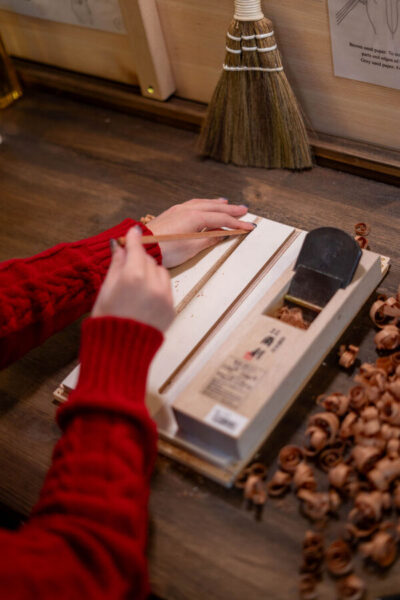
Gion Make Your Own Chopsticks with Engraving Option
Read our review →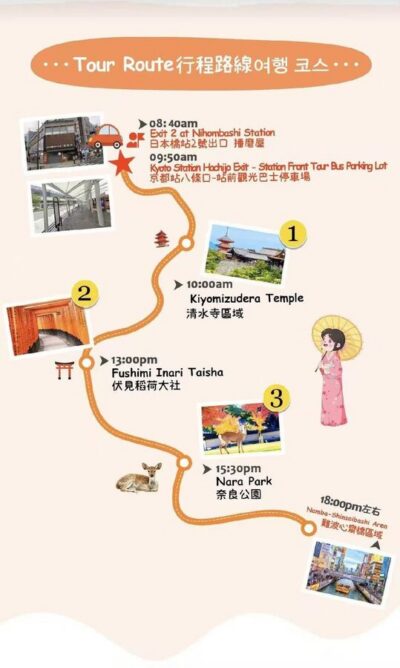
Kyoto Nara Day Trip │ Kiyomizu-dera Temple + Fushimi Inari-taisha Shrine + Nara Park (Departing from Osaka/Kyoto)
Read our review →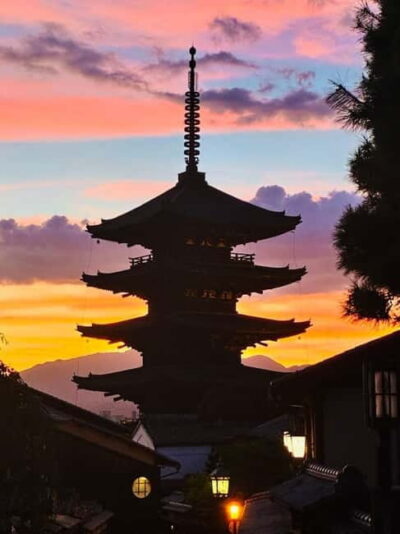
Kyoto Geisha Walking Tour: Gion District & Hidden Gems
Read our review →