Reviewed · KYOTO TOURS
Sushi or Traditional Japanese Cuisine in a Kyoto Home with Emika
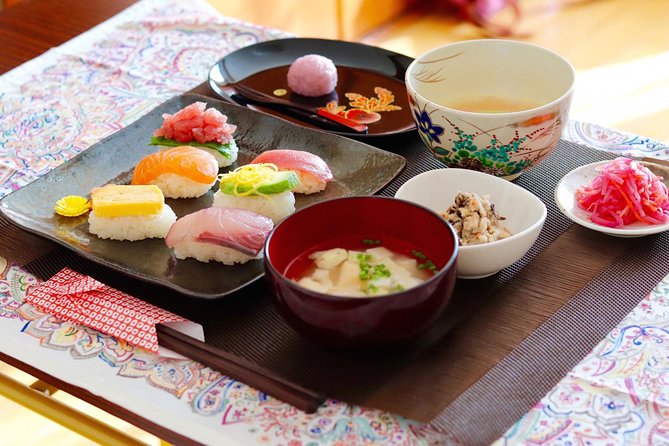
Eat Kyoto cuisine at its source. This private meal with Emika brings you into a Kyoto home for sushi, miso soup, seasonal Obanzai dishes, matcha, and conversation rather than a quick restaurant stop. I like the personal setting and the chance to learn directly from a local family. I also like that Emika may use produce from her own garden and local seasonal ingredients.
The main consideration is time. At about 90 minutes, this is a compact meal rather than a long cooking class or full afternoon cultural program. The home setting also means the experience depends partly on your interest in quiet conversation and local customs. Emika is described as gentle, polite, and somewhat reserved, so this may suit you better than a loud, highly scripted food tour.
In This Review
- Key points to know before booking
- A Kyoto meal that feels personal
- Arriving at Emika’s home in Nishikyo Ward
- Matcha begins or closes the visit
- Understanding Obanzai through a home-cooked meal
- What the 90-minute itinerary feels like
- The host makes the difference
- How much value do you get for $79?
- Dietary needs and comfort
- Who should book this Kyoto home meal?
- Practical booking advice
- Should you book Sushi or Traditional Japanese Cuisine in a Kyoto Home with Emika?
- FAQ
- Where does the experience take place?
- How long does the meal experience last?
- Is hotel pickup included?
- Does the activity end at the same location?
- What food may be served?
- What is Obanzai cooking?
- Is matcha included?
- Who may prepare the matcha?
- Can I request dietary accommodations?
- Is this a private activity?
- Are service animals allowed?
- Is the experience available for lunch and dinner?
- What is included in the price?
- How much does the experience cost?
- What is the cancellation policy?
Key points to know before booking
- A private Kyoto home meal: Only your group participates, giving the visit a more personal feel than a restaurant meal or large food tour.
- Seasonal Obanzai cooking: Expect Kyoto-style home dishes built around vegetables, seafood, rice, miso soup, and other ingredients that may change with the season.
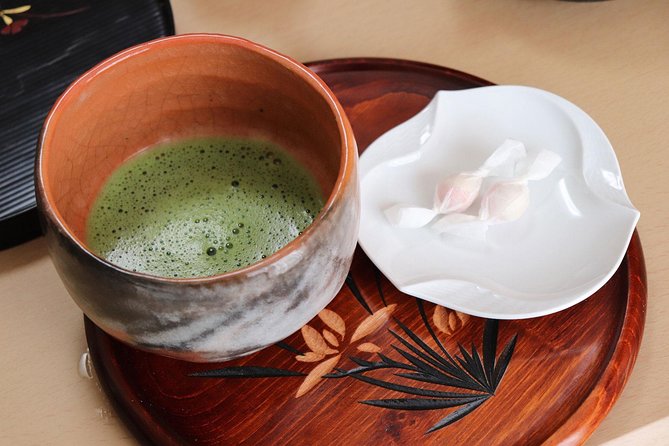
- Matcha with Emika or her father: The meal begins or ends with traditionally prepared matcha and a sweet, and her father may serve the tea.
- Possible garden-grown ingredients: Emika has prepared food using produce from her own garden, adding a direct connection to everyday home cooking.
- Lunch or dinner flexibility: You can choose a daytime or evening sitting, making it easier to fit around Kyoto sightseeing.
- Strong guest satisfaction: The experience has a 5 out of 5 rating from 20 reviews, with 100 percent recommending it.
A Kyoto meal that feels personal
Kyoto has no shortage of sushi counters, noodle shops, and polished restaurants. Those meals can be excellent, but they do not show you how food fits into a local household. Emika’s experience takes place in her home, where the meal is shared around a dining table and conversation is part of the event.
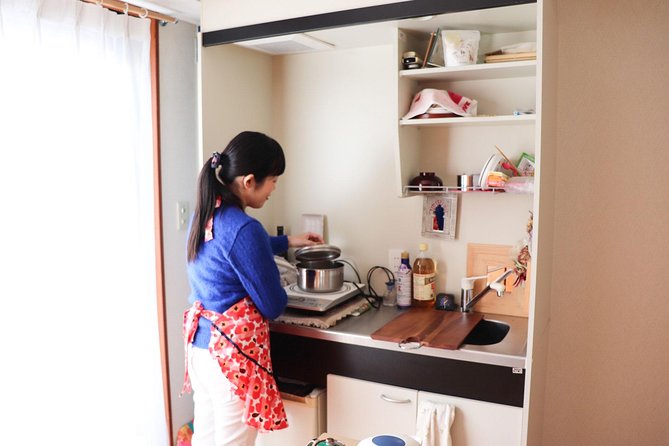
That setting matters. You are not simply ordering from a menu. You are being welcomed into a resident’s daily world, with Emika explaining the food, the ingredients, and aspects of Kyoto life. The tone appears warm and modest rather than theatrical.
I especially like the private format. Since only your group participates, you can ask questions at your own pace. You will not be trying to hear a host over a crowd, and the conversation can focus on your interests, from Japanese food to Kyoto customs and family life.
Still, keep your expectations sensible. This is not described as a professional restaurant tasting menu or a long, hands-on cooking lesson. It is a shared meal with explanations and selected demonstrations. If you want complex knife work, several hours of instruction, or a broad tour of Kyoto restaurants, choose something else.
A few more options to weigh up in Kyoto
- PERFECT KYOTO 1-Day Bus Tour
★ 5.0 · 13,518 reviews - [Kyoto & Nara Day Tour] Sagano Scenic Railway & Nara Park & Fushimi Inari Taisha Thousand Torii Gates & Togetsukyo Bridge & Bamboo Grove & Kimono Forest (Departing from Osaka)
★ 4.9 · 10,942 reviews - Kyoto: Fushimi Inari, Kinkakuji, Bamboo Grove 1 Day Bus Tour
★ 4.8 · 4,316 reviews
Arriving at Emika’s home in Nishikyo Ward
The meeting point is 31-30 Katsurainariyamacho in Kyoto’s Nishikyo Ward, and the activity both begins and ends there. Hotel pickup and drop-off are not included, so you need to arrange your own way to the home.
The location is near public transportation, which helps, but you should still allow enough time to find the address. A private home is not always as easy to spot as a hotel lobby or restaurant sign. I would save the address on your phone before leaving and arrive with a little breathing room, especially if you are coming from central Kyoto.
The mobile ticket makes the practical side simple. Confirmation arrives at booking, so you can keep the reservation details on your phone rather than carrying printed paperwork.
Because the experience is held in a home, it is wise to treat the meeting point with extra care. Follow the arrival instructions you receive, avoid showing up far ahead of schedule, and make sure your phone is charged. These are small steps, but they prevent the awkwardness of searching for a private residence in an unfamiliar neighborhood.
Matcha begins or closes the visit
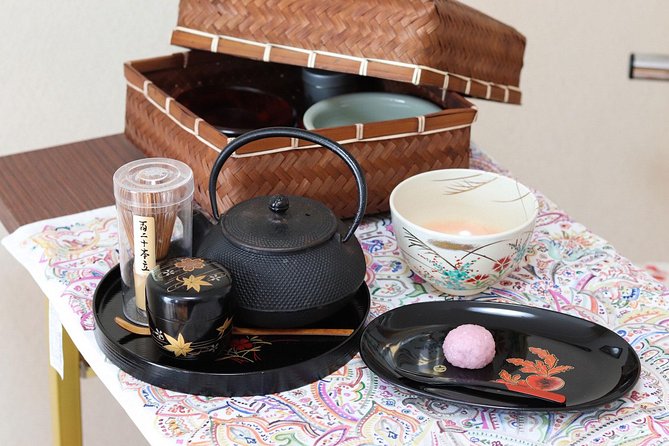
The tea portion is one of the most praised parts of the experience. Emika or her father prepares matcha in the traditional style, and several people particularly enjoyed the tea ceremony element after the meal.
You can expect a cup of matcha served with a sweet that complements the tea. This gives the meal a clear cultural frame. Instead of treating matcha as just another drink, the experience presents it as a practice with its own rhythm and manners.
Emika’s father is described as a master of the tea ceremony, so his participation may be a special part of your visit. The exact arrangement can vary, but the information indicates that he may serve the matcha. If tea culture interests you, this is an important reason to book.
I would not expect a formal, extended tea school lesson. The experience lasts about an hour and a half and centers on the meal, so the tea portion is likely to be short and focused. Even so, a traditional cup prepared in a Kyoto home can feel more meaningful than drinking matcha from a takeout counter.
Pay attention to how the tea is prepared and served. Ask questions politely, and follow the host’s lead if there are customs about handling the bowl or enjoying the sweet. You do not need to arrive as a tea expert. Curiosity and good manners are enough.
Understanding Obanzai through a home-cooked meal
The central food tradition here is Obanzai, a style of everyday Kyoto cooking that uses seasonal vegetables, seafood, and other locally sourced ingredients. Obanzai is not one fixed dish. It is a way of preparing practical home food with what is available.
That means your meal may change with the season. You might find miso soup, rice, sushi, several Obanzai side dishes, and a sweet for the matcha. The menu is not fixed, and that is part of the point. Kyoto cooking often values freshness, balance, and the natural character of the ingredients rather than heavy seasoning or oversized portions.
The meal may also include dishes prepared from produce grown in Emika’s own garden. That detail gives the food a strong sense of place. You are not only eating a regional style. You may be eating ingredients connected directly to the host’s household.
Several dishes are prepared traditionally in front of you, including sushi and miso soup. This is not the same as making every course yourself, but it does let you see how familiar Japanese staples come together in a home kitchen.
I like this approach because it gives you useful food knowledge without turning lunch into a classroom. You can ask what each dish is, how it is normally served, and how the ingredients change during the year. The meal becomes a conversation about daily life, not just a plate-by-plate tasting.
A completely different kind of day out:
- Kyoto: Tea Ceremony in a Traditional Tea House in Kiyomizu
★ 4.9 · 3,519 reviews - Kyoto: Gion Make Your Own Chopsticks with Engraving Option
★ 5.0 · 3,465 reviews - Kyoto Nara Day Trip │ Kiyomizu-dera Temple + Fushimi Inari-taisha Shrine + Nara Park (Departing from Osaka/Kyoto)
★ 4.7 · 3,408 reviews - Kyoto Geisha Walking Tour: Gion District & Hidden Gems
★ 4.7 · 3,273 reviews
What the 90-minute itinerary feels like
The schedule is short and easy to fit into a busy Kyoto day. You meet Emika at her home, settle in, and share tea either at the beginning or the end. The main portion is the Obanzai meal, with conversation and explanations throughout.
A typical flow may include:
- Meeting Emika at the Nishikyo Ward address
- Enjoying matcha prepared by Emika or her father
- Sitting together for sushi, rice, miso soup, and seasonal Obanzai dishes
- Learning about the ingredients and traditional preparation
- Finishing with a Japanese sweet served with matcha
- Returning to the same meeting point
The exact order can vary, since the tea may come before or after the food. The menu also changes with the season.
Ninety minutes is long enough for a relaxed meal and basic cultural exchange, but not so long that it takes over your day. I would pair it with nearby sightseeing or schedule it between other Kyoto plans. Do not place it too tightly against a distant reservation, since you still need time to travel to and from the home.
The lunch and dinner choices are useful. Lunch can work well if you want a calm break from sightseeing. Dinner may be better if you prefer to spend the day visiting temples and then end with a local meal. Since hotel transfers are not included, check your route before selecting a time.
The host makes the difference
Emika receives the strongest praise for her hospitality. She is described as gracious, kind, polite, warm, and witty. Her style appears gentle rather than showy, with a focus on preparing good food and sharing her way of life.
That matters in a home meal. The host is not just delivering information. She is opening a private space and making the food herself. The best part may be the simple exchange around the table, discussing Kyoto, ingredients, drinks, and everyday Japanese customs.
You may also meet Emika’s father during the tea service. His role adds another family connection and gives the visit a link to formal tea culture.
The available feedback is unusually consistent: all 20 ratings are five stars, and the experience is recommended by 100 percent of participants. The praise centers on the food, freshness, hospitality, traditional preparation, and tea ceremony. That does not guarantee that every group will have the same conversation or menu, but it does show a clear pattern of satisfaction.
One small point is worth noting. Emika is described as quiet by one person, though also sweet and witty. If you need a constantly energetic guide, you may find the tone restrained. If you prefer a calm host and a more natural exchange, that may be an advantage.
How much value do you get for $79?
At $79 per person, this costs more than an ordinary Japanese lunch. You are not paying only for rice, soup, and side dishes. The price also covers a private home visit, a personal host, local conversation, traditional matcha, and a meal prepared for your group.
The value is strongest if you care about access and context. A restaurant can give you excellent food, but it cannot usually give you a family setting, explanations from the cook, and a possible tea service from her father. You also avoid the uncertainty of choosing unfamiliar dishes on your own.
The price may feel less worthwhile if you are focused only on quantity or want a formal cooking course. The meal lasts about 90 minutes, and the menu changes with the season. You should book this for the personal connection and cultural setting, not for a huge spread.
Local alcohol is included, which adds a small extra benefit for adults who want to pair a drink with the meal. Specific options are not provided, so do not assume a particular beer, sake, or wine.
Dietary needs and comfort
You should give any specific dietary requirements when booking, in the special requirements field. This is especially important because the menu is seasonal and may include seafood, miso, sushi, local produce, sweets, and alcohol.
The information confirms that dietary requests can be communicated, but it does not promise that every restriction can be accommodated. If you have a serious allergy or a strict religious or medical diet, state it clearly before the visit and wait for confirmation.
Service animals are allowed. The home is near public transportation, but no further details about stairs, seating, or wheelchair access are provided. If you need a specific physical accommodation, ask before booking rather than guessing.
Since this is a private activity, your group has the advantage of a more controlled setting. You will not be sharing the meal with strangers, and the host can focus on your party.
Who should book this Kyoto home meal?
I would recommend it most strongly to:
- Couples who want a personal meal away from restaurant crowds
- Families interested in food and Japanese customs
- Solo visitors who enjoy conversation with local residents
- People curious about Obanzai and seasonal home cooking
- Matcha fans who want more than a cafe-style tea
- Anyone seeking a gentle, human-scale cultural activity
It can also work well for first-time visitors who want an introduction to Kyoto food without committing to a long class.
You may want to skip it if you need a large meal, have very limited mobility without advance confirmation, or prefer a fast and highly structured tour. It is also not the best choice if you want to prepare every dish yourself. The emphasis is on eating together, watching selected preparations, and talking with the host.
Practical booking advice
The experience is commonly reserved about 25 days ahead, so I would not leave it until the last moment if your Kyoto dates are fixed. Lunch and dinner options give you some flexibility, but private home visits have limited capacity by nature.
You receive confirmation at the time of booking, and the mobile ticket is convenient. Cancellation is free if you cancel at least 24 hours before the local start time. Changes or cancellations inside that 24-hour window are not accepted for a refund.
Plan your transportation to and from the Nishikyo Ward address. Since the activity ends where it begins, you can continue to another Kyoto stop afterward, but leave enough time for the journey.
Should you book Sushi or Traditional Japanese Cuisine in a Kyoto Home with Emika?
Book it if you want a genuine home meal, calm conversation, and a close look at Kyoto food traditions. The standout features are Emika’s warm hosting, seasonal Obanzai cooking, possible garden-grown ingredients, and the matcha service involving her father.
At $79, the experience is a fair value for a private meal and cultural exchange, but not for food alone. Go with an open appetite and a little curiosity. If your idea of a memorable Kyoto evening includes sitting at a local table rather than rushing through another restaurant, this is a strong choice.
FAQ
Where does the experience take place?
It takes place in Emika’s home at 31-30 Katsurainariyamacho, Nishikyo Ward, Kyoto, Japan.
How long does the meal experience last?
The experience lasts approximately 1 hour and 30 minutes.
Is hotel pickup included?
No. Hotel pickup and drop-off are not included, so you must make your own way to the meeting point.
Does the activity end at the same location?
Yes. The activity ends back at the meeting point in Emika’s home area.
What food may be served?
The meal may include sushi, miso soup, rice, traditional Obanzai dishes, seasonal vegetables, seafood, and a sweet served with matcha. The menu may change according to the season.
What is Obanzai cooking?
Obanzai is traditional Kyoto home cooking made with seasonal vegetables, seafood, and other locally sourced ingredients.
Is matcha included?
Yes. A cup of traditionally prepared matcha is included, along with a sweet that goes well with the tea.
Who may prepare the matcha?
Emika or her father may prepare the matcha. Her father is described as a master of the tea ceremony.
Can I request dietary accommodations?
Yes. You should provide specific dietary requirements in the special requirements box when booking.
Is this a private activity?
Yes. Only your group participates in the activity.
Are service animals allowed?
Yes. Service animals are allowed.
Is the experience available for lunch and dinner?
Yes. You can choose a lunch or dinner time.
What is included in the price?
The price includes an authentic home-cooked Japanese meal and local alcohol.
How much does the experience cost?
The listed price is $79 per person.
What is the cancellation policy?
You can cancel up to 24 hours before the experience start time for a full refund. Cancellations or changes made less than 24 hours before the start time are not accepted for a refund.
Just added in Kyoto
- The “Golden Route” and Ancient Japan by DIAMIR Erlebnisreisen – 14-Day Tour★ 2.0 · 2 reviews
- Japan: Castles & Cuisine by G Adventures – 6-Day Kyoto to Osaka Tour★ 4.5 · 4 reviews
- Cycle Japan by Explore! – 13-Day Kyoto to Tokyo Tour★ 4.7 · 12 reviews
- Cycle Japan by Intrepid Travel – 11-Day Kyoto to Tokyo Tour★ 4.8 · 2 reviews
- Classic Japan by Intrepid Travel – 11-Day Kyoto to Tokyo Tour★ 4.4 · 14 reviews
- Ancient & Modern Japan 14-Day Tour by Exodus Adventure Travels★ 4.4 · 40 reviews
- 5 Day Cultural Adventure of Kyoto, Nara & Osaka by Tourist Journey★ 2.5 · 2 reviews
- 12 Days Kinosaki Onsen Escape: A Journey Through Japan’s Timeless Towns by UME Travel★ 4.8 · 5 reviews
Kyoto Tours, compared.
![[Kyoto & Nara Day Tour] Sagano Scenic Railway & Nara Park & Fushimi Inari Taisha Thousand Torii Gates & Togetsukyo Bridge & Bamboo Grove & Kimono Forest (Departing from Osaka)](https://media.japanvisits.com/wp-content/uploads/kyoto-nara-day-tour-sagano-scenic-railway-nara-park-fushimi-inari-taisha-thousand-torii-gates-togetsukyo-bridge-bamboo-grove-kimono-forest-departing-from-osaka-k110001-400x257.jpg)
Fushimi Inari, Kinkakuji, Bamboo Grove 1 Day Bus Tour
Read our review →
Tea Ceremony in a Traditional Tea House in Kiyomizu
Read our review →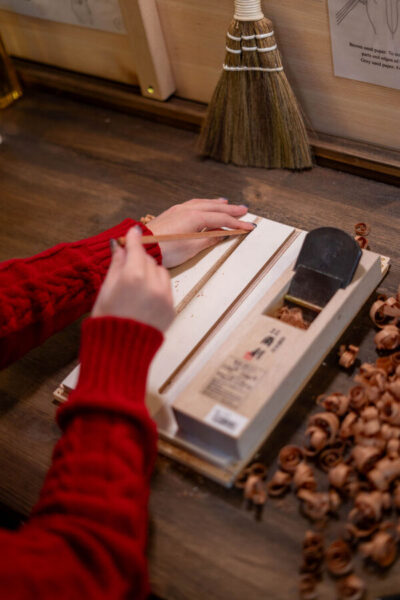
Gion Make Your Own Chopsticks with Engraving Option
Read our review →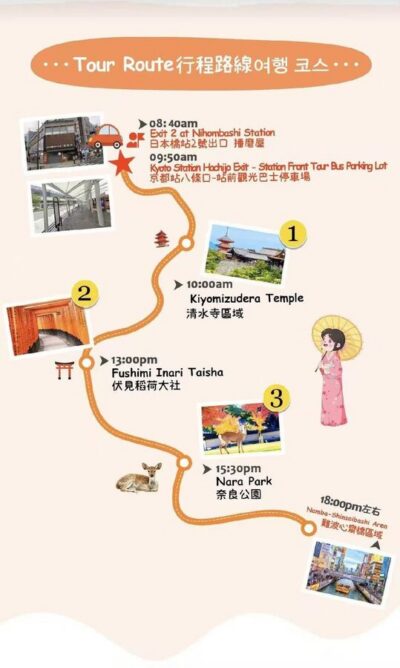
Kyoto Nara Day Trip │ Kiyomizu-dera Temple + Fushimi Inari-taisha Shrine + Nara Park (Departing from Osaka/Kyoto)
Read our review →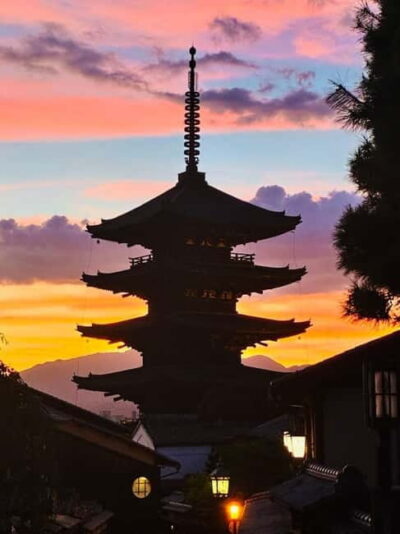
Kyoto Geisha Walking Tour: Gion District & Hidden Gems
Read our review →