
Reviewed · COOKING CLASSES
Takoyaki cooking experience in Kabukicho, Shinjuku
Round food, quick hands, big smiles. This one-hour class lets you cook and eat fresh takoyaki in central Kabukicho, turning a popular Japanese snack into a hands-on meal rather than something grabbed from a street stall. I like the small group size, limited to six people, and the warm help from instructors such as Chihiro, Sakiko, Shuma, Koi, and Kai.
I also like the easy location, only about five minutes from Shinjuku Station, and the relaxed tone reported by people who cooked with children or practiced a little Japanese with the staff. The main consideration is that takoyaki contains wheat flour and the cooking surface is hot, so this is not suitable for anyone with gluten intolerance or children under four.
In This Review
- The essential facts at a glance
- Why takoyaki makes a good first cooking class
- Arriving at 1-14-5 Kabukicho
- What happens at the griddle
- Friendly instruction and the language question
- A family-friendly activity with one clear limit
- What the $25 price really covers
- The flavor payoff: crisp outside, soft inside
- How this class fits into a Shinjuku day
- Who should book this experience
- Should you book the Kabukicho takoyaki class?
- FAQ
- How long does the takoyaki cooking experience last?
- How much does the experience cost?
- Where is the meeting point?
- Are drinks included?
- Can children take part?
- Is the experience available in English?
The essential facts at a glance
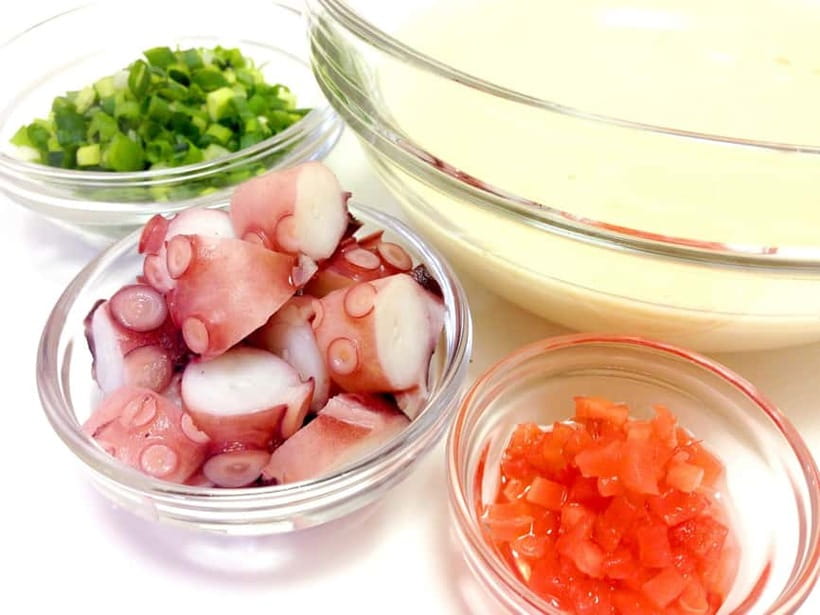
- You cook your own meal: Pour the batter, add chopped octopus, turn the pieces, and eat them hot.
- Small groups matter: With no more than six participants, you should get useful help at the griddle.
- Kabukicho location: The restaurant is about five minutes from Shinjuku Station and close to the Godzilla cinema area.
- Good for families: Children over four can take part, and one family described careful attention to keeping kids safe.
- English and Japanese support: English is available, though a translation machine may be used with some staff.
- A short, fairly priced activity: At $25 per person, the fee includes the cooking session and meal, but not drinks or transport.
Why takoyaki makes a good first cooking class
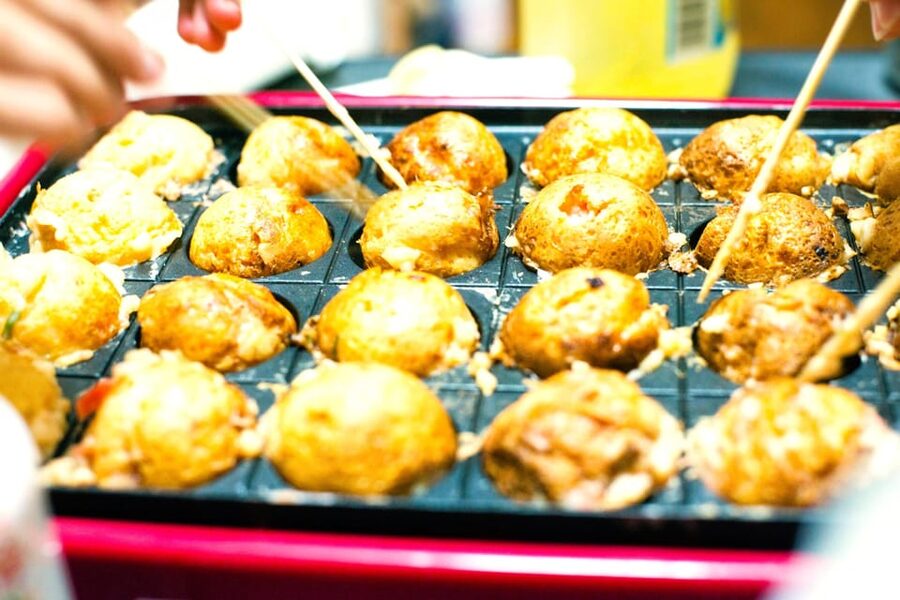
Takoyaki is one of Japan’s most approachable foods. The basic recipe is simple: water and egg-based flour batter goes into round wells in a special griddle, then chopped octopus is added. As the batter cooks, you shape each portion into a ball.
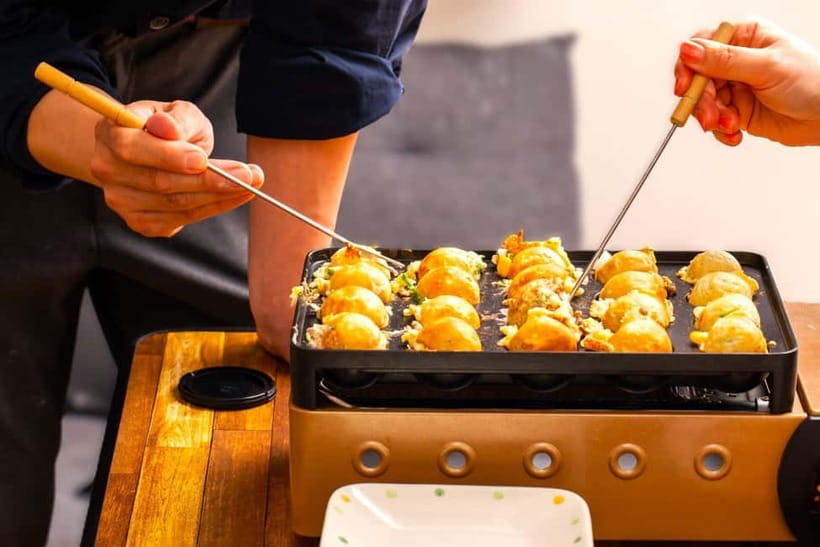
The fun comes from the turning. At first, the soft batter looks more like a small puddle than a neat ball. With a pick or similar cooking tool, you work around the edges and rotate it as the outside firms up. The aim is a browned shell with a soft, fluffy middle.
That small act of turning makes the class more engaging than a standard meal. You are not just watching a cook prepare food. You are learning how the dish changes from liquid batter to a hot snack you can eat with your own hands.
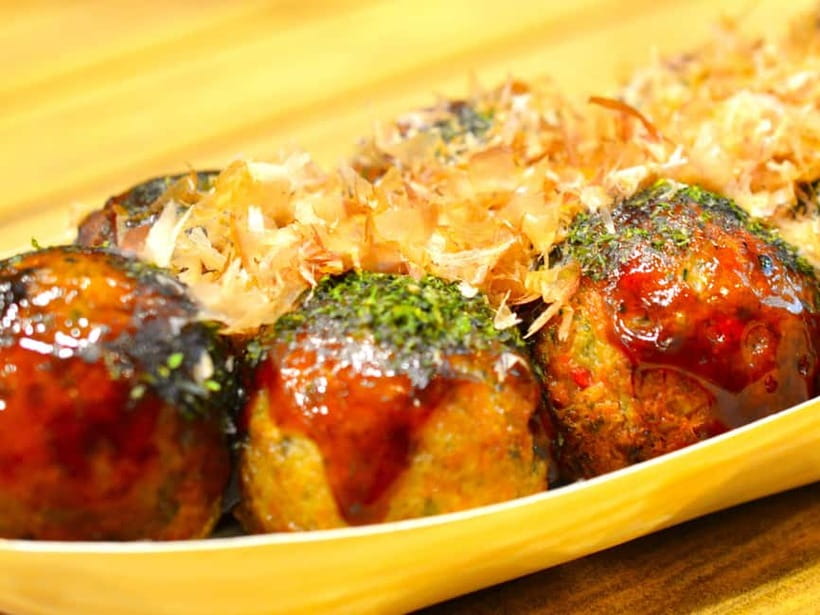
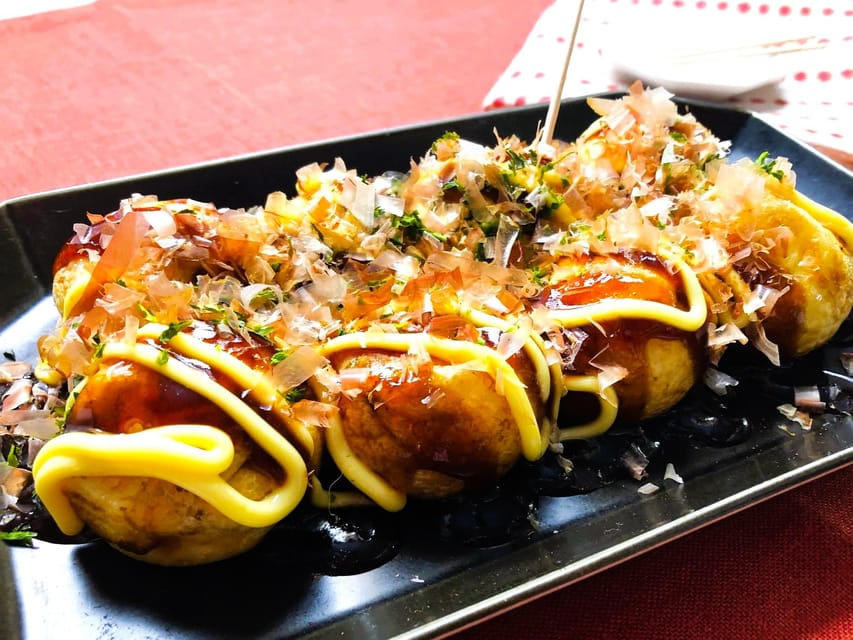
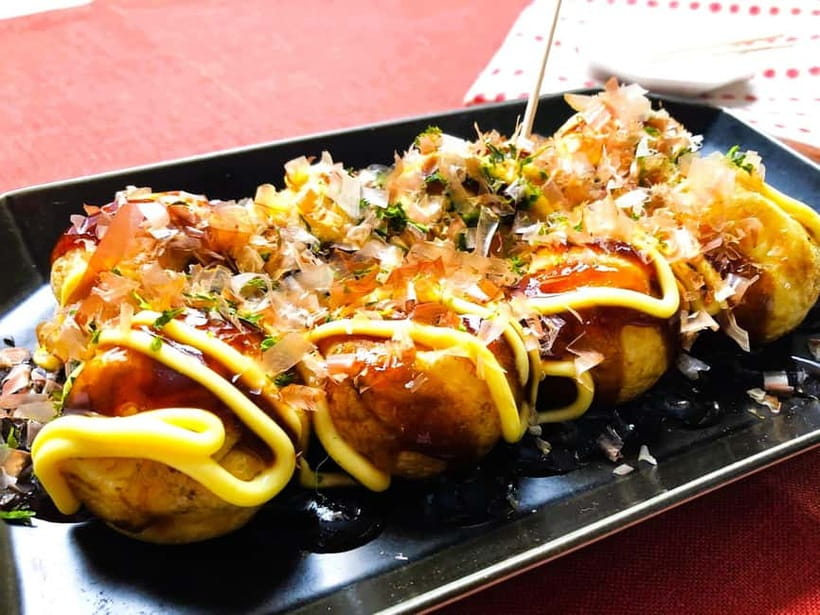
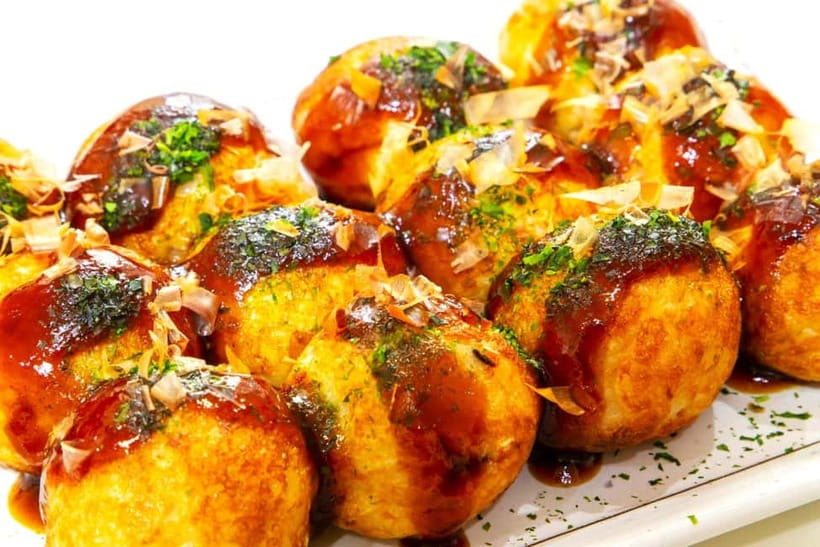
The finished takoyaki is served with familiar toppings, including sauce, mayonnaise, dried bonito flakes, and aonori, or green laver. The contrast is the point: crisp outside, tender inside, salty sauce, and a gentle seafood flavor from the octopus.
You should take care with the first bite. Takoyaki can stay extremely hot in the center, even after the outside looks ready. It pairs well with beer, although bottled drinks and any extra food or drinks cost more.
More Cooking Classes in Tokyo
- Sushi Making Tokyo Roll and Authentic Japanese Sushi Class
★ 5.0 · 3,971 reviews - Tokyo: Roll and Authentic Sushi Making Class in Asakusa
★ 4.9 · 1,957 reviews - Tokyo Shinjuku Chopsticks Making Class
★ 5.0 · 1,763 reviews
Arriving at 1-14-5 Kabukicho
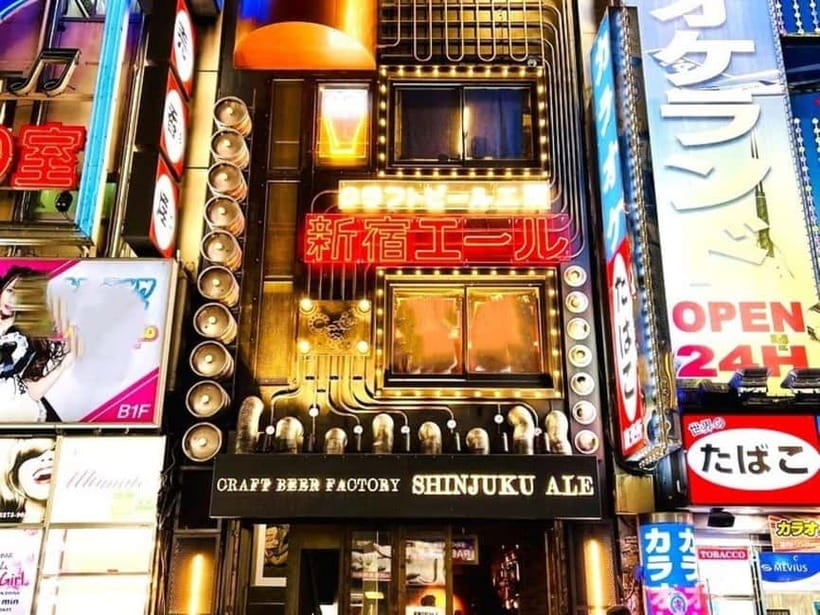
The meeting point is practical, but Kabukicho has plenty of signs and activity, so use the exact directions rather than wandering by feel. From Shinjuku Station, walk along Kabukicho Central Road toward TOHO Cinemas.
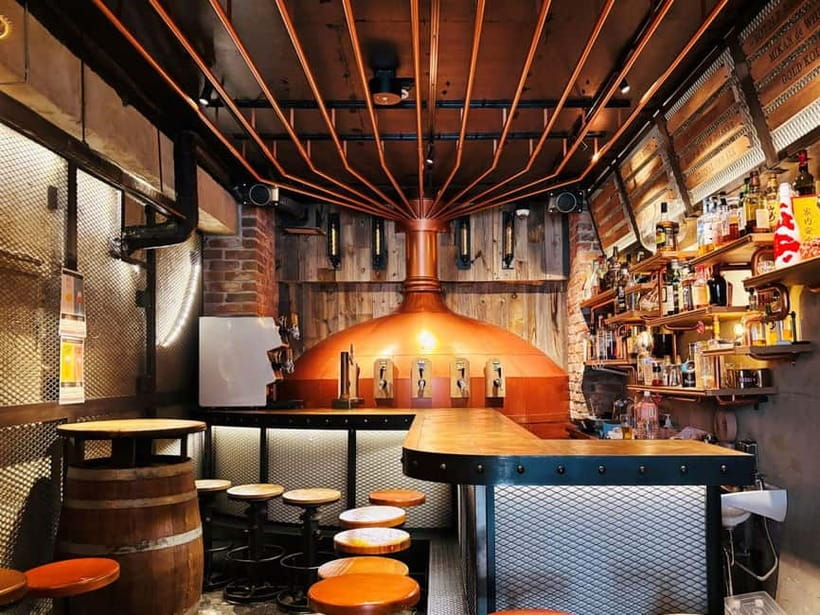
Before reaching the end of the road, look on the right for Shinjuku Ale next to Karaoke 747. The address is 1-14-5 Kabukicho, Shinjuku-ku, Tokyo, and the Google Plus Code is MPV2+VR Shinjuku City, Tokyo.
Allow yourself enough time to find the building. The experience is short, only one hour, so arriving late could cut into the cooking time. When you reach the restaurant, tell the staff that you have reserved the takoyaki experience.
The location also works well with a wider Shinjuku outing. One participant particularly appreciated being close to Godzilla for photographs afterward. TOHO Cinemas and the famous Godzilla head are nearby, giving you an easy plan for the hour after the meal.
What happens at the griddle
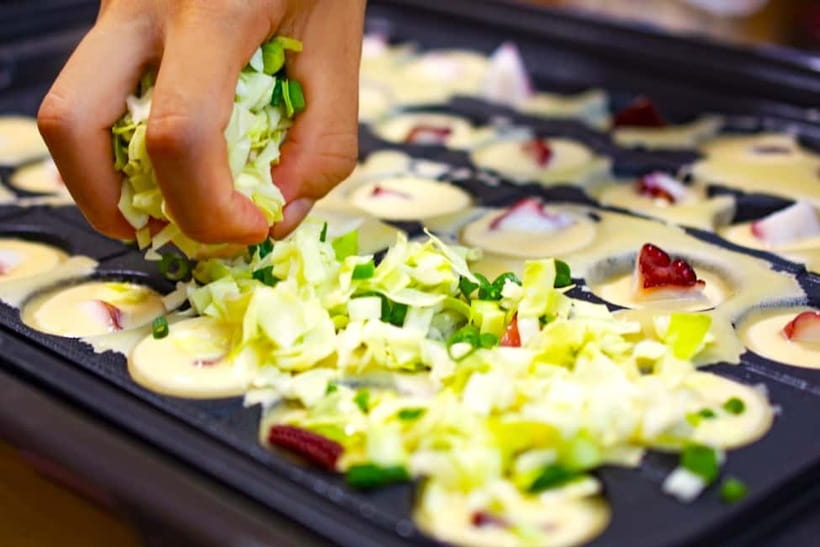
The class follows a straightforward rhythm. You begin with the takoyaki batter and the round griddle. Batter is poured into the wells, and chopped octopus is placed inside before the mixture sets.
Then comes the part that needs the most attention: shaping the balls. You work around each portion and turn it as the edges cook. The instructor helps you judge when a piece is ready to rotate and how to keep the shape round.
This is where the limited group size earns its keep. Six people is small enough for the instructor to watch what you are doing, answer questions, and help if your first few takoyaki look uneven. Do not worry about perfect circles right away. The appeal is in learning the motion, not producing a display-window masterpiece.
The class ends when you finish eating. There is no long lecture or drawn-out sightseeing section, which makes the activity easy to fit between other plans in Shinjuku. You get a focused food lesson and a meal in roughly an hour.
The format also suits people who are not confident cooks. The instructions have been described as easy to follow, and the staff are praised for staying close and offering support. One participant compared the experience with cooking alongside a friend while having a drink, which gives you a good sense of the informal mood.
Friendly instruction and the language question
The strongest pattern in the available feedback is the quality of the staff interaction. Chihiro was praised for being friendly and helping produce delicious takoyaki. Shuma was singled out for explaining how to make a good result, while Sakiko was described as making the session feel relaxed and personal.
Koi and Kai also helped turn the class into a cultural exchange. One participant used the time to talk about Japanese culture and practice a small amount of Japanese. That can be a nice extra if you enjoy conversation, but it is not the formal purpose of the activity.
English and Japanese are listed as the working languages. Some staff members speak good English, but the information also makes clear that a translation machine may be used if the staff member helping you is not fluent. I would treat this as a practical point, not a warning. The cooking process is visual and hands-on, so simple explanations and demonstrations should carry much of the session.
Still, if you want a detailed cooking lecture in polished English, this may feel more basic. If you want a friendly activity where you can learn by watching, trying, and asking simple questions, the format is a better match.
A completely different kind of day out:
- Tokyo Disney Resort – Tokyo Disneyland & Tokyo DisneySea Park Tickets
★ 4.8 · 99,488 reviews - SHIBUYA SKY Ticket
★ 4.7 · 46,509 reviews - JR Whole Japan Rail Pass
★ 4.8 · 29,150 reviews - Mt Fuji and Hakone 1-Day Bus Tour Return by Bullet Train
★ 5.0 · 26,383 reviews
A family-friendly activity with one clear limit
Families can join with children aged four and over. A family with two children found the atmosphere relaxed and felt that the staff paid close attention to safety. That is useful because the griddle stays hot, and younger cooks may need more direct help when turning the takoyaki.
Parents should remain involved. The class is hands-on, not a children’s play session, and children will be working near hot cooking equipment. The staff can help, but adults should still keep a close eye on younger participants.
Children who enjoy making food may get more from this than from simply sitting through a restaurant meal. The round shapes, quick changes, and final toppings give them several small jobs to focus on.
The age limit is firm: children under four are not suitable for this experience. People with gluten intolerance should also avoid it because the takoyaki batter is made with flour.
What the $25 price really covers
At $25 per person, the price includes the takoyaki cooking experience and the meal you prepare. That is a fair deal if you value instruction, staff attention, and the novelty of making a well-known Japanese dish in central Tokyo.
You are paying for more than a plate of takoyaki. In a restaurant, you could order the finished food quickly and perhaps pay less. Here, the value is in learning the technique, handling the griddle, talking with the instructor, and eating the result while it is fresh.
The small group limit strengthens the value. With six or fewer people, the session should feel more personal than a large demonstration. Several people praised the individual help and the fact that the class began promptly after arrival.
The fee does not include bottled drinks, extra meals, additional drinks, or transport to the meeting place. Plan for those separately. Beer goes well with takoyaki, but it is an add-on rather than part of the basic price.
For a compact Shinjuku activity, the cost makes the most sense if you want participation. If your main goal is simply to eat takoyaki, a food stall or casual restaurant may be cheaper and faster. If you want a story to take home along with the meal, the class offers more.
The flavor payoff: crisp outside, soft inside
Takoyaki is easy to underestimate. It looks like a small ball of batter, but the texture changes as you eat it. The outside should be lightly crisp, while the middle stays soft and fluffy around the octopus.
The toppings add much of the familiar flavor. Sauce brings sweetness and salt, mayonnaise adds richness, dried bonito flakes give a savory note, and aonori supplies a mild seaweed taste. You can combine them in the classic style or keep the topping simple.
Because you cook the pieces yourself, you have a better sense of how timing affects the result. Leave them too long and the outside may become overly firm. Turn them at the right moment and you get the contrast that makes takoyaki popular.
The meal is also filling enough for a short food activity, though the exact amount of food is not specified. If you have a large appetite, remember that extra meals are not included. Kabukicho gives you plenty of choices afterward.
How this class fits into a Shinjuku day
The one-hour duration is the main logistical advantage. You can place it before an evening meal, between shopping and sightseeing, or after seeing the Godzilla area. Since the meeting point is close to Shinjuku Station, it does not require a long trip across Tokyo.
The Kabukicho setting gives the activity an energetic urban backdrop, but the class itself is about food rather than neighborhood sightseeing. Do not book it expecting a guided walk through Shinjuku. You are there to cook, eat, and speak with the staff.
The nearby cinema and Godzilla photo spot make a natural follow-up. You could also use the class as a break from the station area. A short cooking session can add variety to a day filled with department stores, city views, and train rides.
Starting times vary, so check availability for your chosen date. The booking terms allow free cancellation up to 24 hours before the activity for a full refund, and you can reserve now and pay later. Those terms are useful when your Tokyo schedule is still shifting.
Who should book this experience
I would recommend it most strongly to:
- First-time visitors who want to try a familiar Japanese dish in a hands-on way.
- Couples and friends looking for a short shared activity.
- Families with children aged four and over who can follow instructions near a hot griddle.
- Food lovers who enjoy learning a simple technique rather than only ordering a finished dish.
- People staying near Shinjuku who want an activity close to the station.
- Anyone curious about Japanese cooking but not ready for a long or demanding class.
It may be a poor fit if you have gluten intolerance, if you dislike octopus, or if you want a large meal with drinks included. It is also less suitable for anyone who prefers quiet sightseeing to active participation.
The language setup should not stop most people from booking, but expectations matter. English support is available, while some instruction may use a translation machine. The hands-on method helps, and the staff have been praised for being patient and friendly.
Should you book the Kabukicho takoyaki class?
Book it if you want a social, practical food experience that fits neatly into a Shinjuku schedule. The combination of a six-person limit, helpful instructors, included meal, and central location gives the $25 price solid value.
I especially like the chance to learn the turning technique instead of simply eating takoyaki from a counter. The strongest staff praise goes to Chihiro, Shuma, Sakiko, Koi, Kai, and the wider team for making the activity relaxed and personal.
Skip it if you cannot eat wheat, have children under four, or only want the cheapest possible takoyaki. For everyone else, this is a short and cheerful way to meet a classic Japanese comfort food on its own terms: hot, messy, round, and made by you.
FAQ
How long does the takoyaki cooking experience last?
The experience lasts about one hour and ends after you finish cooking and eating the takoyaki.
How much does the experience cost?
The listed price is $25 per person. The fee includes the takoyaki cooking experience and the meal.
Where is the meeting point?
The restaurant is at 1-14-5 Kabukicho, Shinjuku-ku, Tokyo, about five minutes from Shinjuku Station on the JR Yamanote Line. Walk along Kabukicho Central Road toward TOHO Cinemas and look for Shinjuku Ale next to Karaoke 747. The Google Plus Code is MPV2+VR Shinjuku City, Tokyo.
Are drinks included?
No. Bottled drinks, additional drinks, and extra meals are not included.
Can children take part?
Children aged four and over can participate. Children under four are not suitable for this activity.
Is the experience available in English?
English and Japanese are listed as available languages. If the staff member assisting you is not fluent in English, a translation machine may be used.
Just added in Tokyo
- A One-of-a-Kind Sushi Experience in a Special Place of Japan★ 5.0 · 15 reviews
- Tokyo Cute Bento Cooking Class – Make a Kawaii Character Lunchbox★ 5.0 · 126 reviews
- Japanese Home Cooking Class & Walk in Todoroki Temple Tokyo★ 5.0 · 88 reviews
- Japan Tokyo Tower Observatory Deck E-Ticket★ 4.0 · 34 reviews
- Catch a Baseball Game in Tokyo with a Local – Tickets Included★ 5.0 · 24 reviews
- JDM Experience with Fast&Furious RX-7 (English speaking Driver)★ 5.0 · 57 reviews
- Tokyo Private Day Tour by Car with English speaking Driver Guide★ 4.0 · 29 reviews
- Japan Classic 10 Day – One Life Adventures★ 5.0 · 129 reviews
Cooking Classes, compared.
Sushi Making Tokyo Roll and Authentic Japanese Sushi Class
Read our review →
Roll and Authentic Sushi Making Class in Asakusa
Read our review →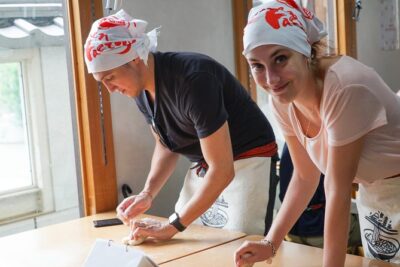
Ramen Cooking Class at Ramen Factory in Kyoto
Read our review →
Sushi Making Class in a Happi Coat near a Famous Spot
Read our review →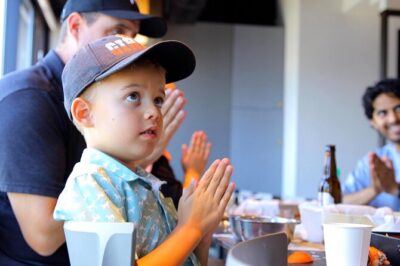
Sushi Making Osaka Roll and Authentic Japanese Sushi Class
Read our review →
Tokyo Sushi Making Class in Tsukiji with Professional Chef
Read our review →
Ramen & Gyoza Cooking Class in Tokyo with Local Supermarket Visit
Read our review →Browse the lists this tour appears in