
Reviewed · TEMPLES AND SHRINES
Tokyo: Asakusa & Tokyo’s Oldest Temple Senso-ji Walking Tour
Old Tokyo begins beneath a red lantern. This two-hour Asakusa walk brings you to Senso-ji, Nakamise Shopping Street, and the old streets around Tokyo’s best-known Buddhist temple. I like the clear focus on one historic district, and I like the small group size, limited to 10 people, which gives the guide room to answer questions.
The $11 price is excellent for a guided introduction to Asakusa, especially if this is your first visit to Tokyo. Guides such as Lax and Shoma have earned praise for their friendly manner, strong English, and ability to explain Japanese culture. The main consideration is that the tour stays around one area, so the quality depends heavily on how well your guide turns the sights into a connected story rather than simply leading you from stop to stop.
In This Review
- Key points to know before booking
- Why Asakusa makes a smart first Tokyo walk
- Meeting at Kaminarimon Police Station
- Walking beneath Kaminarimon Gate
- Nakamise Shopping Street, one hour of sights and snacks
- Senso-ji and the story behind Tokyo’s oldest temple
- An additional 80 minutes around Asakusa
- What the guide can add to your visit
- Is $11 good value for two hours?
- Who should choose this walking tour?
- Booking flexibility and timing
- Should you book the Asakusa and Senso-ji walk?
- FAQ
- Where does the tour begin?
- Where does the tour finish?
- How long does the experience last?
- What language is the tour conducted in?
- How many people can join the group?
- Does the tour include hotel pickup and drop-off?
- What places are visited?
- Can I cancel for a full refund?
Key points to know before booking
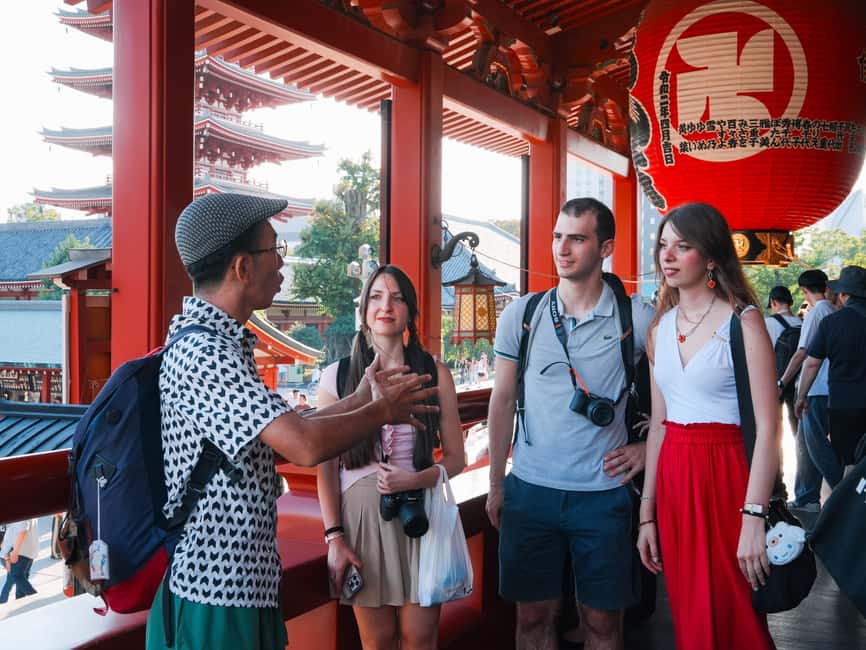
- Kaminarimon Police Station meeting point: You begin beside the police station near the famous Kaminarimon Gate, not at your hotel.
- Senso-ji takes center stage: You learn about Tokyo’s oldest and most celebrated temple, with time for photos, sightseeing, and nearby shopping.
- Nakamise Street adds local color: Traditional shops, lanterns, sweets, and snacks make this the most atmospheric part of the route.
- Small groups keep things personal: The tour accepts up to 10 participants, a useful size for questions and conversation.
- Guide quality matters: Lax has been praised for making the walk fun and personal, while Shoma received strong marks for clear English and cultural insight.
- A budget-friendly introduction: At $11 per person, this is a low-cost way to get context before exploring Asakusa on your own.
Why Asakusa makes a smart first Tokyo walk
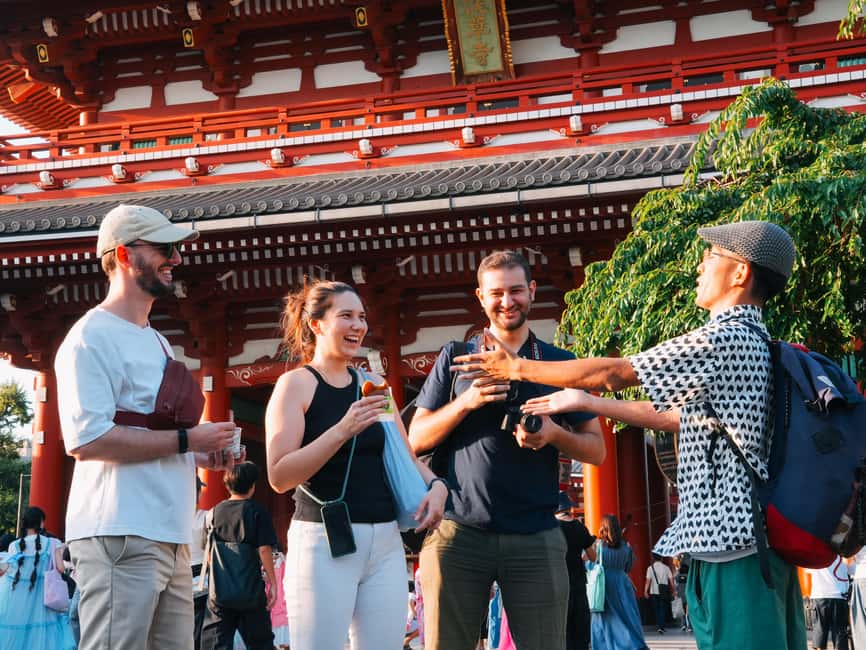
Tokyo can feel enormous on your first day. Asakusa gives you a manageable place to begin, with major sights, traditional shops, religious buildings, and old neighborhood character packed into one district.
This tour is not a cross-city sightseeing marathon. That is its strength. You spend your time learning how one part of Tokyo changed from the Edo period through wartime destruction and post-war recovery. You also get a chance to look beyond the most photographed spots and notice smaller shrines and side streets that can be easy to miss when you explore alone.
I especially like this approach for first-time visitors. You get the basic map of Asakusa, learn how Senso-ji fits into Tokyo’s story, and then have a better sense of where to return for food, shopping, or more wandering.
The route is conducted in English. A small group of no more than 10 people should feel more relaxed than a large coach excursion, though the actual atmosphere will depend on who joins your departure. The tour lasts two hours, so it gives you a useful introduction without taking over your entire day.
More Temples and Shrines in Tokyo
- Tokyo: Meiji Shrine, Asakusa, Skytree Bus Tour and Cruise
★ 4.7 · 1,986 reviews - Tokyo: Asakusa Walking Tour with Sensoji Temple Visit
★ 4.8 · 1,583 reviews - Nikko: Kegon Falls, Lake Chuzenji & Toshogu Temple
★ 4.6 · 1,577 reviews
Meeting at Kaminarimon Police Station
The walk begins at Kaminarimon Police Station, written in the supplied details as 雷門交番. This is an important practical point. Hotel pickup and drop-off are not included, so you need to make your own way to the meeting place.
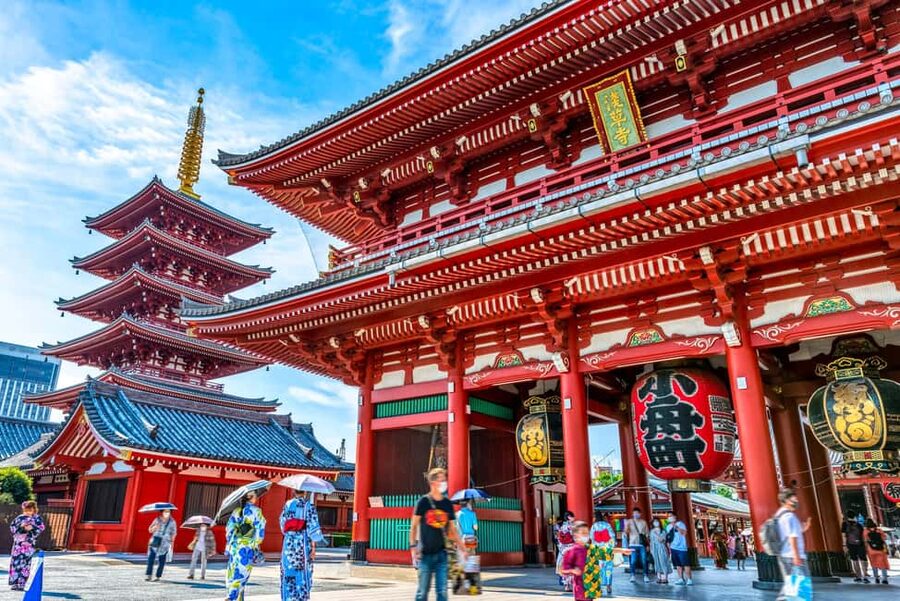
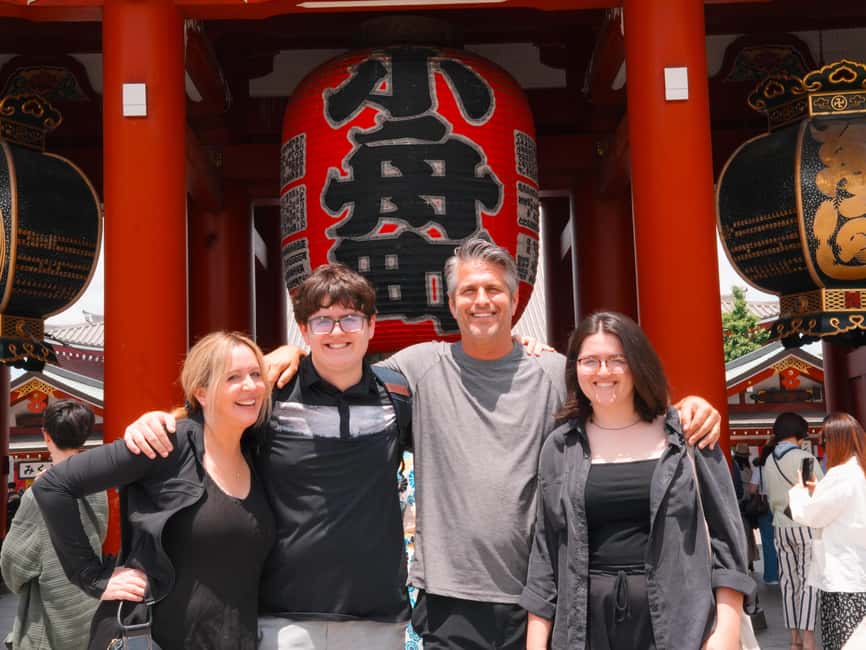
The starting point puts you close to Kaminarimon Gate, the dramatic entrance associated with Asakusa and Senso-ji. Its large lantern and strong red structure provide an immediate sense of place, and they make an easy visual marker for the start of the walk.
Arrive with enough time to find the police station and locate your guide. The activity information does not give a precise arrival recommendation, so I would not cut it close. In a busy sightseeing district, a few extra minutes can save you from beginning the tour flustered.
Starting here also makes practical sense. You are placed right at the edge of Asakusa’s most famous sights instead of spending the first part of the tour on a long transfer. If you have luggage, plan carefully, since this is a walking activity and no hotel service is provided.
Walking beneath Kaminarimon Gate
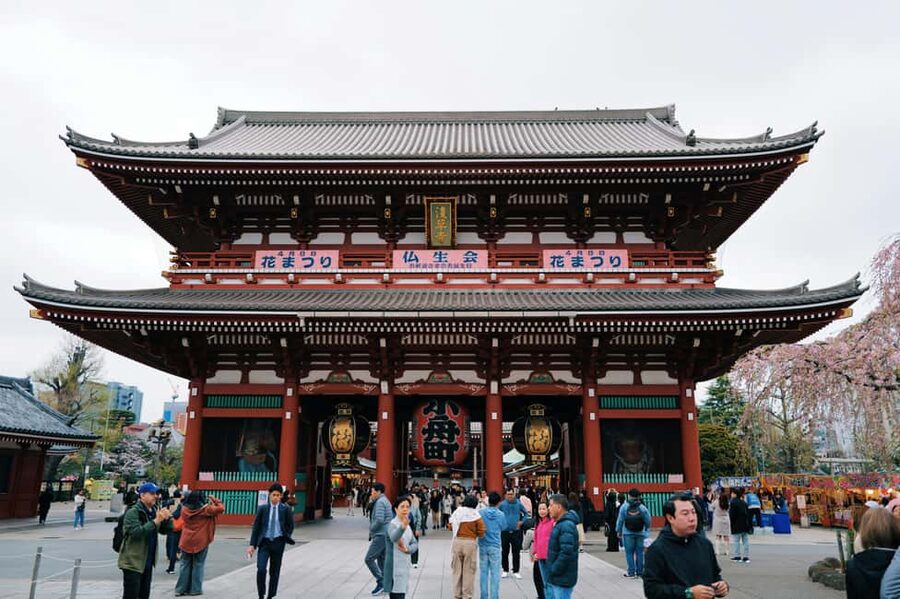
Kaminarimon means Thunder Gate, and it is one of the visual symbols of Asakusa. The gate prepares you for the route ahead: large lanterns, traditional design, souvenir shops, temple buildings, and a steady flow of people moving toward Senso-ji.
Your guide can give this first part meaning rather than leaving you with a quick photo stop. The tour focuses on stories and legends connected with the district, along with the way Asakusa changed over time. The supplied description points to former geisha quarters, small shrines, samurai connections, and the area’s post-war revival.
That range is useful because Asakusa is more than an old temple. It is a district shaped by religion, entertainment, commerce, war, and renewal. A good guide helps you see those layers without turning the walk into a long academic lecture.
Lax has received repeated praise for his friendly personality and ability to make the visit fun. Paul-Axel also found his approach especially personal when the group was very small. Those comments suggest that Lax may be a strong choice if you want conversation and an easygoing tour rather than a formal presentation.
Nakamise Shopping Street, one hour of sights and snacks
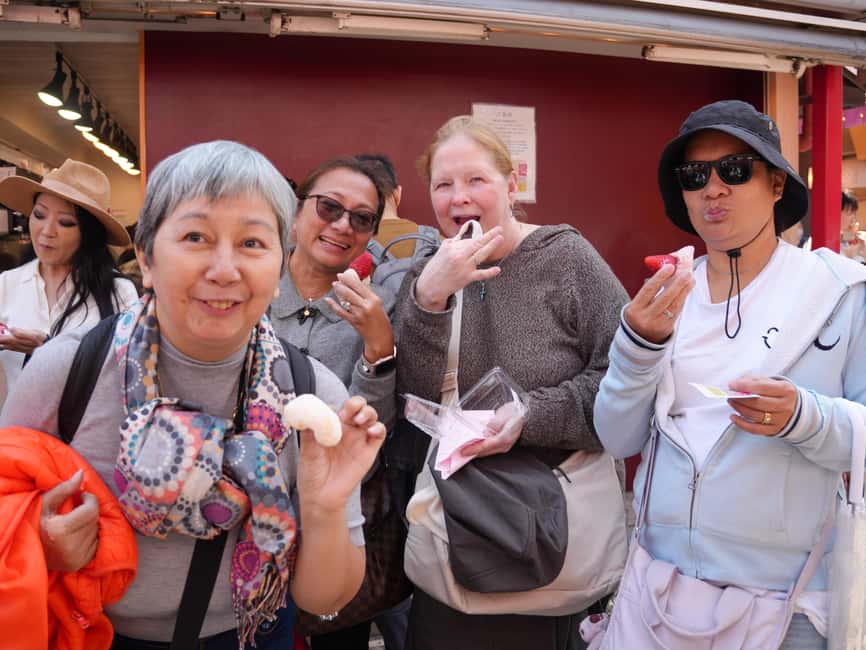
Nakamise Shopping Street is the route’s most colorful stretch. It leads toward Senso-ji and is lined with traditional shops, souvenir stalls, glowing lanterns, sweets, and street snacks.
The stated schedule gives Nakamise about one hour. That is generous enough to look closely instead of rushing straight through. You can expect this portion to combine sightseeing and shopping, so keep in mind that the group’s pace may be affected by questions, photos, and stops at the shops.
I like having a guide here because a row of attractive storefronts does not automatically explain itself. Your guide can help place the shopping lane within Asakusa’s older commercial life and point out how the district keeps traditional forms alive while serving modern visitors.
This is also where the tour’s relaxed side comes through. You are not simply checking off a temple entrance. You are walking through a place with food smells, bright displays, and small purchases that can make the visit feel more personal.
Still, you should not expect a dedicated food tour. Food and snacks are part of the setting, but the main purpose is history and sightseeing. The supplied details do not promise tastings or included food, so budget separately if you want to buy sweets or other treats.
More Walking Tours in Tokyo
- Tokyo Tsukiji Fish Market Food and Culture Walking Tour
★ 5.0 · 3,184 reviews - Tokyo: Imperial Palace and Shogun Historical Walking Tour
★ 5.0 · 2,251 reviews - Tokyo: Shinjuku Local Bar and Izakaya Guided Walking Tour
★ 4.9 · 1,794 reviews - Tokyo: Tsukiji Fish Market Food and Walking tour
★ 5.0 · 1,724 reviews
Senso-ji and the story behind Tokyo’s oldest temple
Senso-ji is the heart of the experience. The temple is described as dating to the seventh century and as Tokyo’s oldest and most celebrated Buddhist temple. Even if you have seen photographs, the setting makes more sense when you understand its place in Asakusa.
The tour allows about an hour here for a mixture of visiting, photography, shopping, and sightseeing. That balance matters. You have time to take in the major buildings and atmosphere, while still leaving room for the guide to explain the religious and cultural background.
A strong guide can help you approach the temple with more respect and curiosity. You may learn about legends associated with Senso-ji, the role of Buddhism in Japanese life, and the traditions visible around the temple grounds. The exact subjects will depend on the guide, but the activity promises explanations of history, religion, and local customs.
Shoma received particularly strong praise for clear English, useful vocabulary, kindness, punctuality, and his explanations of Japanese culture and the differences between Japanese and Anglo ways of thinking. If cultural interpretation is your priority, those are encouraging signs.
The temple portion can also be the busiest part of the walk. Your guide may need to pause often or gather the group after photo stops. A group of 10 is still fairly small, but you should expect a public sightseeing area rather than a quiet private visit.
An additional 80 minutes around Asakusa
The timing in the supplied schedule lists an 80-minute visit in Asakusa, alongside the one-hour stops at Nakamise and Senso-ji. Since the full activity is advertised as two hours, treat these figures as approximate route sections rather than separate blocks that add up neatly.
This broader Asakusa portion is where the experience can become more than a direct walk to the temple. The description promises old Edo-period streets, tucked-away shrines, former entertainment areas, and stories about how the neighborhood changed through different eras.
That is valuable because the main gate and temple are easy to find without a guide. The real advantage of booking is the added explanation around them. You are paying for a local voice that can connect a street, shrine, or district tradition to a larger story.
The drawback is also clear. One three-star assessment found the route acceptable but wanted a stronger narrative and more engagement with the group. That is fair criticism for a walk concentrated in one location. If your guide simply names buildings and repeats dates, two hours could feel thin.
For the best experience, ask questions early. Ask about a legend, a building style, the role of Asakusa in old Tokyo, or how the area recovered after the war. A guide who responds well can turn a standard route into a more personal conversation.
What the guide can add to your visit
The most praised part of this tour is the human element. Lax is repeatedly described as fun, friendly, passionate, and good at sharing his love of Tokyo. Shoma is praised for his English, cultural knowledge, helpful attitude, and clear explanations.
Those details matter more here than they would on a bus tour. Asakusa is compact and easy to reach, so the guide’s value comes from interpretation, pacing, and conversation.
The feedback also suggests that guide experience can vary. One first-time guide was described as very nice but still developing confidence and group engagement. I would keep that in mind if you expect a polished, story-driven performance every time.
The safest expectation is a friendly introduction to Asakusa, with the possibility of a particularly strong experience when you draw a guide such as Lax or Shoma. Do not book this expecting a private historian or an elaborate theatrical presentation.
Is $11 good value for two hours?
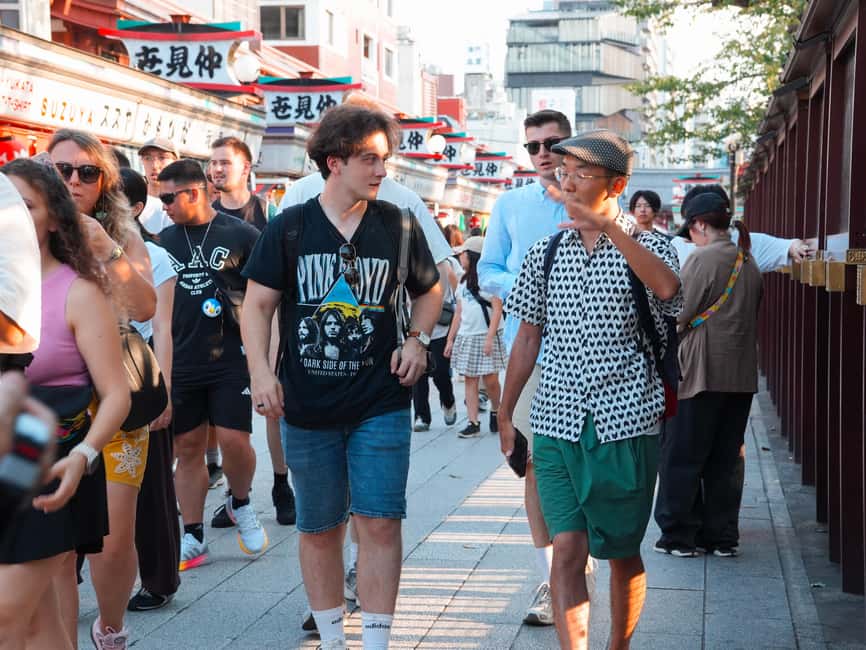
At $11 per person, the price is hard to criticize. You receive an English-speaking guide, a two-hour walking route, and guided access around Nakamise Street, Senso-ji, and Asakusa.
The real value is not admission savings. The temple and shopping street are public sights, and you could visit them independently. The value is the background, the route planning, and the chance to ask questions while you are standing in the places being discussed.
For a low-cost first orientation, I think the price works very well. It leaves you with the rest of the day to explore independently, and the tour can help you decide which parts of Asakusa deserve a longer return visit.
The value is less certain if you already know Asakusa well or prefer to move at your own pace. You may find the fixed route limiting, especially since the tour remains around one district. In that case, the guide’s storytelling needs to be the reason you book.
Who should choose this walking tour?
I would recommend it most strongly for:
- First-time visitors who want a clear introduction to old Tokyo
- People interested in Japanese religion, local customs, and Edo-era stories
- Visitors who prefer walking to large sightseeing vehicles
- Solo visitors or couples who want a low-cost way to meet a guide
- Photographers looking for Kaminarimon, Nakamise, Senso-ji, and traditional streets
- Anyone with only a few hours available for Asakusa
Families may also find the short length manageable, though the supplied details do not specify a child age policy. If you need a highly specialized tour, such as a food-focused walk or a private religious tour, this is not presented as that kind of experience.
You should also be comfortable walking outdoors for two hours and arranging your own transport to the police station meeting point. The details provided do not give a specific accessibility statement, so contact the provider if mobility needs are important to your decision.
Booking flexibility and timing
You can cancel up to 24 hours before the activity for a full refund. You can also reserve now and pay later, which is useful when your Tokyo plans are still shifting.
The start time is not fixed in the supplied information. You need to check availability for the departure options that fit your schedule. Since Asakusa’s famous sights can become crowded, an earlier available departure may offer a calmer start, though the activity does not promise a specific crowd level.
The small-group limit is 10 people. That is large enough for a social outing but small enough for a guide to hear questions. If only a few people book, the experience may feel more like a personal neighborhood walk, as it did for Paul-Axel when Lax led a very small group.
Should you book the Asakusa and Senso-ji walk?
Book this tour if you want a cheap, focused introduction to Tokyo’s oldest temple district and you value stories more than a long list of city highlights. The $11 cost, two-hour length, English guide, and 10-person limit make it an easy addition to a Tokyo itinerary.
Go in with sensible expectations. You are not seeing all of Tokyo, and the route may feel repetitive if the guide does not connect the sights into a strong story. Guide quality can vary, but Lax and Shoma have shown the kind of friendly, clear, culturally focused approach that makes this experience worthwhile.
For a first look at Asakusa, I would book it. Then use the rest of your day to return to the shops, explore at your own pace, and revisit Senso-ji after you understand what you are seeing.
FAQ
Where does the tour begin?
The meeting point is Kaminarimon Police Station, listed in Japanese as 雷門交番.
Where does the tour finish?
The walk returns to Kaminarimon Police Station.
How long does the experience last?
The advertised duration is two hours.
What language is the tour conducted in?
The live tour guide speaks English.
How many people can join the group?
The group is limited to 10 participants.
Does the tour include hotel pickup and drop-off?
No. Hotel pickup and drop-off are not included.
What places are visited?
The route includes Nakamise Shopping Street, Senso-ji Temple, and the wider Asakusa area.
Can I cancel for a full refund?
Yes. You can cancel up to 24 hours in advance for a full refund.
Just added in Tokyo
- A One-of-a-Kind Sushi Experience in a Special Place of Japan★ 5.0 · 15 reviews
- Tokyo Cute Bento Cooking Class – Make a Kawaii Character Lunchbox★ 5.0 · 126 reviews
- Japanese Home Cooking Class & Walk in Todoroki Temple Tokyo★ 5.0 · 88 reviews
- Japan Tokyo Tower Observatory Deck E-Ticket★ 4.0 · 34 reviews
- Catch a Baseball Game in Tokyo with a Local – Tickets Included★ 5.0 · 24 reviews
- JDM Experience with Fast&Furious RX-7 (English speaking Driver)★ 5.0 · 57 reviews
- Tokyo Private Day Tour by Car with English speaking Driver Guide★ 4.0 · 29 reviews
- Japan Classic 10 Day – One Life Adventures★ 5.0 · 129 reviews
Temples and Shrines, compared.
![[Kyoto & Nara Day Tour] Sagano Scenic Railway & Nara Park & Fushimi Inari Taisha Thousand Torii Gates & Togetsukyo Bridge & Bamboo Grove & Kimono Forest (Departing from Osaka)](https://media.japanvisits.com/wp-content/uploads/kyoto-nara-day-tour-sagano-scenic-railway-nara-park-fushimi-inari-taisha-thousand-torii-gates-togetsukyo-bridge-bamboo-grove-kimono-forest-departing-from-osaka-k110001-400x257.jpg)
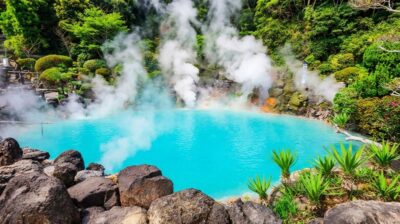
Kyushu One-Day Tour: Yufuin no Mori Train & Yufuin Town & Nyoirin-ji Temple & Dazaifu & Hell Hot Springs (Departing from Fukuoka)
Read our review →
Fushimi Inari, Kinkakuji, Bamboo Grove 1 Day Bus Tour
Read our review →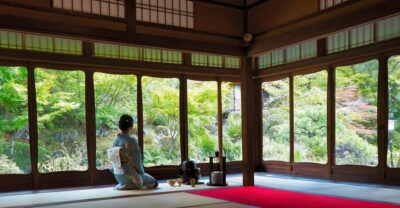
Tea Ceremony in a Traditional Tea House in Kiyomizu
Read our review →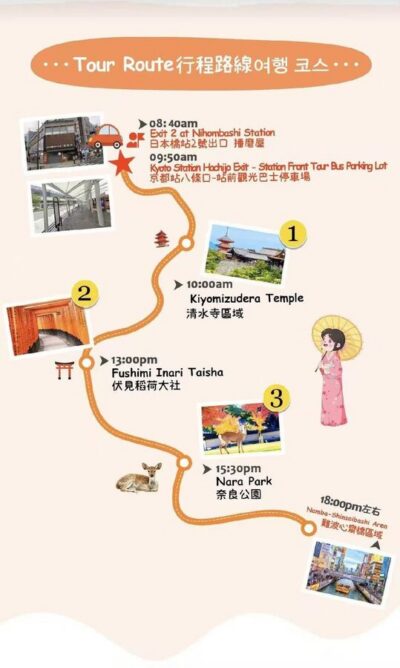
Kyoto Nara Day Trip │ Kiyomizu-dera Temple + Fushimi Inari-taisha Shrine + Nara Park (Departing from Osaka/Kyoto)
Read our review →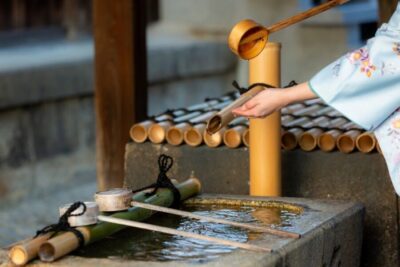
Browse the lists this tour appears in