
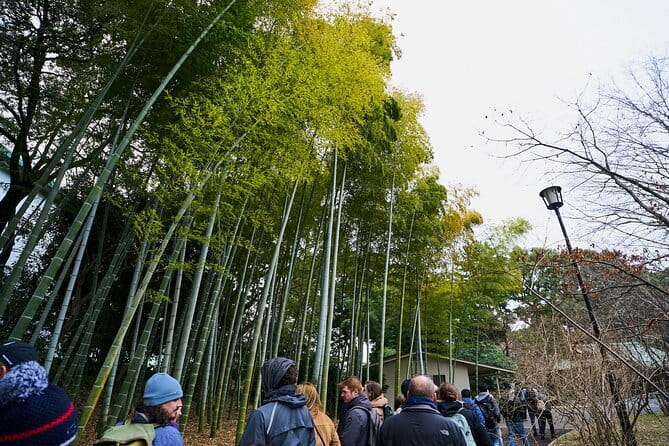
Reviewed · CASTLES AND HISTORIC SITES
Tokyo Castle & Imperial PalaceーShogun Walking Tour
Tokyo’s imperial past is hiding in plain sight. This two-hour walking tour connects castle walls, samurai guardhouses, gardens, and the surviving remains of Edo Castle, giving you much more context than a solo stroll. I like the small-group format, capped at 10 people in the tour description, and the guides’ use of old castle images and models to make vanished buildings easier to picture. The $23.88 price is also fair for a guided introduction to one of central Tokyo’s most important historic areas.
The main drawback is that the tour is English only, and the walking route includes steep slopes, stairs, and exposed paths. You will not enter the Emperor’s residence, either. Still, guides such as K, Keiko, Ai, Tomo, Shin, and Yuta have earned especially warm praise for clear explanations, humor, patience, and genuine enthusiasm for Japanese history.
In This Review
- What makes this Tokyo castle walk worth your time
- Starting at Wadakura Fountain Park
- Sakurada Tatsumi Yagura and the castle’s first line of defense
- Otemon Gate and the logic of Edo Castle
- Three guardhouses, three levels of samurai duty
- Fujimi-yagura and the vanished main tower
- The Shozokan model and a useful visual pause
- Ninomaru Garden, koi, and the quieter side of power
- What the guides add to the experience
- Timing, walking comfort, and practical details
- Is $23.88 a fair price?
- Who should book this walking tour?
- Should you book the Tokyo Castle and Imperial Palace Shogun Walking Tour?
- FAQ
- How long does the Tokyo Castle and Imperial Palace tour last?
- Where does the tour begin?
- Where does the activity end?
- Is the tour offered in Japanese?
- Does the tour enter the Emperor’s residence?
- Are there security rules for entering the Imperial Palace area?
- Is the tour suitable for most people?
- Can I cancel for a full refund?
What makes this Tokyo castle walk worth your time
- Edo Castle’s defenses: See massive gates, stone walls, watchtowers, and guardhouses that protected the shogun.
- A clear introduction to samurai society: Learn how lower-ranking guards, senior samurai, and castle officials fit into the system.
- A surviving castle turret: Sakurada Tatsumi Yagura offers one of the clearest physical links to the Edo period.
- Peaceful Ninomaru Garden: Koi, seasonal plants, and a traditional pond garden provide a quiet change from castle defenses.
- Helpful visual aids: Some guides use laminated pictures, old layouts, and images of former towers to explain what no longer survives.
- A manageable two-hour route: Long enough to provide useful context, but short enough to fit into a busy Tokyo day.
Starting at Wadakura Fountain Park
The tour begins at Starbucks Coffee in Kokyo Gaien Wadakura Fountain Park, at 3-1 Kōkyogaien in Chiyoda City. This is a practical meeting point near public transportation, but give yourself enough time to find the correct Starbucks and arrive ready to walk.
The setting immediately puts you in the right frame of mind. You are near the open grounds in front of the Imperial Palace, with Tokyo’s modern center close by and the old castle site beyond its walls. The contrast is part of the appeal. You are not visiting an isolated museum. You are walking through the center of a capital city where political power shifted from shoguns to emperors.
The guide begins by laying out the basic story: Edo Castle was the seat of the shogun, Tokyo was once called Edo, and the Imperial Palace occupies part of the former castle grounds. That background matters. Without it, the stone walls and carefully placed gates can look like attractive ruins. With it, you can read the route as a carefully designed system of control.
The tour is conducted in English only. The overall group is described as small, up to 10 people, although the additional information also gives a maximum activity capacity of 60. If group size is important to you, confirm the expected size when booking.
More Castles and Historic Sites in Tokyo
- Tokyo: Imperial Palace and Shogun Historical Walking Tour
★ 5.0 · 2,251 reviews - Tokyo Castle & Imperial PalaceーShogun Walking Tour
★ 4.7 · 1,068 reviews - Tokyo: Samurai Ninja Museum Guided tour and Experience
★ 4.6 · 1,010 reviews
Sakurada Tatsumi Yagura and the castle’s first line of defense

The first main stop is Sakurada Tatsumi Yagura, a surviving turret from the Edo period. This is one of the most useful places to begin because it gives you a real structure to examine while the guide explains how the castle was protected.
A yagura was more than a decorative tower. It served as a lookout and defensive position, allowing guards to watch approaches and respond to danger. The guide also explains security systems that continue to shape access around the Imperial Palace today.
You should expect about 20 minutes here. That is enough time for photographs and a proper explanation, though the stop is more about military design and historical context than entering a building. The turret helps you understand the scale of the old castle, even though much of the original complex has disappeared.
Otemon Gate and the logic of Edo Castle
At Kokyo Otemon Gate, you see two large gates and thick stone walls from the original castle. This is where the tour’s central idea becomes clear: Edo Castle was designed to slow, confuse, and control anyone trying to reach the shogun.
The guide explains how the gates worked together and why the approach was difficult to pass quickly. Massive stones, narrow passages, changes in direction, and multiple checkpoints were practical defenses, not just impressive scenery.
You have around 10 minutes here. That may sound brief, but the route has many stops, so the pace keeps moving. I like this format because each place gets one clear purpose. You are not left standing at a wall while the guide delivers a long lecture.
This is also a good photography stop. The contrast between old masonry, formal palace grounds, and modern Tokyo makes the location particularly memorable.
Three guardhouses, three levels of samurai duty
The Constable Guardhouse, Hyakunin Bansho Guardhouse, and Obansho Guardhouse make up the most useful sequence for understanding castle security. Each stop lasts about 10 minutes, and together they explain that samurai service was not one uniform job.
The Constable Guardhouse was used by lower-ranking samurai. Here, you learn who these men were and why their position mattered. Their work was part of the daily machinery that kept the castle operating and protected its inner areas.
Hyakunin Bansho was a larger guardhouse where many samurai were stationed. The name points to the scale of the post, and the guide uses it to explain how personnel were placed around important entrances. It is easier to understand the castle as a working institution when you see that security depended on layers of people, not one heroic warrior at a gate.
Obansho was a central guardhouse near an inner gate. The focus shifts to higher-ranking samurai and their duties. This distinction is valuable because popular images of samurai often flatten the social structure. The tour gives you a more practical picture of rank, responsibility, and access.
These buildings are not grand interiors. You are mainly looking at historic structures and their setting. The value comes from the guide’s interpretation. Several guides have been praised for using laminated images and former castle layouts, which can make a major difference when the original buildings are gone.
More Walking Tours in Tokyo
- Tokyo Tsukiji Fish Market Food and Culture Walking Tour
★ 5.0 · 3,184 reviews - Tokyo: Shinjuku Local Bar and Izakaya Guided Walking Tour
★ 4.9 · 1,794 reviews - Tokyo: Tsukiji Fish Market Food and Walking tour
★ 5.0 · 1,724 reviews - Tokyo: Asakusa Walking Tour with Sensoji Temple Visit
★ 4.8 · 1,583 reviews
Fujimi-yagura and the vanished main tower
Fujimi-yagura is an old watchtower overlooking the grounds. The guide explains its former role and what made it important. Like Sakurada Tatsumi Yagura, it gives you a sense of the castle’s vertical defenses and broad reach.
The route then continues to the former site of Edo Castle’s main tower in the East Gardens. The tower no longer survives, so this stop depends heavily on explanation. The guide discusses why it disappeared and what remains at the site today.
This is one of the places where a good guide earns the modest tour price. A bare foundation does not automatically tell you how dominant the main tower once was. Old drawings, scale models, and simple comparisons help you imagine the lost structure without pretending that the ruin is more complete than it is.
The East Gardens are free to enter, and the tour does not require a separate admission ticket for the listed stops. That keeps the cost low, but it also means you are paying mainly for the guide’s time, route planning, and historical interpretation rather than for access to a paid monument.
The Shozokan model and a useful visual pause
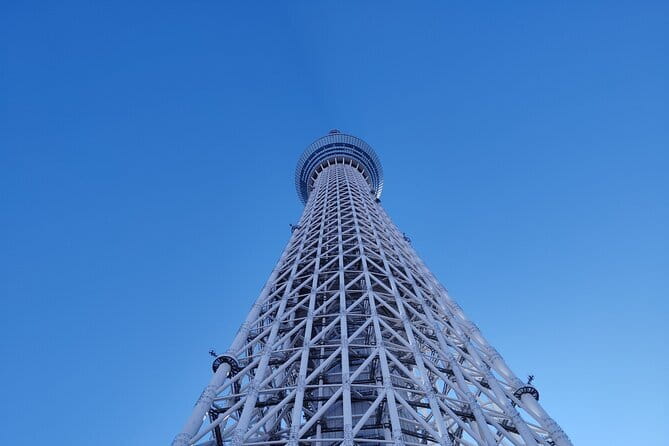
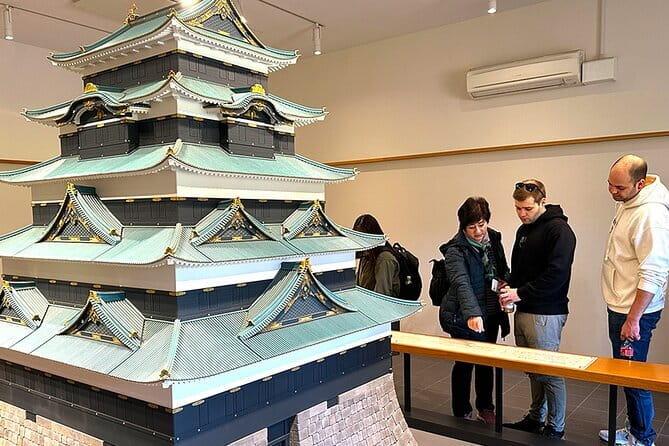
Kokyo Sannomaru Shozokan is scheduled as a short stop where you can see a scale model of the former Edo Castle and visit a souvenir shop with palace-related goods. The model is particularly useful after walking past gates and guardhouses because it shows how the separate pieces once fit together.
I would pay close attention here. Tokyo’s palace grounds are large, and it can be hard to grasp the complete layout from ground level. A model turns the castle from a collection of fragments into a coherent plan.
This stop also provides a change of pace. After several outdoor explanations, you get a chance to look at something more visual and browse palace-related items. The stop is listed at about 10 minutes, so do not expect a long museum visit.
Ninomaru Garden, koi, and the quieter side of power
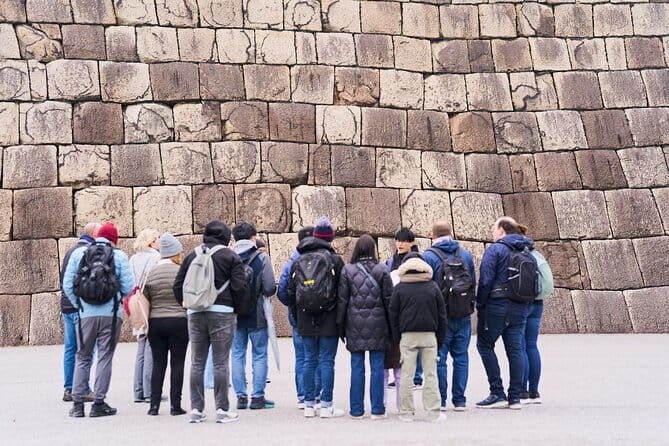
Ninomaru Garden is the tour’s gentlest stop. It includes seasonal plants and a pond with koi, offering a sharp contrast to gates, guard posts, and defensive walls.
The garden shows another side of the former castle grounds. Power in Edo was not expressed only through walls and weapons. Carefully shaped gardens, ponds, and views were also part of the world occupied by the ruling elite.
The scheduled time is about 15 minutes. You will have room to slow down, take photographs, and enjoy the setting. Several guide comments singled out the pond and trees as highlights, especially after the more technical explanations of castle defenses.
This area can be very exposed to the weather. In hot conditions, bring water, a hat, or an umbrella for sun protection. Comfortable shoes matter throughout the route, and especially on slopes and stairs. One guide was praised for handing out sweets and menthol napkins during a very hot walk, but you should still prepare for the conditions yourself.
What the guides add to the experience

The guide is the deciding factor here. The grounds are free and you can walk through many areas independently, so the tour makes sense only if you want the story attached to the stones and gardens.
The strongest guide experiences appear to combine three traits: accurate background, clear English, and a lively delivery. K received repeated praise for being funny, passionate, and able to answer questions in detail. Keiko was appreciated for using laminated images of former castle layouts and guard towers. Tomo was described as especially accommodating, while Nana was praised for patience with family questions.
That does not guarantee every departure will feel identical. One person left disappointed after finding the guide’s English difficult to follow. That is the main risk with any guide-led activity, particularly one built around spoken explanation. The tour is not the best choice if you prefer to explore silently or if you already know the Edo period well.
For most first-time visitors, though, the historical framing has real value. The palace grounds can seem pleasant but vague when seen without context. A guide explains why a gate turns the way it does, why a guardhouse occupied that particular location, and what the missing tower once meant.
Timing, walking comfort, and practical details
The advertised duration is about two hours. The route includes roughly 20 minutes at the first turret, several 10-minute stops, and 15 minutes each at the former main tower site and Ninomaru Garden. The pace is steady rather than rushed, with time for photographs and questions.
You should be comfortable walking for the full period. There are steep slopes and stairs, and the route includes open areas where shade may be limited. The activity has no stated health restrictions, and most people can participate, but comfortable footwear is essential.
A security check is required to enter the Imperial Palace area. Do not bring knives or alcohol. The Emperor’s residence is not open to the public, so this is a tour of accessible grounds and historic sites, not an interior palace visit or a chance to enter the private residence.
The experience uses a mobile ticket. It is near public transportation, begins at the specified Starbucks in Wadakura Fountain Park, and is listed as ending back at the meeting point. The route also concludes near the ginkgo-lined avenue stretching toward Tokyo Station, which gives you a useful orientation point for continuing your day.
Free cancellation is available if you cancel at least 24 hours before the start time. Changes or cancellations made later are not accepted for a refund.
Is $23.88 a fair price?
At $23.88 per person, I consider this a sensible purchase if Japanese political history is new to you. You are not paying for a costly attraction ticket. You are paying for a focused explanation of a large, complicated site that is free to enter.
The price looks especially fair for a small group of up to 10, since a smaller group makes it easier to hear the guide and ask questions. The stated maximum of 60 in the additional details is worth noting, so I would check the expected group size if that affects your decision.
You could walk the East Gardens on your own for less. That is a reasonable option if you mainly want greenery, photographs, and a quiet break. But the tour earns its money by connecting the surviving pieces: the turret, gates, guardhouses, watchtower, missing main tower, model, and garden.
The high rating of 4.9 from 725 ratings, along with a 99 percent recommendation figure, suggests a reliable overall experience. I would still judge it by your interests. A person seeking palace interiors will be disappointed because the Emperor’s residence is closed. Someone wanting a compact, well-explained introduction to Edo Castle should find the cost easy to justify.
Who should book this walking tour?
I would recommend it to first-time visitors who want a clear introduction to the shogun era, samurai roles, and the imperial system. It also suits families, provided everyone can manage the walking and outdoor conditions. One guide was praised for giving extra time and answering a family’s questions patiently.
History fans should appreciate the attention to defensive design and rank within the guardhouses. Photographers will enjoy the mix of stone walls, old towers, gardens, koi, and the modern city beyond.
I would skip it if you dislike guided walking tours, have limited tolerance for sun or stairs, or already have a strong command of Edo Castle’s history. I would also think twice if your main goal is to see the Emperor’s residence, since that is not part of the public visit.
Should you book the Tokyo Castle and Imperial Palace Shogun Walking Tour?
Book it if you want the Imperial Palace grounds to make sense rather than simply look attractive. The best part is not one spectacular building. It is the way the guide explains how gates, guardhouses, walls, watchtowers, gardens, and vanished structures worked together.
Choose an earlier or cooler time if available, bring water and sun protection, and arrive ready for stairs and steady walking. At this price, the tour is a good-value history lesson, especially when your guide is as engaging as K, Keiko, Tomo, Shin, or Yuta. Just keep your expectations clear: this is an outdoor walk through the former Edo Castle grounds, not an interior palace tour.
FAQ
How long does the Tokyo Castle and Imperial Palace tour last?
The tour lasts approximately two hours.
Where does the tour begin?
It begins at Starbucks Coffee in Kokyo Gaien Wadakura Fountain Park, at 3-1 Kōkyogaien, Chiyoda City, Tokyo 100-0002, Japan.
Where does the activity end?
The activity is listed as ending back at the meeting point. The route concludes near the ginkgo-lined avenue stretching toward Tokyo Station.
Is the tour offered in Japanese?
No. The tour is conducted in English only, and Japanese language support is not available.
Does the tour enter the Emperor’s residence?
No. The Emperor’s residence is not open to the public. The tour visits accessible palace grounds, historic castle remains, guardhouses, gardens, and related sites.
Are there security rules for entering the Imperial Palace area?
Yes. A security check is required. Do not bring knives or alcohol.
Is the tour suitable for most people?
Most people can participate, but you need to walk on steep slopes and stairs. Comfortable footwear is recommended, and outdoor conditions can be hot and sunny.
Can I cancel for a full refund?
Yes, if you cancel at least 24 hours before the experience start time. Cancellations or changes made less than 24 hours before the start time are not accepted for a refund.
Just added in Tokyo
- A One-of-a-Kind Sushi Experience in a Special Place of Japan★ 5.0 · 15 reviews
- Tokyo Cute Bento Cooking Class – Make a Kawaii Character Lunchbox★ 5.0 · 126 reviews
- Japanese Home Cooking Class & Walk in Todoroki Temple Tokyo★ 5.0 · 88 reviews
- Japan Tokyo Tower Observatory Deck E-Ticket★ 4.0 · 34 reviews
- Catch a Baseball Game in Tokyo with a Local – Tickets Included★ 5.0 · 24 reviews
- JDM Experience with Fast&Furious RX-7 (English speaking Driver)★ 5.0 · 57 reviews
- Tokyo Private Day Tour by Car with English speaking Driver Guide★ 4.0 · 29 reviews
- Japan Classic 10 Day – One Life Adventures★ 5.0 · 129 reviews
Castles and Historic Sites, compared.

Imperial Palace and Shogun Historical Walking Tour
Read our review →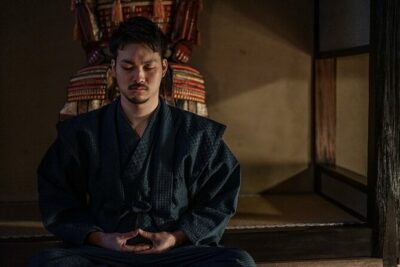
Tokyo Castle & Imperial PalaceーShogun Walking Tour
Read our review →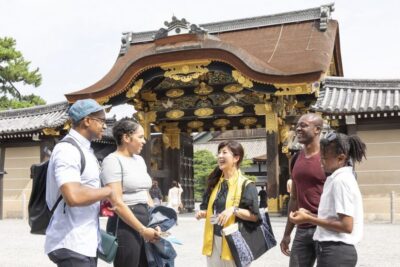
Nijo-jo Castle and Ninomaru Palace Guided Tour
Read our review →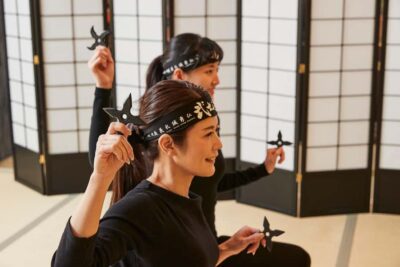
Samurai Ninja Museum Guided tour and Experience
Read our review →Browse the lists this tour appears in