
Reviewed · MARKETS AND FOOD HALLS
Tokyo: Guided Walking Tour of Tsukiji Market with Lunch
Arrive hungry, leave better oriented. This 165-minute walk through Tokyo’s Tsukiji Outer Market mixes food, local customs, and market know-how in a compact small-group outing. I especially like the nine tastings, which turn a simple market stroll into a proper lunch, and the chance to see wholesalers and stall workers at close range rather than just browsing the market’s outer edge.
The tour also begins at the striking Tsukiji Hongwanji Temple, giving the food walk a useful cultural frame. My main caution is value: at $113 per person, you are paying for guidance and market access as much as for the food, and some diners may find the portions or selections less exciting than expected.
In This Review
- Key points to know before booking
- Starting at Tsukiji Hongwanji Temple
- Entering Tsukiji Outer Market
- What the nine tastings actually include
- How the guides shape the experience
- Culture beyond the food stalls
- Is $113 a fair price?
- Timing, comfort, and access
- Who will enjoy this Tsukiji walk?
- Should you book the Tsukiji tour?
- FAQ
- Where does the Tsukiji market tour meet?
- How do I reach the meeting point?
- How long does the experience last?
- What language is the tour conducted in?
- How many people can join the group?
- Is the tour wheelchair accessible?
- What food is included?
- What should I bring?
- Can I cancel for a refund?
Key points to know before booking
- Nine tastings make up lunch: Expect tuna sushi, a Japanese omelette, grilled seafood or beef, fried fish paste, filled rice, dessert, a drink, tea, and dashi soup.
- The meeting point is easy to find: Tsukiji Hongwanji Temple is about 50 meters from Exit A1 of Tsukiji Station on the Hibiya Line.
- You see more than food: The guide explains how Japanese cuisine connects with religion, custom, and the working life of the market.
- The group is capped at 10 people: That matters in narrow market lanes, where a large tour could quickly become awkward.
- The experience is guide-dependent: Guides such as Hide, Tomoko, Yumiko, and Sachiko have been praised for practical help, food advice, and cultural explanation.
- The food is varied but not gourmet-focused: Some people loved the selection, while others found the tuna mayonnaise rice balls, average tuna sushi, and grilled fish disappointing for the price.
Starting at Tsukiji Hongwanji Temple
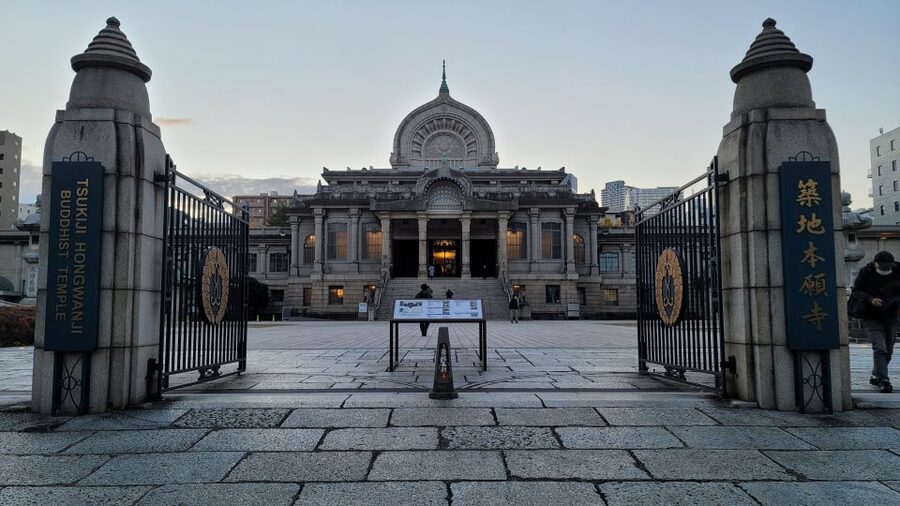
Your meeting point is in front of Tsukiji Hongwanji Temple, a useful landmark and a good place to begin. From Tsukiji Station, take Exit A1, turn left, and walk roughly 50 meters to the temple entrance.
The temple’s exterior is unusual for Tokyo. Its design has ancient Indian-inspired Buddhist influences, which makes it look quite different from the more familiar wooden temple buildings you may see elsewhere in Japan. You only admire it from outside, so do not expect a full temple visit or a long religious tour.
That short opening stop still serves a purpose. It connects the market’s food culture with Japanese religious life before you enter the stalls. The tour is not just about eating things on sticks. You get some explanation of how food, ritual, and daily customs fit together.
The meeting location also removes one common Tokyo problem: finding a small tour in a crowded neighborhood. Look for the guide near the main gate. Since English is the tour language, make sure you are comfortable following explanations and instructions in English.
More Markets and Food Halls in Tokyo
- Tokyo Tsukiji Fish Market Food and Culture Walking Tour
★ 5.0 · 3,184 reviews - Tokyo: Tsukiji Fish Market Food and Walking tour
★ 5.0 · 1,724 reviews - Senkyaku Banrai Toyosu Manyo Club Onsen Experience in Tokyo
★ 4.7 · 1,690 reviews
Entering Tsukiji Outer Market
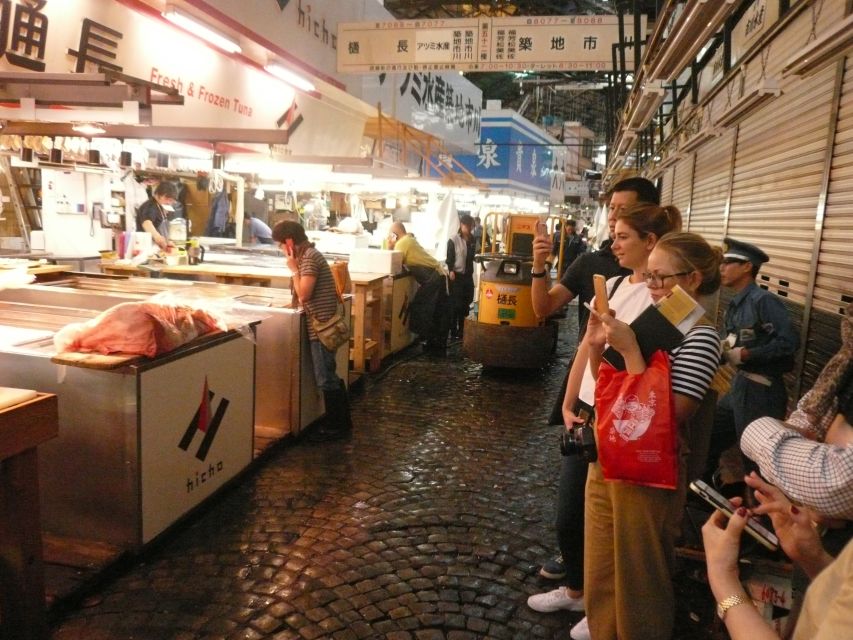
Tsukiji Outer Market is the part of the former Tsukiji fish-market district that remains open to the public, with restaurants, specialty shops, food stalls, and businesses serving both locals and culinary professionals. The tour takes you through the working market streets rather than offering a distant viewing platform.
I like this format because the market makes more sense when someone explains what you are seeing. A stall can be easy to pass without understanding its purpose, while a guide can point out unusual products, explain how certain foods are used, and help you decide what is worth trying.
The market is also a place where you need to watch your footing and your position. Workers are busy, products are displayed close together, and the lanes can feel tight. A group limited to 10 people is a sensible size. You can hear the guide more easily, stay together, and avoid forming a long human traffic jam.
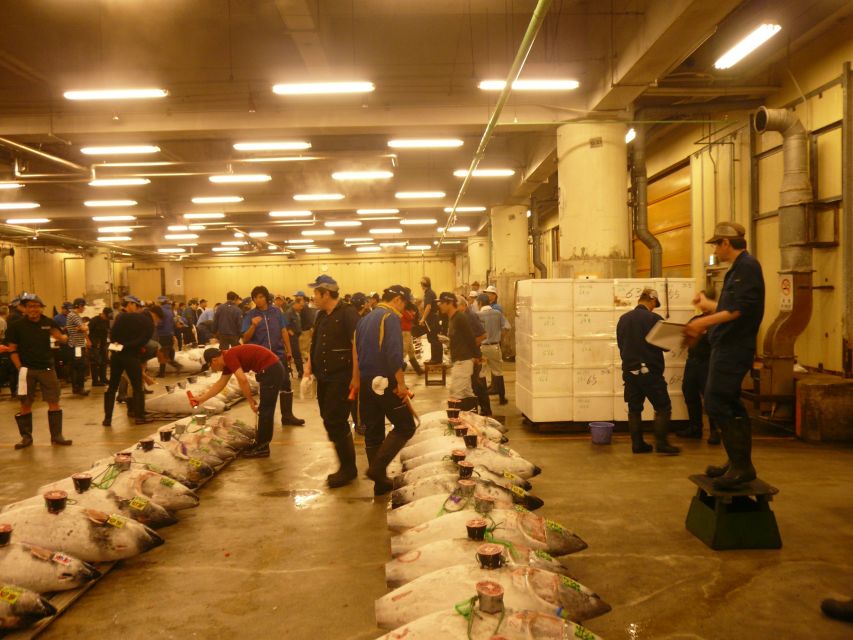
The experience gives you a look at expert wholesalers and market workers doing their jobs. That is different from wandering through a food hall where everything is arranged for casual browsing. Here, the market has a working purpose, and you are visiting during that activity.
That also creates a limit. The tour area is fairly small, so you will not cover every corner of the Tsukiji district. Some people may feel the guide is stretching the time if the market is quiet or if the group moves slowly between food stops. If you want a long, free-form market exploration, this guided route may feel contained.
What the nine tastings actually include

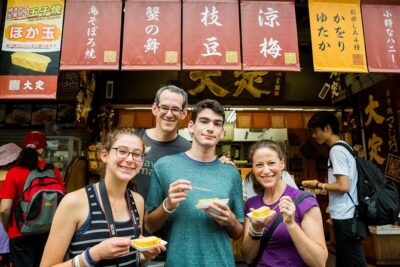
The food is the main reason to book, so it helps to set realistic expectations. The tour includes nine local specialties, served as you walk through the market. The stated selection includes:
- Grilled seafood or beef skewers, with wagyu beef and yakitori-style items highlighted
- Japanese-style omelette
- Tuna sushi
- Fried fish paste skewers
- Filled rice balls
- Dessert
- A drink
- Japanese tea
- Dashi soup stock
This is a broad introduction rather than a sit-down restaurant meal. You sample several familiar and less familiar tastes, and the variety gives you a quick sense of how Japanese food uses seafood, meat, eggs, rice, broth, tea, and sweets.
The strongest part of the menu is its range. You are not eating nine versions of the same fish. The grilled items provide smoky, savory flavors. The omelette shows a softer, sweeter side of Japanese cooking. Dashi offers a small but useful lesson in the stock that supports many Japanese dishes.
The less exciting part is that the food may not match the image suggested by the price. One meal included tuna mayonnaise rice balls, ordinary tuna sushi, greasy grilled fish, and a strawberry-based dessert. That diner enjoyed learning about the market but felt the food was not good enough for the cost.
So I would not book this expecting a carefully designed tasting menu. Think of it as a guided lunch made from market snacks. The quality may depend on the day, the stall, and the guide’s choices. You should also be ready for simple food rather than luxury portions, even though wagyu and fresh seafood are part of the advertised experience.
How the guides shape the experience
The guide is central here. You are not simply buying nine bites. You are paying for help with navigation, ordering, timing, and context in a busy food district.
Hide received strong praise for leading the group around the market and helping people decide what to try. Tomoko was praised for her relaxed approach, cultural explanations, and practical organization. She even queued at food stalls for the group while participants looked around, then helped manage food boxes and cleaning wipes.
That kind of assistance matters more than it may sound. In a crowded market, one person waiting in line while the rest of the group keeps moving can save time. Food boxes and wipes also make a walking lunch less messy, especially when you are trying several small items in succession.
Yumiko and Sachiko were praised for combining local history with hands-on navigation. Having a guide and assistant can be particularly useful when the group needs to move through narrow spaces or collect multiple foods.
The experience is not equally strong with every guide, however. One group found a language barrier at the start, and another felt that the guide and assistant were trying to fill the allotted time because the route itself was short. That does not mean the tour will be poor, but it does mean the guide’s communication style can affect your impression.
If you want a tour built around stories, ask questions as you go. The experience is at its best when the guide explains why a food matters, not just what it is called.
More Walking Tours in Tokyo
- Tokyo: Imperial Palace and Shogun Historical Walking Tour
★ 5.0 · 2,251 reviews - Tokyo: Shinjuku Local Bar and Izakaya Guided Walking Tour
★ 4.9 · 1,794 reviews - Tokyo: Asakusa Walking Tour with Sensoji Temple Visit
★ 4.8 · 1,583 reviews - Tokyo: Tsukiji Fish Market Guided Walking Tour
★ 4.9 · 1,397 reviews
Culture beyond the food stalls
The best reason to choose this walk over simply visiting Tsukiji on your own is the cultural layer. You hear how Japanese food connects with religion and daily practice, starting with the temple and continuing through the market.
Dashi is a good example. A small sample of soup stock may seem modest, but it lets you taste an ingredient that plays a major role in Japanese cooking. Tea offers another short cultural stop, while the omelette, sushi, rice, and fish products show different parts of the country’s everyday food traditions.
You also see the contrast between old customs and modern market commerce. The temple provides a religious setting, while the market puts skilled workers, wholesalers, retailers, restaurants, and casual eaters in the same compact area.
The guide’s explanations can help you notice details that would otherwise pass quickly. You may see a product that looks strange or unfamiliar, then learn how it is prepared or used. You may also understand why the market feels more like a working neighborhood than a single attraction.
Still, cultural context is delivered in short pieces between tastings. This is not an academic lecture or an extended temple tour. If your priority is a detailed study of Buddhism, Tokyo’s wholesale system, or Japanese culinary history, you will need a longer or more specialized experience.
Is $113 a fair price?

At $113 per person, the price is high for a walking lunch made up of market snacks. The nine tastings have value, but their food cost alone is unlikely to explain the full price.
You are also paying for a live English-speaking guide, a small group, help navigating the stalls, and explanations about the market and Japanese culture. For a first visit to Tokyo, that guidance can save you from guessing what to order or missing the meaning of what you see.
The price makes more sense if you are short on time, nervous about ordering in a crowded market, or keen to understand the area rather than simply eat. It is less convincing if you already know Tsukiji well, can comfortably choose your own food, and mainly want the largest or most refined lunch for your money.
The mixed food reactions are important. Several people had excellent experiences with the guides and the overall organization, while at least one diner considered the food average and the tour overpriced. I would treat the meal as a convenient introduction, not as a premium food pilgrimage.
Timing, comfort, and access
The tour lasts 165 minutes, or two hours and 45 minutes. That gives you enough time for the temple exterior, a market walk, explanations, and nine samples without turning the outing into an all-day commitment.
Wear comfortable shoes. You will be walking through market streets and standing at food stops, and the surface can be busy underfoot. Because the tour is food-based, you may also want to avoid eating a large meal immediately beforehand.
The group is limited to 10 participants, which is a real advantage in Tsukiji. Small groups are easier to keep together and make it more practical to hear the guide and receive food in an orderly way.
The activity is listed as wheelchair accessible. The meeting point is close to Tsukiji Station, which is helpful, but the market itself includes busy streets and working stalls. If you have specific mobility needs, confirm the practical route details before booking.
You can cancel up to 24 hours before the start for a full refund, and the reserve-now, pay-later option allows you to hold a place without paying immediately. Those policies are useful if your Tokyo schedule is still changing.
Who will enjoy this Tsukiji walk?
I would recommend it most strongly to first-time visitors who want a friendly introduction to Japanese market food without having to plan every stop. Families can also benefit from the structured tastings and the help of a guide, especially when children want to try several small foods rather than sit through a long meal.
It suits you if you enjoy trying a little of many things. It is also a good fit if you want cultural explanation alongside lunch, or if the idea of ordering alone in a crowded market feels stressful.
You may want to skip it if you are an experienced Tsukiji visitor, a serious food enthusiast seeking top-tier sushi, or someone who prefers plenty of free time to choose your own stalls. The route is fairly compact, and the food is not guaranteed to feel luxurious.
The tour has an average rating of 4.4 out of 5 from 24 ratings, with especially strong praise for the guides’ friendliness, organization, and market knowledge. That pattern tells me the human side of the experience is its safest strength. The food quality and sense of value are less certain.
Should you book the Tsukiji tour?
Book this tour if you want a guided first look at Tsukiji, nine small tastings, and useful cultural context in less than three hours. The best guides can make the market far easier to understand and navigate, and their practical help can be worth a lot in a crowded food district.
Skip it if $113 feels steep for a snack-based lunch, or if your main goal is exceptional sushi. You can also save the money by exploring independently if you are comfortable choosing stalls and finding your way around.
My call: this is a good orientation tour with a food component, not a guaranteed gourmet feast. Go for the guide, the market access, and the range of tastes. Keep your food expectations sensible, and the experience is more likely to feel worthwhile.
FAQ
Where does the Tsukiji market tour meet?
Meet in front of Tsukiji Hongwanji Temple at the main gate.
How do I reach the meeting point?
From Tsukiji Station on the Hibiya Line, take Exit A1, turn left, and walk about 50 meters to the temple entrance.
How long does the experience last?
The tour lasts 165 minutes, which is two hours and 45 minutes.
What language is the tour conducted in?
The live tour guide speaks English.
How many people can join the group?
The tour is limited to 10 participants.
Is the tour wheelchair accessible?
Yes, the activity is listed as wheelchair accessible.
What food is included?
You receive nine tastings, including grilled seafood or beef skewers, Japanese omelette, tuna sushi, fried fish paste skewers, filled rice, dessert, a drink, Japanese tea, and dashi soup stock.
What should I bring?
Wear comfortable shoes for walking through the market.
Can I cancel for a refund?
Yes. You can cancel up to 24 hours in advance for a full refund.
More Lunch Experiences in Tokyo
- Tokyo: Mt.Fuji & Lake Kawaguchiko 1-Day Bus Tour w/Optional Lunch
★ 4.5 · 839 reviews - Tokyo: Sumo Experience and Chanko Nabe Lunch
★ 4.8 · 257 reviews - Tokyo: 1 Day Bus Tour with Meiji-Jingu,Odaiba,lunch&Skytree
★ 4.6 · 156 reviews - Nagano Snow Monkey 1 Day Tour with Beef Sukiyaki Lunch from Tokyo
★ 4.5 · 123 reviews
Just added in Tokyo
- A One-of-a-Kind Sushi Experience in a Special Place of Japan★ 5.0 · 15 reviews
- Tokyo Cute Bento Cooking Class – Make a Kawaii Character Lunchbox★ 5.0 · 126 reviews
- Japanese Home Cooking Class & Walk in Todoroki Temple Tokyo★ 5.0 · 88 reviews
- Japan Tokyo Tower Observatory Deck E-Ticket★ 4.0 · 34 reviews
- Catch a Baseball Game in Tokyo with a Local – Tickets Included★ 5.0 · 24 reviews
- JDM Experience with Fast&Furious RX-7 (English speaking Driver)★ 5.0 · 57 reviews
- Tokyo Private Day Tour by Car with English speaking Driver Guide★ 4.0 · 29 reviews
- Japan Classic 10 Day – One Life Adventures★ 5.0 · 129 reviews
Markets and Food Halls, compared.
Tokyo Tsukiji Fish Market Food and Culture Walking Tour
Read our review →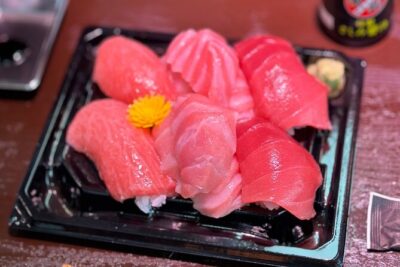

Senkyaku Banrai Toyosu Manyo Club Onsen Experience in Tokyo
Read our review →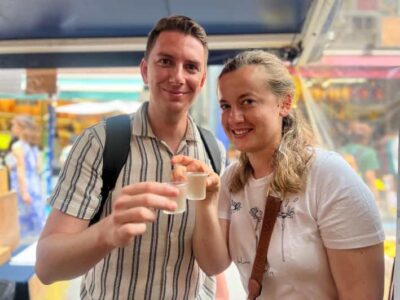
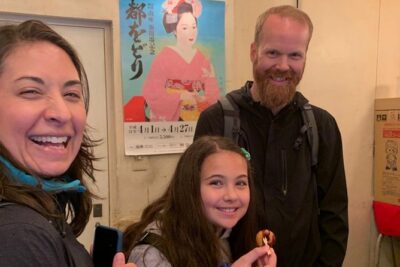
Nishiki Market Brunch Walking Tour (7 Tastings + Brunch)
Read our review →
Tokyo Sushi Making Class in Tsukiji with Professional Chef
Read our review →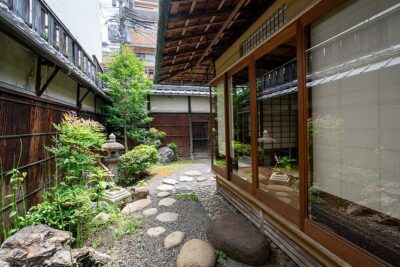
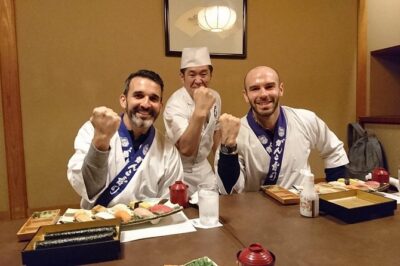
Tsukiji Fish Market Guided Tour and Sushi Making with Pro Chef
Read our review →Browse the lists this tour appears in