

Reviewed · CASTLES AND HISTORIC SITES
Tokyo: Imperial Palace East Gardens Walking Tour
History is hiding beneath Tokyo’s calmest lawns. This 150-minute walk through the Imperial Palace East Gardens brings you into the former grounds of Edo Castle, where Tokugawa shoguns ruled Japan, while modern Tokyo carries on just beyond the walls. I especially like the mix of castle ruins and living gardens, plus the way guides connect military architecture with everyday Japanese customs. The tour costs $19 per person, a fair price for a well-led introduction, though you should know it does not enter the Imperial Palace itself.
I also like that the route includes both the Honmaru ruins and the carefully arranged Ninomaru Garden. Guides such as Mei, Kei, Wakana, Tatsie, and Mieko have been praised for clear English, humor, visual aids, and patient answers. Allow extra energy for a long walk, and check the meeting details carefully because your guide waits near the Starbucks at Kokyo Gaien Wadakura Fountain Park, not at a palace gate.
In This Review
- Key points to know before you book
- Why the East Gardens make a good Tokyo history stop
- Meeting at Kokyo Gaien Wadakura Fountain Park
- Honmaru: reading the castle through its remains
- Ninomaru Garden and the art of controlled beauty
- Stone walls, guard houses, and defensive details
- Guide quality is the deciding factor
- How the 150-minute pace feels
- Is $19 good value?
- Who should book this walking tour?
- Final verdict: book it for context, not palace access
- FAQ
- How much does the Imperial Palace East Gardens walking tour cost?
- How long does the tour last?
- Where does the tour meet?
- Where does the tour finish?
- Does the tour enter the Imperial Palace?
- What language is the tour conducted in?
- Is admission to the Imperial Palace included?
- Is the tour wheelchair accessible?
- Can I cancel for a full refund?
- Do I have to pay when I reserve?
Key points to know before you book
- Edo Castle’s past is the main story: You’ll see foundations, gates, stone walls, guard houses, and defensive structures from the shogun era.
- Ninomaru Garden offers the quietest pause: Ponds, bridges, pruned trees, stone lanterns, and traditional Japanese design give the walk a slower rhythm.
- The tour lasts 2.5 hours: That is enough time for historical explanation and garden viewing, but it is still a proper walking outing.
- The Imperial Palace interior is not included: You visit the East Gardens, part of the former Edo Castle grounds, rather than the present palace building.
- Seasonal timing can shape the experience: Spring brings cherry blossoms, while late fall can bring colorful foliage.
- Guides are the real value: English-speaking guides are praised for making old military history easy to follow, often with humor and printed maps or photographs.
Why the East Gardens make a good Tokyo history stop
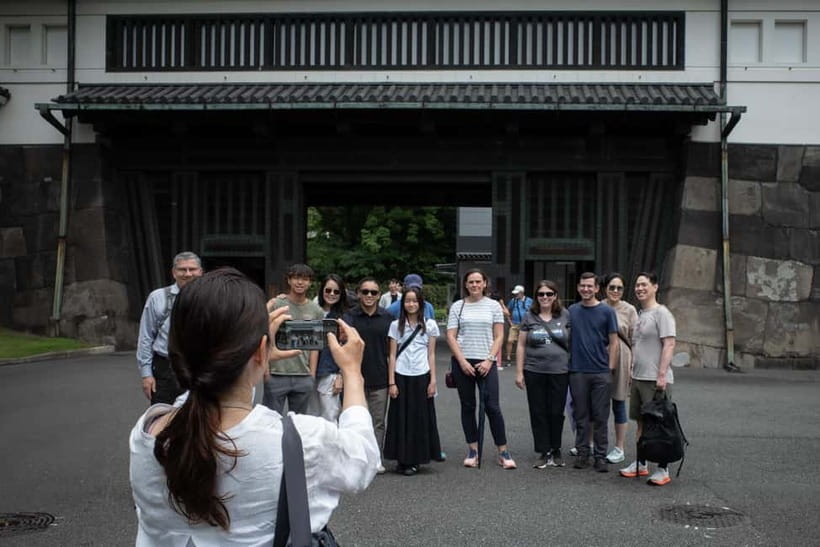
Tokyo can feel relentlessly new. Glass towers, train lines, and giant crossings dominate the city, so the East Gardens offer a useful change of pace without sending you far from the center. The gardens occupy part of the old Edo Castle grounds, once the base of the Tokugawa shoguns during the Edo period.
That setting gives the walk more weight than a simple park visit. You are not only looking at clipped trees and ponds. You are tracing the remains of a political and military center that shaped Japan for centuries.
I like this combination because neither side overwhelms the other. The ruins are not preserved as a complete castle, and the gardens are not just decorative scenery. Together, they show how power, defense, ceremony, and careful garden design once worked in the same place.
The tour also helps you understand the contrast between old and new Tokyo. From the quiet paths, you can think about shoguns, samurai, and castle defenses, then step back into one of the world’s biggest cities. That change of mood is one of the strongest reasons to choose this walk early in a Tokyo visit.
More Castles and Historic Sites in Tokyo
- Tokyo: Imperial Palace and Shogun Historical Walking Tour
★ 5.0 · 2,251 reviews - Tokyo Castle & Imperial PalaceーShogun Walking Tour
★ 4.7 · 1,068 reviews - Tokyo: Samurai Ninja Museum Guided tour and Experience
★ 4.6 · 1,010 reviews
Meeting at Kokyo Gaien Wadakura Fountain Park
The tour begins near Starbucks Coffee at Kokyo Gaien Wadakura Fountain Park. The listed coordinates are 35.68299330000001, 139.7611971, and the guide waits nearby rather than inside the coffee shop.
This is a simple meeting point, but I would not treat it casually. Imperial Palace grounds have several entrances, broad open spaces, and names that can sound similar on a map. Give yourself time to locate the fountain park and confirm that you are standing at the correct Starbucks before the start.
The walk returns to the same place at the end. That is helpful if you want to continue toward Tokyo Station, arrange lunch nearby, or use the area as a fixed point for the rest of your day. It also means you do not need to work out a new pickup location after two and a half hours on foot.
Honmaru: reading the castle through its remains
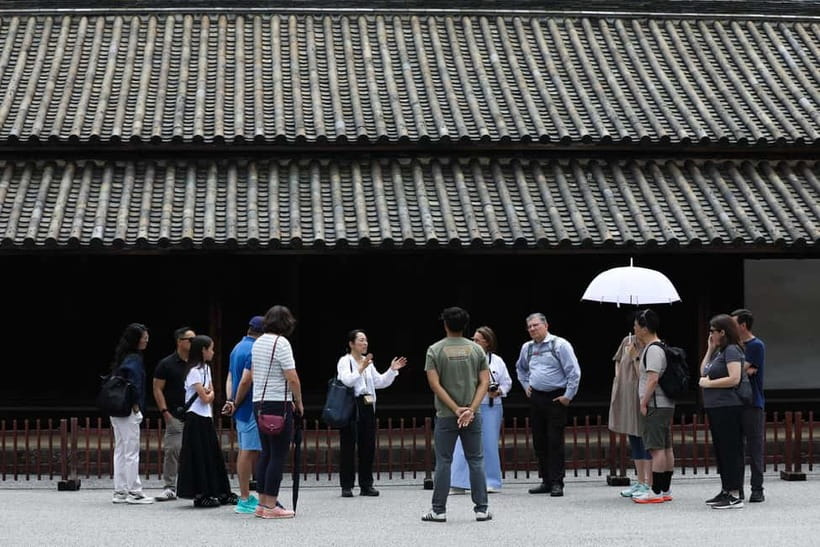
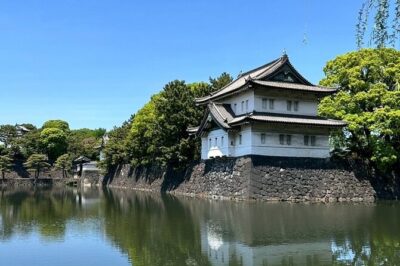
The Honmaru area was once the main compound of Edo Castle. Today, you should expect remnants rather than a fully rebuilt fortress. The tour focuses on castle foundations, gates, and defensive features, helping you picture the original layout from what remains.
This is where a guide earns the $19 price. Without explanation, a stone base or wall can look like a random fragment. With a map, an old image, or a clear explanation, the same stonework becomes evidence of the castle’s size, organization, and defensive plan.
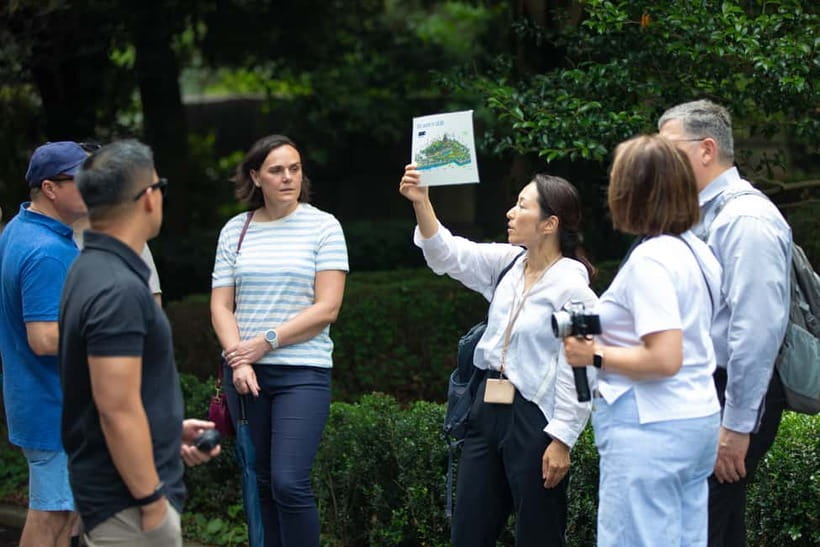
One useful detail from the tour feedback is that Mei has used printed and laminated maps and photographs to explain parts of the castle that no longer survive. That kind of visual aid matters here. You are being asked to imagine a vanished complex, and a picture can bridge the gap between present-day gardens and Edo-period power.
The Honmaru section should suit anyone who likes military history, architecture, or the practical side of the samurai era. The guide may explain how gates, walls, watch towers, and guard houses fit together, rather than offering only dates and names. Neil specifically praised the focus on military architecture, while other guests appreciated explanations of shoguns and emperors.
The limitation is clear: if you expect grand castle interiors, ornate rooms, or a standing central keep, this is not that experience. The appeal comes from reconstruction in your mind, supported by the surviving stones and your guide’s storytelling.
Ninomaru Garden and the art of controlled beauty
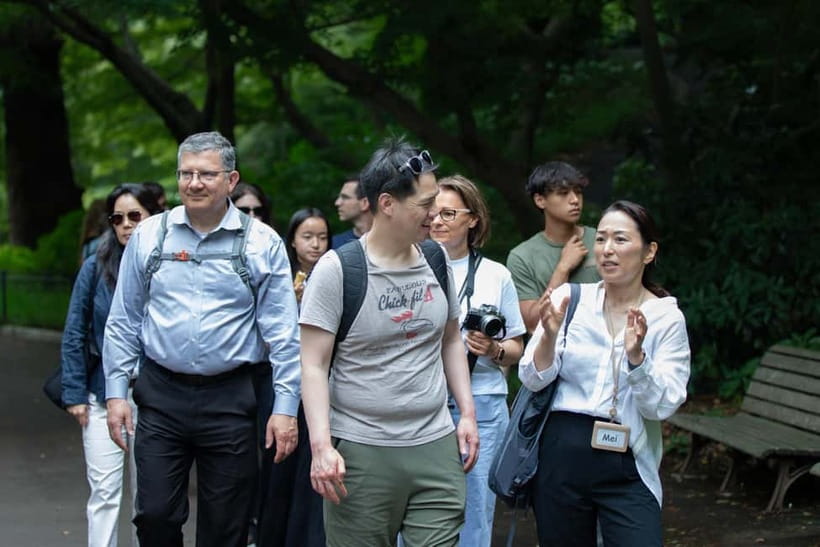
After the castle remains, the Ninomaru Garden provides a gentler part of the route. This area is known for traditional Japanese design, with arranged trees and shrubs, tranquil ponds, bridges, and stone lanterns.
I like the change in pace. The Honmaru area asks you to think about strategy and authority. Ninomaru asks you to slow down and notice proportion, spacing, water, and the shape of individual plants. The two sections make more sense together than either would alone.
You may also see meticulously pruned trees and bonsai features during the walk. These details reward patient looking. Instead of rushing from one famous object to another, you can notice how much work goes into keeping a garden orderly without making it feel stiff.
Several guides have been praised for leaving time to appreciate the gardens rather than filling every minute with talk. That balance is important. A garden tour can become tiring if the guide narrates every step, but silence without context can leave you missing the design choices. The best reports describe a well-paced visit with time for questions, photographs, and personal viewing.
The garden is especially appealing during spring cherry blossom season and in fall, when foliage adds warm color to the paths. Seasonal beauty is never guaranteed on a fixed date, so you should choose your timing with realistic expectations. Even outside those periods, the ponds, bridges, greenery, and traditional planting provide the visual heart of the tour.
More Walking Tours in Tokyo
- Tokyo Tsukiji Fish Market Food and Culture Walking Tour
★ 5.0 · 3,184 reviews - Tokyo: Shinjuku Local Bar and Izakaya Guided Walking Tour
★ 4.9 · 1,794 reviews - Tokyo: Tsukiji Fish Market Food and Walking tour
★ 5.0 · 1,724 reviews - Tokyo: Asakusa Walking Tour with Sensoji Temple Visit
★ 4.8 · 1,583 reviews
Stone walls, guard houses, and defensive details
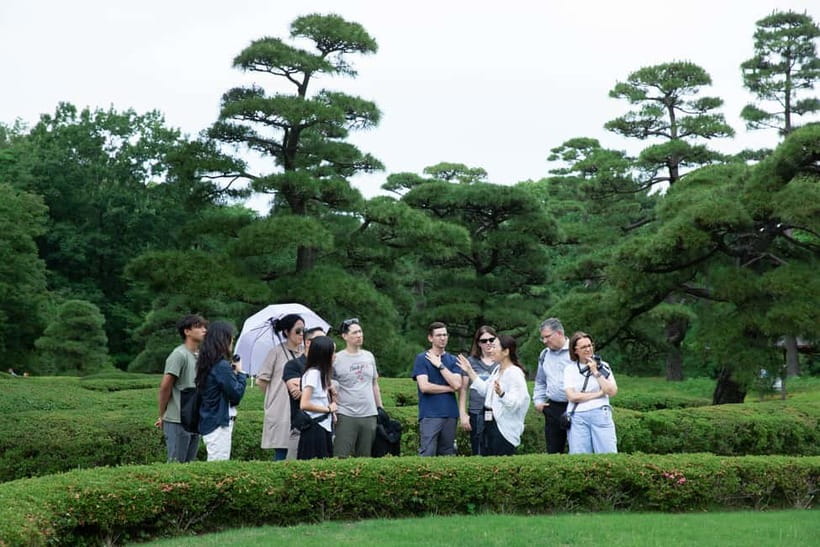
The East Gardens contain more than broad lawns and attractive plants. You will encounter stone walls, guard houses, watch towers, gates, and other preserved features tied to the old castle.
These structures give the tour a physical sense of scale. A history lesson in a museum depends on drawings and objects behind glass. Here, the defensive system is under your feet and around you. You can see how walls were built, where sentries might have watched, and how movement through the castle grounds was controlled.
I find this especially useful for first-time visitors to Japanese castles. The tour does not simply say that Edo Castle was important. It shows how importance was expressed through barriers, controlled entrances, raised foundations, and protected compounds.
The surviving features are partial, so keep your expectations grounded. The East Gardens are not a complete archaeological site, and the tour does not restore every missing section. Its strength is interpretation. You learn how to read what is still there.
Guide quality is the deciding factor
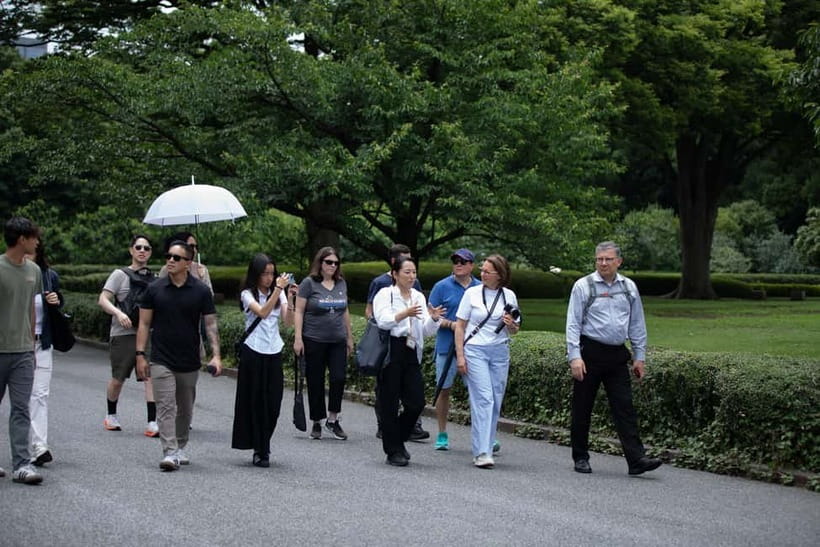
The strongest pattern in the feedback is the quality of the English-speaking guides. Mei receives repeated praise for being friendly, funny, patient, and well prepared. Kei is praised for answering many questions and explaining the castle clearly. Wakana is described as helpful and clear, while Tatsie is noted for a warm style and a good pace.
Mieko, Meiko, Miyu, Midori, Fuku, Loc, and Wakan are also singled out for making the walk engaging and approachable. The names may vary by departure, so you should not book expecting one particular person unless the operator confirms it. Still, the repeated praise suggests that the experience depends less on a fixed script and more on the individual guide’s ability to bring the place to life.
That human element is valuable in Tokyo. You can read about the Tokugawa shoguns before arriving, but a guide can explain why the castle site matters, point out a feature you might otherwise miss, and answer questions about imperial customs or present-day Japan.
The guides also appear to adjust their style to the group. Some provide funny comments about the royal family or modern Japan. Others focus more on maps, architecture, or cultural practices. If you enjoy asking questions, this tour should give you room to do so. If you prefer a quiet walk with little commentary, the guided format may feel more talkative than you want.
How the 150-minute pace feels
Two and a half hours is a useful length for this site. A shorter tour could skim over the castle story and leave little time for the garden. A much longer walk might become tiring, especially in warm weather or during a crowded seasonal period.
The reported pace is one of the tour’s practical strengths. Guides have been praised for giving groups time to stop, listen, take photographs, and enjoy the setting. That does not make the outing effortless. You are still walking through a large historic area, and the experience is best for people comfortable spending 150 minutes on their feet.
The tour begins and ends at the same location, with the East Gardens as the central stop. That straightforward structure makes it easy to pair with another Tokyo activity before or after, though I would avoid scheduling something that starts immediately afterward. Delays, photographs, questions, and the size of the grounds can all affect your exact finish.
The activity is listed as wheelchair accessible. If access is especially important for your group, confirm current route conditions and entrance arrangements when booking, since historic grounds can include uneven surfaces or route changes. The supplied information confirms accessibility, but it does not provide a detailed route map.
Is $19 good value?

At $19 per person, this is a modestly priced guided walk in central Tokyo. You are paying for an English-speaking guide and 150 minutes of explanation, not for a luxury vehicle, meal, or private castle access.
I consider the price good value if you want context. The East Gardens can be visited as a quiet public attraction, but the surviving stones and foundations do not explain themselves. A guide can show you where the Honmaru compound fit into Edo Castle, explain the role of guard houses and walls, and connect the garden design to Japanese tradition.
The value is lower if you only want photographs or a quick stroll. You may prefer to visit independently if you already understand Edo history and do not need interpretation. The tour also does not go inside the Imperial Palace, so anyone expecting access to the current palace should choose a different activity.
The booking terms add flexibility. You can cancel up to 24 hours before the start for a full refund, and the reserve-now, pay-later option lets you hold a place without paying immediately. Those terms are useful when weather or a changing Tokyo schedule is a concern.
Who should book this walking tour?
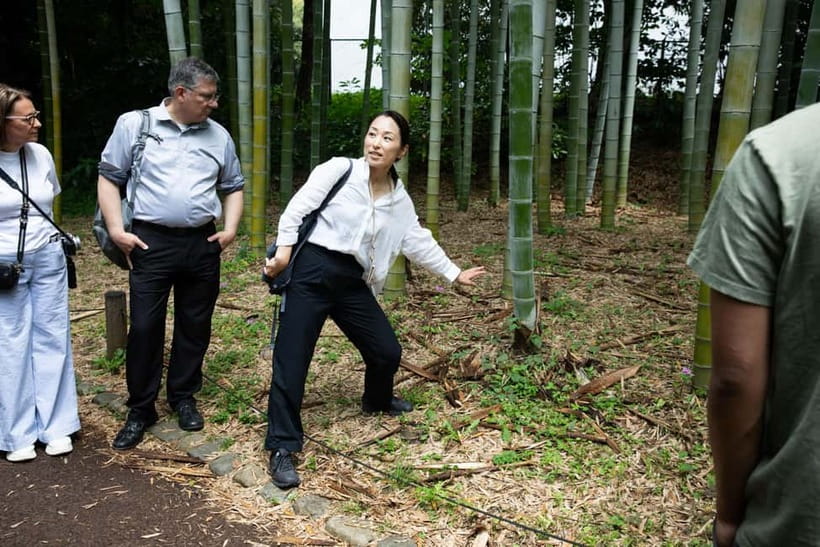
I would recommend it to first-time Tokyo visitors who want a clear introduction to the city’s political past without committing to a full-day museum visit. It also suits families, couples, and small groups who like learning while moving rather than standing in galleries.
History fans should enjoy the Honmaru remains and defensive structures. Garden lovers will get the most from Ninomaru, the ponds, bridges, stone lanterns, and seasonal planting. The experience can also work well for visitors who want a calmer break from Tokyo’s busier districts.
The tour may be less suitable for anyone with limited walking stamina, unless the confirmed route works comfortably for their needs. It is also not the right pick if your main goal is entering the Imperial Palace or seeing intact castle rooms.
For photographers, spring and fall offer the strongest natural color. For everyone else, the site still has value outside peak foliage periods because the history and garden design carry the visit.
Final verdict: book it for context, not palace access
Book this tour if you want the East Gardens to make sense. The combination of Honmaru foundations, defensive walls, guard houses, Ninomaru Garden, and seasonal scenery gives you a compact lesson in how old Edo shaped modern Tokyo.
The best reason to go is the guide. Mei, Kei, Wakana, Tatsie, and the other praised guides are credited with humor, visual aids, patient answers, and a comfortable pace. That can turn a quiet garden walk into a memorable piece of Japanese history.
Skip it if you want to enter the Imperial Palace, avoid guided commentary, or spend only a few minutes outdoors. For $19 and 150 minutes, though, this is a sensible, focused way to connect Tokyo’s present-day city center with the shogun-era castle grounds beneath it.
FAQ
How much does the Imperial Palace East Gardens walking tour cost?
The tour costs $19 per person.
How long does the tour last?
The walking tour lasts 150 minutes, or 2.5 hours.
Where does the tour meet?
Your guide waits nearby the Starbucks Coffee at Kokyo Gaien Wadakura Fountain Park. The coordinates provided are 35.68299330000001, 139.7611971.
Where does the tour finish?
The tour returns to Starbucks Coffee at Kokyo Gaien Wadakura Fountain Park.
Does the tour enter the Imperial Palace?
No. The tour visits the Imperial Palace East Gardens and does not go inside the Imperial Palace.
What language is the tour conducted in?
The tour is conducted in English with a live English-speaking guide.
Is admission to the Imperial Palace included?
Entry to the Imperial Palace is not included. The tour includes the walking tour and guide.
Is the tour wheelchair accessible?
Yes, the activity is listed as wheelchair accessible.
Can I cancel for a full refund?
Yes. You can cancel up to 24 hours in advance for a full refund.
Do I have to pay when I reserve?
No. The reserve-now, pay-later option allows you to book while keeping your payment for later.
Just added in Tokyo
- A One-of-a-Kind Sushi Experience in a Special Place of Japan★ 5.0 · 15 reviews
- Tokyo Cute Bento Cooking Class – Make a Kawaii Character Lunchbox★ 5.0 · 126 reviews
- Japanese Home Cooking Class & Walk in Todoroki Temple Tokyo★ 5.0 · 88 reviews
- Japan Tokyo Tower Observatory Deck E-Ticket★ 4.0 · 34 reviews
- Catch a Baseball Game in Tokyo with a Local – Tickets Included★ 5.0 · 24 reviews
- JDM Experience with Fast&Furious RX-7 (English speaking Driver)★ 5.0 · 57 reviews
- Tokyo Private Day Tour by Car with English speaking Driver Guide★ 4.0 · 29 reviews
- Japan Classic 10 Day – One Life Adventures★ 5.0 · 129 reviews
Castles and Historic Sites, compared.

Imperial Palace and Shogun Historical Walking Tour
Read our review →
Tokyo Castle & Imperial PalaceーShogun Walking Tour
Read our review →
Nijo-jo Castle and Ninomaru Palace Guided Tour
Read our review →
Samurai Ninja Museum Guided tour and Experience
Read our review →Browse the lists this tour appears in