
Reviewed · MARKETS AND FOOD HALLS
Tokyo Morning Tour : Meiji Shrine, Asakusa and Fish Market
Tokyo makes a fine breakfast. This four-hour outing links Meiji Shrine, Tsukiji Market, and Senso-ji in a smart morning route, with sushi, sashimi, mochi, sweet potato, and a savory cutlet along the way. I like the mix of quiet shrine paths and lively food streets, and I like the small group limit of eight, which gives the guide room to answer questions and adjust the pace.
The strongest part is the human touch. Guides such as Shoma Sato and Yosuke earned praise for patience, clear explanations, flexible pacing, and taking photos. The main consideration is that public transport costs about 550 yen extra, and four hours gives you a useful introduction rather than much free time at each stop.
In This Review
- What makes this Tokyo morning worthwhile
- Why this route works in four hours
- Meiji Jingu: a quiet start beneath the torii gates
- Tsukiji Jogai Market: Tokyo’s edible middle hour
- Senso-ji and Asakusa: a strong finish
- The guides are a major part of the value
- Is $72.67 a fair price?
- Who should book this morning tour?
- Small details that can make the morning easier
- Should you book it?
- FAQ
- How long does the Tokyo morning tour last?
- Where does the tour begin?
- Where does the tour end?
- Is public transportation included?
- What food is included during the tour?
- How many people can join the tour?
- Can I cancel for a full refund?
What makes this Tokyo morning worthwhile
- Three very different Tokyo worlds: Move from a forested Shinto shrine to a food market and then to Asakusa’s Buddhist temple district.
- Food is part of the route: Try sushi and sashimi at Tsukiji, plus sweet mochi, sweet potato, and a savory cutlet.
- A maximum of eight people: The compact group should make it easier to hear the guide and ask about customs.
- Guides add the real value: Shoma Sato and Yosuke were praised for explaining history, philosophy, and local customs with patience.
- A useful ending point: The tour finishes at Asakusa Station, leaving you well placed to continue exploring.
- Simple cost planning: The $72.67 price includes the guide, photos, historical explanations, and site admissions, but not transport.
Why this route works in four hours
Tokyo can feel scattered at first. Its major sights sit in different districts, and a first visit can burn precious time on transfers and orientation. This tour gives you a ready-made morning shape: Harajuku first, Tsukiji next, and Asakusa last.
The order also has a pleasant change of mood. Meiji Jingu gives you a calm start, Tsukiji wakes up your appetite, and Senso-ji sends you into one of Tokyo’s best-known old districts. You are not spending four hours looking at similar temples or shopping streets.
The tour begins at the IKEA Swedish Cafe in Harajuku, at the listed Jingumae address. Check the meeting point carefully before setting out, since a precise start matters in Tokyo. The finish is at Asakusa Station, not back in Harajuku, so plan the rest of your day from the eastern side of the city.
You should allow extra time for public transportation. About 550 yen is not a major expense, but it is separate from the tour price. A mobile ticket is provided, and confirmation arrives when you book.
More Markets and Food Halls in Tokyo
- Tokyo Tsukiji Fish Market Food and Culture Walking Tour
★ 5.0 · 3,184 reviews - Tokyo: Tsukiji Fish Market Food and Walking tour
★ 5.0 · 1,724 reviews - Senkyaku Banrai Toyosu Manyo Club Onsen Experience in Tokyo
★ 4.7 · 1,690 reviews
Meiji Jingu: a quiet start beneath the torii gates
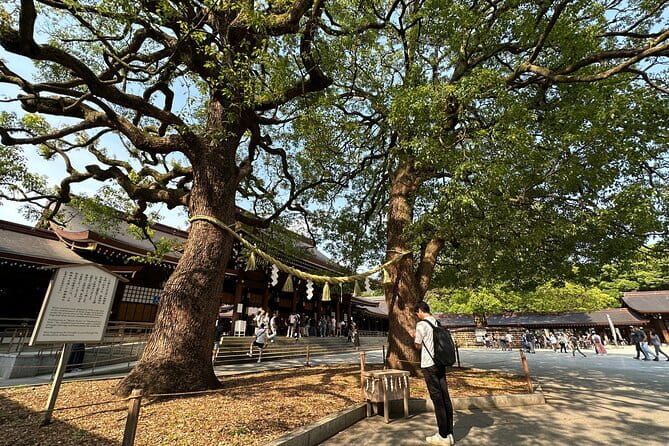
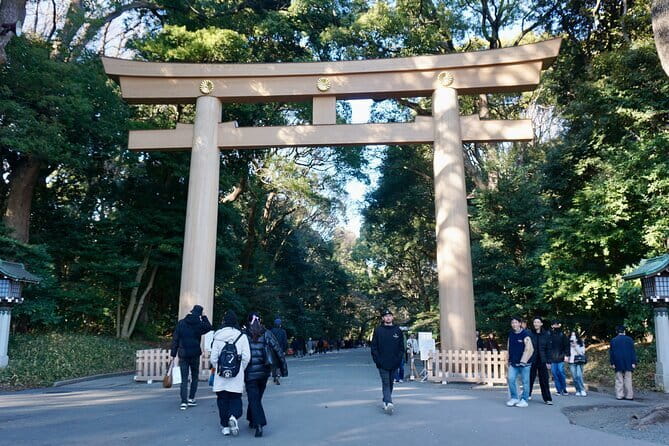
The first stop is Meiji Jingu, Tokyo’s best-known Shinto shrine. It is dedicated to Emperor Meiji and Empress Shoken, and the approach leads through forested paths beneath large torii gates.
This is a good place to begin before the city reaches its full daytime pace. The setting gives you space to notice the basic shape of a Shinto shrine visit: the gate, the approach, the shrine buildings, and the customs connected with showing respect. Your guide can add the context that makes the visit more than a quick photograph.
The supplied schedule allows about one hour here. That is enough for a meaningful walk and explanation, but not enough for a slow, unhurried examination of every corner. If you like quiet places, allow yourself to enjoy the walk instead of treating it only as a stop between food and temples.
Admission to Meiji Jingu is included at no extra charge. The guide also provides historical insights into the districts, which matters here because the shrine’s importance is tied to Japan’s imperial history and Shinto tradition.
The pace may suit you especially well if you are new to Japan. A guide can explain what you are seeing without asking you to memorize a long list of dates or rules. Yosuke was praised for sharing history, philosophy, and customs in a way that helped people understand the places, not just identify them.
Tsukiji Jogai Market: Tokyo’s edible middle hour
The route then shifts to Tsukiji Jogai Market, the outer market area associated with Tokyo’s famous fish trade. The old inner wholesale auction area moved to Toyosu, but Tsukiji’s outer market remains a destination for food.
This distinction is useful. You are not being taken to the former wholesale auction floor. Instead, you are visiting the market streets and stalls where food remains the focus. The setting is more hands-on for a short morning tour because you can look at what is sold and taste several items without needing to arrange a full meal.
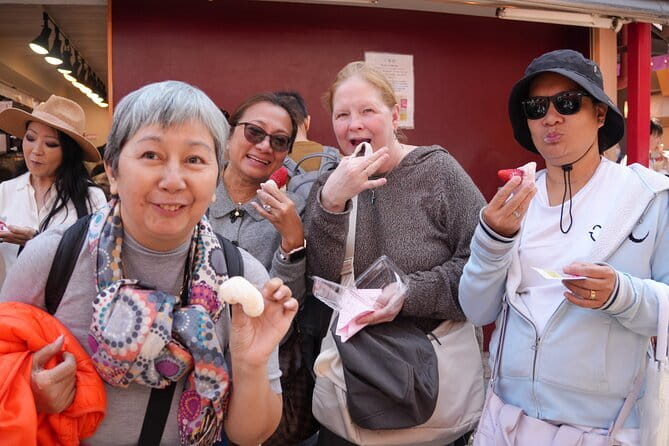
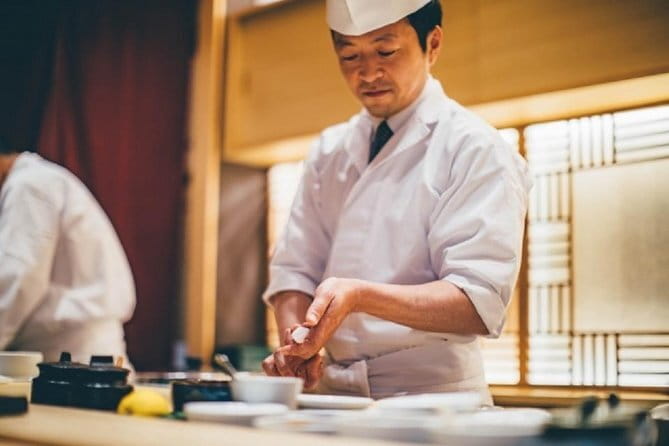
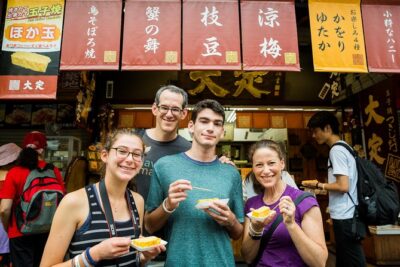
The food portion includes fresh sushi and sashimi, along with street foods such as sweet mochi, sweet potato, and a savory cutlet. That range is one of the tour’s best features. You get more than raw fish, and the contrast between sweet and savory bites helps you sample Japanese food in small portions.
I would think of this as guided tasting rather than a large breakfast. The details provided do not state how many pieces or portions are served, so arrive ready to sample rather than expecting a fixed restaurant meal. If you have a strong appetite, you may still want to budget for something extra later.
The market receives about one hour. That keeps the morning moving, but it also means you will not have unlimited time to browse every stall. The guide’s role is important here. A good guide can explain what you are eating, point out local customs, and keep the group together in a place where it is easy to stop every few steps.
The food is also a practical reason to choose a morning tour. Market activity is part of the appeal, and this schedule lets you see Tsukiji as part of the day rather than as a rushed afternoon add-on. You still need to follow the guide’s timing, so save extensive souvenir shopping for after the tour.
Senso-ji and Asakusa: a strong finish
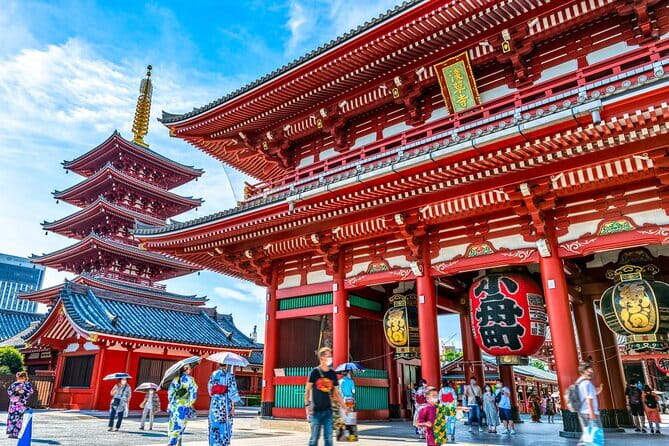
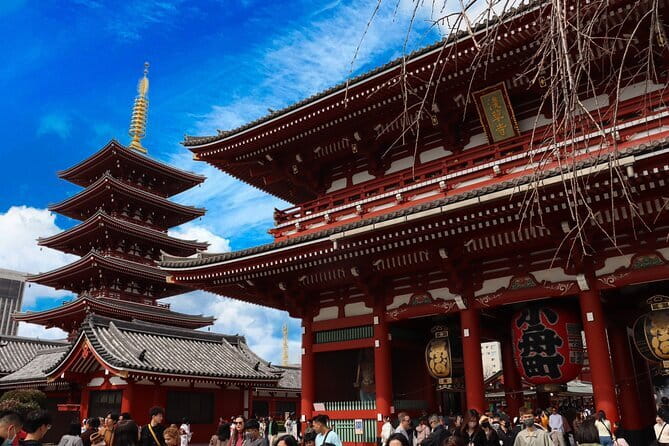
The final main stop is Senso-ji, Tokyo’s oldest Buddhist temple, in Asakusa. You enter through Kaminarimon, the Thunder Gate, then continue along Nakamise-dori, the shopping street leading toward the temple.
This gives the tour a lively finish after the calm of Meiji Jingu. Nakamise-dori is lined with shops, and the route makes it easy to see how religious sites and everyday commerce share the same district. The tour description does not promise free shopping time, so treat the street as part of the guided walk, not as a dedicated retail stop.
Senso-ji is a useful counterpoint to Meiji Jingu. One is a Shinto shrine tied to Emperor Meiji and Empress Shoken. The other is a Buddhist temple with a long place in Tokyo’s religious life. Seeing both in one morning gives you a basic comparison between two important Japanese traditions.
The schedule allows roughly one hour at Senso-ji. That should cover the gate, the approach, the temple area, and an explanation of the district. The tour finishes at Asakusa Station, which is convenient if you want to continue exploring Asakusa on your own.
For many people, this is the most useful arrangement. You finish near a major Tokyo sight rather than returning to the starting point. The tradeoff is that the four-hour format does not leave much room for a long independent visit at the end. If Senso-ji is a top priority, plan to stay after the tour and explore at your own pace.
More Temples and Shrines in Tokyo
- Tokyo: Meiji Shrine, Asakusa, Skytree Bus Tour and Cruise
★ 4.7 · 1,986 reviews - Tokyo: Asakusa Walking Tour with Sensoji Temple Visit
★ 4.8 · 1,583 reviews - Nikko: Kegon Falls, Lake Chuzenji & Toshogu Temple
★ 4.6 · 1,577 reviews - Tokyo: Nikko Toshogu Shrine and Kegon Waterfall Tour
★ 4.5 · 1,266 reviews
The guides are a major part of the value
A sightseeing route can look good on paper and still feel flat without a capable guide. Here, the guide quality appears to be a central strength. Shoma Sato was praised for explaining what the group saw, showing patience, and making an effort to suit different people in the group.
Yosuke received similar praise for making the outing feel pleasant and flexible. Breaks were included and adjusted when needed, which can matter during a four-hour walk with several stops. The small group limit gives this kind of flexibility a better chance of working than a large coach tour.
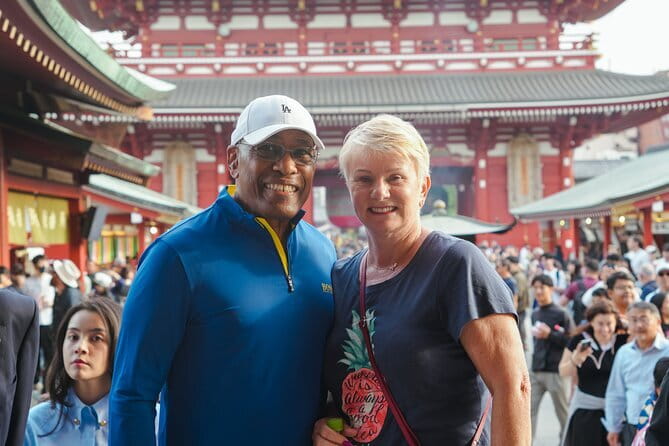
Photos are included, too. That is a modest but useful benefit, especially if you want a picture of the group without handing your phone to a stranger. Do not treat it as a professional photo session. The value is having the guide help record the day while you pay attention to the sites.
One unusual sign of guide quality came from the strong personal response to the guiding. An excellent guide can make the difference between recognizing a torii gate and understanding why the approach to a shrine feels different from a temple street. The praise for both Shoma Sato and Yosuke suggests that the company has more than one capable guide, though you should not assume you will receive a particular person unless the booking confirms it.
Is $72.67 a fair price?
At $72.67 per person, this is not the cheapest way to walk through Harajuku, Tsukiji, and Asakusa. You could visit the sites independently, pay your own transport, and buy food as you go. The tour’s value rests in the guide, the route planning, the small group, the tastings, and the explanations.
The admissions are included for Meiji Jingu, Tsukiji Market, and Senso-ji. The supplied details do not list separate entry fees, so the main out-of-pocket addition is public transportation at about 550 yen.
I see the price as reasonable for a first morning in Tokyo if you want structure and context. It is particularly useful when you have limited time, since one booking covers three districts and ends at a practical station. It is less attractive if you already know Tokyo well, prefer long unplanned market visits, or want to spend most of the morning eating at your own pace.
The maximum of eight helps support the price. A smaller group generally makes it easier to hear explanations, get answers, and keep the walk moving without waiting for a crowd. The cost would be harder to justify if this were only transportation between famous sights, but food and guiding are central to the experience.
Who should book this morning tour?
I would suggest it to a first-time visitor who wants a clear introduction to Tokyo’s cultural and food traditions. It also suits anyone with only a short stay, since the route covers three major areas in one half-day.
It can work well for couples, families, and small groups who appreciate a guide without wanting a large organized outing. Most people can participate, and the group maximum is eight. The information provided does not give a detailed accessibility assessment, so you should ask the operator directly if you have specific mobility needs.
Food lovers will enjoy the market portion, but you should note the format. You are sampling sushi, sashimi, mochi, sweet potato, and a cutlet as part of the walk. This is not described as a full sit-down meal or a private food tour with unlimited tastings.
You should also like moving between very different settings. If you want a slow morning at one shrine, a long market breakfast, or several hours of shopping in Asakusa, this schedule will feel too tight. The tour is built for variety and orientation.
Small details that can make the morning easier
Meet at the IKEA Swedish Cafe in Harajuku, using the full address supplied with your booking. Tokyo meeting points can be confusing, so give yourself enough time to find the correct spot rather than arriving at the last minute.
Wear comfortable shoes. The schedule includes shrine paths, market streets, a shopping street, and temple grounds. The exact walking distance is not provided, but the nature of the route means you should expect to be on your feet for much of the four hours.
Keep some flexibility in your morning after the tour. The outing finishes at Asakusa Station, giving you the option to continue around Asakusa, shop along Nakamise-dori, or make your own way elsewhere. Since the tour does not return to Harajuku, avoid booking a tight appointment near the starting point immediately afterward.
The cancellation policy is forgiving if your plans change early. You can cancel for a full refund up to 24 hours before the local start time. Changes or cancellations inside that window are not accepted for a refund, and the experience requires a minimum number of participants, so a company cancellation could lead to another date, another experience, or a full refund.
Should you book it?
Book this tour if you want a guided first look at Tokyo, enjoy tasting several foods, and value a compact route over long independent stops. The combination of Meiji Jingu, Tsukiji, and Senso-ji is well chosen, and the praised guiding from people such as Shoma Sato and Yosuke gives the experience much of its appeal.
Skip it if you already know these districts or want complete control over your meals, shopping, and timing. For everyone else, the small group, included admissions, photos, and four-hour plan make $72.67 a fair price for a useful morning introduction, with only the modest transport cost added.
FAQ
How long does the Tokyo morning tour last?
The tour lasts approximately four hours.
Where does the tour begin?
It begins at IKEA Swedish Cafe in Harajuku, at the listed address in Jingumae, Shibuya, Tokyo 150-0001.
Where does the tour end?
The tour finishes in Asakusa at Asakusa Station, in Taito City, Tokyo.
Is public transportation included?
No. Public transportation is not included. The estimated additional fare is around 550 yen.
What food is included during the tour?
The food portion includes fresh sushi and sashimi from Tsukiji, plus street foods such as sweet mochi, sweet potato, and a savory cutlet.
How many people can join the tour?
The maximum group size is eight people.
Can I cancel for a full refund?
Yes. You can cancel at least 24 hours before the experience start time for a full refund. Cancellations or changes made less than 24 hours before the start time are not refunded or accepted.
Just added in Tokyo
- Tokyo Sunset Boat Party with Music Drinks and Vibes★ 5.0 · 15 reviews
- 【SUMO FESTIVAL】Tokyo Ginza: Sumo Show & Photo Experience★ 4.5 · 41 reviews
- Tokyo Sumo Experience with Live Show & Audience Challenge★ 5.0 · 38 reviews
- Premium 14-Piece Sushi & Cultural Discovery with Chef Interaction★ 5.0 · 57 reviews
- Tokyo Street Food Tour – 7 Japanese Foods★ 5.0 · 16 reviews
- Tokyo Sumo Morning Training/ Sumo Practice with Wrestlers★ 5.0 · 135 reviews
- Tokyo: Visit Sumo Morning Practice with English Guide★ 4.5 · 22 reviews
- Christmas Magic in Tokyo! Private & Family-Friendly Walking Tour★ 5.0 · 26 reviews
Markets and Food Halls, compared.
Tokyo Tsukiji Fish Market Food and Culture Walking Tour
Read our review →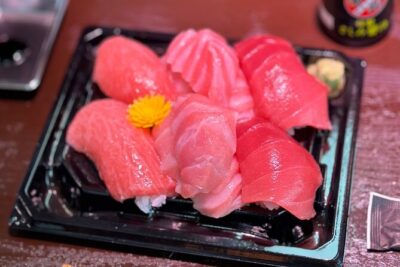
Senkyaku Banrai Toyosu Manyo Club Onsen Experience in Tokyo
Read our review →
Nishiki Market Brunch Walking Tour (7 Tastings + Brunch)
Read our review →
Tokyo Sushi Making Class in Tsukiji with Professional Chef
Read our review →
Tsukiji Fish Market Guided Tour and Sushi Making with Pro Chef
Read our review →Browse the lists this tour appears in