
Reviewed · TEMPLES AND SHRINES
Tokyo Early Morning Tour Asakusa Meiji Shrine (Private Opt)
Start Tokyo before the crowds. This five-hour route links Asakusa, Tsukiji, Meiji Jingu, and Shibuya Crossing in one tidy morning, with an English-speaking guide to explain what you are seeing. I especially like the early start, which gives you cooler streets and more breathing room, and the small maximum group size of eight. The main drawback is that you must pay about 600 yen extra for transportation, and the pace may feel brisk.
I also like the flexible choice between a small-group, private, or self-guided format. Guides such as Hana Tanaka and Kouta have been praised for patient explanations, family-friendly conversation, and help with using Tokyo’s trains. You finish at the Hachiko Statue, but you will not have food, drinks, or admission tickets included, so bring money for the Tsukiji stop.
In This Review
- Key things to know before booking
- Why this early route works in Tokyo
- Meeting your guide in Asakusa
- Tsukiji, where the morning gets tasty
- Meiji Jingu, Tokyo’s quiet pause
- Shibuya Crossing and the Hachiko finish
- What the guide adds to the morning
- Price, transport, and overall value
- Who will get the most from this experience
- Cancellation and practical details
- Should you book the Tokyo early morning tour?
- FAQ
- How long is the Tokyo early morning tour?
- What places does the tour visit?
- Where does the tour begin?
- Where does the tour end?
- Is transportation included?
- Are food and drinks included?
- Is an English-speaking guide included?
- How many people can join the tour?
- Can I cancel for a full refund?
Key things to know before booking
- Four major Tokyo stops in one morning: You visit Asakusa, Tsukiji Fish Market, Meiji Jingu Shrine, and Shibuya Crossing without spending a full day arranging the route yourself.
- Early timing matters: The morning schedule helps you avoid the heavier afternoon crowds and the worst heat.
- A small group keeps the tour personal: The maximum is eight people, with a private option available.
- Tsukiji is the food stop: The outer market remains active even though the wholesale market moved to Toyosu, and food purchases are your responsibility.
- The guide adds cultural context: Hana Tanaka has helped families learn train basics, while Kouta has been praised for answering questions and connecting well with teenagers.
- Budget for local transport: The tour price is $59.46 per person, but transportation costs about 600 yen extra.
Why this early route works in Tokyo
Tokyo can feel like several cities stitched together. One district gives you temple gates and old shopping lanes, another offers seafood stalls, another gives you a forested shrine, and then the day ends beneath the giant screens of Shibuya. This tour makes that contrast the point.
The route also solves a common first-day problem. You want to see the famous places, but you do not yet know how long transfers take or which sights work well together. Here, the morning moves from east Tokyo to central Tokyo and finishes in the west at Shibuya.
I like the timing because each stop has a different mood. Asakusa introduces traditional Tokyo, Tsukiji adds food and local commerce, Meiji Jingu provides quiet, and Shibuya delivers the modern city spectacle. You get a useful first look rather than spending five hours in one neighborhood.
The pace is the tradeoff. The stated duration is about five hours, with roughly one hour in Asakusa, one hour at Tsukiji, 90 minutes at Meiji Jingu, and 30 minutes at Shibuya Crossing. Some guided outings have lasted six hours, but you should plan around five and avoid scheduling a tight afternoon appointment.
More Temples and Shrines in Tokyo
- Tokyo: Meiji Shrine, Asakusa, Skytree Bus Tour and Cruise
★ 4.7 · 1,986 reviews - Tokyo: Asakusa Walking Tour with Sensoji Temple Visit
★ 4.8 · 1,583 reviews - Nikko: Kegon Falls, Lake Chuzenji & Toshogu Temple
★ 4.6 · 1,577 reviews
Meeting your guide in Asakusa
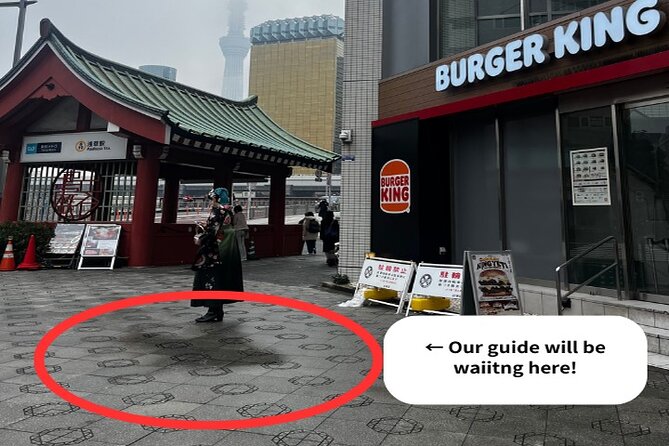
The tour begins at Burger King Asakusa Azumabashi, at 2-chome 206 Kaminarimon, Taito City, Tokyo 111-0034. That is a practical starting area near public transportation, but you should check the exact meeting instructions carefully before setting out. Tokyo has many stations and exits, and a small navigation mistake can cost you time early in the morning.
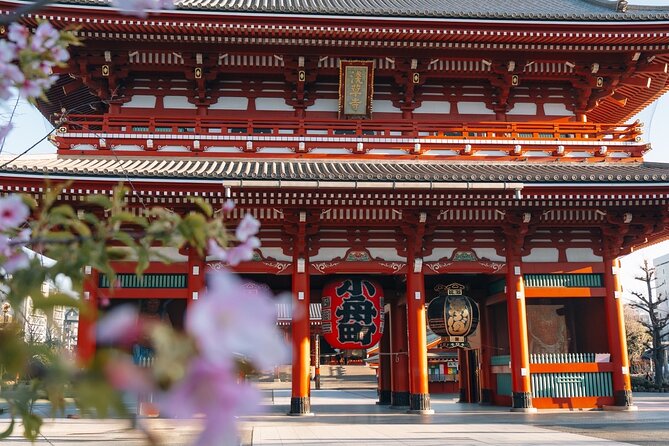
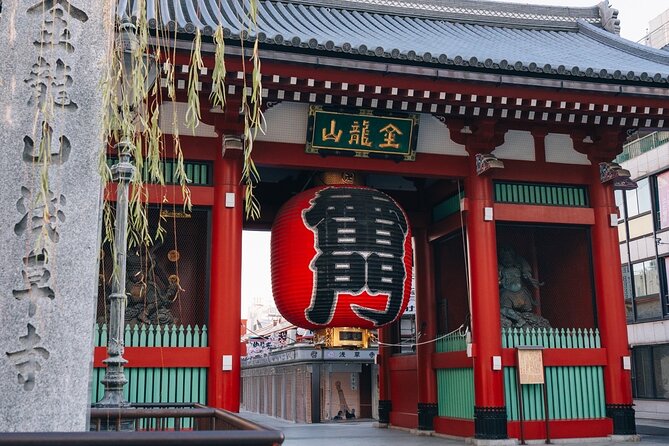
Asakusa is a smart first stop. It is best known for Sensoji, Tokyo’s oldest and most famous Buddhist temple, and the surrounding district gives you an immediate sense of the city’s older character. You will have about an hour here, enough to see the temple area and walk along Nakamise Shopping Street.
Nakamise is more than a place to buy souvenirs. It forms the approach to Sensoji and offers a clear example of how religious sites and everyday commerce sit side by side in Tokyo. The tour’s guide can explain the history behind the temple and nearby shrine, which adds meaning to details you could otherwise pass without noticing.
The early hour is especially useful at Sensoji. The temple grounds can become crowded later in the day, making it harder to pause at the gates or take clear photographs. Morning does not make Asakusa empty, but it gives you a calmer introduction.
You should also remember that the one-hour visit is not designed for a slow shopping session. If you want to inspect every stall along Nakamise, you may need to return later on your own. I see that as a fair compromise because this tour is built around seeing several parts of Tokyo in one morning.
Tsukiji, where the morning gets tasty
The next stop lasts about an hour at Tsukiji Fish Market. The inner wholesale market moved to Toyosu, but the outer market continues to serve food shoppers and visitors. This distinction matters. You are not visiting the old wholesale auction area, so set your expectations around the outer market’s food and retail atmosphere.
This is the stop where the tour price does not cover your experience in the same way as the temple visits. Food and drinks are not included. You can choose what interests you and pay directly, but your spending will depend on how much you sample.
I like having a guide here because a market can be confusing on a first visit. You might find unfamiliar seafood, small food counters, and products you do not know how to order. The guide can point out useful choices and explain local food customs without turning the stop into a formal lecture.
One particularly strong part of the experience is the chance to ask questions as you go. A guide named Hana Tanaka has been praised for giving practical food tips along with cultural and historical context. That combination is helpful at Tsukiji, where simply walking around may leave you wondering what is worth trying.
You should keep the one-hour limit in mind. Tsukiji can easily absorb a whole morning if you enjoy eating and browsing. I would arrive hungry but not expect a leisurely food crawl. Bring yen or another accepted payment method for anything you want to purchase, since food and drinks are separate.
Meiji Jingu, Tokyo’s quiet pause
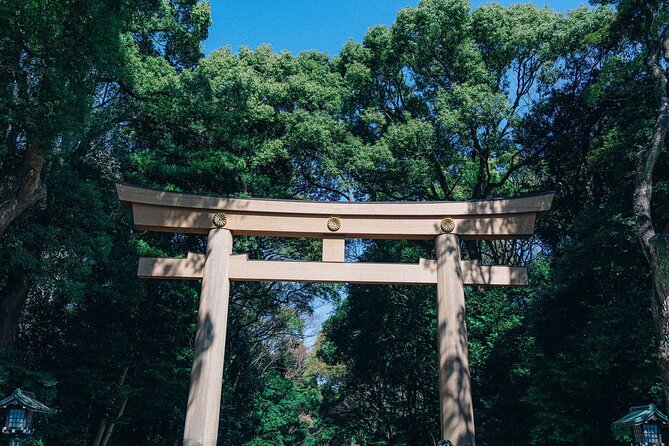
Meiji Jingu Shrine receives the longest visit, about 90 minutes. Located in central Tokyo, the Shinto shrine honors Emperor Meiji and Empress Shoken and is surrounded by a large wooded area. After the temple streets of Asakusa and the food activity at Tsukiji, this change of mood is welcome.
The value here is not only the shrine building. The wooded approach gives you a break from traffic, signs, and dense city blocks. You can listen to the guide explain the shrine’s purpose and customs while moving through a setting that feels far removed from the Tokyo you saw earlier.
The provided information does not promise a particular ceremony or special event, so you should think of this as a cultural visit rather than a scheduled religious performance. Your guide can help explain what you are seeing, but the exact experience may depend on the day.
This is also where comfortable shoes matter. The tour requires a moderate level of physical fitness, and you will be walking through several districts with transfers between them. You do not need an athletic level of fitness based on the information provided, but this is not a vehicle-only sightseeing ride.
Families can benefit from the longer stop. Hana Tanaka has been praised for helping a family learn to ride Tokyo’s train system and for making the city’s past and customs understandable. That kind of support can be valuable when younger members are losing interest or when the adults are still figuring out local transport.
A completely different kind of day out:
- Tokyo Disney Resort – Tokyo Disneyland & Tokyo DisneySea Park Tickets
★ 4.8 · 99,488 reviews - SHIBUYA SKY Ticket
★ 4.7 · 46,509 reviews - JR Whole Japan Rail Pass
★ 4.8 · 29,150 reviews - Mt Fuji and Hakone 1-Day Bus Tour Return by Bullet Train
★ 5.0 · 26,383 reviews
Shibuya Crossing and the Hachiko finish
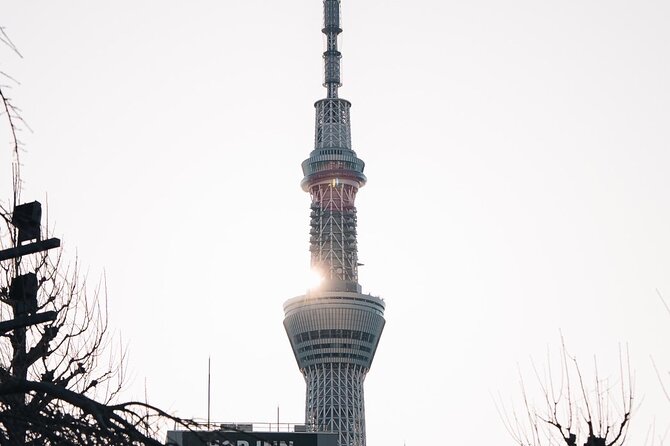
The final stop is Shibuya Crossing, with about 30 minutes set aside. The crossing sits outside Shibuya Station and is known for its large pedestrian scramble, with people moving from several directions at once. It is a short visit, but the location works well as a final burst of modern Tokyo.
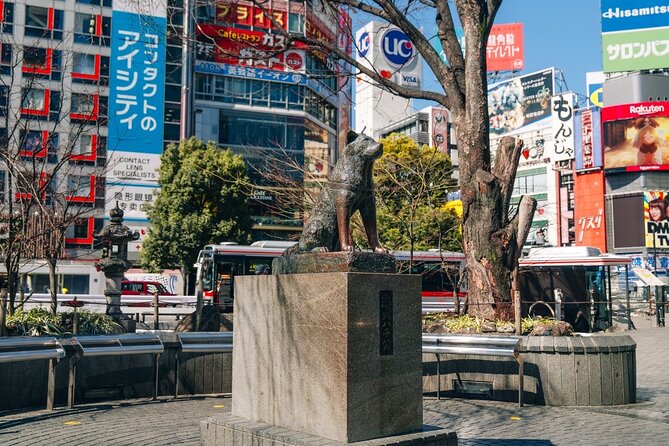
The tour ends at the Hachiko Statue, at 2 Chome-1 Dogenzaka, Shibuya. Hachiko honors the loyal dog remembered in Japan, and the statue offers a more personal story after the large-scale spectacle of the crossing.
I like this ending because it leaves you in a useful part of the city. You can continue exploring Shibuya after the tour instead of being returned to the starting point. The downside is that 30 minutes is enough for an introduction, not a full look at the district. You will not have time to treat Shibuya as another major sightseeing block.
A guide can make the finish more meaningful. Hana has been praised for explaining the Hachiko story and for making the outing feel like time spent with a local friend. That is the kind of small human detail that can keep a fast-moving tour from becoming a simple checklist.
What the guide adds to the morning
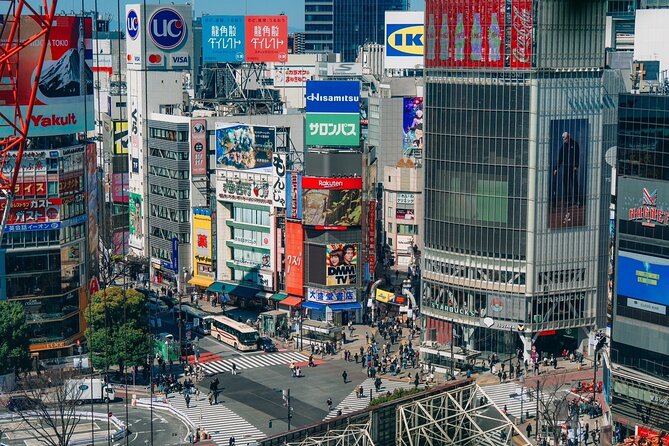
The English-speaking guide is the main reason to choose this experience instead of copying the route yourself. Tokyo’s temples, shrines, market stalls, and famous crossings are easy to photograph. It is harder to understand how they fit into Japanese culture and city life.
The guide also acts as a practical helper. One guide, Hana Tanaka, has helped people learn how to ride the train, while Kouta has been praised for answering questions and finding answers when needed. For a first day in Tokyo, that can reduce the stress of changing neighborhoods.
The small group limit of eight is another useful detail. You are less likely to be separated from the guide than in a large coach group, and questions should be easier to ask. The private option may suit families or friends who want more control over the pace, while the self-guided option gives you greater independence.
The exact amount of guide attention depends on the option you select. If personal explanation is your priority, confirm that you are booking the guided format rather than assuming every version includes the same level of service. The tour information lists an English-speaking guide as included, but it also advertises flexible private and self-guided choices.
Price, transport, and overall value
At $59.46 per person, the cost is reasonable for a five-hour guided introduction to four well-known areas, especially if you are new to Tokyo. You are paying for route planning, cultural explanation, and help moving between districts, not for meals or attraction admissions.
The included sights do not charge an admission fee according to the tour details. That keeps the basic price clear, but you should add roughly 600 yen for transportation. Food and drinks at Tsukiji are also extra.
I would judge the value by how much time and uncertainty the tour saves you. If you already know Tokyo’s train system and enjoy planning routes, you can visit these areas independently. If you want someone to connect the history, food, customs, and transport during your first morning, the fee is easier to justify.
Group discounts may improve the price for larger bookings. A private option could cost more than the listed per-person amount, so check the selected format before paying. The supplied details do not give separate prices for private or self-guided versions.
Who will get the most from this experience
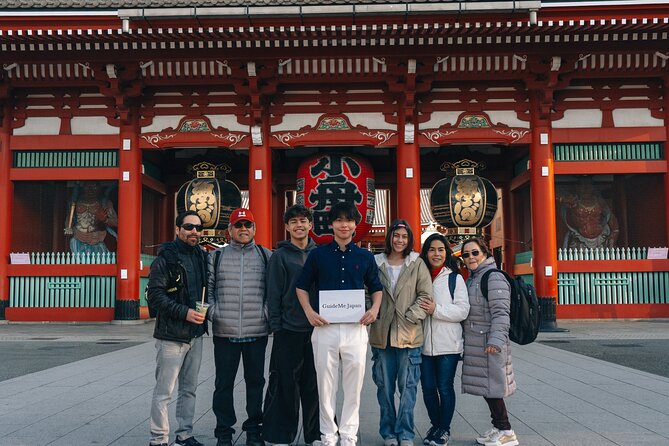
I would recommend this tour to first-time visitors who want a broad introduction without spending a full day organizing trains and walking routes. It also suits families, since the guides have experience working with children and teenagers.
It can work well for an extended family group. The private choice gives a group more control, while a maximum of eight in the shared format keeps the outing from feeling anonymous.
Food lovers will appreciate Tsukiji, but only if they accept that the market stop is short and purchases are separate. History and culture fans will get the most from Asakusa and Meiji Jingu, where the guide’s explanations give more meaning to the buildings and customs.
I would be cautious about booking it if you dislike early starts, want long meals, or prefer to explore one district slowly. The route is efficient by design. You see a lot, but you do not linger everywhere.
Wear comfortable shoes and allow time for public transport. The stated physical requirement is moderate, and the tour involves several stops rather than one compact site. Give yourself a little breathing room after the finish at Hachiko, especially if you plan to continue around Shibuya.
Cancellation and practical details
You receive confirmation when you book, and the route is near public transportation. Free cancellation is available if you cancel at least 24 hours before the local start time. Cancellations or changes made inside that window are not refunded or accepted.
The tour is capped at eight people, but the exact group depends on the option you choose. The listed meeting point is Burger King Asakusa Azumabashi, and the finish is the Hachiko Statue outside Shibuya Station.
The tour provider is GuideMe Japan. Since the route crosses several parts of Tokyo, arrive ready to move rather than treating it as a relaxed walking tour in one neighborhood.
Should you book the Tokyo early morning tour?
Book it if you want a well-planned first look at Tokyo and value a guide who can explain temple customs, market food, shrine culture, and basic train use. The early timing, four contrasting stops, and eight-person limit give it a strong practical appeal.
Skip it if you want to spend hours eating at Tsukiji or exploring every corner of Asakusa and Shibuya. For most first-time visitors, though, $59.46 plus about 600 yen in transport is a fair price for seeing this much of the city before the afternoon crowds arrive. Choose the private format for control, or the guided small-group option for the best balance of cost and personal help.
FAQ
How long is the Tokyo early morning tour?
The tour lasts approximately five hours. The time listed for the stops adds up to five hours, although some outings have lasted around six hours.
What places does the tour visit?
The route includes Asakusa, Tsukiji Fish Market, Meiji Jingu Shrine, and Shibuya Crossing. It ends at the Hachiko Statue near Shibuya Station.
Where does the tour begin?
The meeting point is Burger King Asakusa Azumabashi, Japan, 111-0034 Tokyo, Taito City, Kaminarimon, 2-chome 206, Cross Building Royal Palace.
Where does the tour end?
The tour ends at the Hachiko Statue at 2 Chome-1 Dogenzaka, Shibuya, Tokyo 150-0043, outside Shibuya Station.
Is transportation included?
No. Transportation is not included. The estimated extra transportation cost is around 600 yen.
Are food and drinks included?
No. Food and drinks are not included, so you pay separately for anything you purchase at Tsukiji Fish Market or elsewhere.
Is an English-speaking guide included?
Yes. An English-speaking guide is included in the tour details. A private or self-guided option may also be available, so check the format you select.
How many people can join the tour?
The activity has a maximum of eight people. A private option is available for those who prefer a more personal outing.
Can I cancel for a full refund?
Yes, if you cancel at least 24 hours before the experience start time. Cancellations or changes made less than 24 hours before the local start time are not refunded.
Just added in Tokyo
- Very popular in Harajuku♡Animal petting zoo★ 4.6 · 39 reviews
- Yokohama Port: Private Customizable Tour with Transfer★ 5.0 · 19 reviews
- Wagyu & Sake 8 Course Tasting Dinner in Shinjuku★ 4.9 · 20 reviews
- Warner Bros. Studio Tour Tokyo – The Making of Harry Potter★ 4.8 · 181 reviews
- Yanaka District: Historical Walking Tour in Tokyo’s Old Town★ 4.8 · 117 reviews
- Tokyo: Classic Tsukiji Food Tour★ 4.9 · 78 reviews
- Tokyo: Tsukiji Fish Market Tour with 6 Stops & Seafood Lunch★ 4.5 · 165 reviews
- Tokyo Wagyu & Sake Pairing Tasting Experience with Local Flavors★ 5.0 · 108 reviews
Temples and Shrines, compared.
Kyushu One-Day Tour: Yufuin no Mori Train & Yufuin Town & Nyoirin-ji Temple & Dazaifu & Hell Hot Springs (Departing from Fukuoka)
Read our review →
Fushimi Inari, Kinkakuji, Bamboo Grove 1 Day Bus Tour
Read our review →
Tea Ceremony in a Traditional Tea House in Kiyomizu
Read our review →
Kyoto Nara Day Trip │ Kiyomizu-dera Temple + Fushimi Inari-taisha Shrine + Nara Park (Departing from Osaka/Kyoto)
Read our review →
Browse the lists this tour appears in