
Reviewed · TEMPLES AND SHRINES
Tokyo History: Sensoji Temple & Asakusa District Private Tour
Tokyo’s old soul begins beneath a giant lantern. This private Asakusa walk gives you a clear introduction to Tokyo’s past, with Sensoji Temple at its heart and a local guide to explain customs, stories, and everyday details. I especially like the small temple offering and the chance to taste age manju, rather than simply taking photographs and moving on. I also like the private format, which lets you ask questions and adjust the pace.
The main drawback is time. Three hours is enough for an excellent first look, but not enough to linger at every stop, shop at length, and explore the temple grounds slowly. The $139.63 per-person price is easier to justify for a couple or small family than for one person, though group discounts may improve the value.
In This Review
- Key points at a glance
- Why Asakusa makes a smart first Tokyo walk
- Kaminarimon and Nakamise: a strong opening
- Hozomon Gate and a taste of age manju
- Sensoji Temple and the meaning behind the visit
- Hanayashiki and Asakusa’s narrow streets
- Traditional crafts at the Edo Taito center
- Kappabashi Street and Tokyo’s plastic food
- What the private format changes
- Is $139.63 per person a fair price?
- Pace, fitness, and practical planning
- Who will get the most from this Asakusa tour?
- Should you book the Sensoji and Asakusa private tour?
- FAQ
- How long is the Asakusa and Sensoji Temple tour?
- Is this a private tour?
- Where does the tour begin?
- Where does the tour end?
- Is food included?
- Can I cancel for a full refund?
Key points at a glance
- A private walk through old Asakusa: You explore with only your group and a local guide, not a large tour party.
- Sensoji Temple with a small offering: You can participate in a simple temple custom, including incense and a small offering.
- Local snacks along the route: Age manju and freshly made melon pan add flavor to the sightseeing.
- Kappabashi’s unusual shopping street: You see the district famous for restaurant supplies and realistic plastic food displays.
- A flexible, question-friendly experience: Guides such as Abu, Sheilina, Gulay, Carlos, William, and RamKy have been praised for adapting the walk to individual interests.
- A three-hour introduction: The route covers major sights, but you should plan extra time if you want to shop or eat at length.
Why Asakusa makes a smart first Tokyo walk
Asakusa gives you a useful starting point because several parts of Japanese culture sit close together. You have a Buddhist temple, a traditional shopping street, small food stops, craft displays, amusement history, and the kitchen-supply district of Kappabashi.
I like this mix because it keeps the walk from becoming a string of facts. You see how religion, shopping, food, and craftsmanship connect in one neighborhood. Your guide can also explain customs that are easy to miss when you explore alone, such as how to approach the incense burner or what to do before entering the temple.
The route begins at 2-chōme-16-11 Kaminarimon in Taito City. That puts you near Kaminarimon, the famous gate with its huge red lantern. The tour ends back at the meeting point, which is useful if you want to continue exploring Asakusa afterward without having to find a distant drop-off point.
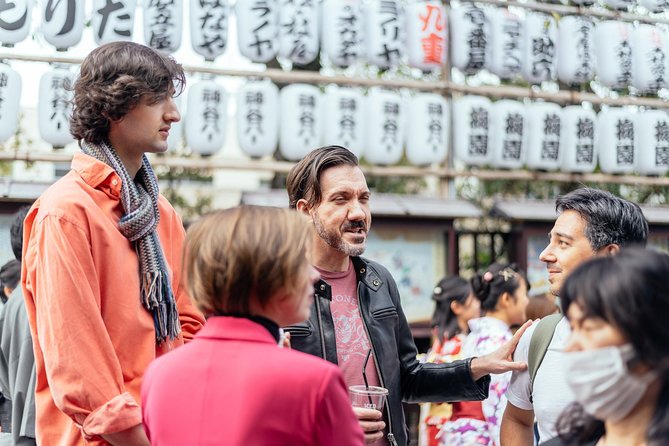
Because the tour is private, you can ask basic questions without feeling self-conscious. You can also request more attention to food, religion, shopping, architecture, or local customs, though the exact flexibility depends on your guide and the time available.
More Private Tours in Tokyo
- Tokyo 6hr Private Tour with Government-Licensed Guide
★ 5.0 · 3,902 reviews - Private Tour to Mt. Fuji and Hakone (Fully Licenced Operator)
★ 5.0 · 1,910 reviews - Tokyo Customized Private Tour (Must See Places in 1 Day)
★ 5.0 · 1,499 reviews
Kaminarimon and Nakamise: a strong opening
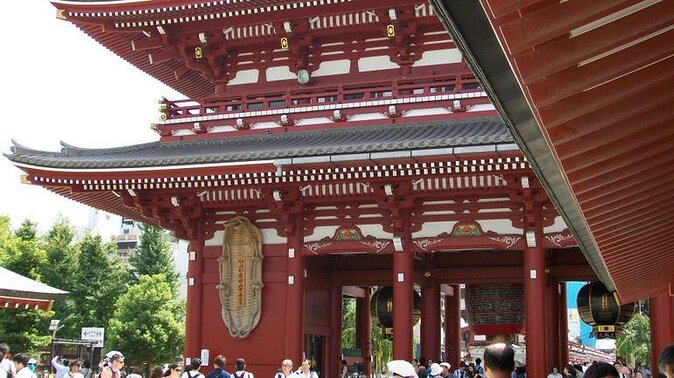
Your first stop is Nakamise Shopping Street, reached through the colorful Kaminarimon gate. The gate and its lantern create the classic Asakusa arrival, but the shopping street gives the scene more substance.
Nakamise has served shoppers since the 18th century. Along the route, you find souvenirs, traditional-style goods, sweets, and snacks. Your guide can help you understand what you are seeing and point out items that may otherwise look like simple tourist merchandise.
The scheduled time here is about 20 minutes. That is enough to get oriented and sample the atmosphere, but it is short if you want to browse every storefront. I would resist making major purchases at the start unless something catches your eye. You may find more shopping opportunities later, especially around Kappabashi.
This is also a good place to ask your guide about etiquette. Asakusa can be crowded, and a private guide helps you move through the area without losing the thread of the story.
Hozomon Gate and a taste of age manju
The walk continues to Hozomon, the second major gate leading toward Sensoji Temple. Before passing through, you stop at a shop to try age manju in a flavor of your choice.
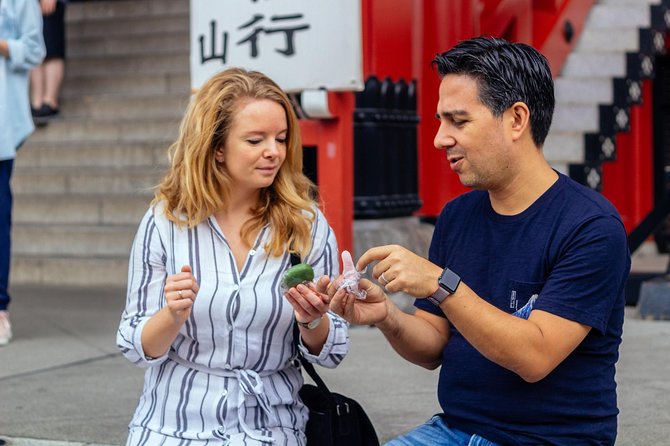
That small food stop is one of the tour’s best touches. A snack gives you a direct connection to the neighborhood, and your guide can help you understand what you are eating instead of leaving you to guess from a sign. The stop is planned for about 20 minutes, so you have time to enjoy the treat without turning the tour into a full meal.
Age manju is a fried version of a sweet bun, and flavors can vary. The tour information does not promise a specific selection, so your choice will depend on what the shop has that day.
If you have dietary restrictions, ask before ordering. Food and drinks beyond the listed snack are not included, and the tour does not state that special dietary arrangements are available.
Sensoji Temple and the meaning behind the visit
Sensoji is the central stop. It is described as Tokyo’s oldest temple, dating to 628, and its grounds provide the main historical and cultural focus of the walk.
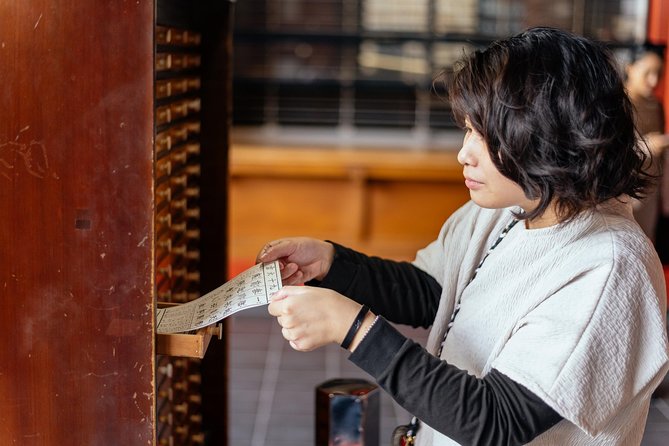
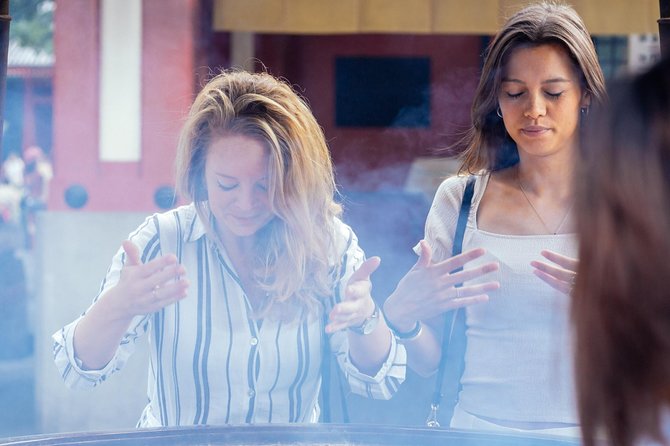
Before entering, you can let incense smoke drift over you, a customary act associated with purification and well-being. The tour includes a small offering, so you are not only looking at the temple from the outside. You get a simple chance to take part respectfully.
Your guide can explain the difference between observing a sacred site and treating it like a photo backdrop. That help matters here. You may see people praying, ceremonies taking place, or visitors following local customs. One person on a past tour saw a wedding ceremony and a samurai ceremony, while another saw a Shinto wedding blessing during a busy holiday period.
The scheduled time at Sensoji is about 20 minutes. That is enough for an introduction, incense, an offering, and a guided look at the grounds. It is not enough for a slow, detailed visit to every corner of the temple area. If you want quiet time for photographs or personal reflection, ask your guide if the route can be adjusted.
The temple can be especially busy on major holidays. A private guide can help you keep moving and still see the main points, but no guide can remove the crowds. I would choose a comfortable pace and avoid expecting a silent temple visit in the middle of a popular Asakusa day.
More Temples and Shrines in Tokyo
- Tokyo: Meiji Shrine, Asakusa, Skytree Bus Tour and Cruise
★ 4.7 · 1,986 reviews - Tokyo: Asakusa Walking Tour with Sensoji Temple Visit
★ 4.8 · 1,583 reviews - Nikko: Kegon Falls, Lake Chuzenji & Toshogu Temple
★ 4.6 · 1,577 reviews - Tokyo: Nikko Toshogu Shrine and Kegon Waterfall Tour
★ 4.5 · 1,266 reviews
Hanayashiki and Asakusa’s narrow streets
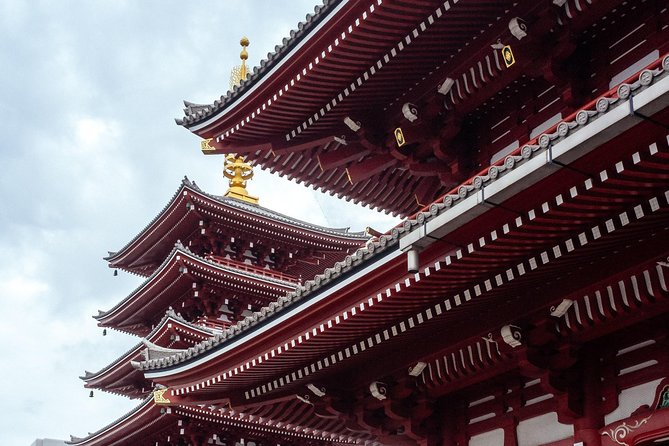
After Sensoji, the route turns through narrower streets toward Asakusa Hanayashiki. The stop lasts about 15 minutes and includes a place known for freshly made melon pan.
Melon pan is a sweet bread with a crisp, cookie-like surface. It is a simple snack, but it gives the walk a pleasant change of pace after the temple. The route also lets you see a more intimate side of Asakusa, away from the broad approach to Sensoji.
You pass through Hanayashiki, a historic amusement area. The information provided does not include an admission visit or rides, so think of this as a look at the surroundings rather than a theme-park stop. If you are hoping to spend time on attractions, you will need to return separately.
This part of the walk is useful for showing how old religious sites and entertainment districts share the same neighborhood. Asakusa is not only about temples. It has long been a place for food, recreation, shopping, and local traditions.
Traditional crafts at the Edo Taito center
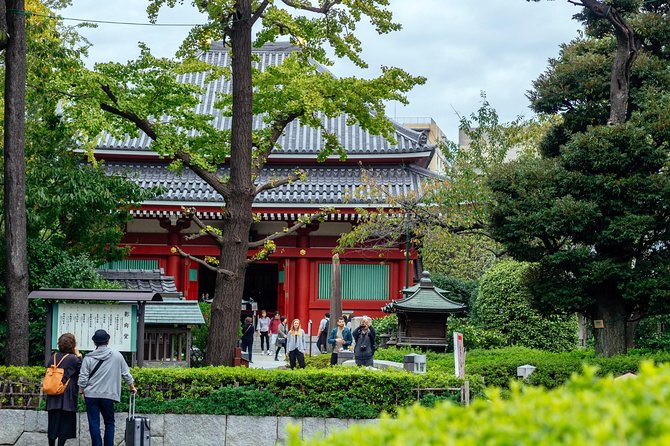
The Edo Taito Traditional Crafts Center, also called the Edo Shitamachi Traditional Crafts Museum, is another 15-minute stop. Here you see objects made by Tokyo artists and craftspeople.
If you visit on a weekend, you may see a craftsperson demonstrating their work. That possibility makes your day and timing matter. The tour does not guarantee a live demonstration, but a weekend visit gives you a better chance.
I like this stop because it adds working craft to the historical story. You are not only hearing about old Asakusa. You are seeing how practical skills and handmade objects remain part of the area’s identity.
The short visit means you should focus on the items that interest you most. If you enjoy ceramics, textiles, woodwork, or other Japanese crafts, tell your guide early. A private tour works best when you make your interests clear instead of waiting for the guide to guess.
Kappabashi Street and Tokyo’s plastic food
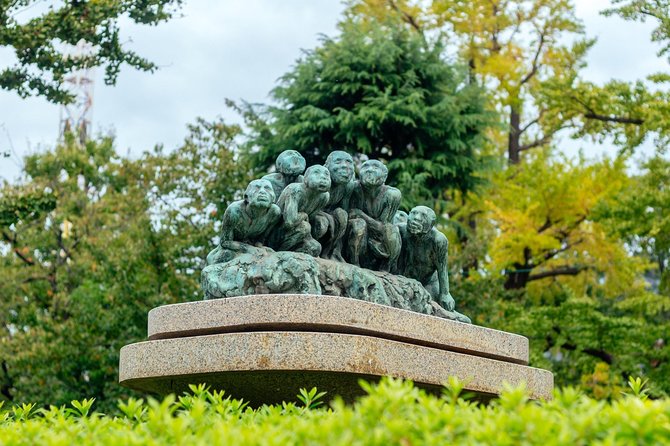
The final part of the route heads toward Kappabashi Street, also known as Kappabashi Dogugai. This district is famous for restaurant equipment and the remarkably realistic plastic models of dishes displayed outside Japanese restaurants.
The tour gives you about 15 minutes here, and the stop appears twice in the route description. In practice, that suggests the plan may allow two short looks at Kappabashi or simply list the same district twice. You should not assume that you will have a full shopping session unless you confirm the timing with your guide.
Kappabashi is a fun ending because it is practical and odd in equal measure. You see where restaurants find tools, dishes, signs, and food replicas. If you want to buy a small kitchen item, this is the place to ask your guide for help, especially if you do not read Japanese labels.
One person enjoyed finding special bowls on Kappabashi and later thought of the guide whenever using them. That is a good example of how this district can turn a quick stop into a lasting souvenir.
Since only 15 minutes are assigned to each Kappabashi entry, decide in advance if you want to shop. A quick browse is realistic. Comparing many knives, bowls, pans, or restaurant goods is not.
What the private format changes
The private setup is the tour’s biggest practical advantage. It means only your group and the guide participate, so you do not spend the morning waiting for strangers or listening to questions unrelated to your interests.
You can ask for more explanation at Sensoji, spend longer with crafts, or accept suggestions for other parts of Tokyo. Carlos, for example, was praised for offering useful ideas for additional places to visit. Gulay was praised for explaining Japanese culture and customs in a warm, accessible way. RamKy was described as an engaging teacher who made the backstreets and temple grounds especially memorable.
Guide quality naturally varies from person to person, but the feedback is unusually consistent. Abu was praised for flexibility, Sheilina for kindness and attention to individual needs, William for helping connect the temple and shopping areas, and Carlos for combining local information with practical Tokyo suggestions.
That flexibility also makes the tour suitable for families. One parent and an 18-year-old daughter used the walk as an introduction to Japanese customs and found it useful early in their trip. I agree with that timing. A first or second day in Tokyo can be ideal, since the guide may help you understand etiquette and give you ideas for the rest of your stay.
Is $139.63 per person a fair price?
At $139.63 per person, this is not a bargain sightseeing walk. You are paying for a private guide, not only for access to places that are free to enter.
The value improves if you are traveling as a couple, family, or small group and can use a group discount. You receive personal attention, a temple offering, guided interpretation, and help with local snacks and customs. You also save the work of planning a route through several areas that can feel confusing on a first visit.
The price is harder to justify if you are a solo traveler who is comfortable reading about Sensoji and exploring independently. Nakamise, Sensoji, Hanayashiki, the crafts center, and Kappabashi do not require a paid admission ticket according to the tour details.
I would pay for this experience if I wanted context, cultural guidance, and a flexible conversation rather than a simple checklist of sights. I would skip it if my main goal were shopping or spending a long time at the temple, since the three-hour schedule moves at a steady pace.
The tour is carbon neutral, with emissions offset. That does not change the sightseeing itself, but it is a useful feature if you prefer walking experiences that address their environmental impact.
Pace, fitness, and practical planning
You should have a moderate level of physical fitness. This is a walking tour through streets, gates, shopping areas, and temple grounds. The route has several stops, and you should expect to be on your feet for most of the three hours.
Wear comfortable shoes. You do not need specialist equipment, but crowded streets and repeated walking between stops make poor footwear an easy mistake.
No hotel pickup or drop-off is included. You meet at Kaminarimon and return there at the end. The meeting point is near public transportation, but you should allow enough time to find the correct gate and meeting location.
Food and beverages are not generally included beyond the specified temple offering and the planned snack stops. Bring money if you want extra sweets, drinks, souvenirs, crafts, or kitchen goods.
Free cancellation is available if you cancel at least 24 hours before the local start time. Within 24 hours, the amount paid is not refunded, and late changes are not accepted.
Who will get the most from this Asakusa tour?
I would recommend it most strongly to first-time visitors who want a friendly introduction to Tokyo’s customs and older neighborhoods. It is also a good fit for families, couples, and anyone who prefers asking questions instead of following a scripted group tour.
Food-minded visitors should enjoy the age manju and melon pan stops, though this is not a food tour. Shoppers may appreciate Kappabashi and Nakamise, especially with a guide to explain what is worth considering.
The tour also suits you if you want to see a temple respectfully but are unsure how to behave. The incense ritual and offering provide a simple structure, while the guide can explain what you are seeing.
I would be more cautious if you have limited mobility, dislike walking, or want a slow photographic tour. The physical requirements are listed as moderate, and the schedule gives each stop a short window.
Should you book the Sensoji and Asakusa private tour?
Book it if you want personal guidance through Asakusa, a taste of local sweets, and clear explanations of Japanese customs. The strongest part is the combination of Sensoji, the shopping streets, traditional crafts, and Kappabashi. You get more than a temple visit, but the temple remains the anchor.
Ask for a guide who will tailor the walk to your interests, and tell that guide at the start if you care most about food, religion, crafts, or shopping. For the best value, use the private format with a small group and consider booking early, since the experience is commonly reserved well ahead of time.
Skip it if you prefer independent wandering or need hours for shopping. For most first-time visitors who want an informed, easy start in historic Asakusa, this is a worthwhile three-hour introduction.
FAQ
How long is the Asakusa and Sensoji Temple tour?
The tour lasts approximately three hours.
Is this a private tour?
Yes. Only your group and your local guide participate.
Where does the tour begin?
The meeting point is 2-chōme-16-11 Kaminarimon, Taito City, Tokyo 111-0034, Japan.
Where does the tour end?
The tour ends back at the meeting point.
Is food included?
A small temple offering is included, along with the planned snack experience. Other food and beverages are not included.
Can I cancel for a full refund?
Yes, if you cancel at least 24 hours before the experience start time. Cancellations within 24 hours are not refunded.
Just added in Tokyo
- Very popular in Harajuku♡Animal petting zoo★ 4.6 · 39 reviews
- Yokohama Port: Private Customizable Tour with Transfer★ 5.0 · 19 reviews
- Wagyu & Sake 8 Course Tasting Dinner in Shinjuku★ 4.9 · 20 reviews
- Warner Bros. Studio Tour Tokyo – The Making of Harry Potter★ 4.8 · 181 reviews
- Yanaka District: Historical Walking Tour in Tokyo’s Old Town★ 4.8 · 117 reviews
- Tokyo: Classic Tsukiji Food Tour★ 4.9 · 78 reviews
- Tokyo: Tsukiji Fish Market Tour with 6 Stops & Seafood Lunch★ 4.5 · 165 reviews
- Tokyo Wagyu & Sake Pairing Tasting Experience with Local Flavors★ 5.0 · 108 reviews
Temples and Shrines, compared.
Kyushu One-Day Tour: Yufuin no Mori Train & Yufuin Town & Nyoirin-ji Temple & Dazaifu & Hell Hot Springs (Departing from Fukuoka)
Read our review →
Fushimi Inari, Kinkakuji, Bamboo Grove 1 Day Bus Tour
Read our review →
Tea Ceremony in a Traditional Tea House in Kiyomizu
Read our review →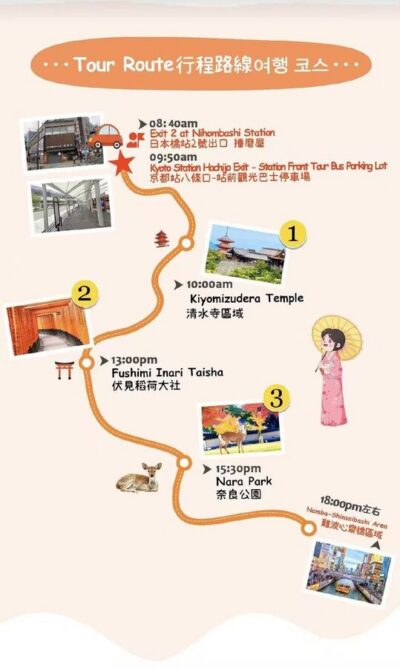
Kyoto Nara Day Trip │ Kiyomizu-dera Temple + Fushimi Inari-taisha Shrine + Nara Park (Departing from Osaka/Kyoto)
Read our review →
Browse the lists this tour appears in