
Reviewed · CASTLES AND HISTORIC SITES
Tokyo Private Tour! Edo Castle & Imperial Palace East Gardens
Tokyo hides a castle beneath its gardens. This two-hour private walk brings the Edo Castle ruins and Imperial Palace East Gardens into focus, with a guide handling the route and the history. I like the personal format and the chance to ask questions, especially with guides such as Naoko, Mikio, Shigeru, and Akiyoshi praised for clear explanations. The main caution is simple: this tour does not enter the Imperial Palace itself, and one reported language mismatch made the experience difficult.
You begin at Wadakura Fountain National Park and return there after walking through the gardens, Ote-mon Gate area, old bridge, castle remains, and Ninomaru Garden. The grounds are free to enter, so you are paying mainly for context, navigation, and private attention, not admission. At $65.41 per person, that can be fair for a small private group, but less appealing if you only want a quiet stroll.
In This Review
- Key points to know before booking
- What you actually see in two hours
- Meeting at Wadakura Fountain National Park
- Ote-mon Gate and the first sense of Edo Castle
- Edo Castle ruins and the vanished center of power
- Ninomaru Garden and the quieter side of Tokyo
- How the private format changes the walk
- The guides are the make-or-break feature
- Heat, sun, and seasonal timing
- Is $65.41 per person good value?
- Who should book this East Gardens tour?
- Cancellation and practical booking notes
- Should you book it?
- FAQ
- How long does the Imperial Palace East Gardens tour last?
- Is this a private tour?
- Does the tour go inside the Imperial Palace?
- What places are included in the walking route?
- Where does the tour begin and end?
- Is admission to the gardens included?
- Do visitors need to pass through a baggage inspection?
- What should I do with Japanese knives before the tour?
- Can I cancel for a full refund?
Key points to know before booking
- The tour visits the East Gardens, not the Inner Palace: You see historic grounds and castle remnants, but there is no access to the working Imperial Palace.
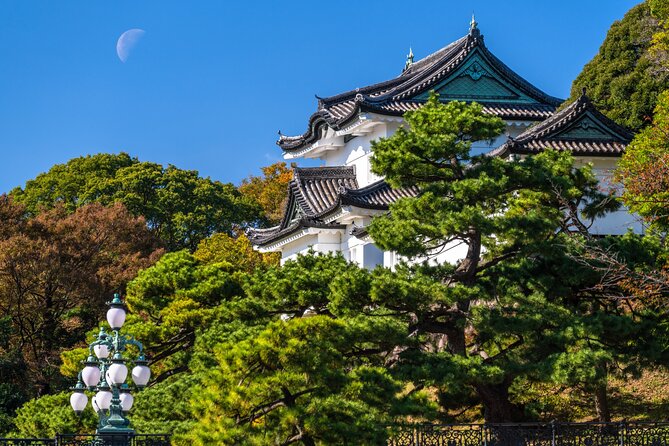
- Ote-mon Gate starts the story: This important entrance helps explain how Edo Castle once functioned and how Tokyo grew around it.
- Private means your pace matters: The guide can answer questions and adjust the walk, with one guest noting that the guide matched a fast walking pace.
- Guides are the tour’s main value: Naoko, Mikio, Shigeru, Akiyoshi, Yoshiko, Ishida, Taka, and Hirashima have all received warm praise for history and cultural insight.
- The gardens offer a calm break from Tokyo: You get trees, seasonal plants, a Japanese garden, and open historic spaces close to the city center.
- Plan for a bag inspection: Leave knives and similar purchases in a coin locker before the meeting point.
What you actually see in two hours
This is a walking tour of the Imperial Palace East Gardens, a large public section of the former Edo Castle site. The route includes Ote-mon Gate, castle ruins, Ninomaru Garden, an old bridge, natural areas, and views of historic buildings and palace grounds.
The name can cause confusion. The Imperial Palace complex has several parts, but this outing is limited to the East Gardens. You do not go inside the Inner Palace, and the experience does not promise an audience with the Imperial Family or access to private palace rooms.
That distinction matters. If you want grand interiors, ceremonial rooms, or a look inside the active palace, this is not the right choice. If you want to understand where Edo Castle once stood and how the imperial site fits into Tokyo today, the route gives you a useful introduction.
You will not pay an entrance fee for the gardens. The charge covers the guide and the private format. A guide can point out details that are easy to pass without noticing, then connect them to Japan’s political and royal past.
More Castles and Historic Sites in Tokyo
- Tokyo: Imperial Palace and Shogun Historical Walking Tour
★ 5.0 · 2,251 reviews - Tokyo Castle & Imperial PalaceーShogun Walking Tour
★ 4.7 · 1,068 reviews - Tokyo: Samurai Ninja Museum Guided tour and Experience
★ 4.6 · 1,010 reviews
Meeting at Wadakura Fountain National Park
The meeting point is Wadakura Fountain National Park at 3-1 Kōkyogaien in Chiyoda City. This puts you near the palace grounds and makes the start practical for a central Tokyo itinerary.
The experience begins and ends at the same place. That is helpful because you do not need to learn a new return route after the walk. It also lets you combine the tour with other time in central Tokyo before or after, although the supplied details do not specify exact nearby stops or a recommended onward route.
Give yourself enough time to locate the meeting point. The tour is only about two hours, so arriving late could cut into the walk. A mobile ticket is available, and confirmation is provided when you book.
At the entrance to the palace grounds, expect a baggage inspection. This is one of the most useful practical warnings. If you buy Japanese knives or other items that might be treated as weapons at Tsukiji, Asakusa, or elsewhere, put them in a coin locker before meeting the guide. Do not assume you can carry them straight into the grounds.
Ote-mon Gate and the first sense of Edo Castle
Ote-mon Gate is an important early stop because it gives the tour a physical starting point. You are not simply walking into a pretty park. You are entering the former castle area through a gate tied to the power of the Tokugawa shogunate.
The guide’s role is especially helpful here. Without explanation, a gate can look like an attractive old structure and little more. With historical context, it becomes part of a larger system of defense, access, rank, and control.
This is where the tour can turn an ordinary walk into a lesson in how Tokyo was organized. The guides praised most often, including Shigeru and Mikio, were able to answer questions about Japanese life, political change, and the continuing role of the Imperial Family.
You should expect stories rather than a long formal lecture. The strongest accounts describe guides who made the past easier to picture and connected older traditions with modern Japanese culture. That broad approach suits visitors who want more than dates and names.
Edo Castle ruins and the vanished center of power
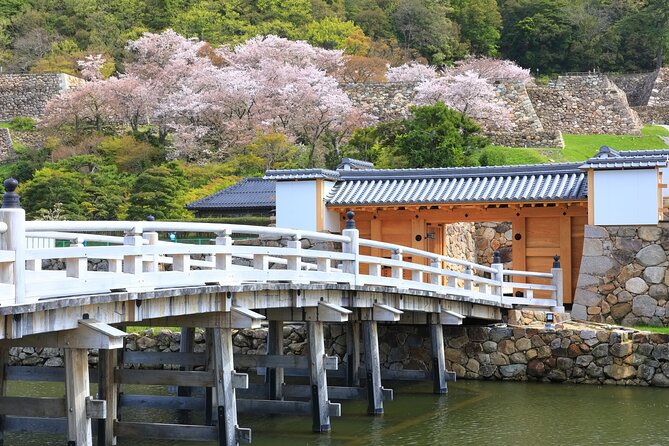
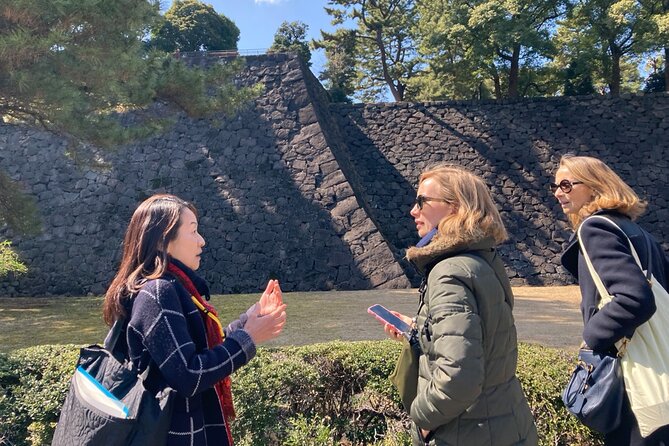
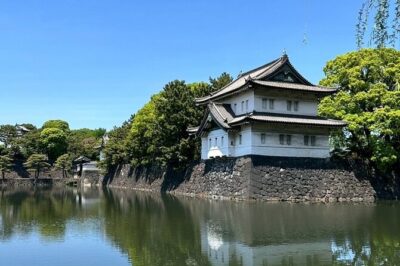
The castle ruins are the historical heart of the walk. Edo Castle was once a major seat of shogunal power, and the remaining stonework and elevated areas help you picture the scale of what once occupied this part of Tokyo.
The remains do not form a complete castle complex. That is worth knowing before you arrive. You will see traces, foundations, and historic space rather than a restored fortress with furnished rooms.
This is another place where a guide earns the fee. A private walk gives you room to ask how the castle related to the shoguns, how the imperial site changed over time, and what the grounds would have looked like during the Edo period. One guide was praised for describing the gardens as they may have appeared under the shoguns, bringing the old setting to life without needing a reconstructed building.
The tour also works well for families. One account describes a guide explaining each part of the garden in detail and discussing plants with a parent and child. If your children are interested in castles, gardens, or Japanese history, the ruins give the walk a clear focus. Younger children who need constant action may find two hours of historical walking less engaging.
More Private Tours in Tokyo
- Tokyo 6hr Private Tour with Government-Licensed Guide
★ 5.0 · 3,902 reviews - Private Tour to Mt. Fuji and Hakone (Fully Licenced Operator)
★ 5.0 · 1,910 reviews - Tokyo Customized Private Tour (Must See Places in 1 Day)
★ 5.0 · 1,499 reviews - Mount Fuji Full-Day Private Tour from Tokyo (Customizable)
★ 4.9 · 1,470 reviews
Ninomaru Garden and the quieter side of Tokyo
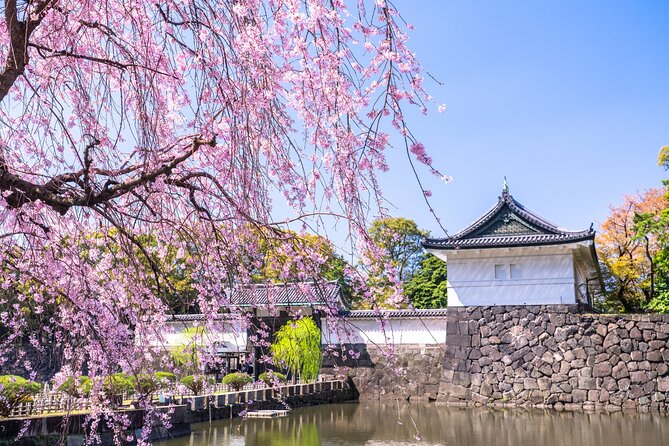
Ninomaru Garden changes the mood. After the stone walls and castle story, you move into a Japanese garden with plants, water, paths, and carefully arranged scenery.
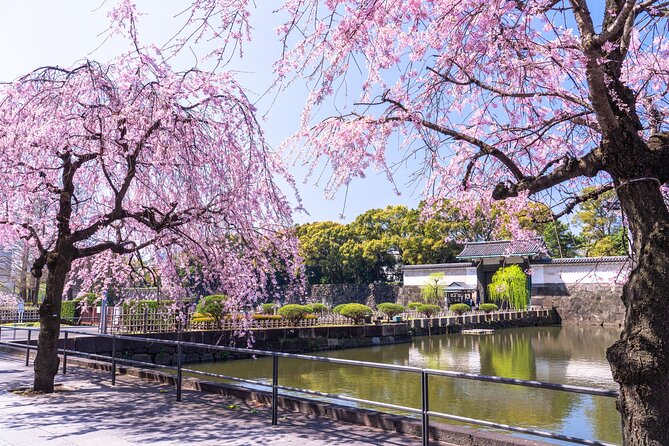
The garden is one reason this tour appeals to people who need a pause from Tokyo’s busy streets. It offers a peaceful setting for photographs and a slower look at Japanese garden design. The exact seasonal display will vary, but plants and flowers bloom throughout the year. Cherry blossoms are especially noted for March and April.
The guide can help you read the garden rather than simply photograph it. Shigeru was praised for discussing plants, while other guides connected garden features with history and Japanese culture. That combination gives the stop more weight than a quick photo break.
Still, remember that the garden is free to enter. If you are comfortable reading signs and walking on your own, you can visit without paying for a guide. The value here comes from interpretation and company, not exclusive access.
How the private format changes the walk
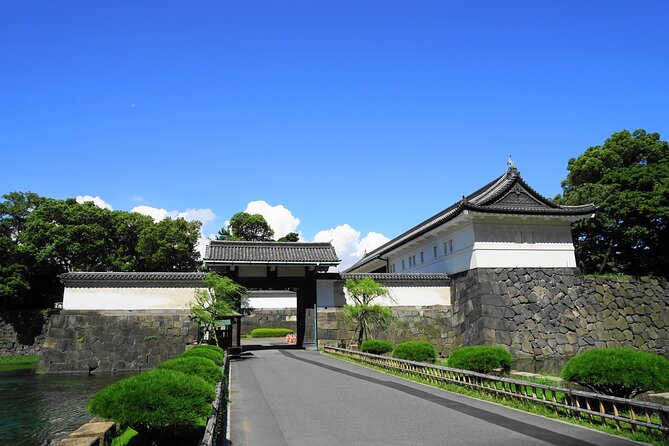
This is a private activity, so only your group participates. That is a real advantage for families, couples, and small groups with different interests.
You can ask about the Imperial Family, Japanese customs, castle history, plants, or daily life. Several guides have been praised for taking time with questions, including Shigeru, who was described as patient and able to give detailed answers.
The private setting can also help with pace. One person noted that the guide arrived on time and adjusted the walk to suit fast walkers. You should still communicate your preferred pace and interests early, since the tour lasts only two hours.
Do not expect a completely improvised walk. The advertised route has a clear focus on the East Gardens, Edo Castle remains, Ninomaru Garden, and Ote-mon Gate. But within that route, private attention gives you more control than a large group outing.
The format is less useful if you prefer to wander silently. You are paying for active explanation. If your ideal garden visit involves moving alone and stopping whenever you wish, the free public grounds may suit you better.
The guides are the make-or-break feature
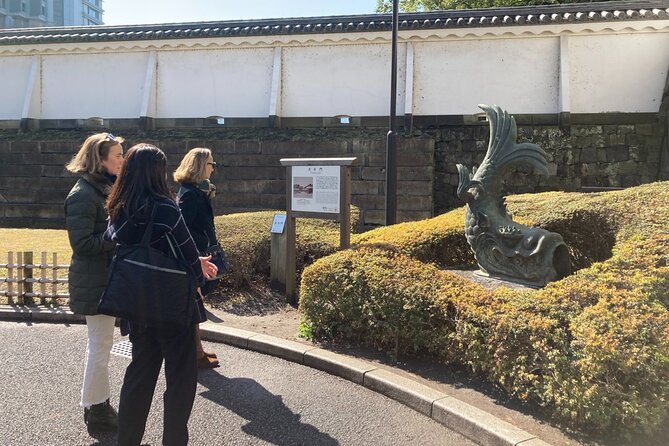
The strongest part of this experience is the human guide. Many guides have received praise for being friendly, punctual, patient, and able to explain Japanese history in clear English.
Naoko has been praised for a lively manner and strong explanations of Japanese culture. Akiyoshi received praise for discussing history, everyday life, and the modern role of the Imperial Family. Mikio was described as warm, professional, and able to answer a wide range of questions.
Shigeru is a good choice in spirit for anyone who wants detail. He has been praised for explaining the grounds carefully, discussing plants, and answering questions with patience. Yoshiko was appreciated for making the walk enjoyable in hot sun, while Ishida was praised for clear English and detailed history.
Taka brought personal perspective to the site, and Hirashima shared substantial historical information during a morning visit. These details suggest a roster of guides with different personalities and strengths rather than one fixed script.
There is one important warning. At least one experience ended after about 45 minutes because the guide’s English was very difficult for the group to understand, and the guide also struggled to understand them. The overall score is high, at 4.9 from 105 ratings, with 98 percent recommending the tour, but communication still deserves attention.
If language clarity is crucial for your trip, contact the provider before booking and ask about the guide assigned to your date. This is especially wise if you want detailed historical discussion rather than a simple walk.
Heat, sun, and seasonal timing
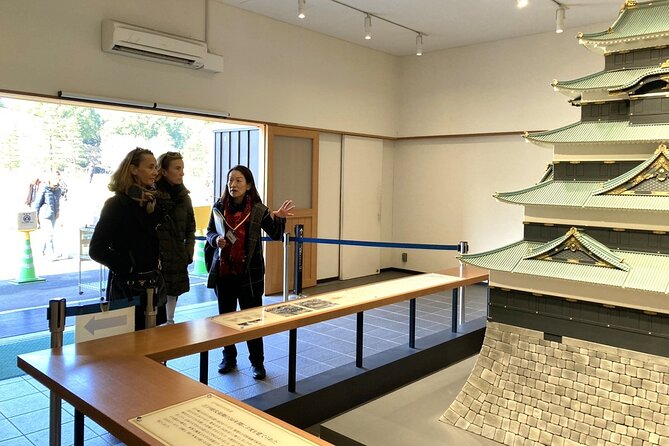
The East Gardens are outdoors, and two hours on foot can feel long in hot weather. One group visited in temperatures around 35 degrees Celsius and received umbrellas and neck coolers from the guide. That is a thoughtful touch, but you should not count on special cooling items unless the provider confirms they are available on your date.
Another guide helped make a hot, sunny walk manageable. The practical lesson is clear: bring water, sun protection, and comfortable shoes. The supplied details do not state the total distance or amount of seating, so plan for a genuine garden walk rather than a short roadside explanation.
Morning may be pleasant for many visitors, and one morning group had a good experience with its guide. Still, the booking information does not promise a particular weather advantage or seasonal route.
Spring brings the appeal of cherry blossoms, especially in March and April. Other times of year may offer different plants and flowers, but no exact bloom calendar is given. If blossoms are your main reason for booking, treat them as a seasonal possibility, not a guarantee.
Is $65.41 per person good value?
At $65.41 per person, this is not an admission ticket. The gardens are free, and entry to the Inner Palace is not included. Your money goes toward a private guide, planning, navigation, and two hours of explanation.
That can be good value if you are short on time or want historical context. A guide can show you the key areas without requiring hours of research. You can also ask questions that a sign or audio guide may not answer.
The price is easier to justify for a small group. A couple, family, or group of friends can split the cost of private attention while keeping the pace flexible. For one person, the price feels higher because the public garden itself costs nothing to enter.
I would book it if the East Gardens are already on your Tokyo plan and you want the site to mean more than a pleasant walk. I would skip it if you mainly want free access, quiet photography, or an interior palace visit.
Group discounts are available, but the exact reduction is not provided. Check the final price for your party before payment.
Who should book this East Gardens tour?
I see this working best for first-time Tokyo visitors who want a clear introduction to Japan’s royal and shogunal history. It also suits people who enjoy asking questions and prefer a private guide to a large group.
Families can benefit from the shorter two-hour length and the chance to adjust the pace. The gardens provide visual variety, while the castle ruins give children a simple story to follow.
History fans should appreciate the connection between Edo Castle, the shoguns, the Imperial Family, and modern Japanese life. Plant lovers may also enjoy the garden explanations, particularly if the assigned guide has strong knowledge of seasonal flowers.
You should think twice if your priority is entering the Inner Palace. This outing does not provide that access. You should also consider another plan if you dislike outdoor walking in heat or want a completely self-guided experience.
The high rating and 98 percent recommendation figure suggest reliable satisfaction overall, but the language concern means I would treat guide assignment as part of the booking decision.
Cancellation and practical booking notes
Free cancellation is available if you cancel at least 24 hours before the local start time. Cancellations or changes made within 24 hours are not refunded or accepted.
The activity requires a minimum number of participants. If the provider cancels because that number is not met, you can receive a full refund or choose another date or experience.
Most people can participate, and the meeting point is near public transportation. The supplied details do not give an accessibility assessment, route distance, or rest-stop plan, so ask the provider if mobility is a concern.
Should you book it?
Book this tour if you want the East Gardens explained, not simply visited. The castle ruins, Ote-mon Gate, Japanese garden, and palace setting carry more meaning when someone connects them to the shoguns, the Imperial Family, and Tokyo’s changing identity.
The best reason to pay $65.41 is the private guide. Naoko, Mikio, Shigeru, Akiyoshi, Yoshiko, Ishida, Taka, and Hirashima have each been praised for bringing personality and clear historical detail to the walk. Just confirm the meeting point, leave knife purchases in a locker, prepare for outdoor conditions, and remember that the Inner Palace is off limits.
If those limits suit your plan, this is a compact and useful way to meet Tokyo’s imperial past.
FAQ
How long does the Imperial Palace East Gardens tour last?
The tour lasts approximately two hours.
Is this a private tour?
Yes. Only your group participates in the activity.
Does the tour go inside the Imperial Palace?
No. The tour does not enter the Inner Palace. It visits the Imperial Palace East Gardens and surrounding historic grounds.
What places are included in the walking route?
The route includes the East Gardens, Edo Castle ruins, Ninomaru Garden, Ote-mon Gate, an old bridge, natural areas, and views of historic buildings and heritage.
Where does the tour begin and end?
It starts at Wadakura Fountain National Park, 3-1 Kōkyogaien, Chiyoda City, Tokyo 100-0002, Japan. It ends back at the meeting point.
Is admission to the gardens included?
The tour information lists admission as free. The price pays for the tour guide and private activity rather than an entrance ticket.
Do visitors need to pass through a baggage inspection?
Yes. Visitors are subject to a baggage inspection when entering the Imperial Palace grounds.
What should I do with Japanese knives before the tour?
Leave Japanese knives or other items that could be used as weapons in a coin locker or similar storage before meeting the guide.
Can I cancel for a full refund?
Yes, if you cancel at least 24 hours before the experience start time. Cancellations made less than 24 hours in advance are not refunded.
Just added in Tokyo
- A One-of-a-Kind Sushi Experience in a Special Place of Japan★ 5.0 · 15 reviews
- Tokyo Cute Bento Cooking Class – Make a Kawaii Character Lunchbox★ 5.0 · 126 reviews
- Japanese Home Cooking Class & Walk in Todoroki Temple Tokyo★ 5.0 · 88 reviews
- Catch a Baseball Game in Tokyo with a Local – Tickets Included★ 5.0 · 24 reviews
- Japan Tokyo Tower Observatory Deck E-Ticket★ 4.0 · 34 reviews
- JDM Experience with Fast&Furious RX-7 (English speaking Driver)★ 5.0 · 57 reviews
- Tokyo Private Day Tour by Car with English speaking Driver Guide★ 4.0 · 29 reviews
- Japan Classic 10 Day – One Life Adventures★ 5.0 · 129 reviews
Castles and Historic Sites, compared.

Imperial Palace and Shogun Historical Walking Tour
Read our review →
Tokyo Castle & Imperial PalaceーShogun Walking Tour
Read our review →
Nijo-jo Castle and Ninomaru Palace Guided Tour
Read our review →
Samurai Ninja Museum Guided tour and Experience
Read our review →Browse the lists this tour appears in