
Reviewed · COOKING CLASSES
Tokyo: Rice Ball Making Class
Food first, then bicycles. This Tokyo experience pairs a hands-on onigiri class with a gentle ride through local streets and a picnic at Hamarikyu Gardens. I like the chance to make a traditional Japanese snack yourself, and I like that the activity gets you beyond the usual central Tokyo route. The main consideration is fitness: cycling is required, and the tour is not suitable for children under 12, people with mobility or back problems, or anyone who cannot ride a bike.
The small group, limited to six people, should make the class feel personal rather than rushed. English-speaking guides have earned especially warm praise for being friendly, clear, and fun, with one guide named Sho singled out for making the cooking session enjoyable. You should still wear comfortable clothes and bring water, since the day combines food preparation, outdoor walking, and cycling.
The food is simple, but that is the point. Onigiri is everyday Japanese cooking, not a staged restaurant performance. You season warm rice, shape it by hand, add fillings such as salmon, pickled plum, or tuna-mayo, and then eat what you made in a historic garden beside Tokyo Bay.
In This Review
- Key points at a glance
- Why onigiri is a smart way to meet Tokyo
- From warm rice to your own picnic
- Hamarikyu Gardens: a calm picnic beside Tokyo Bay
- Cycling Tokyo by backstreet and riverside
- How the $51 price holds up
- The small group and the guide make a difference
- Who should book this Tokyo experience
- Timing, clothing, and practical planning
- My verdict: book it for the mix, not just the food
- FAQ
- Where does the Tokyo rice ball experience begin?
- How much does the experience cost?
- How long does the activity last?
- Is the activity conducted in English?
- How many people can join the group?
- What food do you make during the class?
- Is the onigiri included in the price?
- Is the bicycle included?
- Is entry to Hamarikyu Gardens included?
- What should I bring?
- Who should not book this activity?
- Are drinks and extra snacks included?
- Can I cancel for a refund?
- Can I reserve before paying?
Key points at a glance
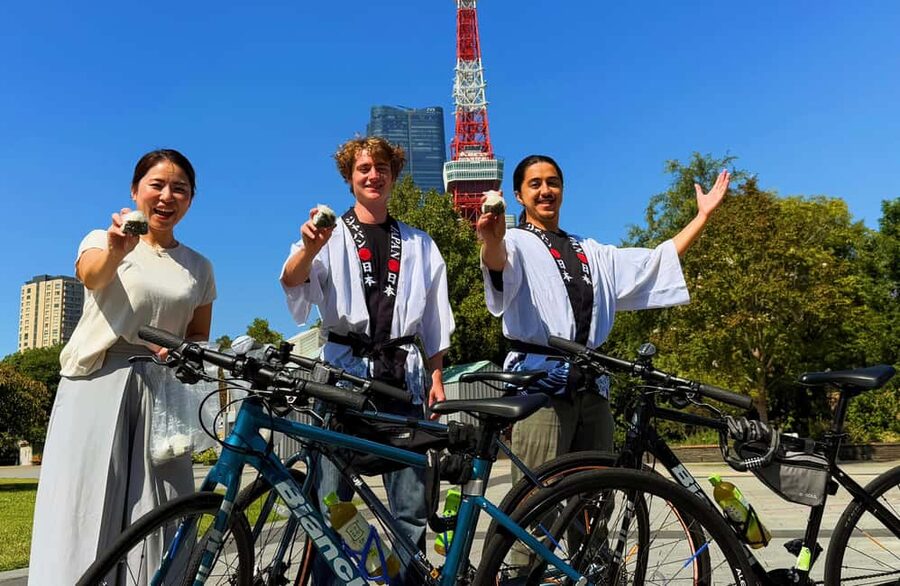
- Make three classic onigiri fillings: Prepare rice balls with savory salmon, tangy pickled plum, and creamy tuna-mayo.
- Eat your own food at Hamarikyu Gardens: The handmade snack becomes a picnic beside saltwater ponds, seasonal flowers, teahouses, and the Tokyo skyline.
- Cycle through quieter Tokyo: The route uses backstreets, neighborhood roads, and riverside paths rather than focusing only on major avenues.
- See several famous sights by bike: Depending on the route, you can catch views of Tokyo Tower, the Imperial Palace, Zozoji Temple, and Tokyo Bay.
- Keep the group small: With no more than six participants, you should have a better chance to ask questions and keep pace with the guide.
- Pay one price for several parts: The $51 cost covers the class, ingredients, bicycle, guide, and Hamarikyu Gardens entrance.
Why onigiri is a smart way to meet Tokyo
Onigiri may look humble: seasoned rice, a filling, and often a strip of seaweed. Yet it is one of Japan’s most familiar foods, found in convenience stores, lunch boxes, homes, and train-station shops. Making it gives you a small but useful window into daily Japanese food culture.
The class begins with freshly steamed rice. You season and shape it under the direction of a local Japanese instructor, learning how to handle the rice and form it into a practical snack. The supplied fillings include salmon, pickled plum, and tuna-mayo, so you get a mix of salty, sharp, and creamy flavors.
I like this format because you are not simply watching a demonstration. You have to press, shape, and make decisions yourself. Onigiri is forgiving, so an imperfect triangle is still lunch. That makes the class suitable for people who want a relaxed activity rather than a serious cooking lesson.
The group size matters here. Six people is small enough for an instructor to correct your technique or explain a filling without shouting across a crowded room. Several high-scoring comments praised the staff’s friendliness and clear English. That is useful in a class where small instructions about seasoning and shaping can make a difference.
Do not expect a full Japanese cooking course. The focus is one food, prepared in a straightforward way, and then eaten soon after. If you want several dishes, knife work, or a long cultural lecture, this will feel limited. If you want a practical introduction to a well-known Japanese snack, it fits nicely.
More Cooking Classes in Tokyo
- Sushi Making Tokyo Roll and Authentic Japanese Sushi Class
★ 5.0 · 3,971 reviews - Tokyo: Roll and Authentic Sushi Making Class in Asakusa
★ 4.9 · 1,957 reviews - Tokyo Shinjuku Chopsticks Making Class
★ 5.0 · 1,763 reviews
From warm rice to your own picnic
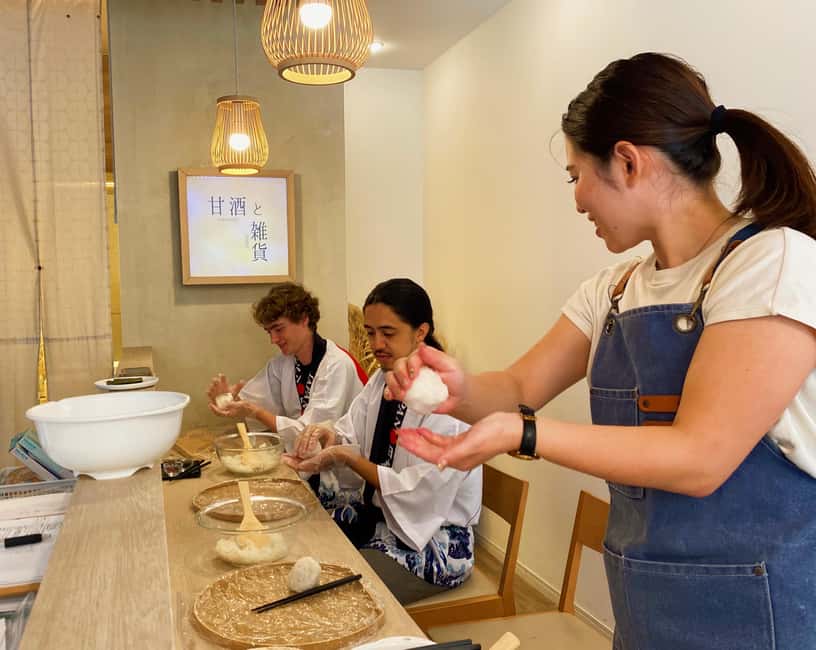
The best part of the schedule is the short distance between making the food and eating it. Your onigiri is packed for the ride, then taken to Hamarikyu Gardens. You are not preparing a snack only to forget about it later. You get to taste it while it is still fresh.
The fillings give the activity some variety. Salmon is a familiar savory choice. Pickled plum brings a sour, sharp flavor that may be new to some people. Tuna-mayo is milder and creamy. If you have never tried umeboshi, the pickled plum, this is a good way to encounter it in a small portion rather than ordering an entire dish built around it.
The experience does not list extra food or drinks beyond the class ingredients. You should bring water, and you can buy extra snacks or drinks at a shop if you want them. I would not count on the onigiri alone as a large meal, especially if you are hungry after cycling.
The food preparation also gives you something to remember after the tour. Tokyo has no shortage of excellent restaurants, but a meal you shape yourself has a different kind of value. You return home knowing how the food is made, not just what it tastes like.
Hamarikyu Gardens: a calm picnic beside Tokyo Bay
Hamarikyu Gardens supplies the change of pace. After the class and bike ride, you enter a historic garden with saltwater ponds, walking paths, seasonal flowers, and traditional teahouses. Tokyo’s modern skyline rises nearby, creating a sharp visual contrast between old garden design and high-rise city life.
This is a particularly good place to eat something simple. You can spread out on the grass, unwrap your warm rice balls, and pause before continuing through the city. The garden entrance is included, so you do not need to pay an additional admission fee during the activity.
The garden is not just a backdrop for lunch. It gives you a chance to see how Tokyo protects quiet, carefully planned spaces within a very dense city. The saltwater ponds also reflect the garden’s position near the bay. Seasonal flowers add interest, though the exact display depends on the time of year.
I would keep your expectations measured. This is a picnic stop, not an extended guided garden visit with a detailed tour of every feature. The schedule is listed as lasting from one to three hours, depending on the available start time and the way the activity is arranged. That makes the pace somewhat flexible, but it also means you should check the exact timing before booking.
Cycling Tokyo by backstreet and riverside
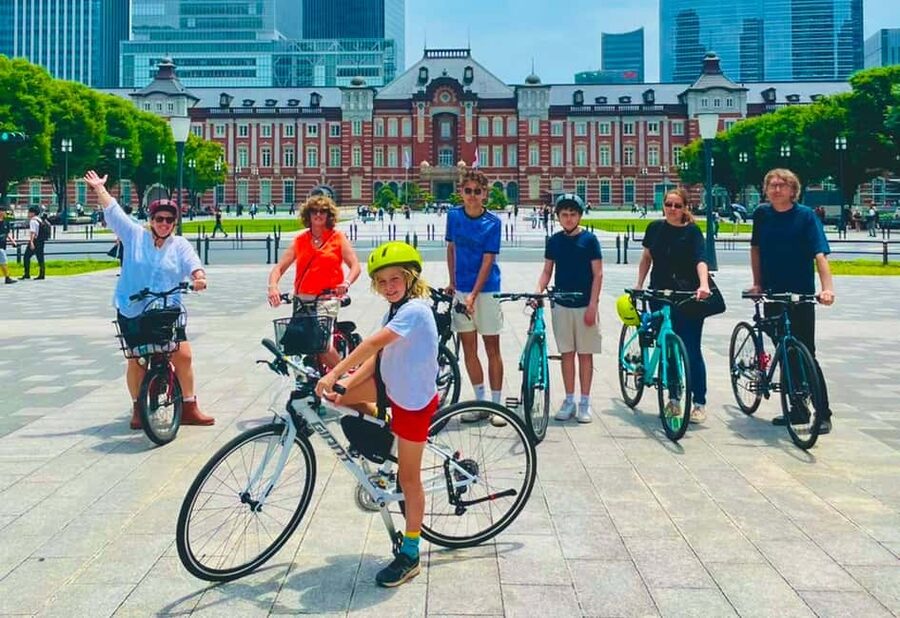
The bicycle portion is designed to show a quieter side of the city. Your guide leads through local backstreets and scenic riverside paths, where you can see ordinary neighborhoods and daily routines. Then the route opens toward broader waterfront lanes with views across Tokyo Bay.
I like this contrast. Tokyo is often presented through major crossings, department stores, and neon streets. A bike lets you notice the spaces between those sights. The neighborhood sections should feel more local, while the riverside stretches offer room to look outward and take in the city’s scale.
The route also brings several major landmarks into view. You may see Tokyo Tower in the distance, along with the Imperial Palace and Zozoji Temple. These sights are not described as long stops with interior visits, so think of them as views and reference points along the ride.
That distinction matters. If you want a full guided visit inside the Imperial Palace area, Tokyo Tower, or Zozoji Temple, you will need separate time. This activity is about connecting food, gardens, neighborhoods, and city views in one compact outing.
Cycling in Tokyo requires attention. Even a route using quieter streets still means managing a bicycle in an urban setting. You need to be comfortable riding and able to maintain a reasonable level of fitness. Comfortable clothing is recommended, and water is essential.
The tour specifically excludes people who cannot ride a bike, people with low fitness, people with back problems, and people with mobility impairments. It is also not suitable for wheelchair users, visually impaired people, people with high blood pressure, or anyone over 70. These limits are strict enough that you should take them seriously rather than assume the ride will be easier than described.
A completely different kind of day out:
- Tokyo Disney Resort – Tokyo Disneyland & Tokyo DisneySea Park Tickets
★ 4.8 · 99,488 reviews - SHIBUYA SKY Ticket
★ 4.7 · 46,509 reviews - JR Whole Japan Rail Pass
★ 4.8 · 29,150 reviews - Mt Fuji and Hakone 1-Day Bus Tour Return by Bullet Train
★ 5.0 · 26,383 reviews
How the $51 price holds up
At $51 per person, the value depends on how much of the package you would otherwise book separately. The fee includes the onigiri class, all ingredients, an English-speaking local guide, a bicycle, and entrance to Hamarikyu Gardens.
That is a fair bundle for a small-group activity. You are paying for instruction, equipment, admission, and a guided route rather than only a cooking demonstration. The small maximum of six also gives the experience more personal attention than a large class.
The price is less attractive if you only want to learn how to make onigiri. In that case, a short cooking class without the bicycle segment might be enough. It is also not a full-day excursion, so you are not getting a long sightseeing program with many paid attractions.
The strongest value comes from the combination. You make something, eat it in a memorable setting, and then see Tokyo from a bicycle. For a visitor who wants one activity that mixes food and light sightseeing, $51 is reasonable.
Extra drinks and snacks are not included. Bring water, and plan a little additional spending if your appetite runs ahead of your rice balls.
The small group and the guide make a difference

A tour limited to six people has practical advantages. The guide can give instructions without turning the class into a crowded assembly line. On the bike ride, a small group should also be easier to keep together.
The English-speaking guides have been praised for being friendly, informative, and enjoyable company. One named guide, Sho, received specific appreciation for making the rice-ball lesson fun and helping participants enjoy their handmade food. Another comment praised the instructor’s perfect English, which should reassure you if you are concerned about following the cooking instructions.
The guide is also important on the cycling section. A route through local roads is more useful when someone leads you through it and points out what you are seeing. You can focus on the ride instead of trying to navigate every turn yourself.
Still, the guide cannot remove the physical demands. A friendly instructor does not turn a bicycle tour into a passive sightseeing ride. If you are unsure about your cycling ability, this is not the right activity to test it for the first time.
Who should book this Tokyo experience
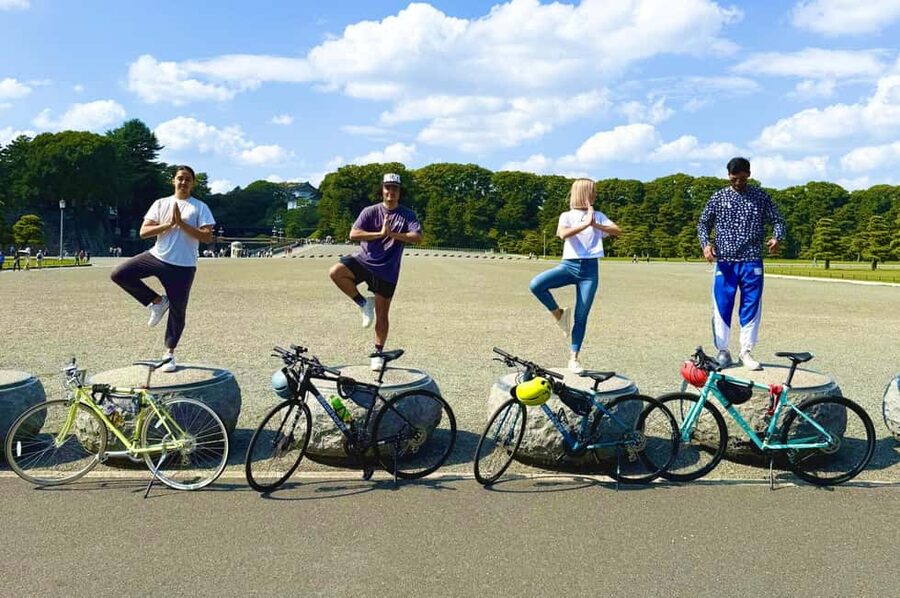
I would recommend it to adults and older teenagers who want a hands-on food activity with a little outdoor sightseeing. It works especially well for first-time visitors who want to see more than famous shopping districts and major stations.
Food lovers should enjoy the practical side of the class. You do not need advanced cooking skills, and the fillings offer an easy introduction to several familiar onigiri styles. The garden picnic adds a pleasant pause before the ride continues.
It also suits people who prefer small groups. Six participants is a useful limit for both questions and cycling pace. If you like meeting a local guide and learning through conversation, the format has clear appeal.
I would not book it for young children, anyone with serious mobility limits, or someone who dislikes cycling. It is also a poor fit if your idea of a Tokyo tour means long indoor sightseeing stops, museum visits, or a heavy focus on major attractions.
Timing, clothing, and practical planning
The stated duration ranges from one to three hours, so check the available start times carefully. The activity begins at the onigiri class, which is also the meeting point. Do not assume you will meet at Hamarikyu Gardens or at a major train station.
Wear clothes that are comfortable for cycling and food preparation. Bring water. Baby strollers are not allowed, and the experience is not designed for wheelchair users.
Free cancellation is available up to 24 hours before the start for a full refund. You can also reserve now and pay later, which helps if your Tokyo schedule is still changing. These terms are useful, but the more important planning point is still the physical requirement: you must be able to ride a bike comfortably.
My verdict: book it for the mix, not just the food
Book this experience if you want to make a traditional Japanese snack, eat it in a historic garden, and see Tokyo by bicycle in one small-group outing. The friendly English-speaking guides, especially Sho, add warmth, while the included bike and garden entry make the $51 fee sensible.
Skip it if cycling is difficult for you, if you need an accessible activity, or if you want a detailed tour of Tokyo’s biggest sights. For the right person, this is a tasty and active way to spend part of a day, with enough local flavor to stay in your memory.
FAQ
Where does the Tokyo rice ball experience begin?
You meet your guide at the onigiri making class. The exact meeting details should be checked when you book.
How much does the experience cost?
The listed price is $51 per person.
How long does the activity last?
The duration is listed as one to three hours. Available starting times can affect the schedule.
Is the activity conducted in English?
Yes. It includes a live English-speaking guide.
How many people can join the group?
The group is limited to six participants.
What food do you make during the class?
You make onigiri, Japanese rice balls, using freshly steamed rice and fillings such as salmon, pickled plum, and tuna-mayo.
Is the onigiri included in the price?
Yes. The onigiri ingredients and the making class are included.
Is the bicycle included?
Yes. A bicycle and a local bike tour guide are included.
Is entry to Hamarikyu Gardens included?
Yes. Entrance to Hamarikyu Gardens is included.
What should I bring?
Bring water and wear comfortable clothing suitable for cycling.
Who should not book this activity?
It is not suitable for children under 12, people with back problems, mobility impairments, low fitness, or high blood pressure. It is also unsuitable for people who cannot ride a bike, wheelchair users, visually impaired people, and people over 70.
Are drinks and extra snacks included?
No. Extra snacks and drinks from a shop are not included.
Can I cancel for a refund?
You can cancel up to 24 hours in advance for a full refund.
Can I reserve before paying?
Yes. The activity offers a reserve-now, pay-later option.
Just added in Tokyo
- Tokyo Cute Bento Cooking Class – Make a Kawaii Character Lunchbox★ 5.0 · 126 reviews
- Japanese Home Cooking Class & Walk in Todoroki Temple Tokyo★ 5.0 · 88 reviews
- A One-of-a-Kind Sushi Experience in a Special Place of Japan★ 5.0 · 15 reviews
- Japan Tokyo Tower Observatory Deck E-Ticket★ 4.0 · 34 reviews
- Catch a Baseball Game in Tokyo with a Local – Tickets Included★ 5.0 · 24 reviews
- JDM Experience with Fast&Furious RX-7 (English speaking Driver)★ 5.0 · 57 reviews
- Tokyo Private Day Tour by Car with English speaking Driver Guide★ 4.0 · 29 reviews
- Japan Classic 10 Day – One Life Adventures★ 5.0 · 129 reviews
Cooking Classes, compared.
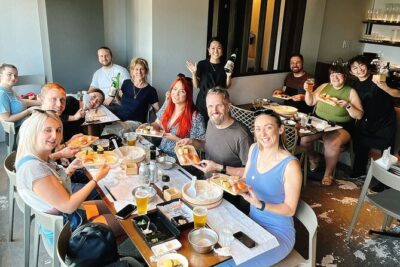
Sushi Making Tokyo Roll and Authentic Japanese Sushi Class
Read our review →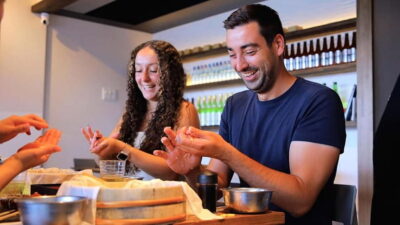
Roll and Authentic Sushi Making Class in Asakusa
Read our review →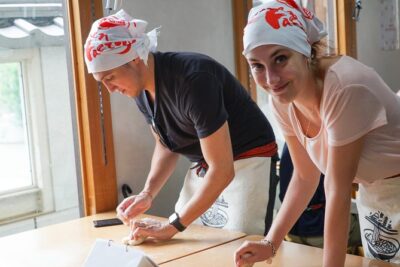
Ramen Cooking Class at Ramen Factory in Kyoto
Read our review →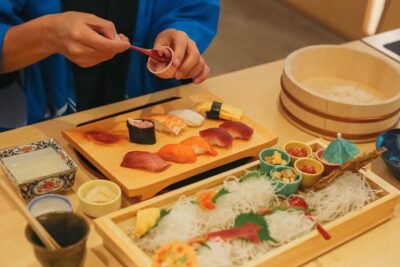
Sushi Making Class in a Happi Coat near a Famous Spot
Read our review →
Sushi Making Osaka Roll and Authentic Japanese Sushi Class
Read our review →
Tokyo Sushi Making Class in Tsukiji with Professional Chef
Read our review →
Ramen & Gyoza Cooking Class in Tokyo with Local Supermarket Visit
Read our review →Browse the lists this tour appears in