
Reviewed · COOKING CLASSES
Tokyo: Sushi and Ramen Cooking Class with Sake Pairing Set
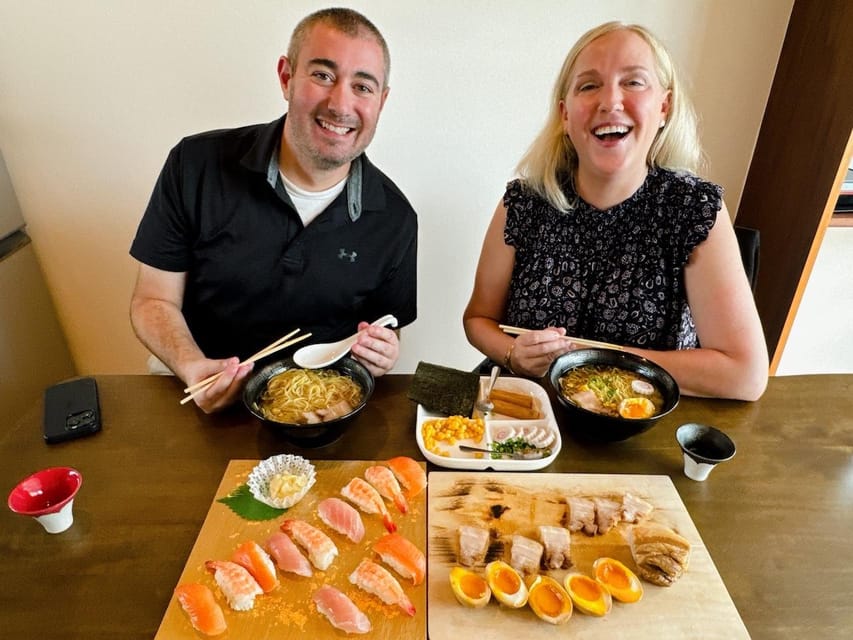
Good food makes Tokyo easier to remember. This three-hour class brings two Japanese favorites together, with hands-on ramen and nigiri sushi instruction, cultural background, and a sake tasting in a friendly setting. I especially like the small-group format, which gives you room to ask questions, and the chance to learn both broth-making and sushi shaping in one sitting. The main consideration is that vegans and vegetarians cannot take part.
You will also get practical value beyond the meal itself. The instructors explain ingredient choices and substitutions for cooking outside Japan, then send you home with recipes and souvenir chopsticks. The class is held in a cozy space, so it suits people who prefer personal attention over a large demonstration, though anyone hoping to make every component entirely from scratch may find that some preparation is completed ahead of time to fit the three-hour schedule.
In This Review
- Key points at a glance
- What the three-hour class is really like
- Ramen, broth, and melt-in-your-mouth chashu
- Making nigiri sushi without the pressure
- Sake tasting with a useful cultural angle
- Fresh ingredients and the Toyosu connection
- Friendly instructors and a comfortable pace
- Location and getting to Tsukishima
- What to wear and who should book
- Is $129 a fair price?
- The take-home value
- Should you book this Tokyo cooking class?
- FAQ
- How long does the Tokyo sushi and ramen class last?
- Where does the cooking class take place?
- How do I reach the venue by train?
- Is the class taught in English?
- Are sake and ingredients included in the price?
- Can vegans or vegetarians join the class?
Key points at a glance
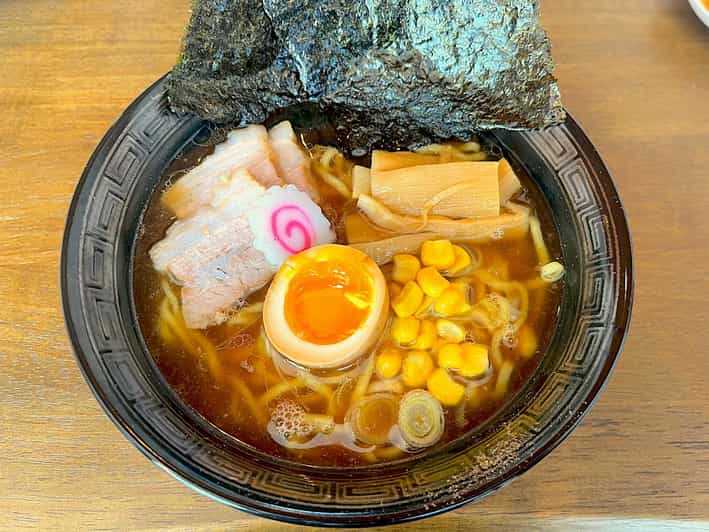
- Two Tokyo classics in one class: Prepare ramen with broth and chashu pork, then shape nigiri sushi by hand.
- A genuinely small setting: The group is limited to eight, with many sessions designed around about four participants.
- Three sake pairings included: A certified sake sommelier selects three Japanese sakes, with beer and other drinks also available according to the session.
- Fresh ingredients matter: Ingredients may come from Toyosu Market, helping make the final meal feel special rather than like a basic tourist cooking exercise.
- Useful take-home material: You receive recipes covering ramen, gyoza, and sushi, plus a pair of chopsticks.
- Easy central Tokyo access: The venue is five minutes from Tsukishima Station and close by taxi to Ginza, Tsukiji, and Tokyo Station.
What the three-hour class is really like
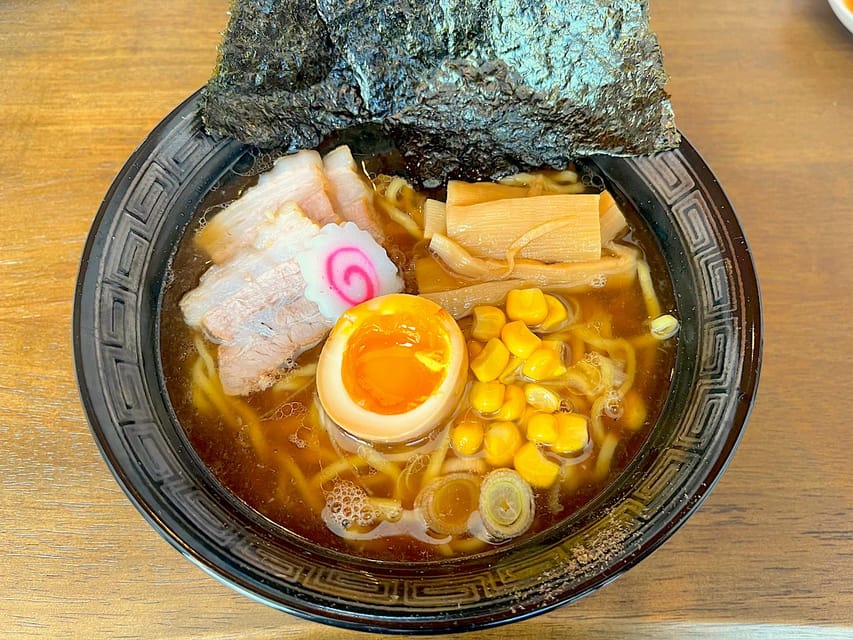
This is not a quick sushi demonstration where you watch a chef work and then receive a small plate. You take part in the cooking, with English-speaking Japanese instructors guiding you through the techniques and explaining why the food is prepared that way.
The class combines two dishes that require different skills. Ramen asks you to think about broth, seasoning, noodles, and pork. Nigiri sushi is more about rice texture, proportion, knife work, and the gentle pressure needed to form a neat piece without crushing it.
The timing is planned so the two projects can come together as a proper meal. Some elements are prepared in advance, which is sensible for a class of this length. A full broth and chashu process can take far longer than three hours, and watching a pot simmer is not the best use of your afternoon in Tokyo.
You should still expect plenty of hands-on work. The instructors demonstrate the steps, then let you try them with help close by. The atmosphere is designed to be relaxed rather than strict, making this a good choice if you have never held a sushi knife or made ramen before.
The space is described as cozy and immaculate, with a warm feel that works well for couples, families, and solo participants. If you are lucky enough to have only one or two other people in your session, the class can feel almost private. If the group reaches its limit of eight, you will have less individual time, but the cap is still modest for a cooking lesson.
More Cooking Classes in Tokyo
- Sushi Making Tokyo Roll and Authentic Japanese Sushi Class
★ 5.0 · 3,971 reviews - Tokyo: Roll and Authentic Sushi Making Class in Asakusa
★ 4.9 · 1,957 reviews - Tokyo Shinjuku Chopsticks Making Class
★ 5.0 · 1,763 reviews
Ramen, broth, and melt-in-your-mouth chashu
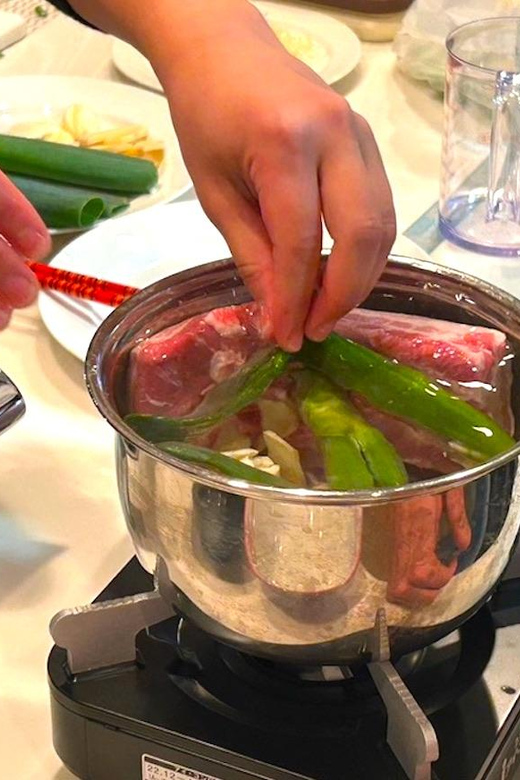
The ramen section is the heart of the class for anyone who wants to understand what makes a bowl taste like more than noodles in soup. You learn how the broth is built, how seasoning affects the final flavor, and how chashu pork fits into the dish.
Chashu is a Japanese-style braised pork belly. Its soft texture and savory flavor are a useful lesson in how patience and preparation shape a bowl of ramen. The class focuses on making the pork tender and flavorful, rather than treating it as a decorative topping added at the last moment.
The instructors also discuss ingredients and possible substitutions for cooking overseas. That is important. Japanese pantry items can be difficult to find in exactly the right form once you leave Tokyo, so advice on workable alternatives gives you a better chance of repeating the recipe at home.
The final bowl appears to be a generous part of the meal. Several people found the food plentiful enough that they could not finish everything, while others called the ramen some of the best they had eaten. That is strong praise, but your result will still depend on how closely you follow the instructions and how much cooking experience you bring.
A useful point to keep in mind is that this is a guided class, not a professional chef course. You will learn reliable methods and gain confidence, but you will not leave with mastery of every regional ramen style. For most visitors, that is the right balance.
Making nigiri sushi without the pressure
The sushi lesson covers the origins of sushi before moving into the practical work of making nigiri. That bit of context helps you see sushi as more than raw fish placed on rice. It connects the dish to Japanese food customs and to the careful balance between rice, topping, seasoning, and shape.
You use the provided ingredients and tools to form nigiri by hand. This is a small but surprisingly useful skill. The rice needs to hold together, but it should not become a dense block. Your fingers need enough pressure to shape it, yet enough care to keep the texture light.
The instructors guide beginners through the process step by step. If you are already comfortable with sushi, you can focus on cleaner shaping and better proportions. If you are new to it, the friendly tone should take away the fear of making an imperfect first piece.
I like that sushi and ramen are taught together. They show two different sides of Japanese cooking. Ramen is warm, layered, and built around broth. Nigiri is restrained and precise. Learning both in one afternoon gives you a broader picture than a class devoted to just one dish.
The trade-off is time. Since the class includes cooking, cultural explanation, eating, and sake tasting, it cannot cover every sushi style or advanced knife technique. Think of it as a well-rounded introduction rather than a specialist lesson.
Sake tasting with a useful cultural angle
Three Japanese sakes are selected by a certified sake sommelier for the tasting. This gives the meal a little structure instead of simply handing you one drink and calling it a pairing.
The sake section is also a good chance to ask questions. One of the instructors comes from a sake brewing family, adding a personal connection to the subject. You may find this especially interesting if you know little about sake and want more than a basic explanation of whether it is sweet or dry.
Beer and other drinks may also be available during the class, so you are not limited to sake alone. That makes the experience easier for mixed groups, especially when one person is curious about sake and another would rather have beer.
The tasting is included in the $129 price, along with the food, ingredients, instruction, recipe booklet, and chopsticks. For a three-hour activity in central Tokyo, that package is reasonably strong value, particularly if you would otherwise pay separately for a meal and a tasting.
Still, do not book this solely as a drinking experience. The sake is an addition to the cooking lesson, not the main event. The real value comes from the combination of instruction, food, cultural explanation, and the chance to repeat the recipes at home.
A completely different kind of day out:
- Tokyo Disney Resort – Tokyo Disneyland & Tokyo DisneySea Park Tickets
★ 4.8 · 99,488 reviews - SHIBUYA SKY Ticket
★ 4.7 · 46,509 reviews - JR Whole Japan Rail Pass
★ 4.8 · 29,150 reviews - Mt Fuji and Hakone 1-Day Bus Tour Return by Bullet Train
★ 5.0 · 26,383 reviews
Fresh ingredients and the Toyosu connection
Ingredient quality can make or break a cooking class. Here, the ingredients are described as fresh, with supplies brought in from Toyosu Market. That matters most with sushi, where the quality and freshness of the topping are more apparent than in a heavily seasoned dish.
You are not simply being shown how to assemble prepackaged food. The class uses the ingredients as a way to talk about Japanese cooking and shopping. Even if you do not remember every technical detail, you will leave with a better sense of why Japanese cooks pay attention to season, texture, and sourcing.
The ramen benefits from good ingredients too, though broth and chashu require more technique to bring everything together. The meal is described as delicious and generous, which makes the cooking feel worthwhile rather than symbolic.
One point I would keep realistic: access to Toyosu ingredients does not mean you can perfectly reproduce the meal in every country. The recipe booklet and substitution advice help, but fish, seasonings, and pork can vary widely depending on where you live. Use the class as a foundation, then adjust at home.
Friendly instructors and a comfortable pace
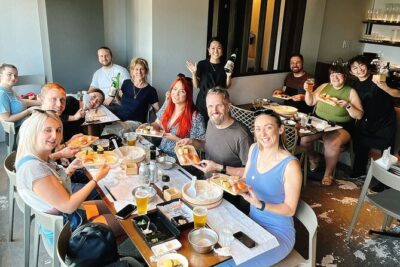
The people leading the class are a major part of its appeal. Instructors named in the sessions include Sato, Haruko, Risa, Alisa, Alex, Misa, and Luna. The teaching style is repeatedly described as patient, kind, warm, and easy to follow.
That matters when cooking in a foreign country. You can ask about unfamiliar ingredients without worrying that you are slowing everyone down. The instructors also share personal stories and cultural details, which makes the session feel more like a conversation than a mechanical lesson.
Some sessions include a pop quiz that encourages people to work together. It sounds lighthearted, but it also gives you a reason to remember the information about sushi, ramen, and Japanese food customs.
The class works well for families because the instructors make an effort to connect with different ages and experience levels. Couples have also used it as an anniversary activity, while solo participants have received one-on-one attention when the booking was small.
The only caution is that the social side depends partly on the group that joins you. A four-person class may feel intimate and relaxed. A full eight-person class will have more energy but may offer slightly less personal time with the instructors.
Location and getting to Tsukishima

The class takes place on the second floor of HAUS Tsukishima, at 2-13-5 Tsukuda, Chuo-ku, Tokyo. Tsukishima Station is the simplest route, with the venue about a five-minute walk from Exit 4, station code Y21.
The location is useful if you are already visiting the central Tokyo area. By taxi, the venue is about six minutes from Tsukiji Fish Market, nine minutes from Ginza, ten minutes from Tokyo Station, and eleven minutes from teamLab Planets. Shinjuku is roughly thirty minutes away by taxi.
Those taxi times can vary with traffic, so I would not cut it close. Arrive five minutes before the class begins, as requested, and allow extra time if you are crossing Tokyo from a distant neighborhood.
If you use a taxi, show the driver this address:
東京都中央区佃2-13-5 HAUS Tsukishima 2階
There is no hotel pickup or drop-off. That is normal for a central Tokyo cooking class, but it means you are responsible for reaching Tsukishima. The station access keeps this from being a difficult outing.
What to wear and who should book
Wear comfortable clothing that you do not mind getting a little dirty. Cooking involves handling ingredients and working around sauces, broth, and food preparation, so your best sightseeing outfit is not the right choice.
This class is a good fit for:
- First-time visitors who want a cultural activity beyond temples and shopping
- Couples looking for a shared afternoon activity
- Families who enjoy food and hands-on learning
- Solo participants who like small classes and conversation
- Sushi and ramen fans who want recipes they can use at home
- People who enjoy sake but do not want a formal tasting alone
It is not suitable for vegans or vegetarians. The available dishes center on sushi, pork, and other animal-based ingredients, and no plant-based version is described.
You should also book with the right expectations. This is not a market tour, a restaurant meal with a short demonstration, or a professional culinary qualification. It is a friendly introduction to two famous Japanese dishes, with enough technique to make the experience useful after your trip.
Is $129 a fair price?
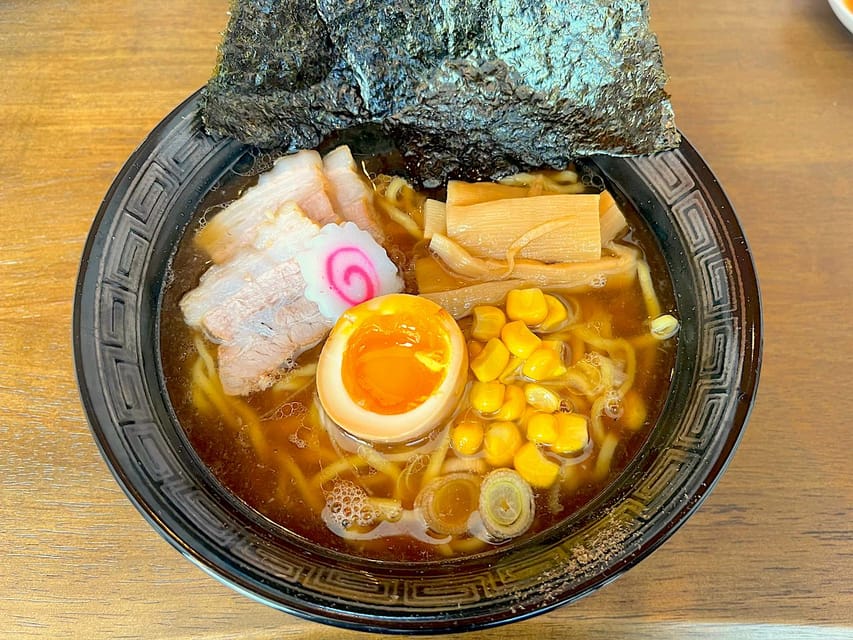
At $129 per person, the class is not a bargain-basement activity, but the price includes more than a single meal. You receive three hours of instruction, all ingredients, sushi and ramen preparation, chashu guidance, three sake pairings, recipes, cultural explanations, and chopsticks to take home.
The small group improves the value. Personal instruction is hard to get in a large cooking studio, and the group limit of eight keeps the class from becoming a stage show. If your session has only a few people, the price feels especially reasonable because the instructors can spend more time correcting your technique.
The fresh ingredients also matter. A good sushi meal in Tokyo can quickly become expensive, and this class combines dining with instruction. You are paying for an activity and a meal, not just for food on a plate.
The weaker value case is for people who already cook ramen and sushi regularly. You may learn less that is new, although the sake background, cultural material, and ingredient tips could still make the afternoon worthwhile.
Flexible booking helps reduce the risk. You can reserve now and pay later, and cancellation is free up to 24 hours before the start time for a full refund. Keep the arrival rule in mind, since being late could cut into the hands-on portion.
The take-home value
The recipe booklet may be the most useful souvenir after the chopsticks. It covers ramen, gyoza, and sushi, giving you more than the two main dishes prepared during the class.
That extra gyoza recipe broadens the value of the lesson. You can use the booklet as a starting point for a Japanese meal at home, even if you need to change some ingredients based on local availability.
The instructors also explain substitutions for overseas cooking. This is exactly the kind of practical detail that many cooking classes skip. You may not find the same fish or seasonings at home, but you will have a better idea of what can be replaced and what should not be altered too much.
The chopsticks are a simple souvenir, but they fit the experience better than a generic Tokyo trinket. Each time you use them, you have a reason to try the recipes again.
Should you book this Tokyo cooking class?
I would book this experience if you love Japanese food and want an activity that combines eating with real participation. The strongest reasons are the small group, patient English-speaking instructors, fresh ingredients, and the unusual pairing of ramen, nigiri sushi, and sake in one three-hour session.
I would skip it if you are vegan or vegetarian, uncomfortable around meat and seafood, or seeking advanced professional training. I would also choose a single-focus ramen or sushi lesson if you want a very technical study of one dish.
For most visitors, this is a well-priced way to spend an afternoon in Tokyo. You learn enough to repeat the food at home, hear useful stories about Japanese food culture, and finish with a generous meal you helped make yourself. That is a better souvenir than another hurried restaurant stop.
FAQ
How long does the Tokyo sushi and ramen class last?
The class lasts three hours. Starting times vary, so you should check availability for your chosen date.
Where does the cooking class take place?
It takes place on the second floor of HAUS Tsukishima, at 2-13-5 Tsukuda, Chuo-ku, Tokyo 104-0051.
How do I reach the venue by train?
The venue is about a five-minute walk from Exit 4 of Tsukishima Station, station code Y21.
Is the class taught in English?
Yes. The class is led by English-speaking instructors, and English is the listed language.
Are sake and ingredients included in the price?
Yes. The price includes all necessary ingredients and a tasting of three Japanese sakes selected by a certified sake sommelier.
Can vegans or vegetarians join the class?
No. The experience is not suitable for vegans or vegetarians.
Just added in Tokyo
- A One-of-a-Kind Sushi Experience in a Special Place of Japan★ 5.0 · 15 reviews
- Tokyo Cute Bento Cooking Class – Make a Kawaii Character Lunchbox★ 5.0 · 126 reviews
- Japanese Home Cooking Class & Walk in Todoroki Temple Tokyo★ 5.0 · 88 reviews
- Catch a Baseball Game in Tokyo with a Local – Tickets Included★ 5.0 · 24 reviews
- Japan Tokyo Tower Observatory Deck E-Ticket★ 4.0 · 34 reviews
- JDM Experience with Fast&Furious RX-7 (English speaking Driver)★ 5.0 · 57 reviews
- Tokyo Private Day Tour by Car with English speaking Driver Guide★ 4.0 · 29 reviews
- Japan Classic 10 Day – One Life Adventures★ 5.0 · 129 reviews
Cooking Classes, compared.
Sushi Making Tokyo Roll and Authentic Japanese Sushi Class
Read our review →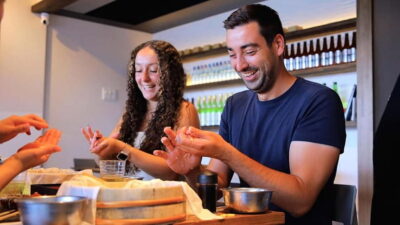
Roll and Authentic Sushi Making Class in Asakusa
Read our review →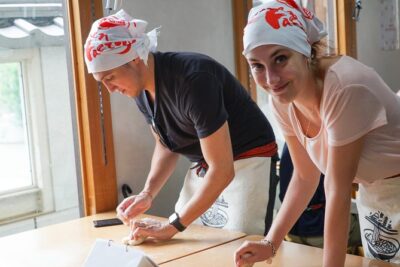
Ramen Cooking Class at Ramen Factory in Kyoto
Read our review →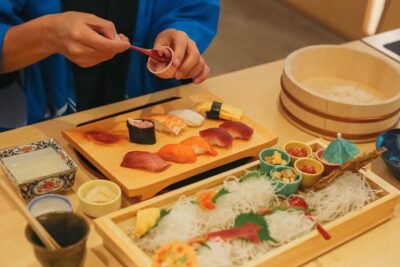
Sushi Making Class in a Happi Coat near a Famous Spot
Read our review →
Sushi Making Osaka Roll and Authentic Japanese Sushi Class
Read our review →
Tokyo Sushi Making Class in Tsukiji with Professional Chef
Read our review →
Ramen & Gyoza Cooking Class in Tokyo with Local Supermarket Visit
Read our review →Browse the lists this tour appears in