
Reviewed · COOKING CLASSES
Tokyo: Sushi Making with Pro Chef & Tsukiji Fish Market Tour
Sushi starts before the rice is cooked. This four-hour Tokyo experience links a walk through Tsukiji Fish Market with hands-on instruction from a professional sushi chef. I like the small groups, limited to eight, and the way the tour connects market ingredients with Japanese food customs. I also like that the sushi you make becomes your lunch, rather than another meal added to an already busy day.
The main drawback is the food policy. This is not suitable for vegans, vegetarians, or people needing halal or gluten-free food, and toppings cannot be changed on the day. You also need to manage stairs, arrive on time, and wear comfortable shoes for the market walk.
In This Review
- Key points to know before booking
- Starting at Tsukiji Honganji Temple
- Walking through Tsukiji’s food stalls
- From market ingredients to Japanese food culture
- Learning sushi from a professional chef
- What the sushi lunch adds to the value
- Weather, stairs, and the physical demands
- Food restrictions and advance planning
- Who will enjoy this four-hour experience
- Meeting point, cancellation, and useful timing tips
- Should you book the Tsukiji sushi class?
- FAQ
- Where does the tour meet?
- How long does the experience last?
- Is the tour conducted in English?
- How many people are in the group?
- Is lunch included?
- Can vegetarians or vegans join?
- What should I bring, and are there stairs?
Key points to know before booking
- Tsukiji comes first: You walk through the market with an English-speaking guide before entering the sushi classroom.
- The group stays small: With no more than eight participants, you should have a fair chance to ask questions and get help with your sushi.
- You make your own lunch: The sushi prepared during the workshop is included in the $101 price.
- The temple meeting point matters: Meet at the front gate of Tsukiji Honganji Temple, not at the rear entrance shown by some map directions.
- The class goes beyond rolling maki: The workshop has included several nigiri pieces and a maki roll, along with lessons about fish, preparation, and proper sushi etiquette.
- Food restrictions need advance notice: Allergy requests may be considered if sent by 5:00 p.m. Japan time the day before, but vegetarian, vegan, halal, and gluten-free meals are not available.
Starting at Tsukiji Honganji Temple
Your meeting point is the main gate of Tsukiji Honganji Temple, directly in front of the temple. This detail is easy to miss. Google Maps may guide you to the back, so check the route before leaving your hotel and allow time to find the correct entrance.
The temple gives the tour a useful cultural opening. Some participants have received a short introduction to Buddhism before heading into the market, which adds context to the neighborhood instead of treating Tsukiji as only a place to eat.
Tsukiji Honganji is also a practical landmark because it is easy to recognize. Still, do not cut it close. Late arrivals cannot extend the tour, and same-day lateness does not qualify for a refund.
The tour lasts four hours, but the exact start time depends on availability. Check the schedule carefully when booking, especially if you have a train reservation, a museum ticket, or another fixed appointment later in the day.
More Cooking Classes in Japan:
- Sushi Making Tokyo Roll and Authentic Japanese Sushi Class
★ 5.0 · 3,971 reviews - Tokyo: Roll and Authentic Sushi Making Class in Asakusa
★ 4.9 · 1,957 reviews - Ramen Cooking Class at Ramen Factory in Kyoto
★ 5.0 · 1,937 reviews
Walking through Tsukiji’s food stalls
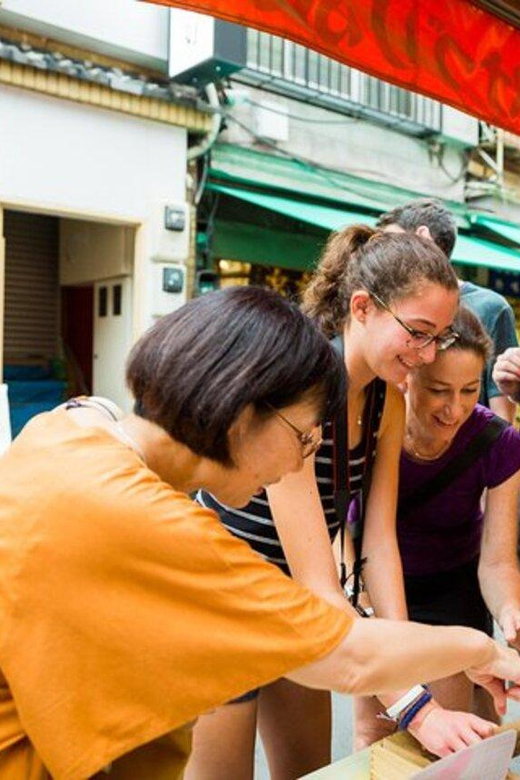
Tsukiji is often called a fish market, but the food area offers a broader look at Japanese cooking. Your guide introduces the ingredients used by sushi restaurants and points out the work done by market professionals. You get a better sense of where seafood, produce, and other cooking supplies begin before they reach a restaurant counter.
The guide’s role is important here. A good guide can explain not only what you are seeing, but also how the market fits into daily life in Tokyo. Guides named Tadashi, often called Tad, Yusei, Kate, Yuko, and Matsayo have been praised for being friendly, patient, and generous with explanations.
Tad has been especially helpful for visitors who wanted more than a quick pass through the stalls. His route has included local vendors, market history, nearby sights, and chances to stop for photographs or small samples. Yusei has also been praised for explaining the area and giving people time to look, eat, and shop.
The pace appears to be one of the strongest features. You are not simply marched from one stall to the next. The tour can include time to linger, ask questions, and try foods that may not be familiar. One market visit included whale meat along with other samples. That is worth noting in advance, since you may encounter foods that raise personal, ethical, or dietary concerns.
The exact samples are not guaranteed. Market stock changes, and the tour cannot promise a particular vendor or dish. Think of the tasting as a chance to learn about local ingredients, not as a fixed food menu.
You may also have the chance to see vendors working and learn where professional kitchens source their ingredients. That connection makes the later sushi class more meaningful. When the chef discusses fish quality, cutting, or freshness, you have already seen the market side of the food chain.
From market ingredients to Japanese food culture
The tour frames sushi as part of a wider food tradition. You learn about the role of the market, the importance of ingredients, and the basic difference between simply eating sushi and understanding how it is prepared.
That context matters because sushi is not just raw fish placed on rice. The rice, cutting technique, topping, shape, and balance all affect the final bite. The market walk gives you a chance to notice the ingredients before you handle them yourself.
The experience is also described as an introduction to the foundation of Japanese food culture at The Kitchen of Tokyo. That phrase points to the broader purpose of the class: you are not only copying hand movements, but learning why certain ingredients and methods matter.
You may hear explanations about different fish, how the chef prepares them, and how to eat sushi correctly. This is useful if you are new to sushi or have always wondered about the customs surrounding soy sauce, wasabi, and nigiri.
The tour is conducted in English with a live guide. That should make the cultural explanations easier to follow than a self-guided market walk, though the amount of detail can depend on the guide and the pace of the group.
Learning sushi from a professional chef
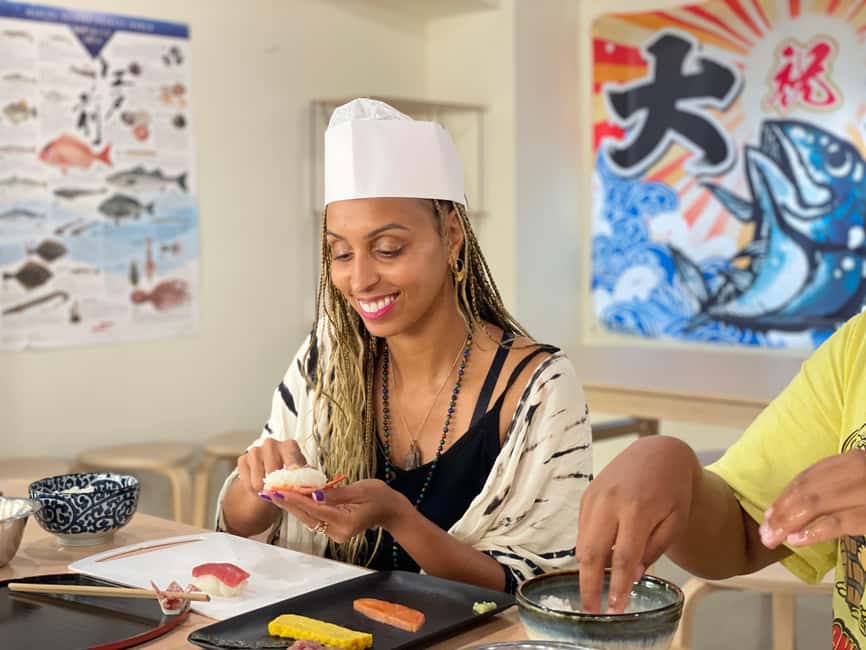
After the market, the focus shifts from looking to doing. A professional sushi chef leads the workshop step by step, showing you how to shape and assemble the pieces.
The teaching style is designed for beginners. You do not need to arrive with knife skills or restaurant experience. The instructors provide tips and encouragement, which matters when your first pieces look more homemade than elegant. Sushi making rewards careful hands, but it is not a contest for perfect symmetry.
The chef may demonstrate how fish is prepared before you work with it. This gives you a closer look at the craft behind the finished piece. Learning about the fish and watching the preparation helps explain why sushi chefs train for years to develop speed, touch, and precision.
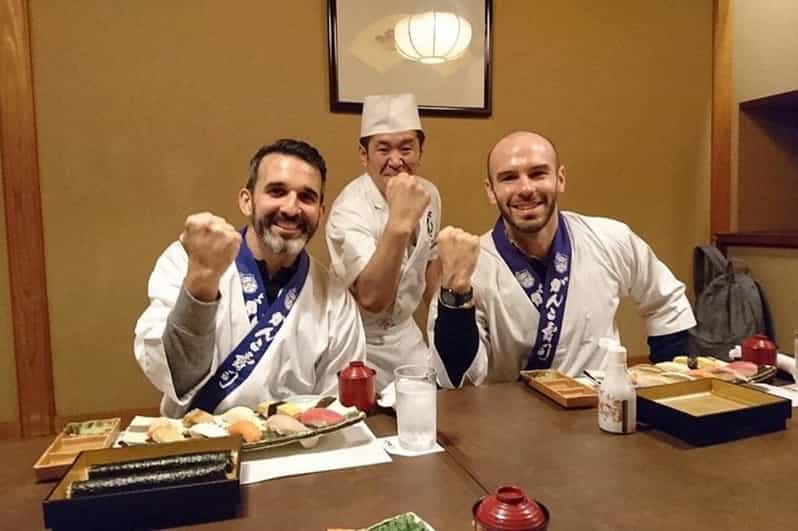
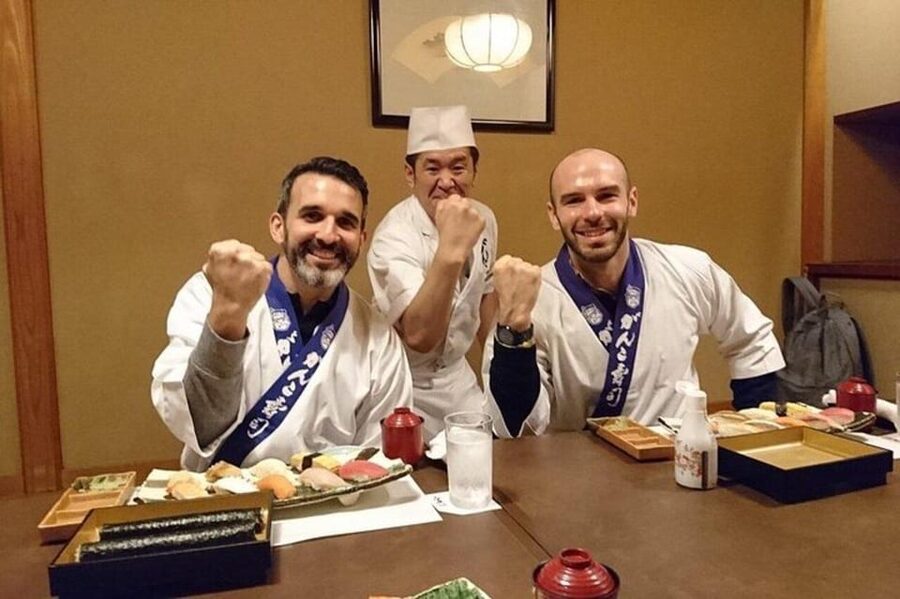
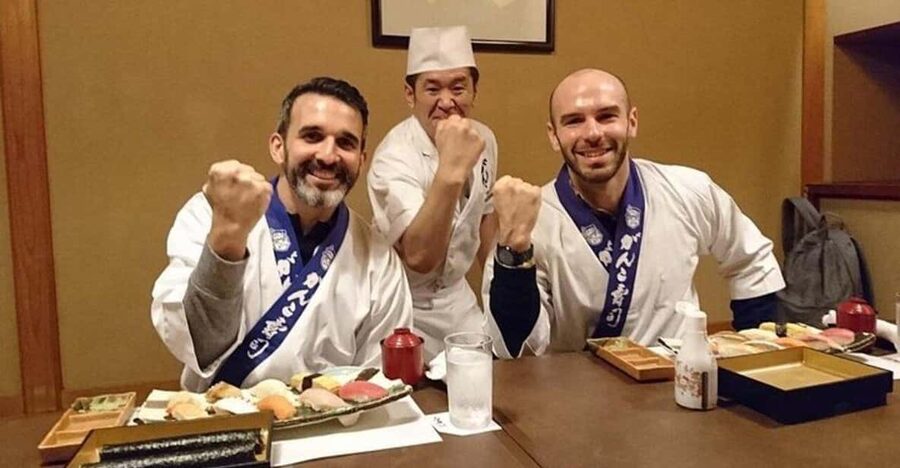
The workshop has included several sushi forms. One class format produced five nigiri and one maki roll. Nigiri requires you to shape the rice and place the topping neatly, while maki asks you to spread ingredients and roll them together. Making both gives you a better feel for the difference between the two styles.
The number and type of pieces can depend on the day’s setup, so do not treat that combination as an absolute guarantee. The key point is that you get to make multiple varieties, not just one basic roll.
Your chef and instructors should guide you through each stage. You can expect help with forming the rice, placing toppings, and handling the finished sushi. Even if your pieces come out uneven, you still get the satisfaction of eating what you made.
That homemade appearance is part of the fun. The workshop is best approached as a craft lesson with lunch at the end, not as a test of whether you can reproduce a master chef’s work in one afternoon.
More Markets and Food Halls in Japan:
- Tokyo Tsukiji Fish Market Food and Culture Walking Tour
★ 5.0 · 3,184 reviews - Tokyo: Tsukiji Fish Market Food and Walking tour
★ 5.0 · 1,724 reviews - Senkyaku Banrai Toyosu Manyo Club Onsen Experience in Tokyo
★ 4.7 · 1,690 reviews - Tokyo: Tsukiji Fish Market Guided Walking Tour
★ 4.9 · 1,397 reviews
What the sushi lunch adds to the value
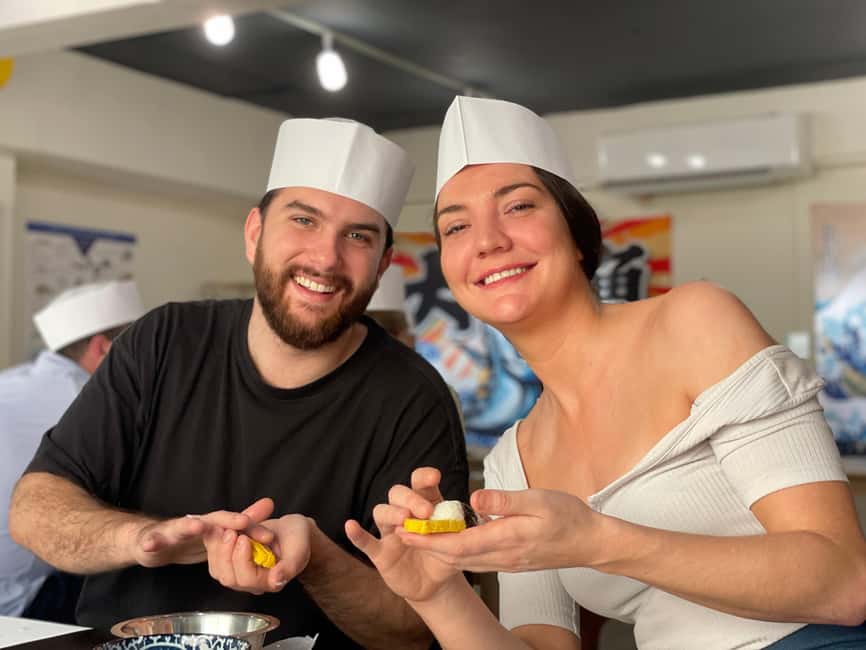
The sushi you make is included as lunch. This is a simple feature, but it affects the value of the tour because you are not paying $101 for a class and then buying another meal immediately afterward.
The price also covers the market walk, local guide, and workshop. In practical terms, you are paying for four hours of instruction, interpretation, food samples when available, and a meal you prepare yourself.
At $101 per person, this is not a budget market stroll. It becomes more reasonable if you want both a guided Tsukiji visit and a structured cooking lesson. Booking the two separately could take more planning, and a small group can be worth paying for when you want personal help during the class.
The group limit of eight is another factor. A large cooking class can leave you watching from the back or waiting for assistance. Here, the smaller format should give you a better chance to hear the chef and receive corrections when your rice or roll refuses to cooperate.
The value is weaker if you mainly want to eat sushi without making it. You may find a cheaper meal elsewhere. This tour earns its price through the combination of market access, food education, and participation.
Tea and soy sauce may not be unlimited. One participant wanted more of both, so keep your expectations focused on the lesson and the sushi itself rather than on an elaborate restaurant-style lunch.
Weather, stairs, and the physical demands
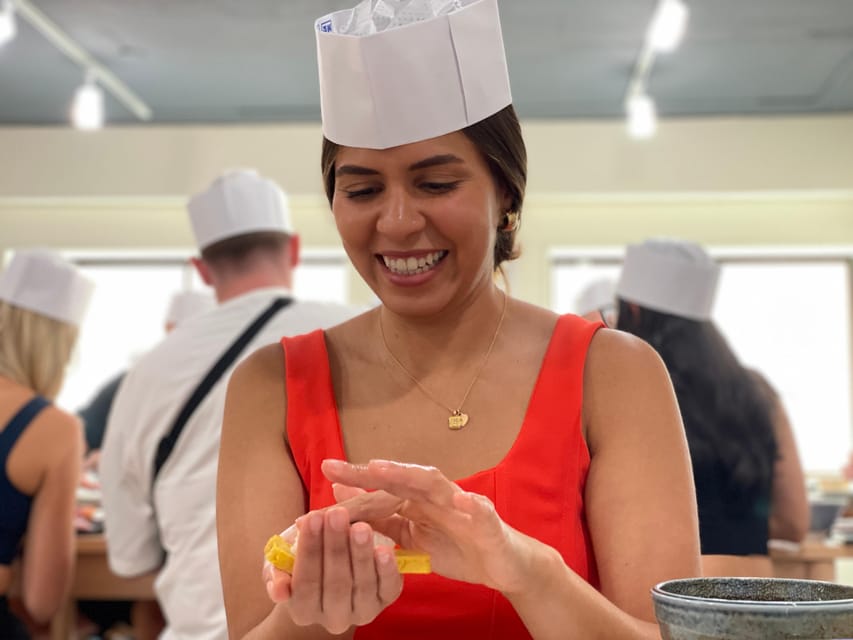
You need comfortable shoes. The market portion involves walking, standing, and moving through busy food areas. Bad weather can affect comfort, and one winter visit took place in snow, making the outdoor part much harder.
Bring clothing suitable for the forecast. The four-hour length gives you time to enjoy the market, but cold rain or snow can make the same pace feel long. The guide may do a good job, but no guide can make wet shoes pleasant.
The classroom is on the third floor, and you need to use stairs. This experience is not suitable for wheelchair users or people with mobility impairments. It is also not suitable for children under four.
Infants and toddlers can attend free of charge, but they do not receive their own sushi kit if they want to make sushi. That makes the arrangement more useful for families with very young children who are simply accompanying adults, not for a toddler-focused cooking lesson.
The class is a better fit for older children, teenagers, couples, adult family groups, and solo visitors who enjoy food and hands-on activities. Children should be able to follow instructions and handle the walking involved.
Food restrictions and advance planning
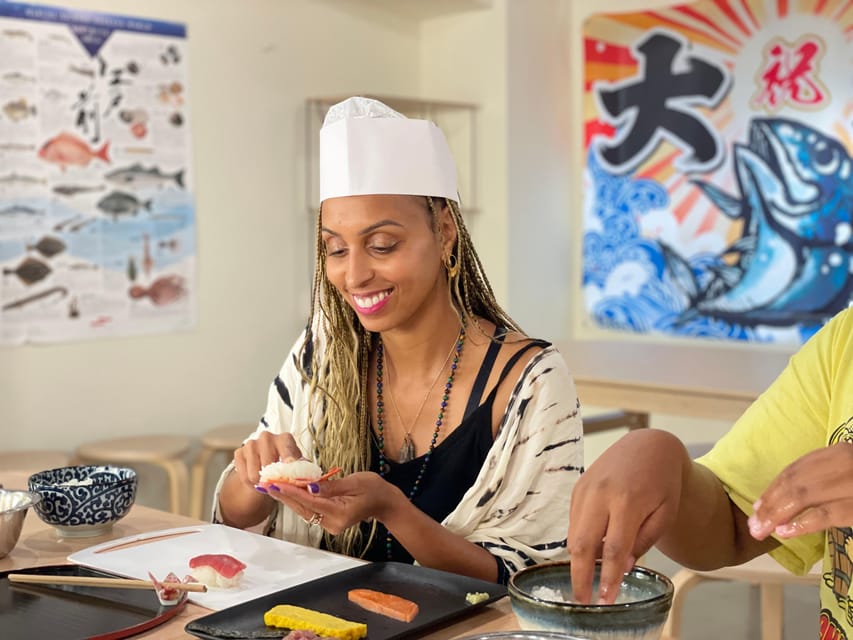
Food restrictions are the biggest booking concern. The experience does not accommodate vegetarian, vegan, halal, or gluten-free requests. Allergy-related requests may be considered, but the provider cannot promise that every allergy can be handled.
You must send allergy information by 5:00 p.m. Japan time on the day before the tour. Do not wait until you arrive at the temple. Sushi toppings cannot be changed on the day, so the menu needs to be checked before you commit.
If you avoid raw fish, ask for clear details before booking. The supplied information confirms a fish-based sushi workshop, but it does not promise cooked alternatives or substitutions.
The market can also expose you to ingredients you do not usually eat. That is part of the educational value for some people, but it may feel uncomfortable if you want a strictly familiar menu.
The fish market wholesaler area is closed on Wednesdays, Sundays, and other market closure days. The tour may still have a classroom component on a market closure day, but you should verify availability and exactly what will operate before booking a date.
Who will enjoy this four-hour experience
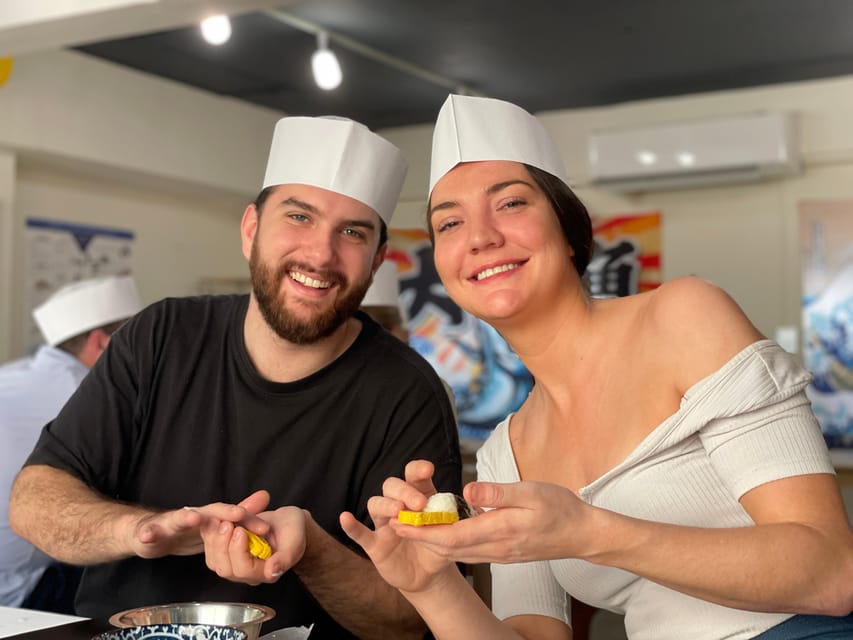
I would choose this tour if you want food to be your way into Tokyo culture. It gives you a clear sequence: temple, market, ingredients, chef, sushi, lunch. That structure works well during a first visit when you want an activity that feels local but remains easy to follow in English.
It also suits people who like active sightseeing. You are not only listening to a guide or sitting at a counter. You walk, taste, watch, shape, and eat.
Adult families have a strong reason to consider it. The experience creates something to do together, and the small group can make it easier for each person to take part. It also offers enough cultural background to appeal to people who want more than a cooking demonstration.
I would be more cautious if you have a packed Tokyo schedule. Four hours is a sizable block, and the market walk may run at a relaxed pace. That is useful if you want time for photos and samples, but less useful if you are trying to squeeze Tsukiji between several major sights.
I would also skip it if food restrictions make the menu uncertain, if stairs are a problem, or if you dislike raw seafood. Those are not minor details that can be fixed at the last minute.
Meeting point, cancellation, and useful timing tips
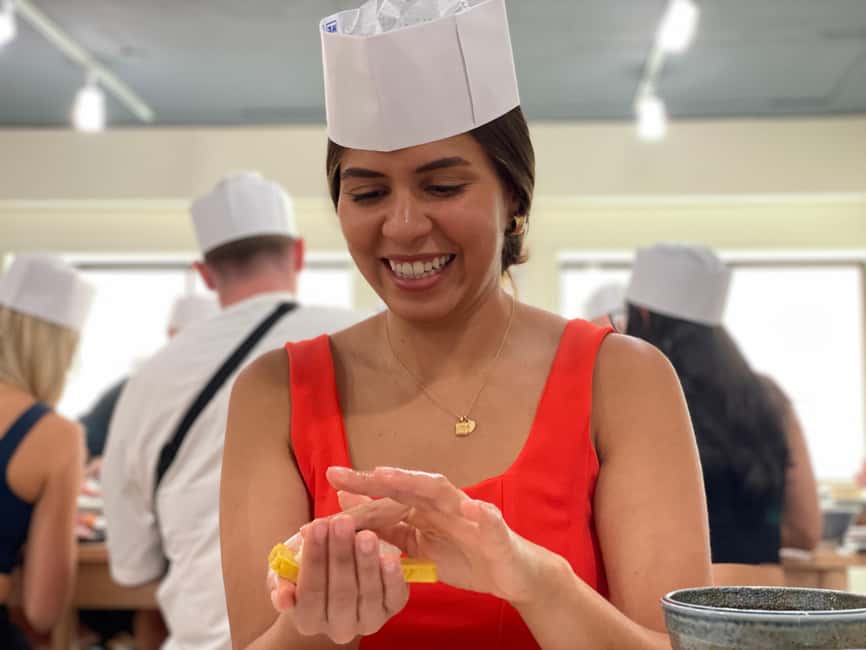
The tour allows free cancellation up to 24 hours before the start for a full refund. You can also reserve now and pay later, which helps if your Tokyo schedule is still changing.
That flexibility does not cover late arrival or same-day cancellation. Plan to reach Tsukiji Honganji Temple’s front gate early enough to orient yourself. Do not follow a map pin blindly to the rear of the temple.
Since the market is closed on certain days, check the date before paying. If the fish market visit is central to your plans, avoid Wednesday and Sunday unless the provider confirms that the market portion will run.
Keep your morning or afternoon open around the full four hours. The experience is much easier to enjoy when you are not watching the clock.
Should you book the Tsukiji sushi class?
Book it if you want a small, active food experience that combines market culture with a professional sushi lesson. The strongest reasons are the eight-person limit, the English-speaking guides, the chance to sample unusual market foods, and the fact that your sushi becomes lunch.
The most praised elements are the guides and the class itself. Tad, Yusei, Kate, Yuko, and Matsayo have all been singled out for kindness, clear explanations, and a relaxed approach. The chef-led lesson also gets high marks for teaching several sushi types and making beginners feel capable, even when their pieces look a little lopsided.
Skip it if you need vegetarian, vegan, halal, or gluten-free food, or if stairs and market walking will be difficult. For everyone else, $101 is a fair price for four hours that combine Tokyo culture, fresh ingredients, personal instruction, and a meal you make with your own hands.
FAQ
Where does the tour meet?
Meet at the main gate of Tsukiji Honganji Temple, at the front of the temple. Google Maps may direct you to the back, so use the front gate as your reference.
How long does the experience last?
The experience lasts four hours. Starting times vary, so check the available schedule when booking.
Is the tour conducted in English?
Yes. It includes a live English-speaking guide.
How many people are in the group?
The group is limited to eight participants.
Is lunch included?
Yes. Lunch consists of the sushi you make during the workshop.
Can vegetarians or vegans join?
No. The experience is not suitable for vegetarians or vegans. Vegetarian, vegan, halal, and gluten-free requests cannot be accommodated.
What should I bring, and are there stairs?
Wear comfortable shoes for the market walk. You will need to walk upstairs to reach the third-floor classroom, and the experience is not suitable for wheelchair users or people with mobility impairments.
Just added in Japan
- A One-of-a-Kind Sushi Experience in a Special Place of Japan★ 5.0 · 15 reviews
- Tokyo Cute Bento Cooking Class – Make a Kawaii Character Lunchbox★ 5.0 · 126 reviews
- Japanese Home Cooking Class & Walk in Todoroki Temple Tokyo★ 5.0 · 88 reviews
- Japan Tokyo Tower Observatory Deck E-Ticket★ 4.0 · 34 reviews
- Catch a Baseball Game in Tokyo with a Local – Tickets Included★ 5.0 · 24 reviews
- JDM Experience with Fast&Furious RX-7 (English speaking Driver)★ 5.0 · 57 reviews
- Tokyo Private Day Tour by Car with English speaking Driver Guide★ 4.0 · 29 reviews
- Japan Classic 10 Day – One Life Adventures★ 5.0 · 129 reviews
Cooking Classes, compared.
Sushi Making Tokyo Roll and Authentic Japanese Sushi Class
Read our review →
Roll and Authentic Sushi Making Class in Asakusa
Read our review →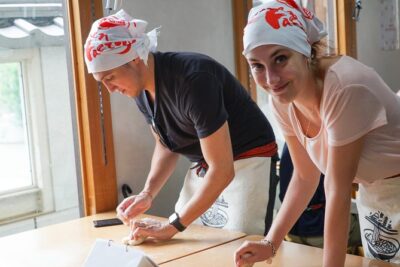
Ramen Cooking Class at Ramen Factory in Kyoto
Read our review →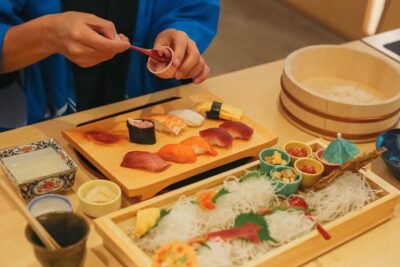
Sushi Making Class in a Happi Coat near a Famous Spot
Read our review →
Sushi Making Osaka Roll and Authentic Japanese Sushi Class
Read our review →
Tokyo Sushi Making Class in Tsukiji with Professional Chef
Read our review →
Ramen & Gyoza Cooking Class in Tokyo with Local Supermarket Visit
Read our review →Browse the lists this tour appears in