
Reviewed · TEMPLES AND SHRINES
TREASURES of Kyoto: Fushimi Inari, Kiyomizu Temple, and more!
Kyoto rewards early risers. This four-hour morning tour links two of the city’s biggest sights, Fushimi Inari-taisha and Kiyomizu-dera, before the day gets crowded. I like the 7:00 a.m. start and the fact that taxi fares between stops are included. I also like the small maximum of 12 people, which gives you a fair chance to ask questions instead of trailing behind a flag.
The drawback is value. At $98.53 per person, this is far more expensive than visiting both shrines independently. The tour makes the most sense if you have limited time, want a planned route, or would rather pay for guidance and transport than work out the details yourself.
The experience earns a strong 4.8 rating from 20 reviews, with 95 percent recommending it. Praise focuses especially on guide and owner Niall, who is described as enthusiastic about Japanese culture and good at explaining what you are seeing. Still, one poor review raises a fair concern: if you are comfortable navigating Kyoto on your own, you may find the cost hard to justify.
In This Review
- Key points to know before booking
- Why this early Kyoto tour works
- Meeting at Inari Station at 7:00 a.m.
- Walking beneath Fushimi Inari’s orange gates
- Kiyomizu-dera and Kyoto from above
- Cobblestone streets near Kiyomizu-dera
- Taxis, walking, and the small-group format
- Is $98.53 a fair price?
- Who should book this Kyoto morning tour?
- Should you book TREASURES of Kyoto?
- FAQ
- How long does the tour last?
- What time does the tour begin?
- Where does the tour meet?
- Where does the tour end?
- Is admission to Fushimi Inari-taisha included?
- Is admission to Kiyomizu-dera included?
- Are taxi fares included?
- How many people can join the tour?
Key points to know before booking
- Start at 7:00 a.m. at Inari Station: Early timing is the main tactic for seeing Kyoto’s famous sites with fewer tour bus crowds.
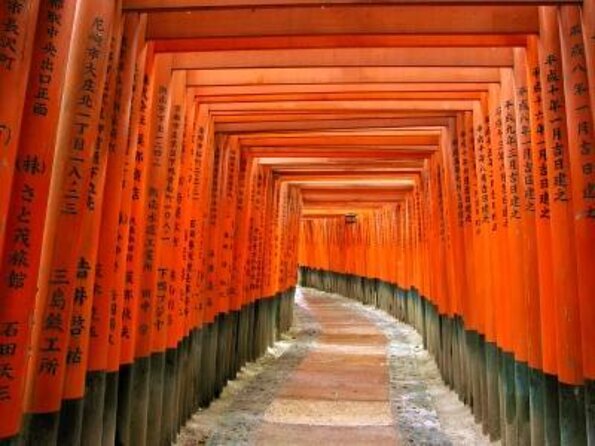
- Fushimi Inari takes about 45 minutes: You walk through the famous orange torii gates, pause for photos, and hear about the shrine’s meaning.
- Kiyomizu-dera gets about one hour: Admission is included, and the temple offers sweeping city views.
- Taxi fares are included: This saves time and avoids the effort of planning the transfers between major stops.
- The group is capped at 12 people: That is small enough for a more personal guide experience, though it is not a private tour.
- The tour ends near Sanjūsangendō Temple: The finish point gives you a useful location for continuing your Kyoto sightseeing.
Why this early Kyoto tour works
Kyoto’s most famous sights are not hard to find. The hard part is fitting them together without wasting time, getting caught in a slow bus ride, or arriving after the quiet morning has disappeared.
That is where this tour earns its keep. It starts at Inari Station, visits Fushimi Inari-taisha first, then moves by taxi toward Kiyomizu-dera and the preserved streets nearby. You do not have to research opening arrangements, choose between several transport options, or decide how long to spend at each stop.
The four-hour length is useful for a short visit. You see major Kyoto icons in one morning and still have most of the day free. I would especially consider it if you are staying in Kyoto for only a night or two, arriving without a firm sightseeing plan, or traveling with someone who prefers a guide.
The timing also matters. Fushimi Inari and Kiyomizu-dera can feel very different early in the day than later on. The tour is planned to reach these places before the heaviest crowds, though you should not expect complete solitude. These are two of Japan’s best-known sights, and even an early start cannot make them secret.
More Temples and Shrines in Kyoto
- [Kyoto & Nara Day Tour] Sagano Scenic Railway & Nara Park & Fushimi Inari Taisha Thousand Torii Gates & Togetsukyo Bridge & Bamboo Grove & Kimono Forest (Departing from Osaka)
★ 4.9 · 10,942 reviews - Kyoto: Fushimi Inari, Kinkakuji, Bamboo Grove 1 Day Bus Tour
★ 4.8 · 4,316 reviews - Kyoto: Tea Ceremony in a Traditional Tea House in Kiyomizu
★ 4.9 · 3,519 reviews
Meeting at Inari Station at 7:00 a.m.
The tour begins at Inari Station, at Fukakusa Inarionmaecho in Kyoto’s Fushimi Ward. You need to be ready for an early morning start, so this is not the right choice if you prefer slow breakfasts or late nights.
Starting at the station is practical. It puts you close to Fushimi Inari-taisha, the first major stop, rather than making you spend the opening part of the tour on a long transfer. The meeting point is also near public transportation, according to the tour details.
You should allow time to find the exact meeting place and arrive before 7:00. The supplied information does not specify a particular platform, sign, or uniform, so confirm the meeting instructions carefully after booking.
The tour is mobile-ticket based, and confirmation is provided at booking. That keeps the arrangement simple, but I would still keep the ticket and meeting details easy to access on your phone.
Walking beneath Fushimi Inari’s orange gates
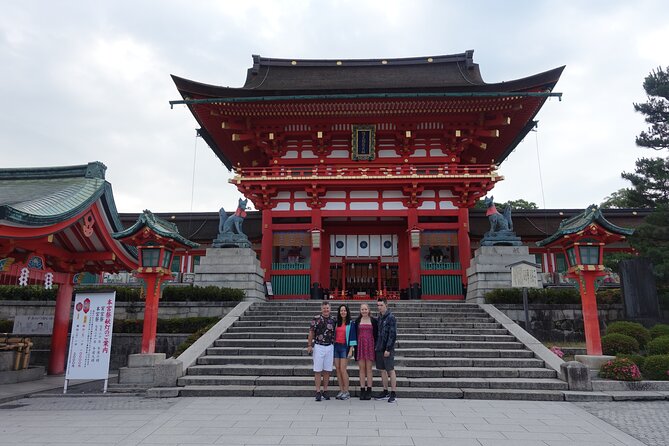
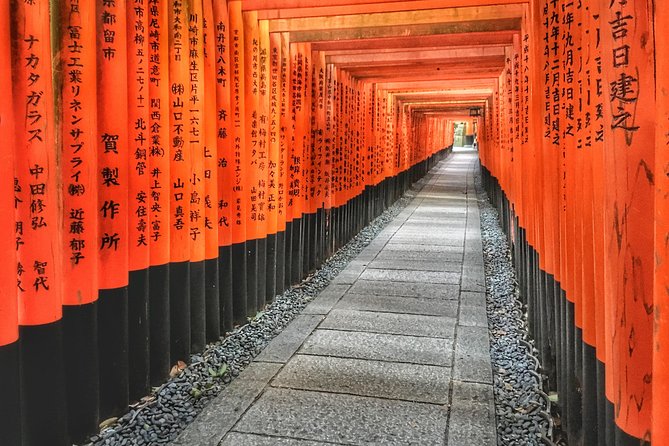
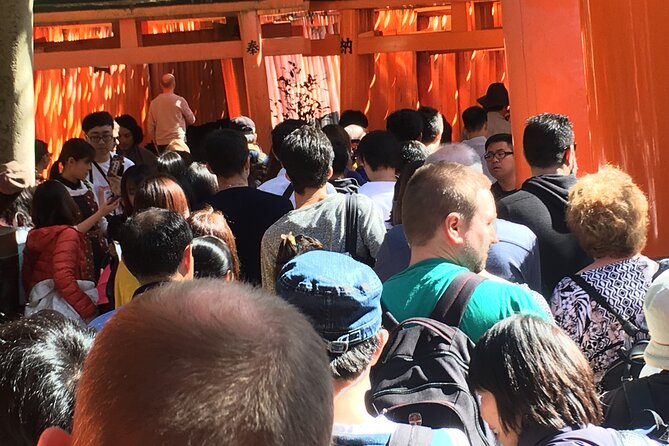
Fushimi Inari-taisha is famous for its long corridors of orange torii gates. The gates climb and curve through the wooded shrine grounds, creating one of Kyoto’s most recognizable scenes.
You spend about 45 minutes here. The guide leads you through the maze, explains the setting, and allows time for photographs. Admission to the shrine is free, so the value of this stop comes from the early access, route planning, and explanation rather than from an entry ticket.
The short visit is both a strength and a limitation. It is enough to see the main torii corridors and take memorable photos without using half your morning. It is not enough for a long hike through the full mountain route. If you want to explore every slope and side path at Fushimi Inari, you will need to return on your own later.
I like this stop as an introduction to Kyoto because it gives you more than a photo backdrop. The guide can explain why the gates are there and help you understand the role of this very special shrine. The experience is still active rather than lecture-heavy: you walk, look, listen, and take pictures.
Wear shoes suited to walking. The tour information says most people can participate, but it also notes in a response to a poor review that Japan can be difficult for people who do not walk much. The tour uses taxis from one stop to the next, which cuts down on long transfers, but it does not remove the walking required inside the shrines and temple grounds.
Kiyomizu-dera and Kyoto from above
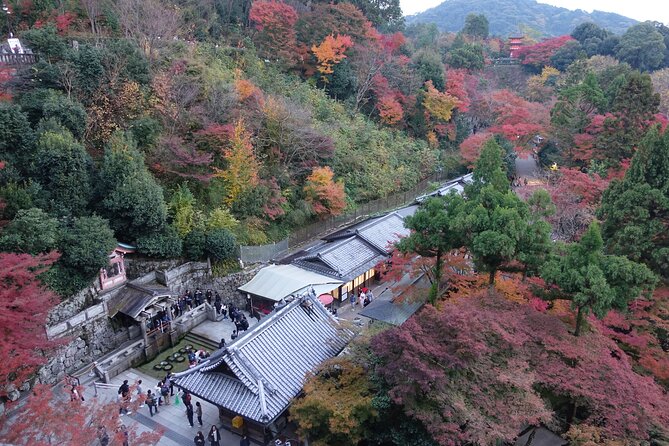
The next major stop is Kiyomizu-dera, one of Kyoto’s defining temples. You have about one hour here, and admission is included.
Kiyomizu-dera is known for its broad views over Kyoto and its dramatic setting. The appeal is not only the buildings. You also get the feeling of looking out across the city from a historic hillside temple, with the morning light giving the views a calmer tone.
The early visit is particularly helpful here. Kiyomizu-dera is one of Japan’s most visited temples, and its approach can become crowded. A morning visit gives you a better chance to appreciate the setting before the streets fill with larger groups.
One hour is enough for a focused visit. You can see the main temple area, listen to the guide, take in the views, and move on without feeling rushed every minute. It is not enough for a leisurely exploration of every nearby lane or shrine, so keep your expectations realistic.
This is also where the included admission helps the price feel a little more reasonable. Unlike Fushimi Inari, Kiyomizu-dera has an entrance fee, and that cost is covered in the tour. It does not close the gap between $98.53 and the cost of doing the route yourself, but it removes one small transaction and gives the group a set plan.
Niall receives the strongest praise in the supplied feedback. One five-star account describes him as informative, enthusiastic, and deeply interested in Japanese culture. That kind of guide can make a real difference at Kiyomizu-dera, where a few clear explanations can turn a beautiful building into a place you understand.
A completely different kind of day out:
- PERFECT KYOTO 1-Day Bus Tour
★ 5.0 · 13,518 reviews - Kyoto: Gion Make Your Own Chopsticks with Engraving Option
★ 5.0 · 3,465 reviews - Kyoto Nara Day Trip │ Kiyomizu-dera Temple + Fushimi Inari-taisha Shrine + Nara Park (Departing from Osaka/Kyoto)
★ 4.7 · 3,408 reviews - Kyoto Geisha Walking Tour: Gion District & Hidden Gems
★ 4.7 · 3,273 reviews
Cobblestone streets near Kiyomizu-dera

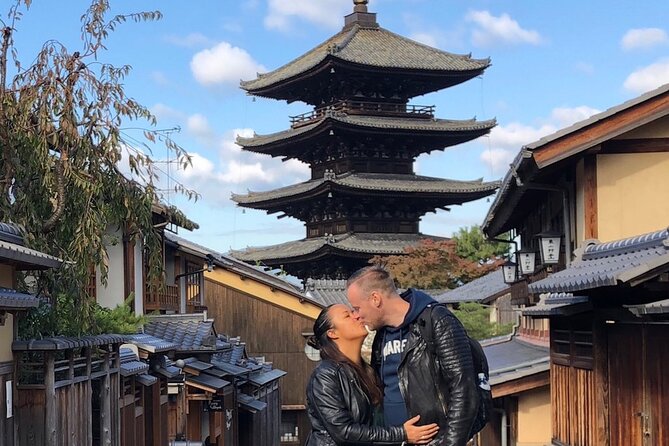
After the temple, the route includes time to wander through a preserved district of cobblestoned streets, quaint shops, and traditional townhouses. The information does not give this stop a separate name or exact duration, so you should view it as a short neighborhood walk rather than a full shopping or food tour.
This portion adds welcome texture to the morning. Fushimi Inari and Kiyomizu-dera are major religious sites, while the old streets show how Kyoto’s built environment feels at ground level. You get narrow lanes, wooden facades, and small shops rather than another large monument.
Do not count on a long, unstructured wander. The entire experience lasts about four hours, and the route ends at Sanjūsangendō Temple. The preserved district is best treated as a scenic connection between the temple visit and the final drop-off area.
The shops may appeal to you if you want small souvenirs or a quick look at Kyoto’s traditional commercial streets. If shopping is a major goal, you may prefer to return later with more time.
Taxis, walking, and the small-group format
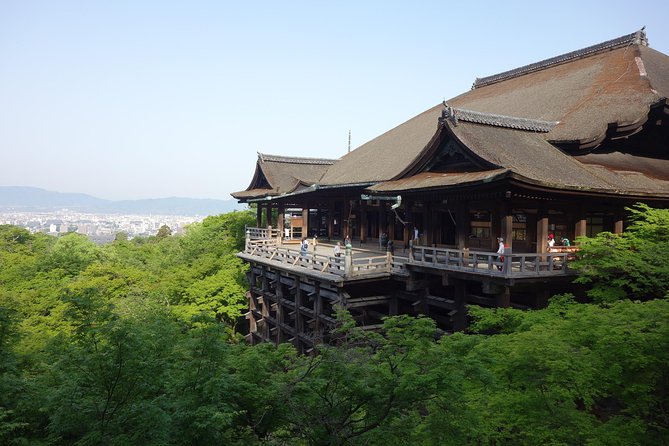
The included taxi fares are one of the tour’s most practical features. Kyoto’s bus system can be useful, but changing vehicles and dealing with traffic can eat into a short morning. A taxi transfer keeps the group moving directly between the main stops.
That convenience matters more when you have only four hours. You are paying not just for a guide, but also for a route designed to reduce wasted time. The tour operator says taxis are used from one stop to the next, which should make the experience easier for anyone who does not want a morning of figuring out Kyoto transport.
You still need to walk at the sights. The taxi does not carry you through Fushimi Inari’s torii gates or around Kiyomizu-dera. If stairs, slopes, or prolonged standing are difficult for you, consider that before booking. The tour says most people can participate, but the walking demands should not be overlooked.
The group limit is 12 people. That is a useful middle ground. You get the social ease of a group tour without the scale of a full coach excursion. It should also be easier to hear the guide and ask a question. At the same time, a 12-person group can still move more slowly than a couple traveling alone.
The guide’s quality becomes important in a group this size. Niall, who is also identified as the owner, is praised for his enthusiasm and clear interest in Japanese culture. The feedback is not uniformly positive, however. One person found the guide unhelpful and felt the tour was a waste of time and money. That criticism is worth taking seriously because the tour’s value depends heavily on the guide adding insight beyond what you could see independently.
Is $98.53 a fair price?
The honest answer depends on what you are buying.
If you visit Fushimi Inari and Kiyomizu-dera by yourself, you can avoid the tour price, and Fushimi Inari has no admission charge. You would need to pay for your own transport and Kiyomizu-dera admission, but the total should still be much less than $98.53 in many cases.
The tour earns its price through convenience. You receive a planned four-hour route, a guide, included taxi fares between stops, admission to Kiyomizu-dera, and the reassurance of seeing two major sights in one morning. For a first visit, that structure may be worth paying for.
I would not book it simply because the landmarks are difficult to reach. They are accessible on your own. I would book it if you value context, dislike planning, have limited time, or want someone else to manage the morning’s movements.
The small group improves the equation. A private guide would cost much more, while a large bus tour might feel impersonal. This option sits between those extremes, though the price remains a serious consideration for budget-minded visitors.
The high 4.8 score and 95 percent recommendation suggest that the experience works very well for most bookings. The single poor account also gives you the main warning: if you already know Kyoto, enjoy researching shrines, and are comfortable using public transport, you may prefer an independent visit.
Who should book this Kyoto morning tour?
I think this tour suits you best if:
- You have only a short time in Kyoto.
- You want to see Fushimi Inari and Kiyomizu-dera in one morning.
- You prefer an early start and lighter crowds.
- You want taxi transfers arranged and paid for in advance.
- You enjoy asking a guide questions in a small group.
- You would like a preserved old district included without planning another stop.
I would be more cautious if you are traveling on a tight budget, want to hike extensively at Fushimi Inari, or prefer to set your own pace. The 45-minute shrine visit and one-hour temple visit give you a useful overview, not a full day at either place.
The tour also requires good weather and a minimum number of participants. If poor weather or low enrollment causes cancellation, you are offered another date or a full refund. You can cancel for a full refund up to 24 hours before the start time, but changes or cancellations inside that period are not accepted.
Should you book TREASURES of Kyoto?
Book it if your priority is a smooth, early introduction to Kyoto’s most famous sights. The included taxis, small group, carefully timed route, and strong praise for Niall give the tour real practical value. You can finish near Sanjūsangendō Temple and still have much of the day ahead.
Skip it if saving money matters more than convenience. Fushimi Inari and Kiyomizu-dera can be visited independently, and independent sightseeing gives you more time and control.
My advice is simple: first-time visitors with limited time should give this tour serious thought. Independent explorers and repeat visitors should compare the $98.53 price with the freedom of doing the same route alone.
FAQ
How long does the tour last?
The experience lasts approximately four hours.
What time does the tour begin?
The tour starts at 7:00 a.m.
Where does the tour meet?
The meeting point is Inari Station at Fukakusa Inarionmaecho, Fushimi Ward, Kyoto, 612-0881, Japan.
Where does the tour end?
The tour ends at Sanjūsangendō Temple, 657 Sanjūsangendōmawari, Higashiyama Ward, Kyoto, 605-0941, Japan.
Is admission to Fushimi Inari-taisha included?
Fushimi Inari-taisha has free admission, so there is no admission charge for this stop.
Is admission to Kiyomizu-dera included?
Yes. Admission to Kiyomizu-dera is included.
Are taxi fares included?
Yes. Taxi fares during the tour, including travel from one stop to the next, are included.
How many people can join the tour?
The tour has a maximum of 12 participants.
Just added in Kyoto
- The “Golden Route” and Ancient Japan by DIAMIR Erlebnisreisen – 14-Day Tour★ 2.0 · 2 reviews
- Japan: Castles & Cuisine by G Adventures – 6-Day Kyoto to Osaka Tour★ 4.5 · 4 reviews
- Cycle Japan by Explore! – 13-Day Kyoto to Tokyo Tour★ 4.7 · 12 reviews
- Cycle Japan by Intrepid Travel – 11-Day Kyoto to Tokyo Tour★ 4.8 · 2 reviews
- Classic Japan by Intrepid Travel – 11-Day Kyoto to Tokyo Tour★ 4.4 · 14 reviews
- Ancient & Modern Japan 14-Day Tour by Exodus Adventure Travels★ 4.4 · 40 reviews
- 5 Day Cultural Adventure of Kyoto, Nara & Osaka by Tourist Journey★ 2.5 · 2 reviews
- 12 Days Kinosaki Onsen Escape: A Journey Through Japan’s Timeless Towns by UME Travel★ 4.8 · 5 reviews
Temples and Shrines, compared.
![[Kyoto & Nara Day Tour] Sagano Scenic Railway & Nara Park & Fushimi Inari Taisha Thousand Torii Gates & Togetsukyo Bridge & Bamboo Grove & Kimono Forest (Departing from Osaka)](https://media.japanvisits.com/wp-content/uploads/kyoto-nara-day-tour-sagano-scenic-railway-nara-park-fushimi-inari-taisha-thousand-torii-gates-togetsukyo-bridge-bamboo-grove-kimono-forest-departing-from-osaka-k110001-400x257.jpg)
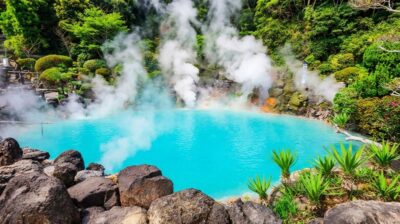
Kyushu One-Day Tour: Yufuin no Mori Train & Yufuin Town & Nyoirin-ji Temple & Dazaifu & Hell Hot Springs (Departing from Fukuoka)
Read our review →
Fushimi Inari, Kinkakuji, Bamboo Grove 1 Day Bus Tour
Read our review →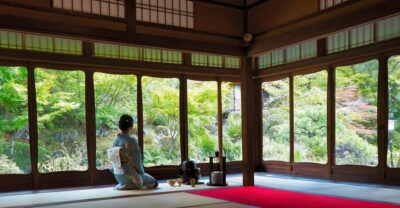
Tea Ceremony in a Traditional Tea House in Kiyomizu
Read our review →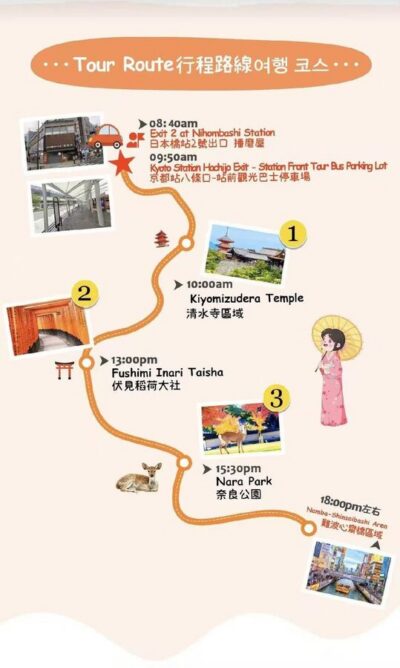
Kyoto Nara Day Trip │ Kiyomizu-dera Temple + Fushimi Inari-taisha Shrine + Nara Park (Departing from Osaka/Kyoto)
Read our review →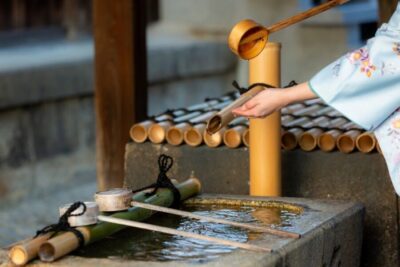
Browse the lists this tour appears in