
Reviewed · SAKE TASTINGS
10 kinds Sake Tasting Experience in Tsukiji with local!!
Sake makes Japan’s food culture easier to understand. I like this private 90-minute tasting because you sample about 10 styles while a local guide explains how they differ, rather than simply lining up glasses and naming them. I also like the relaxed setting, with handouts, small snacks, and help in English when needed. The main drawback is finding the venue, which can be tricky, especially on your first visit.
This is a good choice if you want more than a quick drink at a bar. You learn about Junmai, Daiginjo, brewing methods, regional differences, and drinking manners in a small setting. At $62.40 per person, it is not the cheapest way to drink sake, but the private format and guided comparison make the price easier to justify.
In This Review
- Key points to know before booking
- What the 90-minute sake session is really like
- Understanding Junmai, Daiginjo, and sake quality
- Tasting regional sake from across Japan
- Meeting a local guide at a Shintomi restaurant
- Why the private format affects the value
- Finding the restaurant without a frustrating start
- Who will enjoy this sake tasting most
- A practical way to fit it into your Tokyo day
- What makes the experience feel authentic
- Should you book this Tsukiji sake experience?
- FAQ
- How many kinds of sake will I taste?
- How long does the experience last?
- Is this a private activity?
- Where does the tasting start?
- Where does the activity end?
- Does the session explain Junmai and Daiginjo?
- Are snacks included?
- Can I cancel for a full refund?
Key points to know before booking
- About 10 sake samples: You taste a range of styles, with one session including 11 samples.
- Private group format: Only your party takes part, so you can ask questions at your own pace.
- Useful sake basics: The session covers Junmai, Daiginjo, quality classifications, production, etiquette, and regional styles.
- Friendly English support: The guide can help with language barriers and explain Japanese drinking culture in clear terms.
- Handouts and snacks included: Printed information, nuts, and soybeans help make the tasting easier to follow.
- Tsukiji-area meeting point: You meet at Wagyu Yakiniku & Sake all-you-can-drink Niku-no-Himalaya to nomuno, near public transportation.
What the 90-minute sake session is really like
The experience begins at Wagyu Yakiniku & Sake all-you-can-drink Niku-no-Himalaya to nomuno, at 2-13-2 Shintomi, Chuo City, Tokyo. The activity returns to this same meeting point, so you do not need to arrange a second pickup or find your way to another part of Tokyo afterward.
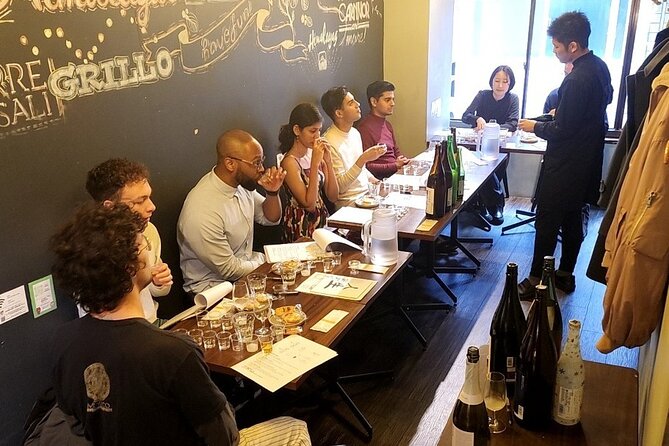
The setting matters. This is held in a restaurant connected with Japanese food and sake, not in a formal museum or a large tour room. That gives the session a casual feel. You can focus on the drinks and conversation without needing to follow a strict sightseeing schedule.
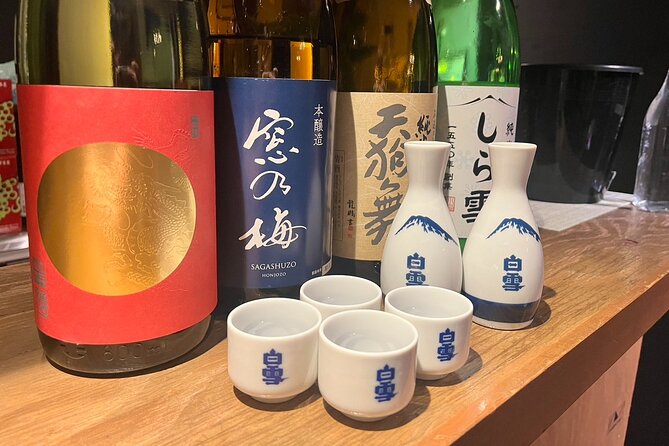
Your guide starts with the basics: what sake is, how to drink it, and how the main categories differ. You then taste a series of samples, generally around 10, moving from lower-priced or simpler examples toward more refined styles. One session included 11 sakes, so the exact number may vary slightly.
I like this comparison format because sake can be confusing when you taste only one bottle. A single drink may seem mild, sweet, dry, floral, or sharp, but you have little context for judging it. Tasting several styles in one sitting helps you notice the contrast. The guide can point out what you are tasting and explain why the differences exist.
The pace is informal rather than theatrical. You are there to drink, ask questions, and talk. One person who booked a Wednesday noon session ended up alone with the guide, creating an especially personal conversation about sake and Japan. That quieter possibility will appeal to people who prefer a private lesson, though anyone seeking a lively group atmosphere may find the mood more subdued.
More Markets and Food Halls in Tokyo
- Tokyo Tsukiji Fish Market Food and Culture Walking Tour
★ 5.0 · 3,184 reviews - Tokyo: Tsukiji Fish Market Food and Walking tour
★ 5.0 · 1,724 reviews - Senkyaku Banrai Toyosu Manyo Club Onsen Experience in Tokyo
★ 4.7 · 1,690 reviews
Understanding Junmai, Daiginjo, and sake quality
A central part of the session is the difference between sake classifications. You learn about terms such as Junmai and Daiginjo, along with the broad idea of how rice polishing and brewing choices affect the final drink.
The experience is not simply a drinking flight. The guide explains how sake is made and what makes one bottle different from another. You may hear about the role of rice, production methods, and the way the drink is classified. The samples give you a chance to test those explanations with your own palate.
The progression from simpler to higher-quality sake is helpful for first-time drinkers. It gives you a reference point for price and style, instead of suggesting that the most expensive bottle is automatically the best for every person. You might prefer a clean, understated sake to a more fragrant Daiginjo, and the session gives you room to discover that.
Do not expect a specialist certification course. This is a friendly introduction, designed for people who want useful knowledge without a long lecture. If you already know sake well, you may find the basic information familiar. The value for an experienced drinker comes more from comparing the selected samples and talking with the local guide.
Tasting regional sake from across Japan
The session also covers differences between sake from various parts of Japan. That is useful because sake is not one uniform drink. Bottles from different areas can reflect local brewing traditions and different flavor preferences.
The available information does not name every prefecture or bottle served, so you should not book expecting a fixed regional menu. Instead, think of this as a guided sample of Japanese sake styles. The exact bottles can change, but the purpose remains the same: show you how broad the category can be.
I like this approach for a Tokyo food itinerary. You may already be eating sushi, grilled meat, tempura, or snacks during your stay, but you may not know which sake works well with them. The guide’s explanations can give you a better base for ordering sake later, even if the session does not promise a formal food-pairing course.
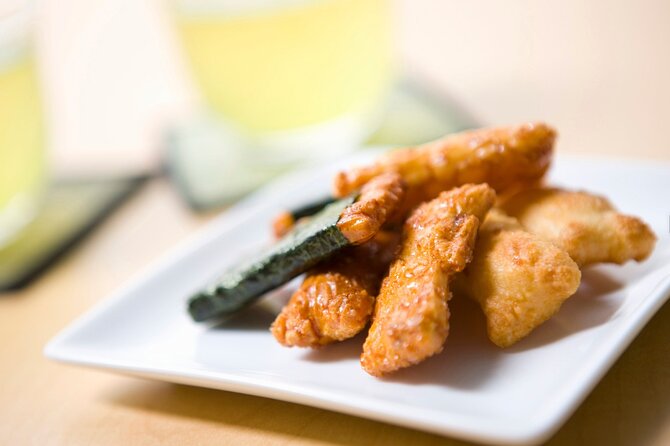
Small snacks are included. Nuts and soybeans were provided during at least some tastings, giving you something to eat between samples. They are simple accompaniments, not a full meal, so plan to eat beforehand or afterward if you need dinner.
Meeting a local guide at a Shintomi restaurant
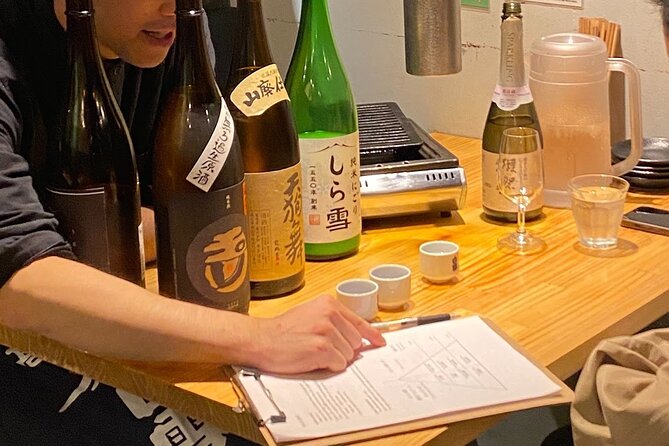
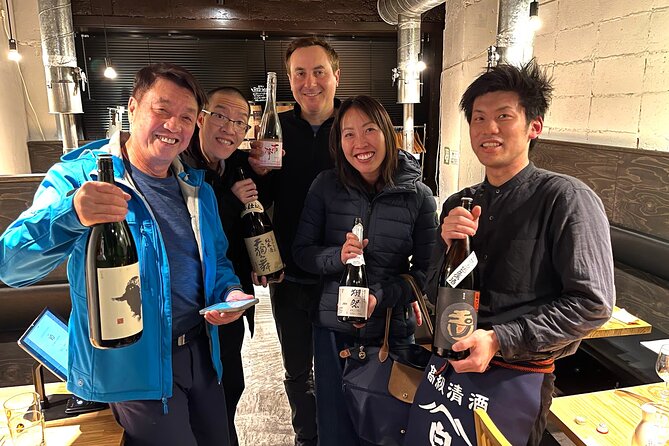
One of the strongest parts of this experience is the guide interaction. The guide is described as a local sake enthusiast, and one guide, Matsu, was praised for giving detailed explanations and creating easy conversation. Another session was led by a manager and chef at Nomuno, which adds a useful connection between sake and Japanese food.
The guide may provide a booklet or information sheets. These are handy because sake terms can blur together after several tastings. You can use the notes later when you see Junmai or Daiginjo on a restaurant menu.
English support is another practical advantage. The guide can help with language barriers, and an English-speaking guide handled a solo midday booking comfortably. That does not mean every discussion will feel like a formal English class, but you should have a much easier time asking questions and following the main points.
The private format is particularly useful here. Only your group participates, so you can say that you prefer dry drinks, ask how to order sake at a restaurant, or pause over a style you do not understand. In a large group, those questions can be lost. Here, the conversation is part of what you are paying for.
More Sake Tastings in Tokyo
- Sake Tasting Masterclass in Shinjuku (8+ Varieties with a Pro)
★ 5.0 · 271 reviews - Tsukiji: Outer Market Walking Tour & Sake Tasting Experience
★ 4.9 · 81 reviews - Tsukiji: Unlimited Sake Tasting Experience
★ 4.9 · 67 reviews - Unlimited Sake Tasting with Sushi Omakase tasting in Tokyo
★ 4.0 · 44 reviews
Why the private format affects the value
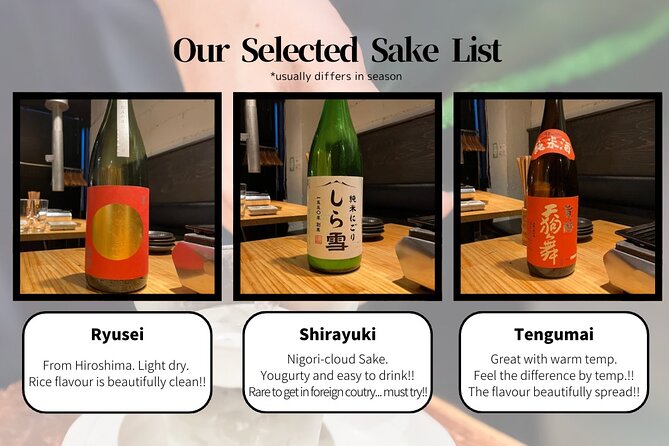
At $62.40 per person, this is a moderately priced experience rather than a budget tasting. The cost includes roughly 10 sake samples, a private guide, cultural and brewing explanations, handouts, and light snacks. For someone who would otherwise buy several sake pours without knowing what they are, the guided format offers clear value.
The price makes more sense if you enjoy food and drink education. You are not paying only for alcohol. You are paying for a structured comparison and a chance to ask a local guide about customs, quality labels, and regional styles.
It makes less sense if your main goal is simply to have one or two drinks in Tsukiji. Tokyo has many places to order sake independently, often at a lower total cost. You should also remember that 10 or more samples in 90 minutes is a serious amount of alcohol, even when each pour is small.
Pace yourself. One person enjoyed 11 tastings but specifically advised taking it slowly. Eat something before the session, use the snacks, and do not assume you must finish every sample. The point is to learn how the drinks differ, not to win a sake race.
Finding the restaurant without a frustrating start
The meeting point is near public transportation, but the venue can be hard to locate. This is the clearest practical weakness in the experience. Give yourself extra time and check the full restaurant name and address before leaving.
The activity starts at Niku-no-Himalaya to nomuno, located at 2-13-2 Shintomi in Chuo City. Tsukiji is a familiar name, but the exact meeting point is in the Shintomi area, so do not rely only on the word Tsukiji when navigating.
A phone with the mobile ticket and the address ready should help. If you are coming from another Tokyo attraction, avoid arriving at the last minute. The guide may be easy to find once you reach the restaurant, but the restaurant itself can take some searching.
Confirmation is sent within 48 hours of booking, subject to availability. Since the experience is often booked 27 days ahead, early planning is sensible if your Tokyo dates are fixed. Free cancellation is available until 24 hours before the start time. Inside that window, the payment is not refunded and changes are not accepted.
Who will enjoy this sake tasting most
I would choose this for a first-time sake drinker who wants a clear introduction without committing to a full day of food tours. You get enough samples to notice real differences, but the session lasts only about an hour and a half.
It also suits curious food lovers who want to understand the drink alongside Japanese dining customs. The link to a restaurant and the guide’s cooking background can make the discussion more useful than a purely technical tasting.
Solo visitors and couples should consider the private format. A solo booking may mean an especially focused conversation, as happened during one quiet midday session. Small groups will also benefit because everyone can ask questions without competing for the guide’s attention.
This is less suitable for someone who dislikes alcohol, wants a substantial meal, or already has advanced sake knowledge. The included nuts and soybeans are snacks, not dinner. And while the guide can explain the foundations well, the experience is aimed at general education rather than professional-level study.
A practical way to fit it into your Tokyo day
The tasting lasts about 90 minutes and ends where it begins. That makes it easy to fit between sightseeing stops, but you should plan your day around the alcohol rather than treating it as a quick coffee break.
A midday booking is possible, and one solo session took place at noon. Still, many people may prefer to schedule it later in the day, especially if they want the tasting to feel like part of an evening meal plan. The experience itself does not promise a full barbecue meal, so check your appetite before arriving.
Because you sample many styles, avoid stacking this directly beside another drinking activity. You will get more from the guide if you can pay attention to aromas, sweetness, dryness, and texture. The session is relaxed, but the alcohol still adds up.
Afterward, you return to the meeting point. You can continue eating at the restaurant or make your own plans, but the provided details do not guarantee a meal as part of the tasting. Treat the food element as light snacks unless you arrange something separately.
What makes the experience feel authentic
The strongest cultural benefit is the ordinary, useful advice. You learn how to drink sake, how quality labels work, and how regional differences affect the bottle in your glass. These are the details that help you feel less lost when ordering in a Japanese restaurant later.
The guide also helps bridge language gaps. That is important in Japan, where a sake menu may list unfamiliar names and categories with little English explanation. A short lesson before the rest of your trip can make later meals more comfortable.
I also like that the session does not present sake as a distant luxury product. You taste it in a restaurant setting, talk with someone connected to food service, and learn through conversation. The atmosphere is informal, and the focus stays on understanding what you are drinking.
The experience is not perfect. The meeting point needs better preparation from you, and the tasting can feel basic if you already have strong sake knowledge. The sample count may also vary, despite the usual promise of around 10. Still, those are manageable concerns for most people.
Should you book this Tsukiji sake experience?
Book it if you want a private, friendly introduction to Japanese sake and value explanation as much as the drinks. The combination of about 10 samples, local guidance, handouts, snacks, and English help gives you a solid foundation in a short session.
I would especially recommend it early in your Tokyo visit. You can use what you learn when ordering sake at markets, izakayas, and restaurants for the rest of your trip. Arrive early, eat something first, pace yourself, and keep the address ready on your phone.
Skip it if you only want a cheap drink, a full meal, or an advanced tasting focused on rare bottles. For everyone else, the private setting and direct conversation make the $62.40 cost reasonable, particularly if you want to understand the drink instead of merely sampling it.
FAQ
How many kinds of sake will I taste?
The session includes around 10 sake varieties. One tasting included 11 samples, so the exact number may vary slightly.
How long does the experience last?
The tasting lasts approximately 1 hour and 30 minutes.
Is this a private activity?
Yes. Only your group participates in the activity.
Where does the tasting start?
It starts at Wagyu Yakiniku & Sake all-you-can-drink Niku-no-Himalaya to nomuno, at 2-chōme-13-2 Shintomi, Chuo City, Tokyo 104-0041, Japan.
Where does the activity end?
The experience ends back at the meeting point.
Does the session explain Junmai and Daiginjo?
Yes. The session covers basic sake information and the differences between classifications such as Junmai and Daiginjo.
Are snacks included?
Small snacks such as nuts and soybeans have been included during the tasting. The experience does not specify a full meal as part of the price.
Can I cancel for a full refund?
You can cancel for a full refund at least 24 hours before the experience start time. Cancellations or changes made less than 24 hours before the start time are not accepted for a refund.
Just added in Tokyo
- Very popular in Harajuku♡Animal petting zoo★ 4.6 · 39 reviews
- Yokohama Port: Private Customizable Tour with Transfer★ 5.0 · 19 reviews
- Wagyu & Sake 8 Course Tasting Dinner in Shinjuku★ 4.9 · 20 reviews
- Warner Bros. Studio Tour Tokyo – The Making of Harry Potter★ 4.8 · 181 reviews
- Yanaka District: Historical Walking Tour in Tokyo’s Old Town★ 4.8 · 117 reviews
- Tokyo: Classic Tsukiji Food Tour★ 4.9 · 78 reviews
- Tokyo: Tsukiji Fish Market Tour with 6 Stops & Seafood Lunch★ 4.5 · 165 reviews
- Tokyo Wagyu & Sake Pairing Tasting Experience with Local Flavors★ 5.0 · 108 reviews
Sake Tastings, compared.
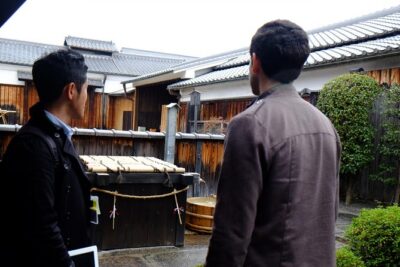
3-Hour Kyoto Insider Sake Brewery Tour with Tastings & Pairings
Read our review →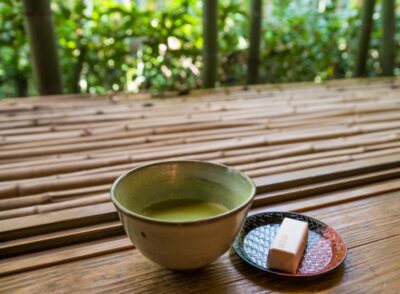
Arashiyama Bamboo, Temple, Monkeys, or Secret Sake Brewery
Read our review →
Insider Sake Brewery Tour with Sake and Food Pairing
Read our review →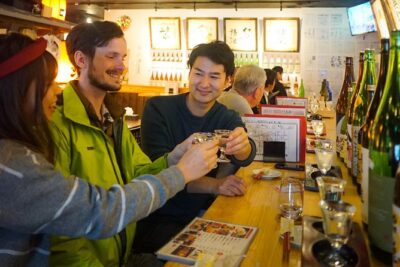
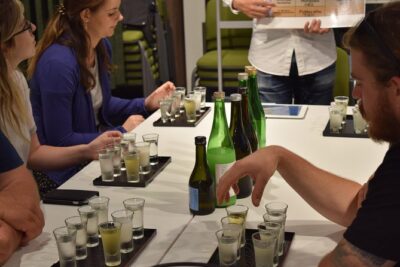
1.5-Hour Kyoto Insider Sake Experience with 7 Tastings & Pairings
Read our review →
Sake Tasting Masterclass in Shinjuku (8+ Varieties with a Pro)
Read our review →
Insider Sake Experience with 7 Tastings and Snacks
Read our review →
Private Tea Ceremony and Sake Tasting in Kyoto Samurai House
Read our review →Browse the lists this tour appears in