
Reviewed · KIMONO AND CULTURAL DRESS
Dance and Game with Maiko
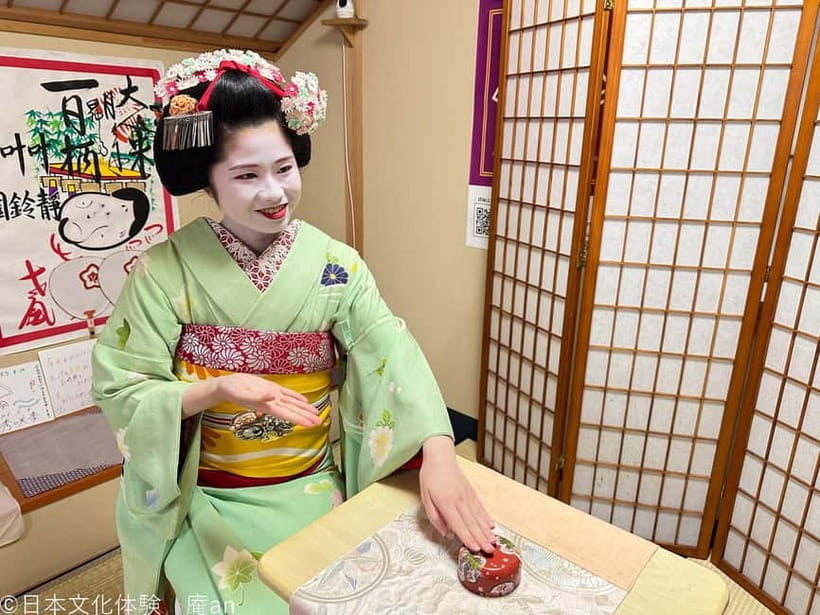
A little Kyoto magic fits into a busy day. This compact maiko experience gives you two graceful dances, a traditional game, close-up photographs, and a small Senjafuda charm without requiring an evening at a formal restaurant. I like the friendly, low-pressure format, and I like that the $28 price includes a personal photo opportunity rather than only a performance.
The main drawback is timing. Although the scheduled visit is 45 minutes, some recent sessions have finished in about 30 minutes, with the final 15 minutes used for photos and informal conversation. The venue is also a building rather than a traditional ochaya, and you must use stairs because there is no elevator.
In This Review
- Key points at a glance
- A quick way to meet a maiko in Kyoto
- Arriving at Gojo Station
- The two maiko dances
- The game brings the room to life
- Photos and the Senjafuda gift
- Understanding the 30-minute and 45-minute timing
- What $28 buys you
- Who will enjoy this most
- Booking advice for a smooth visit
- Should you book Dance and Game with Maiko?
- FAQ
- How long does Dance and Game with Maiko last?
- Where is the meeting point?
- What is included in the price?
- Is English available?
- Is the venue a traditional ochaya?
- Are children under two free?
- Can the performer be a geiko instead of a maiko?
Key points at a glance
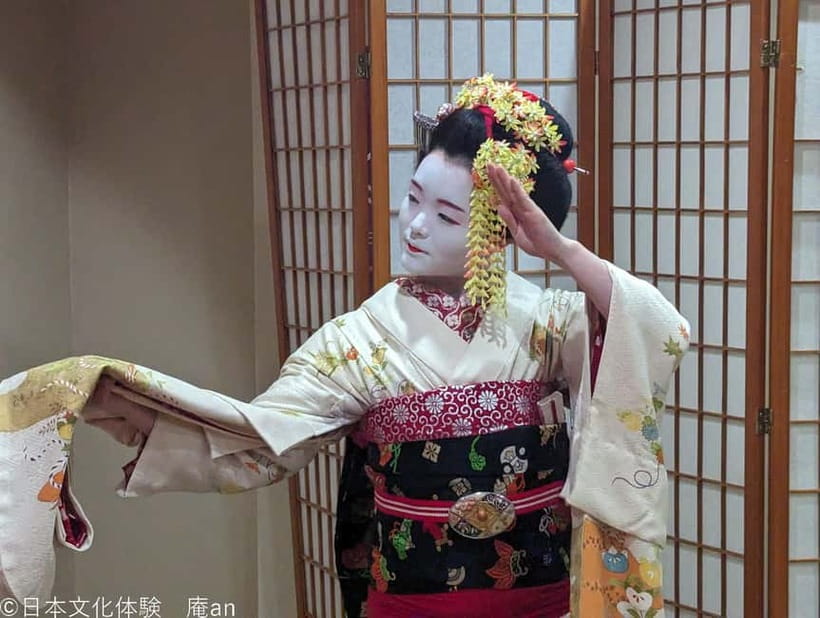
- Two maiko dances: Watch graceful performances based on Japanese seasons, love stories, and everyday scenes.
- A traditional audience game: Volunteers can play directly with the maiko, while everyone else claps and cheers.
- A close photo opportunity: Take a commemorative picture beside a maiko after the performance.
- A small Kyoto keepsake: Each participant receives a Senjafuda, a lucky paper charm.
- Easy Gojo location: The venue is one minute from Exit 1 of Gojo Station on the Subway Karasuma Line.
- Short but not fully predictable timing: The program is sold as 45 minutes, though the performance portion may end around the 30-minute mark.
A quick way to meet a maiko in Kyoto
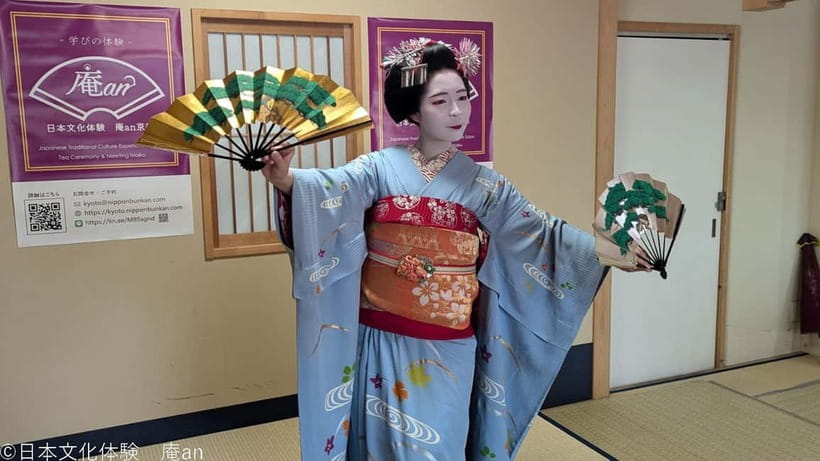
Kyoto is famous for maiko, the apprentice entertainers associated with the city’s traditional dance and music culture. Seeing one in the Gion area can be a matter of luck, and arranging a private evening can cost far more than most sightseeing budgets allow.
This program offers a simple alternative. You arrive at a scheduled time, watch a short performance, take part in a game, and receive a photo opportunity and keepsake. There is no special dress, etiquette lesson, or advance preparation required.
That makes this a practical choice for you if your Kyoto schedule is already crowded. You can fit it between sightseeing stops rather than setting aside a whole evening. The short format also works well for families, first-time visitors, and anyone curious about maiko culture but unsure about committing to a formal cultural dinner.
The setting matters, though. This is not an ochaya, the private traditional teahouse setting associated with geiko and maiko entertainment. The event takes place inside a building with a relaxed atmosphere and friendly staff. You should come for the performance and personal contact, not for an old wooden teahouse or a full traditional meal.
More Kimono Experiences in Kyoto
- [Kyoto & Nara Day Tour] Sagano Scenic Railway & Nara Park & Fushimi Inari Taisha Thousand Torii Gates & Togetsukyo Bridge & Bamboo Grove & Kimono Forest (Departing from Osaka)
★ 4.9 · 10,942 reviews - Kyoto Geisha Walking Tour: Gion District & Hidden Gems
★ 4.7 · 3,273 reviews - Kyoto: Gion Magical Night Walking Tour with Geisha Trivia
★ 4.9 · 2,393 reviews
Arriving at Gojo Station
The location is one of the program’s strongest practical features. From Exit 1 of Gojo Station on the Subway Karasuma Line, the venue is about a one-minute walk. The entrance faces Gojo-dori, the main street, so you do not need to search through a maze of small lanes.
That easy access makes the activity useful on a packed day. You can reach it from central Kyoto by subway, and the short walk keeps the arrival simple. Still, allow enough time to find the entrance and climb the stairs. The staff will not hold the event for late arrivals, even when your delay is caused by transportation or another problem.
The building has no elevator. If you have mobility concerns, contact the provider before booking. The information provided does not promise an accessible route, so you should not assume that the stairs can be avoided.
The operation hours are from 10:00 to 17:00. Reservations received after 17:00 are processed the following day, which is useful to know if you are making a late booking or asking a last-minute question.
The two maiko dances
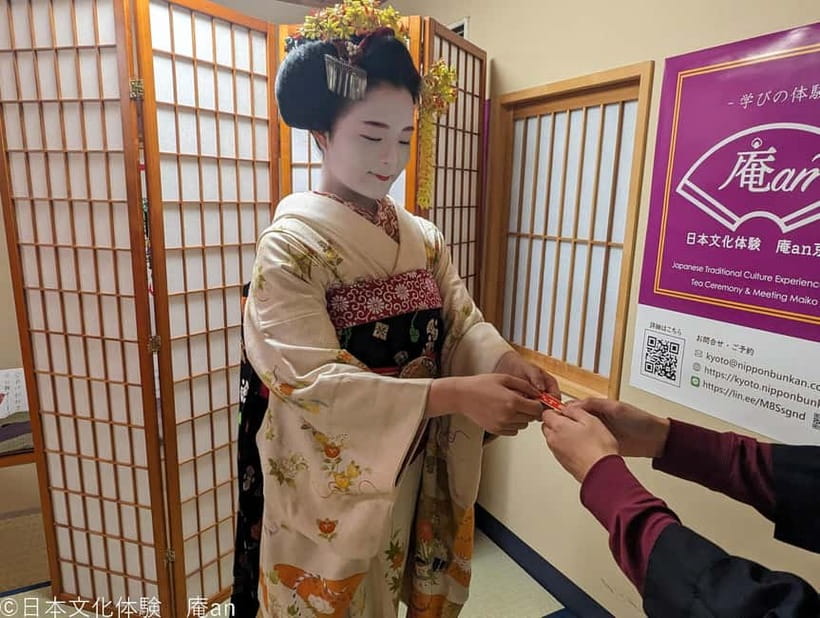
The program begins with two maiko dance performances. These are not long stage productions. Their appeal comes from the close setting, the elaborate appearance of the performer, and the careful hand movements and posture that give the dances their feeling.
Maiko dance often uses music and gestures to express familiar Japanese subjects. You might see references to a season, a love story, or an ordinary moment from daily life. Even without understanding every movement, you can appreciate the measured pace and visual detail.
This is a good place to slow down. Kyoto sightseeing can become a march from temple to temple, with one famous view quickly followed by another. Here, the mood is quieter and more focused. Watch the hands, fan movements, turns, and facial expression instead of treating the dance as something to photograph from the first second.
Photography is allowed during the performance according to the experience details, but you should be considerate and avoid letting your camera block the view of others. The most valuable photo comes later, when you are invited to pose beside the maiko.
The language barrier is limited but real. The instructor language is Japanese, and English translation is provided as much as possible if requested. If you need English support, contact the provider in advance rather than waiting until the program begins.
The game brings the room to life
After the dances, the maiko leads a traditional game with the audience. Volunteers are invited to participate directly, while the rest of the room watches, claps, and cheers.
The game is described as simple and exciting rather than complicated. That is good news if you are nervous about being placed on the spot. You do not need prior knowledge of Japanese games, and you can enjoy the moment even if you never volunteer.
For children and shy adults, the participation setup is worth considering. A recent family booking found that the children felt embarrassed playing in front of a small room of people. The experience can work well for families, but you should not assume that every child will want to take the floor. Sitting close to a parent and watching is perfectly reasonable.
The social side is one of the better parts of the event. You are not only watching a performer from a distance. The game gives the room a shared activity and lets you see a more playful side of the maiko’s role. It also breaks up the formality of the dances.
The audience size can be small. One recent session had only a few people in the room, which can make the photo and game feel more personal. It also means the volunteers may feel more visible. If you are hoping for a large group atmosphere where you can disappear into the crowd, this may not be the right format.
A completely different kind of day out:
- PERFECT KYOTO 1-Day Bus Tour
★ 5.0 · 13,518 reviews - Kyoto: Fushimi Inari, Kinkakuji, Bamboo Grove 1 Day Bus Tour
★ 4.8 · 4,316 reviews - Kyoto: Tea Ceremony in a Traditional Tea House in Kiyomizu
★ 4.9 · 3,519 reviews - Kyoto: Gion Make Your Own Chopsticks with Engraving Option
★ 5.0 · 3,465 reviews
Photos and the Senjafuda gift
The photo opportunity comes after the main performance and game. You can take a commemorative picture beside a maiko at close range. For many people, this is the part that turns a short show into a personal Kyoto memory.
Keep your expectations practical. This is a scheduled photo moment, not an unlimited private portrait session. The details do not specify the number of photos, photographer, or camera service, so bring your own camera or phone and be ready when your turn comes.
You also receive a Senjafuda, sometimes written as Senjyafuda in the program information. It is a small lucky charm and an easy souvenir to carry home. It will not replace a major handicraft purchase, but it adds a personal touch to the visit.
The order is important. The outline places the photo and charm after the main 30-minute program, followed by the maiko leaving the room and a short period for chatting. This explains why the overall booking lasts 45 minutes even though the core show may feel closer to 30 minutes.
Understanding the 30-minute and 45-minute timing
You should plan on 45 minutes from arrival through departure, but do not expect 45 minutes of uninterrupted performance. The advertised sequence is:
- Maiko dance performances
- Traditional game with the audience
- Photo beside the maiko
- Senjafuda presentation
- Short chatting time and room departure
Some people have found the event shorter than expected, with the main portion ending around 30 minutes. That is not necessarily a problem if you have a tight itinerary, but it can feel disappointing if you booked specifically for a full 45-minute show.
I would treat the experience as a compact cultural encounter lasting up to 45 minutes, not as a full-length stage performance. The extra time is used for the personal elements, and those may be more meaningful to you than another dance number.
Do not schedule your next activity too tightly. The published length gives you a useful planning estimate, but the exact pace can vary. At the same time, do not worry about losing half a day. This is designed to be short.
What $28 buys you
At $28 per person, the price is reasonable if you value personal contact. You receive the dance performance, the game, the opportunity to stand beside a maiko for a photo, and the Senjafuda charm. A private maiko evening is a very different and much more expensive experience, so this program gives you a lower-cost introduction.
The value is less clear if your priority is a grand traditional setting. The event is held in a building, not an ochaya, and the program is brief. You are paying for access to a carefully arranged cultural encounter, not for a meal, a full tea ceremony, or a long theatrical production.
Meals are not listed as part of the standard price. The activity may take place in a room where other people are having lunch or dinner, so the atmosphere can vary. If you want a quieter, more formal setting, ask about the arrangement before booking.
Children under two are free when they sit on a parent’s lap. If a child under two needs a seat or meal, the same fee as one person applies. Anyone who participates in the experience must have a reservation, and people who are not participating cannot simply enter with the group.
Who will enjoy this most
I would recommend this to you if you want a first look at maiko performance without spending an entire evening. It is especially useful for:
- First-time visitors to Kyoto
- People with only a short window between sightseeing stops
- Couples who want a commemorative photo
- Families willing to let children watch rather than participate
- Visitors curious about traditional entertainment but not ready for a formal tea ceremony
- Anyone staying near the Gojo subway line
The game makes it more interactive than a standard dance show. The photo and Senjafuda also give you something personal to remember.
You may want to skip it if you need step-free access, fluent English explanations throughout, or a genuine ochaya setting. You may also find it too short if you expect a major cultural performance. The provider can sometimes arrange for a geiko instead of a maiko, depending on the situation, but that cannot be guaranteed.
If a tea ceremony is your main goal, choose a separate Tea Ceremony with Maiko or Tea Ceremony with Maiko Premium program. This experience is focused on dance, play, and photographs.
Booking advice for a smooth visit
Book only for people who will actually participate. The rules do not allow nonparticipants to enter, and children under two are free only when they sit on a parent’s lap.
Arrive early. The event will not be held for late arrivals, and the building requires stairs. Gojo Station makes the meeting point easy, but Kyoto transit delays and wrong turns can still cost you valuable minutes.
If English translation is important, contact the provider before your visit. Japanese is the listed operating language, with English help provided as much as possible when requested.
Cancellation is free up to eight days before the scheduled date. After that point, a cancellation fee applies regardless of the reason, and changing the date or time after a fee has been incurred can create another specified charge. Travel costs to the venue are not reimbursed if you cancel, so check your Kyoto plans carefully before the deadline.
Should you book Dance and Game with Maiko?
Book it if you want a short, affordable introduction to maiko culture with two dances, a light audience game, a close photo, and a lucky charm. The Gojo location is convenient, and the relaxed format removes much of the ceremony and cost that can make traditional Kyoto entertainment feel out of reach.
Skip it if you are seeking a full evening of music, food, or a traditional teahouse interior. Also think twice if stairs are difficult or if your children are uncomfortable volunteering in a small room.
For most visitors, the best way to view this is as a 30 to 45-minute cultural stop, not a major show. At $28, that is a fair trade for a memorable face-to-face moment, especially when your Kyoto schedule is already full.
FAQ
How long does Dance and Game with Maiko last?
The scheduled duration is 45 minutes. The main performance and game may finish around 30 minutes, followed by photos, the Senjafuda gift, and chatting time.
Where is the meeting point?
The venue is a one-minute walk from Exit 1 of Gojo Station on the Subway Karasuma Line. The entrance faces Gojo-dori, the main street.
What is included in the price?
The price includes the Dance and Game with Maiko program. It includes the maiko dances, game, photo opportunity, and Senjafuda gift described in the program.
Is English available?
Japanese is the listed operating language. English translation is provided as much as possible if you request it, and you should contact the provider in advance if you need English assistance.
Is the venue a traditional ochaya?
No. The event is held in a building rather than an ochaya or traditional Japanese house. The venue is described as relaxed, with friendly staff.
Are children under two free?
Children under two are free when they sit on a parent’s lap. If a seat or meal is required, the same fee as one person is charged.
Can the performer be a geiko instead of a maiko?
Depending on the situation, a geiko may be invited instead of a maiko. The performer cannot be guaranteed in advance.
Just added in Kyoto
- The “Golden Route” and Ancient Japan by DIAMIR Erlebnisreisen – 14-Day Tour★ 2.0 · 2 reviews
- Japan: Castles & Cuisine by G Adventures – 6-Day Kyoto to Osaka Tour★ 4.5 · 4 reviews
- Cycle Japan by Explore! – 13-Day Kyoto to Tokyo Tour★ 4.7 · 12 reviews
- Cycle Japan by Intrepid Travel – 11-Day Kyoto to Tokyo Tour★ 4.8 · 2 reviews
- Classic Japan by Intrepid Travel – 11-Day Kyoto to Tokyo Tour★ 4.4 · 14 reviews
- Ancient & Modern Japan 14-Day Tour by Exodus Adventure Travels★ 4.4 · 40 reviews
- 5 Day Cultural Adventure of Kyoto, Nara & Osaka by Tourist Journey★ 2.5 · 2 reviews
- 12 Days Kinosaki Onsen Escape: A Journey Through Japan’s Timeless Towns by UME Travel★ 4.8 · 5 reviews
Kimono and Cultural Dress, compared.
![[Kyoto & Nara Day Tour] Sagano Scenic Railway & Nara Park & Fushimi Inari Taisha Thousand Torii Gates & Togetsukyo Bridge & Bamboo Grove & Kimono Forest (Departing from Osaka)](https://media.japanvisits.com/wp-content/uploads/kyoto-nara-day-tour-sagano-scenic-railway-nara-park-fushimi-inari-taisha-thousand-torii-gates-togetsukyo-bridge-bamboo-grove-kimono-forest-departing-from-osaka-k110001-400x257.jpg)

Tokyo Asakusa Kimono&Yukata Rental at Kimono Miyabi Asakusa Station
Read our review →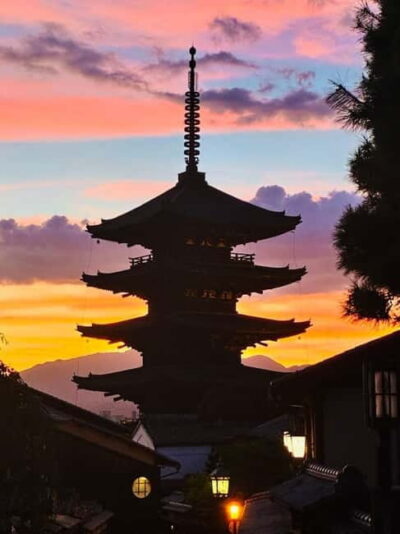
Kyoto Geisha Walking Tour: Gion District & Hidden Gems
Read our review →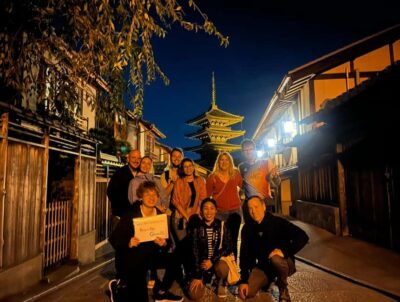
Gion Magical Night Walking Tour with Geisha Trivia
Read our review →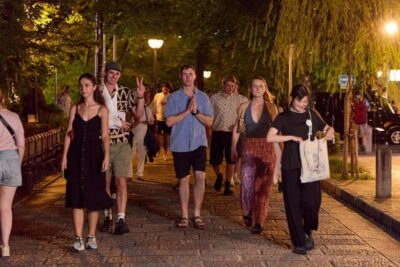
Gion Geisha District Walking Tour – Stories of Geisha
Read our review →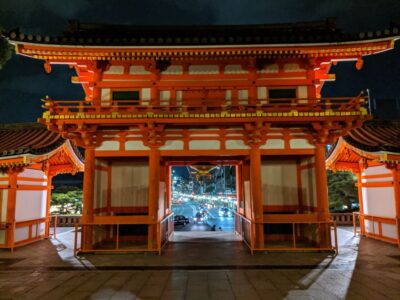
Best of Kyoto: Gion, Geisha, Pagodas & Cobblestones
Read our review →
Kyoto Kimono Rental Experience (Optional Exquisite Hair Styling/Japanese Makeup/Photography) (Ookini Kiyomizu-dera Main Store)
Read our review →Browse the lists this tour appears in