
Reviewed · KIMONO AND CULTURAL DRESS
Gion Walking Tour, Geisha Show and Japanese Game in Kyoto
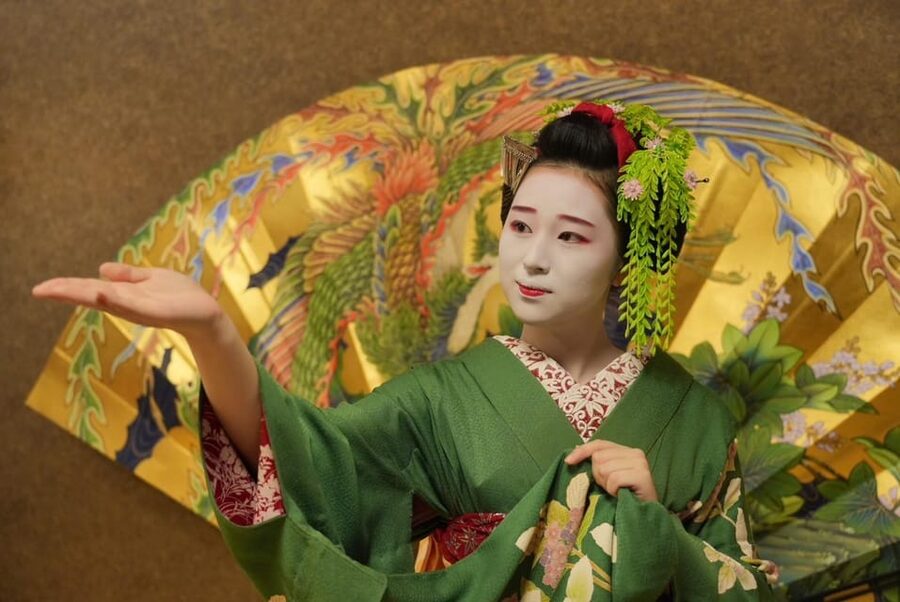
Gion reveals more when you slow down. This two-hour Kyoto experience pairs a small-group walk through Gion with an intimate maiko performance, giving you both local context and a rare cultural encounter. I especially like the limit of six people, which allows more time for questions, and the chance to play a traditional Japanese fan game with the maiko rather than simply watch from a distance.
The first hour covers Gion’s main streets, quieter lanes, and cultural landmarks with an English-speaking guide. The second hour includes tea, a Japanese snack, a traditional dance, questions about maiko and geiko life, and the fan game. The main consideration is the price: at $108 per person, this is not a budget walk, and one participant disliked stops at designated shops. You are paying for the small group and personal access, not just for a stroll around Kyoto.
In This Review
- Why this Gion experience catches my attention
- Starting at the Izumo-no-Okuni Statue
- The first hour: seeing Gion beyond the main street
- Why the small group matters
- The second hour: tea, dance, and conversation
- Playing the traditional Japanese fan game
- What makes the cultural explanation worthwhile
- Price, timing, and practical value
- Who should book this Kyoto experience?
- Should you book the Gion maiko tour?
- FAQ
- How long does the Gion walking and maiko experience last?
- Where does the tour begin?
- Where does the experience finish?
- Is the tour conducted in English?
- How many people can join the group?
- What is included in the $108 price?
Why this Gion experience catches my attention
- A six-person limit: The small group gives you a better chance to hear the guide, ask questions, and take part in the fan game.
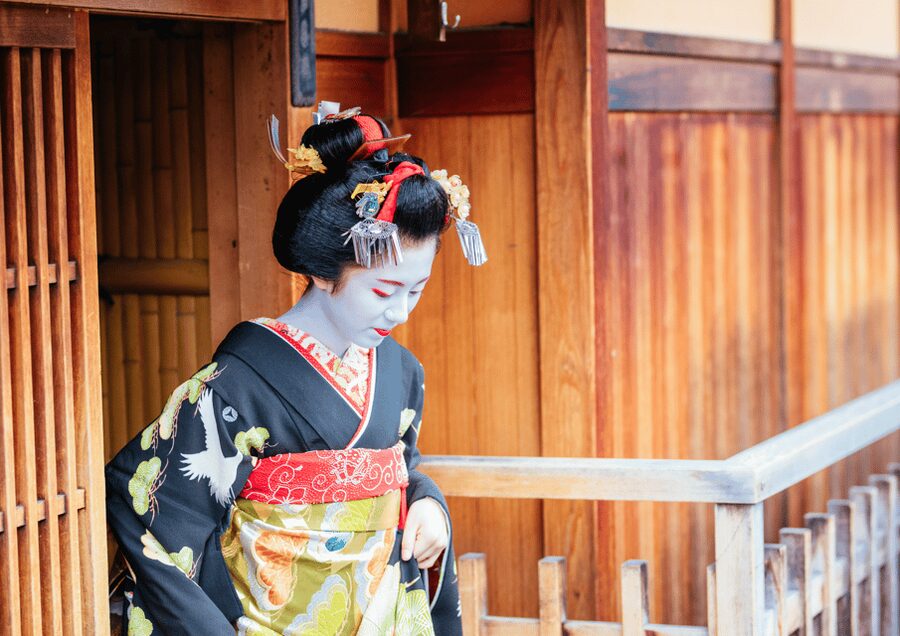
- A full hour with a maiko: You watch a dance, ask about her life, and learn about the training and customs of Kyoto’s geisha districts.
- Quieter Gion streets: The walk is not limited to the busiest road. Guides have taken people through less crowded lanes and to a temple.
- Tea and a Japanese snack: These simple refreshments help create the right setting for the performance.
- English interpretation: Your guide explains the conversation and helps you understand etiquette, customs, and the maiko’s answers.
- A useful meeting point: The tour begins at the Izumo-no-Okuni Statue above Gion Shijo Station and ends at Hangesho.
Starting at the Izumo-no-Okuni Statue
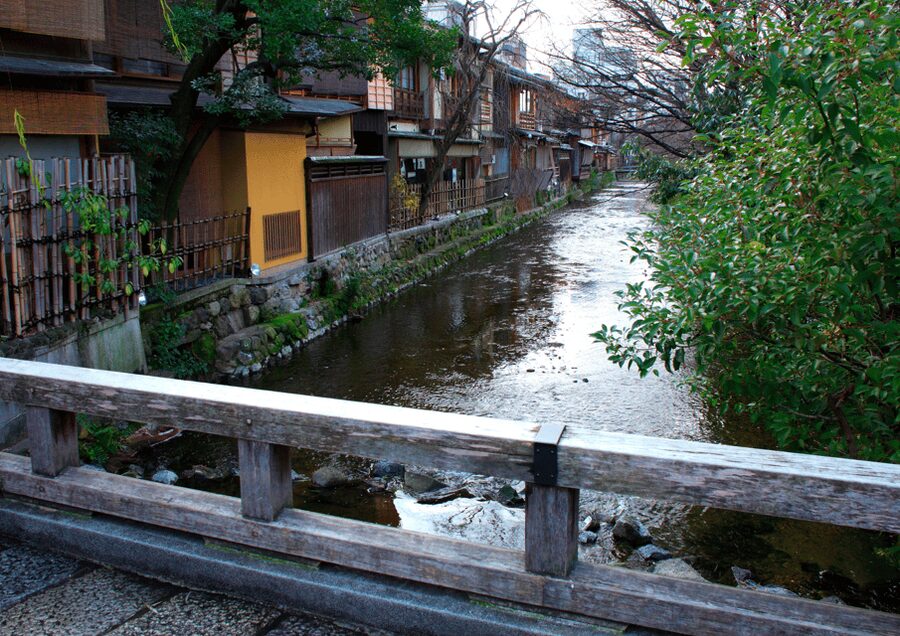
The meeting point is the Izumo-no-Okuni Statue, directly above Gion Shijo Station. Look for a guide holding a white board marked GuideMe Japan. This is a practical starting place because Gion Shijo Station is easy to reach within Kyoto, and you do not need to search for a small side street before the tour begins.
The tour ends at Hangesho, so you should not expect to return to the statue. If you have dinner reservations or an evening train, allow a little extra time after the scheduled finish. The supplied information gives a two-hour duration, but city walks and conversations can feel full, so I would avoid scheduling something immediately afterward.
Your guide speaks English, and the names attached to particularly well-liked tours include Ai Iwata, Rin, Yoshino, Soichiro, Tang, and Hikaru Kuroki. The guide may vary, but the pattern is clear: a warm, capable interpreter makes a major difference here. Ai, for example, was praised for explaining when photographs were appropriate, while other guides helped families, translated patiently, and answered detailed cultural questions.
More Kimono Experiences in Kyoto
- [Kyoto & Nara Day Tour] Sagano Scenic Railway & Nara Park & Fushimi Inari Taisha Thousand Torii Gates & Togetsukyo Bridge & Bamboo Grove & Kimono Forest (Departing from Osaka)
★ 4.9 · 10,942 reviews - Kyoto Geisha Walking Tour: Gion District & Hidden Gems
★ 4.7 · 3,273 reviews - Kyoto: Gion Magical Night Walking Tour with Geisha Trivia
★ 4.9 · 2,393 reviews
The first hour: seeing Gion beyond the main street
The opening hour is a guided walk through Gion. You learn how the district developed, how maiko and geiko fit into Kyoto’s cultural life, and what you are seeing as you move through the area. This context matters because Gion can otherwise become a procession of attractive wooden buildings and camera stops without much understanding of their purpose.
The route includes the main area of Gion, but it can also reach quieter alleyways and a temple. That balance is one of the tour’s strongest features. The busier streets give you the familiar Kyoto scenes, while the side lanes make the neighborhood feel less like a backdrop and more like a living district.
Several guides have also pointed out local shops, including a place selling chopsticks engraved with names and a candy shop. These stops can help explain how traditional products serve both local families and people looking for souvenirs. One person found the designated shop pauses irritating, so your reaction may depend on your interest in buying local goods. If you prefer uninterrupted walking, keep that possible interruption in mind.
A good guide also helps with conduct. Gion is a working neighborhood, not a theme park. Advice about photography and appropriate behavior is valuable, especially in an area where people may be tempted to chase a glimpse of a maiko or geiko. The walk gives you a better framework for observing politely.
Why the small group matters
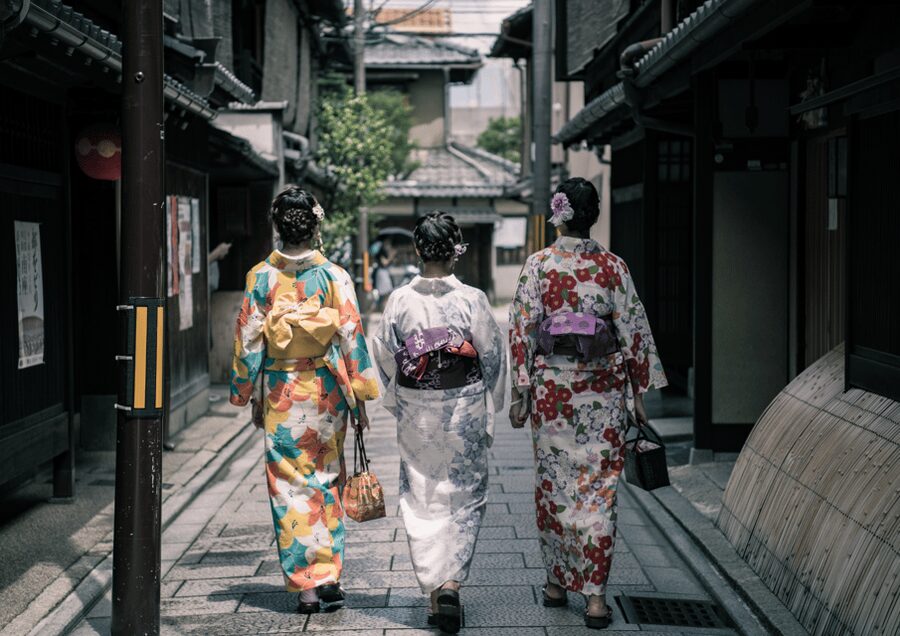
The maximum group size is six people. That number changes the feel of the experience. You are not trying to hear a guide from the back of a crowd, and you have a realistic chance to ask about details that interest you.
The smaller format is especially useful during the maiko session. Each person can take part in the fan game, and questions do not need to be rushed through a long line of participants. Families have enjoyed the format, including one group with a tween and teen, while couples have used it as a special activity during a honeymoon.
The group size may also make the walking hour more flexible. Guides have been able to explain small details in side streets and respond to individual questions about Gion, Japanese culture, and local customs. For a subject that can easily be reduced to costume and dance, that personal explanation adds real value.
There is one trade-off. A small group does not make the price inexpensive. At $108, you are paying a premium for access, interpretation, and a more private setting. If you only want to see Gion’s streets, you can walk the district independently for far less. This tour makes better financial sense if you also want the maiko conversation and game.
The second hour: tea, dance, and conversation
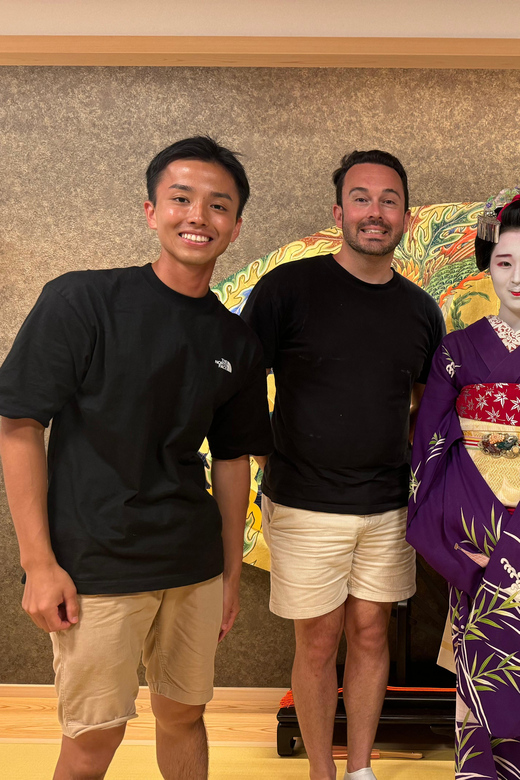
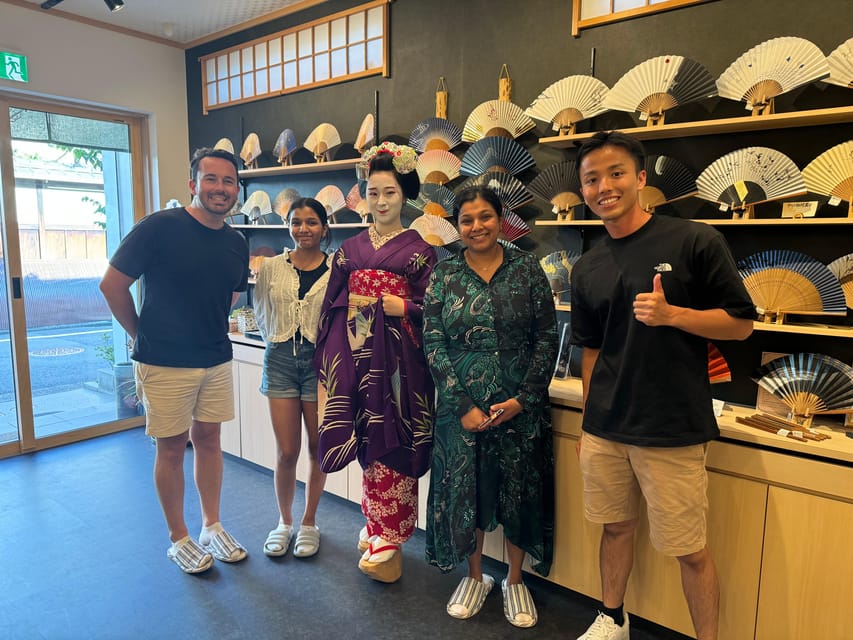
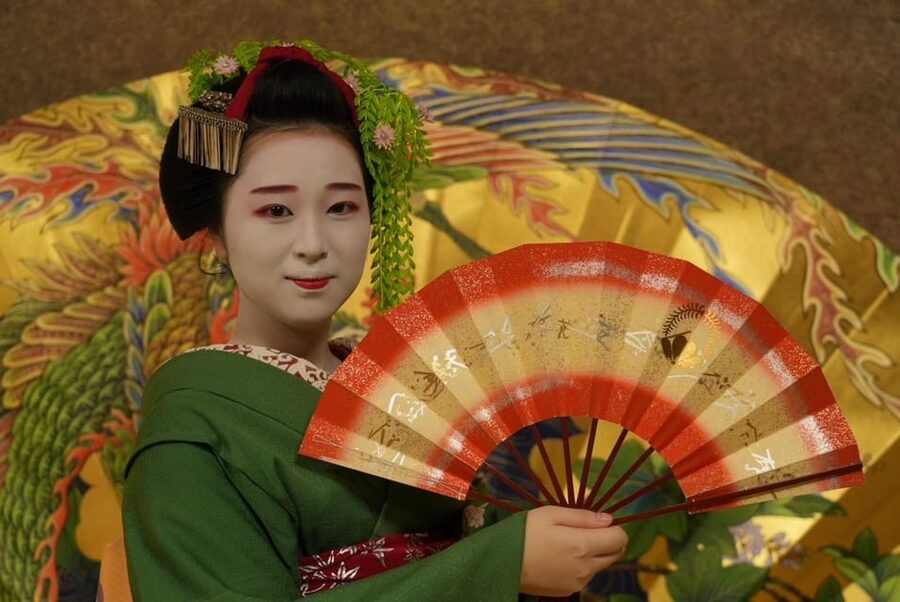
The main event takes place during the second hour. You sit down with tea and a Japanese snack, then watch a maiko perform a traditional dance. The setting is described in several accounts as a separate room inside a fan shop, with people seated on pillows.
The dance is brief enough to remain focused, but it is not a hurried photo opportunity. The appeal comes from seeing the controlled movements, formal presentation, and traditional performance at close range. You are close enough to appreciate details that would be easy to miss in a large theater.
After the dance, you have time to ask questions about the maiko’s current life and the wider world of maiko and geiko. Your guide interprets the exchange in English. This is where the experience becomes more than a show. You can ask about daily routines, training, performance, and the transition between apprentice and established entertainer, within the limits of what the maiko chooses to discuss.
The interpretation is important. Even if you know a little about Japanese culture, the guide helps keep the conversation moving and explains meaning that may not come across directly. Several named guides, including Rin, Ai, and Yoshino, received praise for handling this part with patience and warmth.
Photography is included as part of the experience, according to the supplied tour accounts, and people have had the opportunity to take pictures with the maiko after the performance. Still, follow your guide’s instructions rather than assuming every moment is open to cameras. The etiquette advice is one of the more useful parts of the tour.
More Walking Tours in Kyoto
- Kyoto: Gion Geisha District Walking Tour – Stories of Geisha
★ 4.7 · 2,187 reviews - Night Walk in Gion: Kyoto’s Geisha District
★ 4.5 · 2,003 reviews - Kyoto Gion Geisha District Walking Tour – The Stories of Geisha
★ 5.0 · 1,441 reviews - Nishiki Market Brunch Walking Tour (7 Tastings + Brunch)
★ 5.0 · 1,355 reviews
Playing the traditional Japanese fan game
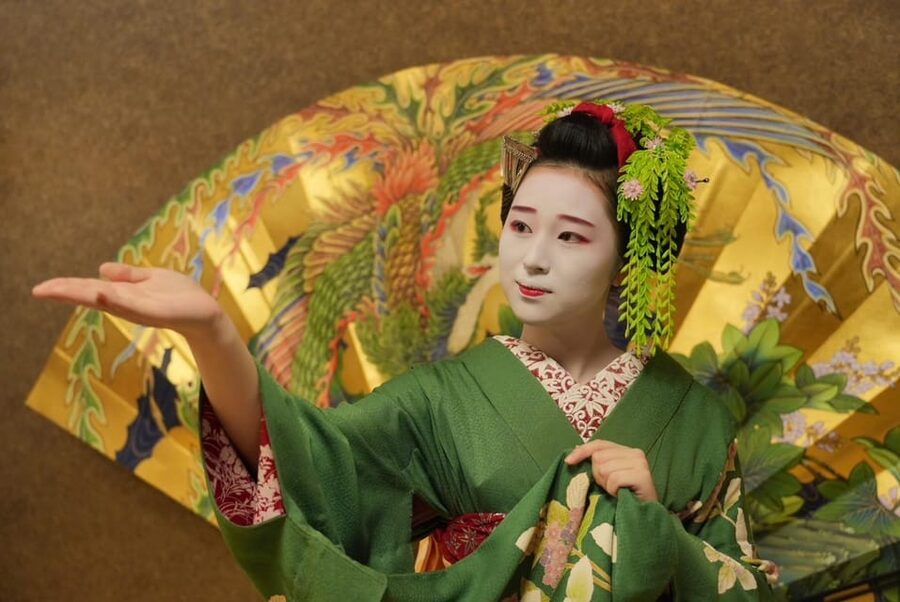
After the questions, you play a traditional fan game with the maiko. The game is simple enough for everyone to join, but it gives the meeting a playful side. You are not only sitting quietly through a formal performance. You get a chance to interact, laugh, and take part in a custom connected with the geisha world.
The game also works well for families. A young participant can enjoy the activity even without knowing much about Kyoto’s arts, while adults can appreciate the cultural explanation behind it. One account described a player scoring zero points but still having a good time, which is a fair warning not to treat this as a serious contest.
The tone is carefully balanced. The dance provides elegance and ceremony, while the game makes the experience relaxed and human. I like that combination because it avoids turning the maiko into a distant display behind glass.
Some participants have also received a signed premium fan as a keepsake. Because the listed inclusions specifically promise the fan game, tea, snack, walk, and show, I would treat a signed fan as a possible extra rather than something to book solely expecting. Ask the operator if that souvenir matters to you.
What makes the cultural explanation worthwhile
The word geisha can carry a lot of outside assumptions. A good guide helps separate popular images from the actual traditions of Kyoto’s maiko and geiko communities. The walk and question session work together: first you learn how Gion functions as a district, then you meet someone connected to the art form you have been discussing.
This is also a useful way to approach the experience respectfully. You learn when to take photographs, how to behave in the streets, and why chasing performers is inappropriate. That guidance protects both your experience and the dignity of people who live and work in Gion.
The tour does not promise access to every part of maiko life. You receive a performance, an interpreted conversation, and a game within a set two-hour schedule. That is enough for a meaningful introduction, but not a full course in Kyoto’s entertainment traditions. I would arrive curious and ready to listen rather than expecting an unrestricted look behind the scenes.
Price, timing, and practical value
The cost is $108 per person. For a standard walking tour, that would be expensive. For a six-person experience that includes an hour with a maiko, an interpreted question session, a traditional game, tea, and a Japanese snack, the price is easier to justify.
I would compare it with the cost of arranging several separate activities. You could walk Gion alone, but you would not receive the same historical explanations or etiquette advice. You could attend a larger cultural performance, but you might not have the same chance to ask personal questions or play the game. The value lies in combining those parts in a small setting.
The fixed two-hour length also suits a busy Kyoto schedule. You can place it between sightseeing and dinner without giving up half a day. Check the available starting times when booking, since the exact departure time can vary.
Free cancellation is available up to 24 hours before the start for a full refund. You can also reserve and pay later, which helps if your Kyoto plans are still shifting. These policies are useful, but the more important planning point is to arrive at the statue on time. The guide needs to gather the small group before setting off.
Who should book this Kyoto experience?
I would recommend it most strongly to people who have a real interest in Japanese performance, local customs, or the history of Gion. Couples, families, and first-time visitors can all enjoy it, particularly if you want an evening activity that feels more personal than a large stage show.
It is also a strong choice for anyone nervous about navigating cultural etiquette alone. The guide explains where photographs are suitable and interprets the maiko’s answers, so you do not have to guess your way through the encounter.
Families should note that the show is formal, but the fan game adds an easy point of connection for younger participants. The small group also means children are less likely to disappear into a crowd. A parent may still want to explain beforehand that the walk and dance require respectful attention.
I would hesitate to recommend it if you want a cheap, independent stroll or dislike planned shop stops. You may also find the experience less satisfying if you expect a long performance or a full evening of entertainment. It is a compact cultural introduction, not a broad tour of all Kyoto nightlife.
Should you book the Gion maiko tour?
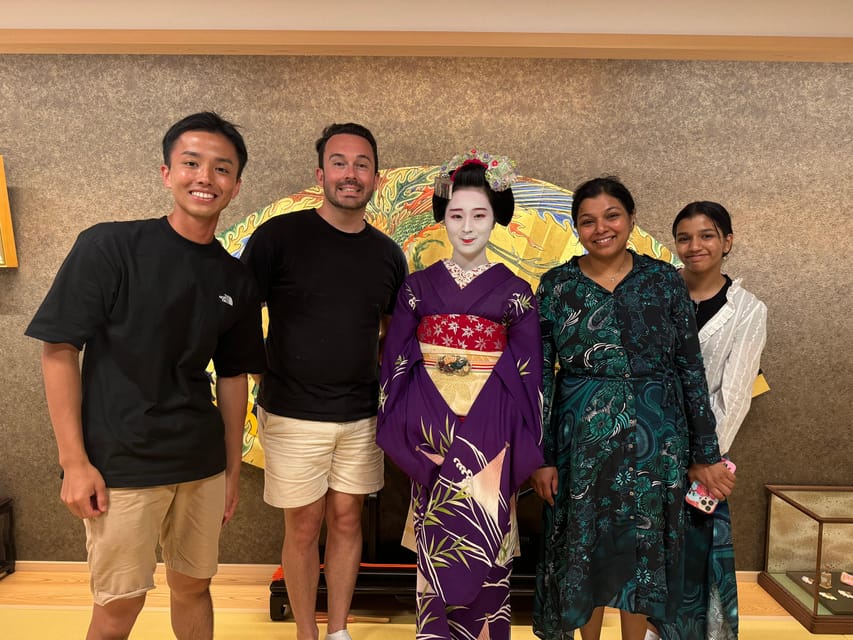
Book it if the idea of meeting a maiko, asking thoughtful questions, and taking part in a traditional fan game appeals to you. The strongest parts are the small group, careful English interpretation, quieter Gion streets, and the balance between a graceful dance and a friendly activity.
Skip it if your priority is simply seeing Gion’s architecture at your own pace, or if $108 feels too high for a two-hour outing. For the right audience, though, the fee buys something difficult to arrange independently: a respectful, close-up introduction to an important Kyoto art tradition with time to ask and listen.
FAQ
How long does the Gion walking and maiko experience last?
The experience lasts two hours. The first hour is a guided walk through Gion, and the second hour includes the maiko dance, questions, tea, a Japanese snack, and the traditional fan game.
Where does the tour begin?
It begins at the Izumo-no-Okuni Statue directly above Gion Shijo Station. The guide holds a white board that says GuideMe Japan.
Where does the experience finish?
The tour finishes at Hangesho.
Is the tour conducted in English?
Yes. The live guide speaks English, and the guide interprets the conversation with the maiko.
How many people can join the group?
The tour is limited to six participants, creating a small-group setting for the walk, questions, and fan game.
What is included in the $108 price?
The price includes the one-hour Gion walking tour, the one-hour maiko show, tea, a Japanese snack, and the traditional Japanese fan game with the maiko. Additional food and other personal expenses are not included.
More Show in Kyoto
- Kyoto Sumo Show with Experience & Photo, 2 Drinks Included
★ 5.0 · 941 reviews - Kyoto: Sumo Experience (with Live Show & Audience Challenge)
★ 5.0 · 519 reviews - Kyoto Gion Cultural Walk & Geisha Show with Dining Options
★ 5.0 · 518 reviews - Kyoto Gion Cultural Walk & Geisha Show with Dining Options
★ 5.0 · 483 reviews
Just added in Kyoto
- The “Golden Route” and Ancient Japan by DIAMIR Erlebnisreisen – 14-Day Tour★ 2.0 · 2 reviews
- Japan: Castles & Cuisine by G Adventures – 6-Day Kyoto to Osaka Tour★ 4.5 · 4 reviews
- Cycle Japan by Explore! – 13-Day Kyoto to Tokyo Tour★ 4.7 · 12 reviews
- Cycle Japan by Intrepid Travel – 11-Day Kyoto to Tokyo Tour★ 4.8 · 2 reviews
- Classic Japan by Intrepid Travel – 11-Day Kyoto to Tokyo Tour★ 4.4 · 14 reviews
- Ancient & Modern Japan 14-Day Tour by Exodus Adventure Travels★ 4.4 · 40 reviews
- 5 Day Cultural Adventure of Kyoto, Nara & Osaka by Tourist Journey★ 2.5 · 2 reviews
- 12 Days Kinosaki Onsen Escape: A Journey Through Japan’s Timeless Towns by UME Travel★ 4.8 · 5 reviews
Kimono and Cultural Dress, compared.
![[Kyoto & Nara Day Tour] Sagano Scenic Railway & Nara Park & Fushimi Inari Taisha Thousand Torii Gates & Togetsukyo Bridge & Bamboo Grove & Kimono Forest (Departing from Osaka)](https://media.japanvisits.com/wp-content/uploads/kyoto-nara-day-tour-sagano-scenic-railway-nara-park-fushimi-inari-taisha-thousand-torii-gates-togetsukyo-bridge-bamboo-grove-kimono-forest-departing-from-osaka-k110001-400x257.jpg)

Tokyo Asakusa Kimono&Yukata Rental at Kimono Miyabi Asakusa Station
Read our review →
Kyoto Geisha Walking Tour: Gion District & Hidden Gems
Read our review →
Gion Magical Night Walking Tour with Geisha Trivia
Read our review →
Gion Geisha District Walking Tour – Stories of Geisha
Read our review →
Best of Kyoto: Gion, Geisha, Pagodas & Cobblestones
Read our review →
Kyoto Kimono Rental Experience (Optional Exquisite Hair Styling/Japanese Makeup/Photography) (Ookini Kiyomizu-dera Main Store)
Read our review →Browse the lists this tour appears in