
Reviewed · KIMONO AND CULTURAL DRESS
Guided Gion Tour: Explore Kyoto’s Historic Geisha District
Gion changes character by the hour. This private two-hour walk takes you through Kyoto’s famous geisha district, pairing preserved wooden streets with Yasaka Shrine, Maruyama Park, Chion-in Temple, and the chance to spot a maiko or geisha along the way. I like the private format, which lets you ask questions and adjust the pace, and I like that you can choose a quieter morning or a more atmospheric evening.
The tour also gives you useful local context rather than just a string of photo stops. Guides such as Ahmed and Mat have been praised for clear explanations and thoughtful answers. The main caution is simple: a geisha or maiko sighting is never guaranteed, and this is not a booked meeting or performance.
In This Review
- Key Points Before You Book
- Why Gion Works Best With a Guide
- Starting Among Gion’s Old Streets
- Izumo no Okuni and the Origins of Kabuki
- Chion-in’s Great Gate
- Yasaka Shrine and Kyoto’s Festival Life
- A Pause in Maruyama Park
- Hanamikoji Street and the Geisha District’s Famous Face
- How the Two-Hour Pace Feels
- Is the $350 Group Price Good Value?
- Weather, Comfort, and Who Should Book
- Should You Book the Guided Gion Tour?
- FAQ
- How long is the Guided Gion Tour?
- How much does the tour cost?
- Is the tour private?
- Does the tour include time with a geisha or maiko?
- What places are included?
- Can I choose the tour time?
- Is pickup available?
- What happens if the weather is poor?
Key Points Before You Book
- Private group of up to eight: The $350 price covers your group, not each person, so the value improves with more participants.
- Two hours of classic Kyoto: You visit Gion, Hanamikoji Street, Yasaka Shrine, Maruyama Park, the Izumo no Okuni Statue, and Chion-in’s great gate.
- Geisha sightings are possible, not promised: The guide takes you to places where you have a reasonable chance of seeing maiko or geisha moving between appointments.
- Morning and evening options: Early hours can feel calmer, while night brings lit lanes and a different mood.
- Strong guide feedback overall: The experience carries a 4.6 rating from 16 reviews, with 94 percent recommending it.
- Weather matters: The tour requires good weather. A poor-weather cancellation brings a different date or a full refund.
Why Gion Works Best With a Guide
Gion looks easy to walk through on a map. It is not difficult to reach, but the meaning of its streets is less obvious when you are on your own. A guide can explain the difference between a traditional machiya house, a tea house, a shrine approach, and the private world behind the district’s quiet entrances.
That context is the main reason to consider this tour. You are not paying for admission to major attractions, since the listed stops are free. You are paying for someone to connect the buildings, customs, performing arts, and daily rhythms of Gion while you walk.
The private setup makes a real difference. Your group can ask about geisha culture, Kyoto traditions, architecture, festivals, or the route itself. With up to eight people, it can work well for a family or a small group of friends who want a more personal walk than a large scheduled outing.
Still, guide quality matters. Most of the available feedback is strongly positive, especially for Ahmed and Mat, but one poor experience described a guide who seemed absent, unfriendly, and not very informative. That is worth keeping in mind because a walking tour depends heavily on the person leading it.
More Kimono Experiences in Kyoto
- [Kyoto & Nara Day Tour] Sagano Scenic Railway & Nara Park & Fushimi Inari Taisha Thousand Torii Gates & Togetsukyo Bridge & Bamboo Grove & Kimono Forest (Departing from Osaka)
★ 4.9 · 10,942 reviews - Kyoto Geisha Walking Tour: Gion District & Hidden Gems
★ 4.7 · 3,273 reviews - Kyoto: Gion Magical Night Walking Tour with Geisha Trivia
★ 4.9 · 2,393 reviews
Starting Among Gion’s Old Streets
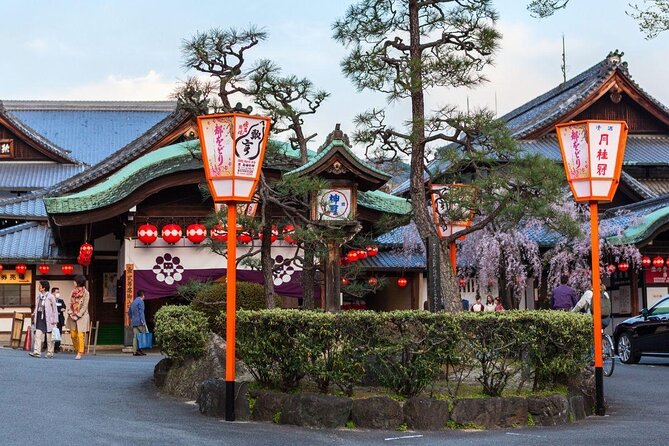
The first hour focuses on the Gion area itself. This is the part where you get the clearest sense of Kyoto’s old entertainment district, with traditional architecture and streets associated with tea houses, geisha, and maiko.
You may be lucky enough to see a performer in Hanamikoji or another nearby lane, but you should set your expectations correctly. A sighting means seeing someone on the way to work, not stopping for a photograph or having time together. The guide’s role is to help you recognize the places where sightings are more likely while reminding you to behave respectfully.
That distinction is important. Gion is a working neighborhood, not an open-air stage. The tour is more rewarding when you appreciate the setting itself, even if nobody in geisha attire appears during your walk.
The timing choice can shape the experience. An early morning outing gives you a better chance of walking before the district becomes crowded. An evening tour lets you see streetlights come on and gives the wooden facades a softer, more dramatic appearance.
The tradeoff is that different times offer different kinds of access and atmosphere. Morning is likely to feel calmer, while evening may feel more visually appealing but less quiet. Since the duration is only about two hours, choose the time that matches your priority rather than trying to see every possible version of Gion.
Izumo no Okuni and the Origins of Kabuki
The brief stop at the Izumo no Okuni Statue adds an interesting performing-arts connection to the walk. The statue honors Izumo no Okuni, the pioneering figure associated with the founding of Kabuki theater.
You spend only about 15 minutes here, so this is not a full museum-style history lesson. Its value comes from the link between Kyoto’s entertainment districts and Japan’s stage traditions. If you are interested in theater, dance, or the development of Japanese popular culture, this stop gives the guide a natural chance to explain how performance shaped the area.
This is also a good example of why a guide can improve a short walking route. Without context, the statue could pass as another monument. With an explanation, it becomes part of the larger story of performance and public life in Kyoto.
Chion-in’s Great Gate
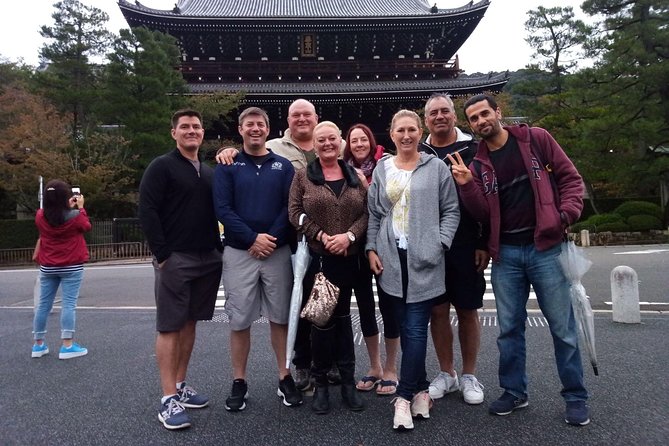
The Chion-in Temple Gate is a quick stop, listed at about 15 minutes, but it provides one of the route’s most imposing sights. The huge wooden entrance gives you a sense of scale that the narrow lanes of Gion do not always provide.
The gate is associated with Chion-in, one of Kyoto’s important Buddhist temples. Here, you can pause for photographs and look at the woodwork and carved details before continuing toward Yasaka Shrine.
Do not expect a long temple visit during this tour. The stop centers on the gate rather than an extended exploration of the temple grounds. That makes the route efficient, but it also means you may want to return independently if Chion-in is high on your Kyoto list.
A completely different kind of day out:
- PERFECT KYOTO 1-Day Bus Tour
★ 5.0 · 13,518 reviews - Kyoto: Fushimi Inari, Kinkakuji, Bamboo Grove 1 Day Bus Tour
★ 4.8 · 4,316 reviews - Kyoto: Tea Ceremony in a Traditional Tea House in Kiyomizu
★ 4.9 · 3,519 reviews - Kyoto: Gion Make Your Own Chopsticks with Engraving Option
★ 5.0 · 3,465 reviews
Yasaka Shrine and Kyoto’s Festival Life
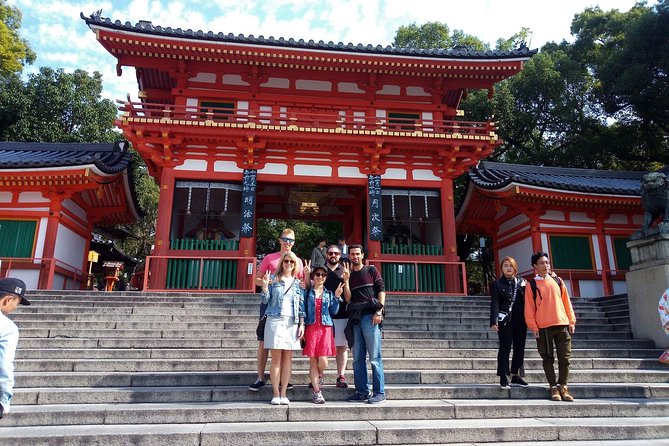
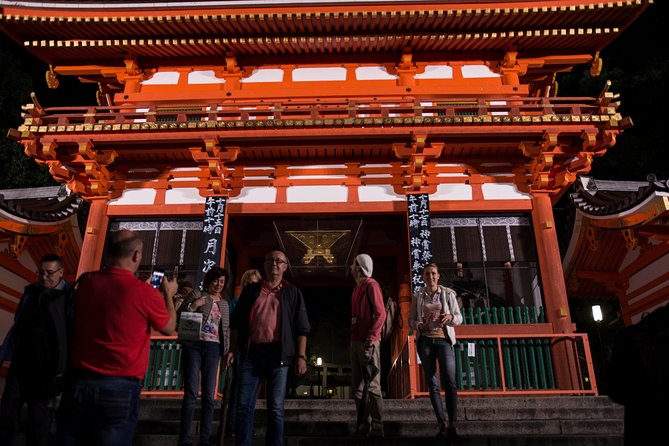
Yasaka Shrine takes about 10 minutes on the planned route. Its lantern-lit paths and colorful Shinto setting make it one of the most recognizable places in this part of Kyoto.
The shrine is closely connected with Kyoto’s festivals, and your guide can help explain why it matters beyond its appearance. This is a useful contrast with Gion’s tea houses and wooden residences. The district is not only about geisha culture. It also has active religious sites that remain part of local life.
The short timing keeps the walk moving, though you will not have much time for a slow shrine visit. If you want to linger, make a note of the places you would like to revisit after the tour.
Yasaka Shrine is also a practical landmark. Its location helps tie together the eastern edge of Gion, Maruyama Park, and the streets leading toward Hanamikoji. The guide can make that geography easier to understand, especially during a first visit to Kyoto.
A Pause in Maruyama Park
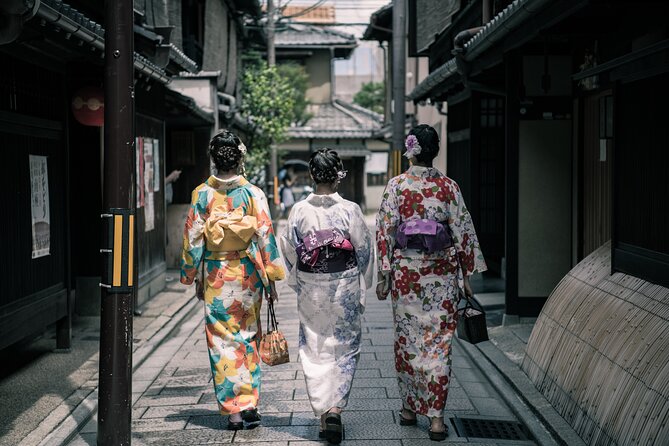
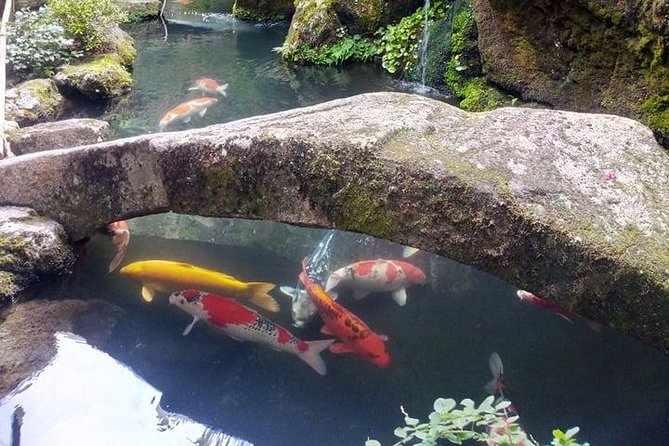
Maruyama Park provides a welcome change from the stone lanes and built-up streets. The 10-minute stop offers a little open space, with ponds, paths, and seasonal cherry blossoms.
The park works particularly well as a breathing point in the walk. That matters in Kyoto’s heat, when even a two-hour outing can feel longer than expected. One family found the pace difficult on an extremely hot day and needed to stop and rest, so you should take the weather seriously.
The short break is useful, but do not expect a long stroll through every corner of the park. The tour gives you an introduction and a chance to pause, not a full park visit. If cherry blossoms are in season, you may want to return with more time.
Hanamikoji Street and the Geisha District’s Famous Face
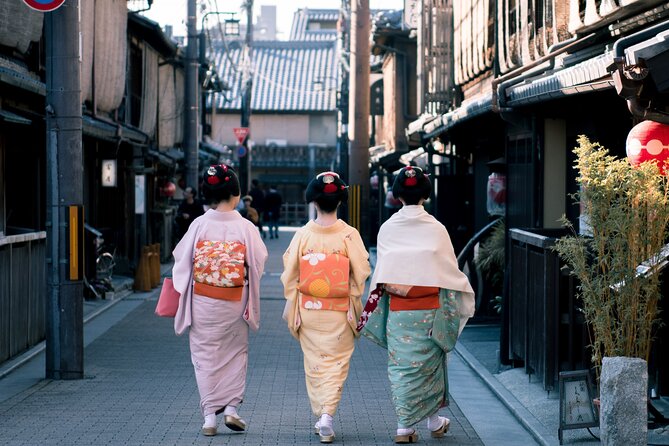
Hanamikoji Street is the route’s most recognizable geisha-district setting. Traditional teahouses and elegant wooden machiya buildings line the street, giving you the classic Kyoto views many people hope to see.
This is where the tour’s photography appeal is strongest. You can take pictures of the architecture, but you need to remember that the street is also part of a private working district. Photography rules and local manners matter, particularly if you see a maiko or geisha passing by.
The guide can point out likely sighting areas and help you understand what you are seeing. That is more useful than simply wandering through and assuming every person in traditional clothing is a geisha. The chance of seeing a genuine maiko is one of the experience’s attractions, but it remains chance, not a promised feature.
One review made the key point clearly: this tour does not include time with a geisha or maiko. If you want a guaranteed performance, meal, or formal cultural meeting, this is not the right product. If you want a guided look at the streets where these traditions remain visible, it fits much better.
How the Two-Hour Pace Feels
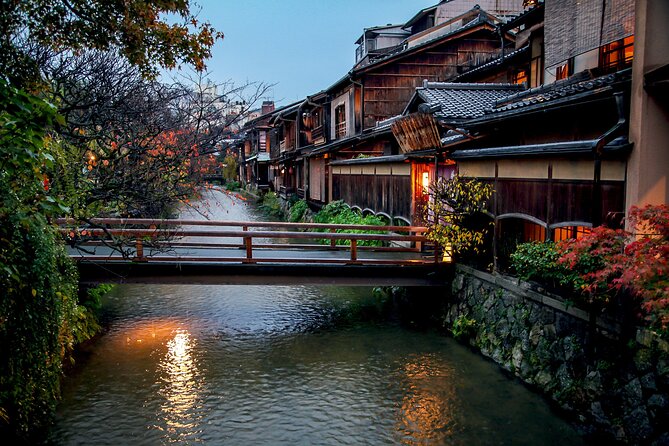
The planned stops add up to roughly two hours:
- Gion area: about one hour
- Izumo no Okuni Statue: about 15 minutes
- Chion-in Temple Gate: about 15 minutes
- Yasaka Shrine: about 10 minutes
- Maruyama Park: about 10 minutes
- Hanamikoji Street: about 10 minutes
That schedule is compact. You cover several notable places without paying admission or spending half a day on a single attraction. I would think of it as an orientation walk, not a complete study of Gion.
The pace may suit you if you want a clear introduction before exploring on your own. It may feel rushed if you stop often for photographs, have mobility concerns, or are visiting during very hot weather. Ask questions as you go, but remember that every long conversation takes time away from the next stop.
The private nature gives the guide some flexibility. You can ask for more explanation at a favorite place, though the exact balance will depend on your guide and your group’s interests. Ahmed has been singled out for punctuality and strong explanations, while Mat has been praised for being considerate and answering questions well.
Is the $350 Group Price Good Value?
The price is $350 per group of up to eight people. For one or two people, that is a substantial cost for a two-hour walk. For a full group, the calculation looks much better, since the same fee can be shared among several people.
Because admission is free at the stops, the fee covers the guiding and management rather than tickets. You are paying for interpretation, route planning, private attention, and the convenience of having someone explain what you are seeing.
I would consider it fair value for a group that wants a structured introduction and would otherwise struggle to understand the cultural details of Gion. It is less compelling if you are happy wandering independently, already understand Kyoto’s history, or mainly want guaranteed access to a geisha performance. The tour cannot provide that guarantee.
Pickup is offered, and the route is near public transportation. One reported outing began with the guide meeting the group at Kyoto Station and taking a bus to Gion. Since arrangements can vary, confirm the meeting details when you book.
Weather, Comfort, and Who Should Book
The experience requires good weather. If poor weather cancels the tour, you can choose another date or receive a full refund. You can also cancel for a full refund up to 24 hours before the start time. Cancellations or changes inside 24 hours are not refunded or accepted.
Most people can participate, and the tour is near public transportation. Even so, this is a walking experience with outdoor exposure. In hot weather, wear light clothing, carry water, and be ready to pause. The available feedback shows that heat can affect the pace, especially for families.
I think the tour suits:
- First-time Kyoto visitors who want a clear introduction to Gion
- Small groups who prefer a private guide
- Families or friends who want to ask many questions
- People interested in architecture, Japanese performing arts, and local customs
- Photographers who want classic Gion streets and shrine views
- Anyone choosing between a quiet morning and a more atmospheric evening
You may want to skip it if your main goal is a guaranteed geisha encounter, an extended temple visit, or a full-day cultural program. The tour is short and focused, which is a benefit for some people and a limit for others.
Should You Book the Guided Gion Tour?
I would book this tour if you are sharing the $350 cost with a group and want more than a self-guided walk through attractive streets. Its best qualities are the private format, the range of major Gion sights, and the chance to ask questions about customs that are easy to miss on your own.
Go in with realistic expectations. You might see a maiko or geisha, but you will not spend scheduled time with one. Choose morning for a calmer walk, evening for glowing streetlights, and avoid the hottest part of the day if anyone in your group struggles with heat.
The strong 4.6 rating and 94 percent recommendation rate suggest a dependable experience overall, but the guide remains the deciding factor. Ahmed and Mat receive especially warm praise for clear, considerate service. If you want a compact, personal introduction to Kyoto’s most famous historic district, this is a sensible choice. If you want a guaranteed performance or a deep temple visit, spend your money elsewhere.
FAQ
How long is the Guided Gion Tour?
The tour lasts approximately two hours.
How much does the tour cost?
The price is $350 per group, with up to eight people included.
Is the tour private?
Yes. Only your group participates in the private activity.
Does the tour include time with a geisha or maiko?
No. The tour does not include scheduled time with a geisha or maiko. The guide takes you to places where you may have a chance to spot one, but sightings are not guaranteed.
What places are included?
The route includes the Gion area, the Izumo no Okuni Statue, Chion-in Temple Gate, Yasaka Shrine, Maruyama Park, and Hanamikoji Street.
Can I choose the tour time?
Tours are available throughout the day. An early morning tour offers a quieter setting, while an evening tour lets you see Gion after the streetlights come on.
Is pickup available?
Yes, pickup is offered. The experience is also near public transportation. A reported tour meeting point was Kyoto Station, followed by a bus ride to Gion.
What happens if the weather is poor?
The experience requires good weather. If it is canceled because of poor weather, you can choose a different date or receive a full refund. You can cancel at least 24 hours before the start time for a full refund.
Just added in Kyoto
- The “Golden Route” and Ancient Japan by DIAMIR Erlebnisreisen – 14-Day Tour★ 2.0 · 2 reviews
- Japan: Castles & Cuisine by G Adventures – 6-Day Kyoto to Osaka Tour★ 4.5 · 4 reviews
- Cycle Japan by Explore! – 13-Day Kyoto to Tokyo Tour★ 4.7 · 12 reviews
- Cycle Japan by Intrepid Travel – 11-Day Kyoto to Tokyo Tour★ 4.8 · 2 reviews
- Classic Japan by Intrepid Travel – 11-Day Kyoto to Tokyo Tour★ 4.4 · 14 reviews
- Ancient & Modern Japan 14-Day Tour by Exodus Adventure Travels★ 4.4 · 40 reviews
- 5 Day Cultural Adventure of Kyoto, Nara & Osaka by Tourist Journey★ 2.5 · 2 reviews
- 12 Days Kinosaki Onsen Escape: A Journey Through Japan’s Timeless Towns by UME Travel★ 4.8 · 5 reviews
Kimono and Cultural Dress, compared.
![[Kyoto & Nara Day Tour] Sagano Scenic Railway & Nara Park & Fushimi Inari Taisha Thousand Torii Gates & Togetsukyo Bridge & Bamboo Grove & Kimono Forest (Departing from Osaka)](https://media.japanvisits.com/wp-content/uploads/kyoto-nara-day-tour-sagano-scenic-railway-nara-park-fushimi-inari-taisha-thousand-torii-gates-togetsukyo-bridge-bamboo-grove-kimono-forest-departing-from-osaka-k110001-400x257.jpg)

Tokyo Asakusa Kimono&Yukata Rental at Kimono Miyabi Asakusa Station
Read our review →
Kyoto Geisha Walking Tour: Gion District & Hidden Gems
Read our review →
Gion Magical Night Walking Tour with Geisha Trivia
Read our review →
Gion Geisha District Walking Tour – Stories of Geisha
Read our review →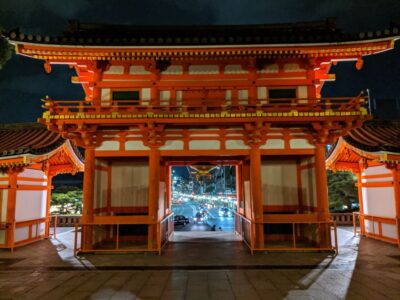
Best of Kyoto: Gion, Geisha, Pagodas & Cobblestones
Read our review →

Kyoto Kimono Rental Experience (Optional Exquisite Hair Styling/Japanese Makeup/Photography) (Ookini Kiyomizu-dera Main Store)
Read our review →Browse the lists this tour appears in