
Reviewed · WALKING TOURS
Half-Day Private Walking Tour in Kyoto
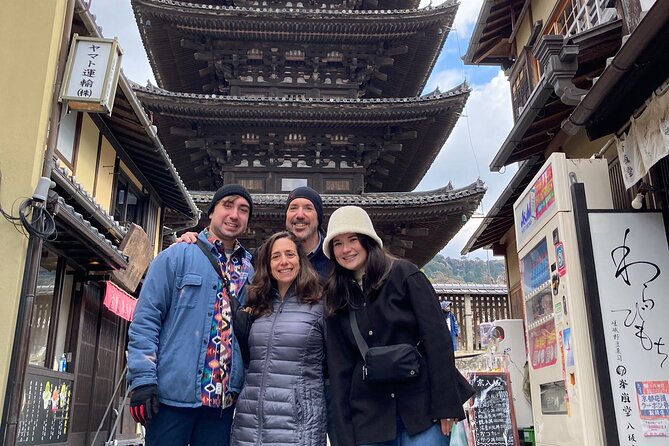
Kyoto rewards curious walkers. This private tour links Kiyomizu-dera, Gion, and Nishiki Market in about three and a half hours, while a local guide adds the customs, stories, food tips, and small shopping stops that are easy to miss on your own. I especially like the private format, which lets your guide adjust the pace and answer your questions, and the mix of temples, old lanes, theater history, and market food. Guides such as Philip, Rika, Reiko, Kaoru, Hiro, and Akiko have been praised for tailoring the outing to personal interests.
The main caution is simple: this is a serious walk. You climb around Kiyomizu-dera, move through crowded shopping streets, and continue across central Kyoto to Nishiki Market. The $95.77 per-person price also excludes the Kiyomizu-dera admission fee and transportation to the meeting point, so the value is best for a first visit or a short stay when efficient sightseeing matters.
In This Review
- Key points at a glance
- Why this route works for a first day in Kyoto
- Kiyomizu-dera: Kyoto’s famous wooden stage
- Sannenzaka and Ninenzaka: shops worth slowing down for
- Yasaka Shrine and the basics of Shinto prayer
- Gion, maiko culture, and the Minamiza theater
- Pontocho: a street to save for evening
- Nishiki Market: Kyoto served in small bites
- What the $95.77 price really buys you
- Guide quality and private-tour flexibility
- Timing, fitness, and practical planning
- Should you book this Kyoto walking tour?
- FAQ
- How long is the private Kyoto walking tour?
- Which places are included?
- Is the Kiyomizu-dera entrance fee included?
- Is transportation included?
- Is this a private tour?
- What happens if I need to cancel?
Key points at a glance
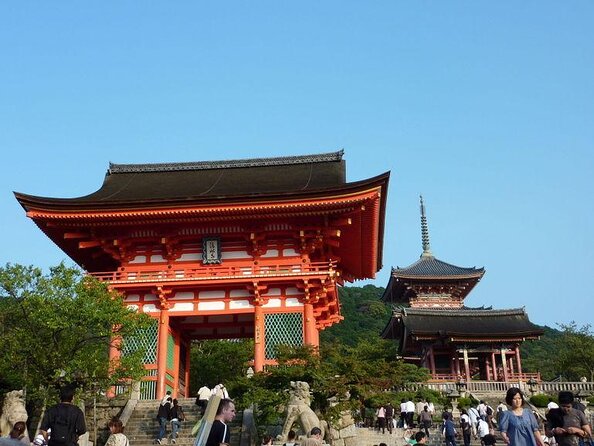
- Five classic Kyoto areas in one route: Kiyomizu-dera, Sannenzaka and Ninenzaka, Yasaka Shrine, Gion, and Nishiki Market.
- A genuinely private experience: Only your own group participates, making it easier to ask questions or request a change of pace.
- Strong guide flexibility: Rika, Reiko, Hiro, Kaoru, Akiko, and Philip have all been praised for adapting routes to interests, shopping needs, food preferences, and accessibility concerns.
- Useful local customs: Your guide explains how to pray at a Shinto shrine and helps make sense of Kyoto’s temple and shrine traditions.
- Food and shopping are part of the plan: Matcha, pickles, fried foods, takoyaki, karaage, spices, sweets, and other market foods appear along the way.
- Plan for comfortable shoes: The route takes about 3 hours 30 minutes and includes plenty of walking, stairs, and time on uneven or crowded streets.
Why this route works for a first day in Kyoto
Kyoto can feel scattered. Its famous sights are spread across several districts, and a short visit can quickly turn into a day of checking train maps and guessing which lane leads somewhere worthwhile. This tour creates a clear east-to-central Kyoto route, beginning near Kiyomizu-dera and ending at Nishiki Market.
I like that the experience is not only a temple visit. You get a working slice of the city: an important Buddhist temple, traditional lanes lined with shops, a Shinto shrine, Gion’s theater and geisha culture, Pontocho’s restaurant street, and a downtown food market.
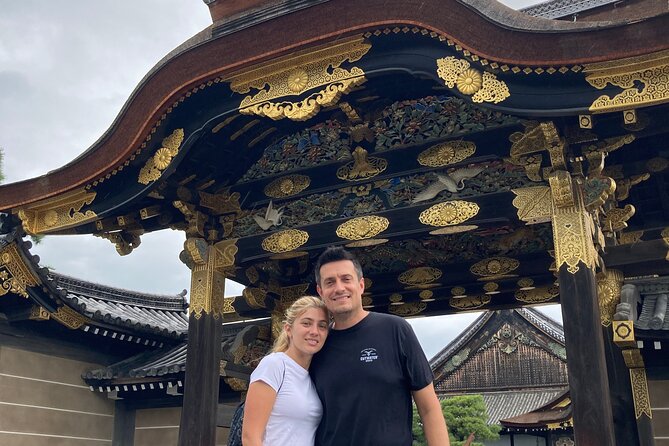
The private setup is important here. Instead of trying to keep up with a large group, you can pause for photos, ask why a ritual is done a certain way, or spend a little longer looking at a shop. One guide, Hiro, even helped with market purchases and spoke with vendors on the visitor’s behalf. Reiko provided maps and follow-up suggestions, while another guide, Rika, was praised for taking photos and sending them to the group afterward.
That level of help is especially useful if you have only one day in Kyoto. One visitor used the tour during a quick day trip from Tokyo by Shinkansen, and another said it helped save time during a one-day Kyoto visit.
More Private Tours in Kyoto
- Kyoto 6hr Private Tour with Government-Licensed Guide
★ 5.0 · 1,369 reviews - 10 Must-see Spots in Kyoto One Day Private Tour (up to 7 people)
★ 5.0 · 1,108 reviews - Kyoto 4hr Private Tour with Government-Licensed Guide
★ 5.0 · 629 reviews
Kiyomizu-dera: Kyoto’s famous wooden stage
The tour begins at Kiyomizu-dera, one of Kyoto’s best-known temples. The scheduled visit lasts about one hour, which gives you time to see the main temple area and take in the view from the celebrated wooden stage.
Your guide uses the temple to explain the meaning behind the phrase jumping off the Kiyomizu stage. It refers to an old expression about taking a bold chance, linked to the height and drama of the temple platform. The phrase is more interesting once you are standing there, looking out over Kyoto.
You also choose one of the Otowa Falls streams to visit. The water is associated with different benefits, so this becomes a small but memorable part of the visit. Your guide can also help explain the proper way to approach the water and other shrine or temple customs.
Kiyomizu-dera admission is not included. The supplied details do not state the current entrance price, so check the fee before departure and bring a little extra cash or a payment method accepted at the temple.
Expect slopes, steps, and a lot of people around the approach to the temple. The route is rewarding, but it is not a flat museum stroll. If you have mobility limits, tell the guide when booking or at the start. One guide, Philip, was specifically praised for making accessibility changes when needed.
Sannenzaka and Ninenzaka: shops worth slowing down for
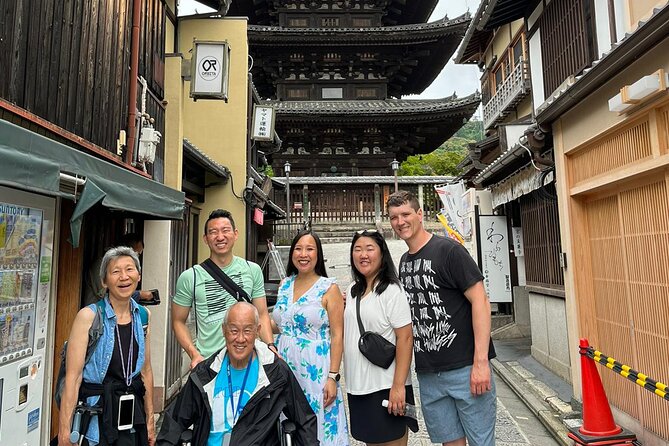
From Kiyomizu-dera, the tour continues through Sannenzaka and Ninenzaka for about 50 minutes. These old lanes are lined with souvenir shops, cafes, sweets, crafts, and food stops.
This is where a local guide can save you from simply walking past something interesting. The streets are attractive, but the most useful part is knowing which shops fit your interests and how to understand the food and goods on offer.
You might find matcha products, small gifts, traditional foods, and cafes. The tour description also points to tastings, though the details of what is included are not fixed. Treat food samples and purchases as optional personal expenses unless your booking confirmation says otherwise.
The lanes can be crowded, especially around the most photographed sections. A private guide helps keep the stop relaxed, but the group still moves through public streets with other people. Give yourself time to stop, look up at the architecture, and enjoy the slope rather than treating this section as a race toward the next sight.
Yasaka Shrine and the basics of Shinto prayer
Yasaka Shrine is the next named stop, with about 10 minutes scheduled for the visit. It sits at the eastern edge of Gion and provides a useful contrast to Kiyomizu-dera.
Here, your guide shows you how to pray properly at a Japanese shrine. That practical lesson gives the stop real value. Shrine etiquette can seem confusing at first, especially when you are unsure about washing your hands, bowing, or approaching the worship hall. A short explanation helps you participate respectfully instead of merely taking a photograph.
Ten minutes is not a long time, so this is an orientation stop rather than a full exploration of the shrine grounds. If Yasaka Shrine is a major personal interest, ask your guide whether the private format allows a little more time there. The route is designed to cover several districts, so every stop has a limit.
More Walking Tours in Kyoto
- Kyoto Geisha Walking Tour: Gion District & Hidden Gems
★ 4.7 · 3,273 reviews - Kyoto: Gion Magical Night Walking Tour with Geisha Trivia
★ 4.9 · 2,393 reviews - Kyoto: Gion Geisha District Walking Tour – Stories of Geisha
★ 4.7 · 2,187 reviews - Night Walk in Gion: Kyoto’s Geisha District
★ 4.5 · 2,003 reviews
Gion, maiko culture, and the Minamiza theater
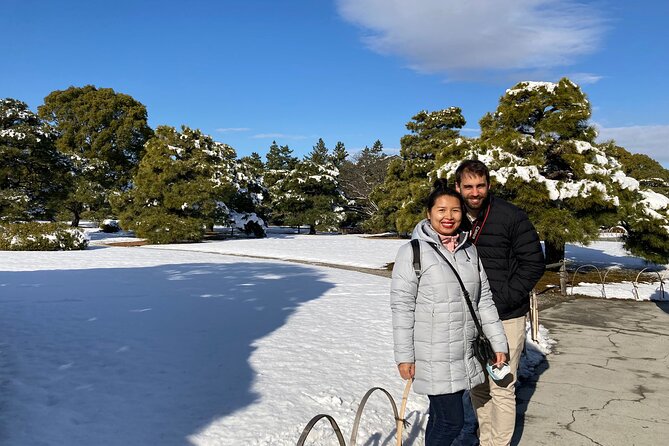
The Gion section lasts about 30 minutes and moves beyond the usual image of lanterns and narrow lanes. Your guide points out a local tea shop where you can look for matcha souvenirs, then introduces the statue of Izumo no Okuni, associated with the beginnings of kabuki.
You also see Minamiza, Kyoto’s famous kabuki theater. The stop adds performing-arts context to the walk and helps explain why Gion is more than a photogenic old neighborhood.
The guide also discusses the lives and history of maiko and geisha. This is a valuable part of the tour because the subject is often reduced to costumes and quick photographs. A good explanation gives you a more respectful view of the work, training, and cultural setting behind the public image.
The reviews consistently praise the guides’ ability to explain Japanese culture in a clear, friendly way. Philip was credited with bringing the past to life, while Akiko was praised for sharing anecdotes about streets, temples, food, and daily customs. Those details are what turn a walk through Gion into something more useful than a photo stop.
Pontocho: a street to save for evening
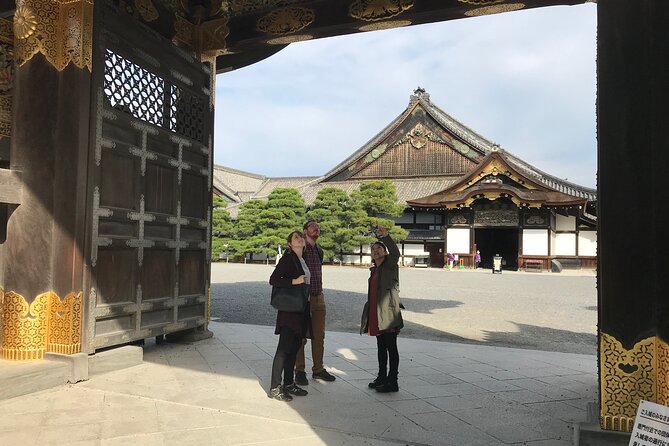
The route passes Pontocho, a narrow street known for restaurants and bars. It is not listed as a timed formal stop, so you should think of it as a preview.
That is actually practical. Your guide can point out the area, and you can return later on your own if you want to experience Kyoto after dark and eat there. The supplied information does not promise restaurant reservations or a meal, so plan to handle dinner separately.
Pontocho is a good example of the tour’s wider value. You receive an introduction to an area, then gain the confidence to come back without spending another guided-tour hour there. Ask your guide for suggestions if you are deciding where to eat later.
Nishiki Market: Kyoto served in small bites
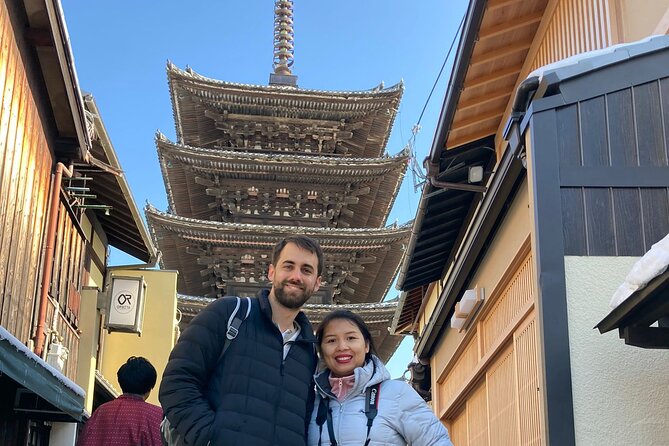
The final main stop is Nishiki Market, with about one hour scheduled. This downtown shopping street is a lively place to see Kyoto’s food culture in one concentrated stretch.
You may encounter seafood, deep-fried foods, Japanese pickles, karaage, takoyaki, Japanese spices, ice cream, green tea, and egg dishes. The market is a good place to sample small portions rather than commit to one large meal, though purchases and food costs are not included in the guide fee.
This is another section where private guiding pays off. A guide can explain unfamiliar foods, point out local specialties, and help with basic communication. Hiro was praised for helping with shopping and speaking with vendors, a useful service if you are unsure how to order or ask about an ingredient.
Nishiki Market can be crowded and narrow. Keep your group together and follow local rules about where to eat. The one-hour stop gives you enough time to browse and taste, but not enough to inspect every stall. If food is your main reason for booking, tell the guide early so the market portion gets the attention it deserves.
What the $95.77 price really buys you

At $95.77 per person, this is not the cheapest way to see Kyoto. You still pay separately for Kiyomizu-dera admission, food, souvenirs, and transportation from your hotel to the starting point. Pickup is offered, but the details should be confirmed, since transportation costs are specifically excluded.
The price makes more sense when you value time and personal attention. A private guide helps connect five major areas without requiring you to plan every transfer or research each site in advance. You also gain cultural explanations, shrine etiquette, food guidance, and local suggestions for after the walk.
The tour is particularly good value for:
- A first visit to Kyoto
- A one-day or short Kyoto stay
- Families with different ages and interests
- Solo visitors who want company and a flexible route
- People who want help with shopping or food
- Anyone who prefers questions and conversation over a fixed group script
It may be less suitable if you already know central Kyoto well, dislike walking, or want long visits inside each temple and shrine. This is a broad introduction, not a slow academic tour of one site.
Guide quality and private-tour flexibility
The strongest part of the experience is the guide. The named guides receive praise for warmth, patience, local knowledge, and flexibility. Philip was described as patient with photo stops and questions. Kaoru customized a morning around existing Kyoto experience and gave maps and useful recommendations. Hiro brought practical items, including handmade maps and a small towel for drying hands after shrine rituals.
Rika adapted a route to interests, suggested food, helped with photos, and even included a coffee stop for a group that loved coffee. Reiko met a group at the Shinkansen platform, helped make the day efficient, and provided advice for continuing after the tour.
These details matter because the itinerary is a framework, not a promise that every group will have the same outing. Tell your guide what you care about: temples, food, shopping, photography, theater, or neighborhood life. The private format gives that conversation real weight.
The published rating is 5 out of 5 from 57 reviews, with 100 percent recommending the experience. That is strong evidence of consistent satisfaction, though the one four-star response raises a fair concern about the price and lack of included transfers.
Timing, fitness, and practical planning
Set aside about 3 hours 30 minutes, and expect most of that time to be on foot. Wear comfortable shoes with good support. The route includes temple approaches, stairs, sloped lanes, market streets, and periods of standing.
A moderate level of physical fitness is recommended. Service animals are allowed, and the route is near public transportation. Since transport from your hotel to Kiyomizu-dera is not included, check the meeting instructions carefully and allow time to arrive.
Free cancellation is available up to 24 hours before the start time for a full refund. Changes or cancellations inside that window are not accepted for a refund. The experience depends on good weather and a minimum number of participants, so a cancellation by the operator may result in another date, another experience, or a full refund.
Should you book this Kyoto walking tour?
Book it if you want a well-organized first look at Kyoto and value a private guide who can explain customs, answer questions, and adjust the route. It is especially helpful for a short visit, a family group, a solo visitor, or anyone who wants food and shopping woven into temple sightseeing.
Skip it if you want a flat route, long quiet visits at individual temples, or an all-inclusive price with transport and admission covered. For most first-time visitors who can manage a fairly active walk, the combination of Kiyomizu-dera, old lanes, Gion, Pontocho, and Nishiki Market makes the cost reasonable. Confirm the pickup details, wear good shoes, and tell your guide your priorities at the start.
FAQ
How long is the private Kyoto walking tour?
The tour lasts approximately 3 hours 30 minutes.
Which places are included?
The route covers Kiyomizu-dera Temple, Sannenzaka and Ninenzaka, Yasaka Shrine, Gion, Pontocho Street, and Nishiki Market.
Is the Kiyomizu-dera entrance fee included?
No. The Kiyomizu-dera admission fee is not included in the tour price.
Is transportation included?
No. Transportation from your hotel to Kiyomizu-dera is not included. Pickup is offered, so confirm the exact arrangements when booking.
Is this a private tour?
Yes. Only your own group participates in the private activity.
What happens if I need to cancel?
You can cancel at least 24 hours before the start time for a full refund. Cancellations or changes made less than 24 hours before the start time are not refunded. If poor weather or insufficient participation causes the operator to cancel, you are offered another date or experience, or a full refund.
Just added in Kyoto
- The “Golden Route” and Ancient Japan by DIAMIR Erlebnisreisen – 14-Day Tour★ 2.0 · 2 reviews
- Japan: Castles & Cuisine by G Adventures – 6-Day Kyoto to Osaka Tour★ 4.5 · 4 reviews
- Cycle Japan by Explore! – 13-Day Kyoto to Tokyo Tour★ 4.7 · 12 reviews
- Cycle Japan by Intrepid Travel – 11-Day Kyoto to Tokyo Tour★ 4.8 · 2 reviews
- Classic Japan by Intrepid Travel – 11-Day Kyoto to Tokyo Tour★ 4.4 · 14 reviews
- Ancient & Modern Japan 14-Day Tour by Exodus Adventure Travels★ 4.4 · 40 reviews
- 5 Day Cultural Adventure of Kyoto, Nara & Osaka by Tourist Journey★ 2.5 · 2 reviews
- 12 Days Kinosaki Onsen Escape: A Journey Through Japan’s Timeless Towns by UME Travel★ 4.8 · 5 reviews
Walking Tours, compared.
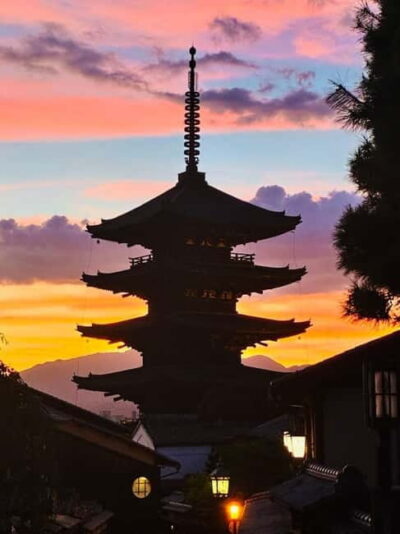
Kyoto Geisha Walking Tour: Gion District & Hidden Gems
Read our review →
Tokyo Tsukiji Fish Market Food and Culture Walking Tour
Read our review →
Gion Magical Night Walking Tour with Geisha Trivia
Read our review →
Imperial Palace and Shogun Historical Walking Tour
Read our review →
Gion Geisha District Walking Tour – Stories of Geisha
Read our review →
Shinjuku Local Bar and Izakaya Guided Walking Tour
Read our review →
Browse the lists this tour appears in