
Reviewed · WALKING TOURS
Hiroshima: Peace Walking Tour of World Heritage Sites
Hiroshima asks you to remember. This five-hour walking tour brings the Peace Memorial Museum, Atomic Bomb Dome, Peace Memorial Park, and Orizuru Tower together with local stories and a shared lunch. I especially like the guide-led museum visit and the chance to fold a paper crane, small touches that make a difficult subject feel personal rather than purely academic. The main drawback is emotional: the museum can be crowded and upsetting, and the pace may feel brisk if you want to study every display.
I also like the way the tour connects wartime destruction with Hiroshima’s recovery. A stop at Shirakami-sha Shrine, the Aorigi Tree, the broad view from Orizuru Tower, and a meal of Hiroshima-style okonomiyaki give you more than a museum visit. Just arrive early, since anyone more than 15 minutes late cannot join, and keep dietary limits in mind because vegetarian choices are limited and gluten intolerance is not accommodated.
In This Review
- Key points at a glance
- Starting near Kamiya-cho-nishi Station
- Shirakami-sha Shrine and the first view of Hiroshima
- One guided hour inside the Peace Memorial Museum
- Walking through Peace Memorial Park
- The Atomic Bomb Dome in its original setting
- Aorigi Tree and a message of recovery
- Orizuru Tower: city views and paper cranes
- Lunch with Hiroshima-style okonomiyaki
- What the guides add to the day
- Is $92 a fair price?
- Timing, walking, and who should book
- Should you book the Hiroshima Peace Walking Tour?
- FAQ
- How long does the Hiroshima Peace Walking Tour last?
- What language is the tour conducted in?
- Where does the tour meet?
- How can I identify the guide?
- What admission fees are included?
- Is lunch included?
- Can I request a vegetarian or allergy-friendly meal?
- Is this a private tour or a group tour?
- What happens if I arrive late?
Key points at a glance
- Local voices make the history personal: Guides including Etsko, Yuji, Yasue, Yuki, Fumiko, and Naoya have been praised for clear English, patience, and heartfelt explanations.
- The museum is the emotional center: You receive a guided visit rather than simply walking through the exhibits alone.
- Origami adds a quiet moment of hope: At Orizuru Tower, you make a paper crane and take part in a peace-focused activity.
- You see more than the famous dome: The shrine, Aorigi Tree, park, museum, tower, and city views create a wider picture of Hiroshima.
- Lunch is included: The meal commonly features Hiroshima’s famous okonomiyaki, giving the tour a useful local-food finish.
- The $92 price covers the main costs: Museum and tower admission, lunch, a local guide, a five-hour experience, and tour photos are included.
Starting near Kamiya-cho-nishi Station
The meeting point is in front of the Montbell store near Kamiya-cho-nishi Station. It is about a one-minute walk from the station, which makes the start fairly simple, but do not cut it close. You are expected to arrive 10 minutes before departure, and an arrival more than 15 minutes late means no participation, refund, or rescheduling.
Look for the guide holding an orange sign marked Magical Trip Tour. The opening walk leads toward Shirakami-sha Shrine, where you spend about 25 minutes. This is a useful first stop because it introduces Japanese shrine etiquette before the serious history begins. Your guide can show you the proper way to enter and behave at the shrine, including the basic protocol for receiving a blessing.
That short pause also helps you settle into the day. Hiroshima’s peace sites deserve attention, but a tour that begins with a small cultural visit can keep the first hour from feeling like a rush straight into tragedy.
More Walking Tours in Hiroshima
- Hiroshima Historical Walking Tour – Why A-Bomb was Dropped
★ 4.8 · 893 reviews - Hiroshima Peace (Heiwa) Walking Tour at World Heritage Sites
★ 5.0 · 872 reviews - Hiroshima City 4hr Private Walking Tour with Licensed Guide
★ 5.0 · 437 reviews
Shirakami-sha Shrine and the first view of Hiroshima
Shirakami-sha Shrine provides a cultural frame for the rest of the morning. It is not the main reason to book this experience, and the stop is brief, but it gives your guide a chance to explain local customs and place the memorial area within everyday Japanese life.
That matters because Hiroshima is not only a site of wartime memory. It is also a living city with shrines, restaurants, shops, offices, and ordinary routines. The tour keeps returning to that point as you move through the memorial district and later look over the modern city from Orizuru Tower.
One guided hour inside the Peace Memorial Museum
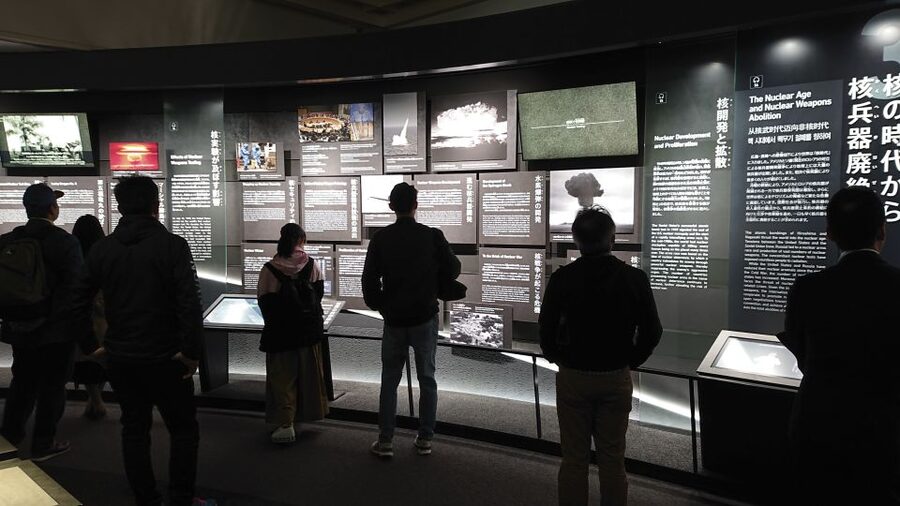
The Peace Memorial Museum is the hardest part of the tour. Its displays explain the atomic bombing and its human cost through artifacts, personal accounts, photographs, and stories of people affected by the attack. You should expect a serious, sometimes painful hour.
A guide changes the experience. Instead of trying to work out the context alone, you can ask questions and receive explanations as you move through the galleries. Guides such as Kaz, Eri, Aki, Yuji, and Yasue have been praised for presenting the subject clearly while allowing space for strong emotions.
You may find the museum crowded, especially at busy times. One person described having to move quickly because of the number of people inside. That is the tradeoff of joining a scheduled tour: you gain structure and interpretation, but you may not have unlimited time at every display.
If you already know you need a pause, tell your guide. Kippei was specifically praised for allowing a participant to move at a personal pace and take a break when the museum became overwhelming. That sort of care is important here. The subject is not entertainment, and a good guide understands that people process it differently.
The tour’s tone is not only about destruction. It also addresses how Hiroshima coped, rebuilt, and developed a message of peace. That balance gives the museum visit a sense of purpose without softening the difficult material.
Walking through Peace Memorial Park
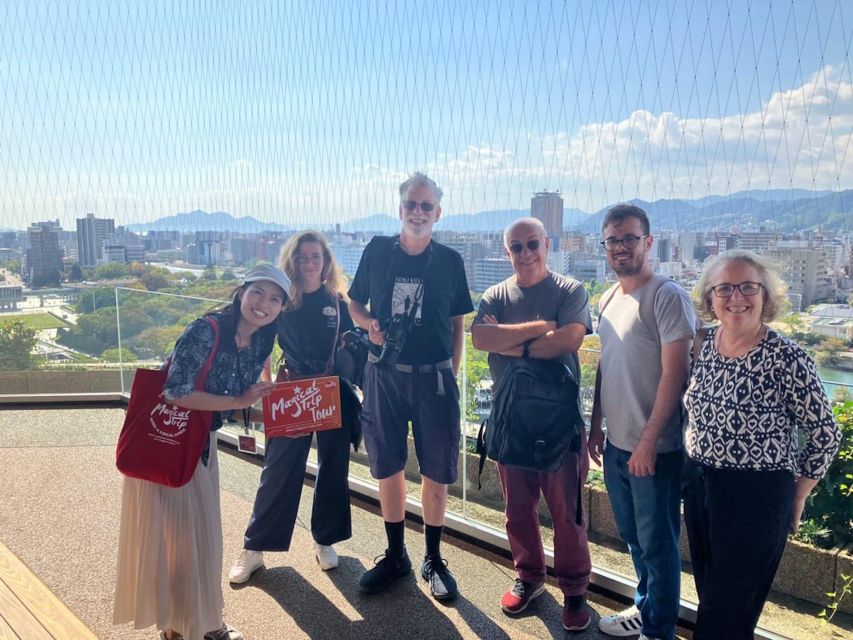
After or around the museum visit, the group spends about an hour in Hiroshima Peace Memorial Park. The walk links the museum’s indoor displays to the actual places and memorials around the city.
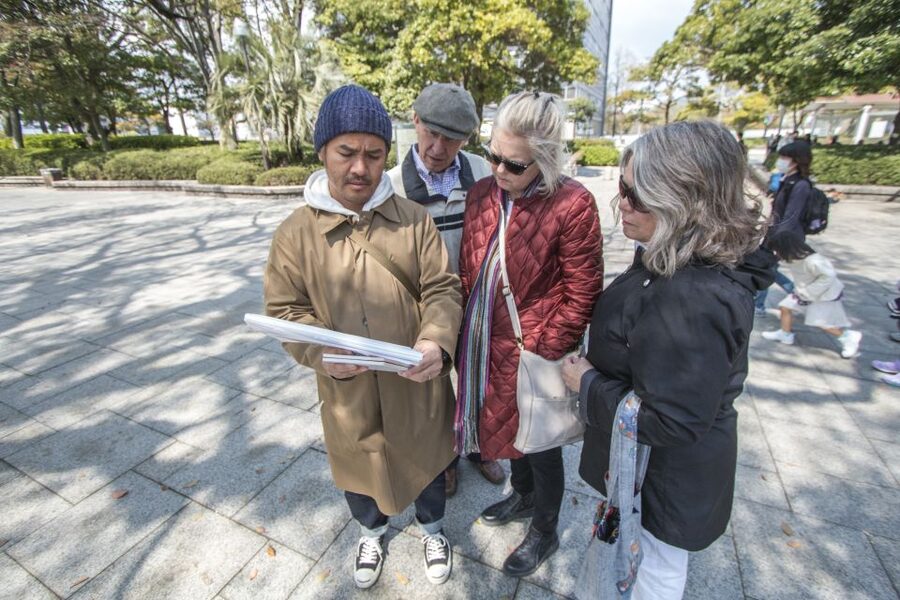
This is where a local guide adds real value. A map can point out the main monuments, but a guide can explain how individual places relate to the bombing, the people who lived nearby, and the city’s recovery. Several guides have been praised for adding details that are easy to miss when you explore alone.
The park also gives you air and space after the museum. That change of setting is welcome. You can think through what you have seen while walking beside the river and memorial grounds, then ask questions that may not have occurred to you inside the galleries.
The tour presents Hiroshima as a city that uses remembrance to support peace building. It does not treat the past as a sealed chapter. You are encouraged to consider Hiroshima’s present message and its hope for the future.
A completely different kind of day out:
- Peaceful Hiroshima & Miyajima UNESCO 1 Day Bus Tour
★ 5.0 · 5,309 reviews - Hiroshima Peace Memorial Museum Ticket
★ 4.8 · 2,727 reviews - Hiroshima: Hiroshima and Miyajima UNESCO Sites 1-Day Tour
★ 4.9 · 2,330 reviews - Hiroshima Peace Memorial Museum Admission
★ 4.6 · 1,308 reviews
The Atomic Bomb Dome in its original setting
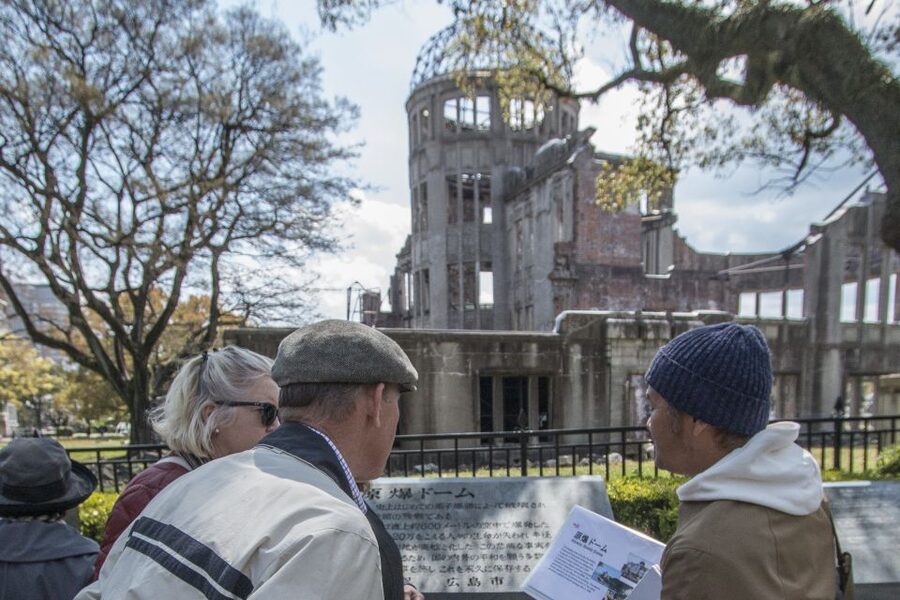
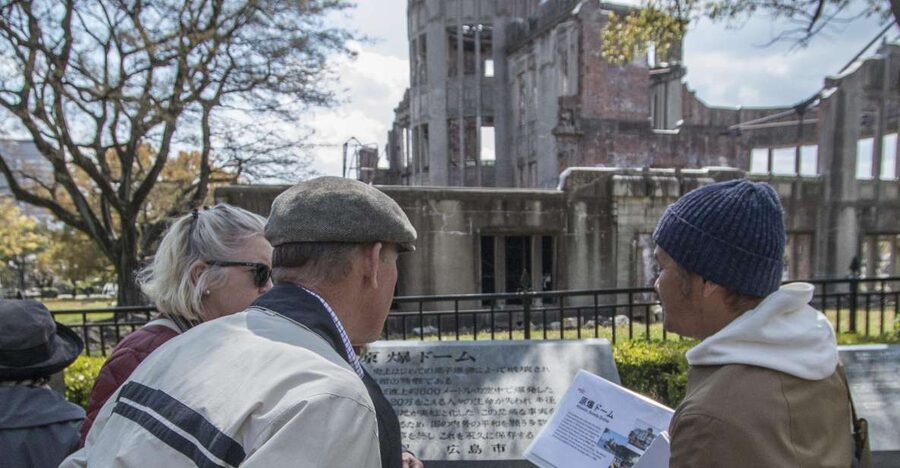
The Atomic Bomb Dome is one of the tour’s central stops and a UNESCO World Heritage Site. Its damaged structure is familiar from photographs, but seeing it beside the river and in relation to the surrounding city gives it more force.
Your guide explains the site and its connection to the bombing. This is not just a quick photo stop. The surrounding setting helps you understand how close the dome is to the other memorial sites and how the modern city has grown around a preserved reminder of August 1945.
The contrast can be unsettling. On one side, you see the remains of the building. Around it, Hiroshima continues as a working city. That combination is a major strength of the walking format. You are not taken to an isolated memorial complex, but through streets where daily life and memory share the same space.
Aorigi Tree and a message of recovery
The Aorigi Tree is a smaller stop, but it carries an important idea. The tree became a symbol of hope after the atomic bombing, and your guide explains why it matters.
This moment broadens the story beyond famous landmarks. The museum shows the scale of the tragedy, the dome shows its physical mark, and the tree represents signs of life returning. You begin to see why the tour emphasizes Hiroshima’s past, present, and future rather than stopping at the destruction itself.
Because the tree is not as internationally famous as the dome, it is the kind of place you might miss without a guide. That is one reason this tour works well for a first visit or a short stay in Hiroshima.
Orizuru Tower: city views and paper cranes
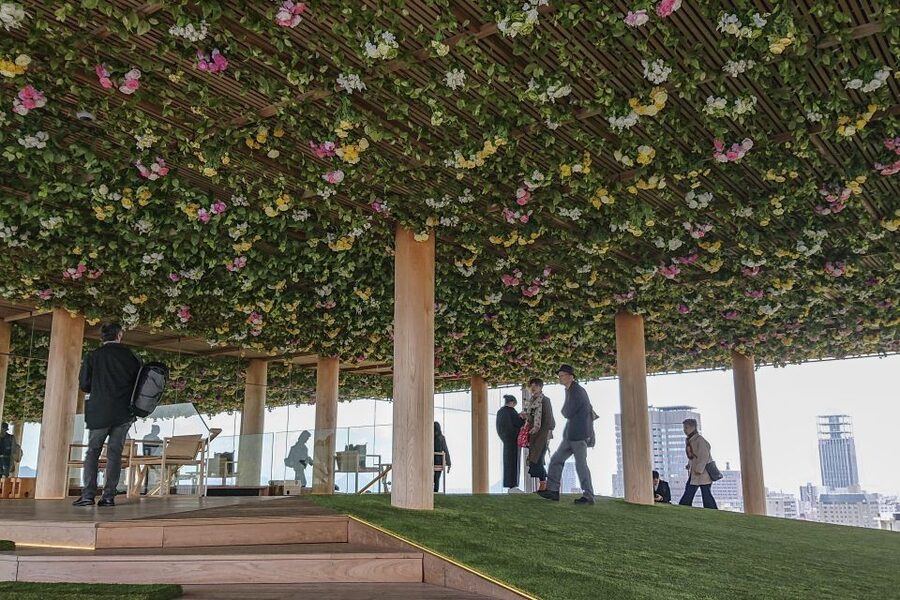
Orizuru Tower changes the mood. After the museum and memorial walk, you ride up to the observatory area, where you can feel the breeze and look across Hiroshima.
The view is a useful reminder that the city is alive and rebuilt. From above, the memorial sites become part of a larger urban setting rather than the whole identity of Hiroshima. The tower also provides a calmer space to reflect before lunch.
The origami activity is a particularly good touch. The orizuru, or folded paper crane, is a symbol of peace. You learn how to make one and attach a wish for peace to the experience. Some guides add personal touches, such as helping with names written in Japanese, and one participant described watching a completed crane spiral down to join the many others displayed in the tower’s glass wall.
The entry ticket may also allow you to return for sunset, according to information provided during the experience. Confirm the current policy on the day, but this can add value if your schedule allows a second visit.
Lunch with Hiroshima-style okonomiyaki

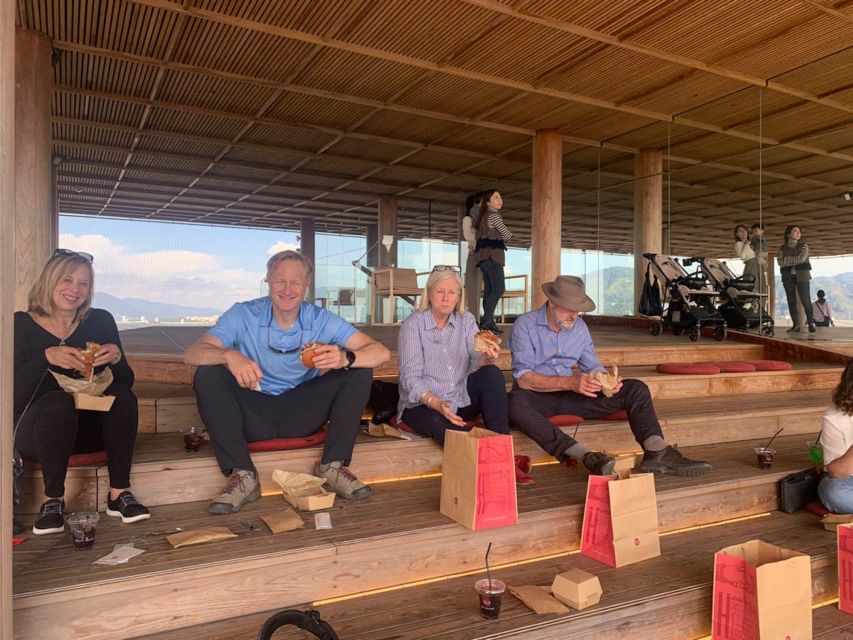
Lunch is included, and Hiroshima-style okonomiyaki is commonly served. This savory pancake-style dish is a fitting way to finish a serious morning because it brings you back to the pleasures of ordinary local life.
The meal is not just a practical pause. Eating with your guide gives you time to ask follow-up questions and talk about what you have seen. Several participants singled out the lunch as delicious, and some described finishing at a relaxed local restaurant or brewery setting.
There is one clear limitation. You do not receive unlimited food and drink, and extra purchases cost more. If you have allergies or dietary restrictions, notify the operator at least one day before the tour. Same-day requests cannot be handled, the kitchens are not operated by MagicalTrip, and an allergy-free meal cannot be guaranteed.
Vegetarian options are limited, and the experience is listed as unsuitable for people with gluten intolerance. If food is a major concern, contact the operator before paying rather than hoping the restaurant can improvise.
What the guides add to the day
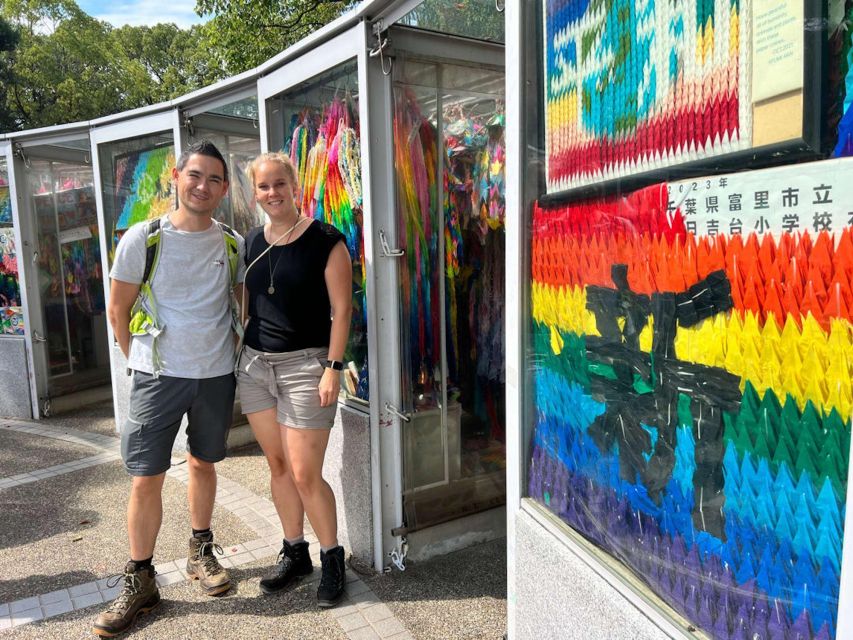
The guides are the main reason to choose this tour instead of visiting the sites independently. Names that appear repeatedly in the experience include Etsko, Yuji, Yasue, Yuki, Fumiko, Kaz, Naoya, Eri, Kippei, Aki, Risa, and Yasu.
Their strengths vary, but the pattern is clear: friendly explanations, good English, patience, and a personal connection to Hiroshima. Some guides share family stories connected to the bombing. Others provide local context, answer difficult questions, take group photographs, or prepare a small handout at the end.
You should not expect every guide to tell exactly the same story. That is part of the personal nature of a local-led tour. English ability has been described as very good across many departures, though one participant noted that a guide’s English was not perfect but still polite and easy enough to understand.
The format is available as a private or small-group experience. A group of six was described as a good size, allowing conversation without losing the benefits of a guide. A small group also makes it easier to ask questions and move through the park together.
Is $92 a fair price?
At $92 per person, this is not the cheapest way to see Hiroshima’s memorial district. You can visit public areas independently and pay separately for admissions and food. The price makes more sense if you want help understanding what you are seeing.
Your fee includes entry to the Peace Memorial Museum, entry to Orizuru Tower, lunch, a five-hour local-led tour, and tour photos. You also avoid the work of planning the walking route between the shrine, park, museum, dome, tree, tower, and restaurant.
The best value comes from the human explanation. Hiroshima’s memorial sites contain a great deal of information, and it can be difficult to decide what deserves your attention. A guide helps connect the displays, buildings, stories, and recovery of the city.
The value is lower if you prefer complete independence, want several hours alone inside the museum, or already have a strong plan for the district. In that case, the fixed timetable may feel restrictive. For a first visit or a single day in Hiroshima, though, the combination of admissions, meal, and guidance is reasonable.
Timing, walking, and who should book
The experience lasts 270 minutes, or four and a half hours, though the listed stop times add up to a longer day. This may reflect approximate durations or overlap between activities, so confirm the exact start and finish time when booking.
You should be prepared for a substantial amount of walking through the memorial district. The tour does not appear suited to someone who wants a quick bus ride between isolated attractions. Wear comfortable shoes and leave room in your schedule for the emotional weight of the museum.
I would recommend it most for:
- First-time visitors to Hiroshima
- People with only half a day in the city
- Families and older children who benefit from clear explanations
- Anyone wanting local stories alongside the major monuments
- Visitors who prefer a small group and included lunch
- People interested in peace education, Japanese culture, and Hiroshima’s recovery
It may not suit you if you dislike scheduled tours, need a strict gluten-free meal, or want to examine every museum display at your own speed. The museum can become crowded, and the group must keep moving.
Should you book the Hiroshima Peace Walking Tour?
Book it if you want Hiroshima explained by a local person rather than reduced to a list of monuments. The strongest features are the guided museum visit, the sensitive handling of difficult material, the paper-crane activity, and the way lunch creates space for conversation afterward.
I would also choose it if you are visiting for only one day. The route makes good use of limited time and covers the main peace sites without leaving you to sort out the order yourself.
Skip it if you need complete control over timing or food. Independent visits give you more freedom, but you will need to build your own context. For most first-time visitors, the $92 cost is justified by the admissions, meal, photos, and especially the guide who helps you understand why each place matters.
FAQ
How long does the Hiroshima Peace Walking Tour last?
The advertised duration is 270 minutes, or four and a half hours. The listed stop times are approximate and may add up to longer, so confirm the current timing when checking availability.
What language is the tour conducted in?
The tour is conducted in English with a live guide.
Where does the tour meet?
You meet in front of the Montbell store near Kamiya-cho-nishi Station. The meeting point is about a one-minute walk from the station.
How can I identify the guide?
The guide holds an orange sign marked Magical Trip Tour.
What admission fees are included?
Entry to the Hiroshima Peace Memorial Museum and Orizuru Tower is included.
Is lunch included?
Yes. Lunch is included, and the meal commonly features Hiroshima-style okonomiyaki. Additional food and drinks are not included.
Can I request a vegetarian or allergy-friendly meal?
Vegetarian choices are limited. You must provide dietary requests or allergy information at least one day before the tour, but an allergy-free meal cannot be guaranteed. The tour is not suitable for people with gluten intolerance.
Is this a private tour or a group tour?
Private and small-group options are available.
What happens if I arrive late?
You should arrive 10 minutes before the start time. If you arrive more than 15 minutes late, you cannot join the tour, and no refund or rescheduling is offered.
Just added in Hiroshima
- Hiroshima Peace Memorial Museum Ticket★ 4.8 · 2,727 reviews
- Hiroshima Peace Memorial Museum Admission★ 4.6 · 1,308 reviews
- Private Full Day Hiroshima Tour★ 4.5 · 29 reviews
- The Peace Memorial to Miyajima : Icons of Peace and Beauty★ 4.5 · 31 reviews
- Shore Excursion from Hiroshima Port : Private Tour in Hiroshima★ 5.0 · 17 reviews
- Hiroshima & Miyajima All-Inclusive Tour w/Licensed guide Pancho★ 5.0 · 54 reviews
- Hiroshima Country Cycling: Explore Rural Life 1 HR from City★ 5.0 · 22 reviews
- Hiroshima Saijo Sake Tasting Tour with visit to 7 Breweries★ 5.0 · 104 reviews
Walking Tours, compared.
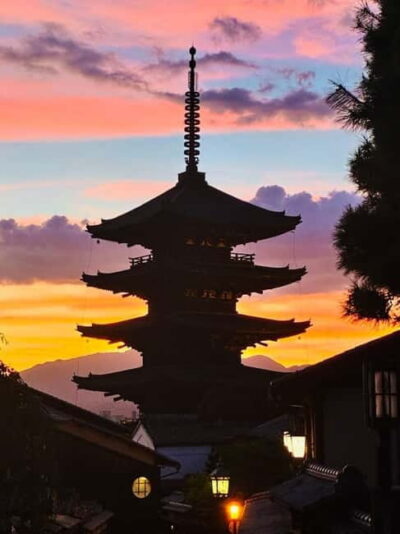
Kyoto Geisha Walking Tour: Gion District & Hidden Gems
Read our review →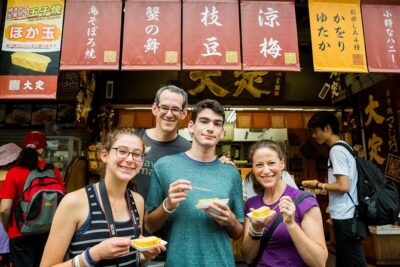
Tokyo Tsukiji Fish Market Food and Culture Walking Tour
Read our review →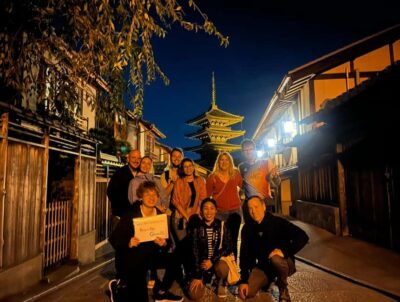
Gion Magical Night Walking Tour with Geisha Trivia
Read our review →
Imperial Palace and Shogun Historical Walking Tour
Read our review →
Gion Geisha District Walking Tour – Stories of Geisha
Read our review →
Shinjuku Local Bar and Izakaya Guided Walking Tour
Read our review →
Browse the lists this tour appears in