
Reviewed · KIMONO AND CULTURAL DRESS
Kimono and Yukata Experience in Kyoto
Pictures begin before the sightseeing. This Kyoto dressing experience lets you choose a traditional kimono or yukata, have it fitted by staff, and spend the day walking around Gion and nearby shrines. I especially like the professional fitting and the generous time outside the shop. The main catch is that hair, makeup, nicer garments, and upgraded accessories cost extra, so the advertised price is only the starting point.
The shop, Kyoto Kimono Rental Rei, sits in Kyoto’s traditional Gion district, close to Yasaka Shrine and other photogenic streets. Staff can assist in English, Chinese, or Japanese, and appointments are offered at several times of day. Still, the shop can become crowded and some customers have found the process slow or the directions hard to follow.
In This Review
- Key details before you book
- Starting in Gion at Kyoto Kimono Rental Rei
- Choosing between a kimono and a yukata
- The ten-minute professional fitting
- Hair styling and makeup: useful extras, not included
- Walking from Yasaka Shrine to Gion’s old lanes
- Photographing yourself in traditional dress
- Returning the clothing before closing
- Comfort, language, and service quality
- Who will get the most from this Kyoto activity?
- Price, value, and the final decision
- FAQ
- Where does the kimono experience begin?
- Is transportation to the shop included?
- What does the basic price include?
- Are hair styling and makeup included?
- How long can I wear the kimono?
- Can I visit shrines while wearing the kimono?
- What sizes are available?
- Can I cancel for a refund?
Key details before you book
- Your rental can cover most of the day: Depending on your appointment and the shop’s closing time, you may keep the outfit until around 5:00 or 5:30 pm.
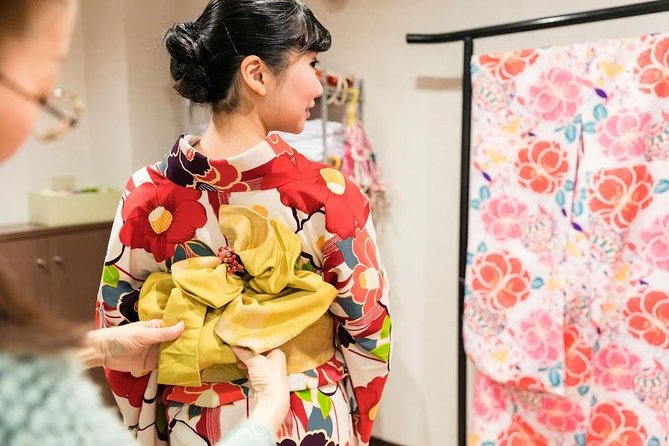
- The fitting is handled for you: Staff select the layers, tie the obi, and arrange the clothing so you do not need to know the correct method.
- Basic clothing is included: The starting price covers a kimono or yukata and professional fitting, but not hair, makeup, premium clothing, or upgraded accessories.
- Gion is right outside: Yasaka Shrine, traditional lanes, and other photo spots are within walking distance.
- Allow about an hour to get ready: The basic fitting is quick, but queues and optional hair or makeup can stretch the process.
- The group limit is 14 people: This is a rental appointment rather than a guided walking tour, so you explore independently.
Starting in Gion at Kyoto Kimono Rental Rei
You make your own way to the meeting point at 270 Umemotocho, Prestige Gion, in Kyoto’s Higashiyama Ward. The shop is near public transportation, but finding the correct entrance and floor can be tricky. Check the address carefully before you arrive, and leave extra time if you are coming by taxi.
The exact shop location matters because one customer went to the wrong floor and could not find the reservation. The building and shop signage may not be as obvious as you expect in the busy Gion area. Having the booking confirmation open on your phone is a sensible move, especially since the experience uses a mobile ticket.
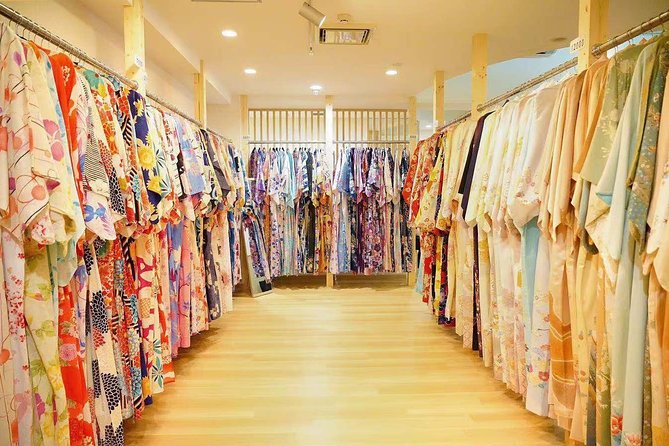
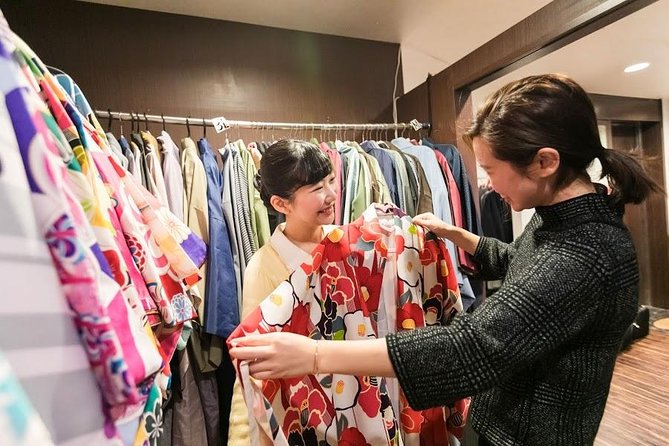
Once checked in, you choose your clothing. The included selection is generally made up of standard kimono or yukata styles. The available range can be attractive and colorful, but the number of choices depends on the size and type of booking. Some customers found the basic selection limited, while others were pleased with the number of lovely options.
That difference is worth understanding. The clothing shown in promotional photos may represent an upgraded style rather than the exact range included in the lowest price. Premium kimonos, samurai-style outfits, better bags, fans, and other accessories can carry additional charges. Ask to see the included choices first, then ask for the price of any upgrade before you agree.
More Kimono Experiences in Kyoto
- [Kyoto & Nara Day Tour] Sagano Scenic Railway & Nara Park & Fushimi Inari Taisha Thousand Torii Gates & Togetsukyo Bridge & Bamboo Grove & Kimono Forest (Departing from Osaka)
★ 4.9 · 10,942 reviews - Kyoto Geisha Walking Tour: Gion District & Hidden Gems
★ 4.7 · 3,273 reviews - Kyoto: Gion Magical Night Walking Tour with Geisha Trivia
★ 4.9 · 2,393 reviews
Choosing between a kimono and a yukata
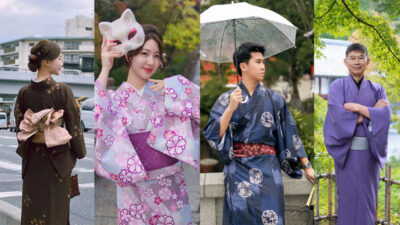
A kimono and a yukata both create a memorable Kyoto photo, but they are not quite the same experience. The kimono is more formal and usually involves several layers. That gives it a polished look, but it can also feel warm and restrictive, especially in summer.
The yukata is a lighter cotton garment commonly associated with warm weather. It is generally easier to wear for a long walk, though the exact comfort depends on the clothing, sandals, and weather on your chosen day.
The shop provides sizes for a broad range of ages and body types:
- Women: approximately 140 to 175 centimeters
- Men: approximately 170 to 185 centimeters
- Children: approximately 100 centimeters
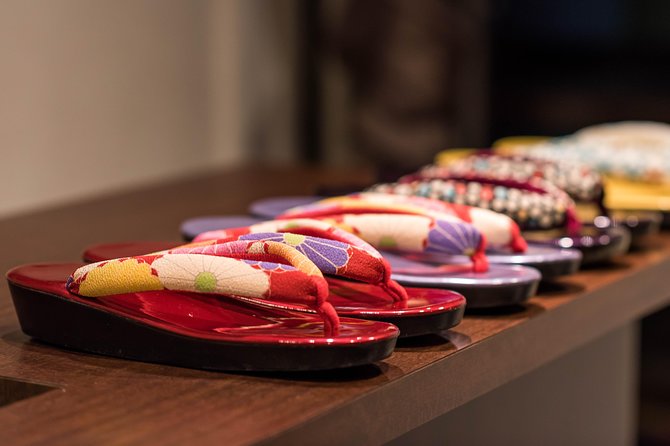
Larger footwear can be harder to find. One customer around 186 centimeters tall and wearing EU size 45 received suitable men’s sandals, but another person with larger feet found the shoe choices limited. If footwear size is important to you, ask the shop in advance.
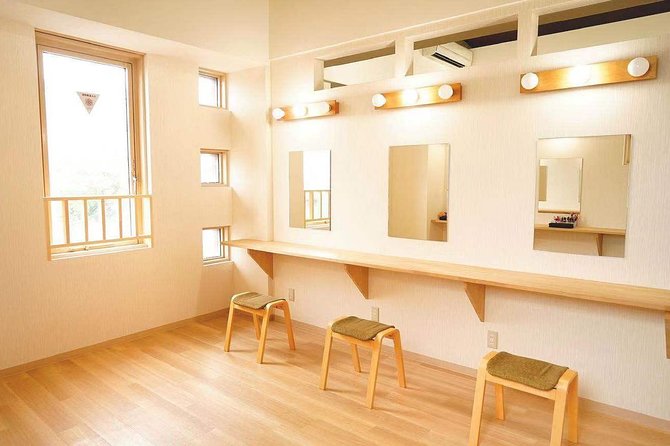
For changing, you should expect to remove your regular clothing down to underwear. Wear suitable underlayers that make you comfortable, such as shorts beneath a skirt or loose clothing that is easy to change out of. In winter, you may want warm layers underneath. In summer, remember that a formal kimono can become hot.
The ten-minute professional fitting
The basic fitting itself is listed at about ten minutes, though the full process takes longer once you include choosing clothes, waiting, and changing. Staff handle the complicated parts, including the layers and obi belt, so you can relax instead of trying to copy a dressing tutorial.
The fitting is one of the strongest parts of the experience. Several appointments have been completed in about an hour from arrival to departure, even when hair and makeup were included. At other times, the shop has felt chaotic, with waits longer than the expected 30 minutes.
Your time slot helps, but it may not guarantee an immediate start during busy periods. A reservation is still a good idea because walk-in demand can add more waiting. If you have a shrine visit, restaurant reservation, or train to catch, do not schedule it too closely after the fitting.
Staff are often described as efficient, patient, and friendly, and English instructions are available. Service can vary from one staff member to another, particularly when the shop is busy. The overall process is practical rather than luxurious. You are being dressed for a day out, not receiving a private cultural lesson.
Hair styling and makeup: useful extras, not included
Hair styling costs 1,650 yen, and makeup costs 5,500 yen according to the supplied pricing. These services are optional, but they can make the finished outfit look much more complete in photographs.
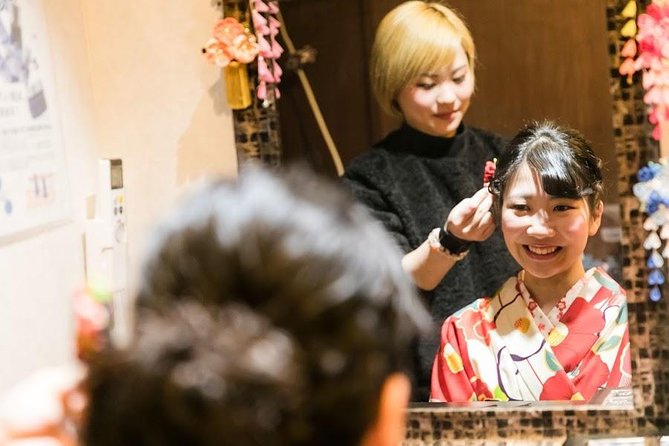
Hair styling usually takes about ten minutes. A simple arrangement with flowers or another accessory has been a popular choice, and the result can add a distinctly formal touch. Hair accessories may cost extra, so confirm the full price before selecting them.
Makeup takes about 20 minutes and must be added to your booking or arranged with enough time. One common problem is assuming makeup can simply be added at the shop, then discovering there is no time left in the appointment schedule. If you want both services, reserve enough time from the start.
The add-on system is the biggest source of disappointment. Better kimono fabrics, larger clothing selections, purses, fans, hair decorations, and beauty services may all be priced separately. The staff may suggest upgrades, but you should decide based on your budget rather than feeling obliged to create the outfit shown in a photograph.
Also ask about payment. A 10 percent credit card charge has been reported at the shop, so carrying Japanese yen can help you avoid an unexpected surcharge. The advertised booking price is about $25.43 per person, which is fair for a basic rental and fitting. It becomes less of a bargain if you add several premium options.
A completely different kind of day out:
- PERFECT KYOTO 1-Day Bus Tour
★ 5.0 · 13,518 reviews - Kyoto: Fushimi Inari, Kinkakuji, Bamboo Grove 1 Day Bus Tour
★ 4.8 · 4,316 reviews - Kyoto: Tea Ceremony in a Traditional Tea House in Kiyomizu
★ 4.9 · 3,519 reviews - Kyoto: Gion Make Your Own Chopsticks with Engraving Option
★ 5.0 · 3,465 reviews
Walking from Yasaka Shrine to Gion’s old lanes
After you are dressed, you are free to explore on your own. This is not a guided tour, and no guide or hotel transportation is included. That freedom is useful because you can build the rental around your Kyoto plans rather than follow a fixed route.
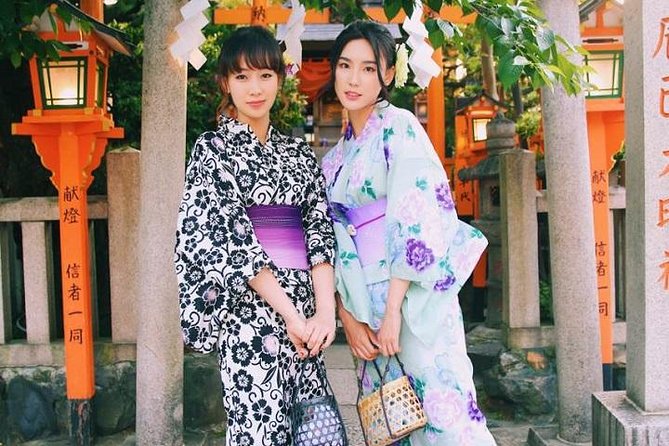
Yasaka Shrine, also called Gion Shrine, is the easiest nearby stop. Its gates, shrine buildings, and surrounding lanes provide natural places for photographs. You can also walk toward the traditional streets of Gion, where the kimono feels suited to the setting rather than like a costume in a studio.
Kiyomizu-dera and Heianjingu Shrine are named as possible places to visit, but the booking does not provide admission tickets or a guide for either shrine. You will need to make your own way and manage your own sightseeing time. Kiyomizu-dera is especially useful if you want to combine the rental with one of Kyoto’s best-known temple areas, though walking in sandals may become tiring.
The outfit works best for slow wandering and photos, not a full day of fast sightseeing. The sandals can be uncomfortable over long distances, and the kimono’s layers restrict your stride. A short walk through Gion, a shrine visit, and a café stop make better sense than trying to cover half of eastern Kyoto.
Some people pair the rental with a rickshaw ride. That can be a practical choice if you want more photographs without walking far, though the ride is not included in this booking.
Photographing yourself in traditional dress
The experience gives you access to excellent photo settings, but it does not include a photographer. If you are alone, getting full-length pictures can be awkward. Bring a small tripod if practical, use a phone timer, or ask someone nearby to take a picture.
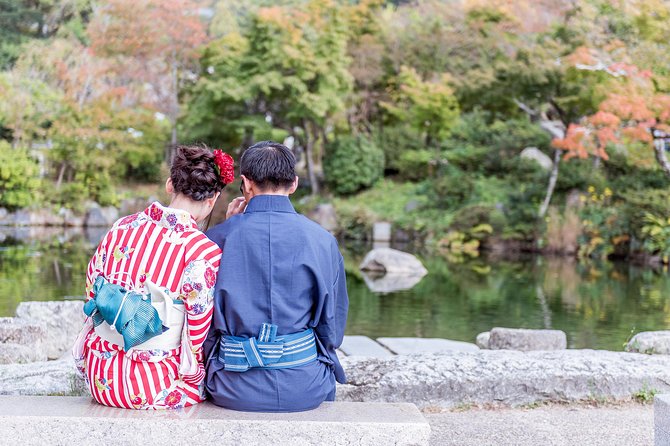
The streets around Yasaka Shrine and Gion offer more variety than a single shop backdrop. You can photograph the obi, sleeves, hair arrangement, sandals, and accessories against old wooden buildings and shrine gates. A clear umbrella can be useful in light rain because it protects your clothing while still letting daylight reach your face.
Rain is not always a disaster. A damp day can mean fewer people on the streets and softer light for photographs. Still, the activity requires good weather, and the provider may offer a different date or a full refund if poor conditions cause cancellation. If the shop agrees to reschedule because of rain, confirm the new return time and booking details before leaving.
Returning the clothing before closing
You return to Kyoto Kimono Rental Rei to change back into your own clothes. The stated itinerary says to return before 6 pm, but actual closing instructions can vary. Some appointments have required clothing back by 5:00 or 5:30 pm, particularly on a Saturday.
Treat the return deadline as firm. Do not plan an evening activity across town without leaving time to get back, change, and handle any delay. The final changing process is listed at about 30 minutes, although the exact time depends on the shop’s workload.
The rental ends back at the meeting point. You cannot keep the clothing overnight under the terms provided, so plan your route around the shop rather than assuming you can return it whenever convenient.
Comfort, language, and service quality
The shop can serve English-speaking, Chinese-speaking, and Japanese-speaking customers. That makes the fitting accessible if you do not speak Japanese, and several customers have found the staff quick and helpful.
Service is not perfectly consistent. Busy periods have produced long waits and a crowded feeling. A few customers also felt that staff were less welcoming to foreign customers or more attentive to people speaking their native language. I would not treat that as an automatic outcome, but it is a fair reason to keep expectations practical.
This is a popular, high-turnover rental shop. You receive a real fitting and a chance to wear traditional clothing around Kyoto, but you should not expect a quiet private appointment or a long explanation of Japanese dress customs. The cultural value comes mainly from wearing the clothing in the city, learning how the layers feel, and seeing how the outfit fits into Kyoto’s streets and shrines.
The experience works well for families. A three-generation group, including a 78-year-old grandmother and an 11-year-old child, completed the activity and found the staff patient and helpful. Children must fit within the listed size range, and the process may take longer when several family members are dressed together.
Who will get the most from this Kyoto activity?
I would recommend it most strongly if you want:
- A memorable photo activity in Gion
- A simple introduction to wearing Japanese traditional clothing
- Flexible time to explore without a guide
- A family activity that works across several generations
- A convenient way to add local dress to a shrine visit
- A short cultural activity during a packed Kyoto schedule
It may not suit you if you dislike tight clothing, long waits, extra charges, or walking in sandals. It is also less useful if you are looking for a guided explanation of Kyoto’s history, since staff dress you but do not lead a sightseeing tour.
The experience is best treated as a rental with cultural value, not as a full sightseeing tour. That distinction keeps the price in perspective.
Price, value, and the final decision
At about $25.43 per person, the basic package offers a kimono or yukata and professional fitting. That is a reasonable entry price for several hours in traditional clothing, especially if you plan to use nearby shrines and Gion streets for photographs.
The value drops when every appealing detail becomes an add-on. Hair styling costs 1,650 yen, makeup costs 5,500 yen, and premium clothing or accessories may add considerably more. Before changing, ask which kimono range is included, what each upgrade costs, whether accessories are included, and if card payment carries a surcharge.
Book this activity if you want an easy, photogenic Kyoto memory and you are willing to manage your own route. Reserve ahead, arrive early, wear comfortable underlayers, bring cash, and leave plenty of time before the return deadline. Skip it if you want a calm private fitting, a guided cultural tour, or a clearly all-inclusive price. For the right visitor, the basic rental is good fun and a memorable way to see Gion at walking pace.
FAQ
Where does the kimono experience begin?
It begins at Kyoto Kimono Rental Rei, located at 270 Umemotocho, Prestige Gion, in Higashiyama Ward, Kyoto, postal code 605-0064.
Is transportation to the shop included?
No. You make your own way to the meeting point, and hotel pickup and drop-off are not included.
What does the basic price include?
The basic price includes a kimono or yukata rental and professional kimono fitting.
Are hair styling and makeup included?
No. Hair styling costs 1,650 yen, and makeup costs 5,500 yen. Both are optional extras.
How long can I wear the kimono?
The experience lasts approximately one to nine hours, depending on your appointment and the shop’s schedule. Clothing must be returned before closing, with return times reported around 5:00, 5:30, or before 6:00 pm.
Can I visit shrines while wearing the kimono?
Yes. You can walk independently to nearby places such as Yasaka Shrine, Kiyomizu-dera, and Heianjingu Shrine. Shrine admission and guiding are not included.
What sizes are available?
Women’s sizes are listed for approximately 140 to 175 centimeters, men’s sizes for 170 to 185 centimeters, and children’s sizes from approximately 100 centimeters.
Can I cancel for a refund?
You can cancel at least 24 hours before the start time for a full refund. Cancellations or changes made less than 24 hours before the start time are not accepted for a refund. If poor weather causes the activity to be canceled, you can be offered another date or a full refund.
Just added in Kyoto
- The “Golden Route” and Ancient Japan by DIAMIR Erlebnisreisen – 14-Day Tour★ 2.0 · 2 reviews
- Japan: Castles & Cuisine by G Adventures – 6-Day Kyoto to Osaka Tour★ 4.5 · 4 reviews
- Cycle Japan by Explore! – 13-Day Kyoto to Tokyo Tour★ 4.7 · 12 reviews
- Cycle Japan by Intrepid Travel – 11-Day Kyoto to Tokyo Tour★ 4.8 · 2 reviews
- Classic Japan by Intrepid Travel – 11-Day Kyoto to Tokyo Tour★ 4.4 · 14 reviews
- Ancient & Modern Japan 14-Day Tour by Exodus Adventure Travels★ 4.4 · 40 reviews
- 5 Day Cultural Adventure of Kyoto, Nara & Osaka by Tourist Journey★ 2.5 · 2 reviews
- 12 Days Kinosaki Onsen Escape: A Journey Through Japan’s Timeless Towns by UME Travel★ 4.8 · 5 reviews
Kimono and Cultural Dress, compared.
![[Kyoto & Nara Day Tour] Sagano Scenic Railway & Nara Park & Fushimi Inari Taisha Thousand Torii Gates & Togetsukyo Bridge & Bamboo Grove & Kimono Forest (Departing from Osaka)](https://media.japanvisits.com/wp-content/uploads/kyoto-nara-day-tour-sagano-scenic-railway-nara-park-fushimi-inari-taisha-thousand-torii-gates-togetsukyo-bridge-bamboo-grove-kimono-forest-departing-from-osaka-k110001-400x257.jpg)

Tokyo Asakusa Kimono&Yukata Rental at Kimono Miyabi Asakusa Station
Read our review →
Kyoto Geisha Walking Tour: Gion District & Hidden Gems
Read our review →
Gion Magical Night Walking Tour with Geisha Trivia
Read our review →
Gion Geisha District Walking Tour – Stories of Geisha
Read our review →
Best of Kyoto: Gion, Geisha, Pagodas & Cobblestones
Read our review →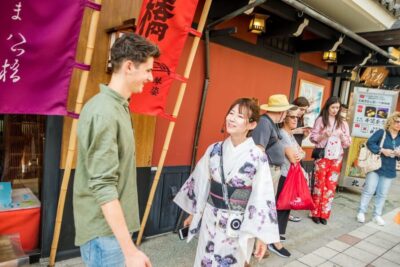
Kyoto Kimono Rental Experience (Optional Exquisite Hair Styling/Japanese Makeup/Photography) (Ookini Kiyomizu-dera Main Store)
Read our review →Browse the lists this tour appears in