
Reviewed · TEMPLES AND SHRINES
Kyoto: Fushimi Inari Shrine Walking Tour
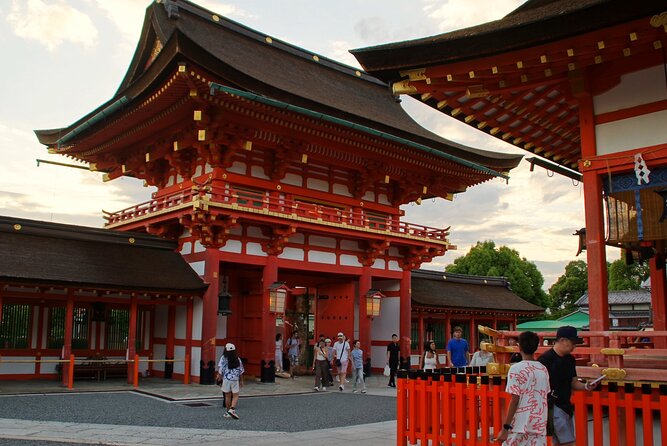
Orange gates lead to a bigger story. This two-hour evening walk through Fushimi Inari-taisha combines the shrine’s famous torii paths with clear explanations of Inari worship, fox symbolism, and local rituals. I like the small group limit of 10, which helps you stay close to the guide, and I like that the tour reaches scenic mountain paths rather than stopping at the crowded entrance. The $39.64 price also feels fair if you want cultural context instead of simply taking photos and moving on.
The main caution is the climb. The shrine can be very busy in the evening, and the route includes uphill walking. You should also know that the experience begins at 6:00 pm, ends back at the starting point, and does not include food, drinks, or optional tips.
In This Review
- Four things to know before you book
- Why Fushimi Inari is worth more than a quick photo stop
- Meeting at Daily Yamazaki at 6:00 pm
- Entering the torii gate paths
- Fox statues and Inari worship
- The forest climb and Kyoto views
- A two-hour pace with room for questions
- What the $39.64 price buys you
- Evening crowds, quiet corners, and photo expectations
- Who will enjoy this Fushimi Inari walk
- Should you book this Kyoto shrine tour?
- FAQ
- How long does the Fushimi Inari Shrine Walking Tour last?
- What time does the tour begin?
- Where is the meeting point?
- Where does the tour end?
- What is included in the tour?
- Are food and drinks included?
- Is tipping required?
- How many people can join the tour?
- Can I cancel for a full refund?
Four things to know before you book
- The tour starts at 6:00 pm: Evening light gives the shrine a different mood, but the area may still be busy.
- The group is limited to 10 people: That is small enough for questions and easier to keep track of on the forest paths.
- The walk goes beyond the main gate: You will follow scenic trails up the mountain for Kyoto views and quieter corners.
- Fox statues have a purpose: Your guide explains how foxes connect to Inari worship and why they appear throughout the shrine grounds.
- The visit includes a real climb: The route is more than a flat temple stop, so comfortable walking shoes make sense.
- The meeting point is easy to identify: Start at Daily Yamazaki Fushimi Inari Shrine, 93 Fukakusa Inarionmaecho, Fushimi Ward.
Why Fushimi Inari is worth more than a quick photo stop
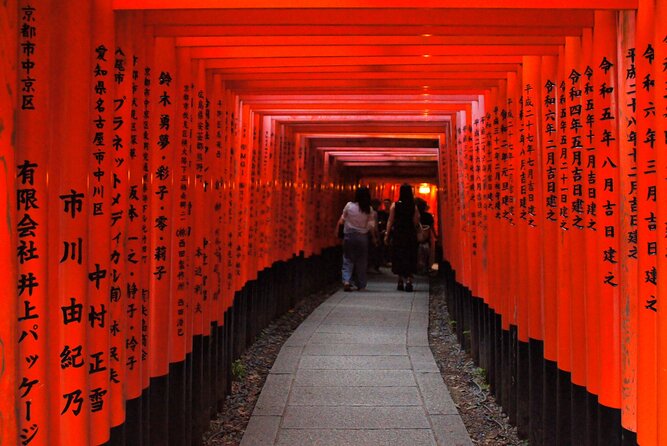
Fushimi Inari-taisha is one of Kyoto’s most recognizable sights because of its thousands of orange-red torii gates. These gates form long corridors through the wooded slopes of Mount Inari, creating the image most people associate with the shrine.
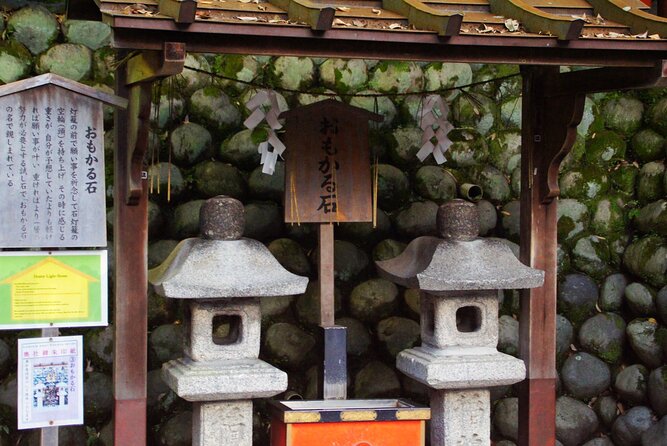
The striking colors are only the beginning. The shrine is dedicated to Inari, a deity linked with rice, prosperity, and successful business. Foxes appear throughout the grounds as Inari’s messengers. Once you know this, the statues, offerings, and small shrine details become easier to read.
That is where a guide can add real value. Without explanation, you may see a long tunnel of gates, a few stone foxes, and a series of worship buildings. With context, you can begin to understand why people bow, purify themselves, make offerings, and pause at particular points.
I especially like the focus on traditional practices happening around you. The tour is not only a walk through an attractive setting. It gives you a way to understand the place as a living shrine rather than a backdrop for travel photos.
More Temples and Shrines in Kyoto
- [Kyoto & Nara Day Tour] Sagano Scenic Railway & Nara Park & Fushimi Inari Taisha Thousand Torii Gates & Togetsukyo Bridge & Bamboo Grove & Kimono Forest (Departing from Osaka)
★ 4.9 · 10,942 reviews - Kyoto: Fushimi Inari, Kinkakuji, Bamboo Grove 1 Day Bus Tour
★ 4.8 · 4,316 reviews - Kyoto: Tea Ceremony in a Traditional Tea House in Kiyomizu
★ 4.9 · 3,519 reviews
Meeting at Daily Yamazaki at 6:00 pm
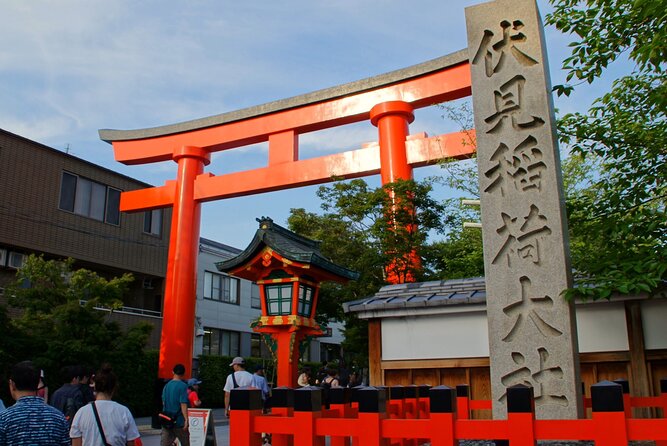
The tour begins at the Daily Yamazaki Fushimi Inari Shrine convenience store at 93 Fukakusa Inarionmaecho in Fushimi Ward. The supplied details do not give a separate transportation plan, but the meeting point is near public transportation, which makes it practical to reach within Kyoto.
Arrive with enough time to find the exact meeting point. The store name is useful because Fushimi Inari has several entrances, paths, and nearby businesses. You do not want to begin the evening by trying to locate the group among the crowds.
The guide leads the group from the meeting point into the shrine complex. Since the tour ends back at the same location, you do not need to arrange a separate return point during the activity. That is helpful if you plan to continue exploring the area afterward or want a simple route back to your accommodation.
The start time shapes the experience. At 6:00 pm, daylight and evening atmosphere may overlap, depending on the season. You can expect the shrine to have plenty of activity, and one direct review described the evening tour as busy. The guide’s route planning matters here, especially when the main approach is full of people.
Entering the torii gate paths
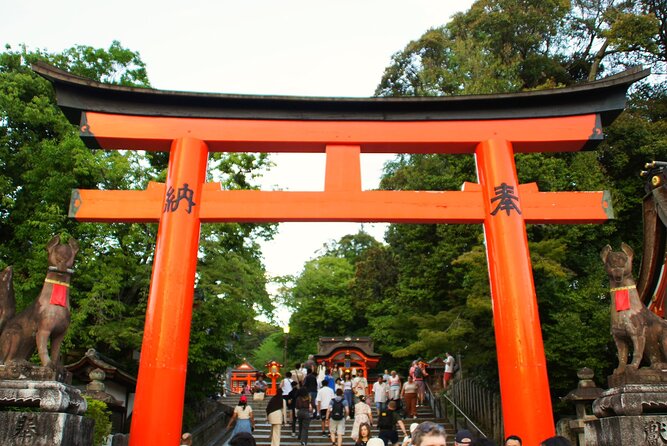
The torii gates are the visual heart of the experience. They line the mountain route in closely spaced rows, creating a long orange-red passage beneath the trees. Walking through them gives you a strong sense of movement, but the repeated design can also make the shrine feel confusing if you do not know where to go.
That is one of the tour’s practical advantages. Your guide handles navigation while explaining the meaning behind the gates and the shrine traditions connected with them. You can pay attention to the setting instead of constantly checking a map or wondering if you have taken the correct fork.
The tour is designed around interpretation, not just transit. You will hear about the spiritual meaning of Fushimi Inari-taisha and the role of rituals within the complex. The details supplied for this experience do not name a specific guide, but the feedback consistently praises the guide’s friendly manner, local insight, and willingness to answer questions.
A small group helps here. With a maximum of 10 people, you are less likely to lose the guide in a narrow gate corridor. It also gives you a better chance to ask about something you notice, such as a fox statue, a ritual gesture, or an offering.
Fox statues and Inari worship
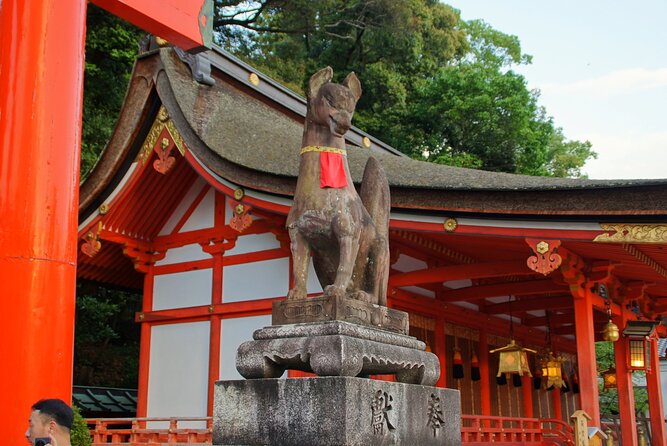
The fox figures are among the most interesting parts of Fushimi Inari. They are not the deity itself. They serve as messengers of Inari, and their presence gives the shrine a distinct character.
The tour places this symbolism in context. You may learn why foxes appear in different parts of the shrine and how their role connects to Japanese religious tradition. This makes the many statues feel less like decoration and more like part of a larger system of belief.
The guide also explains shrine customs and rituals. That can include the meaning of practices taking place around you, though the supplied details do not specify every ritual covered. You should expect broad cultural and historical explanation rather than a formal religious ceremony created for the group.
I like this part of the tour for a simple reason: it helps you observe respectfully. When you know what a space represents, you are more likely to slow down, watch what people are doing, and avoid treating every sacred feature as a prop.
More Walking Tours in Kyoto
- Kyoto Geisha Walking Tour: Gion District & Hidden Gems
★ 4.7 · 3,273 reviews - Kyoto: Gion Magical Night Walking Tour with Geisha Trivia
★ 4.9 · 2,393 reviews - Kyoto: Gion Geisha District Walking Tour – Stories of Geisha
★ 4.7 · 2,187 reviews - Night Walk in Gion: Kyoto’s Geisha District
★ 4.5 · 2,003 reviews
The forest climb and Kyoto views
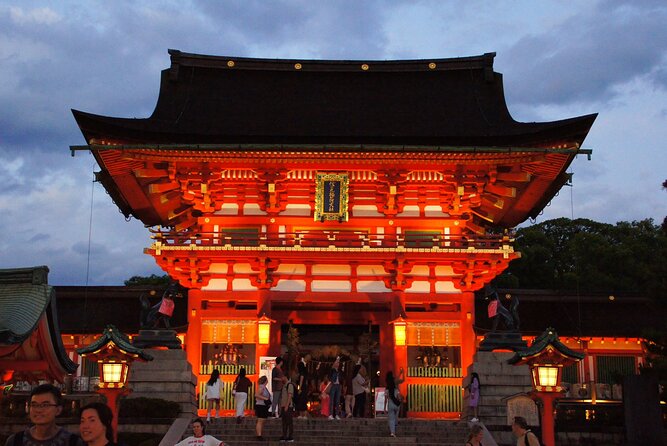
This is a walking tour with an uphill section, not a quick visit to the lower shrine buildings. The route follows scenic trails through the mountain forest and includes panoramic views of Kyoto as you ascend.
The climb is also the main physical consideration. One review described it as a considerable effort, while still finding the tour worthwhile. If you have limited mobility, dislike hills, or want a fully relaxed evening, you should take that seriously before booking. The supplied information says most people can participate, but it does not give a precise distance, elevation gain, or accessibility arrangement.
The mountain setting is a major reason to choose this experience instead of visiting the entrance alone. The lower areas can feel crowded, especially at popular times. As you move along the trails, you might find quieter points for reflection and photography. Several comments praised the guide for locating peaceful areas and viewpoints that many people miss.
Do not think of the views as guaranteed uninterrupted sightseeing time. The group is moving along a shrine route, and the walk has a cultural focus. Still, the combination of forest paths, gates, and Kyoto panoramas gives the two hours a good rhythm.
Wear shoes suited to uphill walking. Bring water, since food and drinks are not included. The tour details do not state whether bottled water is provided, so plan as if you need to handle your own refreshment.
A two-hour pace with room for questions
Two hours is enough to make the shrine meaningful without turning the visit into a full-day hike. The guide can introduce the main religious ideas, lead you along part of the mountain route, and point out scenic areas without asking you to commit an entire day.
The pacing appears to be one of the strongest features. One direct comment praised the balance between walking and cultural learning, while another described the pace as comfortable despite the climb. That is important at Fushimi Inari, where it is easy to spend too much time at the first torii corridor and then rush the rest.
The group format should also make the walk more personal. A maximum of 10 people is not a private tour, but it is far more manageable than a large coach group. You can stay near the guide, hear explanations more easily, and ask questions about Japanese spirituality or local customs.
You should not expect a long independent photography session at every stop. The guide needs to keep the group together and complete the route within about two hours. If your priority is taking hundreds of carefully composed photos, a self-guided visit may give you more freedom. If you want to understand what you are seeing, the guided structure is the better trade.
What the $39.64 price buys you
At $39.64 per person, this is not the cheapest way to walk through Fushimi Inari. You can visit the shrine without paying for a tour, and the supplied itinerary identifies admission as free. The value comes from the guide, the route, and the interpretation rather than from an expensive entry ticket.
I would judge the price by asking what you want from the visit. If you already know a great deal about Inari worship, shrine etiquette, and the mountain paths, you may prefer to explore alone. If this is your first visit and you want the symbolism explained in plain English, the fee is reasonable.
The tour includes an English-speaking guide, historical insight into the district, and entry to Fushimi Inari-taisha. It does not include food or drinks, and tips are optional. The small group limit is also part of the value because it gives you a better chance to hear the guide and keep the visit organized.
The strongest benefit is time. Fushimi Inari is simple to reach but not always simple to understand. A guide can help you avoid wandering without purpose and can direct attention to details you might otherwise pass without noticing.
Evening crowds, quiet corners, and photo expectations
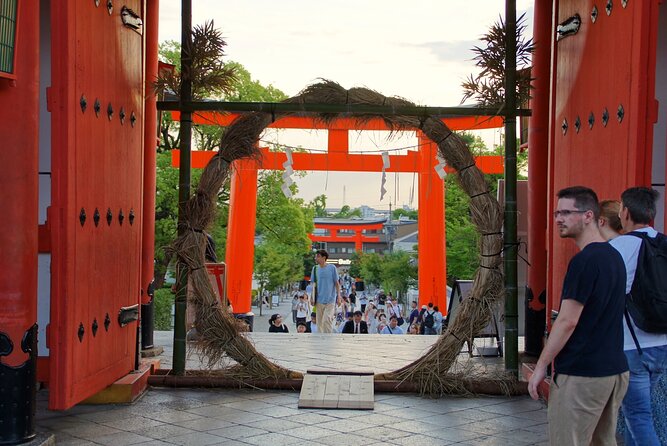
The popular image of Fushimi Inari often suggests complete peace beneath endless gates. The reality is more mixed. The lower shrine and famous first sections can be crowded, and the evening tour may still be busy.
That does not ruin the experience. It simply means you should not expect every photograph to show an empty path. The guide may help by timing certain parts of the visit and pointing out quieter trails or reflection spots. The supplied feedback places strong emphasis on this ability to find peaceful areas and good viewpoints.
The mountain route changes the feel of the shrine. The forest, the gradual climb, and the repeated gates create a calmer setting as you move away from the most photographed areas. You might find the contrast between busy entrance paths and quiet upper sections more memorable than a perfectly empty gate corridor.
Bring realistic expectations. This is a famous Kyoto attraction, not a secret place. The reward is seeing it with more understanding and finding moments of calm within a well-known site.
Who will enjoy this Fushimi Inari walk
I would recommend this tour to first-time visitors who want more than a quick stop. It suits you particularly well if you are curious about Japanese shrine traditions, fox folklore, and the meaning of the torii gates.
It is also a good match for people who prefer a guide to handle navigation. The mountain paths can be confusing, and a small group makes it easier to stay with the person leading the walk.
The tour may appeal to photographers who want scenic viewpoints, though the guided pace limits complete freedom. It also suits families and mixed-interest groups if everyone can manage the uphill walk and stay together for two hours.
I would think twice if you want a flat, short stroll, a private experience, or a visit built entirely around your own schedule. The guide-led format gives you useful structure, but you give up some independence.
Booking confirmation is provided at the time of purchase. Most people can participate, and the group has a maximum of 10. Free cancellation is available if you cancel at least 24 hours before the 6:00 pm start time. Changes or cancellations made later are not accepted for a refund.
Should you book this Kyoto shrine tour?
Book it if you want Fushimi Inari explained, not just photographed. The combination of fox stories, shrine customs, orange-red torii gates, forest trails, and Kyoto views gives you a fuller visit than a quick walk around the entrance.
The $39.64 cost is sensible for the small group and English-speaking guide, especially if you are new to Japanese religious sites. Just prepare for crowds, an uphill climb, and a two-hour walking pace.
If you are comfortable exploring on your own and mainly want photos, visit independently. If you want a friendly guide, useful cultural context, and access to quieter mountain sections, this is a strong choice.
FAQ
How long does the Fushimi Inari Shrine Walking Tour last?
The tour lasts approximately two hours.
What time does the tour begin?
The tour starts daily at 6:00 pm.
Where is the meeting point?
The meeting point is Daily Yamazaki Fushimi Inari Shrine, 93 Fukakusa Inarionmaecho, Fushimi Ward, Kyoto, 612-0881, Japan.
Where does the tour end?
The activity ends back at the meeting point.
What is included in the tour?
The experience includes an English-speaking guide, historical insights into the district, and entry to Fushimi Inari-taisha Shrine.
Are food and drinks included?
No. Food and drinks are not included.
Is tipping required?
Tips are optional and are not included in the tour price.
How many people can join the tour?
The activity has a maximum group size of 10 people.
Can I cancel for a full refund?
Yes. You can receive a full refund if you cancel at least 24 hours before the experience start time. Cancellations or changes made less than 24 hours before the start are not accepted for a refund.
Just added in Kyoto
- The “Golden Route” and Ancient Japan by DIAMIR Erlebnisreisen – 14-Day Tour★ 2.0 · 2 reviews
- Japan: Castles & Cuisine by G Adventures – 6-Day Kyoto to Osaka Tour★ 4.5 · 4 reviews
- Cycle Japan by Explore! – 13-Day Kyoto to Tokyo Tour★ 4.7 · 12 reviews
- Cycle Japan by Intrepid Travel – 11-Day Kyoto to Tokyo Tour★ 4.8 · 2 reviews
- Classic Japan by Intrepid Travel – 11-Day Kyoto to Tokyo Tour★ 4.4 · 14 reviews
- Ancient & Modern Japan 14-Day Tour by Exodus Adventure Travels★ 4.4 · 40 reviews
- 5 Day Cultural Adventure of Kyoto, Nara & Osaka by Tourist Journey★ 2.5 · 2 reviews
- 12 Days Kinosaki Onsen Escape: A Journey Through Japan’s Timeless Towns by UME Travel★ 4.8 · 5 reviews
Temples and Shrines, compared.
![[Kyoto & Nara Day Tour] Sagano Scenic Railway & Nara Park & Fushimi Inari Taisha Thousand Torii Gates & Togetsukyo Bridge & Bamboo Grove & Kimono Forest (Departing from Osaka)](https://media.japanvisits.com/wp-content/uploads/kyoto-nara-day-tour-sagano-scenic-railway-nara-park-fushimi-inari-taisha-thousand-torii-gates-togetsukyo-bridge-bamboo-grove-kimono-forest-departing-from-osaka-k110001-400x257.jpg)
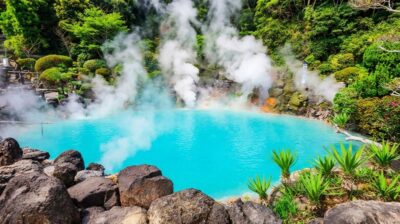
Kyushu One-Day Tour: Yufuin no Mori Train & Yufuin Town & Nyoirin-ji Temple & Dazaifu & Hell Hot Springs (Departing from Fukuoka)
Read our review →
Fushimi Inari, Kinkakuji, Bamboo Grove 1 Day Bus Tour
Read our review →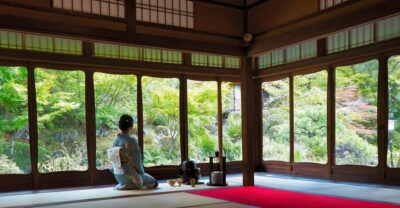
Tea Ceremony in a Traditional Tea House in Kiyomizu
Read our review →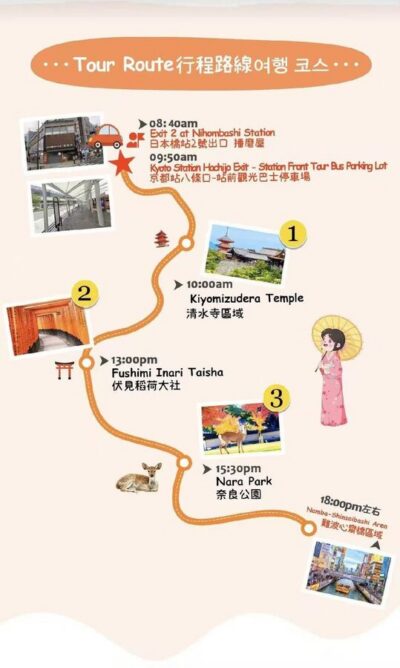
Kyoto Nara Day Trip │ Kiyomizu-dera Temple + Fushimi Inari-taisha Shrine + Nara Park (Departing from Osaka/Kyoto)
Read our review →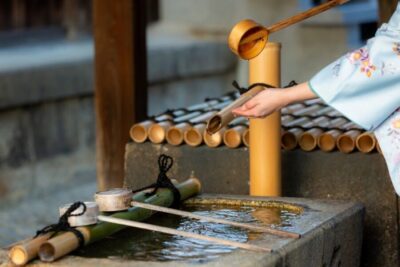
Browse the lists this tour appears in