
Reviewed · TEMPLES AND SHRINES
Kyoto: Fushimi Inari Taisha Guided Walking Tour
Red gates lead to a bigger story. This short tour makes Fushimi Inari Taisha easier to understand, not just easier to photograph. I like the small groups of up to nine and the chance to choose between a fuller Mount Inari walk or a shorter visit to the famous torii gates. The main consideration is physical effort: the longer option includes uphill walking and is not suited to people with mobility, heart, respiratory, or pregnancy-related concerns.
I also like the practical flexibility. At $24 per person, with entrance fees and an English-speaking guide included, it is a sensible way to add Fushimi Inari to a tight Kyoto schedule. Guides such as Katz, Christiana, Raphael, Nobumasa, and others have been praised for clear explanations, patience, help with photos, water reminders, and adapting their pace to children or older members of a group.
In This Review
- Key points to know before you book
- Why Fushimi Inari deserves more than a quick photo
- Meeting at Daily Yamazaki near the shrine
- The lower shrine: a good starting point for the visit
- The torii trail and the climb up Mount Inari
- What the guide adds to the experience
- The 30-minute street food stop
- Is $24 a good value?
- Who should choose the longer route?
- Practical advice for a smoother visit
- FAQ
- How long does the Fushimi Inari walking tour last?
- What language is the tour conducted in?
- Where does the tour meet?
- Is the tour suitable for a last-minute booking?
- Are entrance fees included?
- Is food included?
- Can I choose a shorter route?
- How many people are in the group?
- What happens if I need to cancel?
- Should you book this Fushimi Inari tour?
Key points to know before you book
- Two ways to see Fushimi Inari: Choose the upper and lower shrine route for extra walking, or focus on the lower shrine and the famous torii gates.
- Thousands of vermilion torii: The gates line the trail up Mount Inari, creating one of Kyoto’s most recognizable sights.
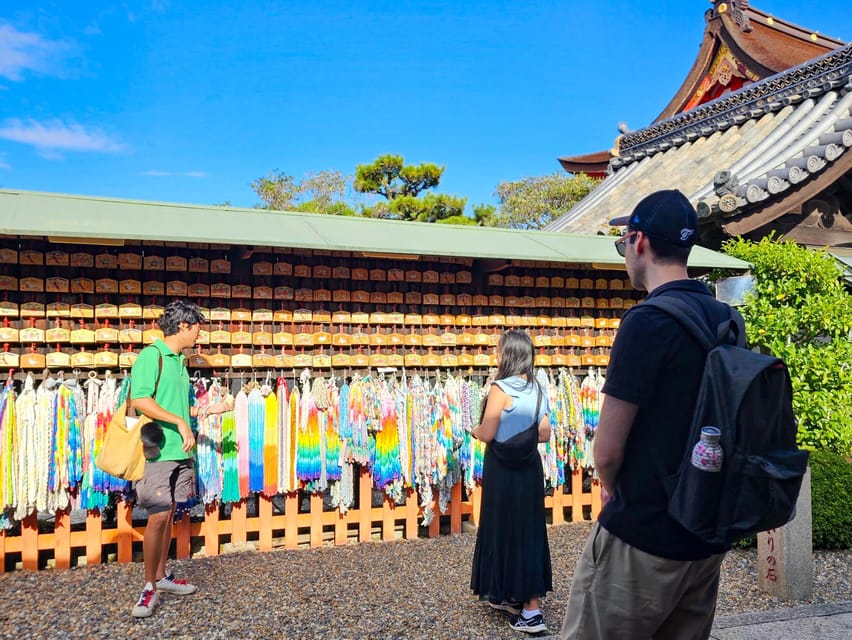
- A guide adds cultural context: You learn about Inari, the deity linked with agriculture and commerce, and the foxes associated with the shrine.
- A genuinely small group: The tour is limited to nine people, which makes questions and pace adjustments easier.
- Street food is part of the outing: The itinerary includes about 30 minutes to walk and sample food near the shrine.
- Good for last-minute plans: You can book on the same day when space is available, and cancel up to 24 hours ahead for a full refund.
Why Fushimi Inari deserves more than a quick photo
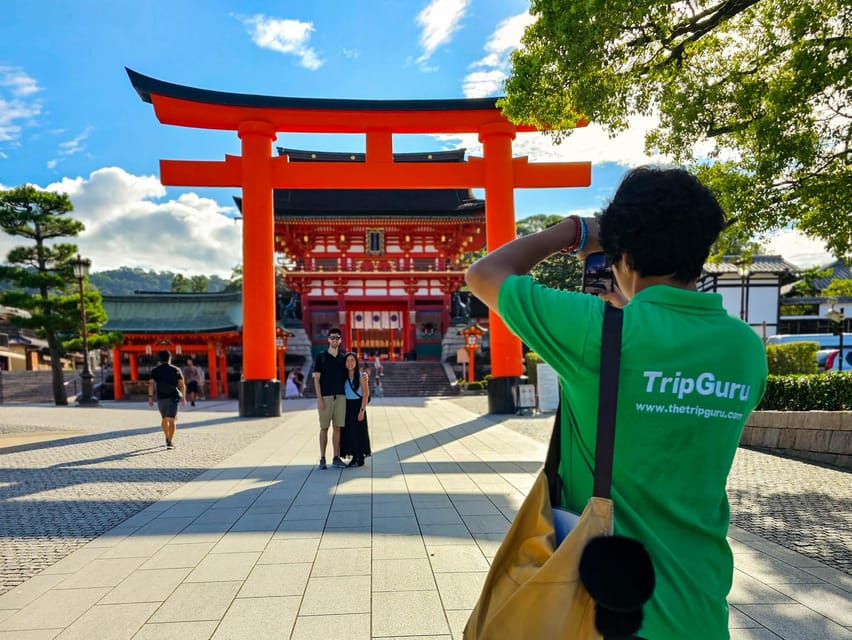
Fushimi Inari Taisha is one of Kyoto’s most recognizable sights, but the first dramatic view can hide what the shrine represents. The torii gates are not simply a beautiful passageway. They have been donated by individuals and businesses, and they mark a place of worship connected with Inari.
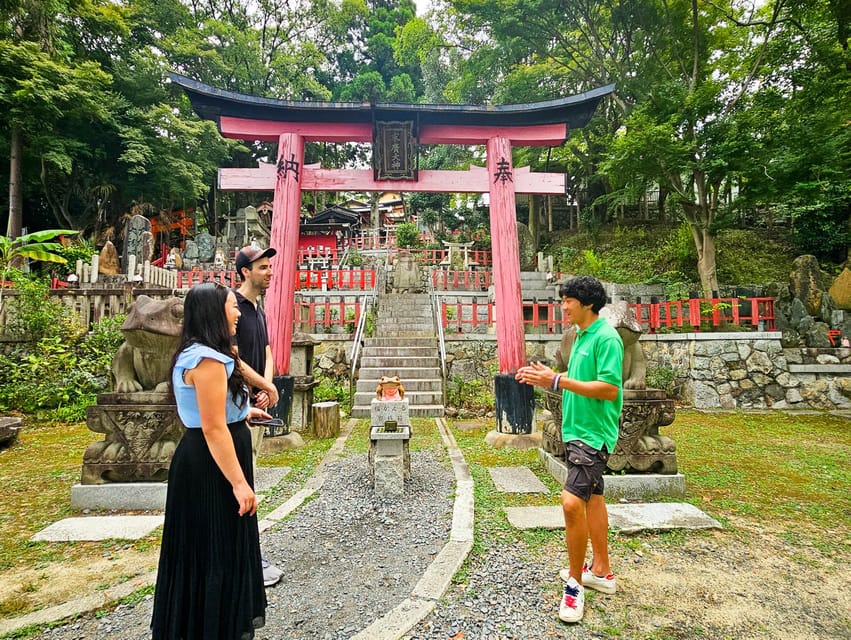
Inari is associated with agriculture and commerce. Foxes appear throughout the shrine grounds because they are regarded as messengers of Inari. A guide can point out these details as you walk, giving meaning to statues, smaller shrines, offerings, and symbols that are easy to miss when you are moving through with a camera in hand.
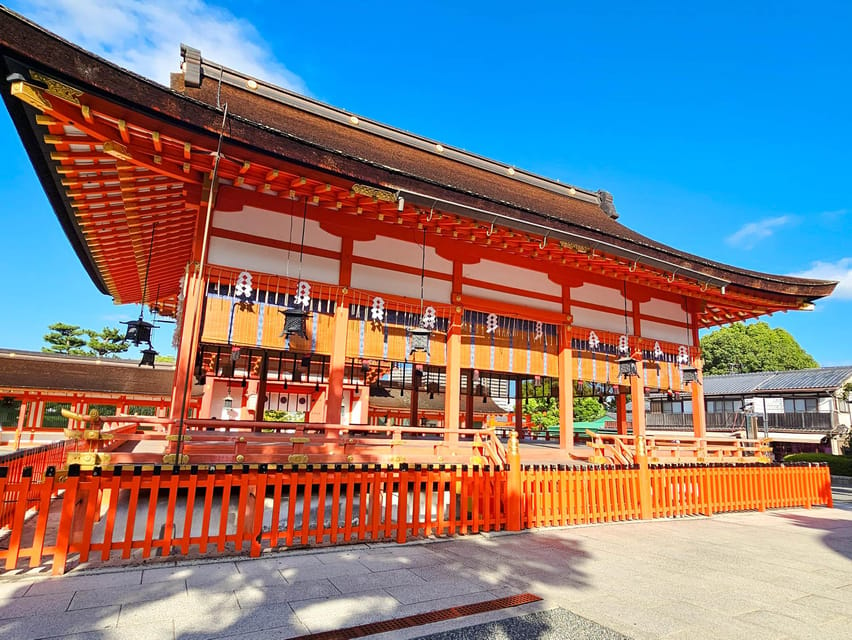
The shrine has a lower section at the base of Mount Inari and an upper section reached by trail. The lower area contains the main entrance, the offering hall, and several smaller shrines. The upper area leads you through the torii-lined route and offers views toward Kyoto and the surrounding mountains.
That division matters when you plan your time. You can see the iconic gates without committing to a longer climb, or you can use the tour to make a proper walk of the mountain. The choice is built into the experience, which is useful if your energy, schedule, or footwear is limited.
More Temples and Shrines in Kyoto
- [Kyoto & Nara Day Tour] Sagano Scenic Railway & Nara Park & Fushimi Inari Taisha Thousand Torii Gates & Togetsukyo Bridge & Bamboo Grove & Kimono Forest (Departing from Osaka)
★ 4.9 · 10,942 reviews - Kyoto: Fushimi Inari, Kinkakuji, Bamboo Grove 1 Day Bus Tour
★ 4.8 · 4,316 reviews - Kyoto: Tea Ceremony in a Traditional Tea House in Kiyomizu
★ 4.9 · 3,519 reviews
Meeting at Daily Yamazaki near the shrine
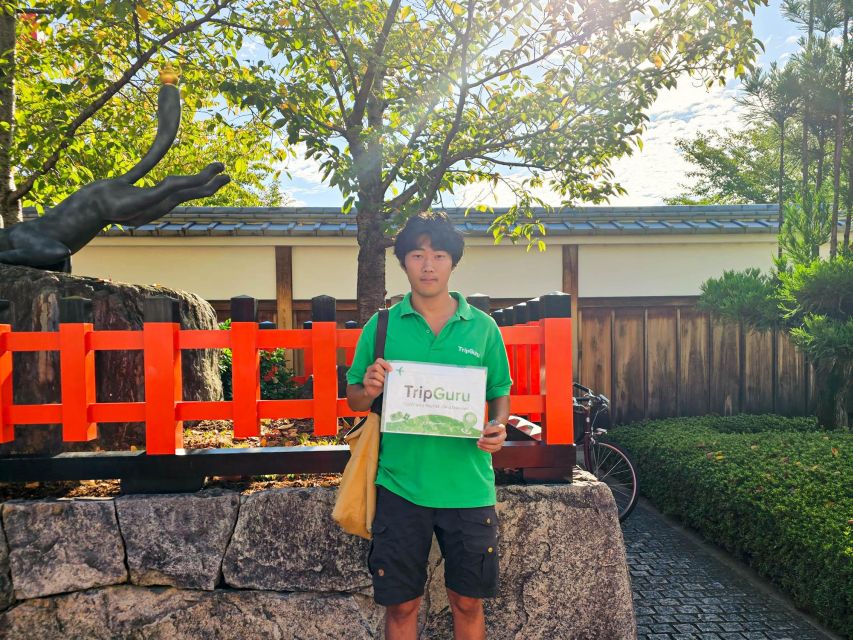
The meeting point is Daily Yamazaki Fushimi Inari Shrine. Your guide will wear a TripGuru shirt or hold a TripGuru sign, so look for those markers rather than expecting a large tour desk.
Arrive early. The guide waits a maximum of 10 minutes before continuing, and morning traffic can take longer than navigation apps suggest. This is especially important if you are coming from another part of Kyoto and have a fixed train, lunch, or sightseeing plan afterward.
The tour does not include hotel pickup or drop-off. You need to make your own way to the meeting point and return there at the end. That keeps the price low, but it also means you should build in a time cushion for getting there.
The total outing lasts two to three hours. The exact length depends on the option you choose and how much walking you do. The itinerary begins and ends at the same Daily Yamazaki meeting point, with the shrine visit and a street food walk in between.
The lower shrine: a good starting point for the visit
The lower section gives you a useful introduction to Fushimi Inari. Here, you encounter the main entrance, the offering hall, and smaller religious sites before heading toward the mountain trail.
This is the better choice if your main goal is to see the torii gates and understand the shrine without spending an extra hour on foot. It also works well for visitors with a packed Kyoto itinerary. You still get the setting, the symbolism, and the famous red gates, but with less physical strain.
A guide is particularly helpful here because the shrine can feel visually overwhelming. There are gates, fox figures, buildings, signs, and worshippers moving through the same space. Instead of trying to decode everything alone, you can ask what a feature means and learn how Inari worship connects to everyday life in Japan.
The shorter option is not a poor substitute. It is a practical choice for anyone who wants the central experience without treating the entire mountain as a hiking project. If you have children, older relatives, or a limited amount of time, this may be the wiser selection.
The torii trail and the climb up Mount Inari
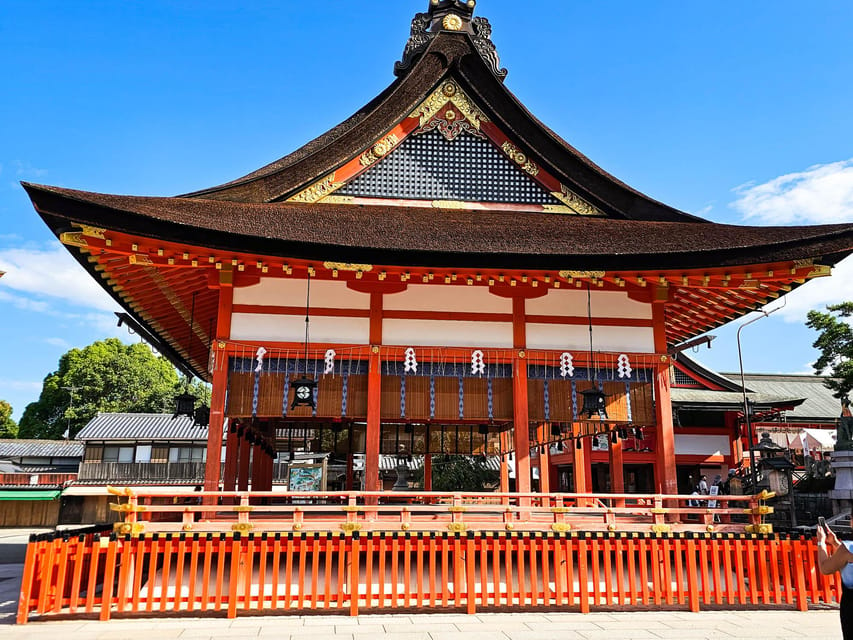
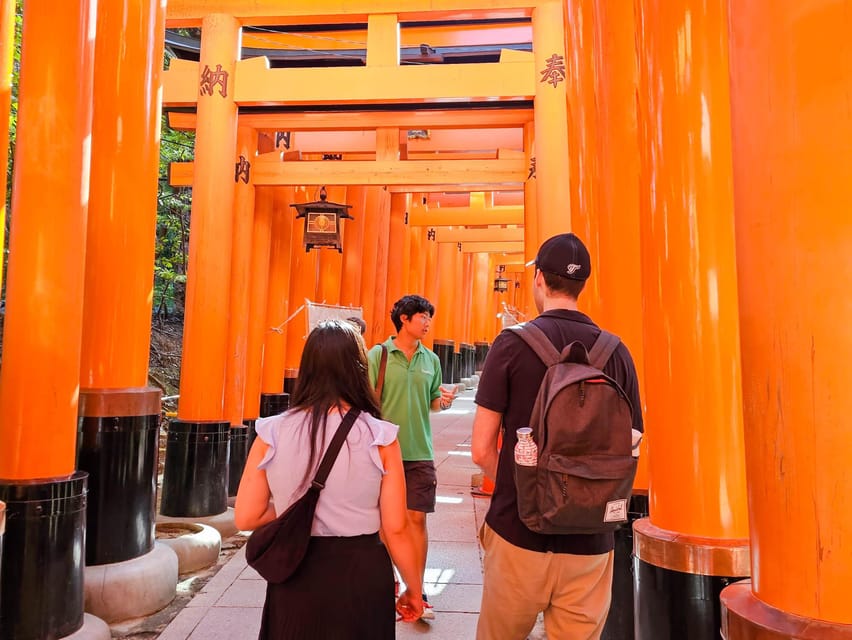
The upper shrine route adds roughly an hour of walking and takes you onto the trail up Mount Inari. Thousands of vermilion torii gates line the path, forming the tunnel-like views that make Fushimi Inari so famous.
The visual effect changes as you walk. At one moment, the gates form a close corridor. At another, the trail opens toward smaller shrines or views back toward Kyoto. The mountain route gives you a stronger sense of the shrine as a living religious site rather than a single photo stop.
You should wear comfortable shoes. This is not a flat sightseeing walk, and the longer option requires more time on your feet. The tour information specifically advises against booking for people with mobility impairments, heart problems, respiratory issues, or pregnancy. Take those limits seriously, especially in warm weather.
The guide can help with pacing, and past tour experiences have included regular checks for breaks and hydration. Cody, for example, was praised for asking if the group needed rest and for helping people stay hydrated. Raphael also adapted the outing for a group with children and strollers. Those examples suggest a considerate style, but you should still choose the route that matches your own ability.
The reward for the extra effort is not only the gates. The upper trail gives you a closer look at the smaller shrines on Mount Inari and views over Kyoto and the surrounding mountains. If you enjoy walking and want more than the standard entrance-area visit, Option A gives the shrine a fuller shape.
More Walking Tours in Kyoto
- Kyoto Geisha Walking Tour: Gion District & Hidden Gems
★ 4.7 · 3,273 reviews - Kyoto: Gion Magical Night Walking Tour with Geisha Trivia
★ 4.9 · 2,393 reviews - Kyoto: Gion Geisha District Walking Tour – Stories of Geisha
★ 4.7 · 2,187 reviews - Night Walk in Gion: Kyoto’s Geisha District
★ 4.5 · 2,003 reviews
What the guide adds to the experience
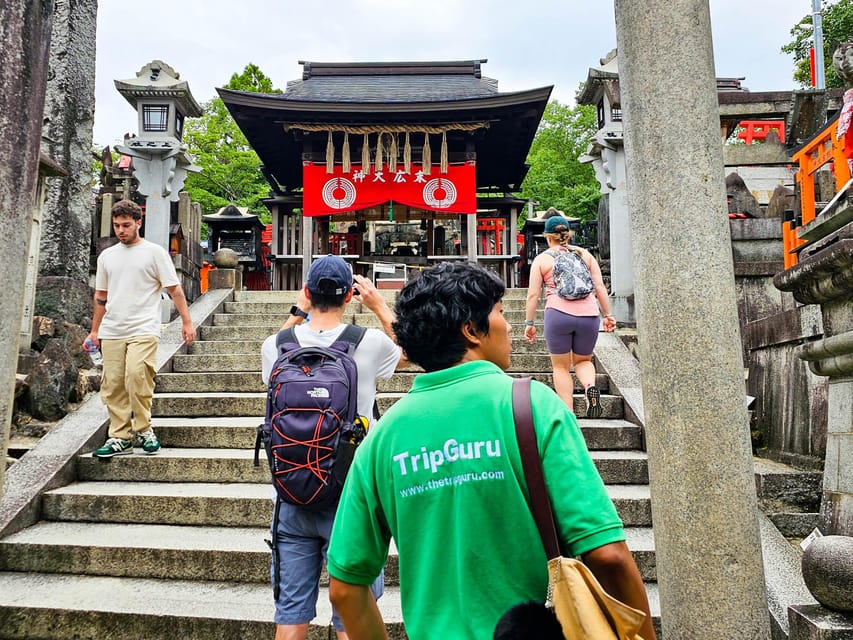
The main value of this tour is interpretation. Fushimi Inari is easy to visit independently, but it is harder to understand independently unless you have already done some reading.
The English-speaking guide explains the role of Inari, the meaning of the fox messengers, and the purpose of the torii gates. You also get historical facts and small cultural details while standing in the places connected to them. That timing helps the information stay connected to what you are seeing.
The small group size matters. With no more than nine participants, you can ask questions without holding up a large crowd. Guides have also been praised for being friendly, patient, and willing to take photographs. Jessica described a guide who photographed her, helped with a bag, brought water, and suggested places to eat. Dione appreciated a guide who supplied water and mineral sweets during the walk.
Those personal touches should not be treated as guaranteed extras. Water, sweets, bag carrying, and restaurant suggestions are not listed as included services. Still, they show the kind of attentive approach that can make a short walking tour feel more personal.
Guide quality can vary from person to person, as it does on any guided outing. The named guides praised for this experience include Katz, Christiana, Raphael, Nobumasa, and others. The consistent themes are clear explanations, good humor, patience, and a willingness to adjust the walk to the group.
The 30-minute street food stop
The itinerary includes about 30 minutes of walking and street food after the shrine visit. This is a pleasant way to finish because it shifts the experience from religious sights to the everyday food scene around Fushimi Inari.
Meals and drinks are not included, so you pay for anything you choose to eat or drink. Think of this as a chance to browse and sample rather than a full meal. If you are hungry, plan accordingly, especially if your tour starts at an unusual time.
The food stop also gives you time to ask the guide for suggestions. One guide was praised for offering useful places to eat, although individual recommendations can differ. If you have allergies or dietary needs, ask before buying anything, since the tour details do not specify food options or dietary accommodations.
The group returns to Daily Yamazaki Fushimi Inari Shrine after the street food portion. This clear endpoint makes it easier to continue sightseeing or head back to your accommodation, provided you have allowed enough time for the complete two to three hours.
Is $24 a good value?
At $24 per person, this is a low-cost guided experience in Kyoto. Entrance fees, walking-tour services, and an English-speaking guide are included. You are mainly paying for cultural explanation, group coordination, and the convenience of having someone lead you through a large and busy shrine complex.
The value is strongest if you have only a few hours and want help making sense of the site. A self-guided visit costs less in direct terms, but you would need to research the shrine beforehand and manage the route yourself. This tour gives you a simple meeting point, a set duration, and a guide who can answer questions along the way.
The price does not cover transport, hotel pickup, food, drinks, or personal purchases. Those costs are easy to control, but you should include them in your day’s budget. The lack of transportation is less of a problem if you are already sightseeing in southern Kyoto, but it requires planning if you are coming from far away.
The reserve-now-and-pay-later option also helps if your schedule is unsettled. You can hold a place without paying immediately, while free cancellation is available up to 24 hours before the tour. Same-day booking is accepted when space remains, making this useful for a last-minute Kyoto afternoon.
Who should choose the longer route?
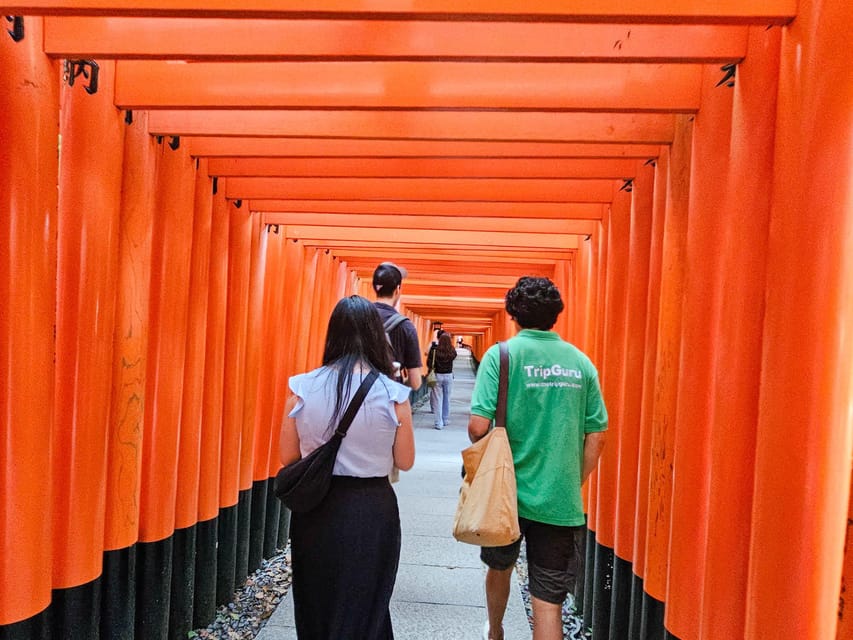
Choose the full upper and lower shrine option if you want a proper walk on Mount Inari and have at least three hours available. You will get more of the shrine, more smaller religious sites, and city and mountain views that the shorter route may not reach.
This option suits people who enjoy walking and want to connect the famous gates with the wider setting. It is also the better pick if you have already seen Kyoto’s major temples and want an outing with a stronger cultural explanation.
Choose the lower section option if your priority is the classic torii-gate experience. It is a better fit for a short schedule, reduced stamina, or a group that includes young children or older adults. The shorter route also leaves more time for another Kyoto sight, meal, or train connection.
Do not book the longer walk simply because it sounds more complete. The best route is the one you can enjoy without rushing or worrying about your knees, breathing, or energy. Fushimi Inari will still be meaningful if you see less of Mount Inari.
Practical advice for a smoother visit
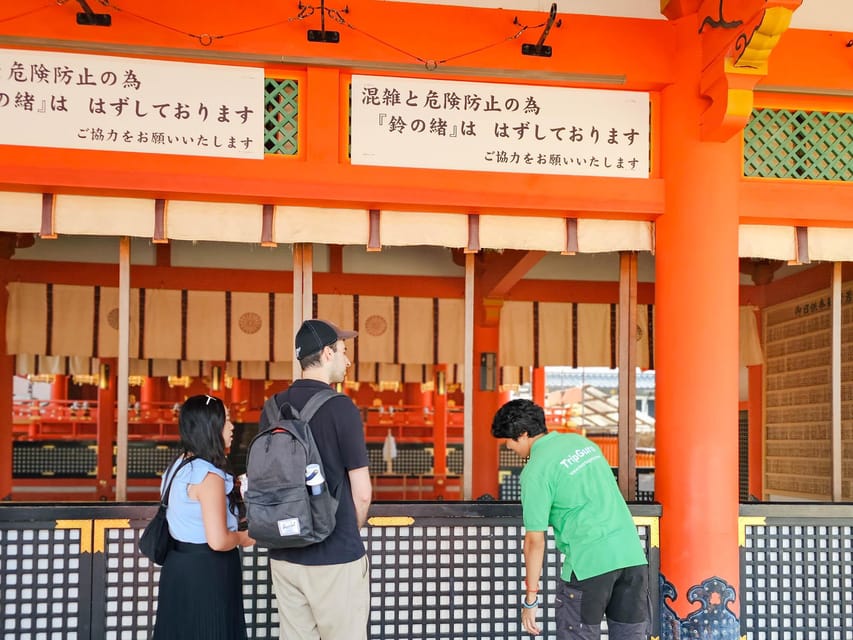
Wear comfortable shoes, even for the shorter option. The shrine visit is on foot, and the full route includes a mountain trail.
Dress modestly and respectfully. Avoid overly revealing clothing, shorts, or tank tops on the shrine grounds. This is both a practical sign of respect and a simple way to feel more at ease in a religious setting.
Arrive before the meeting time, not at it. The 10-minute waiting limit is firm, and traffic can be much slower than your navigation app predicts. Leave extra time, especially in the morning.
Bring enough water for your own needs. Guides may remind you to hydrate or help with small comforts, but water is not listed as an included item. In warm conditions, the mountain route can feel more demanding than its short duration suggests.
Keep your schedule flexible after the tour. The official length is two to three hours, and the longer option adds walking. If you need to catch a train, leave a generous buffer after the planned return time.
FAQ
How long does the Fushimi Inari walking tour last?
The tour lasts two to three hours. The longer upper and lower shrine option includes about an extra hour of walking.
What language is the tour conducted in?
The tour is conducted in English by a live English-speaking guide.
Where does the tour meet?
Meet at Daily Yamazaki Fushimi Inari Shrine. The guide will wear a TripGuru shirt or hold a TripGuru sign.
Is the tour suitable for a last-minute booking?
Yes. Same-day and last-minute bookings are accepted when availability remains.
Are entrance fees included?
Yes. Entrance fees and the walking tour are included in the price.
Is food included?
No. Meals, drinks, and personal food purchases are not included. The itinerary includes about 30 minutes for street food and walking after the shrine visit.
Can I choose a shorter route?
Yes. You can choose the lower shrine option, which focuses on the shrine base and the well-known torii gates, or choose the upper and lower shrine option with the Mount Inari trail.
How many people are in the group?
The tour is limited to nine participants.
What happens if I need to cancel?
You can cancel up to 24 hours in advance for a full refund. The reserve-now-and-pay-later option lets you book without paying immediately.
Should you book this Fushimi Inari tour?
Book it if you want clear cultural context, a small group, and a guided visit that fits into two or three hours. At $24, it offers good value for an English-speaking guide, entrance fees, and a choice between a short shrine visit and a longer mountain walk.
I would especially recommend it to first-time visitors who want to understand the fox statues, Inari worship, and the purpose of the torii gates instead of simply collecting photos. It also suits solo visitors and families who value help with photos, pacing, and questions.
Skip it if you prefer to wander alone, already know the shrine well, or cannot manage a walking tour. The lower route reduces the effort, but this remains a foot-based experience with no hotel pickup. For most visitors with a free morning or afternoon in Kyoto, though, this is a friendly, affordable way to give Fushimi Inari more meaning.
Just added in Kyoto
- The “Golden Route” and Ancient Japan by DIAMIR Erlebnisreisen – 14-Day Tour★ 2.0 · 2 reviews
- Japan: Castles & Cuisine by G Adventures – 6-Day Kyoto to Osaka Tour★ 4.5 · 4 reviews
- Cycle Japan by Explore! – 13-Day Kyoto to Tokyo Tour★ 4.7 · 12 reviews
- Cycle Japan by Intrepid Travel – 11-Day Kyoto to Tokyo Tour★ 4.8 · 2 reviews
- Classic Japan by Intrepid Travel – 11-Day Kyoto to Tokyo Tour★ 4.4 · 14 reviews
- Ancient & Modern Japan 14-Day Tour by Exodus Adventure Travels★ 4.4 · 40 reviews
- 5 Day Cultural Adventure of Kyoto, Nara & Osaka by Tourist Journey★ 2.5 · 2 reviews
- 12 Days Kinosaki Onsen Escape: A Journey Through Japan’s Timeless Towns by UME Travel★ 4.8 · 5 reviews
Temples and Shrines, compared.
![[Kyoto & Nara Day Tour] Sagano Scenic Railway & Nara Park & Fushimi Inari Taisha Thousand Torii Gates & Togetsukyo Bridge & Bamboo Grove & Kimono Forest (Departing from Osaka)](https://media.japanvisits.com/wp-content/uploads/kyoto-nara-day-tour-sagano-scenic-railway-nara-park-fushimi-inari-taisha-thousand-torii-gates-togetsukyo-bridge-bamboo-grove-kimono-forest-departing-from-osaka-k110001-400x257.jpg)
Kyushu One-Day Tour: Yufuin no Mori Train & Yufuin Town & Nyoirin-ji Temple & Dazaifu & Hell Hot Springs (Departing from Fukuoka)
Read our review →
Fushimi Inari, Kinkakuji, Bamboo Grove 1 Day Bus Tour
Read our review →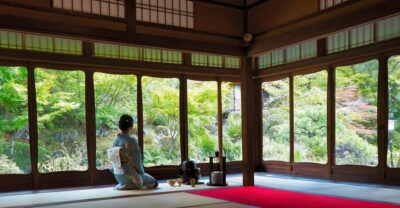
Tea Ceremony in a Traditional Tea House in Kiyomizu
Read our review →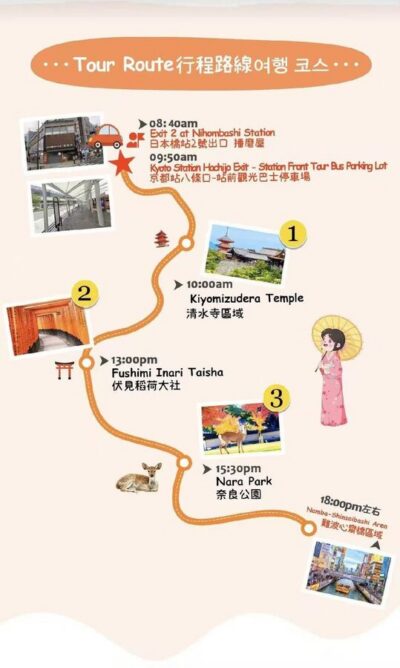
Kyoto Nara Day Trip │ Kiyomizu-dera Temple + Fushimi Inari-taisha Shrine + Nara Park (Departing from Osaka/Kyoto)
Read our review →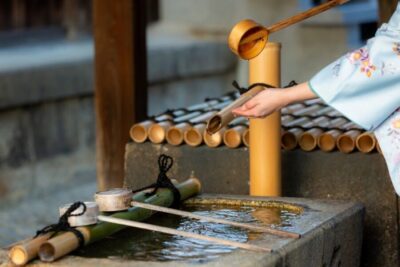

Browse the lists this tour appears in