
Reviewed · TEMPLES AND SHRINES
Kyoto Guided Walking Tour: Secret Zen Garden and Fushimi Inari
Quiet Kyoto comes before the crowds. This four-hour walking tour pairs the broad temple grounds of Tofukuji with the calm of Komyo-in’s Zen garden, then follows lesser-used paths toward Fushimi Inari. I like the smart route, which gives you both a major Kyoto sight and several peaceful spiritual places in one morning. I also like the small group, capped at eight people, since guides such as Mika, Kenta, and Naomi can adjust the pace and answer questions.
The main caution is physical: this is not a gentle stroll. You will walk uphill, climb through the Fushimi Inari area, and spend much of the morning on your feet. Comfortable shoes are essential, and the tour operates rain or shine.
In This Review
- What Makes This Kyoto Walk Worth Your Morning
- Starting at Tofukuji, Before Fushimi Inari Gets Busy
- Komyo-in’s Zen Garden and the Value of a Slow Pause
- Araki Shrine and the Spiritual Side of the Route
- Taking the Quieter Approach to Fushimi Inari
- Yotsuji Viewpoint: A Reward on the Climb
- Kumataka Shrine and a More Private Fushimi Inari
- Reaching the Senbon Torii Gates
- The Main Sanctuary and the Tour’s Finish
- Guides, Group Size, and the Human Difference
- Is $78.83 a Fair Price?
- Who Should Book This Four-Hour Walk?
- Should You Book the Secret Zen Garden and Fushimi Inari Tour?
- FAQ
- How long is the Kyoto walking tour?
- What time does the tour begin?
- Where does the tour start?
- Where does the tour end?
- How many people can join the tour?
- Is much walking involved?
- Does the tour operate in bad weather?
- Can I cancel for a full refund?
What Makes This Kyoto Walk Worth Your Morning
- A quiet start at Tofukuji: Begin among temple grounds, maple trees, bridges, and Zen sub-temples before reaching the busiest part of Fushimi Inari.
- Komyo-in’s peaceful garden: Spend about 25 minutes at a lesser-known temple where the garden and silence do much of the talking.
- A less crowded route to Fushimi Inari: The walk uses quieter paths before joining the famous torii gate route.
- Yotsuji viewpoint: Reach a scenic turning point on the mountain trail, with time to pause and enjoy the view.
- Small-group attention: With no more than eight people, the guide can match the group’s pace, especially on uphill sections.
- A practical half-day plan: The 9:00 a.m. start leaves the rest of your day open for Kyoto’s other sights.
Starting at Tofukuji, Before Fushimi Inari Gets Busy
Meet at 9:00 a.m. outside the FamilyMart at 12-chome-232 Honmachi in Kyoto’s Higashiyama Ward. The meeting point is near public transportation, but you should allow enough time to find the exact convenience store. This is not a hotel pickup, so arrive with your bearings already sorted.
The first part of the route centers on Tofukuji, one of Kyoto’s major Zen temples. It was founded in the 13th century and has a large temple complex with wooded areas, bridges, and subsidiary temples. The visit gives you useful context before the tour reaches Fushimi Inari. Instead of seeing the torii gates as a quick photo stop, you begin by learning how Kyoto’s Buddhist and Shinto sites differ in purpose and atmosphere.
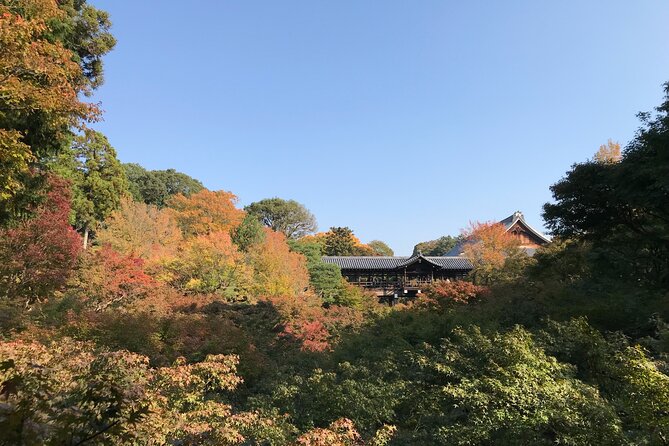
The first listed stop is Gaun-kyo Bridge, a wooden bridge over a green valley. You have only about five minutes here, but it is a fine early pause. The view includes Tsutenkyo Bridge and, in the right season, a broad spread of maple trees below.
The scenery changes with the time of year. Autumn is likely to bring the strongest colors, while other seasons offer a quieter view of the valley and temple grounds. The short stop means you should think of Gaun-kyo as a viewpoint, not a long photo session.
More Temples and Shrines in Kyoto
- [Kyoto & Nara Day Tour] Sagano Scenic Railway & Nara Park & Fushimi Inari Taisha Thousand Torii Gates & Togetsukyo Bridge & Bamboo Grove & Kimono Forest (Departing from Osaka)
★ 4.9 · 10,942 reviews - Kyoto: Fushimi Inari, Kinkakuji, Bamboo Grove 1 Day Bus Tour
★ 4.8 · 4,316 reviews - Kyoto: Tea Ceremony in a Traditional Tea House in Kiyomizu
★ 4.9 · 3,519 reviews
Komyo-in’s Zen Garden and the Value of a Slow Pause
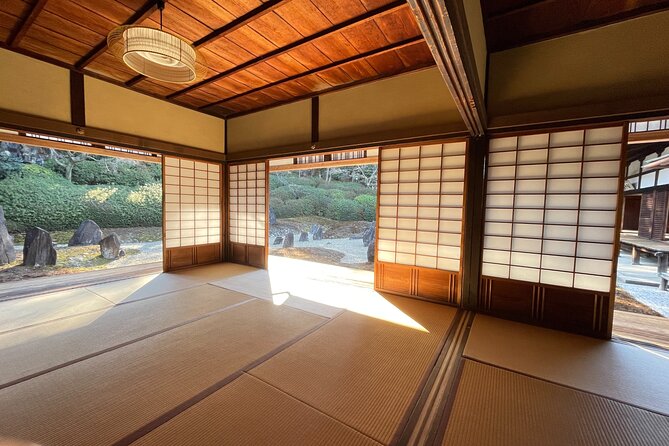
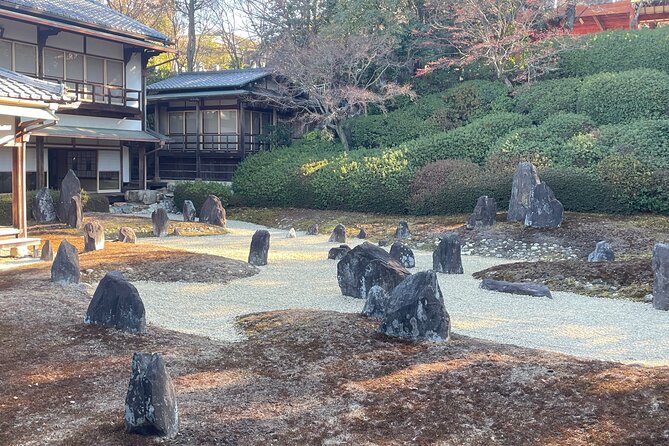
Komyo-in is the emotional center of the tour for many people. This sub-temple is less known than Kyoto’s headline sights, and its Zen garden offers a chance to sit with the visual simplicity of rocks, gravel, plants, and carefully arranged space.
You receive about 25 minutes here, which is long enough to look closely rather than simply walk through. Your guide may explain how Zen gardens encourage attention and stillness, as well as the role of meditation in Zen practice. The tour is described as an introduction to Zen philosophy, so it should suit you if you want cultural explanation without signing up for a formal meditation class.
This stop also shows the value of going with someone who knows the area. Tofukuji has several religious buildings and side sites, and it is easy to pass through without understanding what you are seeing. Guides Mika and Kenta were praised for clear explanations, illustrations, and a willingness to answer questions. That kind of help matters most in places where the visual details are subtle.
The garden is not a secret in the literal sense, and you should not expect to have the temple entirely to yourself. Still, it usually offers a calmer setting than the major routes through Kyoto. Keep your voice low and follow any temple rules about where you may sit or take photographs.
Araki Shrine and the Spiritual Side of the Route
After Komyo-in, the walk moves toward Araki Shrine. This is a brief stop of about ten minutes, with no admission charge. The shrine is associated with prayers for love, strong relationships, and general well-being.
That focus gives the stop a personal quality. You can take a moment to observe how people use a religious place for everyday hopes, not only for grand ceremonies or sightseeing. If you are traveling as a couple, Araki Shrine may feel especially fitting, though you do not need a specific wish to appreciate it.
Do not expect a large, elaborate attraction here. The value is in the contrast. You have just spent time with Zen temple design, and now you are seeing a Shinto shrine connected to personal prayer. The guide’s explanation helps tie those parts of Kyoto together.
Taking the Quieter Approach to Fushimi Inari
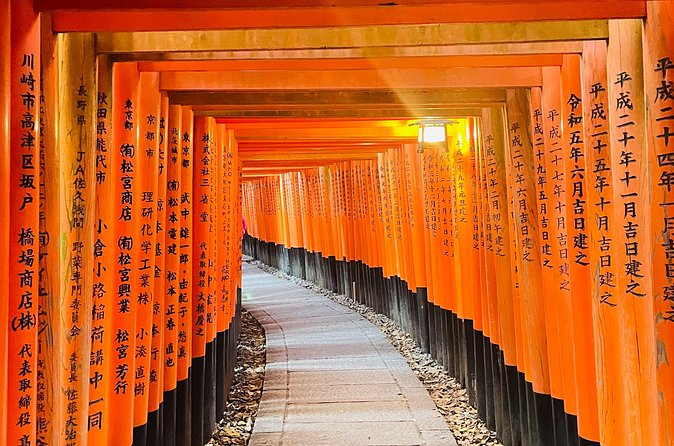
The route then heads toward the Fushimi Inari area. Fushimi Inari Taisha is famous for its thousands of orange-red torii gates, fox statues, and wooded mountain paths. It is one of Kyoto’s most photographed places, and it can feel crowded near the lower entrance.
This tour’s route is designed to delay that pressure. Instead of sending you straight into the busiest approach, it takes you through lesser-used paths and smaller religious sites first. Several people praised the peaceful feeling before the group reached the famous torii gates. That is an important benefit if you want more than a fast photograph at the entrance.
A guide also saves you from spending time checking maps at every turn. Fushimi Inari’s paths branch and climb, and the route can be confusing when you are trying to match a map to signs. The small group allows the guide to keep everyone together while still adjusting the pace.
You should still prepare for a real hike. The route includes uphill walking, and the stop at Yotsuji comes along the ascent. The tour information calls for moderate physical fitness and a moderate amount of walking and hiking. If stairs or hills are difficult for you, ask yourself if four hours on this terrain sounds comfortable before booking.
More Walking Tours in Kyoto
- Kyoto Geisha Walking Tour: Gion District & Hidden Gems
★ 4.7 · 3,273 reviews - Kyoto: Gion Magical Night Walking Tour with Geisha Trivia
★ 4.9 · 2,393 reviews - Kyoto: Gion Geisha District Walking Tour – Stories of Geisha
★ 4.7 · 2,187 reviews - Night Walk in Gion: Kyoto’s Geisha District
★ 4.5 · 2,003 reviews
Yotsuji Viewpoint: A Reward on the Climb
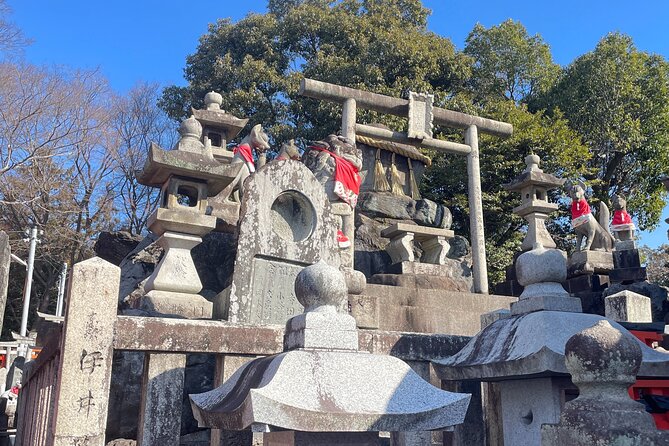
Fushimi Inari Yotsuji is a four-way junction and viewpoint on the mountain trail. You have around 20 minutes here, enough time to rest, take photographs, and look back toward Kyoto.
This is one of the most useful stops on the route because it gives the walk a clear high point. You are not only passing through torii gates at ground level. You are also seeing how the shrine climbs into the wooded hills above the city.
Yotsuji is not the summit of the mountain, and this tour does not promise a complete mountain circuit. That is good news if you want a focused half-day outing rather than a long trek. At the same time, the view comes after an uphill section, so the physical effort is part of the experience.
The guide’s pacing matters here. Kenta was specifically praised for walking at the group’s pace despite the uphill route. With a maximum of eight participants, you have a better chance of getting a pause when you need one than you would on a large coach excursion.
Kumataka Shrine and a More Private Fushimi Inari
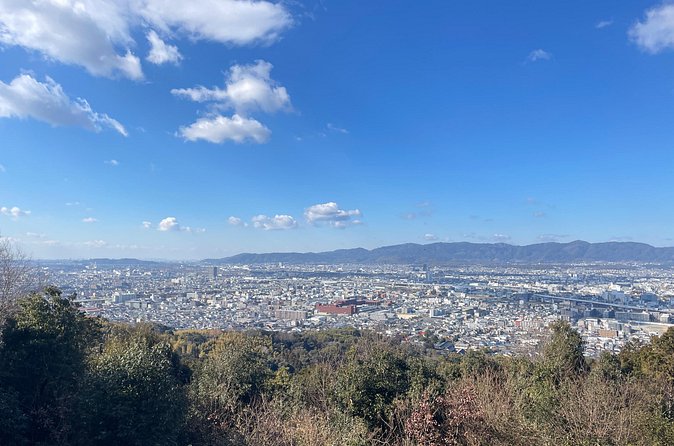
Kumataka Shrine is a secluded site away from the busiest torii path. It is associated with strong spiritual energy and offers a quiet break from the better-known sections of Fushimi Inari.
This stop lasts about 15 minutes and has no admission charge. Its appeal is not a famous building or sweeping view. It is the feeling of stepping aside from the main route and seeing a more private part of the shrine complex.
I would keep expectations sensible. The shrine may mean more to you if you enjoy religious places, local customs, and quiet observation than if you are looking only for major monuments. The guide’s interpretation is particularly useful here, since the site may not explain itself fully to someone arriving without background.
Reaching the Senbon Torii Gates
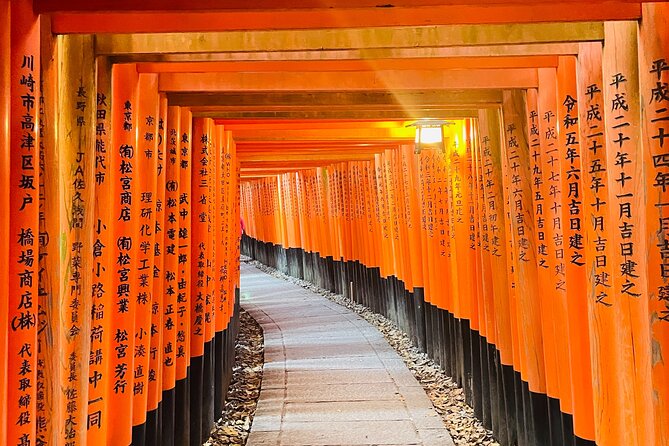
The tour eventually joins the Senbon Torii, the famous tunnel of thousands of red-orange gates. This is the image most people associate with Fushimi Inari, and it is worth seeing in person. The gates create a strong visual rhythm as they follow the path uphill.
The route’s order is one of its best features. You first experience the quiet temple garden, smaller shrines, and wooded paths. Only then do you reach the iconic gates. That progression makes the famous section feel like part of a larger religious setting rather than an isolated backdrop for photographs.
Crowds can still gather here, especially near the lower sections. A guide cannot remove the popularity of Fushimi Inari, but an early 9:00 a.m. start and a route through quieter areas give you a better chance at a calmer experience than arriving later and wandering alone.
Remember that Fushimi Inari remains an active place of worship. Walk respectfully, keep clear of worshippers, and avoid treating every gate as a prop. The orange torii are donated, and their presence reflects the shrine’s continuing religious role.
The Main Sanctuary and the Tour’s Finish
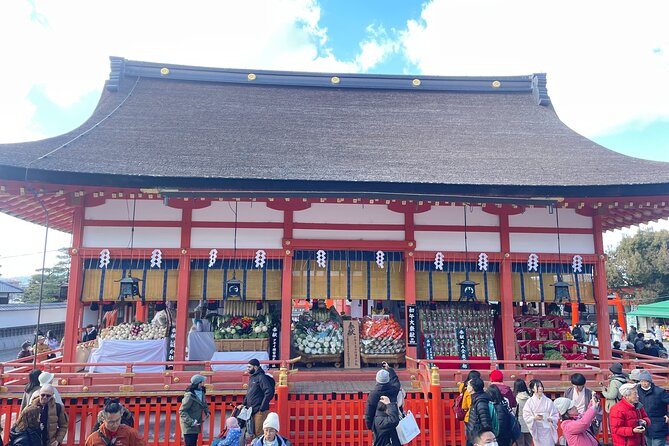
The final listed stop is the main sanctuary, or Honden, of Fushimi Inari Taisha. You have about ten minutes here. This is a place for worship, and it provides a useful counterpoint to the torii trail, which often receives more attention from sightseers.
The tour finishes at the Outer Oratory in Fushimi Inari Shrine, at 58 Fukakusa Yabunouchicho. That end point is practical because you are already inside the shrine complex and can continue exploring on your own afterward. You might return to sections of the torii route, visit nearby places, or simply stop for food and a rest.
The itinerary includes several short stops, but the walking between them makes the outing feel like a connected route rather than a series of isolated visits. The listed stop times add up to less than four hours, leaving room for walking, explanations, and changes in pace.
Guides, Group Size, and the Human Difference
The guide is a major part of this experience. Mika receives repeated praise for clear explanations, careful notes, and good crowd management. Naomi is described as informative and willing to answer questions, while Kenta is praised for flexibility and for matching the group’s walking speed.
Those details matter more than a long list of facts. A good guide helps you understand why a Zen garden looks the way it does, what a shrine is used for, and how to behave respectfully. The strongest guide-led moments here seem to come from making difficult cultural ideas easy to remember.
The maximum group size is eight. That is small enough for direct conversation and a more personal pace, but it does not guarantee a private tour. If everyone walks at a different speed, the guide still has to balance the needs of the group.
The tour is offered in English according to the feedback about the guides. The supplied information does not promise a particular guide, so you should treat Mika, Kenta, and Naomi as examples of the team rather than assume one person will lead your outing.
Is $78.83 a Fair Price?
At $78.83 per person, this is not the cheapest way to walk around Kyoto. You can visit Fushimi Inari independently without paying an entrance fee, and many temple grounds in the area are easy to reach by train or local transit.
The price makes more sense if you value structure and interpretation. You are paying for a planned route, a guide, crowd-avoidance know-how, cultural explanation, and a small group. The experience also links Tofukuji, Komyo-in, Araki Shrine, Kumataka Shrine, and Fushimi Inari in one morning, which would take more research to arrange on your own.
Admission is included at Komyo-in, while the other listed stops are free. No meals or transportation are listed as included. I see the strongest value for a first visit to Kyoto, a short stay, or anyone who wants a local guide to handle the route while they focus on the temples and scenery.
If you enjoy building your own route, walking alone, and reading about temples in advance, the cost may feel high. If you want context and a calm introduction without spending a full day on a single temple district, it is easier to justify.
Who Should Book This Four-Hour Walk?
I would recommend it to you if you want:
- A first introduction to Zen temples and Shinto shrines
- A small group rather than a large sightseeing party
- A balance of well-known and lesser-known places
- A guided approach to Fushimi Inari
- A half-day activity that ends early enough for more Kyoto plans
- Help understanding religious customs and historical context
I would be cautious if you dislike hills, stairs, or long periods of walking. The route is not suitable for someone seeking a fully relaxed, vehicle-based temple tour. It also may not satisfy you if your main goal is a long, uninterrupted meditation session at Komyo-in, since the garden visit lasts about 25 minutes.
The tour runs rain or shine, so check the forecast and dress for changing conditions. Wear comfortable walking shoes, bring what you need for several hours outside, and arrive at the FamilyMart meeting point before 9:00 a.m.
Should You Book the Secret Zen Garden and Fushimi Inari Tour?
Book this tour if you want Kyoto explained as a living religious city, not just a collection of famous photographs. The strongest reasons are the quiet opening at Tofukuji, the time at Komyo-in, the less crowded approach to Fushimi Inari, and the chance to ask questions in a group of eight or fewer.
Skip it if you prefer independent wandering or if uphill walking will make the morning unpleasant. For most first-time Kyoto visitors who want a well-paced introduction to Zen design, shrine customs, and the Senbon Torii, this is a thoughtful use of four hours and a fair way to add local guidance to a self-planned trip.
FAQ
How long is the Kyoto walking tour?
The tour lasts approximately four hours.
What time does the tour begin?
The tour begins at 9:00 a.m.
Where does the tour start?
The meeting point is FamilyMart Nakai at 12-chome-232 Honmachi, Higashiyama Ward, Kyoto, 605-0981, Japan.
Where does the tour end?
The tour ends at the Outer Oratory in Fushimi Inari Shrine, at 58 Fukakusa Yabunouchicho, Fushimi Ward, Kyoto, 612-0882, Japan.
How many people can join the tour?
The maximum group size is eight travelers.
Is much walking involved?
Yes. A moderate amount of walking and hiking is involved, including uphill sections around Fushimi Inari. Comfortable walking shoes are recommended.
Does the tour operate in bad weather?
Yes. The tour takes place rain or shine.
Can I cancel for a full refund?
Yes. You can cancel at least 24 hours before the local start time for a full refund. Cancellations or changes made less than 24 hours before the start time are not accepted for a refund.
Just added in Kyoto
- The “Golden Route” and Ancient Japan by DIAMIR Erlebnisreisen – 14-Day Tour★ 2.0 · 2 reviews
- Japan: Castles & Cuisine by G Adventures – 6-Day Kyoto to Osaka Tour★ 4.5 · 4 reviews
- Cycle Japan by Explore! – 13-Day Kyoto to Tokyo Tour★ 4.7 · 12 reviews
- Cycle Japan by Intrepid Travel – 11-Day Kyoto to Tokyo Tour★ 4.8 · 2 reviews
- Classic Japan by Intrepid Travel – 11-Day Kyoto to Tokyo Tour★ 4.4 · 14 reviews
- Ancient & Modern Japan 14-Day Tour by Exodus Adventure Travels★ 4.4 · 40 reviews
- 5 Day Cultural Adventure of Kyoto, Nara & Osaka by Tourist Journey★ 2.5 · 2 reviews
- 12 Days Kinosaki Onsen Escape: A Journey Through Japan’s Timeless Towns by UME Travel★ 4.8 · 5 reviews
Temples and Shrines, compared.
![[Kyoto & Nara Day Tour] Sagano Scenic Railway & Nara Park & Fushimi Inari Taisha Thousand Torii Gates & Togetsukyo Bridge & Bamboo Grove & Kimono Forest (Departing from Osaka)](https://media.japanvisits.com/wp-content/uploads/kyoto-nara-day-tour-sagano-scenic-railway-nara-park-fushimi-inari-taisha-thousand-torii-gates-togetsukyo-bridge-bamboo-grove-kimono-forest-departing-from-osaka-k110001-400x257.jpg)
Kyushu One-Day Tour: Yufuin no Mori Train & Yufuin Town & Nyoirin-ji Temple & Dazaifu & Hell Hot Springs (Departing from Fukuoka)
Read our review →
Fushimi Inari, Kinkakuji, Bamboo Grove 1 Day Bus Tour
Read our review →
Tea Ceremony in a Traditional Tea House in Kiyomizu
Read our review →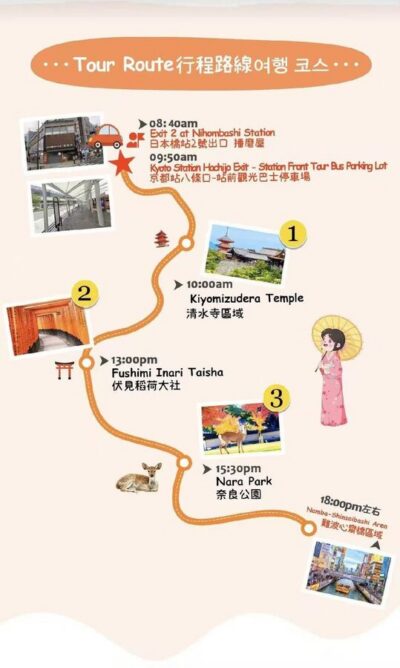
Kyoto Nara Day Trip │ Kiyomizu-dera Temple + Fushimi Inari-taisha Shrine + Nara Park (Departing from Osaka/Kyoto)
Read our review →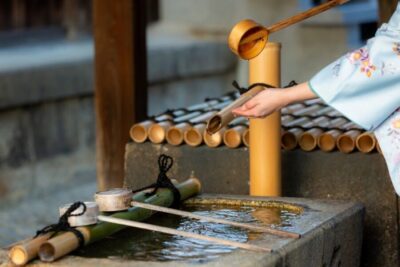
Browse the lists this tour appears in