
Reviewed · CITY TOURS AND SIGHTSEEING
Kyoto & Uji: Full Day Sightseeing Tour from Osaka or Kyoto
Kyoto’s biggest sights fit into one long day. This nine-hour tour links the Golden Pavilion, Kiyomizu-dera, Kyoto’s old lanes, and Uji’s famous tea district in one air-conditioned vehicle. I like the wide range of stops, from grand temples to the small, colorful Yasaka Koshindo, and I like the free time at each site, which lets you look around without being led every second. The main drawback is the pace: eight stops leave little room for lingering, a relaxed lunch, or a second look at any one temple.
At $57.90 per person, this is a sensible option if you have only one day for Kyoto and Uji or do not want to piece together several train and bus rides. The three main admission tickets cost an additional 1,600 yen, and lunch is on your own. A group of up to 45 people can make the day feel less personal, but a good guide can make the schedule much easier to manage. Guides named John, Jone, and Cave have been praised for clear directions, helpful tips, and friendly care.
In This Review
- Key points to know before booking
- Why this Kyoto and Uji route makes sense
- Kinkaku-ji, the Golden Pavilion, in 40 minutes
- Kiyomizu-dera and the eastern Kyoto hills
- Ninenzaka and Sannenzaka, Kyoto by foot
- A quick stop at Yasaka Koshindo
- Uji River and Uji Shrine
- Byodo-in and the Phoenix Hall
- Green tea along Byodoin Omotesando
- The guide and vehicle experience
- Is $57.90 good value?
- Rain, crowds, and the pace of the day
- Who should book this day tour?
- Should you book the Kyoto and Uji tour?
- FAQ
- How long does the Kyoto and Uji tour last?
- Can I join the tour from Osaka or Kyoto?
- What is included in the tour price?
- Are the temple admission fees included?
- Is lunch included?
- How large can the group be?
- Can I cancel for a full refund?
Key points to know before booking
- Eight major stops in about nine hours: You cover Kinkaku-ji, Kiyomizu-dera, the Ninenzaka and Sannenzaka lanes, Yasaka Koshindo, the Uji River, Uji Shrine, Byodo-in, and Byodoin Omotesando.
- Three temple admissions cost extra: Kinkaku-ji, Kiyomizu-dera, and Byodo-in together require 1,600 yen, in addition to the tour price.
- Uji adds a welcome change of pace: After Kyoto’s famous temple districts, you get river views, a small Shinto shrine, Byodo-in’s Phoenix Hall, and shops devoted to green tea.
- You get useful structure without a packed lecture: The guide handles meeting details, timing, and route planning, while you have time to explore each stop on your own.
- The maximum group size is 45: The air-conditioned vehicle is practical, but this is a group sightseeing day rather than a private or intimate tour.
- Weather matters: Rain does not cancel the cultural value of the day, but temple grounds, stone lanes, and stairways are more tiring when wet.
Why this Kyoto and Uji route makes sense
Kyoto is not difficult to visit, but its best-known sights sit in different parts of the city. Kinkaku-ji is in northern Kyoto, Kiyomizu-dera is in the eastern hills, and Uji is south of the city. Seeing all three areas independently in one day takes planning, good connections, and careful attention to the clock.
This tour solves that problem with a simple tradeoff. You give up some freedom and accept a fixed timetable, but you gain an air-conditioned vehicle, a guide, and a route that connects Kyoto and Uji without asking you to work out every transfer.
The schedule is full, but not unreasonable on paper. The listed sightseeing time adds up to about four hours and 40 minutes. The remaining time covers transport, boarding, meeting points, and the day’s lunch break. You should expect a structured day, not a slow temple walk with long pauses for photography.
That structure is especially useful if you are staying in Osaka or have only a short stay in Kyoto. It is also handy for anyone who wants the famous sights but would rather not handle a complicated public transport plan. If you already know Kyoto well, or if you want an entire afternoon at one temple district, this route may feel too broad.
More Sightseeing Tours in Kyoto:
- Kyoto: Private Highlights Tour with Guide and Luxury Vehicle
★ 4.6 · 316 reviews - Kyoto: Full-Day City Highlights Bike Tour with Light Lunch
★ 5.0 · 52 reviews - Private Guided Historical Sightseeing Tour in Kyoto
★ 3.5 · 24 reviews
Kinkaku-ji, the Golden Pavilion, in 40 minutes
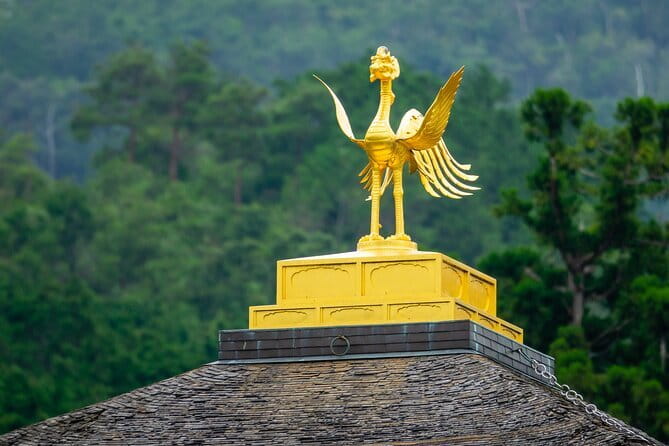
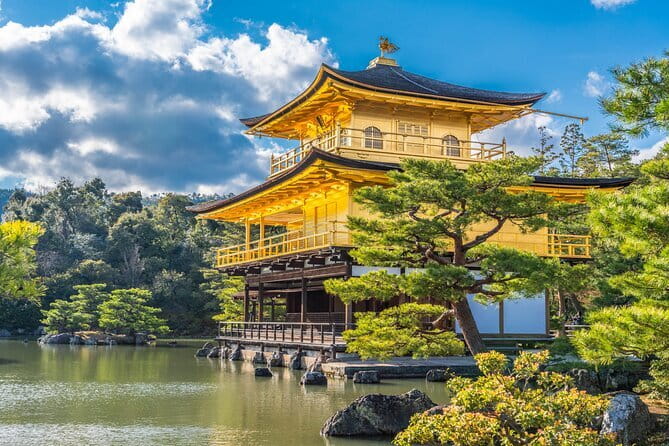
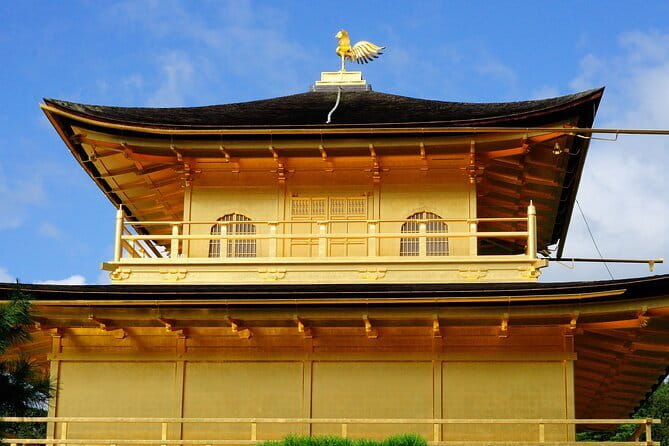
The day begins with one of Kyoto’s clearest visual symbols: Kinkaku-ji, better known as the Golden Pavilion. Its bright gold exterior reflects over a pond, with carefully arranged gardens around it. The temple is a Zen Buddhist site and part of the Historic Monuments of Ancient Kyoto UNESCO World Heritage listing.
Forty minutes is enough to see the pavilion, follow the main garden route, and take photographs. It is not enough for a slow examination of every garden feature. The famous view tends to attract attention quickly, so your guide’s timing matters here. You will want to stay aware of the meeting time instead of wandering too far from the main path.
Admission is not included. The cost of the three paid temples together is listed as 1,600 yen, so carry enough Japanese yen for these entries. The tour price looks good at first glance, but this extra cost should be part of your calculation.
Kiyomizu-dera and the eastern Kyoto hills
Kiyomizu-dera receives one hour, the longest single temple visit on the Kyoto portion of the route. Founded in 780 near the Otowa Waterfall, it is one of Japan’s best-known temples and another part of the Historic Monuments of Ancient Kyoto UNESCO World Heritage listing.
This is a more involved stop than Kinkaku-ji. You have time to see the main temple area and take in the views from the hillside setting, though the exact amount of free time will depend on the group’s pace. The site’s fame also means you should expect plenty of movement around you, especially near the main viewing areas.
The practical issue is footing. Kiyomizu-dera connects naturally with Kyoto’s old streets, but the area includes slopes and stairs. Wear shoes that are comfortable for walking and keep your belongings easy to carry. The admission fee is extra, just like at Kinkaku-ji.
I like the way this stop gives the day a strong historical center. Kinkaku-ji is mainly a visual hit, while Kiyomizu-dera offers a larger temple visit with more room to look, walk, and pause.
Ninenzaka and Sannenzaka, Kyoto by foot
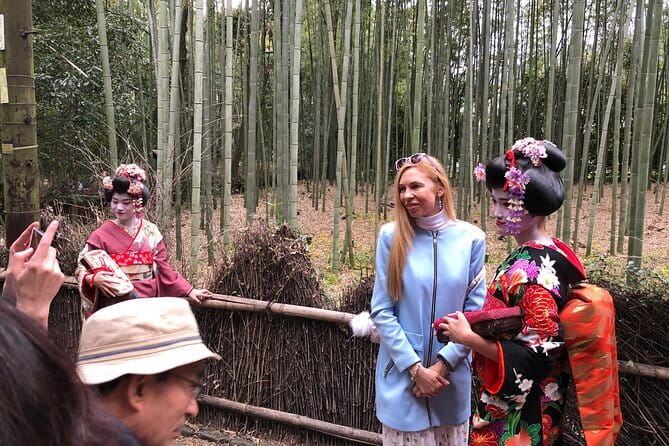
The hour at Ninenzaka and Sannenzaka is one of the most useful parts of the tour for seeing Kyoto away from a single temple. These sloping lanes have operated for centuries and are lined with traditional Japanese-style buildings, shops, and places to stop for a snack or small purchase.
There is no separate admission fee. You can use this hour to photograph the old façades, browse shops, or simply walk through the district. Since the lanes are sloped, you should not treat this as a completely effortless stroll. The area connects closely with Kiyomizu-dera, so it makes sense in the day’s sequence.
This is also where a fixed tour schedule can feel tight. You may have to choose between shopping, refreshments, and photography. I would decide before arrival what matters most to you. If you want souvenirs, tea sweets, or detailed photos, avoid spending too long at the first shop.
A few more options to weigh up in Kyoto
- PERFECT KYOTO 1-Day Bus Tour
★ 5.0 · 13,518 reviews - [Kyoto & Nara Day Tour] Sagano Scenic Railway & Nara Park & Fushimi Inari Taisha Thousand Torii Gates & Togetsukyo Bridge & Bamboo Grove & Kimono Forest (Departing from Osaka)
★ 4.9 · 10,942 reviews - Kyoto: Fushimi Inari, Kinkakuji, Bamboo Grove 1 Day Bus Tour
★ 4.8 · 4,316 reviews - Kyoto: Tea Ceremony in a Traditional Tea House in Kiyomizu
★ 4.9 · 3,519 reviews
A quick stop at Yasaka Koshindo
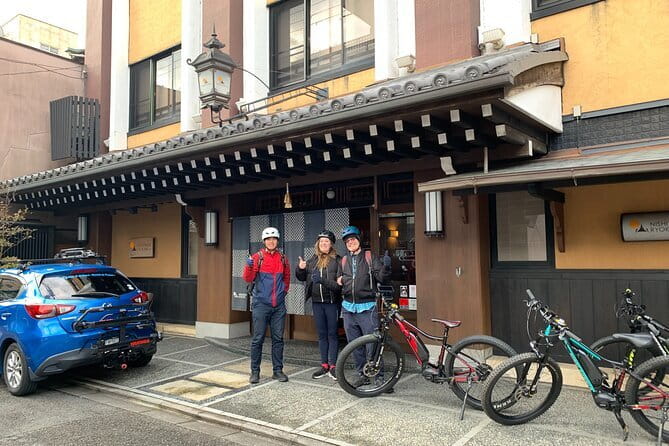
Yasaka Koshindo gets 30 minutes. Officially called Daikokusan Kongoji Temple Koshindo, this small temple is easy to recognize because of the colorful monkey figures decorating the site. It sits on the way toward Ichinenzaka and adds a curious, less monumental note to the morning.
The stop is free, and half an hour is a comfortable amount of time for a small temple. It gives you a chance to notice a local religious tradition without using up the time needed for Kyoto’s larger sites.
I appreciate this inclusion because the day is not limited to the three most famous ticketed temples. A short stop like this can help break up the procession of grand gates, ponds, and halls. Do not expect a major sightseeing complex here. Think of it as a compact cultural pause and a good photo stop.
Uji River and Uji Shrine
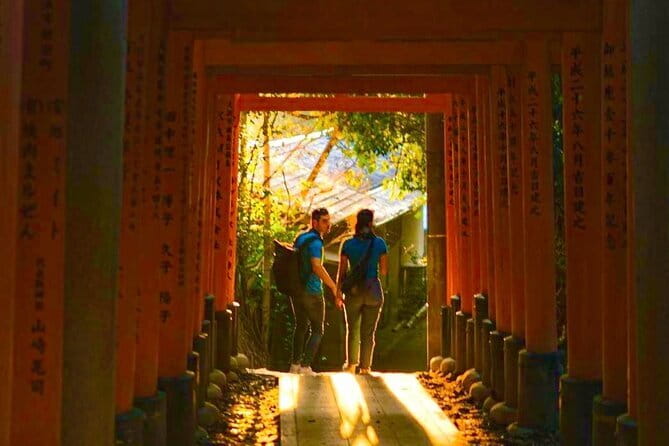
The tour then shifts south to Uji, beginning with 20 minutes beside the Uji River. The river flows from Lake Biwa, Japan’s largest lake, and has long served as a route between Shiga and Osaka. In Uji, it gives the day a more open setting after the narrow lanes around Kiyomizu-dera.
Twenty minutes is brief, but it is enough to enjoy the river view and reset your eyes before the next temple. Do not expect a long riverside walk. The value here is the contrast between Kyoto’s crowded historic districts and Uji’s waterway.
Uji Shrine follows, also for 20 minutes. This Shinto shrine has a rabbit theme, with white, red-eyed rabbits appearing on its lanterns and votive plaques. That detail makes the stop easy to remember, especially if you have already seen several more formal temple compounds during the day.
Both stops are free. Their short duration tells you what this tour is trying to do: introduce you to several parts of Uji rather than give you a complete visit to each one. You will see the character of the town, but you will need another visit if you want extended time beside the river or a slow shrine walk.
Byodo-in and the Phoenix Hall
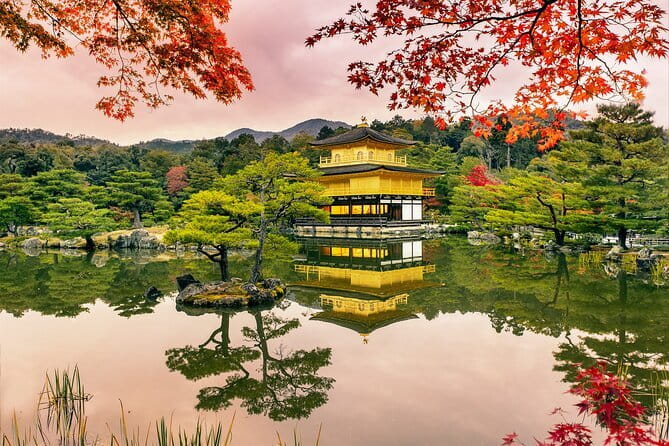
Byodo-in is the main Uji sight and receives 30 minutes. It is one of Japan’s best-preserved national treasures and part of a UNESCO World Heritage site. The Phoenix Hall, with wing-like corridors on each side, is the temple’s instantly recognizable structure.
The hall’s appearance is especially meaningful because it is associated with the image on Japan’s 10-yen coin. Even if you have seen photographs before, the real building has a calm, balanced setting that photographs do not fully convey.
Thirty minutes gives you a focused visit, but it is not generous. Admission is not included, and it forms part of the 1,600-yen total for the three paid temples. You should listen carefully for the group meeting instructions here. It would be easy to lose track of time while looking across the water or trying to frame the Phoenix Hall without other people in the picture.
For me, this stop is the strongest reason to include Uji. The town is famous for tea, but Byodo-in gives the visit a major architectural focus. The limited time is the price of fitting Kyoto and Uji into one day.
Green tea along Byodoin Omotesando
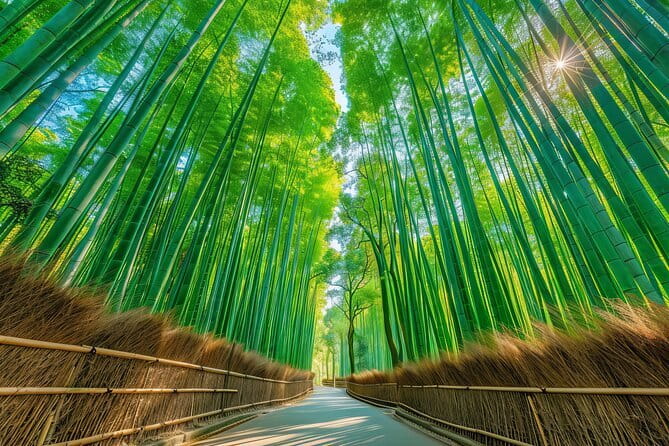
The final stop is Byodoin Omotesando, a 30-minute shopping street lined with green tea shops and tea-related products. Uji is one of Japan’s best-known tea-producing areas, so this is the natural place to look for tea, sweets, and other products connected with the local specialty.
You will not have time for an extended tasting program based on the information provided, but half an hour is enough to browse and buy something small. If you plan to purchase tea, keep your bags manageable because the tour is not over until you return to your original drop-off area.
This street also makes a practical ending. After several temples, you get a chance to browse at your own speed and bring home a food or drink souvenir rather than another purely decorative item. Lunch is not included, so your guide will need to manage the day’s meal timing around the sightseeing schedule. The supplied details do not specify a particular restaurant or lunch arrangement, so you should be prepared to pay for your own meal.
The guide and vehicle experience
The tour includes an air-conditioned vehicle and a guide. That matters in Kyoto, where a day of temple grounds and sloping streets can become tiring, particularly in warm or wet weather. One positive account described the vehicle as comfortable, while another praised the guide’s clear check-in and return times.
Guide quality can vary by departure, but named guides John, Jone, and Cave have received specific praise. John was described as giving explanations in English, Mandarin, and Japanese, while also sending meeting details and area maps through WhatsApp. Jone was praised for being friendly and helpful, and Cave received credit for useful tips.
Those details point to the tour’s strongest service feature: organization. When you have eight stops, clear meeting instructions are not a minor extra. They help you enjoy your free time without constantly wondering where to go next.
The maximum group size is 45 people. That is a sizeable coach group, so do not expect a private guide to adjust the route around your personal interests. On the other hand, the fixed vehicle keeps the day simple and protects you from losing time between distant parts of Kyoto and Uji.
If you are booking separately from relatives or friends, tell the provider at least one day ahead. Otherwise, your party could be assigned to different vehicles. Also mention a stroller or large luggage when booking. Most people can take part, but this is a walking-heavy sightseeing day with slopes and temple grounds.
Is $57.90 good value?
The price is fair for the amount of ground covered. You are paying for roughly nine hours, transportation, and a guide who handles a complicated route between Osaka or Kyoto, northern Kyoto, eastern Kyoto, and Uji.
The extra 1,600 yen for Kinkaku-ji, Kiyomizu-dera, and Byodo-in is reasonable, but do not forget it when comparing this tour with other options. Lunch is also separate. Your final daily cost will therefore be the tour price, temple admissions, lunch, and anything you buy in Uji.
The best value comes when you care more about seeing the highlights than controlling every minute. The tour gives you eight recognizable stops in one day, including several places that would be awkward to combine without a vehicle. It is less good value for a repeat visitor who wants a slow morning at Kiyomizu-dera or a long tea-focused afternoon in Uji.
The rating of 4.9 from 25 ratings, with 96 percent recommending the experience, matches the main strengths: a well-planned route, friendly guides, comfortable transport, and a lot of sightseeing in limited time. One less positive account described the day as painful, a useful warning that the long schedule and walking can wear you down. The tour’s success depends partly on your energy and your willingness to follow the clock.
Rain, crowds, and the pace of the day
Bad weather does not erase the value of Kyoto’s temples, but it changes the experience. Wet stone lanes and temple grounds can be tiring, and umbrellas may make photography harder. One account still found the day worthwhile during heavy afternoon rain, largely because the guide kept good care of the group.
Bring practical clothing rather than dressing only for photographs. Comfortable footwear matters more than looking formal, and a small bag is easier on crowded streets and stairs. The tour does not promise long indoor breaks, so you should be ready to spend much of the day moving between outdoor areas and temple buildings.
The pace is also worth stressing. The day is designed for first-time sightseeing, not deep study. You will see the famous golden pavilion, Kiyomizu-dera, old Kyoto lanes, and the Phoenix Hall, but you may leave wishing you had another hour at one or two of them.
Who should book this day tour?
I would recommend it most strongly to first-time visitors, short-stay visitors, and people based in Osaka who want to see Kyoto and Uji without arranging several separate excursions. It also suits you if you prefer a guide to explain the setting, organize meeting times, and keep the route moving.
Families and older visitors should think about the walking and the full nine-hour duration. The tour accepts most participants, but the slopes around Ninenzaka and Sannenzaka, temple grounds, and busy sightseeing schedule can be demanding. Mention a stroller or large luggage before booking.
I would choose a different plan if you want quiet temples, long meals, extensive shopping, or a private pace. A group of up to 45 and a fixed itinerary mean that personal interests come second to covering the route.
Should you book the Kyoto and Uji tour?
Book it if your priority is maximum sightseeing in one day. The combination of Kinkaku-ji, Kiyomizu-dera, Kyoto’s old streets, and Byodo-in is strong, and the Uji stops add river views and tea culture rather than simply repeating the Kyoto temple experience.
Skip it if you already have several days in Kyoto and can comfortably plan your own transport. You will gain more time at each place independently. For everyone else, $57.90 is a reasonable price for a demanding but efficient day, provided you budget for the 1,600-yen temple admissions, lunch, and the energy needed for a full schedule.
FAQ
How long does the Kyoto and Uji tour last?
The tour lasts approximately nine hours.
Can I join the tour from Osaka or Kyoto?
Yes. The experience is offered with departure options from Osaka or Kyoto.
What is included in the tour price?
The price includes an air-conditioned vehicle and a guide. It also provides a mobile ticket.
Are the temple admission fees included?
No. Admission to Kinkaku-ji, Kiyomizu-dera, and Byodo-in is not included. The combined ticket cost is 1,600 yen.
Is lunch included?
No. Lunch is not included in the tour price.
How large can the group be?
The tour can have a maximum of 45 participants.
Can I cancel for a full refund?
Yes. You can cancel at least 24 hours before the experience start time for a full refund. Cancellations or changes made less than 24 hours before the start time are not accepted for a refund.
Just added in Kyoto
- The “Golden Route” and Ancient Japan by DIAMIR Erlebnisreisen – 14-Day Tour★ 2.0 · 2 reviews
- Japan: Castles & Cuisine by G Adventures – 6-Day Kyoto to Osaka Tour★ 4.5 · 4 reviews
- Cycle Japan by Explore! – 13-Day Kyoto to Tokyo Tour★ 4.7 · 12 reviews
- Cycle Japan by Intrepid Travel – 11-Day Kyoto to Tokyo Tour★ 4.8 · 2 reviews
- Classic Japan by Intrepid Travel – 11-Day Kyoto to Tokyo Tour★ 4.4 · 14 reviews
- Ancient & Modern Japan 14-Day Tour by Exodus Adventure Travels★ 4.4 · 40 reviews
- 5 Day Cultural Adventure of Kyoto, Nara & Osaka by Tourist Journey★ 2.5 · 2 reviews
- 12 Days Kinosaki Onsen Escape: A Journey Through Japan’s Timeless Towns by UME Travel★ 4.8 · 5 reviews
City Tours and Sightseeing, compared.
Private City Highlights Tour with Local Guide
Read our review →
Tokyo Private Sightseeing Tour by Car- English speaking chauffeur
Read our review →
Naha: North Okinawa Sightseeing Tour & Churaumi Aquarium
Read our review →
Private Highlights Tour with Guide and Luxury Vehicle
Read our review →
Custom Hidden Gems & Highlights Tour with Local Guide
Read our review →
Mount Fuji Full Day Sightseeing Tour from Tokyo
Read our review →Browse the lists this tour appears in