
Reviewed · CITY TOURS AND SIGHTSEEING
Private Guided Historical Sightseeing Tour in Kyoto
Kyoto rewards a well-planned first look. This private four-hour tour links Fushimi Inari, Kiyomizu-dera, Gion, and Nishiki Market, giving you a fast introduction to the city’s temples, shrines, food, and old streets. I like the private format, which lets your guide adjust the pace, and I like the range of stops, from sacred red torii gates to the restaurant lanes of Pontocho.
The main concern is not the sightseeing plan but the operator’s communication. Several customers were left waiting when a guide did not arrive, while others had excellent outings with guides such as Julian, Johannes, Robert, Ricardo, Andrea, Diego, and Ken. That sharp contrast means you should confirm the meeting time and pickup details before setting out.
In This Review
- The five things to know before booking
- What this private Kyoto tour is really designed to do
- Fushimi Inari begins with Kyoto’s most famous gates
- Kiyomizu-dera delivers the classic temple view
- Kennin-ji offers a quieter Zen pause
- Yasaka Shrine connects the route to Gion
- Nishiki Market is the tour’s best food break
- Pontocho gives you an hour of atmosphere
- Gion brings the tour back to old Kyoto
- The guides can make or break the experience
- Is $85 fair for four private hours?
- Who should book this Kyoto introduction?
- Should you book this tour?
- FAQ
- How long does the Kyoto tour last?
- How much does the tour cost?
- Is this a private tour?
- Which Kyoto sights are visited?
- Is hotel pickup available?
- Are admission tickets included?
- Can most people participate?
- Is the tour close to public transportation?
- Can I cancel for a full refund?
The five things to know before booking
- Seven major Kyoto stops in four hours: You see Fushimi Inari, Kiyomizu-dera, Kennin-ji, Yasaka Shrine, Nishiki Market, Pontocho, and Gion.
- A genuinely private outing: Only your group participates, so the guide can adapt the pace and answer your questions.
- Strong praise for individual guides: Julian, Johannes, Robert, Ricardo, Andrea, Diego, Oscar, and Ken were singled out for clear explanations, patience, and local suggestions.
- A brisk east Kyoto route: This is a useful orientation tour, not a slow, detailed visit to every site.
- Communication needs checking: Some bookings suffered from missing guides, unclear meeting times, or late operator messages.
- Admission information is inconsistent: The tour details say entrance tickets are included, but one customer was told admissions were not covered and another guide did not know they had been paid for.
What this private Kyoto tour is really designed to do
At $85 per person, this experience is best understood as a guided introduction to Kyoto rather than a deep study of its temples. Four hours is enough to connect several famous places, but not enough to linger at each one, read every sign, or explore every side lane.
I like this approach if you have only a short stay in Kyoto or want help getting your bearings at the start. A local guide can explain the difference between Shinto shrines and Buddhist temples, point out customs you might miss alone, and help you make sense of a city where major sights can be spread across busy streets and transit lines.
The private setup adds real value. You are not tied to the pace of a large group, and the guide can slow down for older members of your party or spend more time on a subject that interests you. Ricardo adjusted the route for four older people, while other guides were praised for taking questions and changing the pace.
The schedule is still tight. The seven listed stops add up to the full four hours, before allowing much time for transfers. You should expect highlights, explanations, photographs, and short visits rather than a leisurely day at the temples.
More Sightseeing Tours in Kyoto:
- Kyoto: Private Highlights Tour with Guide and Luxury Vehicle
★ 4.6 · 316 reviews - Kyoto: Full-Day City Highlights Bike Tour with Light Lunch
★ 5.0 · 52 reviews - Kyoto & Uji: Full Day Sightseeing Tour from Osaka or Kyoto
★ 5.0 · 25 reviews
Fushimi Inari begins with Kyoto’s most famous gates
The tour starts at Fushimi Inari-taisha, one of Kyoto’s most recognizable Shinto shrines. Its long rows of orange torii gates climb toward Mount Inari, creating a powerful first impression even if you only walk a short section.
The planned stop lasts about 30 minutes, so you will not cover the entire mountain route. That is not necessarily a problem. The lower shrine area and first stretch of gates provide the essential experience, and a guide can explain the shrine’s religious meaning instead of leaving you with nothing but photographs.
Pay attention to the small details. Fushimi Inari is a working place of worship, not simply a scenic corridor. Your guide may explain the role of fox imagery and the way offerings and gates connect to local belief. One highly praised guide used this stop to explain Shinto customs, which can make the visit far more rewarding.
Crowds can affect the mood here, especially around the entrance. A short guided visit helps you avoid wandering without direction, but you should not expect complete solitude or a long climb during this tour.
Kiyomizu-dera delivers the classic temple view
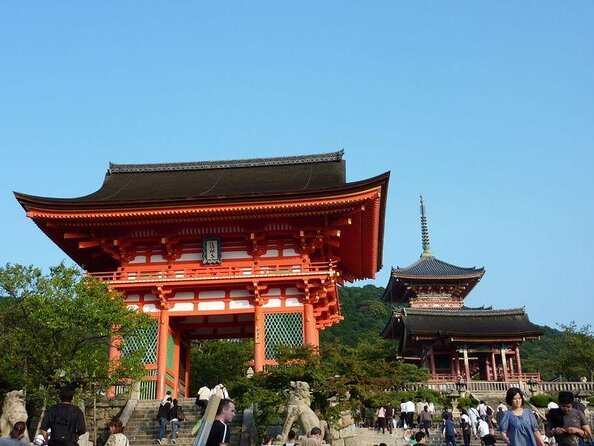
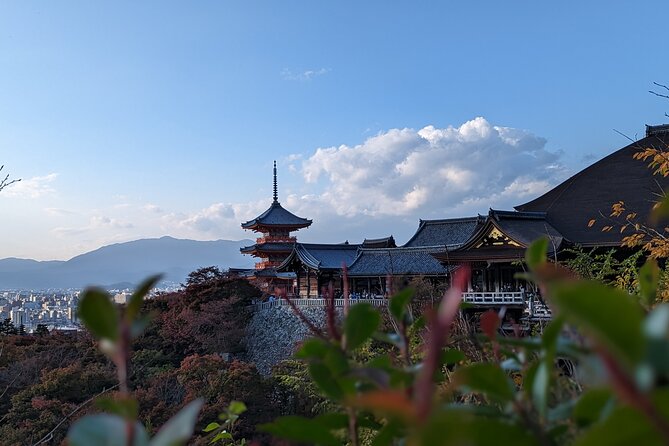
Kiyomizu-dera receives another 30-minute visit. The temple is known for its large wooden terrace and its position above Kyoto, making it one of the city’s essential sights.
The wooden terrace is the main visual reward, but the temple’s value also comes from its stories and rituals. A guide can explain what you are seeing, why the site matters, and how the surrounding approach fits into the visit. Several guides were praised for explaining the history and cultural meaning of temples rather than simply naming them.
Thirty minutes goes quickly here. You will have time for the central highlights, but not for a slow walk through every building or a relaxed look at the surrounding streets. If Kiyomizu-dera is your top priority, you may want to return on your own later.
The approach and temple grounds can require walking, so comfortable shoes matter. The tour is near public transportation, and guides have used a mix of walking, trains, and taxis, but the exact transport plan can vary. Ask in advance if your group needs a slower route.
Kennin-ji offers a quieter Zen pause
Kennin-ji is a useful change of pace after the better-known sights. This Zen Buddhist temple sits in the Gion area and gives the tour a more reflective stop, away from the constant movement of major sightseeing sites.
The visit is scheduled for about 30 minutes. That is enough for a guided look at the temple and an explanation of Zen practice, but it is not a full meditation session or an extended art visit. The point is contrast: Fushimi Inari presents Shinto tradition, Kiyomizu-dera offers a grand temple setting, and Kennin-ji introduces a calmer Zen atmosphere.
I value this stop because the tour is not only a parade of famous photo locations. The guide can help you notice the design, quiet spaces, and religious purpose that make a temple different from a shrine.
Keep your expectations practical. The supplied details do not promise a tea ceremony, meditation activity, or special access. You are visiting the temple as part of a guided sightseeing route.
A few more options to weigh up in Kyoto
- PERFECT KYOTO 1-Day Bus Tour
★ 5.0 · 13,518 reviews - [Kyoto & Nara Day Tour] Sagano Scenic Railway & Nara Park & Fushimi Inari Taisha Thousand Torii Gates & Togetsukyo Bridge & Bamboo Grove & Kimono Forest (Departing from Osaka)
★ 4.9 · 10,942 reviews - Kyoto: Fushimi Inari, Kinkakuji, Bamboo Grove 1 Day Bus Tour
★ 4.8 · 4,316 reviews - Kyoto: Tea Ceremony in a Traditional Tea House in Kiyomizu
★ 4.9 · 3,519 reviews
Yasaka Shrine connects the route to Gion
Yasaka Shrine continues the tour’s look at Kyoto’s spiritual life. It is closely tied to the Gion area and is known for traditional celebrations, giving your guide a natural chance to explain the connection between religion, neighborhoods, and festivals.
This is another 30-minute stop. You can see the main shrine area and hear the basic story, but the schedule does not allow a long exploration of every building or surrounding lane.
The stop works especially well for first-time visitors because it links several parts of Kyoto. You are not simply visiting an isolated monument. You are moving through a living district where worship, food, entertainment, and old architecture sit close together.
If you enjoy cultural context, ask your guide how Yasaka Shrine differs from the Buddhist temples visited earlier. Guides such as Robert and Ken were praised for explaining Japanese history and culture in a way that added meaning to the sights.
Nishiki Market is the tour’s best food break
Nishiki Market changes the rhythm completely. Its narrow shopping passage is lined with food stalls, specialty shops, and places selling local ingredients. After several religious sites, this is where Kyoto becomes edible.
The schedule allows about 30 minutes. That is enough to look around and try a few items if the pace is sensible, but you should not expect a full meal or a long shopping session. If food is a priority, tell your guide early so you can use the stop well.
I like having a guide here because market customs can be confusing. You might want to know what an unfamiliar snack is, which foods are local, or how to avoid wasting time in a crowded passage. One guide included street food as part of the experience, and another helped with restaurant recommendations.
The market can feel crowded, and the narrow route may make it hard to stay together if your group spreads out. Keep an eye on the guide and agree on a meeting point if anyone stops to shop.
Pontocho gives you an hour of atmosphere
Pontocho receives the longest visit, one hour, and that makes sense. The narrow alley beside the Kamogawa River is one of Kyoto’s most atmospheric old entertainment districts, with traditional restaurants and an evening feel even when you visit earlier in the day.
This is the part of the tour where the guide can help you read the character of Kyoto rather than simply tick off a monument. You will see a historic dining quarter and learn how it fits into the city’s food and entertainment culture.
Do not assume the tour includes dinner or a reserved restaurant table. The available details describe sightseeing in the district, not a meal. Still, the stop is useful for finding places to return to later, and Andrea was praised for offering restaurant suggestions.
The hour also gives the guide more room to adjust the pace. If your group wants food advice, photography time, or a slower walk, Pontocho is the most likely place to make that request.
Gion brings the tour back to old Kyoto
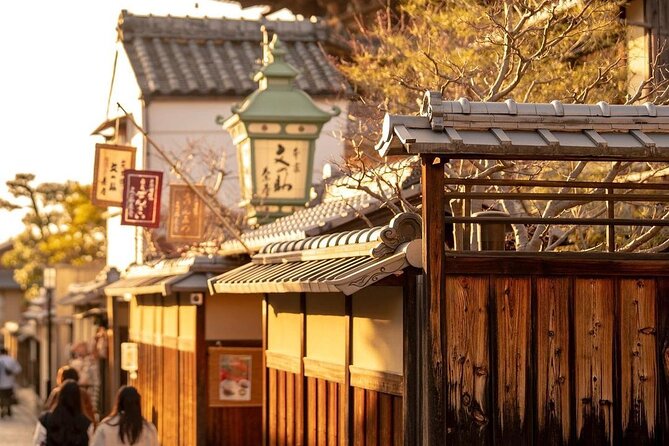
The final stop is Gion, the district most closely associated with geisha culture and traditional wooden streets. A 30-minute visit gives you a taste of the area’s quiet lanes, old buildings, and continuing cultural traditions.
Gion is a place to observe respectfully. Do not treat people working in the district as photo props, and follow your guide’s advice about where to walk and when to put your camera away. A good guide can explain the difference between seeing a traditional district and intruding on private life.
One customer spotted an authentic geisha during the outing, but that should be treated as luck, not a promised part of the tour. The reliable benefit is the setting and the guide’s explanation of the area.
Because Gion and Pontocho are close in theme, some people may prefer more temple time. Others will appreciate ending among Kyoto’s old streets and food culture. Tell the guide your preference if route changes are possible.
The guides can make or break the experience
The strongest part of this tour is the human element. Julian was praised for his passion for Kyoto’s history. Johannes was described as friendly, engaging, and well informed, with the ability to explain Shinto and add street food to the outing. Robert received praise for explaining a large amount of history and culture in clear terms.
Ricardo adapted the pace for an older group, Oscar made a short visit feel worthwhile, Andrea answered questions and suggested restaurants, Diego picked up a group at its hotel, and Ken was praised for his warmth and understanding of Japanese culture.
That is a strong list of good individual performances, but the experience is not consistent. Several bookings failed because the guide did not arrive, the phone number did not work, or messages received no answer. One group waited an hour at the collection point. Another had to take a taxi and join 30 minutes late because the operator supplied details too late.
I would not ignore this pattern. After booking, confirm the start time, pickup location, guide contact, and admission arrangements. Use the contact method provided by the operator, and save the meeting details rather than relying on a last-minute message.
There was also a time discrepancy between an app showing noon and a guide expecting 1 p.m. That kind of error can ruin a short tour. Confirm the local start time in writing before the day of the outing.
Is $85 fair for four private hours?
The price is $85 per person. For a private four-hour route through seven major Kyoto sights, that can be fair if you value personal guidance and want a structured first look at the city.
You are paying for the guide’s time, route planning, explanations, and flexibility, not simply transportation between attractions. A private group also means you can ask questions without waiting for a large party to catch up.
The value drops if you want long visits, a full meal, or detailed temple study. Four hours is a sampler. You will likely leave with a better sense of Kyoto and a list of places to revisit, rather than feeling that every sight has been fully explored.
Admission costs need special attention. The tour information says admission tickets are included at each stop, but one customer was told admissions were not included, and another said the guide did not know that entrance fees had already been paid. Ask the operator to confirm exactly what the $85 covers before you go.
Who should book this Kyoto introduction?
I would recommend it to a first-time visitor with only a few hours, a couple who wants a private guide, or a family that needs a flexible pace. It also suits you if temples, shrines, old districts, and food markets all sound appealing and you would rather not plan the connections yourself.
It is less suitable if you want a slow cultural workshop, a tea ceremony, a full mountain walk at Fushimi Inari, or several hours inside one temple. None of those is promised.
The route involves walking and public transportation is nearby. Most people can participate, but the supplied details do not describe a fully step-free route. If mobility is a concern, ask about the walking distance and taxi use before booking.
Pickup is offered, and one successful outing began with a hotel pickup. Do not assume it is automatic for every hotel. Confirm your location and whether pickup changes the start time.
Free cancellation is available up to 24 hours before the start time. Late cancellations and late changes are not refundable under the stated terms. Poor weather or failure to meet the minimum number of participants may lead to another date or a full refund.
Should you book this tour?
Book it if you want a private, brisk introduction to Kyoto and are willing to confirm the details carefully. The route is broad, the best guides add real cultural value, and the price is reasonable for a private half-day orientation.
I would hesitate if your schedule is fragile or if you cannot tolerate operator uncertainty. The reports of missing guides, unclear times, and unanswered messages are serious. Contact Konnichiwa-japan before the tour, confirm every detail, and keep a backup plan for the afternoon.
If the operator communication is solid, this can be a smart first day in Kyoto. You will see the major east Kyoto sights, learn how the city’s religious and entertainment districts fit together, and finish with useful ideas for exploring on your own.
FAQ
How long does the Kyoto tour last?
The tour lasts approximately four hours.
How much does the tour cost?
The listed price is $85 per person.
Is this a private tour?
Yes. Only your group participates in the activity.
Which Kyoto sights are visited?
The route includes Fushimi Inari-taisha Shrine, Kiyomizu-dera Temple, Kennin-ji Temple, Yasaka Shrine, Nishiki Market, Pontocho District, and Gion.
Is hotel pickup available?
Pickup is offered. One outing included pickup from a hotel, but you should confirm your exact pickup location with the operator.
Are admission tickets included?
The tour details state that admission tickets are included. However, one customer reported that admissions were not included, and another said the guide did not know entrance fees had been paid. Confirm this point before departure.
Can most people participate?
The additional information says most people can participate. The route includes walking, so ask about the walking arrangements if you have mobility concerns.
Is the tour close to public transportation?
Yes. The experience is described as being near public transportation. Guides have used walking, trains, and taxis on some outings.
Can I cancel for a full refund?
You can cancel at least 24 hours before the start time for a full refund. Poor weather or failure to meet the minimum number of participants may also result in another date or a full refund.
Just added in Kyoto
- The “Golden Route” and Ancient Japan by DIAMIR Erlebnisreisen – 14-Day Tour★ 2.0 · 2 reviews
- Japan: Castles & Cuisine by G Adventures – 6-Day Kyoto to Osaka Tour★ 4.5 · 4 reviews
- Cycle Japan by Explore! – 13-Day Kyoto to Tokyo Tour★ 4.7 · 12 reviews
- Cycle Japan by Intrepid Travel – 11-Day Kyoto to Tokyo Tour★ 4.8 · 2 reviews
- Classic Japan by Intrepid Travel – 11-Day Kyoto to Tokyo Tour★ 4.4 · 14 reviews
- Ancient & Modern Japan 14-Day Tour by Exodus Adventure Travels★ 4.4 · 40 reviews
- 5 Day Cultural Adventure of Kyoto, Nara & Osaka by Tourist Journey★ 2.5 · 2 reviews
- 12 Days Kinosaki Onsen Escape: A Journey Through Japan’s Timeless Towns by UME Travel★ 4.8 · 5 reviews
City Tours and Sightseeing, compared.
Private City Highlights Tour with Local Guide
Read our review →
Tokyo Private Sightseeing Tour by Car- English speaking chauffeur
Read our review →
Naha: North Okinawa Sightseeing Tour & Churaumi Aquarium
Read our review →
Private Highlights Tour with Guide and Luxury Vehicle
Read our review →
Custom Hidden Gems & Highlights Tour with Local Guide
Read our review →
Mount Fuji Full Day Sightseeing Tour from Tokyo
Read our review →Browse the lists this tour appears in