
Reviewed · WORKSHOPS
Manga Lesson with a Professional Japanese Manga Artist in Nakano
Draw with the tools pros use. This two-hour class in Nakano gives you hands-on time with screen tones, manga ink, specialized nibs, and manga paper, not just a quick sketch on a tourist worksheet. I especially like the step-by-step teaching and the chance to leave with a finished piece of art. The main catch is finding the school, since the directions may need extra care.
The class works well for mixed-age families because instructor Nao Yazawa has been praised for adjusting her pace to beginners, children, and experienced artists in the same session. I also like that the lesson is private and customizable, though solo visitors must select single-person tuition rather than joining a group booking.
In This Review
- Key points at a glance
- What happens inside Manga School Nakano
- The manga process, from pencil draft to screen tone
- Why Nao Yazawa matters to the experience
- A private class that suits mixed skill levels
- Is $67.77 a fair price?
- The Nakano setting and arrival advice
- What makes the finished souvenir worthwhile
- Who should book this manga lesson?
- Small drawbacks worth knowing
- Should you book the Nakano manga lesson?
- FAQ
- How long does the manga lesson last?
- Where does the activity take place?
- What is included in the price?
- Are drinks included?
- Can beginners join the class?
- Can experienced artists take the lesson?
- Is the class private?
- Is the lesson taught in English?
- Can I cancel the booking?
Key points at a glance
- Try authentic manga tools: Work with screen tones, dip pens, ink, white correction ink, and specialized nibs.
- Learn from a working artist: Nao Yazawa has taught beginners and practiced artists with a patient, personal approach.
- Finish a real drawing: Your class follows the full manga process, from pencil draft to inking, corrections, highlights, and screen tones.
- Good for families: Different ages and ability levels can receive separate guidance during the same private lesson.
- A useful two-hour pace: The session is long enough to learn a process without taking up an entire day in Tokyo.
- Plan the arrival carefully: The school is near public transportation, but clear directions and the activity message matter.
What happens inside Manga School Nakano
You meet at Manga School Nakano in Arai, Nakano City, for a class lasting about two hours. The address is listed as Japan, 165-0026 Tokyo, Nakano City, Arai, 2-chōme 7-13, Nangoku Building.
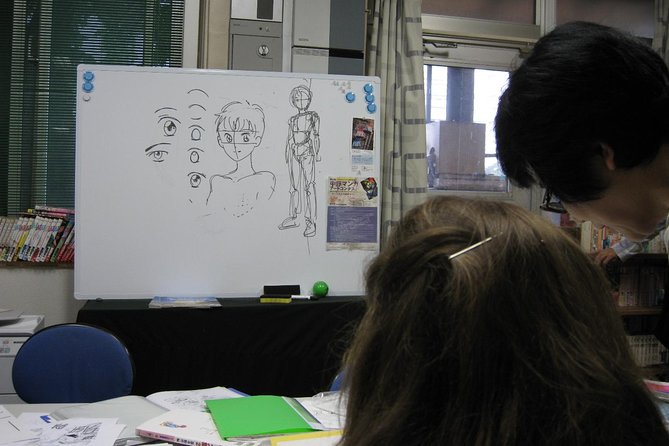
The lesson begins with a short explanation of manga techniques and the development of manga. This opening gives the class some useful context before you pick up a pen. It is not a long lecture, so most of your time goes toward drawing.
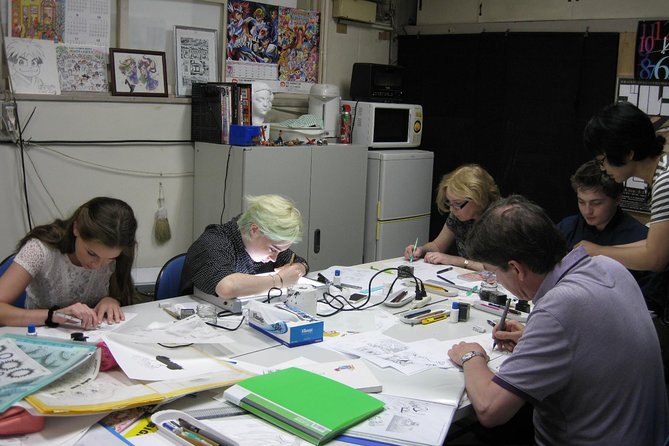
The school provides the manga tools. You get to handle materials that many casual artists do not normally have at home, including screen tones, manga paper, ink, and three types of specialized pen nibs. That practical introduction is one of the strongest reasons to choose this class over a basic anime drawing workshop.
You then work through a character drawing in stages. The instructor demonstrates each step, watches your work, and makes corrections. Beginners can choose from manga references to copy with help, while more experienced artists can receive pointers suited to their own level.
The pace is personal rather than fixed. If you are new to drawing, the instructor can slow down and explain the basics. If you already draw, you can spend more time on expressions, line work, or the finer points of manga production.
A few more options to weigh up in Tokyo
- Tokyo Disney Resort – Tokyo Disneyland & Tokyo DisneySea Park Tickets
★ 4.8 · 99,488 reviews - SHIBUYA SKY Ticket
★ 4.7 · 46,509 reviews - JR Whole Japan Rail Pass
★ 4.8 · 29,150 reviews
The manga process, from pencil draft to screen tone
The class teaches more than how to draw large anime eyes. You follow a traditional production sequence that helps explain why finished manga art has its particular look.
First comes the pencil draft. This is where you build the character, set the pose, and work out the proportions. It is the forgiving stage, since pencil lines can be adjusted before the permanent ink goes down.
Next, you ink the drawing. The dip pens and nibs make this part feel different from ordinary sketching. You need to control pressure and line weight, and the instructor can show you how those changes affect the character.
After inking, you erase the pencil lines. You also paint the black areas and correct mistakes. White ink is used for highlights and small repairs, giving you a taste of the careful cleanup that goes into finished manga artwork.
The final stage is applying screen tones. These adhesive sheets create gray areas, textures, and effects. Screen tones may look simple when you see them in a finished comic, but using them well requires placement and patience. This is the detail that makes the class feel like an introduction to actual manga production rather than a standard drawing lesson.
You take your completed drawing home. The finished work may not look like a professional comic page, but it gives you a physical souvenir and a record of what you learned.
Why Nao Yazawa matters to the experience
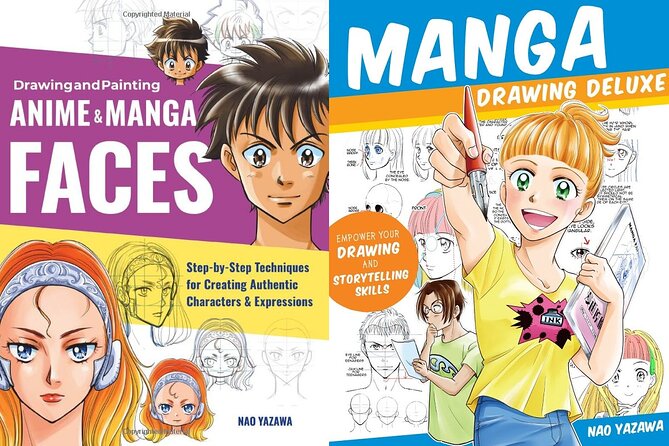
The instructor named most often by participants is Nao Yazawa, a professional manga artist and series creator. Her role is central to the value of the class. You are not simply watching a video or following a generic studio assistant. You can ask about technique, tools, characters, and the working methods behind manga art.
The strongest praise centers on her patience and clarity. She has taught complete beginners who arrived with little or no drawing experience, as well as seasoned artists looking for traditional manga methods. That range matters if you are booking for a family with different ages and abilities.
One family described a lesson in which each person chose characters and received guidance suited to their age, style, and ability. Another person with very little artistic confidence still went home with a finished manga drawing after careful help. This suggests that the class is designed to help you produce something satisfying, not to test whether you already have talent.
Children also seem to fit the setting well. Young manga fans can talk about favorite series while learning the tools, but the lesson is not limited to children. Older teens, adults, couples, and three-generation families have all found a place in the format.
The activity information says English instruction is available without an interpreter. Still, one participant had trouble locating the school and felt that the staff spoke limited English outside the lesson. I would pay close attention to the meeting details sent through the Viator message system and allow time to get your bearings before the class starts.
A private class that suits mixed skill levels
This is a private activity, so only your own group participates. That gives the instructor room to move between students instead of presenting one rigid lesson to a crowded room.
For a family of four, this setup is particularly useful. A child can work from a simple reference while an adult practices more detailed line work. You can share the same session without forcing everyone to draw at the same speed.
The booking rules need attention. A solo visitor should choose the single-person tuition option. A group of two to four should select the matching two-to-four-person group tuition. The group lesson is not open to unrelated participants, so selecting the wrong option could create a booking problem.
You should also provide your preferred start time in the special requirements box at checkout. The time is subject to availability, and an alternative may be offered if your first choice is already filled. Your confirmed activity time and details arrive through the Viator message system.
A completely different kind of day out:
- Mt Fuji and Hakone 1-Day Bus Tour Return by Bullet Train
★ 5.0 · 26,383 reviews - TOKYO SKYTREE® Ticket
★ 4.7 · 25,136 reviews - teamLab Borderless Tickets: MORI Building DIGITAL ART MUSEUM
★ 4.7 · 24,126 reviews - teamLab Planets TOKYO Ticket
★ 4.7 · 21,663 reviews
Is $67.77 a fair price?
At $67.77 per person, the cost is reasonable if you care about the instruction and the materials, not just the finished souvenir. The fee includes a professional manga artist and the manga tools used in the class. Drinks are not included, but that is a minor issue for a two-hour indoor activity.
The value improves for anyone who would otherwise buy specialty supplies without knowing how to use them. Screen tones, dip pens, ink, correction materials, and manga paper are more useful when an artist can show you the basics in real time.
You also receive more than a short demonstration. The class covers a full drawing process, provides references, includes corrections, and lets you take home your work. One participant was even directed to a Tokyo shop where manga supplies could be purchased afterward, which is helpful if the lesson inspires you to continue drawing.
The price is less attractive if you only want a casual souvenir and have no interest in the process. A two-hour drawing lesson requires attention and participation. You will get more from it if you enjoy making things with your hands.
The Nakano setting and arrival advice
Nakano is a practical place for an activity like this. The school is near public transportation, and the class takes place in a dedicated manga school rather than at a major sightseeing attraction. That makes the experience feel tied to a real creative neighborhood routine.
The exact meeting point is in Arai, at Nangoku Building. You should not assume that finding a school in Tokyo will be effortless, especially if you are arriving on a tight schedule. One person specifically found the location difficult to identify and asked for better directions.
Check the message with your activity time and meeting details before leaving. If you are using a phone for navigation, make sure you have the address available in Japanese as well as English. The activity includes a mobile ticket, but the ticket itself may not replace careful directions to the building.
The class ends back at the meeting point. Since the session lasts about two hours, it is easy to fit into a day in Nakano, but your start time should be confirmed before arranging other plans.
What makes the finished souvenir worthwhile
The drawing you take home is not an afterthought. You have made it through the main stages of manga production, and the paper carries the marks of your own decisions.
You may begin with a reference image, especially if you are new to manga. That is a good choice, not a shortcut. Copying a character with an artist’s guidance lets you focus on proportions, expressions, line weight, and the order of the work instead of inventing everything at once.
The finished piece can also show a clear before-and-after change. You start with a pencil sketch, then add ink, black areas, white highlights, corrections, and screen tones. Even a simple character becomes a lesson in how manga artists create depth and texture with limited color.
Some families have produced drawings that they felt proud to display at home. The school may keep copies of artwork for display or social media, according to one account, so you can ask about that during the session if it matters to you.
Who should book this manga lesson?
I would recommend it first to manga and anime fans who want to understand the craft behind the finished page. It is also a strong choice for a child who loves drawing but has never used traditional manga materials.
Families with different skill levels are a particularly good match. The instructor can work with a beginner child, a more experienced parent, and a teen who wants to focus on characters or expressions during the same private booking.
Couples can also make good use of the session. One person does not need to be an artist. The class is built around instruction, and the finished drawings give both of you something personal to take home.
Solo artists should consider the single-person tuition option. A private lesson can move quickly because the instructor can focus entirely on one student. One solo participant worked through drawing basics, expressions, and inking in a short but useful session.
You may want to skip it if you dislike seated, hands-on activities or prefer a quick sightseeing stop. The class requires concentration, and your result will depend partly on how much effort you put into the process.
Small drawbacks worth knowing
The strongest weakness is practical rather than artistic: the meeting point may be hard to locate. Clearer directions would help, so confirm the address and activity messages before setting out.
The class also has limited flexibility close to the start time. You need to request a preferred departure time, and changes made less than 24 hours before the start are not accepted. Free cancellation is available up to 24 hours in advance for a full refund.
The published rating is 4.9 from 77 ratings, with 99 percent recommending the experience. That is an excellent record, but one payment problem was reported, involving a participant being asked to pay again on site. Because of that, keep your booking confirmation handy and clarify any payment question before handing over money.
These issues do not change the main appeal of the class, but they are worth handling before you arrive.
Should you book the Nakano manga lesson?
Book it if you want more than a themed photo stop. The best part is the direct contact with professional tools and a working manga artist who can correct your drawing as you go.
I would especially choose it for a manga-loving family, a creative teenager, a beginner who wants patient guidance, or an experienced artist curious about traditional Japanese production methods. At $67.77, the combination of instruction, materials, private teaching, and a finished artwork makes solid sense.
Before booking, select the correct solo or group tuition option, request your preferred time, and study the meeting instructions carefully. If you handle those details, this is a focused and memorable way to spend two hours in Tokyo.
FAQ
How long does the manga lesson last?
The lesson lasts approximately two hours.
Where does the activity take place?
It takes place at Manga School Nakano in Arai, Nakano City, Tokyo. The listed address is 2-chōme 7-13, Nangoku Building, postal code 165-0026.
What is included in the price?
The price includes instruction from a professional manga artist and the manga tools used during the lesson.
Are drinks included?
No. Drinks are not included.
Can beginners join the class?
Yes. All skill levels are welcome, including complete beginners. Beginners can choose from manga references and receive help from the instructor.
Can experienced artists take the lesson?
Yes. The instructor can adjust the teaching to students who already practice drawing and want to improve their manga technique.
Is the class private?
Yes. Only your group participates in the private activity. Solo visitors need to select single-person tuition, while groups of two to four should select the appropriate group tuition.
Is the lesson taught in English?
The activity provides precise English instruction without interpreters. You should still read the meeting messages carefully, since finding the location may require extra attention.
Can I cancel the booking?
Yes. You can cancel at least 24 hours before the local start time for a full refund. Cancellations and changes made less than 24 hours before the start are not accepted.
Just added in Tokyo
- MT. FUJI/ Private Tour delivered and guided by a top-tier driver★ 5.0 · 27 reviews
- Mt fuji & Hakone customizable day tour w/ English speaking driver★ 5.0 · 45 reviews
- Fuji Speedway Self Drive & Mt. Fuji Private Tour pickup & dropoff★ 5.0 · 14 reviews
- Mt.Fuji Trekking 1 Day Tour up to the summit★ 5.0 · 14 reviews
- Customisable Mt.Fuji Private Day Trip, English Speaking Driver★ 5.0 · 22 reviews
- Seasonal Mt. Fuji Scenic Views, Fruit Picking and Ropeway Ride!★ 4.5 · 35 reviews
- Private Mt Fuji Tour from Tokyo: Scenic BBQ and Hidden Gems★ 5.0 · 146 reviews
- Private Mount Fuji Tour in Luxury Vehicle with English Guide★ 4.5 · 39 reviews
Workshops, compared.

Sushi Making Tokyo Roll and Authentic Japanese Sushi Class
Read our review →
Gion Make Your Own Chopsticks with Engraving Option
Read our review →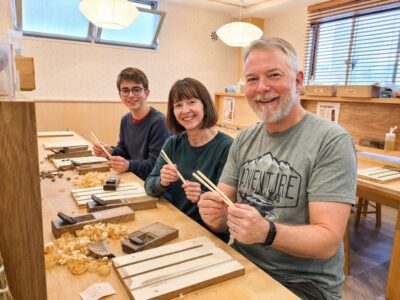
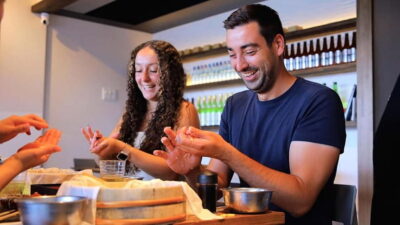
Roll and Authentic Sushi Making Class in Asakusa
Read our review →
Ramen Cooking Class at Ramen Factory in Kyoto
Read our review →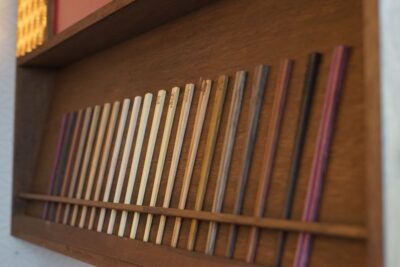
Tokyo Asakusa Chopsticks Workshop: Make Your Own Pair
Read our review →
Ring Making Workshop : Vintage Japanese Coin Ring
Read our review →Browse the lists this tour appears in