
Reviewed · WORKSHOPS
Tokyo Manga Drawing Experience Pro Artist Workshop & MangaHistory
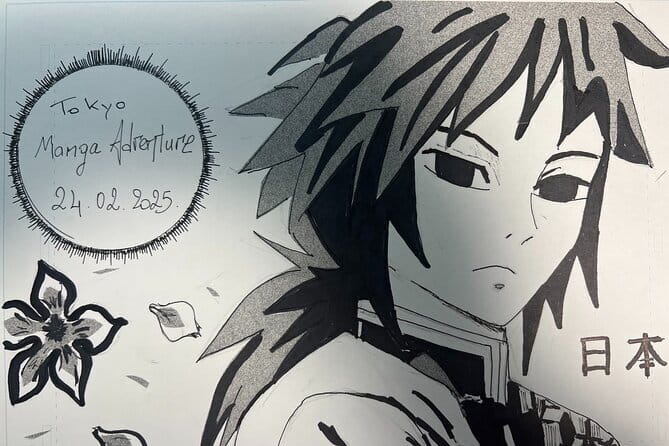
Make manga, not just memories. This three-hour Tokyo workshop gives you a finished artwork to take home, plus a clear look at how manga is made. I especially like the small maximum group of six, which should give you room to ask questions, and the fact that all drawing tools, drinks, and snacks are included. The main drawback is simple: at $100 per person, it costs more than a casual museum visit, so it makes the most sense if you want an active creative experience rather than a short introduction.
You do not need drawing skills. A professional manga artist guides you from the first idea through pencil sketching, inking, shading, and depth. You can draw an original character or choose a favorite, but the finished result will depend on how much time you spend developing your idea and how much help you ask for.
In This Review
- Key points to know before you book
- What this Tokyo manga class is really like
- Starting at Lawson in Hiroo
- Manga history before you pick up the pen
- Building your character and story
- From pencil sketch to ink and shading
- The advantage of a group capped at six
- Drinks, snacks, and a relaxed pace
- Is $100 a fair price?
- Who should book this workshop?
- Practical details before you go
- Should you book the Tokyo manga workshop?
- FAQ
- How long does the manga drawing workshop last?
- How much does the experience cost?
- Where does the workshop begin?
- Where does the workshop end?
- Are drawing tools and materials included?
- Are drinks and snacks included?
- Do I need previous drawing experience?
- How many people can join the class?
- Can I cancel for a full refund?
Key points to know before you book
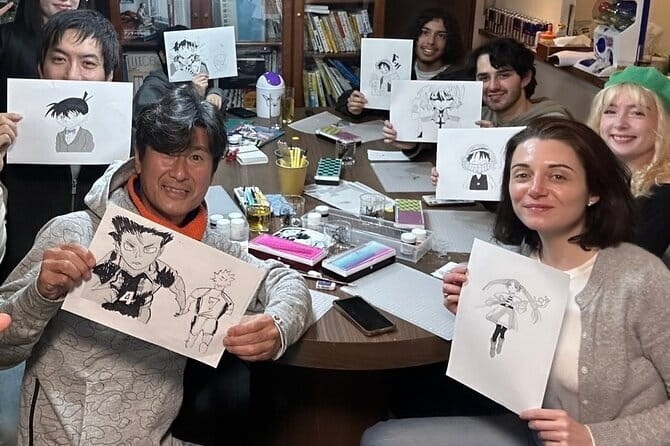
- A finished manga souvenir: You take your completed artwork home at the end of the three-hour class.
- A maximum of six participants: The small format allows for direct help while you work.
- Traditional manga steps: You practice pencil sketching, inking, shading, and adding depth.
- A short manga culture lesson: The session includes information about manga history, famous artists, and well-known works.
- Flexible class times: Morning, afternoon, and evening sessions are available.
- A convenient Hiroo meeting point: The class begins and ends at Lawson, 1-chōme-16-3 Hiroo, Shibuya, Tokyo 150-0012.
What this Tokyo manga class is really like
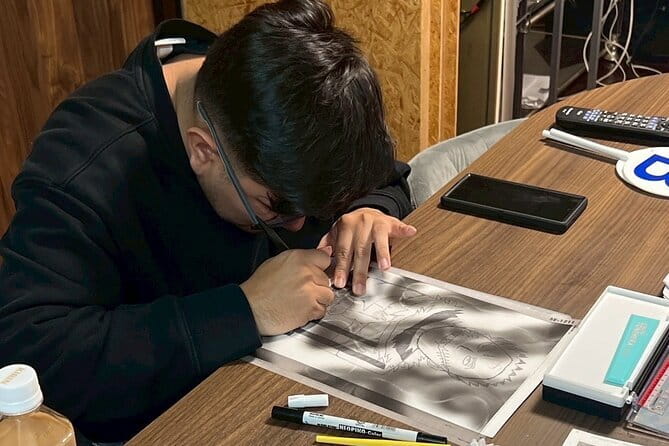
This is not a quick cartoon lesson where you copy one sample and leave. The class is built around making your own piece of manga art, with instruction along the way. That difference matters. You are not only learning how manga characters look. You are also making decisions about expression, pose, composition, and story.
The workshop lasts about three hours. That is long enough to move through several stages without rushing every line. You begin with an idea, then develop it with help from the artist. From there, you work through the traditional process, starting with a pencil sketch and moving toward ink, shading, and depth.
I like this structure because it gives you something concrete to focus on. Manga can seem effortless when you see a polished page, but this class helps show the work behind the clean lines and expressive faces. You get to try the tools instead of simply watching someone else use them.
The class is also designed for beginners. You do not need to prepare a character in advance or bring drawing supplies. Just arrive ready to work. If you already draw, you can use the time to test professional tools and ask more specific questions about technique.
A few more options to weigh up in Tokyo
- Tokyo Disney Resort – Tokyo Disneyland & Tokyo DisneySea Park Tickets
★ 4.8 · 99,488 reviews - SHIBUYA SKY Ticket
★ 4.7 · 46,509 reviews - JR Whole Japan Rail Pass
★ 4.8 · 29,150 reviews
Starting at Lawson in Hiroo
The meeting point is Lawson, 1-chōme-16-3 Hiroo, in Tokyo’s Shibuya area. The activity begins and ends at this same point, which keeps the logistics simple. You do not need to arrange private transportation as part of the booking, and the location is near public transportation.
Because the meeting point is a convenience store, check the full address carefully before setting out. In Tokyo, similar shop names and dense streets can make a last-minute search slower than expected. I would arrive with enough time to locate the correct Lawson and settle in before the class begins.
The location also makes the workshop easy to fit into a larger Tokyo day. You can choose a morning, afternoon, or evening class, depending on your plans. The class schedule is one of its practical strengths, especially if you want to pair it with sightseeing elsewhere in the city.
No separate return transfer is provided. That is not a serious issue here because the class ends where it starts, but you should plan your onward route before the lesson finishes.
Manga history before you pick up the pen
The workshop includes an introduction to manga history, along with famous artists and works. This part gives context to the practical lesson. You are not simply drawing a large-eyed character because that is what you associate with manga. You get a short explanation of the creative tradition behind the form.
The cultural section also helps you understand why the tools and drawing stages matter. Manga production has its own working methods, and the class connects those methods to the artwork you create. The result is a better sense of how an idea becomes a finished image.
This portion is likely to appeal most to people who already enjoy Japanese manga or anime. It also works for curious beginners who want more than a souvenir photo. The information is presented as part of the workshop, so you should expect a useful introduction rather than a full academic lecture on Japanese publishing history.
One participant specifically praised the friendly team and the overview of manga and its history. That praise points to an important strength: the staff do not treat the cultural explanation as an afterthought. They use it to set up the hands-on work that follows.
Building your character and story
Once the introduction is finished, you choose what to draw. You can create an original character or work with a favorite character. You can also develop a simple story concept, rather than producing an isolated face on a page.
The instructor helps you think through composition, expressions, and poses. These are practical choices, but they also make the class more personal. A character’s expression can change the mood of the whole drawing, while a pose can suggest action, personality, or emotion.
I would arrive with a loose idea, not a rigid plan. You might want to draw a particular character, animal, or scene, but keeping the concept flexible leaves room for the instructor’s advice. Since you have three hours, an idea that is too complicated could leave you rushing the final stages.
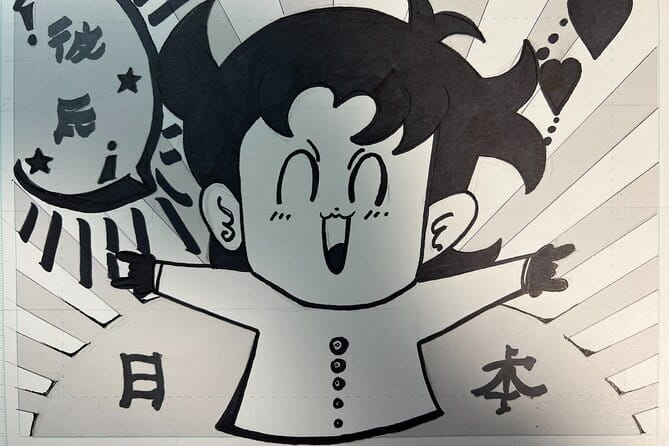
You should also be realistic about the finished piece. The instructor can guide you, but the work remains yours. A first attempt may have uneven lines or a pose that needs more practice. That is part of the value. You are taking home evidence of what you learned, not a page secretly completed by a professional.
A completely different kind of day out:
- Mt Fuji and Hakone 1-Day Bus Tour Return by Bullet Train
★ 5.0 · 26,383 reviews - TOKYO SKYTREE® Ticket
★ 4.7 · 25,136 reviews - teamLab Borderless Tickets: MORI Building DIGITAL ART MUSEUM
★ 4.7 · 24,126 reviews - teamLab Planets TOKYO Ticket
★ 4.7 · 21,663 reviews
From pencil sketch to ink and shading
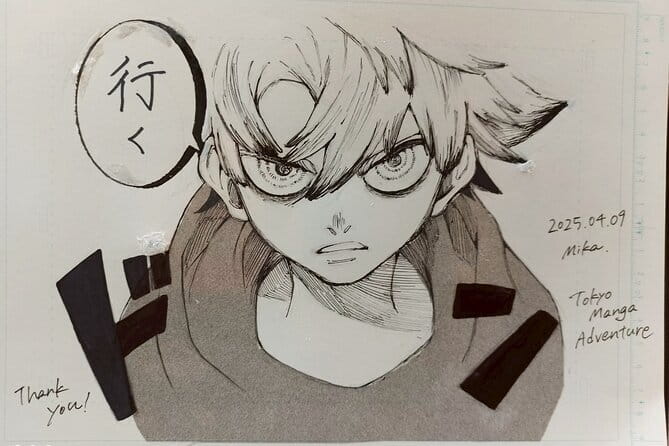
The class takes you through the main traditional steps of manga creation. Pencil sketching comes first, allowing you to establish the character, pose, and composition before committing to darker lines.
Next comes inking. This is where the drawing begins to look more finished, but it is also where small mistakes become harder to hide. A professional artist stays nearby to offer guidance and answer questions, which is especially useful if you are unsure how much pressure to use or how to refine a line.
The final stages include shading and adding depth. These details can change a flat drawing into something with weight and dimension. Even a simple character gains more presence when the light, shadows, and darker areas are handled carefully.
A participant described the instruction as a step-by-step explanation of how to use the tools to draw a character. That is a good way to understand the teaching style. You are shown how the tools work, then given time to try them yourself, with help available as questions come up.
The traditional process is also one reason this class may appeal to people who normally draw on a tablet. You get a chance to work with physical materials and see how each stage affects the next. All necessary tools are supplied, so you can focus on learning rather than shopping for pens, paper, or other equipment.
The advantage of a group capped at six
The maximum group size is six people. That is small enough to make a real difference during a drawing lesson. You are less likely to spend the whole session watching from a distance, and it should be easier to get the instructor’s attention when you reach a tricky part of the drawing.
Small-group teaching is particularly helpful for beginners. You may need a quick correction to a face, hand, pose, or line technique. You can ask without holding up a large class, and the instructor can tailor suggestions to your drawing rather than giving only general advice.
The group format also gives the workshop a social side. You share the room with other manga fans and can see how different people approach the same basic process. One person may focus on a favorite character, while another creates something completely original.
Still, small group does not mean private instruction. Six participants can produce different needs at different times. If you want one-on-one coaching for the entire three hours, this is not described as a private class. For most beginners, though, the group size offers a useful balance between personal help and a shared activity.
Drinks, snacks, and a relaxed pace
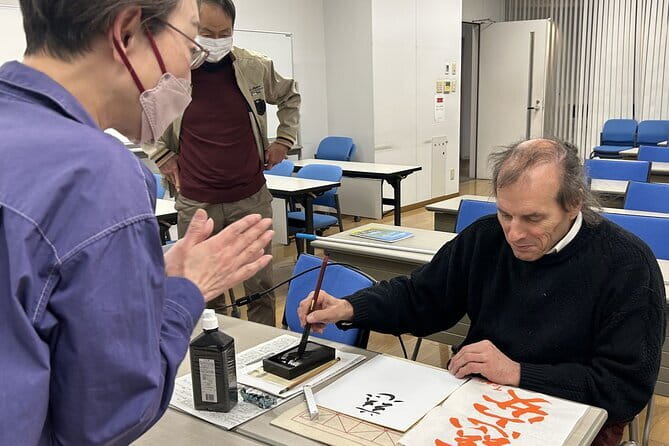
Drinks and snacks are included. That is a modest detail, but it helps during a three-hour seated activity. You can stay focused on your artwork instead of stopping to find refreshments.
The relaxed pace also matters. Drawing requires concentration, especially when you move from a loose pencil sketch to ink. Having time to ask questions, make adjustments, and add shading makes the class more rewarding than a short drop-in session.
You should not expect a full meal. The included food is best viewed as a small comfort during the workshop. If you have dietary concerns, the available information does not specify the snack selection, so you may want to clarify that before booking.
Is $100 a fair price?
At $100 per person, this is not the cheapest creative activity in Tokyo. The price is easier to justify when you count what is included: three hours of instruction, all manga drawing tools and materials, drinks, snacks, cultural context, and a finished artwork to take home.
You are also paying for access to a professional manga artist and a group capped at six. That personal guidance is the main value. A large class could show you the same basic steps, but it would not necessarily give you as much time to ask about your own drawing.
The souvenir has value because you create it yourself. A purchased print may look more polished, but it will not show your decisions, mistakes, and progress through the class. If you want an activity tied closely to Japanese manga culture, the cost is reasonable for a three-hour workshop.
The price may feel high if you only want a quick introduction or if you already have strong manga skills and can practice independently. It is a better fit for someone who wants instruction, hands-on use of traditional tools, and a finished personal memento.
The current rating is 5, with 100 percent recommending the activity. The strongest praise focuses on the friendly staff, clear step-by-step help, and useful explanation of manga history. Those points support the idea that you are paying for the teaching and atmosphere, not just paper and pens.
Who should book this workshop?
I would recommend it to anime and manga fans, creative couples, families with older children, solo visitors who enjoy making things, and anyone wanting a break from Tokyo’s major sights. You do not need to be able to draw well. In fact, beginners may gain the most because the class explains each stage from the start.
It also suits people who want a souvenir with a personal story. You will remember the character you created and the process behind it long after a standard shop purchase fades into the background.
This may not be the right choice if you dislike seated activities, want a fast class, or expect a polished professional illustration with little effort. Three hours is a meaningful block of your Tokyo schedule, and the finished drawing will reflect your own skill level.
The morning, afternoon, and evening options make it easier to fit into your plans. I would choose the time when you are most alert. Detailed drawing takes patience, and an evening class after a packed sightseeing day may feel more demanding than expected.
Practical details before you go
Confirmation is normally sent at booking. If you book within one day of the class, confirmation is sent as soon as possible and depends on availability. Since the class is limited to six people, last-minute space may be less certain.
The activity is near public transportation, but private transportation is not included. Plan to reach the Lawson meeting point independently, then return to the same place when the workshop ends.
Most people can participate. The supplied information does not give detailed accessibility notes, so anyone with specific mobility, seating, vision, or hand-use needs should ask the provider before booking.
Free cancellation is available if you cancel at least 24 hours before the local start time. Cancellations made less than 24 hours before the start are not refunded, and changes inside that period are not accepted.
Should you book the Tokyo manga workshop?
Book it if you want more than a photo or a souvenir from a shop. The class gives you a clear introduction to manga, patient instruction, professional tools, and a piece of art that carries your own fingerprints, quite literally.
Skip it if the $100 price feels too high for a creative class or if you would rather spend those three hours visiting museums and neighborhoods. For manga fans and first-time artists, though, the small group and friendly step-by-step teaching make this a strong choice for a hands-on Tokyo afternoon or evening.
FAQ
How long does the manga drawing workshop last?
The workshop lasts approximately three hours.
How much does the experience cost?
The price is $100 per person.
Where does the workshop begin?
It begins at Lawson, 1-chōme-16-3 Hiroo, Shibuya, Tokyo 150-0012, Japan.
Where does the workshop end?
The activity ends back at the meeting point.
Are drawing tools and materials included?
Yes. The tools needed for drawing manga are provided.
Are drinks and snacks included?
Yes. Drinks and snacks are included in the experience.
Do I need previous drawing experience?
No. Previous experience is not necessary, and beginners are welcomed with instruction and support.
How many people can join the class?
The activity has a maximum of six participants.
Can I cancel for a full refund?
Yes, if you cancel at least 24 hours before the local start time. Cancellations made less than 24 hours before the start are not refunded.
Just added in Tokyo
- Very popular in Harajuku♡Animal petting zoo★ 4.6 · 39 reviews
- Yokohama Port: Private Customizable Tour with Transfer★ 5.0 · 19 reviews
- Wagyu & Sake 8 Course Tasting Dinner in Shinjuku★ 4.9 · 20 reviews
- Warner Bros. Studio Tour Tokyo – The Making of Harry Potter★ 4.8 · 181 reviews
- Yanaka District: Historical Walking Tour in Tokyo’s Old Town★ 4.8 · 117 reviews
- Tokyo: Classic Tsukiji Food Tour★ 4.9 · 78 reviews
- Tokyo: Tsukiji Fish Market Tour with 6 Stops & Seafood Lunch★ 4.5 · 165 reviews
- Tokyo Wagyu & Sake Pairing Tasting Experience with Local Flavors★ 5.0 · 108 reviews
Workshops, compared.
Sushi Making Tokyo Roll and Authentic Japanese Sushi Class
Read our review →
Gion Make Your Own Chopsticks with Engraving Option
Read our review →
Roll and Authentic Sushi Making Class in Asakusa
Read our review →
Ramen Cooking Class at Ramen Factory in Kyoto
Read our review →
Tokyo Asakusa Chopsticks Workshop: Make Your Own Pair
Read our review →
Ring Making Workshop : Vintage Japanese Coin Ring
Read our review →Browse the lists this tour appears in