
Reviewed · COOKING CLASSES
Private Sushi Making with a Sushi Master
Sushi is better when you make it yourself. This private Tokyo workshop combines a Michelin-starred restaurant setting with clear instruction from a sushi master, so you learn more than how to press rice around fish. I especially like the chance to make nigiri, maki, and gunkan sushi, plus the personal attention that comes with a private booking.
I also like that the class includes sushi history, a quiz, photographs, and a meal of what you prepare. The main consideration is timing: the class lasts about 1 hour and 45 minutes, and arriving more than five minutes late without contacting the provider can mean losing the booking and payment.
In This Review
- Key points to know before booking
- What the private sushi class in Nishiazabu is really like
- Starting with sushi history and a short quiz
- Watching the sushi master prepare the ingredients
- Making nigiri, maki, and gunkan sushi
- Nigiri
- Maki
- Gunkan
- Eating what you make
- Why the private format is worth the price
- Who will enjoy this Tokyo activity most
- Staff, language, and the tone of the lesson
- Timing, location, and planning your arrival
- The final decision: is this sushi class a good buy?
- FAQ
- Where does the sushi-making class take place?
- How long does the activity last?
- What types of sushi will I make?
- Is the class private?
- Is food included?
- Can dietary restrictions be accommodated?
- What happens if I arrive late?
- Can I cancel for a refund?
Key points to know before booking
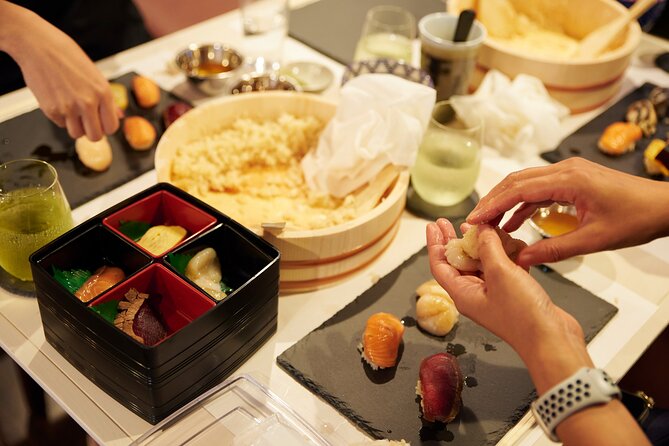
- Three sushi styles in one class: Make classic nigiri, seaweed-wrapped maki rolls, and gunkan, the battleship-shaped style.
- Private instruction: Only your group participates, giving you direct help from the sushi master.
- Michelin-starred setting: The workshop takes place at A-PULSE AZABU STUDIO in Nishiazabu.
- More than a cooking lesson: The session includes sushi history, a quiz, demonstrations, hands-on practice, photographs, and a meal.
- Good for many diets: Vegetarian, vegan, gluten-free, and other dietary needs can be accommodated.
- Strong value for food lovers: At $130.81 per person, you are paying for instruction, premium ingredients, a private format, and lunch or dinner.
What the private sushi class in Nishiazabu is really like
This is a compact, food-focused activity in Tokyo. You meet at A-PULSE AZABU STUDIO, at 3-chōme-8-18 Nishiazabu in Minato City, and return to the same place when the session ends.
The private format matters. You are not trying to copy a chef from the back of a crowded room, and you do not have to compete with a large group for help. If your rice shape is lopsided or your roll begins to loosen, the sushi master can address it right away.
That personal attention also makes this a good choice if you are completely new to sushi making. You do not need to arrive with knife skills or restaurant experience. The lesson is designed to take you from explanation to demonstration, then into hands-on work.
The class is offered with a mobile ticket, which keeps the arrival process simple. Still, I would save the booking confirmation on your phone before leaving your hotel, and I would plan your route carefully. The no-show rule is strict: if the provider has not heard from you within five minutes of the scheduled start, the reservation may be treated as abandoned with no refund.
More Cooking Classes in Tokyo
- Sushi Making Tokyo Roll and Authentic Japanese Sushi Class
★ 5.0 · 3,971 reviews - Tokyo: Roll and Authentic Sushi Making Class in Asakusa
★ 4.9 · 1,957 reviews - Tokyo Shinjuku Chopsticks Making Class
★ 5.0 · 1,763 reviews
Starting with sushi history and a short quiz
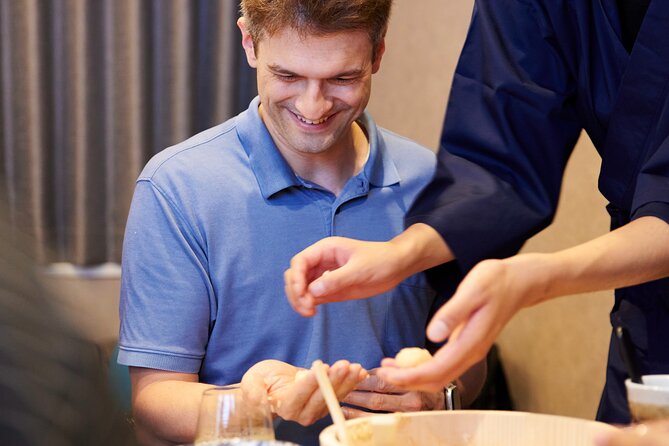
The class begins with an introduction to the history of sushi. This gives the food some context before you start handling ingredients, and it helps explain why different forms of sushi are shaped and served in different ways.
You also take part in a quiz. It is a small feature, but it gives the opening section a lively rhythm instead of making you sit through a long lecture. You can expect questions about sushi and its traditions, with the instructor keeping the tone friendly and accessible.
I like this order. You first learn what you are making, then watch it being done, and only after that handle the ingredients yourself. For a first-time sushi maker, that progression removes some of the guesswork.
The exact quiz questions and teaching style can vary, but the purpose is clear: this is not just a meal with a quick demonstration attached. You are given enough background to understand the dishes you are preparing.
Watching the sushi master prepare the ingredients
The sushi master demonstrates the process before you begin. A key part of the lesson is learning about slicing raw fish, selecting seasonal ingredients, and handling sushi rice.
That preparation is where the difference between home sushi and restaurant sushi becomes easier to see. The ingredients are selected by the sushi master and prepared to a high standard, so the lesson focuses on technique without asking you to judge the quality or safety of questionable produce.
The fish is described as sushi grade, and the quality of the ingredients is one of the strongest reasons to consider the class. The finished meal includes your sushi, along with soup and green tea according to the experience details shared by the provider.
You will not simply be handed a tray of prepared items. The point is to watch the chef’s movements closely, then try the same steps yourself. Pay attention to the pressure used when forming the rice, the amount of filling placed in a roll, and the way the fish is positioned over the rice.
Making nigiri, maki, and gunkan sushi
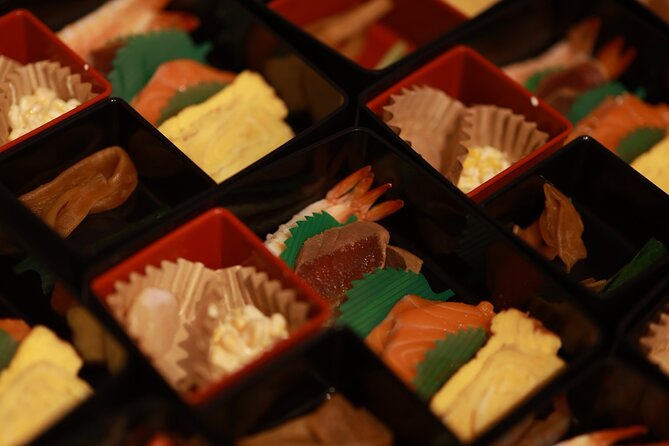
The hands-on section covers three distinct forms of sushi. Each one teaches a different skill, which makes the short class feel more useful than a lesson focused on one basic roll.
A completely different kind of day out:
- Tokyo Disney Resort – Tokyo Disneyland & Tokyo DisneySea Park Tickets
★ 4.8 · 99,488 reviews - SHIBUYA SKY Ticket
★ 4.7 · 46,509 reviews - JR Whole Japan Rail Pass
★ 4.8 · 29,150 reviews - Mt Fuji and Hakone 1-Day Bus Tour Return by Bullet Train
★ 5.0 · 26,383 reviews
Nigiri
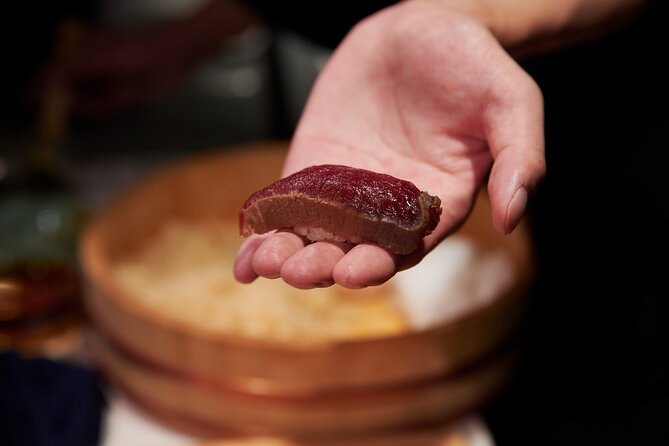
Nigiri is the familiar style with a slice of fish placed over a small mound of rice. It looks simple, but the shape and proportions matter.
You will practice forming the rice so it holds together without becoming dense. Then you place the fish on top. This is the style that most clearly shows the value of careful technique, since there is nowhere for uneven rice or poor balance to hide.
Nigiri also gives you a direct taste of the ingredients. With less seaweed and fewer fillings, the fish, rice, and seasoning have to work together.
Maki
Maki is the traditional roll wrapped in seaweed. You will learn how to place the ingredients, roll them together, and cut the finished cylinder into pieces.
Maki is often the style people feel most comfortable trying at home after the class. The steps are easy to remember, but the amount of filling and the pressure used while rolling can take practice.
The instructor’s help is useful here. A private class gives you a better chance to ask why a roll splits, why rice sticks to the mat or knife, or how tightly the roll should be formed.
Gunkan
Gunkan, sometimes called battleship-style sushi, is wrapped with seaweed around the sides and topped with additional ingredients. Its shape gives it a different look from both nigiri and maki.
This style is especially fun for photographs because the seaweed forms a small wall around the rice. It also shows how sushi can be built to hold toppings that would not sit neatly on a standard piece of nigiri.
Making all three styles gives you a broader view of sushi preparation. You learn to shape rice, work with seaweed, balance fish and fillings, and present each piece in a different way.
Eating what you make
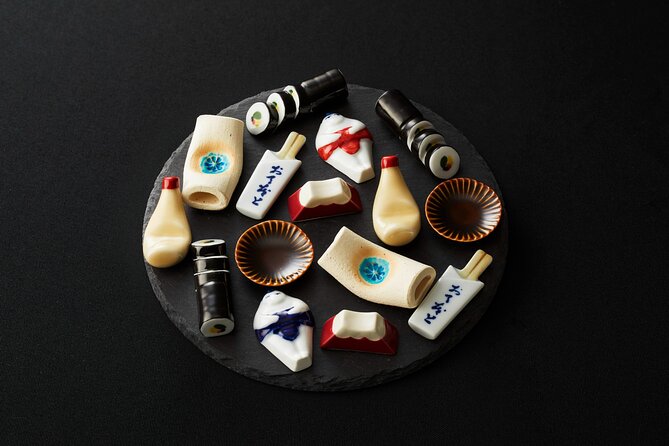
The class ends with time to photograph your creations and eat them. This is an important part of the experience, since you get an immediate reward for all that careful shaping.
Come hungry. The provider specifically asks participants to do so because you will be eating your own sushi, not merely sampling one piece at the end.
The meal is also a useful test of your new skills. You can see which pieces held together, which rolls looked tidy, and which flavors worked best for you. Even a slightly uneven piece can taste excellent when the ingredients are fresh.
Soup and green tea are included with the meal according to the supplied details. Those additions make the finish feel more like a complete Japanese meal rather than a cooking exercise with a quick bite afterward.
The photo time adds a light, social ending. If you are taking the class with family or friends, you can compare your creations. If you are attending alone, the private setting still allows you to take photographs without feeling rushed by a large group.
Why the private format is worth the price
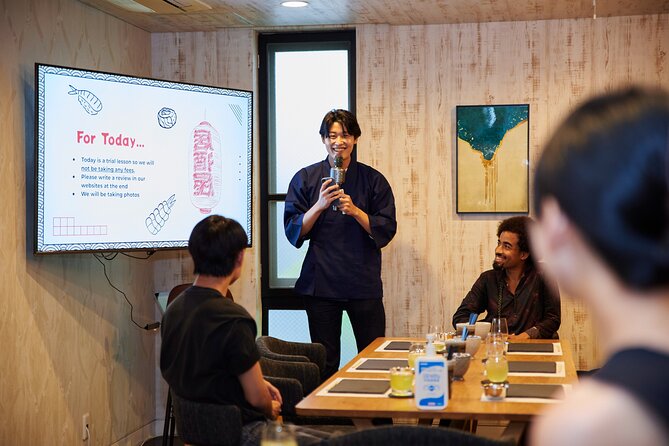
The listed price is $130.81 per person. That is not a budget activity, especially for a class lasting less than two hours, but the price needs to be judged against what is included.
You are getting a private session, instruction from a sushi master, high-quality ingredients, three sushi styles, a meal, soup, green tea, a quiz, and photographs. The class also takes place in a Michelin-starred sushi restaurant setting, which adds a sense of occasion that a casual group workshop may not provide.
I see the best value here for people who care about food and want more than a standard sightseeing stop. If you are already planning to spend heavily on a top sushi meal in Tokyo, this experience gives you a way to understand the work behind it while also eating.
The value is weaker if you only want a quick cooking activity or if you are mainly looking for the lowest-cost meal. You could find cheaper food-related classes, but they may not offer private instruction or the same ingredient quality.
The class is also a good gift for a sushi fan. It produces something you can remember and possibly repeat at home, rather than an object that takes up space in your luggage.
Who will enjoy this Tokyo activity most
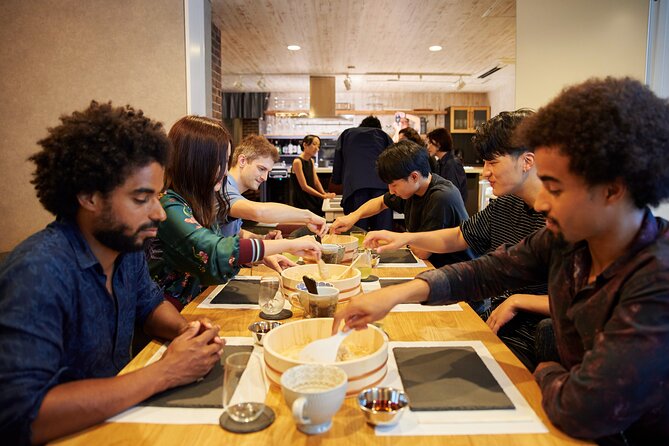
I would recommend this class to first-time sushi makers, food-focused couples, families, and solo visitors who want direct contact with a chef. A solo participant can receive plenty of personal attention, and one solo chef who attended the class found the instruction and discussion especially valuable.
It also suits people who worry that sushi making will be too difficult. One practical benefit of the session is confidence. After seeing the steps and trying them with guidance, you may find it less intimidating to make sushi at home.
The class can work for experienced cooks too. A chef who attended appreciated the details about technique and flavor, so this is not limited to people who have never touched a sushi mat.
Dietary needs are another strength. Vegetarian, vegan, gluten-free, and other restrictions can be accommodated. You should provide those details when booking so the sushi master can plan the ingredients properly.
This may be less suitable if you dislike raw fish, though the provider does state that dietary restrictions can be accommodated. Ask about your specific needs before booking rather than assuming every substitution will be available on the day.
Staff, language, and the tone of the lesson
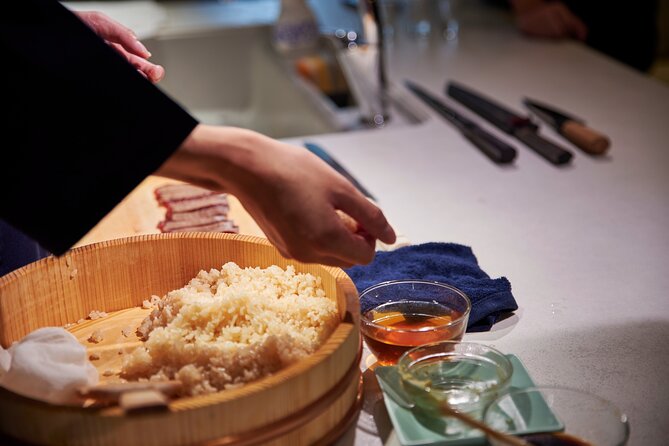
The teaching team includes Rin, who assists with the class, and Chef Riku, who has been praised for his instruction and precision. English-language support is available, and the staff has been described as speaking English very well.
That matters in a lesson where small instructions affect the final result. You want to understand how to handle the rice, when to cut the roll, and how much pressure to use. Clear communication makes the class more relaxed and gives you a better chance of repeating the process later.
The tone appears friendly rather than formal. The class includes jokes, laughter, a quiz, and time for photographs, so you are not expected to behave like a professional apprentice in a silent kitchen.
At the same time, the Michelin-starred setting and sushi-master instruction give the experience some seriousness. You get the fun of a hands-on activity without reducing sushi to a novelty.
Timing, location, and planning your arrival
The full activity lasts approximately 1 hour and 45 minutes. That is long enough for the explanation, quiz, demonstration, cooking, photographs, and meal, but short enough to fit neatly into a busy Tokyo schedule.
The meeting point is A-PULSE AZABU STUDIO in Nishiazabu, Minato City. The activity ends at the same location, so you do not have to arrange a separate return point or follow a guide across the city afterward.
The venue is near public transportation. Even so, allow extra time for finding the exact studio and getting settled. Tokyo addresses can be precise but still require attention, especially when you are moving through an unfamiliar neighborhood.
Do not schedule this with a tight connection or a train departure immediately afterward. The class has several parts, and the meal and photograph session are meant to be enjoyed, not hurried.
If a flight delay or another serious problem affects your arrival, contact the provider as soon as possible. The team has shown some kindness in handling a delayed arrival, but that should not be treated as a guarantee. The written rule remains five minutes after the start time without contact.
You can cancel for a full refund up to 24 hours before the scheduled start time. Cancellations or changes made later are not accepted for a refund, and cut-off times follow Tokyo local time.
The final decision: is this sushi class a good buy?
Book it if you want a small, personal food experience with real instruction and a meal at the end. The combination of private attention, three sushi styles, good ingredients, and a sushi master makes this more useful than a quick roll-making demonstration.
I would especially choose it for a special afternoon, a food-centered Tokyo day, or a first visit when you want an activity that connects you with Japanese cuisine in a direct way. It is also a strong pick for solo participants and anyone with dietary requirements, provided those needs are arranged in advance.
Skip it if your main goal is a cheap meal, a long cultural tour, or a highly technical fish-cutting course. This class teaches sushi making, not advanced fish filleting. For that, the provider offers a separate premium fish gutting and sushi-making course.
At $130.81 per person, the experience asks you to pay for quality and personal instruction. If those are the parts you value, this is an enjoyable and practical way to bring a little Tokyo sushi skill home with you.
FAQ
Where does the sushi-making class take place?
The class takes place at A-PULSE AZABU STUDIO, located at 3-chōme-8-18 Nishiazabu, Minato City, Tokyo 106-0031, Japan.
How long does the activity last?
The workshop lasts approximately 1 hour and 45 minutes.
What types of sushi will I make?
You will make nigiri, maki, and gunkan sushi. Nigiri has fish over rice, maki is wrapped in seaweed, and gunkan is a battleship-style piece wrapped with seaweed and topped with ingredients.
Is the class private?
Yes. This is a private activity, so only your group participates.
Is food included?
Yes. You eat the sushi you make at the end of the class. Soup and green tea are also included according to the experience details.
Can dietary restrictions be accommodated?
Yes. Vegetarian, vegan, gluten-free, allergy-related, and other dietary restrictions can be accommodated.
What happens if I arrive late?
If the provider does not receive contact from you within five minutes after the scheduled start time, the booking may be treated as a no-show, with no refund. Contact the provider as soon as possible if you are delayed.
Can I cancel for a refund?
You can cancel up to 24 hours before the scheduled start time for a full refund. Cancellations or changes made less than 24 hours before the start time are not refunded or accepted.
Just added in Tokyo
- Very popular in Harajuku♡Animal petting zoo★ 4.6 · 39 reviews
- Yokohama Port: Private Customizable Tour with Transfer★ 5.0 · 19 reviews
- Yanaka District: Historical Walking Tour in Tokyo’s Old Town★ 4.8 · 117 reviews
- Wagyu & Sake 8 Course Tasting Dinner in Shinjuku★ 4.9 · 20 reviews
- Warner Bros. Studio Tour Tokyo – The Making of Harry Potter★ 4.8 · 181 reviews
- Tokyo: Classic Tsukiji Food Tour★ 4.9 · 78 reviews
- Tokyo: Tsukiji Fish Market Tour with 6 Stops & Seafood Lunch★ 4.5 · 165 reviews
- Tokyo Wagyu & Sake Pairing Tasting Experience with Local Flavors★ 5.0 · 108 reviews
Cooking Classes, compared.
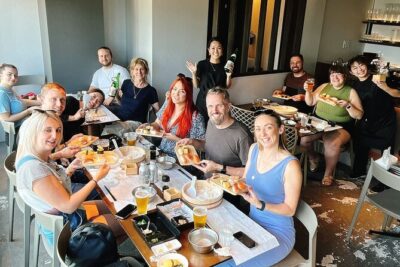
Sushi Making Tokyo Roll and Authentic Japanese Sushi Class
Read our review →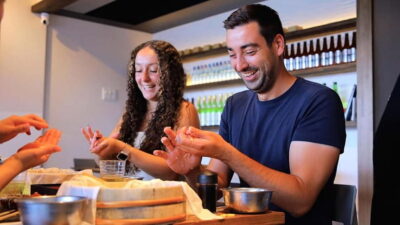
Roll and Authentic Sushi Making Class in Asakusa
Read our review →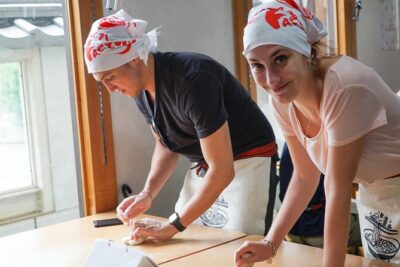
Ramen Cooking Class at Ramen Factory in Kyoto
Read our review →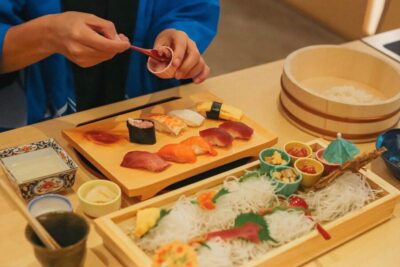
Sushi Making Class in a Happi Coat near a Famous Spot
Read our review →
Sushi Making Osaka Roll and Authentic Japanese Sushi Class
Read our review →
Tokyo Sushi Making Class in Tsukiji with Professional Chef
Read our review →
Ramen & Gyoza Cooking Class in Tokyo with Local Supermarket Visit
Read our review →Browse the lists this tour appears in