
Reviewed · WALKING TOURS
Private Walking Tour in Bamboo Forest & Hidden Spots in Arashiyama
Arashiyama rewards an early start. This four-hour private walk takes you beyond the famous bamboo path into Sagano, a former aristocratic retreat with old temples, preserved streets, stone Buddhist figures, and riverside views. I like the route’s variety, especially the move from Seiryōji and Otagi Nenbutsu-ji to the bamboo grove and Tenryu-ji. I also like having a guide for the local details, since bamboo, shrines, temple customs, and old roads are easier to appreciate with context.
The main drawback is the crowd problem. The bamboo forest can become packed as the morning goes on, which takes away much of its quiet, otherworldly feel. You also pay $85.87 per person, with temple admission, lunch, and transportation not included, so this tour offers its best value when you want private attention and a fuller route, not just a quick photograph in the grove.
In This Review
- Key points to know before booking
- Why Sagano is worth more than a bamboo photograph
- Seiryōji, the 9th-century villa turned temple
- Saga Toriimoto and an old road to Mount Atago
- Otagi Nenbutsu-ji and its 1,200 stone faces
- The bamboo forest, beautiful but rarely silent
- Tenryu-ji, Zen gardens and a World Heritage setting
- Togetsukyo Bridge and a useful finish
- What four hours and a private guide really provide
- Is $85.87 per person a fair price?
- Who should book this Arashiyama walk?
- Should you book it?
- FAQ
- Where does the tour begin?
- Where does the tour end?
- How long does the walking tour last?
- Is this a private tour?
- Are temple entrance fees included?
- Is transportation to the meeting point included?
- Can I cancel for a full refund?
Key points to know before booking
- The tour begins at 9:00 a.m. at Saga-Arashiyama Station, giving you a useful early position before the bamboo path grows busier.
- The route is private, so only your own group takes part. That allows room for questions and a pace suited to your party.
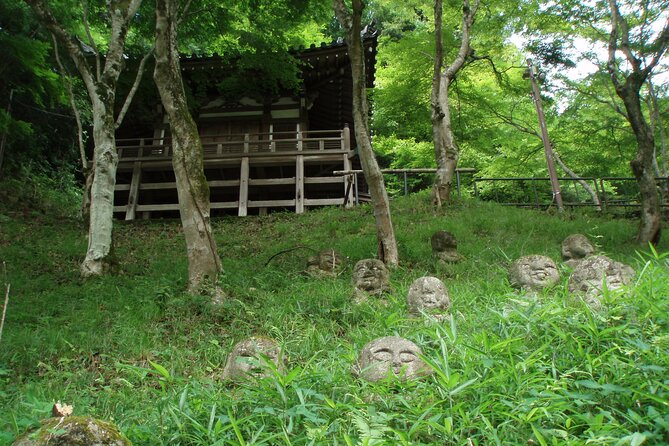
- Otagi Nenbutsu-ji is the route’s most unusual stop, with about 1,200 hand-carved Rakan figures, each with its own expression.
- The bamboo forest is only one part of the walk, not the entire experience. You also visit traditional streets, two important temples, and Togetsukyo Bridge.
- Temple admission is extra, including Otagi Nenbutsu-ji and Tenryu-ji. Lunch, hotel transfers, and transport to and from the area are also excluded.
- The walk ends at Togetsukyo Bridge, close to Monkey Park, so you can continue exploring Arashiyama afterward.
Why Sagano is worth more than a bamboo photograph
Arashiyama is often reduced to one narrow idea: tall green bamboo and a phone held at arm’s length. The famous grove is beautiful, but it is a small piece of a much older district. Sagano was once a country retreat for Kyoto’s aristocrats, and the quieter lanes still show why this western edge of Kyoto appealed to them.
I like this tour because it gives you a proper sequence. You begin near Saga-Arashiyama Station, walk through temple grounds and old streets, reach the bamboo grove after gaining some local context, then finish beside the Katsura River. The route feels more like a neighborhood walk than a single attraction with a queue.
The private format matters here. Arashiyama has many details that are easy to miss: the purpose of an old highway, the meaning of Buddhist statues, the role of bamboo in Japanese life, and the story behind a bridge named for the moon. You can ask about what interests you instead of waiting for a large group to catch up.
At $85.87 per person, this is not the cheapest way to see the district. The price makes more sense for couples, families, or friends who want a guide to themselves and would otherwise struggle to connect the separate sights. If you only want to walk through the bamboo grove, you can do that without paying a tour fee. The value comes from the wider route and personal commentary.
More Private Tours in Kyoto
- Kyoto 6hr Private Tour with Government-Licensed Guide
★ 5.0 · 1,369 reviews - 10 Must-see Spots in Kyoto One Day Private Tour (up to 7 people)
★ 5.0 · 1,108 reviews - Kyoto 4hr Private Tour with Government-Licensed Guide
★ 5.0 · 629 reviews
Seiryōji, the 9th-century villa turned temple
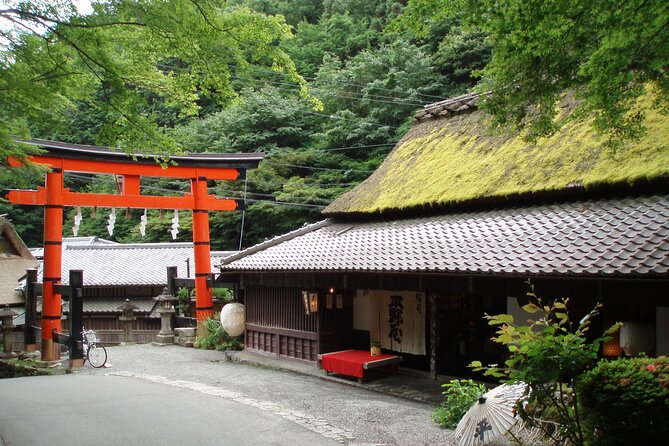
The first stop is Seiryōji, also called Saga Shakadō. The site began as a villa belonging to an aristocrat in the ninth century, giving you an early look at Sagano’s connection with Kyoto’s courtly past.
The planned stop lasts about 10 minutes, and admission is free. That is enough time for an introduction and a look around, but not a long temple visit. I would treat it as a scene-setting stop rather than the main event.
This opening works well because it places the rest of the walk in context. You are not simply heading toward a popular grove. You are moving through a district shaped by aristocratic retreats, Buddhist worship, and old roads leading into the mountains.
If you enjoy spending a long time studying temple architecture, 10 minutes may feel brief. Still, the short visit keeps the tour moving and leaves room for the more distinctive sites later.
Saga Toriimoto and an old road to Mount Atago
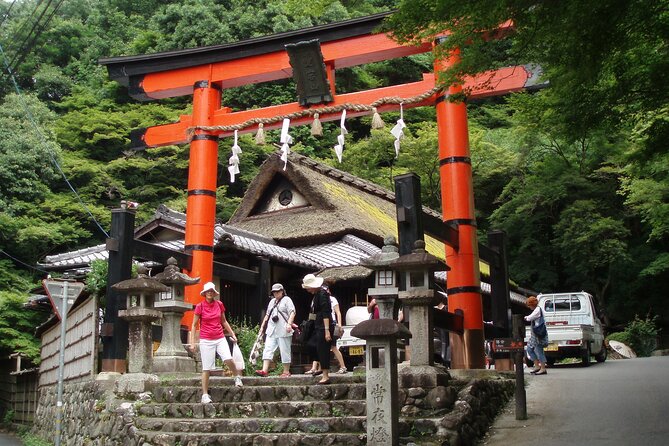
Next comes the Saga Toriimoto Traditional Buildings Preservation Area. Kyoto has four designated town preservation areas, and this one follows the old Atago highway, a route that once led toward Mount Atago and its Shinto deity connected with fire prevention.
This is one of the tour’s best chances to see a quieter side of Arashiyama. Instead of polished sightseeing streets and souvenir shops, you get traditional buildings and a sense of how people once traveled beyond the city center.
The planned visit is again about 10 minutes, with no admission fee. That may sound short, but the area works as part of the walking rhythm. You see the buildings, hear why the road mattered, and continue on foot rather than spending half the morning inside one major temple.
I would pay attention here to the street itself. The point is not a single grand object. It is the preserved shape of the old route and the contrast between this calm historic area and the crowded bamboo path ahead.
Otagi Nenbutsu-ji and its 1,200 stone faces
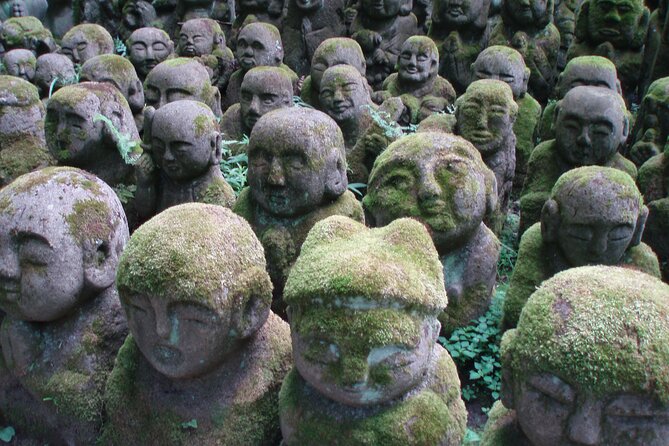
Otagi Nenbutsu-ji is the most memorable stop for many people who prefer unusual sights over famous ones. The temple is known for roughly 1,200 stone Rakan figures, representing disciples of Buddha. Each was hand-carved by one of 1,200 individuals who visited the temple.
The figures are not identical or solemn in the same way. Their expressions and shapes give the grounds a playful, human quality. You can spend time looking from one face to the next, spotting differences that would be impossible in a uniform row of statues.
The visit is scheduled for about 20 minutes, and admission is not included. That extra fee is worth factoring into your budget before you arrive. The supplied price covers the guide, not every temple gate along the way.
I would have liked a longer stop here, especially if you enjoy photography or Buddhist art. The 20-minute visit gives you a taste, but the statues reward slow looking. If your guide has flexibility, this is a sensible place to ask for a little more time, though the total walk still has to stay on schedule.
This temple also helps the tour earn its private-tour price. You could find the site on your own, but a guide can explain why the figures are called Rakan and point out the hand-carved character that makes them different from standard temple decoration.
More Walking Tours in Kyoto
- Kyoto Geisha Walking Tour: Gion District & Hidden Gems
★ 4.7 · 3,273 reviews - Kyoto: Gion Magical Night Walking Tour with Geisha Trivia
★ 4.9 · 2,393 reviews - Kyoto: Gion Geisha District Walking Tour – Stories of Geisha
★ 4.7 · 2,187 reviews - Night Walk in Gion: Kyoto’s Geisha District
★ 4.5 · 2,003 reviews
The bamboo forest, beautiful but rarely silent
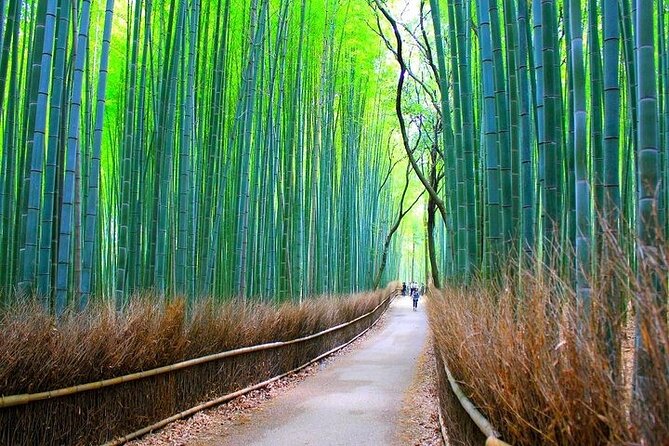
The Bamboo Forest Street is the tour’s headline sight. You walk between towering bamboo stalks while the guide explains how this plant has been valued and used in Japan. That context gives the grove more meaning than a quick stop for a selfie.
The path is free, and the planned visit lasts about 10 minutes. In practice, the full walking route around the grove may take longer, but you should not expect a long period of solitude. The walkway is broad, photogenic, and very popular.
The bamboo itself is extraordinary. Tall stalks rise on both sides, creating a narrow green corridor that can feel far removed from central Kyoto. The effect is strongest when the path is quiet. Later in the day, the same space can become a procession of people stopping for photographs.
The early 9:00 a.m. start is one of the tour’s smartest features. It does not guarantee an empty path, but it gives you a better chance of seeing the grove before the heaviest crowds. If you are especially sensitive to noise or packed walkways, keep your expectations realistic. The forest is beautiful, but it is not a private wilderness.
A few practical points help. Wear shoes suitable for several hours of walking, and consider insect repellent because bites have been reported around the grove. Keep your camera ready, but also look upward and listen when the path allows it. The bamboo is more impressive when you stop treating it as a backdrop and notice its height, repetition, and movement.
The strongest praise for this part of the route concerns its beauty and photo opportunities. The strongest criticism concerns the crowds and the fact that the main path itself is fairly short. That is why I prefer this tour’s broader route. If the grove feels too busy, the other stops still give your morning substance.
Tenryu-ji, Zen gardens and a World Heritage setting
Tenryu-ji brings the walk back to one of Arashiyama’s major cultural landmarks. Founded in the 14th century, this Zen Buddhist temple is designated as one of Kyoto’s World Cultural Heritage sites.
The visit lasts about 20 minutes, and admission is extra. You should confirm the current entrance cost when booking or at the gate, since the supplied tour details do not state a full price for this temple.
The main appeal is the garden and its calm sense of order. The tour description connects the setting with Zen and a peaceful state of mind, which is a useful way to approach it. I would not rush through the garden searching for one dramatic object. Give yourself time to notice the arrangement of water, plants, paths, and temple buildings.
Twenty minutes is enough for an overview, but it is not a full Tenryu-ji visit. If the temple garden is high on your Kyoto list, you may want to return after the tour and pay for more time. The tour is designed to show you several places, not to provide an extended study of every one.
That trade-off is important. You gain range, but each stop has a limit. For a first introduction to Arashiyama, I think the variety works well. For a dedicated temple enthusiast, the schedule may feel brisk.
Togetsukyo Bridge and a useful finish
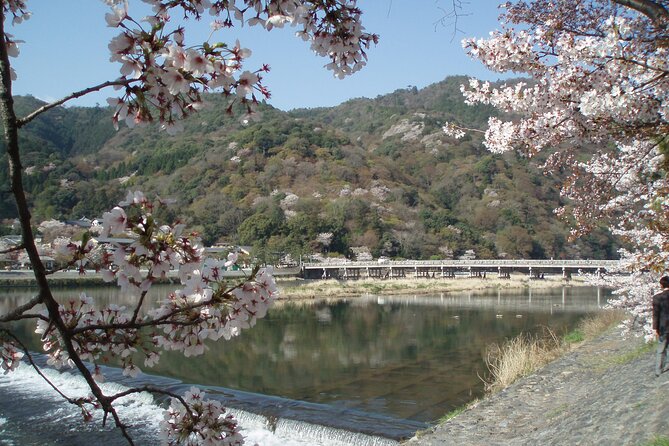
The walk ends at Togetsukyo Bridge, a short final stop of about five minutes. Admission is free, and the bridge is one of the easiest places to orient yourself in Arashiyama.
Its name means Moon Crossing Bridge. The story says an ancient emperor saw the moon as if it were crossing the bridge, giving the structure a poetic name that fits the river setting.
The bridge was built to reach a temple across the river, and today it gives you a broad closing view after the tighter bamboo paths and temple lanes. The ending feels practical as well as scenic. You are not dropped back at the station. Instead, you finish near Monkey Park, with the rest of Arashiyama open to you.
You can continue toward Monkey Park, explore nearby shops and eateries, or make your own way back toward the station. Since transportation is not included, plan your next move before the guide says goodbye.
The five-minute stop may sound too short for a bridge, but the bridge is more of a transition point than a formal guided visit. It marks the end of the organized walk and the start of your free time.
What four hours and a private guide really provide
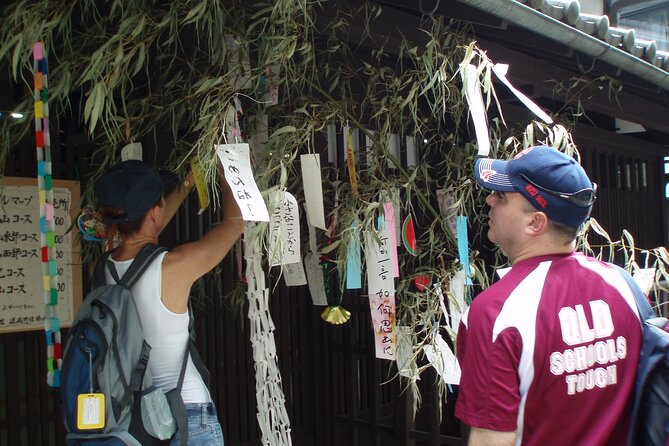
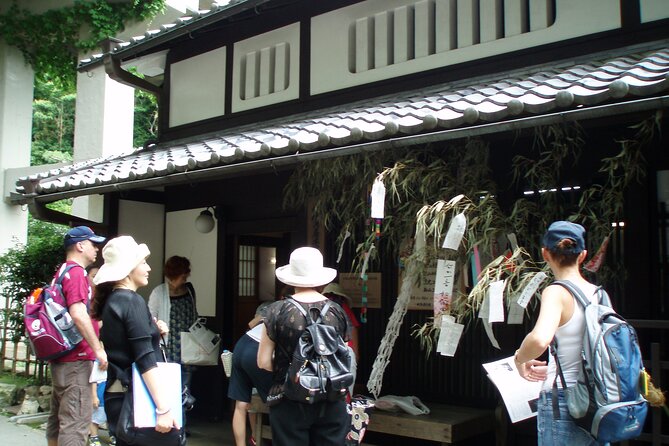
The tour lasts about four hours, though the listed stops add up to only about 75 minutes. The remaining time is spent walking between them and receiving explanations along the way. That is worth understanding before you book. This is a walking experience, not a vehicle-based sightseeing circuit.
The route is near public transportation and begins at Saga-Arashiyama Station, at 11-1 Sagatenryuji Kurumamichicho. You must make your own way there, and hotel pickup and drop-off are not included. The meeting time is 9:00 a.m., which works well for an early start from another part of Kyoto.
Because the activity is private, only your group participates. That is useful if you have children, older relatives, photographers, or simply a lot of questions. The available information says most people can participate, but it does not give a detailed accessibility assessment, so you should ask the provider if your group has specific mobility needs.
The guide is the one included service. Lunch is not included, so plan to eat before the tour or after it. Arashiyama has shops and eateries along the way, but you should not assume the walking schedule includes a meal break.
The cancellation terms are simple: you can receive a full refund if you cancel at least 24 hours before the 9:00 a.m. start. Changes or cancellations made inside that window are not accepted for a refund.
Is $85.87 per person a fair price?
I see this as a convenience and interpretation fee. The bamboo grove itself costs nothing, and you can reach Arashiyama by public transportation without a package. The paid temples add modest extra costs, but the tour price is mainly for the private guide and the carefully connected route.
For two people, the cost is easier to justify if you value personal attention. You see six different places, avoid planning the walking order yourself, and get explanations as you go. For a larger group, the price can become harder to defend unless the private format is especially important.
The tour is also good value for a first visit when you want the major sights with a few less familiar ones. Otagi Nenbutsu-ji and Saga Toriimoto keep the morning from becoming a simple bamboo-and-bridge outing.
I would not book it solely for crowd-free photographs. No guide can guarantee that, and the grove is a public attraction. Book it for the combination of local history, temple stops, unusual statues, and a private walking pace.
Who should book this Arashiyama walk?
I would recommend it to:
- First-time visitors who want a clear introduction to western Kyoto
- Couples or families who prefer a private guide to a large group
- Visitors who want more than the famous bamboo path
- People interested in temples, old roads, Buddhist art, and local stories
- Photographers who can start early and accept that the grove may still be busy
I would think twice if you want a slow, silent morning inside the bamboo. I would also hesitate if you dislike paying separately for temple admission or prefer to set your own pace at every stop.
Should you book it?
Book this tour if you want a well-rounded morning in Arashiyama, with a private guide connecting the district’s temples, preserved streets, bamboo, and riverfront. The route’s best surprises are Seiryōji, Saga Toriimoto, and especially Otagi Nenbutsu-ji, while Tenryu-ji supplies the major cultural landmark.
Skip it if the bamboo grove is your only goal. You can visit that free path independently, and the crowds may still disappoint you despite the early start. But if you want the bamboo forest placed in the wider story of Sagano, this four-hour walk gives you a useful and pleasant way to do it.
FAQ
Where does the tour begin?
The tour begins at 9:00 a.m. at Saga-Arashiyama Station, located at 11-1 Sagatenryuji Kurumamichicho, Ukyo Ward, Kyoto.
Where does the tour end?
The tour ends at Togetsukyo Bridge. The bridge is close to Monkey Park, so you can continue exploring Arashiyama afterward.
How long does the walking tour last?
The tour lasts approximately four hours.
Is this a private tour?
Yes. Only your own group participates in the activity.
Are temple entrance fees included?
No. Admission to Otagi Nenbutsu-ji and Tenryu-ji is not included. Lunch, hotel transfers, and transportation to and from the attractions are also excluded.
Is transportation to the meeting point included?
No. You must make your own way to Saga-Arashiyama Station, and hotel pickup and drop-off are not provided.
Can I cancel for a full refund?
Yes, if you cancel at least 24 hours before the experience start time. Cancellations or changes made less than 24 hours before the start are not accepted for a refund.
Just added in Kyoto
- The “Golden Route” and Ancient Japan by DIAMIR Erlebnisreisen – 14-Day Tour★ 2.0 · 2 reviews
- Japan: Castles & Cuisine by G Adventures – 6-Day Kyoto to Osaka Tour★ 4.5 · 4 reviews
- Cycle Japan by Explore! – 13-Day Kyoto to Tokyo Tour★ 4.7 · 12 reviews
- Cycle Japan by Intrepid Travel – 11-Day Kyoto to Tokyo Tour★ 4.8 · 2 reviews
- Classic Japan by Intrepid Travel – 11-Day Kyoto to Tokyo Tour★ 4.4 · 14 reviews
- Ancient & Modern Japan 14-Day Tour by Exodus Adventure Travels★ 4.4 · 40 reviews
- 5 Day Cultural Adventure of Kyoto, Nara & Osaka by Tourist Journey★ 2.5 · 2 reviews
- 12 Days Kinosaki Onsen Escape: A Journey Through Japan’s Timeless Towns by UME Travel★ 4.8 · 5 reviews
Walking Tours, compared.
Kyoto Geisha Walking Tour: Gion District & Hidden Gems
Read our review →
Tokyo Tsukiji Fish Market Food and Culture Walking Tour
Read our review →
Gion Magical Night Walking Tour with Geisha Trivia
Read our review →
Imperial Palace and Shogun Historical Walking Tour
Read our review →
Gion Geisha District Walking Tour – Stories of Geisha
Read our review →
Shinjuku Local Bar and Izakaya Guided Walking Tour
Read our review →
Browse the lists this tour appears in