
Reviewed · CASTLES AND HISTORIC SITES
Samurai Training in Tokyo: Swords, Bushido & Mental Discipline
Put down the plastic sword. This private Tokyo dojo session offers a more serious look at samurai practice, mixing etiquette, meditation, wooden sword work, and one traditional combat kata. I like the personal instruction and the quiet matcha break, which give the two-hour experience more substance than a quick costume photo.
I also like the setting in Kojimachi, an area once connected with the inner grounds of Edo Castle. The personalized scroll certificate is a thoughtful souvenir. The main consideration is physical focus: this is beginner-friendly, but it is still a training session involving posture drills, strength work, and one-on-one practice rather than a passive history talk.
In This Review
- Key points to know before booking
- What makes this Tokyo samurai class different
- Arriving at the Kojimachi dojo
- Dressing as a samurai before training begins
- Bushido, etiquette, breathing, and meditation
- Wooden sword drills and heavy-stick training
- Learning one combat kata, then practicing with an instructor
- Matcha and sweets in the middle of the lesson
- The certificate and final photograph
- How the teaching and language support work
- Is $85.66 good value for two hours?
- Who should book this experience?
- Should you book Samurai Training in Tokyo?
- FAQ
- Where does the samurai training take place?
- How long does the experience last?
- Is the experience private?
- Is the class conducted in English?
- Do beginners need previous sword training?
- Are samurai clothes included?
- What food and drink are provided?
- What is the cancellation policy?
Key points to know before booking
- Training takes place in Kojimachi: The dojo is at 4-chōme-2-1 Kōjimachi in Chiyoda City, near public transportation and back at the same location when the session ends.
- The lesson goes beyond sword poses: You practice breathing, meditation, silent walking, wooden sword movements, heavy-stick exercises, and one authentic combat kata.
- It is private for your group: You can ask as many questions as you like, and the instructor can adjust explanations for beginners.
- Traditional details are part of the value: Samurai clothing, matcha, Japanese sweets, a live sword demonstration, and a name-personalized certificate are included.
- English support is provided: The experience is conducted in English, and past sessions have also used English translators.
- Plan ahead: The average booking point is 37 days before the activity, and at least two participants are required.
What makes this Tokyo samurai class different
Many samurai-themed activities in Japan focus on spectacle. You put on a costume, hold a sword, pose for a photo, and leave with a few facts. This session takes a different route. It treats the samurai ideal as a combination of behavior, concentration, physical control, and technique.
That difference matters. You are not simply learning how a sword looks in a photograph. You are introduced to the rules around handling it, the attitude expected during practice, and the Bushido ideas of honor, discipline, and respect.
The private format is especially useful. You can ask questions about the movements, the training philosophy, or samurai history without waiting for a large group to catch up. If you are completely new to sword arts, that personal attention should make the lesson easier to follow.
The experience lasts about two hours. That is enough time to cover several parts of training without turning the session into a full-day athletic commitment. Still, the schedule is active. You should arrive ready to stand, move, concentrate, and repeat instructions carefully.
More Castles and Historic Sites in Tokyo
- Tokyo: Imperial Palace and Shogun Historical Walking Tour
★ 5.0 · 2,251 reviews - Tokyo Castle & Imperial PalaceーShogun Walking Tour
★ 4.7 · 1,068 reviews - Tokyo: Samurai Ninja Museum Guided tour and Experience
★ 4.6 · 1,010 reviews
Arriving at the Kojimachi dojo
The meeting point is Samurai Sword Tokyo at 4-chōme-2-1 Kōjimachi, Chiyoda City, Tokyo 102-0083. The building has toilets, and the location is near public transportation. There is no private vehicle or air-conditioned transport included, so you handle your own journey to the dojo.
Kojimachi gives the activity a useful sense of place. The district was once connected with the inner grounds of Edo Castle, where samurai trained and served. That does not turn the class into a preserved castle tour, but it adds a fitting historical backdrop before you begin.
The activity is private, meaning only your group takes part. This is a strong advantage for families, couples, or friends who prefer not to perform in front of strangers. It also lets you ask practical questions freely, something that can be difficult in a crowded demonstration.
At least two participants are required. Keep that rule in mind when planning a solo Tokyo itinerary. You cannot assume that showing up alone will be enough to run the class.
Dressing as a samurai before training begins
Samurai uniform rental is included. Changing into traditional clothing is not just a photo opportunity. It marks the shift from ordinary sightseeing to a structured lesson, and it helps explain why etiquette matters before the sword work starts.
You can also take a commemorative photo in the outfit, with the samurai, and the instructor is happy to take the picture. This is a practical touch. You do not have to depend on a timer or ask another participant to document the moment.
The clothing may appeal most to families and first-time visitors who want a memorable picture. For people mainly interested in martial arts, it remains a pleasant extra rather than the core reason to book.
The tone of the class appears warm and welcoming. Praise has focused on the friendly instructors and translators, with particular appreciation for the way they explain the first form. That combination of traditional formality and approachable teaching is important for beginners, who may otherwise worry about making a mistake.
Bushido, etiquette, breathing, and meditation
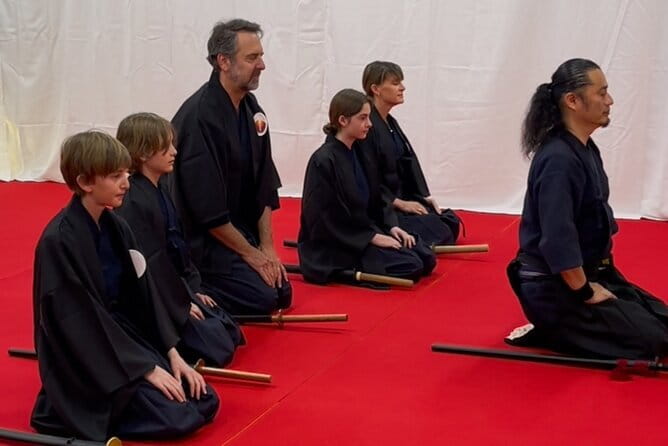
The session begins with samurai etiquette and the spirit of Bushido. This opening is valuable because it gives the physical exercises a reason. The sword is not presented as a toy or a dramatic prop. It is connected to control, respect, and responsibility.
You then work on breathing techniques and meditation. These exercises may surprise people who arrive expecting immediate sword action, but they fit the subject well. The lesson presents calm attention as part of martial skill.
I like this part because it slows the experience down. Tokyo sightseeing can be noisy and fast, while meditation asks you to settle your breathing and posture. Even a short introduction can help you understand that samurai training was not only about force or combat.
Do not expect a long religious or academic seminar. The class has two hours to cover a lot, so the Bushido discussion serves as a practical foundation for the drills that follow. If you want a detailed university-level study of samurai society, this activity will feel too brief. If you want a clear introduction with physical practice, the balance makes sense.
A completely different kind of day out:
- Tokyo Disney Resort – Tokyo Disneyland & Tokyo DisneySea Park Tickets
★ 4.8 · 99,488 reviews - SHIBUYA SKY Ticket
★ 4.7 · 46,509 reviews - JR Whole Japan Rail Pass
★ 4.8 · 29,150 reviews - Mt Fuji and Hakone 1-Day Bus Tour Return by Bullet Train
★ 5.0 · 26,383 reviews
Wooden sword drills and heavy-stick training
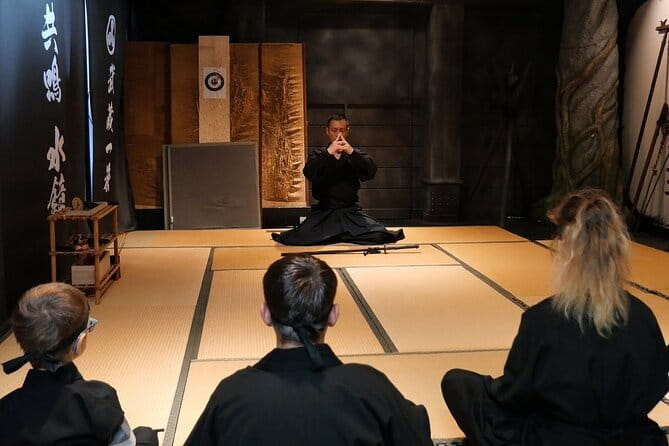
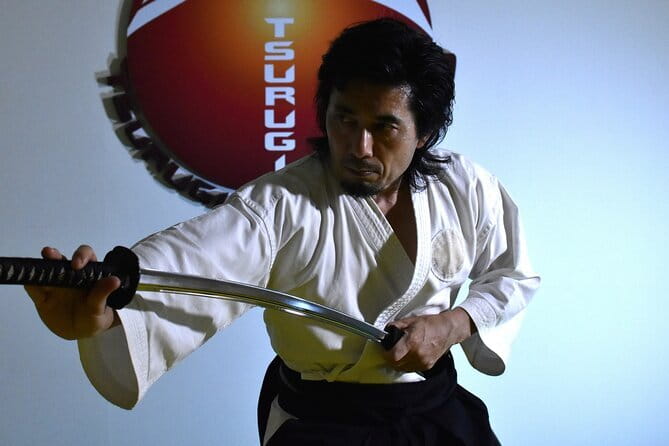
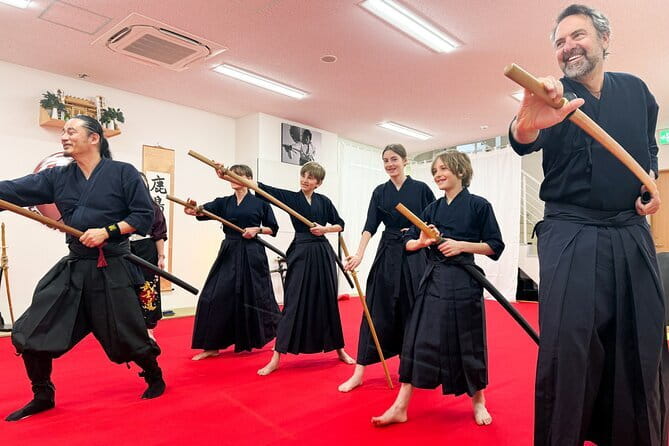
Next comes movement with a wooden sword. You learn basic sword motions and work toward one authentic samurai combat kata. A kata is a set sequence of movements, so your goal is not random swinging. You are learning order, timing, posture, and control.
The instructor first demonstrates the skills, including a live sword demonstration. Seeing the movement before attempting it gives you a visual guide and shows the difference between a careful technique and a theatrical flourish.
Strength training with a heavy stick is also included. The description does not give a precise weight or number of exercises, so you should not expect a fixed gym-style workout. Think of it as a traditional conditioning element that tests your grip, balance, and concentration.
The session also includes silent walking exercises. These focus on posture and awareness, with a ninja-like quality that younger participants may enjoy. The exercise sounds simple, but quiet movement can reveal how quickly you lose balance or begin to rush.
This variety is one of the class’s best features. You are not repeating the same sword pose for two hours. The program moves between mental control, footwork, strength, and formal technique.
Learning one combat kata, then practicing with an instructor
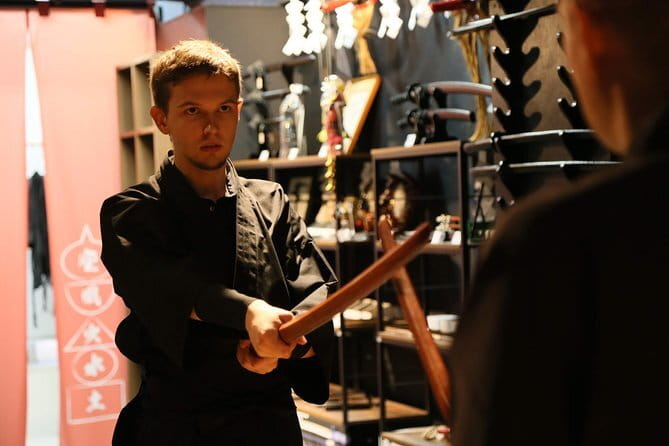
The central skill is one samurai combat kata. You should not expect to master a complete martial arts system in a single visit. The realistic goal is to learn one sequence well enough to understand its structure and perform it with guidance.
That limited scope is a strength. A class that promised many forms in two hours would probably produce shallow instruction. Focusing on one kata gives you a better chance to remember the movement after you leave.
The session then applies the sword skills in one-on-one sparring with an instructor. The available details do not describe the equipment or exact rules, so you should follow the instructor’s directions closely and treat this as controlled practice rather than a competitive match.
This is where the private format earns its keep. The instructor can watch your movement and offer corrections directly. You can also ask why a position or action matters instead of simply copying it.
The lesson is described as suitable for beginners and most people can participate. Even so, your attention and comfort level matter. Anyone who dislikes physical activity or struggles with standing and movement may prefer a quieter cultural workshop.
Matcha and sweets in the middle of the lesson
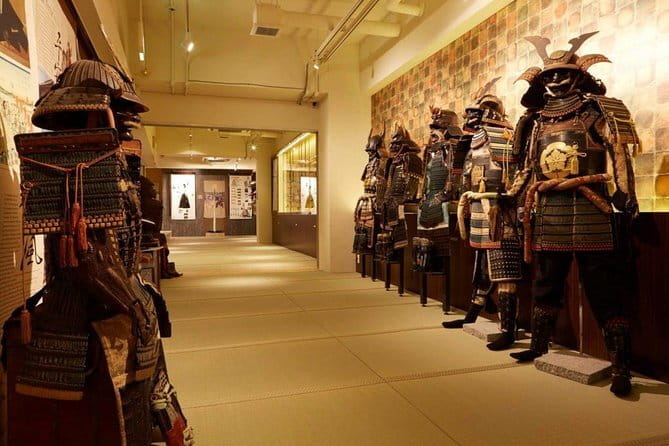
The break includes authentic matcha green tea and traditional Japanese sweets. It is a small detail, but it changes the pace of the experience. After concentration and movement, you get time to sit, refresh, and ask questions in a calmer setting.
I like the way this break connects the martial lesson with everyday Japanese culture. The tea is not just a beverage handed out at the end. It becomes part of the rhythm of the session, placing the training beside hospitality and ceremony.
Do not book this expecting a full meal. Matcha and sweets are a refreshment, not lunch. If you schedule the class near mealtime, plan another place to eat before or after.
The break can also help families. Younger participants may appreciate a pause before returning to the final practice. Adults who are more interested in the cultural side can use the time to ask about Bushido, the dojo, or the techniques they have just learned.
The certificate and final photograph
At the end, you receive a personalized scroll-style certificate with your name and the techniques learned. This is more useful than a generic printed ticket because it records what you practiced in the session.
The certificate is not proof of a formal rank or long-term martial arts qualification. It is a souvenir of participation. That distinction is worth keeping clear, especially if you already train in a Japanese martial art and are looking for recognized certification.
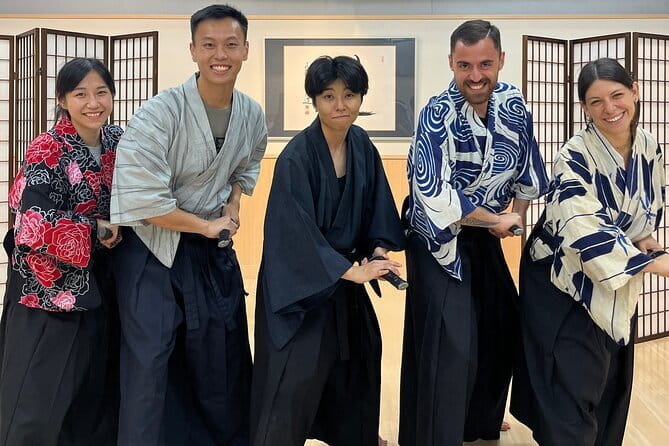
The final photo adds another keepsake. You wear the samurai attire, and a commemorative image is taken with the samurai. Since the instructor is willing to take photos, you can concentrate on the moment instead of managing your phone.
Together, the certificate and photograph give the experience a satisfying finish. The class begins with etiquette and preparation, moves through practice, then ends with something tangible to take home.
How the teaching and language support work
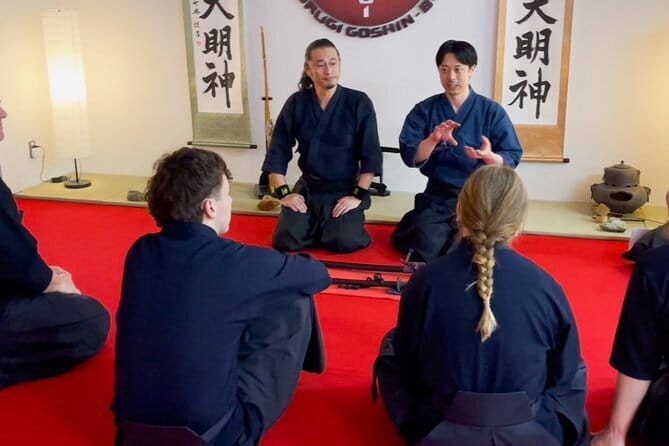
The experience is offered in English. The included guide explains sword skills, Bushido, and samurai history, and past sessions have included English translators. This matters because sword instruction depends on precise wording. A vague explanation of foot position or timing can make a movement hard to follow.
The strongest praise has focused on clear instruction, welcoming instructors, and translator support. One session specifically highlighted the help given while learning the first form. Another praised the instructors and translators for making people feel comfortable.
You should still expect traditional terms and unfamiliar movements. Ask questions whenever something is unclear. The private format allows you to do that, and the instructor is happy to answer as many questions as you like.
The warm teaching style also makes this suitable for different ages. The experience has been recommended for all ages, and most people can participate. That does not mean every part will suit every child or adult, but the instruction is designed to welcome newcomers rather than assume prior sword training.
Is $85.66 good value for two hours?
At $85.66 per person, this is not the cheapest cultural activity in Tokyo. The value comes from the amount packed into the two hours and the fact that the session is private for your group.
Your fee covers uniform rental, English instruction, a live sword demonstration, meditation, wooden sword training, heavy-stick work, silent walking, one combat kata, controlled one-on-one practice, matcha, sweets, a photo, and a personalized certificate. You are paying for teaching and attention, not just admission to a room.
The private setup is the key price question. If you only want to wear samurai clothing and take pictures, you can find simpler options that cost less. If you want an organized lesson with direct instruction and cultural context, the price is easier to justify.
The experience is also booked an average of 37 days ahead. That suggests you should not leave it until the final days of a Tokyo visit, especially because two participants are required. Free cancellation is available up to 24 hours before the start time, but changes or cancellations inside that window are not refunded.
Who should book this experience?
I would recommend this for first-time visitors who want an activity with real participation rather than another viewing stop. It suits couples, families, friends, and small private groups who like Japanese culture, martial arts, or hands-on learning.
It is especially good for:
- People curious about Bushido and samurai etiquette
- Beginners who want patient, direct instruction
- Families seeking a memorable activity for different ages
- Visitors who value a certificate and photograph
- Anyone interested in the connection between mental focus and physical technique
You may want to skip it if you only have time for a major Tokyo landmark, dislike structured physical activity, or want advanced martial arts training. It is an introduction, not a full course in Koryu Kenjutsu or a recognized rank examination.
Should you book Samurai Training in Tokyo?
Book it if you want to spend two hours learning how samurai practice was shaped by discipline, respect, calm breathing, and controlled movement. The wooden sword drills and combat kata provide the action, while meditation, etiquette, matcha, and the certificate give the session a broader cultural frame.
I would book well ahead, bring at least one other participant, and arrive ready to listen carefully rather than simply pose with a sword. At $85.66, the activity makes the most sense for you if personal instruction and a private setting matter more than finding the lowest-cost photo opportunity.
FAQ
Where does the samurai training take place?
The experience begins and ends at Samurai Sword Tokyo, 4-chōme-2-1 Kōjimachi, Chiyoda City, Tokyo 102-0083, Japan. The location is near public transportation.
How long does the experience last?
The activity lasts approximately two hours.
Is the experience private?
Yes. Only your group participates, and you can ask the instructor as many questions as you like.
Is the class conducted in English?
Yes. The experience is in English, and English translator support has also been used during instruction.
Do beginners need previous sword training?
No. The class is described as beginner-friendly, and most people can participate.
Are samurai clothes included?
Yes. Samurai uniform rental is included in the price.
What food and drink are provided?
You receive matcha green tea and traditional Japanese sweets during the break.
What is the cancellation policy?
You can cancel up to 24 hours before the experience begins for a full refund. Cancellations or changes made less than 24 hours before the start time are not accepted for a refund.
Just added in Tokyo
- Manga Lesson with a Professional Japanese Manga Artist in Nakano★ 5.0 · 77 reviews
- Making a bento box with cute character look in Japan★ 5.0 · 15 reviews
- Tokyo/Ikebukuro Manga drawing workshop by pro-Manga artists★ 5.0 · 65 reviews
- Luxury Tokyo Sake, Cocktail, Whisky and Pairing Tour★ 5.0 · 18 reviews
- Tokyo Ueno Food & Nature & Localtown Tour: 10Dishes+ Drinks★ 5.0 · 34 reviews
- Make Your Own Bonsai with a Professional Bonsai Artist in Tokyo★ 4.5 · 18 reviews
- Make Traditional Nerikiri Sweets & Matcha experience in Shibuya★ 5.0 · 130 reviews
- Daikoku Parking Tokyo Drift & APIT Car Meet JDM Culture Tour★ 5.0 · 79 reviews
Castles and Historic Sites, compared.
Imperial Palace and Shogun Historical Walking Tour
Read our review →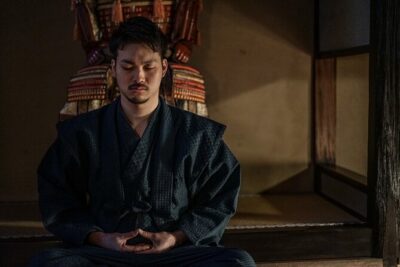
Tokyo Castle & Imperial PalaceーShogun Walking Tour
Read our review →
Nijo-jo Castle and Ninomaru Palace Guided Tour
Read our review →
Samurai Ninja Museum Guided tour and Experience
Read our review →Browse the lists this tour appears in