
Reviewed · COOKING CLASSES
Sushi Cooking Class: AKEMI’s SUSHiKiTCHEN in Tokyo
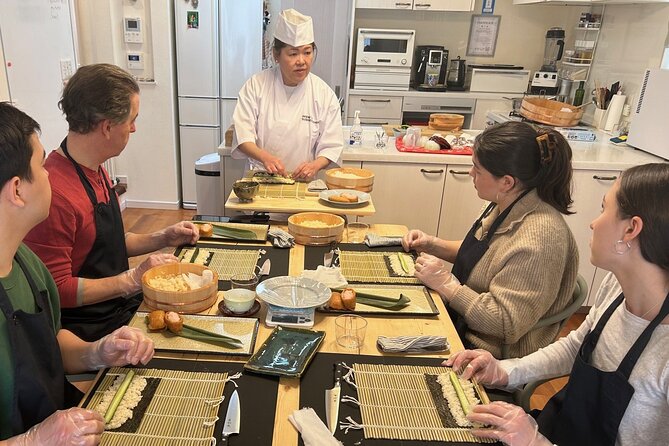
Sushi makes more sense when you make it. AKEMI’s SUSHiKiTCHEN brings you into chef Akemi’s Tokyo home for a small-group lesson that covers four types of sushi, Japanese food culture, and the proper way to enjoy what you create. I especially like the personal setting and the care put into the ingredients, including rice ordered from a Kyoto shop founded in 1787. The main thing to consider is the price, $105.68 per person, which is fair for a hands-on class but higher than simply eating sushi at a neighborhood restaurant.
The class lasts about two and a half hours and is limited to a maximum of six people, with lessons capped at five students according to the description. That means you should receive real help rather than watch a demonstration from the back of a crowded room. I also like that the class takes place in a quiet residential part of Tokyo, though you will need to make your own way to Sasazuka and return to the same meeting point.
In This Review
- Key points to know before booking
- Why a Tokyo home is the right place to learn sushi
- Meeting Chef Akemi and learning the basics
- The ingredients: Kyoto rice and fish from Tokyo markets
- Making four types of sushi by hand
- Eating the sushi you prepared
- Japanese etiquette and food culture, not just cooking
- Is $105.68 a good value?
- Who will enjoy this class most?
- The practical call: should you book it?
- FAQ
- Where does the sushi cooking class take place?
- How long does the experience last?
- How many people can join the class?
- How many types of sushi will I make?
- Is previous sushi-making experience required?
- Who teaches the class?
- Where do the ingredients come from?
- Does the class end at the same place where it begins?
- Can I cancel for a full refund?
Key points to know before booking
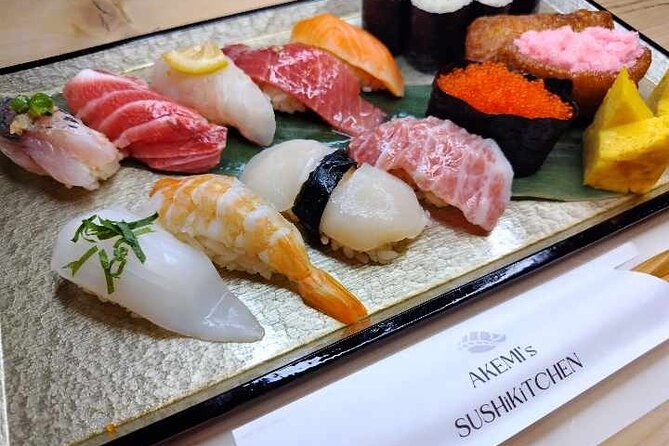
- Four sushi styles in one lesson: You prepare four types of sushi, then eat the meal you made yourself.
- Chef Akemi’s professional training: She has seven years of restaurant experience in Japan and completed the Edomae Sushi Technique Acquisition Course at Tokyo Sushi School.
- Specially sourced ingredients: The sushi rice comes from Hachidaime Gihey in Kyoto, established in 1787, while the fish is sourced from the Toyosu and Tsukiji markets.
- A true home setting: The lesson takes place in Akemi’s Tokyo home, in a quiet residential area rather than a restaurant or tourist attraction.
- Small class size: The activity allows a maximum of six people, with plenty of personal guidance promised in the small-group format.
- Flexible cancellation: You can receive a full refund if you cancel at least 24 hours before the local start time.
Why a Tokyo home is the right place to learn sushi
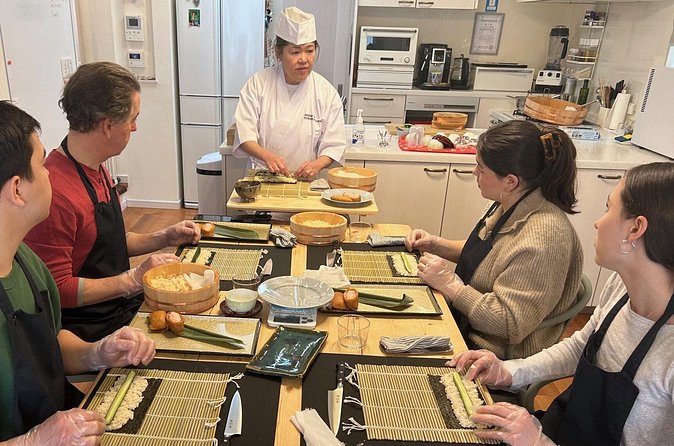
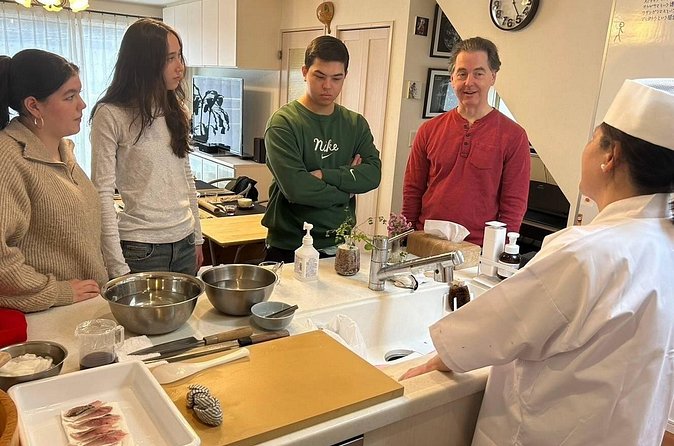
A sushi restaurant can show you the finished product. This class lets you see the work behind it. You enter the home of your chef host, settle into a more relaxed setting, and learn by doing instead of simply watching a chef work across a counter.
That setting matters. Sushi can seem formal, even mysterious, when you encounter it in a polished restaurant. At home, the lesson is designed to make the techniques approachable. You get personal instruction, time to ask questions, and a chance to correct your method before moving on.
The location is in Sasazuka, in Shibuya, at Tamanosato Sasazukaten, 1-chōme-56-18, Tokyo 151-0073. It is near public transportation, but this is not a central sightseeing stop such as Asakusa or Shibuya Crossing. Plan your route before the class, especially if you are working around other timed activities.
The quiet residential setting is part of the appeal. You see a more ordinary side of Tokyo, away from the neon and major shopping streets. The tradeoff is that the class requires a little more planning than an activity directly beside a major station or landmark.
More Cooking Classes in Tokyo
- Sushi Making Tokyo Roll and Authentic Japanese Sushi Class
★ 5.0 · 3,971 reviews - Tokyo: Roll and Authentic Sushi Making Class in Asakusa
★ 4.9 · 1,957 reviews - Tokyo Shinjuku Chopsticks Making Class
★ 5.0 · 1,763 reviews
Meeting Chef Akemi and learning the basics
Chef Akemi brings both restaurant experience and formal sushi training to the class. She has worked in Japan’s restaurant industry for seven years and completed the Edomae Sushi Technique Acquisition Course at Tokyo Sushi School.
That background gives the lesson a useful balance. You are not simply learning a casual home recipe with no wider context. You are also not being pushed through a rigid professional certification class. The stated aim is an enjoyable and educational session, with explanations in English and plenty of guidance for first-timers.
Akemi’s partner, Dan, is also part of the welcoming home environment. A positive impression of both hosts is one of the strongest themes attached to the class. That matters because a cooking lesson depends as much on the tone of the room as on the recipe. If you feel comfortable asking for help, you are more likely to learn and enjoy the process.
The class also introduces Japanese food culture beyond the mechanics of rolling or shaping sushi. You learn essential sushi terms, the background of the dish, and traditional eating etiquette. Even someone familiar with sushi may pick up useful details here, since ordering and eating sushi properly involves its own vocabulary and customs.
The ingredients: Kyoto rice and fish from Tokyo markets
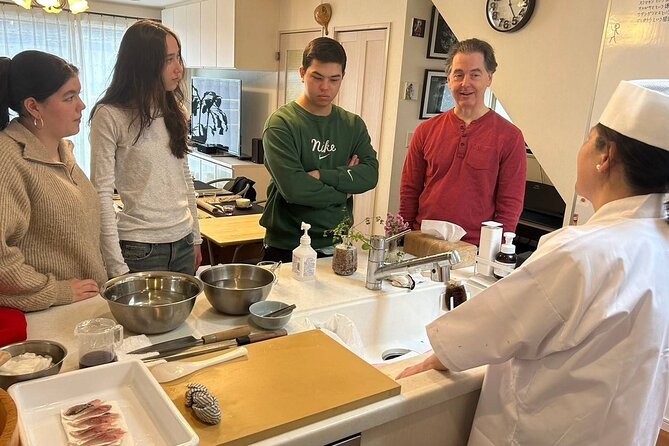
Ingredient quality is one of the clearest reasons this class costs more than a basic cooking workshop. Akemi uses blended rice specially ordered from Hachidaime Gihey in Kyoto, a rice shop with roots going back to 1787.
Rice is not a minor part of sushi. It supplies the texture, balance, and structure that hold each piece together. The class gives you a chance to work with rice selected for sushi rather than treating it as an afterthought. You also learn how preparation affects the final result, although the supplied details do not specify every cooking step.
The fish, called neta in sushi terminology, comes directly from Tokyo’s Toyosu and Tsukiji fish markets. That connection ties the class to two of the city’s most important seafood centers. The ingredient list is not generic, and the emphasis on fresh fish helps explain why the finished meal is more than a simple craft project.
You should still keep your expectations realistic. The class information does not name the exact fish or fillings used on your particular date. What you do know is that Akemi sources the fish from Toyosu and Tsukiji and selects high-quality ingredients for the lesson.
Making four types of sushi by hand
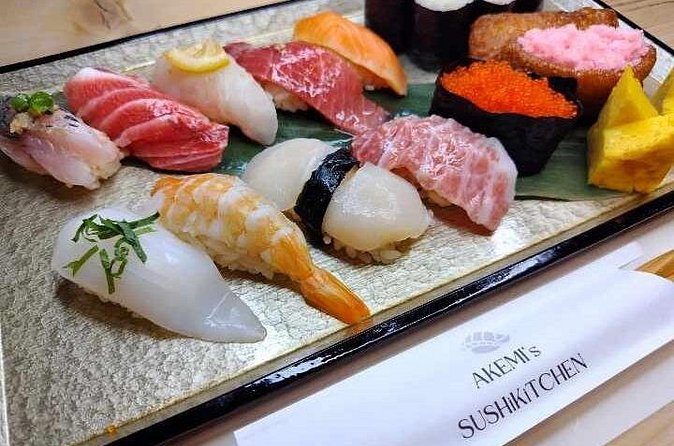
The practical heart of the activity is preparing four different kinds of sushi. The description does not name each style, so you should not book expecting a specific item such as sushi rolls, nigiri, or temaki unless Akemi confirms that in advance.
What is clear is that you will learn several techniques rather than repeating one simple shape. That variety gives the class more value. You can compare how different forms are assembled, handled, and eaten, and you leave with a broader understanding of what sushi can be.
The format is hands-on. You make your own meal with instruction from Akemi, rather than receiving a plate prepared entirely by someone else. For a beginner, that means the class is not about making perfect restaurant pieces on the first attempt. It is about learning the basic movements, understanding the ingredients, and gaining enough confidence to recognize good technique.
A maximum of six people keeps the scale manageable. The lesson is described as a small-group class with a maximum of five students, while the additional activity details allow up to six total participants. Either way, this is far smaller than a large demonstration. You should have a reasonable chance to see the technique clearly and receive individual help.
The pace is also likely to feel more useful than rushed. At two hours and 30 minutes, the session has time for instruction, preparation, cultural explanation, and the final meal. It is long enough to teach something meaningful, but short enough to fit into a day of sightseeing.
A completely different kind of day out:
- Tokyo Disney Resort – Tokyo Disneyland & Tokyo DisneySea Park Tickets
★ 4.8 · 99,488 reviews - SHIBUYA SKY Ticket
★ 4.7 · 46,509 reviews - JR Whole Japan Rail Pass
★ 4.8 · 29,150 reviews - Mt Fuji and Hakone 1-Day Bus Tour Return by Bullet Train
★ 5.0 · 26,383 reviews
Eating the sushi you prepared
The class ends with a meal made by the participants. That final step is important. You are not only practicing a technique and then leaving with unfinished food. You sit down to enjoy the results, which gives the lesson a natural finish.
I like this format because the meal becomes a built-in test of what you learned. You can see how the rice, fish, and shaping work together. You also gain a better sense of sushi as a complete dish instead of a collection of decorative pieces.
The meal should be especially satisfying for anyone who enjoys food with a story behind it. You know where the rice came from, where the fish was sourced, and how much work went into shaping each type. That knowledge changes the way you taste the finished sushi.
The activity description does not specify whether drinks, extra dishes, or take-home food are included. You should therefore treat the prepared sushi meal as the main food component and ask the provider directly if you need details about dietary restrictions or additional menu items.
Japanese etiquette and food culture, not just cooking
A restaurant meal can teach you what sushi tastes like. This class also explains how sushi fits into Japanese culture. You learn the terminology used around sushi and hear about the dish’s development over time.
The etiquette section adds practical value for the rest of your trip. You may visit sushi restaurants several times in Japan, and knowing basic vocabulary and eating customs can make those meals less intimidating. You do not need to memorize a long rulebook. A few clear explanations can help you understand what you see at the counter and make more confident choices.
The class also has value for people who already know Japanese food. The description notes that even Japanese participants have learned more about their own food culture through the lesson. That suggests the class is not limited to visitors with no previous sushi experience.
Still, the amount of cultural discussion may vary with the group and the questions people ask. If you want a lecture focused mainly on sushi’s history, this may not be the right format. The cultural material supports the cooking lesson rather than replacing it.
Is $105.68 a good value?
At $105.68 per person, this is not the cheapest way to eat sushi in Tokyo. If your only goal is a full meal, you can find more economical choices. The price makes more sense when you count the instruction, the small group, the home setting, the professional training, and the quality of the ingredients.
You are paying for access to a chef’s time. A class of five or six allows Akemi to watch your technique and offer corrections. That personal attention is difficult to get in a large cooking school.
You are also paying for a meal with a clear connection to Japanese food culture. The rice from Hachidaime Gihey and fish from Toyosu and Tsukiji are useful details, not decorative marketing points. They show that the food has been selected with care.
I would consider the price worthwhile if you want a memorable food activity and enjoy learning by hand. It is less attractive if your schedule is tight, your budget is very limited, or you prefer to spend your money on a high-end sushi dinner rather than a class.
The average booking time is 49 days ahead, which suggests you should not leave this activity until the last minute if your dates are fixed. Book early enough to fit it into your Tokyo plan, especially if you are visiting during a busy season.
Who will enjoy this class most?
This lesson suits first-time sushi makers particularly well. You do not need previous sushi experience, and the class is designed to give you guidance as you work.
It is also a strong choice for people who enjoy meeting local hosts in a personal setting. You are entering a private home, not simply attending a commercial kitchen session. That can make the experience feel more connected to everyday Tokyo life.
Food-focused visitors will appreciate the attention to rice, fish markets, terminology, and etiquette. Families and couples may also like the shared activity, though the information provided does not specify a minimum age or child policy. Confirm those details before booking with young children.
You may want to choose another activity if you need a fully specified menu, have strict dietary requirements, or dislike home-based experiences. The exact four sushi types are not listed, and the class centers on seafood sourced from Tokyo’s fish markets.
The mobile ticket is convenient, and confirmation arrives at booking. Service animals are allowed, and the meeting point is near public transportation. These details make the class fairly simple to fit into a Tokyo itinerary, though you remain responsible for reaching Sasazuka on time.
The practical call: should you book it?
I would book AKEMI’s SUSHiKiTCHEN if you want more than a sushi meal. The strongest reasons are the small class, Akemi’s restaurant and sushi-school background, the carefully sourced ingredients, and the chance to eat food you prepared yourself.
I would skip it if you are looking for a quick, inexpensive meal or a class with a fully published menu. The $105.68 price is a commitment, and the residential location requires planning.
For most food-minded visitors, the class offers a thoughtful use of two and a half hours in Tokyo. You leave with practical techniques, a better grasp of sushi etiquette, and a clearer idea of why rice and fish quality matter. That is a useful souvenir, and one you can keep using long after the last piece is gone.
FAQ
Where does the sushi cooking class take place?
The class takes place in Chef Akemi’s home in Tokyo, at Tamanosato Sasazukaten, 1-chōme-56-18, Sasazuka, Shibuya, Tokyo 151-0073, Japan.
How long does the experience last?
The sushi lesson lasts approximately two hours and 30 minutes.
How many people can join the class?
The activity allows a maximum of six participants. The lesson description also says classes are limited to a maximum of five students.
How many types of sushi will I make?
You will learn how to make four types of sushi. The specific types are not listed in the available information.
Is previous sushi-making experience required?
No. The class is suitable for people who have never tried making sushi and includes personalized instruction.
Who teaches the class?
Chef Akemi teaches the class. She has seven years of experience in Japan’s restaurant industry and completed the Edomae Sushi Technique Acquisition Course at Tokyo Sushi School.
Where do the ingredients come from?
The rice is specially ordered from Hachidaime Gihey in Kyoto, established in 1787. The fish, called neta, is sourced from the Toyosu and Tsukiji fish markets.
Does the class end at the same place where it begins?
Yes. The activity ends back at the meeting point.
Can I cancel for a full refund?
Yes. You can cancel for a full refund if you do so at least 24 hours before the experience start time. Changes or cancellations made less than 24 hours before the local start time are not accepted for a refund.
Just added in Tokyo
- A One-of-a-Kind Sushi Experience in a Special Place of Japan★ 5.0 · 15 reviews
- Tokyo Cute Bento Cooking Class – Make a Kawaii Character Lunchbox★ 5.0 · 126 reviews
- Japanese Home Cooking Class & Walk in Todoroki Temple Tokyo★ 5.0 · 88 reviews
- Japan Tokyo Tower Observatory Deck E-Ticket★ 4.0 · 34 reviews
- Catch a Baseball Game in Tokyo with a Local – Tickets Included★ 5.0 · 24 reviews
- JDM Experience with Fast&Furious RX-7 (English speaking Driver)★ 5.0 · 57 reviews
- Tokyo Private Day Tour by Car with English speaking Driver Guide★ 4.0 · 29 reviews
- Japan Classic 10 Day – One Life Adventures★ 5.0 · 129 reviews
Cooking Classes, compared.
Sushi Making Tokyo Roll and Authentic Japanese Sushi Class
Read our review →
Roll and Authentic Sushi Making Class in Asakusa
Read our review →
Ramen Cooking Class at Ramen Factory in Kyoto
Read our review →
Sushi Making Class in a Happi Coat near a Famous Spot
Read our review →
Sushi Making Osaka Roll and Authentic Japanese Sushi Class
Read our review →
Tokyo Sushi Making Class in Tsukiji with Professional Chef
Read our review →
Ramen & Gyoza Cooking Class in Tokyo with Local Supermarket Visit
Read our review →Browse the lists this tour appears in