
Reviewed · KIMONO AND CULTURAL DRESS
The Art of Geisha: Exclusive Show & Gion Walking Tour
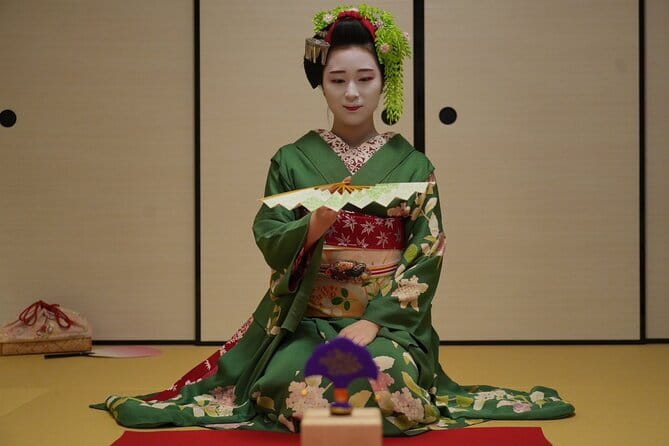
A maiko performance beats a hurried Gion glimpse. This Kyoto experience combines a short walk through Gion with a private-style show by a geisha apprentice, giving you a planned meeting instead of hoping to spot one on the street. I like the tiny group size, capped at six, and the chance to ask questions directly while enjoying tea and snacks. The main drawback is the short length: at roughly one to two hours, this is a focused cultural encounter, not a full afternoon tour of Kyoto.
The 3 p.m. start works well after a morning of temples, though you will need to reach the statue of Izumo-no-Okuni in Kawabatacho on time. I also like that an English-speaking guide helps explain the customs and translates the conversation. Just remember that children aged six and under cannot join, and the $124.21 price is significant for a compact experience.
In This Review
- Key points to know before booking
- Why this Gion experience feels different
- Starting at the Izumo-no-Okuni statue at 3 p.m.
- Inside the small tea house setting
- What you see from the maiko performance
- The conversation and Japanese game
- What the guide adds to the afternoon
- Is $124.21 a fair price?
- Timing, transport, and the end point
- Who should book this experience?
- Booking flexibility and practical limits
- Should you book the Art of Geisha experience?
- FAQ
- Where does the tour begin?
- What time does the experience start?
- Where does the tour end?
- How long does the experience last?
- How many people can join?
- Is a geisha performance included?
- Are tea and snacks included?
- Can I cancel for a full refund?
Key points to know before booking
- The group never exceeds six people, so the maiko conversation feels personal rather than staged for a crowd.
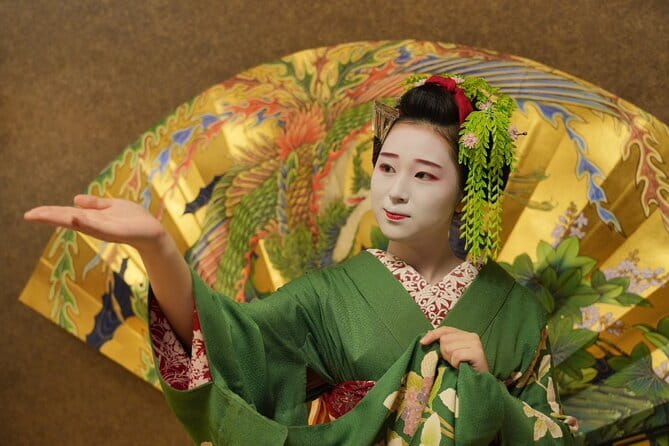
- You watch a maiko perform traditional arts, then join a traditional Japanese game with her.
- Tea and snacks are included, adding a calm social setting to the show.
- Guides such as Ai and Yoshino have received especially warm praise for their friendly explanations and help with interpretation.
- The walk begins in Gion at 3 p.m. and ends at Hangesho, a different address in Higashiyama.
- Free cancellation is available up to 24 hours before the start time, which gives you some useful flexibility.
Why this Gion experience feels different
Gion is famous for geisha culture, but the world behind its wooden facades can be hard to understand from the street. You may see a maiko hurrying to an appointment, but that brief glimpse tells you little about her training, arts, or daily work.
This experience gives you a proper introduction. You begin with a guide in the Gion district, learn about the area and the geisha tradition, and then attend a performance by a maiko, the apprentice who is still training to become a geiko, or geisha. The setting allows time for conversation, which is the real reason to consider this tour.
I like the balance between watching and taking part. You are not simply seated in front of a performance. After the dance and other traditional arts, you can ask questions and test your skill in a Japanese game with the maiko. That small exchange helps explain the human side of a profession that can otherwise seem distant and mysterious.
The experience is also more respectful than trying to photograph maiko on the streets of Gion. You meet her in an arranged setting, where conversation and performance are expected. That makes the encounter more comfortable for you and avoids treating the neighborhood as a stage.
More Kimono Experiences in Kyoto
- [Kyoto & Nara Day Tour] Sagano Scenic Railway & Nara Park & Fushimi Inari Taisha Thousand Torii Gates & Togetsukyo Bridge & Bamboo Grove & Kimono Forest (Departing from Osaka)
★ 4.9 · 10,942 reviews - Kyoto Geisha Walking Tour: Gion District & Hidden Gems
★ 4.7 · 3,273 reviews - Kyoto: Gion Magical Night Walking Tour with Geisha Trivia
★ 4.9 · 2,393 reviews
Starting at the Izumo-no-Okuni statue at 3 p.m.
Your meeting point is the statue of Izumo-no-Okuni in Kawabatacho, in Kyoto’s Higashiyama Ward. The advertised start time is 3 p.m., so plan to arrive early enough to find the statue and settle in. The location is near public transportation, but your confirmation should be checked carefully for the exact meeting instructions.
Beginning outdoors is useful. You first get some context about Gion rather than walking straight into a tea house with no explanation. The guide introduces the district and the role of maiko and geiko in Kyoto’s traditional entertainment culture.
The walk is not presented as a long sightseeing route. The total experience lasts about one to two hours, and the Gion portion is a brief orientation before the show. If you want a detailed architectural tour, visits to several temples, or a long evening stroll through the lanes, this will feel too limited.
Still, the short walk serves a purpose. It helps you see the geisha district as a working neighborhood, not just a backdrop for photographs. A guide such as Ai or Yoshino can also answer basic questions before you meet the maiko, leaving you better prepared to notice the details of the performance.
Inside the small tea house setting
The show includes Japanese tea and snacks, which gives the meeting a relaxed rhythm. You can watch the maiko perform while having something small to eat, rather than sitting through a formal stage production in a large hall.
The exact tea house setting may vary, but the experience is designed around intimacy. With a maximum of six people, you should have a much clearer view and a better chance to speak than you would in a large cultural show. Some bookings have been especially small, with one maiko meeting only a few people. That is a major part of the value.
The setting also matters because geisha arts are built around close social interaction. The performance is only one part of the tradition. Conversation, manners, music, dance, games, and the careful presentation of tea all belong to the same world of hospitality.
You should keep your expectations realistic. This is not a long theatrical production with a full cast and elaborate stage effects. It is a personal cultural presentation, and the strongest moments are likely to come from the direct exchange rather than the length of the dance.
What you see from the maiko performance
The maiko performs traditional arts during the central part of the experience. The supplied details do not specify the exact dances, instruments, or number of pieces, so you should not expect a fixed program beyond the advertised performance.
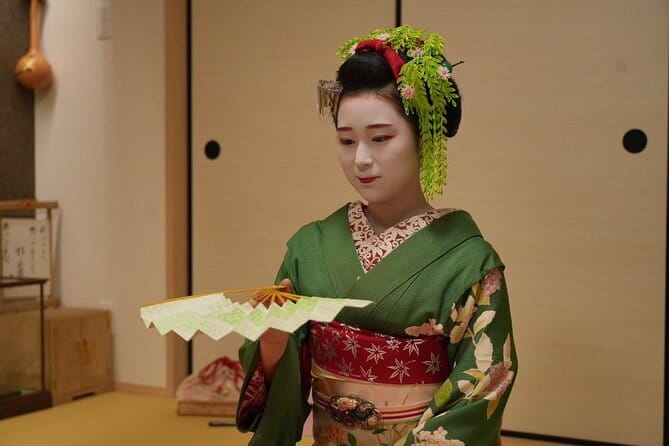
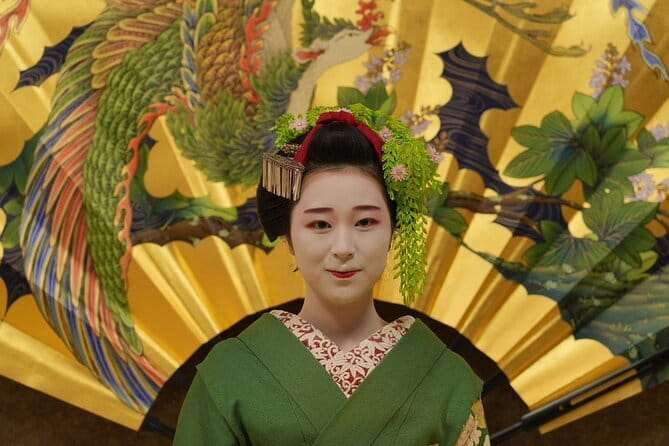
What you can count on is an opportunity to observe the training and presentation expected of a geisha apprentice. The formal clothing, hairstyle, movements, and controlled pace are all part of the experience, but the guide’s explanation helps you understand why these details matter.
This is where the tour’s educational side earns its place. The guide explains how many years maiko train and how demanding the path can be. That context turns a pretty performance into something more meaningful. You begin to see the discipline behind the graceful movements.
The small room also lets you notice small details that could disappear in a crowded theater. You may find yourself watching the hands, posture, expressions, or transitions between movements. The experience is not designed for hurried sightseeing. It rewards quiet attention.
Photography rules and performance etiquette are not specified in the information provided, so ask the guide before taking pictures. A polite question at the beginning is better than guessing, especially in a traditional setting.
More Walking Tours in Kyoto
- Kyoto: Gion Geisha District Walking Tour – Stories of Geisha
★ 4.7 · 2,187 reviews - Night Walk in Gion: Kyoto’s Geisha District
★ 4.5 · 2,003 reviews - Kyoto Gion Geisha District Walking Tour – The Stories of Geisha
★ 5.0 · 1,441 reviews - Nishiki Market Brunch Walking Tour (7 Tastings + Brunch)
★ 5.0 · 1,355 reviews
The conversation and Japanese game
For many people, the best part comes after the formal performance. You can speak with the maiko and ask questions through the English-speaking guide. This is your chance to ask about training, the difference between a maiko and geiko, or the customs you have just seen.
The guide’s role is important here. Ai has been praised for her friendly manner and strong understanding of Kyoto, while Yoshino has been singled out for guiding the Gion walk and helping with interpretation. Having a guide who can explain both sides of the conversation makes the meeting more natural.
You also get to play a traditional Japanese game with the maiko. It is a small feature, but it changes the mood. Instead of remaining a silent observer, you take part in a playful exchange. One participant even managed to beat the maiko, which suggests the game is meant to be fun rather than a serious test.
That interactive moment makes this experience a good choice for couples, friends, and families with older children. It also gives shy visitors an easy way to join in. You do not need special knowledge or skill. The guide can explain what to do.
The conversation time may depend on the group size and the pace of the session. A group of four or fewer should naturally allow more individual questions than a full group of six. If speaking directly with the maiko is your main reason for booking, the six-person limit is one of the most useful details to consider.
What the guide adds to the afternoon
The English-speaking guide is not just there to lead you from one address to another. The guide provides the bridge between the Gion neighborhood, the performance, and the conversation.
That matters because geisha culture comes with unfamiliar terms and customs. Without explanation, you might notice the costume and dance but miss the difference between a maiko and a geiko, or misunderstand the years of training involved. A good guide gives you enough background without turning the afternoon into a lecture.
The named guides connected with this experience, including Ai and Yoshino, have been praised for being warm, helpful, and able to explain Kyoto clearly. Those qualities are especially useful in a small group, where the guide can respond to your questions rather than reciting a fixed script.
The guide can also help with practical details. If you are unsure when to applaud, where to sit, or how to phrase a question, ask. A little guidance helps you relax and behave appropriately.
Because the tour is short, you should not expect a broad survey of Kyoto’s history. The guide’s focus is Gion and the maiko experience. I see that as a strength if you want a clear theme, but a limitation if you want a general introduction to the city.
Is $124.21 a fair price?
At $124.21 per person, this is not a budget activity. You are paying for more than a short neighborhood walk. The price covers the maiko performance, tea and snacks, an English-speaking guide, a very small group, and access to a cultural setting that is not easy to arrange independently.
The six-person maximum is the key value point. A cheaper, larger show might provide a performance, but it may not give you a real chance to ask questions or play a game with the performer. Here, the personal exchange is what separates the experience from a standard cultural demonstration.
The price makes more sense if geisha culture is high on your Kyoto wish list. For someone who has always wanted to see a maiko perform, the combination of access, explanation, and conversation may justify the cost. The experience has also been described as a highlight of a Japan visit and a long-awaited personal milestone.
On the other hand, the value is weaker if you mainly want a long Gion walk. The walking portion is limited, and the activity lasts only about one to two hours. You would need another plan for the rest of the afternoon.
I would place it in the special-occasion category. It is a better use of your budget than a generic sightseeing walk if you care about this subject, but it is not the right pick for every Kyoto itinerary.
Timing, transport, and the end point
The tour starts at 3 p.m. and ends at Hangesho, at 535 Morishitacho in Higashiyama Ward. Since the beginning and end are different locations, do not assume you will return to the statue or your hotel.
The end point is still in the Higashiyama area, so you can continue exploring nearby afterward, but the provided details do not specify the best route from Hangesho to your next stop. Use a map before the tour and allow time to orient yourself after the experience.
The duration is listed as approximately one to two hours. That range is worth noting. A one-hour session fits easily before dinner, while a longer version may affect a restaurant reservation or evening plan.
The activity is near public transportation, and most people can participate. No special fitness requirements are stated, but you should be prepared for a walk through Gion and a change of location. Wear shoes you can walk in comfortably.
The mobile ticket is convenient. Keep the confirmation available on your phone, particularly because the meeting point is a specific statue rather than a large attraction entrance.
Who should book this experience?
I would recommend it most strongly to first-time visitors who want a respectful introduction to maiko culture without spending an entire evening at a formal show. It also suits anyone who has tried and failed to spot a maiko in Gion and wants a reliable chance to see one in an appropriate setting.
It is a good fit for:
- Couples looking for a memorable Kyoto activity
- Small groups that value conversation over a large stage show
- Visitors interested in traditional Japanese arts
- Older children who can take part respectfully
- Anyone who wants an English-speaking guide to explain the customs
It may be less suitable for young families because children aged six and under cannot join. It may also disappoint visitors expecting a long walking tour, a large-scale performance, or a complete lesson in Kyoto history.
You should also consider your comfort with a quiet, intimate setting. This is not a loud entertainment venue. The best experience comes from listening, observing, and asking thoughtful questions.
Booking flexibility and practical limits
Confirmation is provided when you book, and free cancellation is available if you cancel at least 24 hours before the 3 p.m. start time. Cancellations made less than 24 hours before the start are not refunded, and late changes are not accepted.
The activity is capped at six people, which is excellent for conversation but means spaces may be limited. The tour has had more than ten bookings in the past month, so booking ahead is sensible if your Kyoto dates are fixed.
Check the age rule before reserving. Children six and under cannot participate. The listed inclusions are the geisha show, Japanese tea and snacks, and an English-speaking guide. Any additional fees are not included.
Should you book the Art of Geisha experience?
Book it if meeting a maiko, learning about her training, and asking questions are central to your Kyoto plans. The combination of a Gion introduction, traditional performance, tea, snacks, and a game creates a personal experience that a street sighting cannot match.
I would skip it if you want a long, inexpensive walking tour or a full evening of entertainment. At $124.21, the activity asks you to pay for access and intimacy, not duration.
For the right person, that is a fair trade. Keep the group small, arrive early at the Izumo-no-Okuni statue, and treat the conversation as seriously as the performance. If you do, this compact afternoon can become one of the clearest windows into Kyoto’s geisha tradition.
FAQ
Where does the tour begin?
It begins at the Statue of Izumo-no-Okuni in Kawabatacho, Higashiyama Ward, Kyoto.
What time does the experience start?
The scheduled start time is 3 p.m.
Where does the tour end?
It ends at Hangesho, 535 Morishitacho, in Kyoto’s Higashiyama Ward.
How long does the experience last?
The experience lasts approximately one to two hours.
How many people can join?
The group has a maximum of six participants.
Is a geisha performance included?
Yes. The experience includes a performance by a maiko, who is a geisha apprentice.
Are tea and snacks included?
Yes. Japanese tea and snacks are included in the experience.
Can I cancel for a full refund?
Yes, if you cancel at least 24 hours before the scheduled start time. Cancellations made less than 24 hours before the start are not refunded.
More Show in Kyoto
- Kyoto Sumo Show with Experience & Photo, 2 Drinks Included
★ 5.0 · 941 reviews - Kyoto: Sumo Experience (with Live Show & Audience Challenge)
★ 5.0 · 519 reviews - Kyoto Gion Cultural Walk & Geisha Show with Dining Options
★ 5.0 · 518 reviews - Kyoto Gion Cultural Walk & Geisha Show with Dining Options
★ 5.0 · 483 reviews
Just added in Kyoto
- The “Golden Route” and Ancient Japan by DIAMIR Erlebnisreisen – 14-Day Tour★ 2.0 · 2 reviews
- Japan: Castles & Cuisine by G Adventures – 6-Day Kyoto to Osaka Tour★ 4.5 · 4 reviews
- Cycle Japan by Explore! – 13-Day Kyoto to Tokyo Tour★ 4.7 · 12 reviews
- Cycle Japan by Intrepid Travel – 11-Day Kyoto to Tokyo Tour★ 4.8 · 2 reviews
- Classic Japan by Intrepid Travel – 11-Day Kyoto to Tokyo Tour★ 4.4 · 14 reviews
- Ancient & Modern Japan 14-Day Tour by Exodus Adventure Travels★ 4.4 · 40 reviews
- 5 Day Cultural Adventure of Kyoto, Nara & Osaka by Tourist Journey★ 2.5 · 2 reviews
- 12 Days Kinosaki Onsen Escape: A Journey Through Japan’s Timeless Towns by UME Travel★ 4.8 · 5 reviews
Kimono and Cultural Dress, compared.
![[Kyoto & Nara Day Tour] Sagano Scenic Railway & Nara Park & Fushimi Inari Taisha Thousand Torii Gates & Togetsukyo Bridge & Bamboo Grove & Kimono Forest (Departing from Osaka)](https://media.japanvisits.com/wp-content/uploads/kyoto-nara-day-tour-sagano-scenic-railway-nara-park-fushimi-inari-taisha-thousand-torii-gates-togetsukyo-bridge-bamboo-grove-kimono-forest-departing-from-osaka-k110001-400x257.jpg)

Tokyo Asakusa Kimono&Yukata Rental at Kimono Miyabi Asakusa Station
Read our review →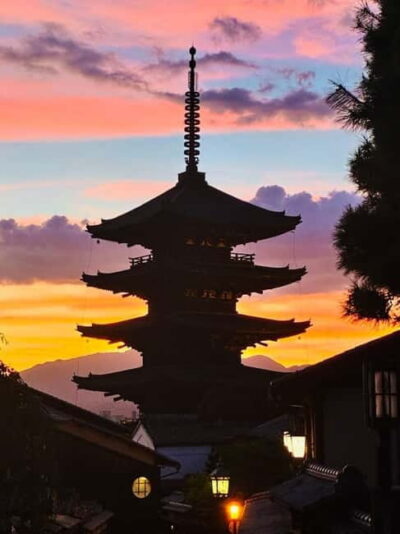
Kyoto Geisha Walking Tour: Gion District & Hidden Gems
Read our review →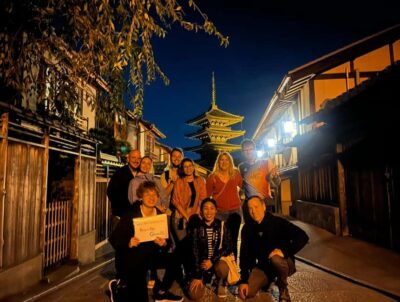
Gion Magical Night Walking Tour with Geisha Trivia
Read our review →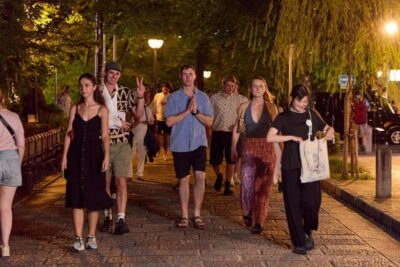
Gion Geisha District Walking Tour – Stories of Geisha
Read our review →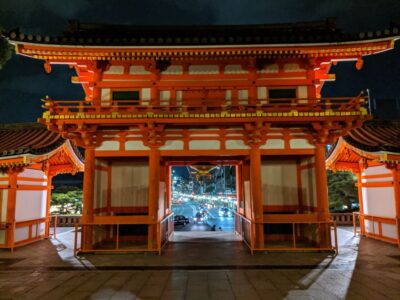
Best of Kyoto: Gion, Geisha, Pagodas & Cobblestones
Read our review →
Kyoto Kimono Rental Experience (Optional Exquisite Hair Styling/Japanese Makeup/Photography) (Ookini Kiyomizu-dera Main Store)
Read our review →Browse the lists this tour appears in