
Reviewed · MULTI-DAY TOURS THAT VISIT TAKAYAMA
Cycle Japan by Intrepid Travel – 11-Day Kyoto to Tokyo Tour Review
Japan comes into focus at bicycle speed: a river path leads you from Kyoto toward Nara, quiet roads follow the Hida River, and Tokyo’s local cycling routes reveal a city too sprawling to grasp on foot. This 11-day guided trip pairs seven days of riding with trains and time in historic towns, ending with two rides through the capital.
I like the contrast between Kyoto’s temples and Gifu’s mountain roads, and the way the route makes room for everyday Japan: a Takayama market, neighborhood canals in Gujo Hachiman and meals at local spots. The support vehicle and option to request an e-bike also make the longer rides more manageable.
The main consideration is the effort. One day covers about 70 km with roughly 800 m of climbing, and the vehicle is not available in Kyoto or Tokyo. Also, some tour information names the Noto Peninsula as a highlight, but the day-by-day route described here does not include it, so confirm that point before booking.
In This Review
- At a glance: what makes this ride different
- Kyoto by bike, from bamboo paths to Gion
- Lake Biwa and Hikone’s samurai past
- Hida River roads and the mountain-town stretch
- Tokyo by train, then by local cycling routes
- What the riding, support and accommodation are really like
- Is the $5,995 starting price good value?
- Who should book this Japan cycling tour?
- FAQ
- How many days do you cycle on this tour?
- How far do you ride each day?
- How difficult is the cycling?
- Is an e-bike available?
- What kind of bike is provided?
- What are the rooms and bathrooms like?
- What meals are included?
- Where does the tour start and end, and how large is the group?
At a glance: what makes this ride different
- Seven riding days, not eleven: The tour includes two train-transfer days and two days without cycling, giving your legs some breaks.
- The longest ride comes in the mountains: Day 7 covers about 70 km and 800 m of elevation gain, with most climbing early.
- Kyoto gets more than a quick look: You ride to Arashiyama, visit two temples and walk through Gion.
- Tokyo is explored by bike: Two rides cover districts and landmarks that are spread across the city.
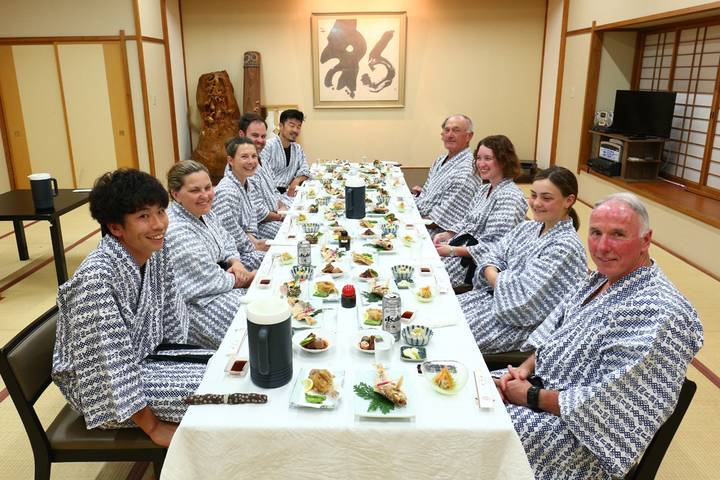
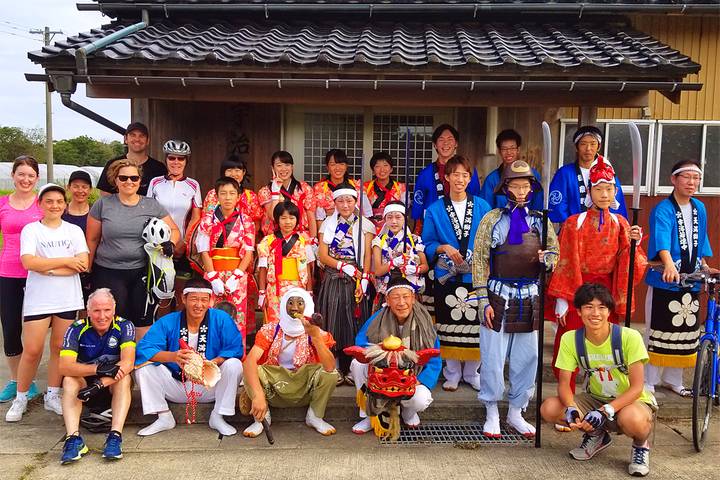
- Traditional inns are part of the trip: Two nights are in ryokans or minshukus, where futons, tatami floors and shared bathing facilities may be the norm.
- Your bike is provided: The standard bike is a Giant Escape RX3 hybrid. E-bikes are limited, cost extra and must be requested in advance.
Kyoto by bike, from bamboo paths to Gion
Your first evening starts with a 6 pm meeting with the local leader and group, followed by a walk and welcome dinner. Arriving early gives you time for a first look at Kyoto, perhaps at Nijo Castle or one of its Zen gardens. The trip begins gently, but bring comfortable walking shoes: exploring temples and older neighborhoods means plenty of time off the saddle, too.
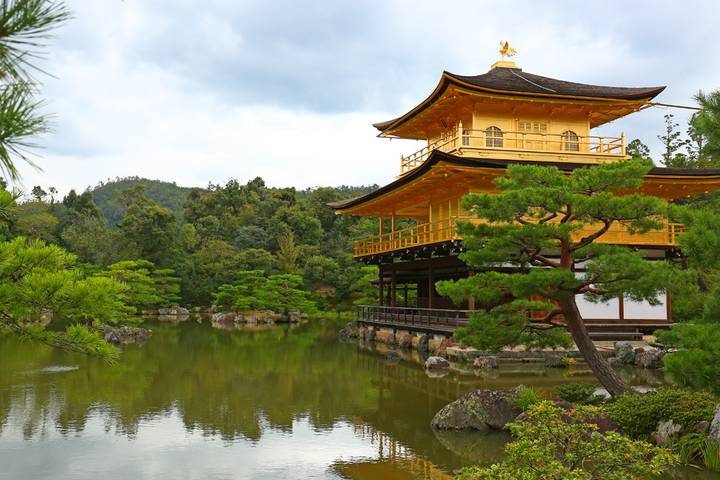
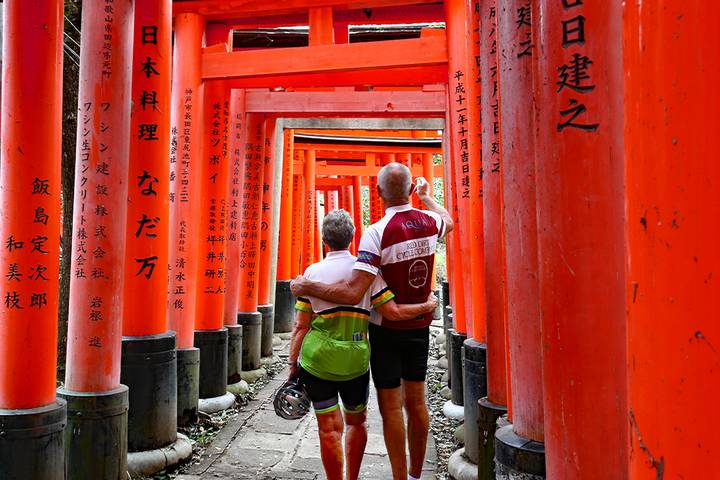
Day 2 is a useful introduction to the bike and the group. After a safety talk and test ride, you follow a dedicated path beside the Katsura River, passing traditional houses and community gardens toward Arashiyama. The bamboo forest is a famous stop, and the nearby temples give the ride more depth than a simple scenic spin.
Tenryuji and Ryoanji are included, with the latter known for its spare Zen garden. Later, you cycle across northern Kyoto and along the Philosopher’s Path before finishing in Higashiyama. An evening walk in Gion offers a chance to see the district’s old streets and perhaps geiko or maiko on their way to appointments. Treat that possibility as a bonus, not a scheduled encounter.
Day 3 takes you from Kyoto to Nara on a riverside cycling path. At Todaiji Temple, the enormous bronze Buddha is the main event, while Nara’s free-roaming deer make the park feel quite different from Kyoto’s carefully ordered temple grounds. You also stop at Nagarebashi, a long wooden bridge often used in samurai dramas, then return to Kyoto by train.
This route is a good fit if you like history with a side of movement. It also puts real distance into the first part of the trip: the Nara ride is about 50 km, mostly flat, but still a full day in the saddle.
A few more options to weigh up in Kyoto
- PERFECT KYOTO 1-Day Bus Tour
★ 5.0 · 13,518 reviews - [Kyoto & Nara Day Tour] Sagano Scenic Railway & Nara Park & Fushimi Inari Taisha Thousand Torii Gates & Togetsukyo Bridge & Bamboo Grove & Kimono Forest (Departing from Osaka)
★ 4.9 · 10,942 reviews - Kyoto: Fushimi Inari, Kinkakuji, Bamboo Grove 1 Day Bus Tour
★ 4.8 · 4,316 reviews
Lake Biwa and Hikone’s samurai past
On Day 4, a transfer takes you from Kyoto to Otsu, on the shore of Lake Biwa. The ride follows the mostly flat lake edge, with lunch in Omi Hachiman, a small former trading town on the old Nakasendo route. The water and open shoreline offer a welcome change after the dense temple districts.
The day ends in Hikone, where you visit the castle, a designated national treasure. Its feudal setting makes this more than a quick photo stop, and the free evening leaves room to find a local café or restaurant. The ride is about 56 km, so flat terrain does not mean a short day.
Day 5 brings a train journey north to Gero Onsen, a hot spring town in Gifu Prefecture. You visit Gassho Village, an open-air collection of traditional farmhouses with steep roofs and folk crafts. It is a constructed village setting rather than a working rural community, but it gives you a clear look at a building style associated with mountain life.
This is a non-cycling day, with dinner included. Use the break to rest before the longer rides ahead.
Hida River roads and the mountain-town stretch
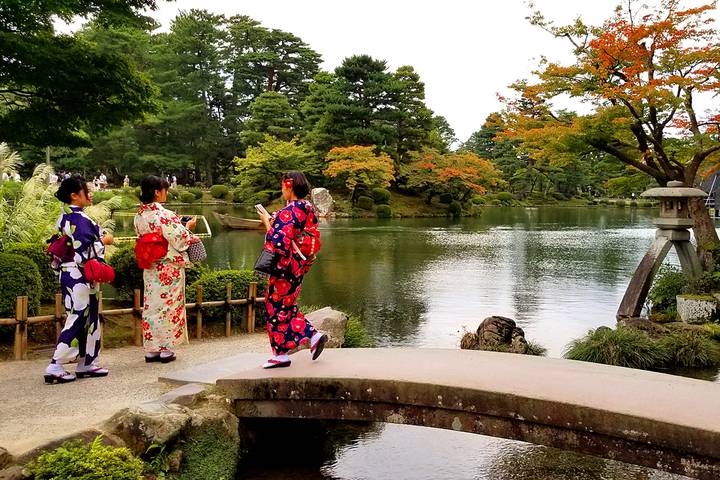
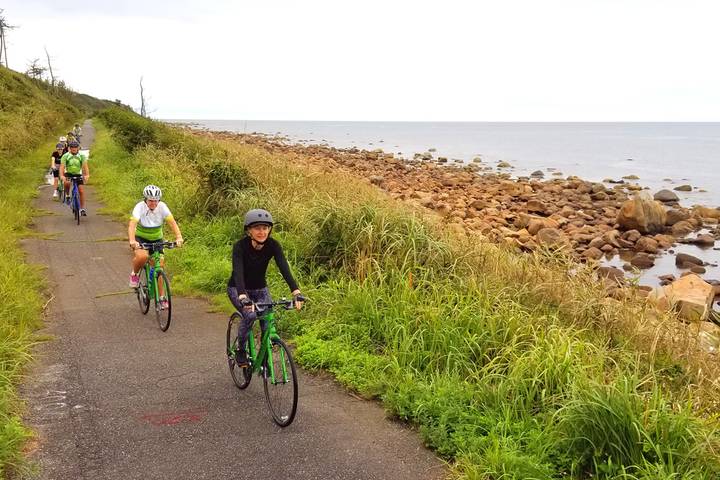
Day 6 returns you to the bike for a ride from Gero Onsen to Takayama. The road follows the Hida River through wooded hills and mountain scenery, with about 55 km of riding and 450 m of climbing. The route is described as quiet, but the elevation makes it a more substantial day than the flat lake ride.
Takayama’s preserved old town is a worthy reward. Edo-period streets hold sake breweries, handicraft shops and food stores, and arriving in the early afternoon leaves time to explore after the ride. This is one of the trip’s best chances to browse at your own pace rather than move straight from one scheduled stop to the next.
Start Day 7 early at Takayama’s morning market, where stalls sell produce, spices and handicrafts. Then comes the longest ride: about 70 km and 800 m of elevation gain to Gujo Hachiman. The climbing is front-loaded, followed by mostly downhill riding on quiet mountain roads. That profile is helpful, but it does not make the day easy. If hills are not a regular part of your riding, train for them before departure.
Gujo Hachiman is known for its canals and quiet streets, with 16th-century Hachiman Castle at the center of town. Day 8 continues mostly downhill for about 70 km to Gifu, with roughly 300 m of elevation gain. It is the last rural ride, so you get a final stretch of countryside before trading the bike for Japan’s rail network.
Gifu’s free time is a chance to recover or explore independently. The Battle of Sekigahara museum is one possible outing; shops, restaurants and izakayas offer a simpler evening. After several consecutive riding days, taking it easy is a perfectly good plan.
Tokyo by train, then by local cycling routes
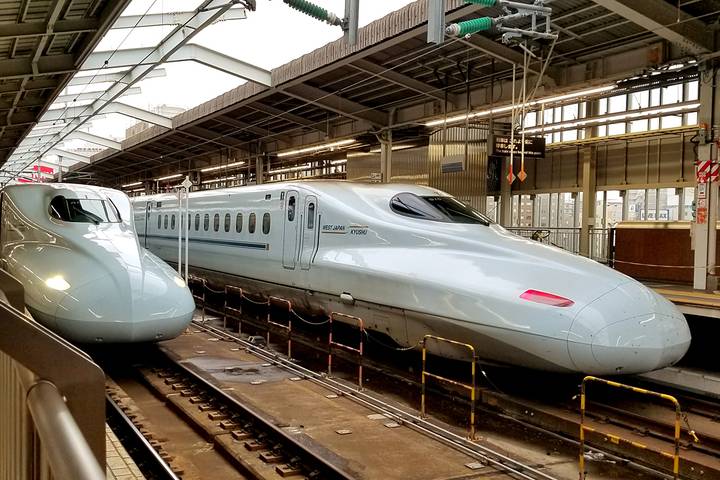
On Day 9, you leave your bike behind and take a train to Tokyo. The journey is part of the experience: Japan’s rail system makes long distances straightforward, and the changing scenery gives you a pause between the mountain region and the capital. An evening orientation walk introduces both contemporary areas and older streets.
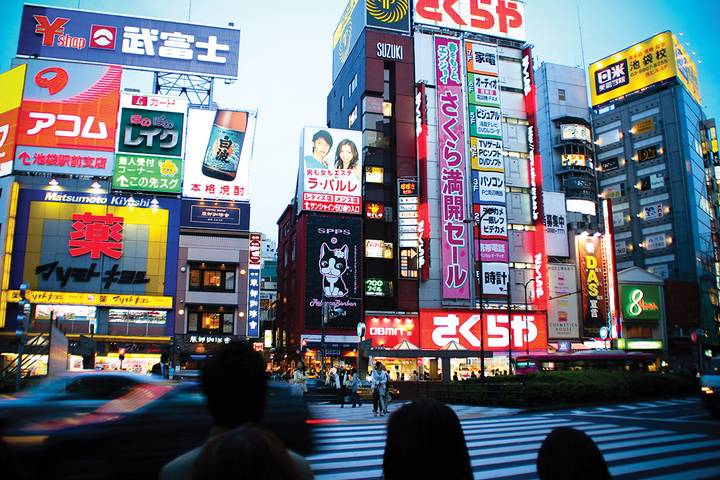
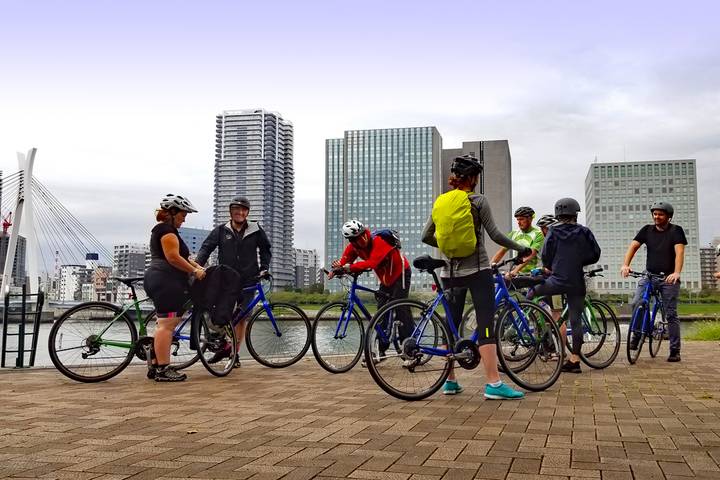
Day 10 is the city’s big cycling day, split into two rides. In the morning, you use local paths to reach Ueno Park, Akihabara, Nihonbashi and Ginza. The route combines park paths, shopping districts and the city’s gadget-heavy side, with lunch at Tsukiji Outer Market. This is an efficient way to connect places that can feel far apart when you are walking.
The afternoon ride adds the Imperial Palace, Tokyo Tower, Tsukishima and Tokyo Skytree. The day covers about 40 km, mostly flat, but there is a lot to see and the pace is shaped by group stops. You finish with an included farewell dinner, with the evening free for karaoke or a walk and drinks with the leader.
The support vehicle is not available in Tokyo, just as it is not available in Kyoto. That matters if you are used to having a pick-up option on every ride. You should be comfortable riding in a group and handling city cycling, rather than relying on a van as an easy escape.
A completely different kind of day out:
- Kyoto: Tea Ceremony in a Traditional Tea House in Kiyomizu
★ 4.9 · 3,519 reviews - Kyoto: Gion Make Your Own Chopsticks with Engraving Option
★ 5.0 · 3,465 reviews - Kyoto Nara Day Trip │ Kiyomizu-dera Temple + Fushimi Inari-taisha Shrine + Nara Park (Departing from Osaka/Kyoto)
★ 4.7 · 3,408 reviews - Kyoto Geisha Walking Tour: Gion District & Hidden Gems
★ 4.7 · 3,273 reviews
What the riding, support and accommodation are really like
The stated physical rating is medium, and the daily figures make that more useful than the label alone. Rides range from about 40 km to 70 km, with the steepest day on the Takayama to Gujo Hachiman leg. You need to be confident riding both independently and with a group; a reasonable general fitness level is helpful, but hill practice is especially wise.
A support vehicle accompanies the group outside Kyoto and Tokyo. It can carry luggage and provide a break from riding, though it can take a maximum of four cyclists at a time. One leader rides with the group and another drives the vehicle. On paths where the vehicle cannot follow, a group member may be asked to ride at the back.
The standard bike is a Giant Escape RX3 hybrid with flat handlebars and 27 gears. E-bikes may be available for an extra fee, but numbers are limited and a request does not guarantee one. If you prefer a step-through frame, ask the operator about the exact model and availability before paying. One past participant particularly wished they had trained more for hills, but preferred a lighter non-electric bike for easier handling. That is a useful reminder: an e-bike can reduce effort, but you still need to be comfortable managing the bicycle.
You ride on seven days, although bicycle hire is included for nine days. Trains cover longer transfers, including the journey from Gifu to Tokyo. A Japan Rail Pass is not included, and the scheduled group train sections are booked and paid for together, so they cannot be used independently.
Accommodation is twin-share, with eight hotel nights and two nights in traditional Japanese inns. Ryokans and minshukus may mean sleeping on futons or mattresses on tatami floors, with shared bathing facilities and limited room furniture. Some rooms may be small, and double-bed requests cannot always be met during busy periods. If getting up from the floor is difficult for your knees, hips or back, check the accommodation details carefully before booking.
Ten breakfasts, six lunches and four dinners are included. Vegetarian, vegan, halal and kosher meals can be requested. You will still need to budget for some meals and for optional activities, as well as flights and travel insurance.
Is the $5,995 starting price good value?
At a starting price of $5,995, this is a guided, supported cycling holiday rather than a low-cost way to get from Kyoto to Tokyo. The price includes nine days of bicycle hire, a cycling leader and support driver, accommodation, scheduled train transfers and a useful mix of meals and site visits. You are also paying for the route planning and the chance to ride through several regions without arranging every train, bike and overnight stop yourself.
The value is strongest if you want to combine active days with cultural stops and prefer the safety net of a leader and support vehicle. It is less compelling if you are an independent cyclist who likes planning their own route, or if you want to spend long, unhurried stretches at each temple and town. Group size is 12 to 16, so expect a shared pace and coordinated stops rather than a private ride.
The trip receives especially strong marks for itinerary, transport and guiding, while accommodation and food rate a little lower. That balance makes sense: the route is the main attraction, while traditional inns and included meals are practical parts of the package, not luxury features. The overall rating is 4.8 out of 5, based on only two ratings, so treat it as an encouraging signal rather than a broad guarantee.
One detail deserves a direct question before booking. The coast of the Noto Peninsula appears among the named highlights, but it does not appear in the day-by-day route described for this 11-day trip, which runs through Kyoto, Lake Biwa, Gifu and Tokyo. If Noto is a deciding reason for you, confirm whether it is part of the departure you are considering.
Who should book this Japan cycling tour?
I would choose this trip if you are a confident recreational cyclist who wants to see more than the headline sights and is happy to trade some freedom for a well-supported route. The strongest days link culture and riding naturally: Kyoto’s temples, Lake Biwa’s shoreline, Takayama’s old streets and Tokyo’s varied districts all feel different from the saddle.
It can also work for older riders and those who would rather conserve energy, provided they plan ahead about the e-bike and prepare for hills. The trip is open to ages 14 and up, but the 70 km mountain days call for real fitness, not just enthusiasm.
Skip it if you dislike group cycling, shared facilities or consecutive days on the bike. Before booking, ask about e-bike frame style and availability, the room arrangement on the shared-accommodation nights, and the Noto Peninsula discrepancy. If those details suit you, this is a compelling way to connect Japan’s historic centers with its quieter mountain towns.
FAQ
How many days do you cycle on this tour?
You cycle on seven days: Kyoto, Nara, Lake Biwa, Gero Onsen to Takayama, Takayama to Gujo Hachiman, Gujo Hachiman to Gifu, and Tokyo. The other days include train travel or no scheduled cycling.
How far do you ride each day?
The listed rides range from about 40 km to 70 km, or roughly 25 to 44 miles. The longest rides are the 70 km routes from Takayama to Gujo Hachiman and Gujo Hachiman to Gifu.
How difficult is the cycling?
The tour is rated medium intensity, with a physical rating of 3 out of 5. You should be confident riding a bicycle alone and in a group, and the mountainous ride from Takayama includes about 800 m of climbing.
Is an e-bike available?
An e-bike may be available for an additional cost, but numbers are limited and it must be requested in advance. A request does not guarantee a bike. Ask about the frame style and availability when you book.
What kind of bike is provided?
The standard bike is a Giant Escape RX3 hybrid with an aluminium frame, 27 gears, flat handlebars and 28 mm tires. Bringing your own bike is not permitted on this trip.
What are the rooms and bathrooms like?
Accommodation is twin-share, with eight hotel nights and two nights in a ryokan or minshuku. Traditional inns may use futons on tatami floors and shared bathing facilities. A single supplement is available for an extra $485, but does not apply on Days 5 and 7 and is subject to availability.
What meals are included?
The tour includes 10 breakfasts, six lunches and four dinners. Vegetarian, vegan, halal and kosher options are available on request.
Where does the tour start and end, and how large is the group?
The tour starts in Kyoto and ends in Tokyo. The stated group size is 12 to 16 people, and the tour is guided in English.
Just added in Kyoto
- The “Golden Route” and Ancient Japan by DIAMIR Erlebnisreisen – 14-Day Tour★ 2.0 · 2 reviews
- Japan: Castles & Cuisine by G Adventures – 6-Day Kyoto to Osaka Tour★ 4.5 · 4 reviews
- Cycle Japan by Explore! – 13-Day Kyoto to Tokyo Tour★ 4.7 · 12 reviews
- Classic Japan by Intrepid Travel – 11-Day Kyoto to Tokyo Tour★ 4.4 · 14 reviews
- Ancient & Modern Japan 14-Day Tour by Exodus Adventure Travels★ 4.4 · 40 reviews
- 5 Day Cultural Adventure of Kyoto, Nara & Osaka by Tourist Journey★ 2.5 · 2 reviews
- 12 Days Kinosaki Onsen Escape: A Journey Through Japan’s Timeless Towns by UME Travel★ 4.8 · 5 reviews
- Kyoto Nara Day Trip │ Kiyomizu-dera Temple + Fushimi Inari-taisha Shrine + Nara Park (Departing from Osaka/Kyoto)★ 4.7 · 3,408 reviews
Multi-Day Tours That Visit Takayama, compared.
Tokyo to Osaka by Rail – Private Tour (14 Days) with Explore!
Read our review →
Japan: Land of the Rising Sun 12-Day Tour by Intrepid Travel
Read our review →
Stunning Japan with Shirakawa-go by Stunning Tours – 8-Day Osaka to Tokyo Tour
Read our review →
Visions of Japan with Hiroshima & Osaka 15-Day Tour by Globus
Read our review →
Best of Japan by Contiki – 13-Day Tokyo to Osaka Tour
Read our review →
14 Days Japan Panoramic (Private 3 Star Hotels) by Stunning Tours
Read our review →Browse the lists this tour appears in