
Reviewed · TEA CEREMONIES
EDOCCO Tea House–A Quick Dive into Japanese Traditional Culture
One hour can cover a lot. At EDOCCO Tea House in Tokyo, you prepare matcha, watch a Japanese dance performance, try on a kimono, write calligraphy, and fold origami. I like the clever mix of quiet ritual and hands-on fun, and I especially like that English explanations help you understand what you are seeing rather than simply watching a staged show.
The small-group format is another strong point. With a maximum of 20 people, the instructors can offer individual help, which matters when you are holding a bamboo whisk or trying a brush stroke for the first time. The main consideration is the brisk schedule: the dance performance is reported to last less than 10 minutes, so anyone hoping for a long theater presentation may find it too short.
In This Review
- Key points to know before you book
- A calm cultural stop in central Tokyo
- Matcha preparation with a Japanese sweet
- A short Japanese dance performance
- Kimono dress-up and photo time
- Calligraphy with patient instruction
- Origami that works for children and adults
- Why the one-hour format offers good value
- Who will enjoy EDOCCO Studio most
- Getting there and planning the timing
- How to make the most of the hour
- Should you book EDOCCO Tea House?
- FAQ
- Where does the EDOCCO Tea House experience begin?
- Where does the activity end?
- How long does the experience last?
- What is included in the price?
- Is the matcha-making equipment included for purchase?
- Is the experience offered in English?
- What is the maximum group size?
- Is the experience suitable for children?
- What is the cancellation policy?
Key points to know before you book
- Four traditions in one hour: Matcha preparation, Japanese dance, kimono dress-up, calligraphy, and origami are all included.
- English guidance throughout: Explanations make the customs easier to understand, particularly the tea ceremony and dance movements.
- Hands-on keepsakes: You create calligraphy and origami pieces to take away as simple reminders of the session.
- Small groups help beginners: The maximum group size is 20, with individual instruction available.
- Good for families: Children aged 8 and 11 have enjoyed the activities, especially the kimono, tea, and paper folding.
- Convenient Tokyo stop: The activity begins and ends at EDOCCO Studio, 2-chome-16-2 Sotokanda, Chiyoda City.
A calm cultural stop in central Tokyo
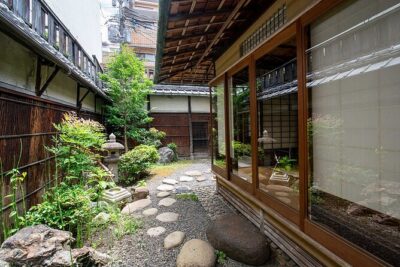
EDOCCO Studio is designed as a restored setting where old Japanese customs meet a modern visitor program. That setting matters. You are not only checking off a list of activities in a plain classroom. The surroundings help frame the tea, clothing, dance, and crafts as parts of a larger cultural tradition.
The session lasts about one hour, making it easy to fit between sightseeing stops. It can work well near the start of a Tokyo visit, when you want a basic understanding of Japanese customs before seeing them elsewhere. It also suits the end of a busy day, since the tea ceremony offers a quieter change of pace from Tokyo streets.
The activity is not a full formal tea ceremony or an extended performance. Instead, it gives you a friendly introduction to several familiar parts of Japanese culture. That is the key to enjoying it. Come ready to participate, not expecting a long specialist lecture.
More Tea Ceremonies in Tokyo
- Matcha Making Class in Tokyo with Authentic Japanese Sweets Set
★ 5.0 · 744 reviews - Tokyo: Traditional Tea Ceremony with a Tea Master
★ 5.0 · 528 reviews - Tokyo: Matcha Making Experience with Mochi Sweets in Asakusa
★ 4.9 · 388 reviews
Matcha preparation with a Japanese sweet
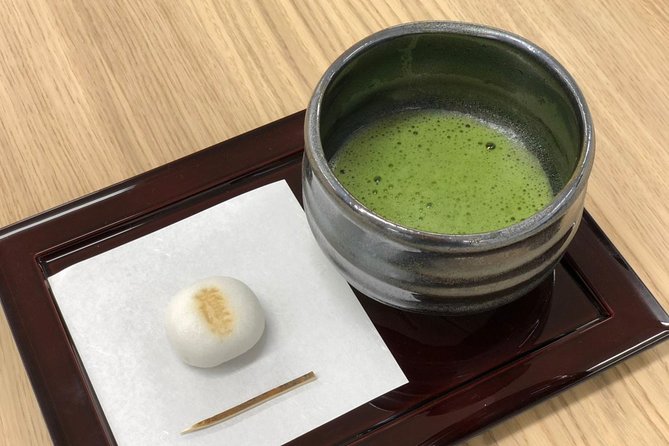
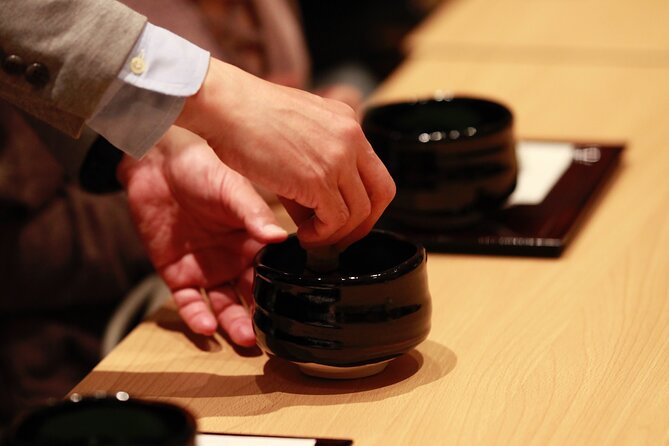
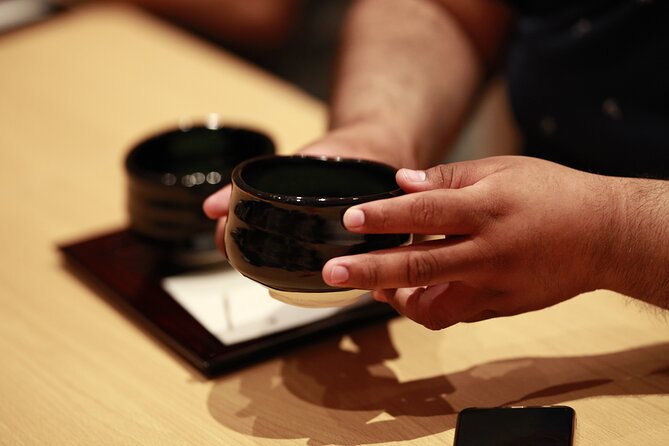
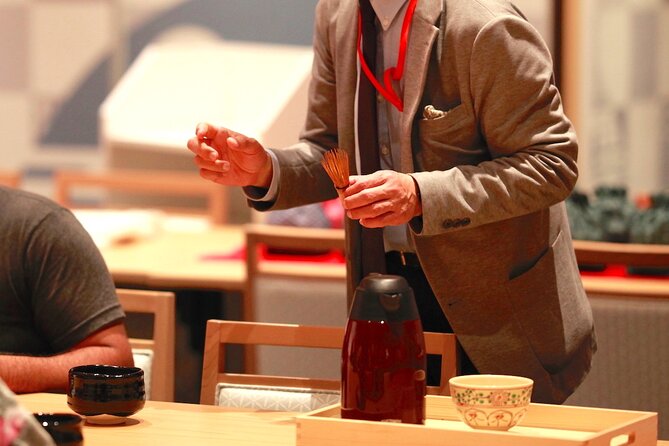
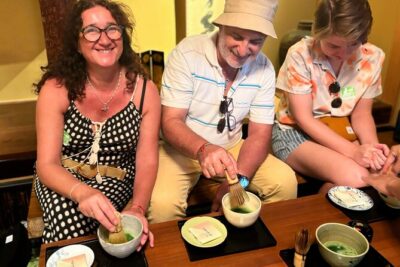
The tea portion introduces you to matcha, the finely ground green tea used in Japanese tea practice. An instructor guides you through preparing and serving it, with a traditional tea bowl, bamboo whisk, matcha powder, and related tools available during the demonstration.
You also receive a matcha and Japanese sweet snack set. The sweet is not just a snack on the side. In Japanese tea practice, a sweet balances matcha’s strong, grassy taste and gives the tasting a little rhythm.
I like this part because it turns a familiar drink into a physical activity. You are not simply handed a cup. You learn how the whisk is used and gain a small sense of the care involved in making the tea. Beginners should find the instructions approachable, though the short timetable means you will not study every rule or movement of a formal tea ceremony.
A useful distinction: the tea set itself is not included for purchase. If you want to continue making matcha at home, a set with a bowl, matcha powder, bamboo whisk, and other tools is available separately. That gives you the option to buy a practical souvenir, but you should treat it as an extra cost rather than part of the $72.48 price.
A short Japanese dance performance
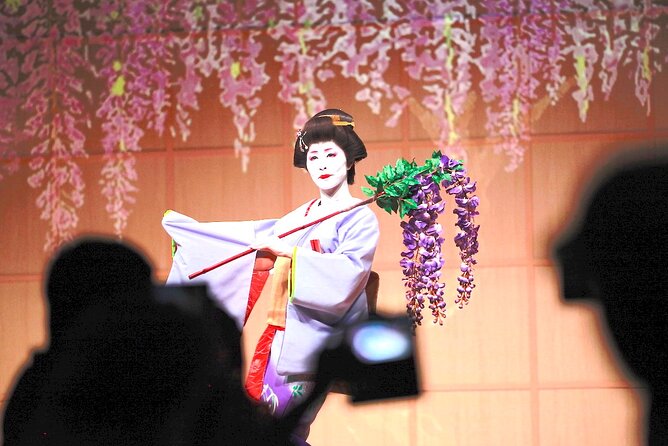
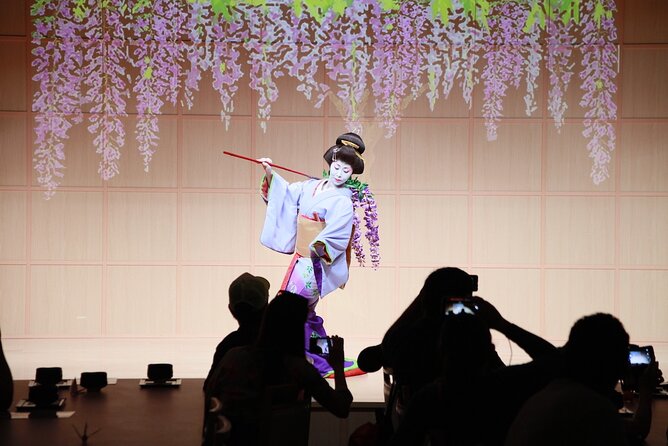
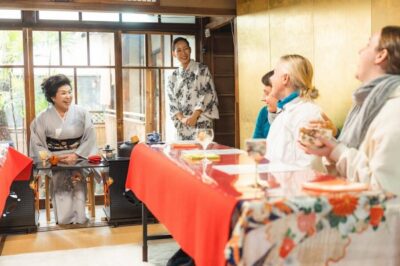
The Japanese dance show gives the session its most theatrical moment. The performance is presented with matcha and sweets, and English explanation helps you follow the cultural meaning behind the dance. Several descriptions identify the performer as a geisha, while the main value for you is the chance to see the controlled gestures, fan work, posture, and formal movements in context.
The dance has been praised as beautiful and memorable. It is also the clearest limitation of the program. One participant found the performance shorter than 10 minutes, which did not allow enough time to appreciate the art fully. If dance is your main reason for booking, you may want a dedicated performance elsewhere in Tokyo as well.
For most people, the short length works as part of the wider format. You get a live cultural presentation without giving up the calligraphy, kimono, and origami sections. The English explanation is particularly useful because it gives you something to watch for rather than leaving you to guess at the meaning of each movement.
Kimono dress-up and photo time
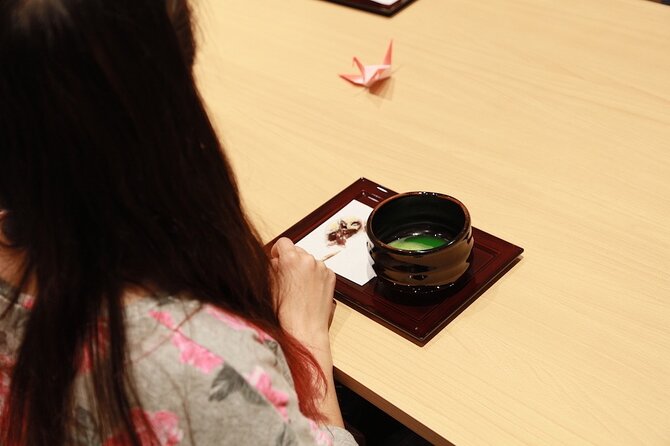
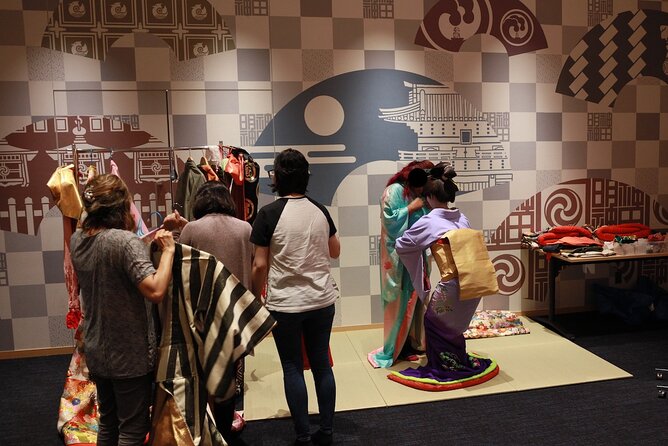
The kimono activity lets you put on traditional Japanese clothing and pose for photos. The wording used for the activity is kimono cosplay, so this is a dress-up experience rather than a full formal kimono fitting or a long lesson in textile design and etiquette.
That difference is worth knowing. You should expect a fun visual introduction, not the lengthy dressing process associated with a professional kimono rental. Still, it gives you a chance to feel how clothing changes the mood of a cultural setting. Some children especially enjoy this section, and it adds a light, playful note after the more focused tea and dance activities.
The kimono portion also works well for families. One family with children aged 8 and 11 enjoyed the chance to dress up, learn traditional dance movements, and use a fan. If you are traveling with children, the variety helps prevent the hour from feeling like a lesson that requires long concentration.
A completely different kind of day out:
- Tokyo Disney Resort – Tokyo Disneyland & Tokyo DisneySea Park Tickets
★ 4.8 · 99,488 reviews - SHIBUYA SKY Ticket
★ 4.7 · 46,509 reviews - JR Whole Japan Rail Pass
★ 4.8 · 29,150 reviews - Mt Fuji and Hakone 1-Day Bus Tour Return by Bullet Train
★ 5.0 · 26,383 reviews
Calligraphy with patient instruction
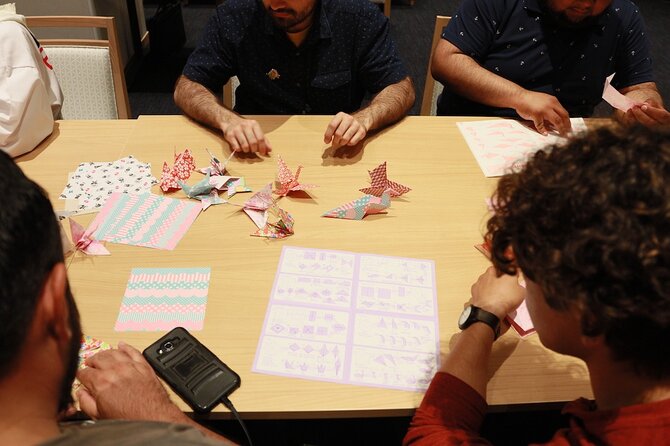
The shodo section introduces Japanese brush calligraphy. You learn basic brush strokes and create a character of your own. Shodo is more than writing with a different tool. The movement of the brush, the pressure used, and the balance of the finished character all matter.
The activity is beginner-friendly, but it still offers a small challenge. A brush does not behave like a pencil, and the first attempt may look less controlled than you expect. That is part of the fun. You leave with a personal piece of paper, not a mass-produced souvenir.
The instructors receive strong praise for patience and careful teaching. Ori is identified as a particularly detail-oriented instructor, while Mr. Bambu is described as warm, friendly, and informative. Since staff assignments can vary, I would not book solely for one named host, but the teaching approach appears to be a real strength of the program.
Calligraphy is also one of the better sections for adults who want something more reflective. Origami provides quick satisfaction, while brush writing asks you to slow down and concentrate. Together, they give the hour a good balance.
Origami that works for children and adults
The origami workshop shows how a single sheet of paper can become a crane or another folded design. The instructor guides you through the steps, so you do not need previous experience.
This is a simple activity, but it earns its place in the program. Origami is easy to understand across language barriers, and it gives children a task they can complete with their hands. Adults often enjoy it for the same reason. Tokyo sightseeing can involve a lot of looking and walking. Folding paper offers a welcome change.
Do not expect a large craft class with many different projects. The session is short, and the goal is an introduction to the method. If you make a mistake, the small group format gives you a better chance of receiving help before the activity moves on.
Why the one-hour format offers good value
The price is $72.48 per person. That is not the cheapest way to spend an hour in Tokyo, particularly since the activity does not include a full meal or a long performance. The value comes from the number of elements packed into the session and the personal guidance provided.
You receive the matcha and Japanese sweet set, dance appreciation, calligraphy, origami, and kimono dress-up. You also receive explanations in English, which can make the difference between a pleasant demonstration and an activity you actually understand.
I see the price as reasonable for a first introduction, especially if you would otherwise pay separately for a tea experience, a cultural show, and a craft workshop. It is less compelling if you already have a detailed tea ceremony, a kimono rental, or a dedicated calligraphy class booked elsewhere.
The program has a 4.9 rating from 34 reviews, with 100 percent recommending it. That high score fits the repeated strengths: kind staff, clear English, a well-organized schedule, and a good mix of activities. Keep the one short dance performance in mind when judging the value.
Who will enjoy EDOCCO Studio most
I would recommend this to first-time visitors who want a friendly introduction without committing half a day. The format gives you several cultural reference points that you will notice later during your time in Japan.
It is also a good family activity. The age range of the children described in the feedback, 8 and 11, suggests that school-age children can manage the activities with help. Tea, paper folding, brush writing, and costumes each offer a different kind of engagement.
Couples can enjoy it as a shared activity, too. One session continued even though only one couple had booked, which suggests the provider may run the program for a very small group when possible. That can make the instruction feel personal, though the minimum number of participants rule means the provider can cancel if too few people are booked.
You may want to skip it if you are seeking a formal, highly detailed tea ceremony or a long geisha dance show. This is an accessible sampler. It favors variety and participation over depth in one single tradition.
Getting there and planning the timing
The meeting point is EDOCCO Studio at 2-chome-16-2 Sotokanda, Chiyoda City, Tokyo 101-0021. The venue is near public transportation, and the activity returns to the same location.
One detailed route description uses the Marunouchi Line to Ochanomizu Station, identified as M20, followed by crossing the road, going up to the pedestrian bridge, turning left, and taking the first right at the intersection. Allow enough time to find the studio, especially if you are unfamiliar with Tokyo station exits and elevated walkways.
The booking pattern suggests reserving about 17 days ahead on average. That is useful guidance for a planned Tokyo itinerary, though you should check availability for your own dates. A mobile ticket is provided, making the entry process simple once your booking is confirmed.
Free cancellation is available up to 24 hours before the start time for a full refund. Changes or cancellations inside that 24-hour window are not refunded. The provider can also reschedule or refund the activity if poor weather affects the program or if the minimum number of participants is not reached.
How to make the most of the hour
Go in with a willingness to try each activity. The tea, calligraphy, and origami portions are not passive demonstrations, and you will get more from them if you accept that your first brush stroke or paper fold may be imperfect.
Listen closely during the dance explanation. The performance is short, so the context helps you notice the details of posture, hand movement, and fan use. Without that explanation, the dance could pass too quickly.
If you have children with you, let them know that the session changes activities often. That variety is a strength, but it also means the group must keep moving. The maximum of 20 participants is manageable, though a smaller group should offer more direct help.
You should also leave room in your expectations for a modern visitor-friendly presentation. The setting draws on traditional aesthetics, but the program is built to welcome people with little prior knowledge. That is a benefit for most first-time visitors, not a flaw.
Should you book EDOCCO Tea House?
Book it if you want a compact, friendly introduction to Japanese culture. The best parts are the variety, English guidance, and patient hands-on teaching. You can make matcha, watch a short dance, wear a kimono, write calligraphy, and fold origami without giving up an entire afternoon.
At $72.48, the price makes the most sense when you value instruction and several activities in one place. Families, couples, and first-time visitors should find it especially useful. If you want a long dance performance or a formal tea ceremony with extensive detail, choose a more specialized program instead.
For a single hour in Tokyo, EDOCCO gives you plenty to see, try, and remember. Just book it for the broad cultural introduction, not for deep study of any one tradition.
FAQ
Where does the EDOCCO Tea House experience begin?
It begins at EDOCCO Studio, 2-chome-16-2 Sotokanda, Chiyoda City, Tokyo 101-0021, Japan.
Where does the activity end?
The activity ends back at the same meeting point at EDOCCO Studio.
How long does the experience last?
The experience lasts approximately one hour.
What is included in the price?
The price includes a matcha and Japanese sweets snack set, Japanese dance show appreciation, calligraphy, origami, and Japanese dress-up cosplay.
Is the matcha-making equipment included for purchase?
A matcha set with a tea bowl, matcha powder, bamboo whisk, and other tools is available to buy, but it is not included as part of the activity.
Is the experience offered in English?
Yes. English explanations are provided, including guidance about the cultural meaning of the Japanese dance.
What is the maximum group size?
The activity has a maximum of 20 participants.
Is the experience suitable for children?
The experience has been enjoyed by children aged 8 and 11, including the tea, origami, calligraphy, kimono, and dance sections.
What is the cancellation policy?
You can cancel at least 24 hours before the start time for a full refund. Cancellations or changes made less than 24 hours before the start time are not refunded or accepted. If poor weather or insufficient bookings causes the provider to cancel, you will be offered another date or activity, or a full refund.
More Snorkeling and Diving in Tokyo
- Okinawa: From Naha: Kerama Islands 1-day snorkeling tour
★ 4.4 · 423 reviews - Naha, Okinawa: Keramas Island Snorkeling Day Trip with Lunch
★ 4.7 · 370 reviews - [Miyako Island/Half Day] Sea Turtle Snorkeling
★ 5.0 · 337 reviews - Okinawa Ishigaki Blue Cave Snorkeling Tour
★ 5.0 · 332 reviews
Just added in Tokyo
- A One-of-a-Kind Sushi Experience in a Special Place of Japan★ 5.0 · 15 reviews
- Tokyo Cute Bento Cooking Class – Make a Kawaii Character Lunchbox★ 5.0 · 126 reviews
- Japanese Home Cooking Class & Walk in Todoroki Temple Tokyo★ 5.0 · 88 reviews
- Catch a Baseball Game in Tokyo with a Local – Tickets Included★ 5.0 · 24 reviews
- Japan Tokyo Tower Observatory Deck E-Ticket★ 4.0 · 34 reviews
- JDM Experience with Fast&Furious RX-7 (English speaking Driver)★ 5.0 · 57 reviews
- Tokyo Private Day Tour by Car with English speaking Driver Guide★ 4.0 · 29 reviews
- Japan Classic 10 Day – One Life Adventures★ 5.0 · 129 reviews
Tea Ceremonies, compared.
Tea Ceremony in a Traditional Tea House in Kiyomizu
Read our review →
World Heritage Kyoto & Nara Uji Authentic Matcha Experience
Read our review →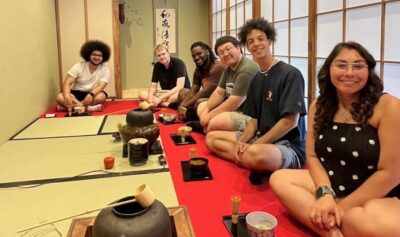
Browse the lists this tour appears in