
Reviewed · TEMPLES AND SHRINES
Inside of Fushimi Inari – exploring and lunch with locals
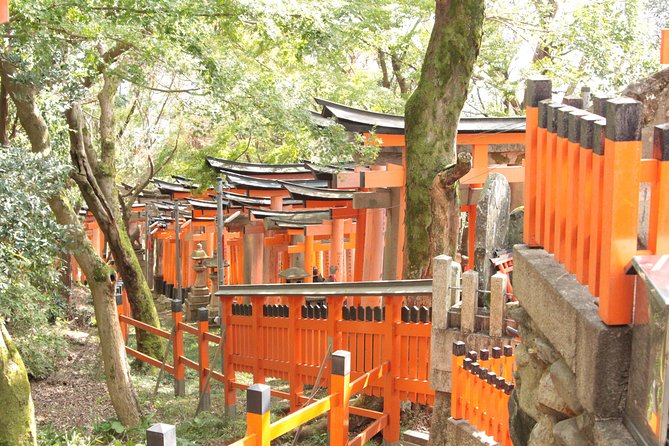
Kyoto’s famous gates have a quieter side. This four-hour Fushimi Inari tour leaves the main crowds behind for bamboo and cedar paths, small worship sites, a waterfall, and a gate factory. I especially like the local perspective and the included soba lunch, which make this more than a quick walk beneath red torii gates.
I also like the small-group format, with the advertised group limited to 12 people and additional details listing a maximum of six. Guides such as Go, Satsuki, and Ko have earned praise for adjusting the pace and explaining the shrine clearly. The main caution is simple: the hike includes steep stairs, and the mountain route may feel harder than expected.
In This Review
- Key points to know before booking
- Why this Fushimi Inari route is different
- Meeting beneath the Great Torii
- The main shrine and the first torii gates
- Bamboo, cedar, and quiet worship sites
- A rare look at the gate-making tradition
- The final climb to the 233-meter summit
- Soba lunch, tea, and a boiled egg
- How much value do you get for $72.26?
- Who will enjoy this hike most?
- Guide quality and group atmosphere
- Weather, cancellation, and food needs
- Should you book this Fushimi Inari tour?
- FAQ
- How long does the Fushimi Inari tour last?
- What is included in the food portion?
- Can vegetarian, halal-friendly, or gluten-free food be provided?
- How difficult is the hike?
- Where does the tour begin?
- Where does the tour finish?
- How large is the group?
- Is admission to Fushimi Inari included?
- What happens if the weather is poor?
Key points to know before booking
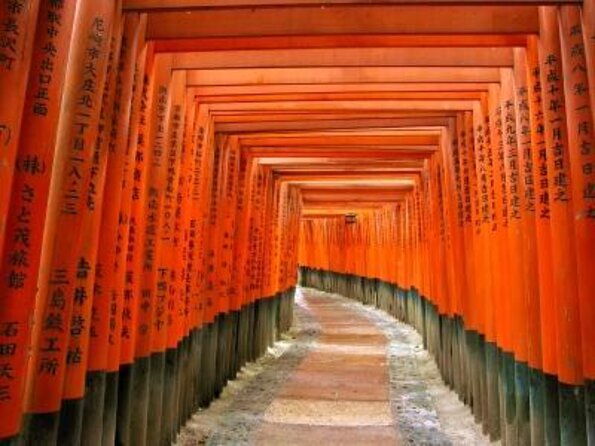
- The route goes beyond the famous torii gates: You visit bamboo and cedar forest paths, worship stones, a waterfall, and a gate factory.
- The summit is included: Reaching the 233-meter summit shrine takes about 20 minutes on a forest route, with plenty of stairs along the way.
- Lunch is part of the experience: A soba noodle meal is included, along with a Japanese tea and boiled egg break.
- The group should feel personal: The tour is described as limited to 12 people, while the additional information gives a maximum of six, so confirm the exact group size when booking.
- Guides make a real difference: Go, Satsuki, and Ko are praised for friendly explanations and for taking groups away from the busiest paths.
- The price reflects more than admission: At $72.26 per person, you are paying for a guide, a four-hour route, food, and access to quieter parts of the mountain.
Why this Fushimi Inari route is different
Fushimi Inari-taisha is one of Kyoto’s most recognizable sights. The rows of red torii gates climb Mount Inari, creating the classic image found in nearly every Kyoto guidebook. The trouble is that the best-known section can become crowded, especially near the main shrine and the first stretch of gates.
This tour is designed to show you more of the mountain than the standard photo stop. You still see the main shrine and the famous torii, but the route also moves through forest tracks and lesser-visited religious sites. That matters because Fushimi Inari is not just a corridor of red gates. It is a complete sacred mountain, with small shrines, stones, pathways, and places of worship spread through the woods.
I like this approach for two reasons. First, a guide can explain what you are seeing instead of leaving you to guess at the meaning of the gates. Second, the quieter route gives you room to notice the setting. Cedar trunks, bamboo, stone worship sites, and the steady climb create a more thoughtful experience than simply walking up, taking a photograph, and turning around.
The tour lasts about four hours. That is long enough to cover the main shrine, the torii gates, the forest route, the summit, lunch, and the tea break without turning the outing into a full-day commitment.
More Temples and Shrines in Kyoto
- [Kyoto & Nara Day Tour] Sagano Scenic Railway & Nara Park & Fushimi Inari Taisha Thousand Torii Gates & Togetsukyo Bridge & Bamboo Grove & Kimono Forest (Departing from Osaka)
★ 4.9 · 10,942 reviews - Kyoto: Fushimi Inari, Kinkakuji, Bamboo Grove 1 Day Bus Tour
★ 4.8 · 4,316 reviews - Kyoto: Tea Ceremony in a Traditional Tea House in Kiyomizu
★ 4.9 · 3,519 reviews
Meeting beneath the Great Torii
The tour begins at the Great Torii in Fushimi Ward, at 68 Fukakusa Yabunouchicho. It ends at the same meeting point, which keeps the logistics simple. The location is near public transportation, but you should still allow enough time to identify the correct meeting area.
This is one place where careful preparation matters. One disappointing experience came from a missed connection between the guide and the booked group. The guide had reportedly waited 15 minutes before the scheduled start, wore a noticeable red cap, and searched for about 30 minutes. That does not appear to reflect the normal quality of the tour, but it is a useful warning.
Check the meeting time, read the instructions closely, and look for the guide’s identifying clothing. If you are delayed or unsure, use the contact information supplied with your booking. A busy shrine entrance is not the place to rely on a vague meeting plan.
The main shrine and the first torii gates
The opening section covers Fushimi Inari-taisha Shrine and the first rows of red torii gates. Your guide explains the shrine’s background and the cultural meaning of the gates, giving context to what might otherwise look like a long series of identical structures.
The gates are connected with prayers and offerings, and their repetition is part of what gives Fushimi Inari its special character. Your guide can help you understand why this site is so important and how the mountain functions as a place of worship, not merely a scenic walk.
This portion is also the most familiar and likely the busiest. You should expect other people around the main shrine and the popular gate corridors. The tour’s advantage is not that it removes every crowd. It is that the route does not stop there.
A guide is particularly useful here because you can ask questions as you walk. The tour promises an explanation of the shrine’s history and cultural background, so you get more than a quick introduction before heading uphill.
Bamboo, cedar, and quiet worship sites
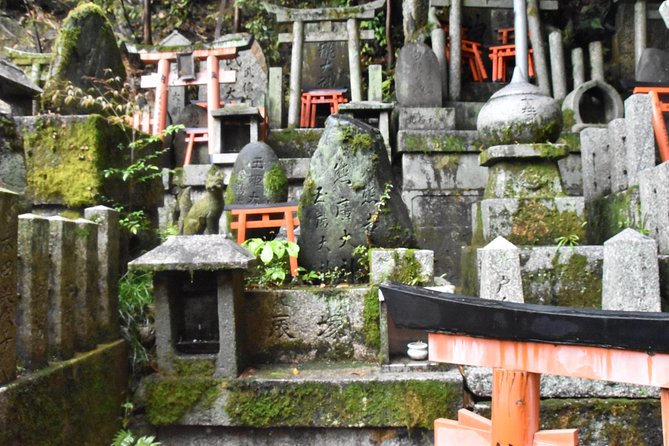
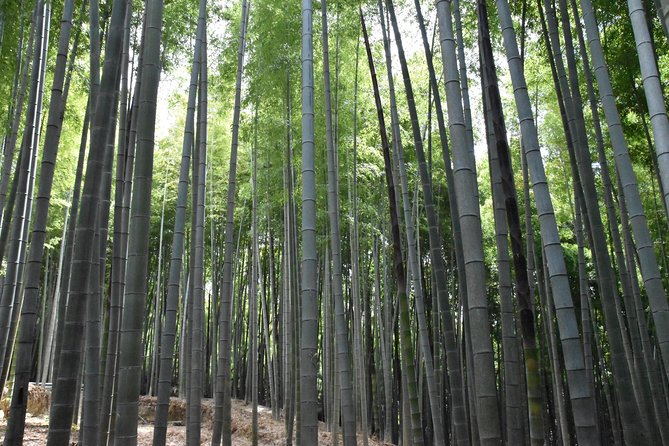
After the main shrine and torii gates, the route turns toward a peaceful forest path. The walk passes through bamboo and cedar trees, with stops at authentic holy spots that include worship stones and a waterfall.
This is the part I find most appealing for anyone who has already seen photographs of Fushimi Inari. The gates are the visual headline, but the forest gives the mountain its sense of place. The change in atmosphere can be striking: instead of focusing on taking the same photograph as everyone else, you have time to observe the smaller religious details and the natural setting.
The worship stones and waterfall add variety to the route. They also show that the sacred area extends well beyond the main shrine buildings. Your guide’s role is important because small sites can be easy to pass without understanding their purpose.
The forest path is described as easy walking in places, but do not confuse that with a flat route. The full tour includes an uphill climb and many stairs later on. A person who is comfortable with moderate walking should be able to appreciate the route, but anyone with limited fitness should think carefully before booking.
A completely different kind of day out:
- PERFECT KYOTO 1-Day Bus Tour
★ 5.0 · 13,518 reviews - Kyoto: Gion Make Your Own Chopsticks with Engraving Option
★ 5.0 · 3,465 reviews - Kyoto Nara Day Trip │ Kiyomizu-dera Temple + Fushimi Inari-taisha Shrine + Nara Park (Departing from Osaka/Kyoto)
★ 4.7 · 3,408 reviews - Kyoto Geisha Walking Tour: Gion District & Hidden Gems
★ 4.7 · 3,273 reviews
A rare look at the gate-making tradition
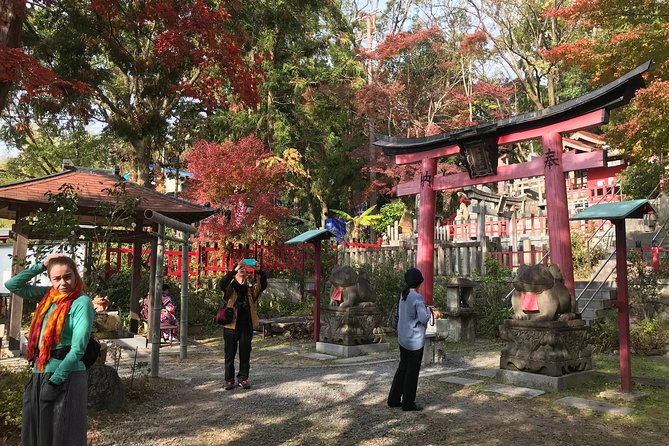
One of the tour’s unusual stops is a gate factory. That is a welcome change from a standard shrine walk because it connects the thousands of gates on the mountain with the work required to produce and maintain them.
The factory visit is not presented as a long technical demonstration, so you should not expect a formal workshop or guaranteed production schedule. Still, seeing this part of the process helps explain that the torii are not simply decorative scenery. They are physical offerings tied to the shrine and its continuing religious life.
This kind of stop is exactly why a local guide can add value. You are not just looking at the finished gates. You are being directed toward a working part of the tradition that you might miss on your own.
The final climb to the 233-meter summit
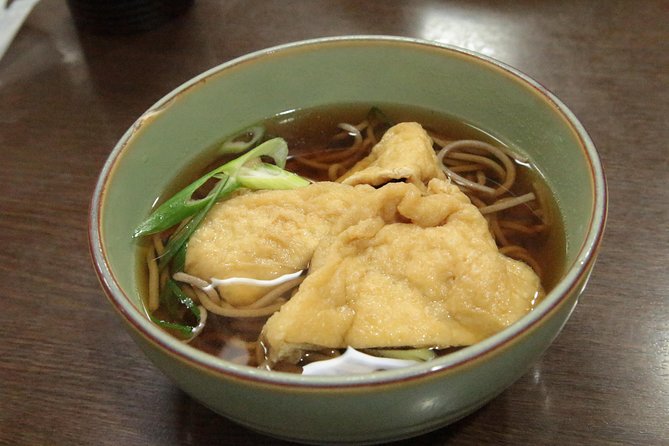
The route includes a forest climb to the summit shrine. The summit is 233 meters high, and the final section takes about 20 minutes. You can then look around the summit shrine and, if you wish, pray there.
This is where the tour becomes physically demanding. The stairs are described as steep, and one person found the hike more challenging than expected. Another praised the breathtaking views but gave the same clear warning: there are many steep stairs, so this is not the right outing if you struggle physically.
The climb is not a technical hike, but you should arrive ready for sustained uphill walking. Wear comfortable shoes and do not treat the tour as a casual city stroll. The guide can adjust the pace, as Go did for one group, but no guide can remove the stairs.
Reaching the summit gives the route a satisfying shape. You begin with the major shrine, move through quieter forest areas, and finish at the upper shrine before returning. If you prefer a short visit focused only on the first torii gates, this tour may feel too ambitious. If you want to see the full sacred mountain, the climb is one of its strongest features.
Soba lunch, tea, and a boiled egg
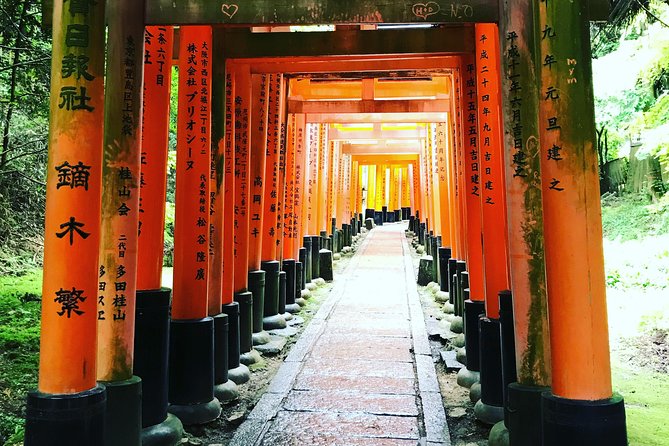
Food is included, which makes the $72.26 price easier to assess. The tour provides a soba noodle lunch and a break with Japanese tea and a boiled egg.
Soba is a practical choice for a walking tour. It is a familiar Japanese meal, quick to serve, and suited to a midday break. The food also gives the outing a more local feel than a simple snack purchased at a crowded attraction.
Dietary needs are addressed in the tour information. Vegetarian, halal-friendly, and gluten-free food can be available, but you should communicate your needs when booking rather than assume a substitute will appear automatically.
The meal is not the main reason to book. The guide-led route is the centerpiece. Still, having lunch and refreshments included means you do not need to interrupt the schedule to find food, and the break gives your legs a chance to recover before or after the climb.
How much value do you get for $72.26?
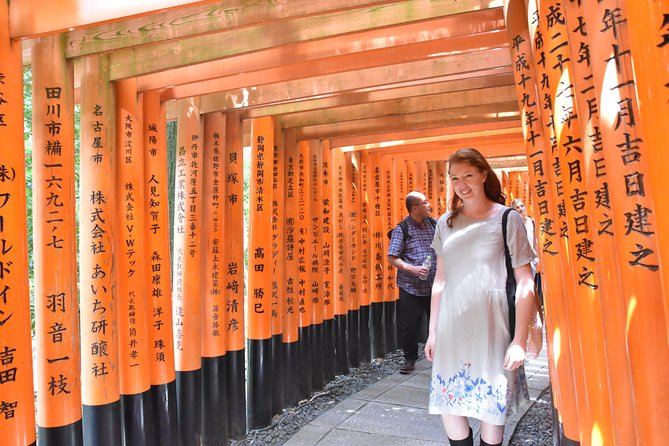
At $72.26 per person, this is not the cheapest way to visit Fushimi Inari. You can enter the shrine grounds without paying an admission charge, and independent visitors can walk the torii route at no tour cost.
The comparison changes once you consider what is included. This experience lasts about four hours, uses a small-group format, includes a guide, covers the mountain route, and provides soba, tea, and a boiled egg. You are also paying for direction through paths and sites that may be difficult to identify on your own.
I see the value most clearly for a first visit to Kyoto or for anyone who wants cultural explanation without booking a private guide. A group of six would feel especially personal. The advertised limit of 12 is still modest, but the conflicting group-size details deserve a quick check before payment.
The price is less appealing if you only want photographs of the torii gates or plan to walk at your own pace. Independent visitors can spend as long or as little as they like. This tour earns its cost through interpretation, route planning, food, and the less familiar parts of the mountain.
The activity is often booked about 80 days ahead, which suggests you should not leave it until the last minute if the timing matters to you.
Who will enjoy this hike most?
I would recommend this tour to people who want a fuller visit to Fushimi Inari than the usual entrance-and-photo stop. It suits you if you enjoy walking, want explanations of Japanese religious sites, and like the idea of eating a simple local meal during the outing.
It is also a good choice if crowds make famous sights tiring. The tour cannot promise an empty Fushimi Inari, but the bamboo and cedar route offers quieter stretches away from the main flow.
You should think twice if you have difficulty with steep stairs, need a flat route, or dislike fixed group schedules. The guide can adjust the pace, but the summit climb remains part of the experience.
Families and older participants should judge the outing by fitness rather than age. The key issue is the uphill walking, not the cultural content. Moderate physical fitness is required.
Guide quality and group atmosphere
The guides named in the feedback include Go, Satsuki, and Ko. Their strengths are consistent: friendly explanations, a personal pace, and the ability to lead groups away from the busiest areas.
Go adjusted the pace to fit the group. Satsuki was praised for guiding people through quiet trees and small shrines. Ko received especially strong praise for explaining both the mountain and its history while creating a sense of discovery.
Those details matter because the route is not just a marked path. A good guide helps you understand why a waterfall, worship stone, factory, or small shrine belongs in the story of Fushimi Inari.
The overall rating is 4.7 from 17 ratings, with 94 percent recommending the experience. That is a positive record, though the sample is not large. The missed-meeting complaint is worth noting, so arrive early and follow the meeting instructions carefully.
Weather, cancellation, and food needs
The tour requires good weather. If poor weather causes cancellation, you are offered another date or a full refund. You can also cancel for a full refund up to 24 hours before the start time. Cancellations or changes made less than 24 hours ahead are not refunded or accepted.
Because the route uses forest paths and steep stairs, weather can affect both comfort and safety. Check the forecast before your cancellation deadline if your plans are flexible.
The mobile ticket makes access convenient, and confirmation is sent at booking. Public transportation is nearby, and the tour returns to the starting point.
Should you book this Fushimi Inari tour?
Book it if you want the mountain, not just the gates. The combination of shrine explanations, forest paths, worship sites, a gate factory, summit climb, soba lunch, and tea creates a well-rounded half-day in Kyoto.
Skip it if you want a short, flat visit or prefer complete freedom to stop and leave whenever you like. The stairs are the deciding factor.
For most reasonably fit visitors who want a quieter and more informed look at Fushimi Inari, $72.26 is a fair price. Confirm the group size, note your dietary needs, arrive early at the Great Torii, and wear shoes suited to steep steps. Do that, and this tour gives you a much fuller picture of Kyoto’s most famous shrine mountain.
FAQ
How long does the Fushimi Inari tour last?
The experience lasts approximately four hours. The sightseeing and hiking portion is listed as about three hours and 30 minutes, with lunch and the tea break included in the overall outing.
What is included in the food portion?
The tour includes a soba noodle lunch, Japanese tea, and a boiled egg break.
Can vegetarian, halal-friendly, or gluten-free food be provided?
Vegetarian, halal-friendly, and gluten-free food is available. You should state your dietary needs when booking.
How difficult is the hike?
The tour requires moderate physical fitness. The route includes a climb to the 233-meter summit and many steep stairs, including a final forest climb that takes about 20 minutes.
Where does the tour begin?
The meeting point is the Great Torii in Fushimi Ward, Kyoto, at 68 Fukakusa Yabunouchicho, postal code 612-0881.
Where does the tour finish?
The activity ends back at the meeting point.
How large is the group?
The tour is described as limited to 12 participants. The additional information gives a maximum of six travelers, so confirm the expected group size when booking.
Is admission to Fushimi Inari included?
An admission ticket is included in the activity details. The tour covers the main shrine, the torii gates, forest paths, worship sites, the waterfall, gate factory, and summit shrine.
What happens if the weather is poor?
If the tour is canceled because of poor weather, you are offered a different date or a full refund. You can cancel for a full refund up to 24 hours before the start time.
More Lunch Experiences in Kyoto
- Bike Tour Exploring North Kyoto plus Lunch
★ 5.0 · 1,087 reviews - Osaka/Kyoto: Arashiyama, Nara & Fushimi Inari Shrine w/Lunch
★ 4.4 · 754 reviews - Kyoto Zen Meditation & Garden Tour at a Zen Temple with Lunch
★ 5.0 · 441 reviews - 4.5-Hour Kyoto Bike Tour with Lunch and UNESCO Zen Temples
★ 5.0 · 122 reviews
Just added in Kyoto
- The “Golden Route” and Ancient Japan by DIAMIR Erlebnisreisen – 14-Day Tour★ 2.0 · 2 reviews
- Japan: Castles & Cuisine by G Adventures – 6-Day Kyoto to Osaka Tour★ 4.5 · 4 reviews
- Cycle Japan by Explore! – 13-Day Kyoto to Tokyo Tour★ 4.7 · 12 reviews
- Cycle Japan by Intrepid Travel – 11-Day Kyoto to Tokyo Tour★ 4.8 · 2 reviews
- Classic Japan by Intrepid Travel – 11-Day Kyoto to Tokyo Tour★ 4.4 · 14 reviews
- Ancient & Modern Japan 14-Day Tour by Exodus Adventure Travels★ 4.4 · 40 reviews
- 5 Day Cultural Adventure of Kyoto, Nara & Osaka by Tourist Journey★ 2.5 · 2 reviews
- 12 Days Kinosaki Onsen Escape: A Journey Through Japan’s Timeless Towns by UME Travel★ 4.8 · 5 reviews
Temples and Shrines, compared.
![[Kyoto & Nara Day Tour] Sagano Scenic Railway & Nara Park & Fushimi Inari Taisha Thousand Torii Gates & Togetsukyo Bridge & Bamboo Grove & Kimono Forest (Departing from Osaka)](https://media.japanvisits.com/wp-content/uploads/kyoto-nara-day-tour-sagano-scenic-railway-nara-park-fushimi-inari-taisha-thousand-torii-gates-togetsukyo-bridge-bamboo-grove-kimono-forest-departing-from-osaka-k110001-400x257.jpg)

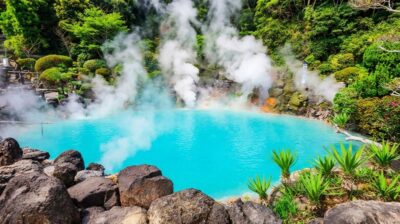
Kyushu One-Day Tour: Yufuin no Mori Train & Yufuin Town & Nyoirin-ji Temple & Dazaifu & Hell Hot Springs (Departing from Fukuoka)
Read our review →
Fushimi Inari, Kinkakuji, Bamboo Grove 1 Day Bus Tour
Read our review →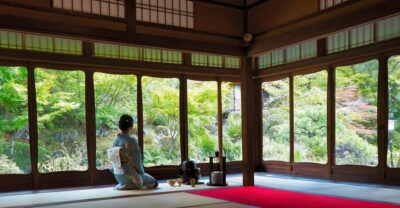
Tea Ceremony in a Traditional Tea House in Kiyomizu
Read our review →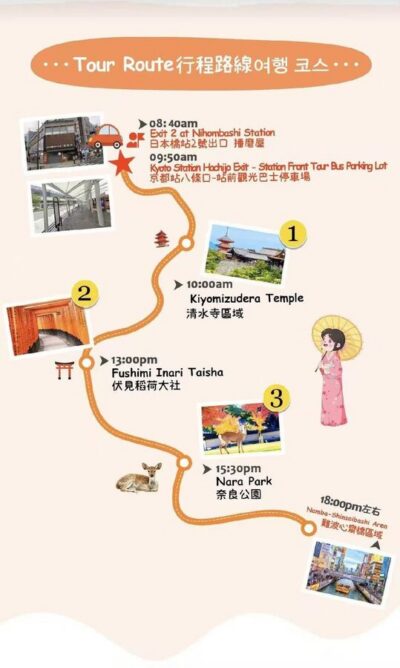
Kyoto Nara Day Trip │ Kiyomizu-dera Temple + Fushimi Inari-taisha Shrine + Nara Park (Departing from Osaka/Kyoto)
Read our review →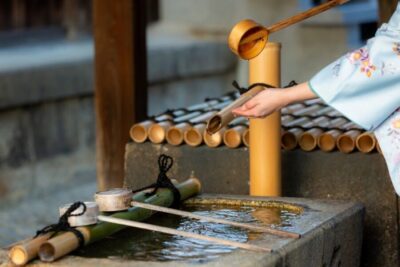
Browse the lists this tour appears in