
Reviewed · TEMPLES AND SHRINES
Inside of Fushimi Inari – exploring and lunch with locals
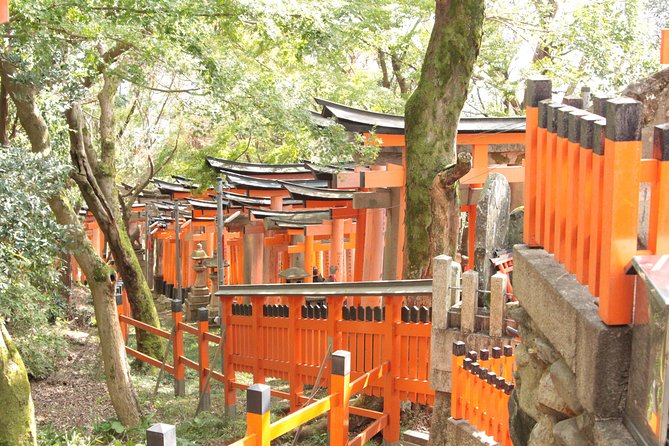
A quieter Fushimi Inari awaits. This four-hour walk takes you past the famous red torii gates and into the shrine’s less-visited forest paths, where you can see worship stones, a waterfall, bamboo, and even a torii-making factory. I especially like the small-group format, limited to 10 people, and the chance to eat soba at a traditional local restaurant. The main drawback is simple: this is still a hike, with stairs and uphill walking to the 233-meter summit.
Guides such as Ko, Go, Kenji, Taishi, Yuya, and the others bring different personalities, but the praise is consistent: they explain Shinto customs clearly, answer questions, and adjust the pace. I also like the tea and salted boiled egg at a mountain hut, plus the effort to use quieter routes. If you want only the famous torii tunnel and a quick photo, this tour takes longer and asks more of your legs.
In This Review
- Key points to know before you book
- Starting beneath Fushimi Inari’s great torii
- Three hours through cedar, bamboo, and sacred places
- The 20-minute climb to the summit shrine
- Quiet photo spots instead of only the famous gates
- Tea, a salted egg, and a view over Kyoto
- Soba and inari sushi at a traditional restaurant
- What the guides add to the experience
- Is $67 a fair price for four hours?
- Who should book this Fushimi Inari walk?
- FAQ
- Where is the meeting point?
- How do I reach the meeting point from the Keihan line?
- How long does the experience last?
- Is the tour conducted in English?
- Is lunch included?
- Can vegan or allergy-friendly food be arranged?
- Should you book it?
Key points to know before you book
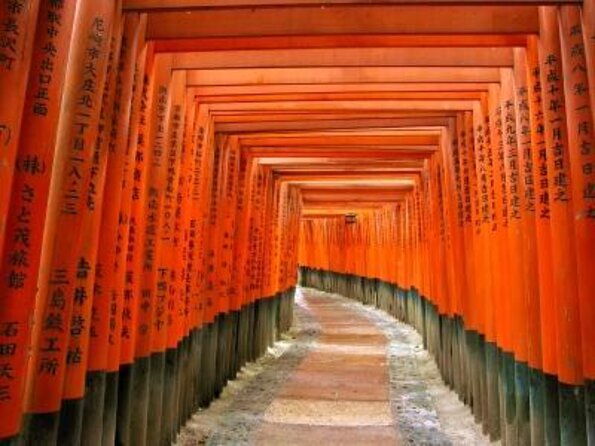
- See more than the torii gates: Visit bamboo paths, worship stones, a waterfall, a summit shrine, and a working torii-making factory.
- A 233-meter summit walk: The uphill route takes about 20 minutes, with stairs and additional walking through the shrine grounds.
- Quiet photo stops: Your guide points out less crowded places on the way down, useful when the main gate paths are full.
- Local food is part of the experience: Enjoy soba noodles and inari sushi at a traditional restaurant, with vegan and allergy-friendly choices available if arranged ahead.
- A small English-speaking group: The group is limited to 10 people, and guides keep a casual pace with breaks.
- Good value at $67: The price includes the guide, lunch, tea, a salted boiled egg, and other food offerings, though lunch drinks cost extra.
Starting beneath Fushimi Inari’s great torii
You meet at the Great Torii Gate, at the stone pillar across from the JR Inari Station exit. The meeting point is also the finishing point, which makes the morning or afternoon easy to plan around. If you arrive by the Keihan railway, Fushimi-Inari Station is about a 10-minute walk away.
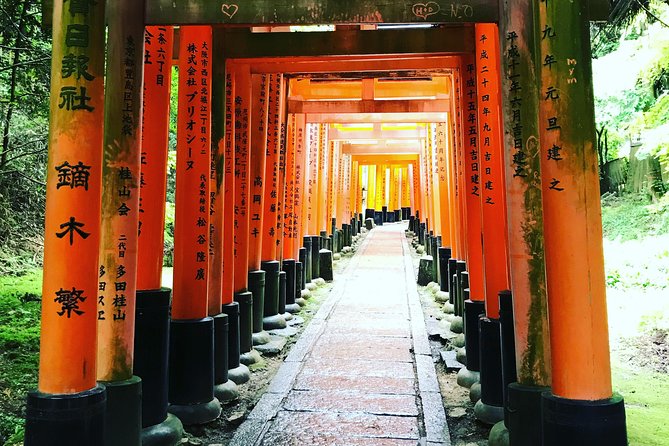
The first part sets the tone. Your guide introduces Fushimi Inari Taisha, explains the main shrine, and gives meaning to the thousands of vermilion torii gates. Without context, the gates can look like one long, photogenic tunnel. With an explanation of their purpose and cultural background, the walk becomes more than a hunt for the next picture.
Fushimi Inari is a Shinto shrine, and the route includes more than the most photographed sections. Your guide can explain the traditions connected with the shrine and Shinto practice as you move through the grounds. That makes this a good choice if you want cultural information in plain English rather than a rapid walk with a few memorized facts.
The first major advantage is the guide’s local direction. The main torii route can become crowded, particularly around the lower shrine area. This experience uses quieter paths where possible, so you get a better sense of the mountain as a place of worship rather than only a famous sightseeing stop.
More Temples and Shrines in Kyoto
- [Kyoto & Nara Day Tour] Sagano Scenic Railway & Nara Park & Fushimi Inari Taisha Thousand Torii Gates & Togetsukyo Bridge & Bamboo Grove & Kimono Forest (Departing from Osaka)
★ 4.9 · 10,942 reviews - Kyoto: Fushimi Inari, Kinkakuji, Bamboo Grove 1 Day Bus Tour
★ 4.8 · 4,316 reviews - Kyoto: Tea Ceremony in a Traditional Tea House in Kiyomizu
★ 4.9 · 3,519 reviews
Three hours through cedar, bamboo, and sacred places
The walking portion lasts about three hours, including the route to the summit and the return through photo stops. The paths are organized, but you will go up and down stairs. Comfortable shoes are essential, and a hands-free backpack is more useful than a shoulder bag that swings around while you climb.
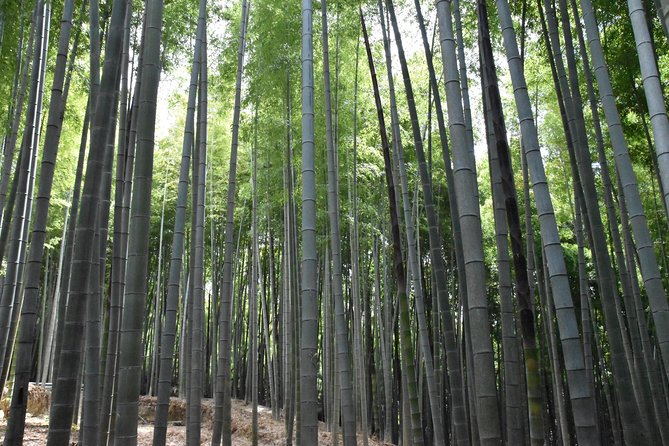
The route moves into a peaceful forest of bamboo and cedar trees. This change matters. The lower shrine area is known for its rows of red gates, while the forest sections offer shade, quiet, and a slower rhythm. You might find the bamboo path especially appealing if you want a calmer side of Kyoto without leaving the Fushimi Inari area.
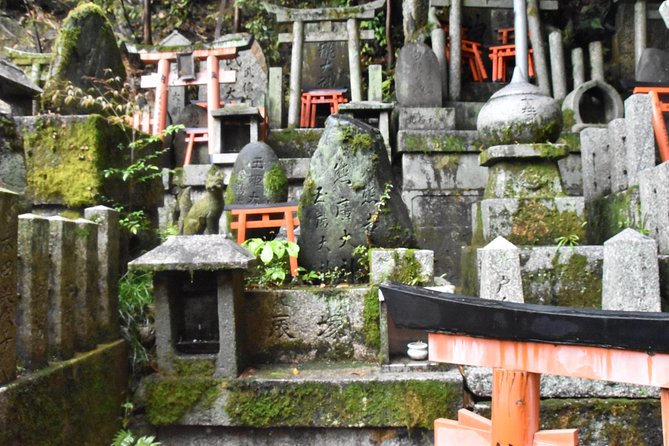
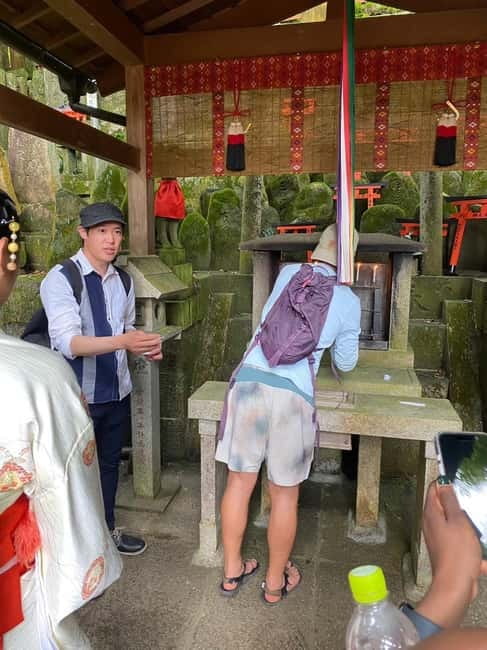
Along the way, the guide visits authentic holy spots, including worship stones and a waterfall. These places help show how the mountain functions as a religious site. You are not simply walking through a decorative garden. The route includes spots that hold meaning for worshippers and local practice.
One particularly unusual stop is a factory connected with torii production. A guide may also arrange an encounter with a torii maker. Seeing someone carve or produce the columns gives you a useful link between the thousands of gates on the mountain and the people who maintain this tradition. Kat specifically enjoyed watching a master carve torii columns, which was an added treat during the walk.
The factory stop also gives the tour a local feel. Many short visits to Fushimi Inari stay on the standard path and never connect the shrine to the people who work around it. Here, the guide helps you notice the living community tied to the site.
The 20-minute climb to the summit shrine
The summit route rises to 233 meters. The uphill section to the summit shrine takes about 20 minutes, though the full walking time depends on your pace and the group’s breaks. That is not a major mountain hike, but it is more demanding than a flat shrine visit.
Your guide leads you around the summit shrine and explains what you are seeing. The upper area feels different from the lower gates, with more forest and fewer of the broad, open spaces found near the entrance. The climb gives the visit a clear shape: you begin at the main shrine, enter the forest, reach the high point, then return by a route chosen for views and photographs.
The guides are used to keeping the pace casual. Several participants appreciated being allowed to walk at their own speed, and the route includes breaks. Still, you should be honest about your comfort with stairs before booking. The experience is described as easy to moderate, not as a completely effortless stroll.
I would pack light, wear shoes with a firm sole, and avoid carrying anything you need to hold in your hand. The route may be well organized, but stairs are still stairs, especially after several hours on your feet.
Quiet photo spots instead of only the famous gates
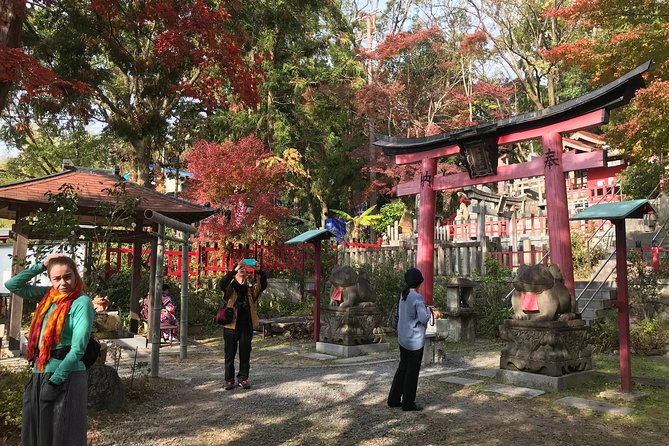
Photography is a planned part of the experience. On the way down, your guide points out places that are usually less crowded. This is one of the tour’s strongest practical benefits because the most famous torii sections can be difficult for unhurried photos.
You will still see the classic red gates, but the guide also helps you frame the forest, shrine details, bamboo, and mountain route. The aim is not only to collect another picture of the same tunnel. It is to show you different textures and settings within the Fushimi Inari grounds.
The less crowded paths also make it easier to listen. If you are trying to keep up with a guide while people move in both directions, explanations can get lost. A quieter route gives you space to stop, ask questions, and take pictures without holding up a large group.
Do not expect an empty mountain at every moment. Fushimi Inari is a major Kyoto sight, and crowd levels can vary. The value here is that your guide knows where to turn and when to pause, rather than promising that every section will be silent.
A completely different kind of day out:
- PERFECT KYOTO 1-Day Bus Tour
★ 5.0 · 13,518 reviews - Kyoto: Gion Make Your Own Chopsticks with Engraving Option
★ 5.0 · 3,465 reviews - Kyoto Nara Day Trip │ Kiyomizu-dera Temple + Fushimi Inari-taisha Shrine + Nara Park (Departing from Osaka/Kyoto)
★ 4.7 · 3,408 reviews - Kyoto Geisha Walking Tour: Gion District & Hidden Gems
★ 4.7 · 3,273 reviews
Tea, a salted egg, and a view over Kyoto
The mountain break includes Japanese hot tea and a boiled egg with salt at a scenic hut. This is a modest snack, but it fits the walk perfectly. The tea gives you a warm pause, while the egg adds something filling before lunch.
You also get time at a viewpoint with a panorama over Kyoto city. The view gives you a sense of where you are in relation to the city below. After the shaded forest and red gates, the open outlook is a welcome change.
The snack and drink are included. Vegan options are available, but you should state your dietary needs in advance rather than waiting until the day of the tour. The same advice applies to lunch.
Small details such as this break help justify the tour’s four-hour length. You are not being rushed from gate to gate. The food stop, viewpoint, and short pauses let the walk breathe, which is useful when you want a cultural outing rather than a timed photo dash.
Soba and inari sushi at a traditional restaurant
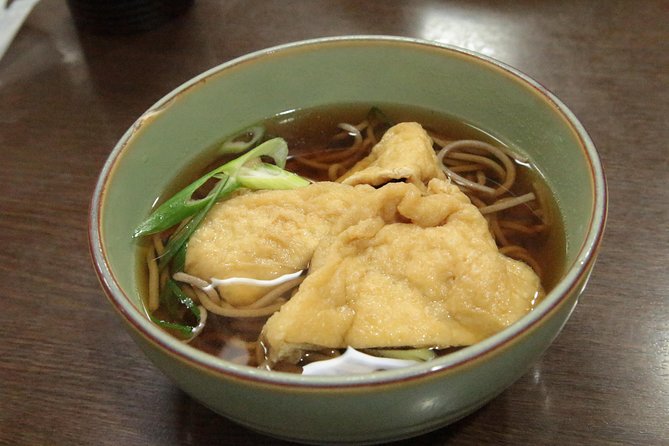
Lunch is served at a local soba restaurant and lasts about 30 minutes. The included meal features Japanese noodle soba and inari sushi, the sweet fried tofu pockets filled with rice. It is a straightforward Japanese meal, but it fits the setting better than a generic restaurant stop near a major station.
The lunch has received especially warm praise. Tyler enjoyed the authentic Japanese food after the hike, while Kana and Ryoma both singled out the soba as a strong part of the experience. One participant also noted that the meal came with a good view.
The restaurant stop is brief, so expect a focused meal rather than a long, leisurely lunch. Drinks at the restaurant are not included, and you will pay separately for those. Tea at the mountain hut is included, so you still receive a drink during the walking portion.
Vegetarian and vegan arrangements are possible, and allergy-related alternatives are available. You must tell the tour provider in advance. This is important because a request made at the table may not be easy to handle in a traditional restaurant.
Inari sushi makes a particularly fitting addition to a Fushimi Inari visit. The shrine is closely associated with Inari, the Shinto deity connected with rice and prosperity, and foxes are commonly linked with Inari worship. The meal does not replace a full lesson in those traditions, but it connects the food stop with the place you are visiting.
What the guides add to the experience
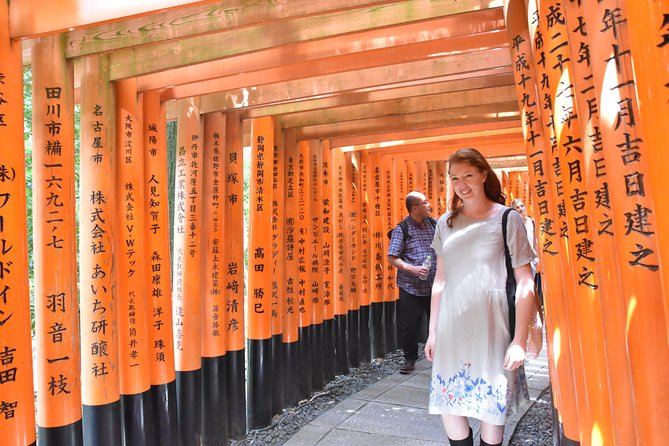
A guide is most useful here because Fushimi Inari is easy to visit but harder to understand. You can follow the gates on your own, yet you may miss the meaning of the worship stones, waterfall, summit shrine, and torii-making work nearby.
The guides are English-speaking and the group is limited to 10 participants. That size allows questions without turning the walk into a private tour price. Past guide names include Ko, Go, Kenji, Taishi, Yuya, and their assistants. Go has been praised for useful suggestions about other places to visit in Kyoto, while Kenji has been noted for explaining both Fushimi Inari and Shinto traditions.
The tone appears friendly and personal. You may meet local people along the route, and the guides can help you feel connected to the neighborhood rather than confined to the most photographed shrine path. That local contact is one of the rare parts of the experience that cannot be copied easily with a map.
Guide quality can always vary from person to person, so it would be unfair to promise an identical personality on every date. The consistent strengths are the local route choices, English explanations, relaxed walking pace, and willingness to answer questions.
Is $67 a fair price for four hours?
At $67 per person, this is not the cheapest way to see Fushimi Inari. You can enter the shrine grounds without paying for a guided walk, and independent visitors can follow the torii route at no cost. The question is what you want from the visit.
The price includes four hours with an English-speaking guide, lunch, tea, a salted boiled egg, and other food offerings. It also buys route planning, explanations, less crowded photo stops, and access to parts of the area you might not notice alone. For someone who would otherwise pay for a separate food experience or spend time searching for a quieter path, the cost is reasonable.
The value is strongest for first-time visitors to Kyoto, people interested in Shinto, and anyone who wants to make one focused half-day visit to Fushimi Inari. It is less compelling if you already know the shrine well, prefer walking alone, or plan to spend only an hour taking pictures of the main gates.
The price does not include drinks at lunch. That is a minor extra cost, but you should know it before you arrive. Free cancellation up to 24 hours ahead and the option to reserve now and pay later also make the booking less rigid if your Kyoto plans are still changing.
Who should book this Fushimi Inari walk?
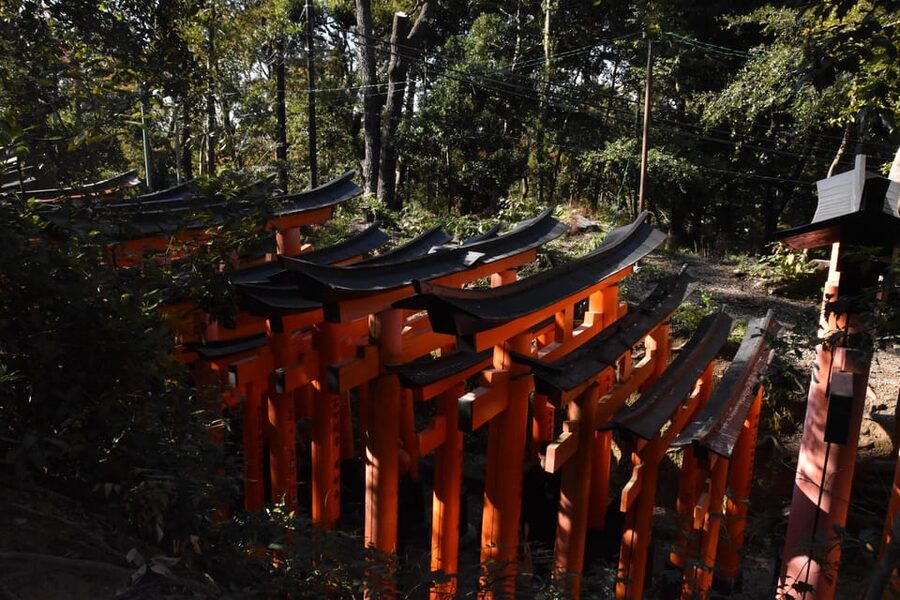
I would choose this experience if you want the famous sight plus the parts most people skip. The bamboo and cedar paths, worship stones, waterfall, torii factory, summit shrine, viewpoint, and local meal give the visit much more range than a simple gate walk.
It suits solo visitors and couples who want company without joining a huge group. It also works well for families with older children who can manage stairs, though the walking pace and terrain should be considered carefully.
Food-sensitive visitors can also benefit, provided they communicate dietary restrictions in advance. Vegan choices and allergy-friendly alternatives are available, but they are not something to leave until the last minute.
I would hesitate to book it if you have trouble with uphill stairs, want a private tour, or dislike fixed meal stops. The schedule includes a 30-minute lunch and a three-hour hike, and the exact timing can shift according to walking speed.
FAQ
Where is the meeting point?
Meet at the Great Torii Gate, at the stone pillar across from the JR Inari Station exit. The tour finishes at the same place.
How do I reach the meeting point from the Keihan line?
Fushimi-Inari Station on the Keihan line is about a 10-minute walk from the Great Torii Gate.
How long does the experience last?
The experience lasts four hours. Starting times vary, so check availability for the date you want.
Is the tour conducted in English?
Yes. The experience includes a live English-speaking guide.
Is lunch included?
Yes. Lunch includes Japanese soba noodles and inari sushi. Drinks at the lunch restaurant are not included.
Can vegan or allergy-friendly food be arranged?
Yes. Vegan options and choices for allergies or dietary restrictions are available, but you must tell the provider in advance.
Should you book it?
Book this tour if you want to understand Fushimi Inari, not merely photograph its gates. The strongest reasons are the quiet forest routes, the summit walk, the local torii-making connection, the Kyoto viewpoint, and the soba lunch.
At $67, you are paying for guidance and access to a fuller experience, not just admission to a shrine. Bring good shoes, keep your bag hands-free, allow for stairs, and report food needs before the tour. If that sounds like your kind of Kyoto morning or afternoon, this is a smart way to see Fushimi Inari beyond the usual red-gate corridor.
More Lunch Experiences in Kyoto
- Bike Tour Exploring North Kyoto plus Lunch
★ 5.0 · 1,087 reviews - Osaka/Kyoto: Arashiyama, Nara & Fushimi Inari Shrine w/Lunch
★ 4.4 · 754 reviews - Kyoto Zen Meditation & Garden Tour at a Zen Temple with Lunch
★ 5.0 · 441 reviews - 4.5-Hour Kyoto Bike Tour with Lunch and UNESCO Zen Temples
★ 5.0 · 122 reviews
Just added in Kyoto
- The “Golden Route” and Ancient Japan by DIAMIR Erlebnisreisen – 14-Day Tour★ 2.0 · 2 reviews
- Japan: Castles & Cuisine by G Adventures – 6-Day Kyoto to Osaka Tour★ 4.5 · 4 reviews
- Cycle Japan by Explore! – 13-Day Kyoto to Tokyo Tour★ 4.7 · 12 reviews
- Cycle Japan by Intrepid Travel – 11-Day Kyoto to Tokyo Tour★ 4.8 · 2 reviews
- Classic Japan by Intrepid Travel – 11-Day Kyoto to Tokyo Tour★ 4.4 · 14 reviews
- Ancient & Modern Japan 14-Day Tour by Exodus Adventure Travels★ 4.4 · 40 reviews
- 5 Day Cultural Adventure of Kyoto, Nara & Osaka by Tourist Journey★ 2.5 · 2 reviews
- 12 Days Kinosaki Onsen Escape: A Journey Through Japan’s Timeless Towns by UME Travel★ 4.8 · 5 reviews
Temples and Shrines, compared.
![[Kyoto & Nara Day Tour] Sagano Scenic Railway & Nara Park & Fushimi Inari Taisha Thousand Torii Gates & Togetsukyo Bridge & Bamboo Grove & Kimono Forest (Departing from Osaka)](https://media.japanvisits.com/wp-content/uploads/kyoto-nara-day-tour-sagano-scenic-railway-nara-park-fushimi-inari-taisha-thousand-torii-gates-togetsukyo-bridge-bamboo-grove-kimono-forest-departing-from-osaka-k110001-400x257.jpg)
Kyushu One-Day Tour: Yufuin no Mori Train & Yufuin Town & Nyoirin-ji Temple & Dazaifu & Hell Hot Springs (Departing from Fukuoka)
Read our review →
Fushimi Inari, Kinkakuji, Bamboo Grove 1 Day Bus Tour
Read our review →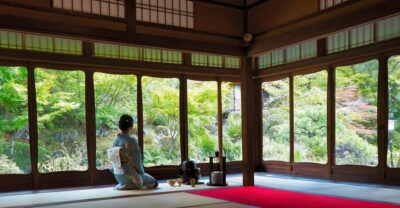
Tea Ceremony in a Traditional Tea House in Kiyomizu
Read our review →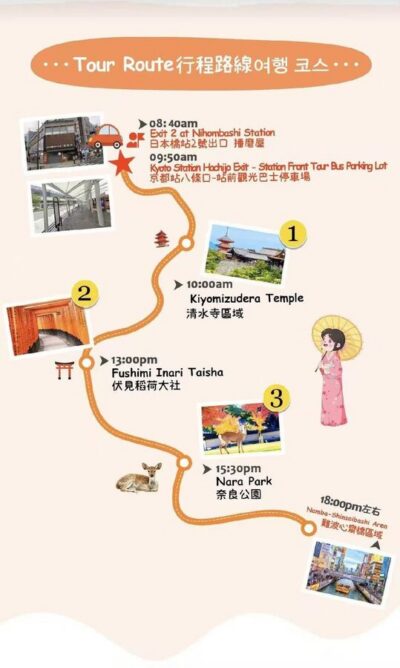
Kyoto Nara Day Trip │ Kiyomizu-dera Temple + Fushimi Inari-taisha Shrine + Nara Park (Departing from Osaka/Kyoto)
Read our review →
Browse the lists this tour appears in